Buyer Fit Snapshot
| Best fit | Recyclable Poly Mailers for Brands projects where brand print, material claims, artwork control, MOQ, and repeat-order consistency need to be specified before quoting. |
|---|---|
| Quote inputs | Share finished size, material target, print colors, finish, packing count, annual reorder estimate, ship-to region, and any compliance wording. |
| Proofing check | Approve dieline scale, logo placement, barcode or warning zones, color tolerance, closure strength, and carton packing before bulk production. |
| Main risk | Vague material claims, crowded artwork, missing packing details, or unclear freight terms can make a low unit price expensive after revisions. |
Fast answer: Recyclable Poly Mailers for Brands: Film, Print, MOQ, and Carton Packing should be specified like a repeatable production item. The safest quote records material, print method, finish, artwork proof, packing count, and reorder notes in one written spec.
Production checks before approval
Compare the actual filled-product size with the drawing, then confirm tolerance on folds, seals, hang holes, label areas, and retail display edges. Reserve space for logos, QR codes, warning copy, and material claims before decorative graphics fill the panel.
Quote comparison points
Review material grade, print process, finish, sampling route, tooling charges, carton quantity, and freight assumptions side by side. A quote is only useful when the supplier can repeat the same color, closure quality, and packing count on the next order.
Recyclable Poly Mailers for Brands look easy right up until procurement, operations, and marketing all show up with their own opinions. Then the details stop being boring. Film gauge, seal strength, print coverage, disposal language, shipping weight, and whether the mailer still looks decent after a carrier tosses it around like it owes them money. If the bag tears, adds unnecessary dimensional weight, or leaves customers guessing about disposal, the sustainability message turns mushy fast.
That is why recyclable poly mailers for brands deserve the same scrutiny you would give any other packaging decision. The right mailer protects the product, keeps freight under control, and looks like it belongs to the brand. The wrong one burns cash twice. First on the order. Then on replacements, complaints, and the lovely little flood of customer emails that starts with “just checking.”
Most brands choose these mailers for practical reasons. They are lighter than boxes, cheaper to ship for soft goods, and easier to brand cleanly with a logo or seasonal art. They also let sustainability-minded teams say something accurate instead of pretending every shipment needs a carton with half a forest inside it. The real job is making sure recyclable poly mailers for brands match the product, the route, and the customer experience.
Here is the part people still mess up: recyclable does not mean “put it anywhere and hope for the best.” In most cases, it refers to polyethylene film that can enter film-plastic recovery streams where those programs exist. That is not the same as curbside recycling. Mixing those up is how brands end up with confused customers and claims they should have never printed in the first place.
We will cover how recyclable poly mailers for brands are built, what moves the price, how to Choose the Right specs, and where teams waste money. If you are comparing options now, take a look at Custom Poly Mailers alongside other Custom Packaging Products so you can compare formats without winging it.
A mailer does not earn points for good intentions. It earns points for surviving transit, looking on-brand, and giving customers a disposal path that actually makes sense.
Recyclable Poly Mailers for Brands: Why They Matter
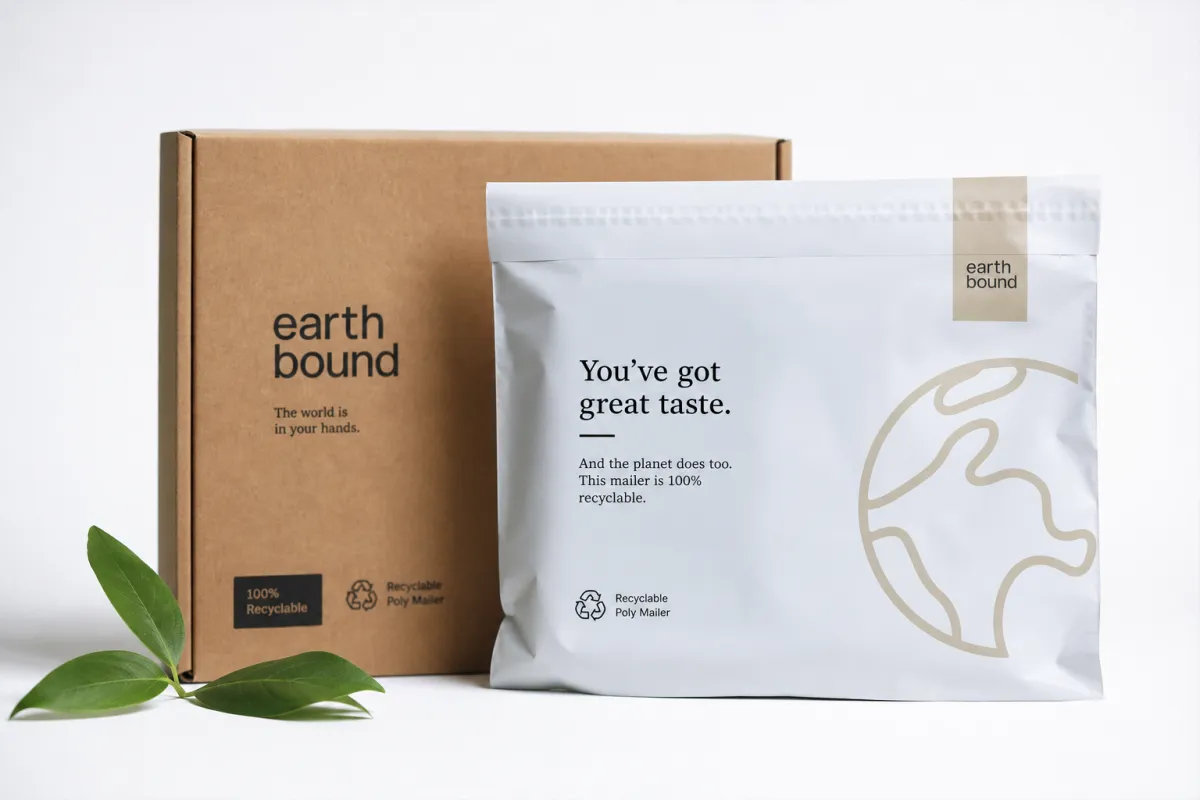
The case for recyclable poly mailers for brands is pretty straightforward. They are light, compact, and efficient for shipping apparel, accessories, soft home goods, and anything else that does not need rigid crush protection. That usually means lower postage, faster pack-out, and fewer inches of empty space riding around in a carton for no good reason.
The visual side matters too. A custom-printed mailer looks deliberate. It feels finished. It tells customers the brand thought through the package experience instead of grabbing the cheapest bag in a catalog and calling it strategy. That sounds blunt because it is.
The sustainability angle is real, but only if you keep it honest. Recyclable poly mailers for brands can reduce shipping weight compared with corrugated boxes, which often lowers transport emissions per shipment. They can also cut material use when the product is soft and does not need a rigid structure. None of that excuses bad sizing, sloppy print choices, or a bag that fails in transit. Better materials do not cancel out poor execution. Nice try, though.
From a packaging buyer’s view, the value usually comes from three places:
- Lower freight weight than boxes for soft goods.
- Cleaner brand presentation than plain mailers.
- More credible sustainability claims when the recycling language is accurate and easy to follow.
The catch is simple: recyclable poly mailers for brands only work as a sustainability story if customers can actually access the right recovery stream. In the U.S., film plastic drop-off is often available through store collection programs, while standard curbside bins usually do not accept stretchy film. The EPA recycling guidance is a solid reference if you want claims that hold up under scrutiny.
Precision helps. Say what the mailer is made from. Say how it should be disposed of. Do not hint at universal curbside recycling unless you have verified it for the markets you serve. Clean language beats fuzzy green branding every time. And yes, customers can tell when a claim is trying too hard.
How Recyclable Poly Mailers Work
Most recyclable poly mailers for brands use polyethylene film, usually low-density polyethylene or a closely related structure. That matters because polyethylene is one of the material families accepted in many film-plastic recovery programs. Some mailers also include recycled content, which can reduce virgin plastic use. Useful? Yes. The same as recyclability? No. Those get blurred all the time, and the packaging industry keeps paying for it.
Here is the cleaner version. Recyclable means the package can be recovered in a suitable recycling stream. Recycled content means part of the material came from previously recovered plastic. Compostable means something else entirely, and no, it is not shorthand for “good for the planet” just because it sounds nicer in a deck. A mailer can be recyclable, contain recycled content, both, or neither.
The recovery path usually looks like this: the customer removes labels or contaminants where needed, places clean film into a store drop-off or film collection program, and the material is baled and processed into secondary products where facilities exist. That may become new film, composite lumber, or another application depending on the recycler and the region. The point is not that every bag becomes another bag. The point is that the material has a real route forward.
Limits still matter. Adhesives, heavy ink coverage, mixed materials, extra labels, and residue can all interfere with recovery. For recyclable poly mailers for brands, that means print methods and closure design are part of the material decision. They are not decoration. A mailer covered in incompatible layers or built with a messy adhesive system weakens the recycling story fast.
Better suppliers test packaging against performance standards instead of hoping for the best. For shipping validation, many teams look at protocols from organizations like the International Safe Transit Association, especially for fragile items or rough handling routes. Even for less fragile goods, the bag still needs to survive abrasion, seam stress, and conveyor abuse. Nobody wants to replace a shipment because the seal gave up halfway through transit.
Recyclable poly mailers for brands work best for soft products such as:
- Apparel and streetwear
- Scarves, socks, and accessories
- Lightweight home textiles
- Non-fragile promotional kits
- Flat products with controlled pack-out
If the item is rigid, sharp-edged, or likely to get crushed, a mailer may be the wrong tool. That is not a sustainability failure. That is just packaging judgment.
What Affects Cost and Pricing for Recyclable Poly Mailers for Brands
Pricing for recyclable poly mailers for brands is never one neat number. Size, thickness, print coverage, recycled content, order quantity, and setup requirements all push the quote around. If a supplier sends a tidy number without asking those questions, they are probably guessing. Guessing is not a sourcing strategy.
Stock mailers are usually the lowest-cost starting point. They ship quickly, need little or no setup, and work fine if custom branding is not a priority. Custom printed recyclable poly mailers for brands cost more upfront, but they can improve the customer experience enough to justify the spend. If the package is part of the unboxing moment, generic looks lazy.
Film thickness drives cost more than many teams expect. A thinner bag may save on material, but if it tears, stretches, or splits at the seam, the savings disappear the moment a shipment gets replaced. I would rather see a brand spend a bit more on a mailer that survives the trip than chase the lowest quote and spend the next quarter cleaning up the mess. Cheap packaging is usually expensive in disguise. Old trick, still working on people.
Minimum order quantity matters too. Custom recyclable poly mailers for brands often come with plate, proof, color-match, or setup charges that make tiny runs inefficient. A small order can still make sense for a test launch or a limited drop, but the unit price usually improves as volume rises. There is no mystery there. That is just how production economics work.
Here is a practical comparison to keep your budget honest:
| Option | Typical Unit Price Range | Best For | Typical Lead Time |
|---|---|---|---|
| Stock recyclable mailers | $0.12-$0.20 each | Fast replacement orders, low branding needs | 3-7 business days |
| Custom printed recyclable mailers | $0.18-$0.42 each | Brand presentation, repeat shipments, campaigns | 12-18 business days |
| Recycled-content custom mailers | $0.20-$0.48 each | Sustainability-led brands with clear claims | 14-21 business days |
Those ranges are broad on purpose. A 10 x 13 inch mailer with a one-color logo is not the same thing as a larger bag with full-bleed art, custom tint, and heavier film. Still, the table gives you a realistic frame of reference. If a quote sits far outside those ranges, ask what is driving it before you decide it is good or bad.
Watch the hidden costs too. Oversized mailers can raise dimensional weight. Weak adhesive can trigger returns. Bad sizing can leave too much empty space, which looks sloppy and wastes film. If the customer experience is poor, the cheapest mailer may end up being the most expensive thing you bought all year. Recyclable poly mailers for brands should reduce total packaging cost, not just the line item on the purchase order.
How to Choose Specs for Recyclable Poly Mailers for Brands
Spec selection starts with the product, not the packaging catalog. Brands still get this wrong all the time. A folded T-shirt, a hoodie, and a small bundle of soft goods do not need the same structure. Recyclable poly mailers for brands should match item weight, shape, and the route the shipment will travel.
Start with size. You want the smallest mailer that fits the product comfortably and still allows for a clean seal. Too much dead space does two bad things: it makes the pack-out look sloppy and can increase shipping cost if the parcel gets bulkier than it needs to be. For apparel, common sizes land around 10 x 13 inches, 12 x 15.5 inches, or 14.5 x 19 inches, but the right choice depends on fold style and product thickness.
Then choose thickness. Many brands land in the 2.25 mil to 3 mil range for general apparel shipping. Lighter goods may work at the low end, while heavier soft goods or rougher routes may justify more material. Going thinner can save pennies. Going too thin can cost dollars in reshipments. That is not a perfect formula, but it is close enough to matter.
Closure design matters more than people admit. Self-seal is standard because it is quick and reliable, but the adhesive has to hold through transit without turning into a wrestling match for the customer. If the seal fails, nothing else matters. If it is miserable to open, the customer starts the experience annoyed. Neither outcome does your brand any favors.
Print strategy is the other big call. One-color branding can look sharp and restrained. Full-coverage art can create a stronger unboxing moment, but it may raise cost and complicate material use if the print system is not matched well to the film. For many brands, the sweet spot is a clean exterior with a logo, one or two brand colors, and a short disposal note on the back or flap.
Good packaging specs think beyond the bag itself. If you use insert cards, tissue, or thank-you notes, make sure the set works together. Paper inserts can be FSC-certified if that matters to your sourcing story, and the whole pack can stay coherent instead of turning into a pile of unrelated materials. That is where Case Studies can help; they show how brands balance print, structure, and cost without making random choices under deadline pressure.
If you need a quick checklist, use this:
- Confirm product dimensions and folded thickness.
- Match mailer size to the smallest practical fit.
- Choose film thickness based on route risk, not optimism.
- Test the seal and tear resistance with actual product weight.
- Decide how much print coverage the budget can support.
- Write disposal language that matches the recycling claim.
Step-by-Step Process and Timeline for Ordering
Ordering recyclable poly mailers for brands gets much easier when the brief is complete before anyone asks for a quote. Send a supplier only a logo and a vague request for “eco packaging,” and you will get a vague answer back. That is not a vendor problem. That is a brief problem.
The process usually starts with specs: size, film thickness, quantity, print colors, and any recycled-content target. Then comes artwork review. This is where brands lose time if the logo file is low resolution, if the art runs into the seal area, or if the design changes after proofing has already begun. Small revisions turn into long delays because production does not care about your calendar drama.
A clean sequence for recyclable poly mailers for brands looks like this:
- Define the product and shipping use case.
- Choose size, thickness, and finish.
- Prepare logo files and artwork.
- Request a quote and confirm setup costs.
- Review digital or physical proof.
- Approve production.
- Allow manufacturing, packing, and freight time.
- Inspect the shipment on arrival before a full rollout.
Timing depends on the order type. Stock mailers can move quickly, often within a few business days. Custom printed recyclable poly mailers for brands usually need more time because proof approval, print setup, and production all add steps. A common planning window is 12 to 18 business days after proof approval, though more complex print coverage or busy seasons can stretch that. If the launch matters, build in buffer time. A little cushion now saves a lot of stress later.
These are the usual delay magnets:
- Missing logo files or wrong file formats
- Unclear recycling claims that need legal review
- Last-minute size changes after proof approval
- Color corrections that require re-proofing
- Slow sign-off from marketing, operations, or compliance
Brands that want a cleaner sourcing process usually get better results when they prepare a simple packaging brief. List the product, target quantity, ship-to location, artwork version, and deadline. Then compare quotes for Custom Packaging Products side by side so you can see whether mailers, boxes, or a mixed format makes more sense. That beats making decisions based on which email arrived first.
Common Mistakes Brands Make With Recyclable Poly Mailers
The biggest mistake with recyclable poly mailers for brands is overselling the recycling claim. If the mailer is only recyclable through film drop-off programs, say that. Do not imply curbside acceptance unless it is actually true in the markets you serve. A sloppy claim creates customer confusion, and once customers stop trusting the packaging copy, the rest of the messaging takes a hit too.
Another common problem is choosing a bag that is too thin. That saves a little on the purchase order and costs more in transit damage, service complaints, and replacement shipments. The greener option is not greener if it breaks under normal handling. Teams skip that part because the cheap quote looks better in a spreadsheet. The spreadsheet is not the customer.
Print and adhesive compatibility can also cause trouble. If the ink smears, the logo peels, or the closure fails, the package stops looking professional fast. On recyclable poly mailers for brands, the print system should be tested on the actual film, not assumed from a spec sheet. Ask for samples under realistic packing conditions instead of trusting a neat render on a screen.
Size mistakes waste money too. Too small, and the product bulges or the seal struggles. Too large, and the package looks bloated and can raise shipping cost. The goal is a tidy fit with enough room for efficient packing, not a bag so oversized that the mailer itself becomes the problem.
And yes, some brands buy on unit price alone. That is usually where the spreadsheet trap starts. Total cost includes damage rate, returns, freight efficiency, customer sentiment, and how much time your team spends answering “how do I recycle this?” emails. If your recyclable poly mailers for brands create more service tickets, the cheap price was never cheap.
If your products are fragile or valuable, verify parcel performance with recognized test methods. ISTA protocols or ASTM-style testing can expose weak points before the bag meets a real carrier. That is a lot cheaper than learning about seam failure from a customer photo. Ask me how fun that email looks on a Monday morning.
Expert Tips for Better Results With Recyclable Poly Mailers for Brands
Use the mailer as part of the whole brand system. Recyclable poly mailers for brands perform better when the exterior, insert card, and disposal note sound like they came from the same company. A clean logo on the outside and a short, factual recycling message inside the parcel is usually better than blasting a giant green claim across every surface.
Sample testing is worth the time. Do not approve recyclable poly mailers for brands just because they look good empty. Load them with your real product, shake them, seal them, open them, drop a few, and inspect the seams. Check opacity too if privacy matters. A bag that goes too transparent under light is not a premium look, and nobody likes surprises from their shipping mailer.
Keep the claim tight and factual. If the mailer is suitable for film plastic collection programs, say so clearly. If it contains recycled content, say that too, but do not treat recycled content as proof of recyclability. A brand can be honest and still sound polished. You do not need a sustainability manifesto printed on the outside of the bag.
Think in batches. A first run of recyclable poly mailers for brands does not have to be perfect forever. Launch with a quantity that matches a real sales window, then review customer feedback, damage rates, and packing speed. Maybe the size needs a tweak. Maybe the print needs more contrast. Maybe the adhesive is fine, but the bag is one inch too generous. Small changes are cheaper than a full reprint.
Use packaging as both a cost center and a marketing asset. That sounds obvious, but many teams still treat mailers as an afterthought until the last week before launch. A better move is to decide what the mailer needs to do first: protect, present, and communicate. If it can do all three without getting cute, you have a good package. If it only looks good in a render, that is not the same thing.
Here is a practical rule of thumb I use for recyclable poly mailers for brands: if the package cannot survive a bad day in transit, do not pretend it is ready. Test harder. Or choose a better spec. That usually saves more money than chasing the lowest quote.
What to Do Next With Recyclable Poly Mailers for Brands
Start with a packaging audit. Review current product types, average shipment weights, damage complaints, and any packaging-related customer comments. That shows you where recyclable poly mailers for brands can help and where they are the wrong fit. If your current box system is overbuilt for soft goods, there is probably easy savings sitting there already.
Next, request samples. Not mockups. Samples. Put your real products inside and test the bag the way your team will pack it every day. If the customer experience matters, test the opening feel, seal reliability, and print readability. If the package carries a sustainability message, test the disposal note for clarity too. A lot of packaging problems are obvious the second you stop staring at renders and start handling actual product.
Then compare at least three specs: stock, custom printed, and a recycled-content option if the budget allows. Recyclable poly mailers for brands are not a one-size category. You may find that lower-coverage print and a slightly heavier film give you the best mix of cost and performance. Or you may find that stock mailers are enough for one product line while premium custom mailers make sense for a higher-margin collection. The point is to decide, not drift.
Build a brief before you ask for quotes. Include product dimensions, order quantity, artwork files, shipping destination, and launch date. The cleaner the brief, the cleaner the response. If you want to see how different packaging programs are built, review Case Studies and compare them against your own shipment profile.
Finally, roll out carefully. Do not switch every SKU at once unless uncertainty sounds fun. Move one product line first, track damage rate, shipping cost, and customer response, then scale from there. That gives you actual data instead of team opinions shouted across a meeting about packaging, which is a spectacularly unreliable data source.
If you want the practical version in one sentence, it is this: recyclable poly mailers for brands should protect your products, fit your brand, and tell the truth about disposal without making operations harder than they need to be. That is the standard worth buying against. Anything less is just green paint on a weak package.
FAQ
Are recyclable poly mailers for brands actually recyclable everywhere?
No, not everywhere. Recyclable poly mailers for brands are usually recyclable through film plastic collection programs, not standard curbside bins. Brands should give clear disposal instructions and avoid implying universal recyclability, because the local recovery system decides whether the material has a real path forward.
What size should recyclable poly mailers for brands be?
Pick the smallest size that fits the product comfortably with room for a clean seal. Too much empty space makes recyclable poly mailers for brands look sloppy and can increase shipping bulk. Start with the actual folded product dimensions, then test a few size options with real pack-out conditions.
Do recyclable poly mailers cost more than standard mailers?
Usually a bit more, especially for custom printing or recycled-content options. The real cost for recyclable poly mailers for brands depends on order quantity, thickness, print coverage, setup fees, and whether reduced damage offsets the higher unit price. Cheap is only cheap if it works.
Can I print my logo on recyclable poly mailers for brands without affecting recyclability?
Yes, if the print method, inks, and coverage fit the material and the supplier has tested the format. Keep the design simple, and confirm that the finished recyclable poly mailers for brands still fit the recycling stream you want to reference. Pretty is fine. Confusing is not.
How long does it take to order custom recyclable poly mailers for brands?
Stock options can ship quickly, while custom mailers take longer because of proofing and production. Build in extra time for artwork approval, sample review, and any revisions before launch. For recyclable poly mailers for brands, a realistic buffer is better than pretending the calendar will cooperate.


