Buyer Fit Snapshot
| Best fit | Carton Partition Inserts Supplier projects where brand print, material claims, artwork control, MOQ, and repeat-order consistency need to be specified before quoting. |
|---|---|
| Quote inputs | Share finished size, material target, print colors, finish, packing count, annual reorder estimate, ship-to region, and any compliance wording. |
| Proofing check | Approve dieline scale, logo placement, barcode or warning zones, color tolerance, closure strength, and carton packing before bulk production. |
| Main risk | Vague material claims, crowded artwork, missing packing details, or unclear freight terms can make a low unit price expensive after revisions. |
Fast answer: Carton Partition Inserts Supplier: Choose the Right Fit should be specified like a repeatable production item. The safest quote records material, print method, finish, artwork proof, packing count, and reorder notes in one written spec.
Production checks before approval
Compare the actual filled-product size with the drawing, then confirm tolerance on folds, seals, hang holes, label areas, and retail display edges. Reserve space for logos, QR codes, warning copy, and material claims before decorative graphics fill the panel.
Quote comparison points
Review material grade, print process, finish, sampling route, tooling charges, carton quantity, and freight assumptions side by side. A quote is only useful when the supplier can repeat the same color, closure quality, and packing count on the next order.
Carton Partition Inserts Supplier: Choose the Right Fit
A carton partition inserts supplier can look like a small line item on a quote. It usually isn't. The divider design often decides whether fragile goods arrive intact or turn into a pile of breakage, repacks, and wasted labor. Put six glass jars in one carton, pack cosmetic bottles with delicate pumps, or ship machined parts with sharp edges, and the partition is doing real work. It keeps products from touching, holds them upright, and stops the kind of movement that turns a decent pack into a headache.
Most buyers do not start looking for a carton partition inserts supplier until something goes wrong. A carton slips off a pallet. A bottle neck chips in transit. A warehouse crew spends extra time fighting with a divider that looked fine in the sample room and awful on the pack line. I've seen that pattern more than once. The lightbulb moment usually comes late, which is annoying, but also common. The insert is part of the packaging system. Not a spare part. Not decoration.
The right carton partition inserts supplier thinks about the whole setup: material choice, cell geometry, carton fit, production speed, and the cost of damage after the shipment leaves the dock. That means looking past the divider itself and asking how the pack behaves under compression, vibration, stacking, and rough handling. Packaging fails in the real world, not in the PowerPoint. A supplier worth your time understands that, and won't pretend a pretty drawing is proof.
From beverage packs to glassware, cosmetics, automotive components, and industrial shipments, partition inserts show up anywhere separation matters as much as cushioning. A good carton partition inserts supplier will ask how the product sits in the shipper, how the carton closes, whether the pack is hand-built or automated, and how often the SKU changes. Those are not small details. They shape the design more than most buyers expect, and they can save a lot of back-and-forth later.
What a carton partition inserts supplier actually solves
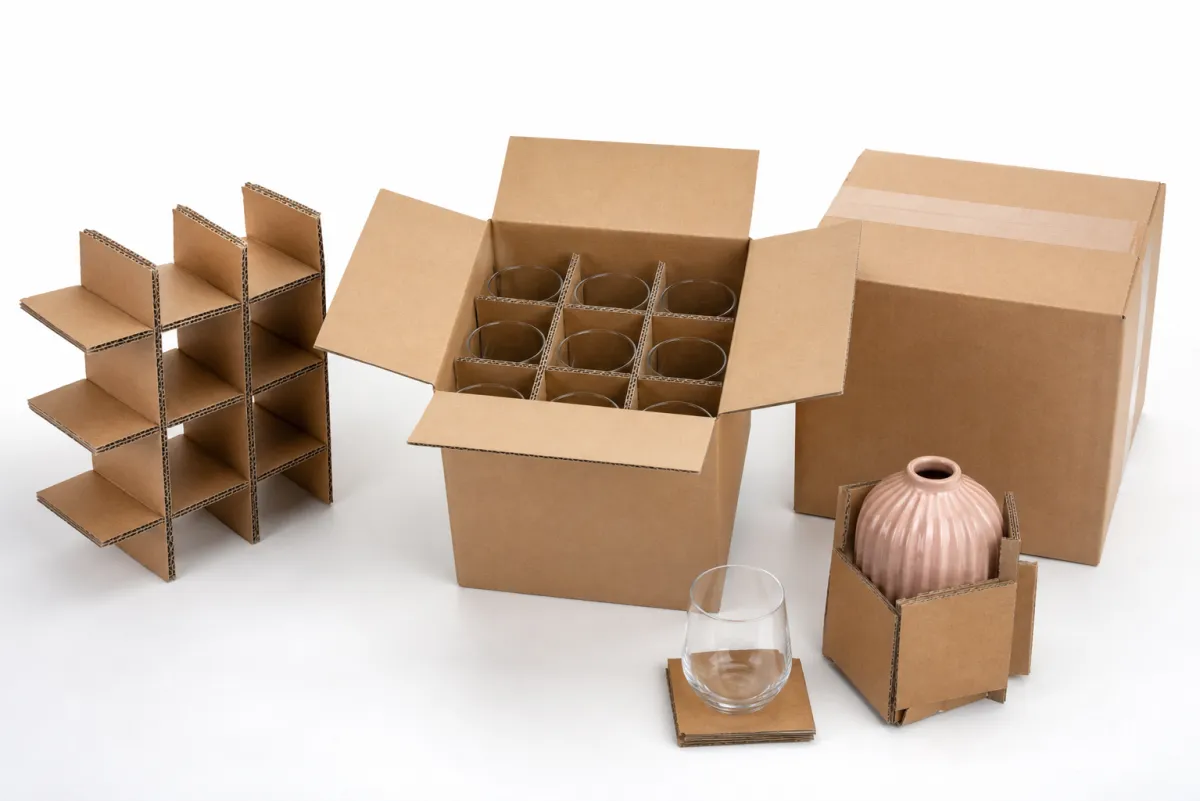
A carton partition inserts supplier solves a simple but expensive problem: keeping multiple items inside one carton from banging into each other during movement, compression, and vibration. Simple on paper. Expensive in practice. One weak partition wall can let a bottle lean into its neighbor, a cosmetic pump can press into a closure, or a metal component can scratch a painted finish. Once that happens, the box stops acting like protection and starts reading like a damage report.
Here is the plain version. Carton partition inserts are divider systems, usually made from corrugated board, chipboard, molded fiber, or specialty paperboard. They create separate cells inside a carton. Each cell holds a product upright and away from the next one. A carton partition inserts supplier helps match that cell structure to the item shape, the carton size, and the way your team actually packs orders. That fit is what keeps items from tipping, rubbing, and colliding in transit.
I see a lot of packaging trouble start when people treat every divider as interchangeable. They are not. A carton partition inserts supplier has to think about board grade, flute strength, cut accuracy, and how the divider behaves after folding, loading, and stacking. A partition that looks neat on a sample table can still fail if it bows under pressure or leaves too much free space around the product. Packaging does not care about neat.
Where these inserts show up most often:
- Beverage cartons with glass or filled bottles that need strict separation.
- Glassware and houseware packs where edge-to-edge contact is the main risk.
- Cosmetics and personal care kits that combine rigid bottles, jars, and closures.
- Automotive and industrial parts that scratch easily or have sharp corners.
- E-commerce shipper packs that need repeatable placement and fast packing.
A carton partition inserts supplier also solves a throughput problem. Easy-to-place inserts, easy-to-fold inserts, and easy-to-read inserts keep the line moving with less training. If the design needs constant adjustment or forces the packer to muscle products into place, labor goes up and damage risk usually follows. A clean divider system can remove secondary wraps, cut void fill, and make every pack more repeatable. That is why the supplier matters just as much as the carton.
How carton partition inserts supplier solutions work in transit
A carton partition inserts supplier usually starts with one of two basic structures. The first is a set of slotted sheets that interlock to form a grid, creating a tidy matrix of cells inside the box. The second is a custom-cut divider layout built around the product footprint, carton dimensions, and pack pattern. Both do the same job. They just behave differently in production, assembly, and shipping performance.
The protection comes from separation, not magic. A well-designed divider blocks item-to-item contact, limits lateral movement, and spreads load across the carton instead of concentrating stress on one fragile point. Stack the carton two or three layers high on a pallet and the partition can help transfer vertical force more evenly. A carton partition inserts supplier should care about compression and stacking, not just whether the product fits on the first try.
Fit tolerance matters too. Too loose, and the items shift. Too tight, and packers waste time forcing parts into place while the board distorts before the carton even leaves the line. Good fit is a three-way balance between the product footprint, the carton interior, and the way the insert is assembled. That balance keeps the shipment stable without slowing the operation down. Nobody wants a divider that needs a prayer and three extra hands to assemble.
Material choice changes transit behavior more than buyers sometimes realize. Corrugated board gives stiffness and strong separation. Chipboard can work for lighter packs where cost and flat storage matter. Molded fiber can add a shaped profile and a cleaner fiber-based sustainability story. Specialty boards may improve rigidity, printability, or moisture resistance. A carton partition inserts supplier should explain those trade-offs plainly, because the board is not just a surface choice. It is part of the protection strategy.
If you want a useful reference point for transit performance, ISTA testing methods are a sensible benchmark for fragile packs that will see vibration, drop, or mixed-mode freight. Their guidance at ista.org does not replace your own pack test, but it gives procurement teams and packaging engineers a common language for risk. A carton partition inserts supplier that understands those methods is usually easier to work with because the conversation stays concrete: how much movement, what kind of drop, and which product surfaces need the most protection.
Transit behavior usually improves when the insert does three things well:
- It keeps the product centered in the cell without forcing it into the walls.
- It resists collapse when cartons are stacked, tipped, or handled roughly.
- It reduces the need for secondary packaging, which can slow the line and increase cost.
A carton partition inserts supplier should not promise that a divider alone will solve every damage issue. Sometimes the outer carton is too weak. Sometimes the closure fails. Sometimes the product needs a different orientation. Still, the insert is often the smartest place to start because it controls the first point of contact between neighboring items and gives the whole shipper more structure. The honest answer is better than a glossy promise.
Key factors that drive carton partition inserts cost and pricing
Price is not just board cost. A carton partition inserts supplier usually prices based on material grade, flute profile, sheet size, cut complexity, cell count, order volume, and whether the design is stock or custom engineered. A simple straight divider in a standard size may be economical. A tighter layout with odd cutouts and higher compression needs can move the cost up fast. Part count matters too. Every extra fold or cut adds time and setup.
Here is where buyers get tripped up. The cheapest quote is not always the lowest total cost. If a thinner insert allows more breakage, the hidden expense shows up in claims, returns, labor, and lost customer confidence. A carton partition inserts supplier that helps reduce carton size, secondary wrapping, or repacking can save more money than one that looks cheaper on paper. Total cost should include the insert price, inbound freight, storage space, and what happens after shipment.
Volume changes pricing in a very direct way. Small runs can make sense for launch programs, seasonal SKUs, or pilot orders, but the per-piece cost tends to be higher because setup is spread over fewer units. Larger runs usually bring the unit cost down, especially when the carton partition inserts supplier can optimize board usage and production scheduling. For a simple custom corrugated divider, buyers often see small-run pricing in the $0.18 to $0.40 range per unit, while higher-volume programs can come in lower depending on cut pattern and material thickness.
The table below gives a practical comparison of common options. The numbers are directional, not universal. Board markets, freight rates, and die complexity all move around. Still, it is a useful starting point when a carton partition inserts supplier is helping you sort through alternatives.
| Material option | Best fit | Typical unit cost signal | What to watch |
|---|---|---|---|
| Single-wall corrugated | General fragile goods, bottles, jars, and moderate separation needs | $0.12-$0.28 in mid-volume runs | Good balance of stiffness and cost, but not always enough for heavy stacking |
| Heavy-duty corrugated | Glassware, heavier components, and higher compression loads | $0.20-$0.45 depending on cell count | Better rigidity, usually higher freight and material cost |
| Chipboard | Lighter products, compact packs, and cost-sensitive programs | $0.08-$0.18 for simpler layouts | Less strength, so fit and handling discipline matter more |
| Molded fiber | Sustainability-focused packs or shapes that benefit from a molded contour | $0.18-$0.40 depending on tooling and volume | Can require more upfront development and fit checks |
| Specialty board | Premium presentations, moisture concerns, or custom performance needs | Varies widely by spec | Good for specific performance goals, but not always the lowest-cost path |
In purchasing discussions, I always ask whether the goal is lower unit price, less damage, or faster packing. Sometimes those goals line up. Sometimes they fight each other. A carton partition inserts supplier can help sort that out by showing how cell count, board thickness, and carton size affect the final cost. If the answer is a little more board in exchange for fewer returns, that can be a good trade. Cheap is not the same thing as smart.
Freight and storage matter more than people expect. Flat-packed inserts save warehouse space, but oversized sheets can be awkward to handle and may drive inbound shipping charges higher. Heavier board grades protect better, yet they also add weight to every carton and pallet. A carton partition inserts supplier should discuss landed cost, not just factory cost, because a low unit price can vanish once the material is boxed, shipped, received, and stored.
If sustainability is part of the buying brief, ask about fiber sourcing and recycled content. A carton partition inserts supplier can often align with chain-of-custody requirements or other material standards, and organizations such as the Forest Stewardship Council provide recognized references for responsibly sourced fiber. That does not automatically make an insert the right choice, but it gives procurement teams a cleaner way to compare options with a sustainability lens.
Carton partition inserts supplier process and timeline
The typical carton partition inserts supplier process starts with discovery. That means collecting product dimensions, weight, fragile areas, carton internal size, closure method, storage conditions, and annual volume. If the product has a narrow neck, a painted finish, a sharp edge, or a pressure-sensitive closure, those details should be called out early. A supplier cannot design a stable insert if the real risk points are still fuzzy.
After discovery, the supplier usually moves into concepting and sample creation. A simple stock-based insert can move quickly if the carton size and cell layout are already familiar, while a fully custom layout may need one or two design iterations before the fit is right. A carton partition inserts supplier that works carefully will send drawings, sample photos, and change notes so the buyer can see what changed and why. That paperwork may feel slow, but it prevents a lot of confusion later.
For many projects, sampling takes longer than the actual production run, especially when the pack needs to be checked with real products instead of dummy weights. Production timing then depends on material availability, die or tooling needs, plant schedule, and order volume. A carton partition inserts supplier should be able to give a realistic lead time, not a vague promise. For a straightforward job, it is common to see 10 to 15 business days from approval to shipment, while more complex custom programs can run longer if tooling or material sourcing needs extra coordination.
Communication is part of the timeline too. The best carton partition inserts supplier will set a clear approval checkpoint before mass production starts, because once the first run is cut, changes are more expensive. That checkpoint should answer basic questions: Does the insert fit? Can the packer assemble it without slowing down? Does it protect the product under normal handling? If the answer is no, it is much cheaper to revise the drawing than to discover the problem after 20,000 units are already in circulation.
A partition that looks perfect in a sample carton can still fail on a live pack line if workers have to twist, force, or guess their way through the assembly. Fit has to work for the people doing the packing, not just for the drawing.
One thing I tell buyers is to expect a short conversation about tolerances. A carton partition inserts supplier should know whether you need a snug fit, a float fit, or a cell wall that accommodates slight product variation. That level of detail prevents unnecessary rework. If the pack team handles products with a little dimensional drift, the insert may need more forgiving cell geometry than a standard catalog design would suggest.
Common mistakes when choosing carton partition inserts
One of the most common mistakes is ordering an insert before confirming the carton internal dimensions. A carton partition inserts supplier can only work from accurate measurements. Even a few millimeters of error can create a loose fit, a bulging sidewall, or a divider that shifts during packing. Buyers often focus on the outer carton size listed in procurement records, but the interior measurement is the one that matters for the partition.
Another mistake is overengineering. It is easy to add more cells, thicker board, or a highly customized layout because it feels safer. Usually, that just makes the pack heavier, slower, and more expensive without adding much protection. A carton partition inserts supplier should explain where strength matters and where it does not. More board is not automatically better if the product already sits securely in a simpler geometry.
People also get into trouble when they ignore how the pack is handled on the floor. A design that looks elegant on a spec sheet may be awkward for a busy operator who needs to build cartons fast. If the insert requires two hands in a cramped space, or if the cells are hard to identify at a glance, the line slows down. A carton partition inserts supplier should test for practicality, not only for structural performance.
Common failure points to watch:
- Loose fit around the product body or neck.
- Insufficient compression strength for stacked pallets.
- Divider walls that collapse after repeated handling.
- Complex assembly steps that confuse packers during busy shifts.
- Changes to the carton or product that never triggered a redesign review.
Transit testing is another area where shortcuts get expensive. A carton partition inserts supplier may show a clean sample that passes visual inspection, but visual approval is not the same as vibration or drop confirmation. For fragile, irregular, or high-value items, ask for testing that reflects the actual shipping environment. ASTM D4169 and similar methods are useful references for understanding distribution risks, even if your final validation plan is simpler. The point is to stress the pack before customers do.
Product changes ripple through the whole pack design. A slightly taller bottle, a different closure, or a switch from hand packing to semi-automation can make the old divider spec obsolete. A carton partition inserts supplier can only keep the system working if the specification gets revisited whenever the product or carton changes. That habit saves a lot of quiet headaches, and a lot of avoidable scrap.
Expert tips for working with a carton partition inserts supplier
Start with the product, not the insert. That is the first habit I would recommend to anyone working with a carton partition inserts supplier. Measure the fragile zones, identify where contact would cause damage, and note whether the product should stand upright, lie flat, or nest at a slight angle. Once you understand the item itself, the divider design becomes much easier to specify.
Ask for multiple material options. A carton partition inserts supplier can often show you a lower-cost board, a stronger board, and a more sustainable fiber-based option. That makes comparison easier than trying to infer the differences from one quote. You want to see the trade-off in stiffness, weight, storage, and pricing before committing. A side-by-side view usually makes the answer obvious faster than a long meeting ever will.
Test with the actual pack-out crew whenever possible. The team that loads the cartons every day can tell you in a few minutes whether the design is practical or annoying. A carton partition inserts supplier may think a layout is efficient, but the people on the line will quickly spot if the cell walls snag, the folds are fussy, or the insert takes too long to orient. That feedback is worth more than a glossy sample photograph.
Automation matters too. If your operation plans to scale, ask whether the insert can be placed by hand now and still remain compatible with semi-automated or automated loading later. A carton partition inserts supplier should know that not every divider design is friendly to machine placement. Some styles fold beautifully by hand but jam up in a higher-speed process. Planning for that now is cheaper than redesigning later.
Good procurement habits that usually save money:
- Standardize carton and insert dimensions across related SKUs where possible.
- Keep a simple drawing record so the latest approved spec is easy to find.
- Review the insert whenever the product, carton, or ship method changes.
- Request a brief sample report that notes fit, assembly speed, and any concerns.
One of the smartest questions you can ask a carton partition inserts supplier is this: how much of the design is fixed, and how much can be adjusted without tooling changes? That tells you whether the program is flexible enough for future growth. If the supplier can reuse a die layout or adapt a cell pattern without starting from zero, your team gains speed and usually saves money.
Another practical tip is to consider the whole shipper, not just the divider. A carton partition inserts supplier can only go so far if the outer carton is under-specified or the closure method is weak. Strong partitions inside a weak carton still fail in the real world. The best designs treat the insert, the carton, and the closure as one system. Otherwise you are just moving the weak point around.
Actionable next steps with your carton partition inserts supplier
Build a short brief before you ask for quotes. A carton partition inserts supplier will move faster if you provide carton dimensions, product dimensions, fragile areas, packing orientation, target order volume, and any cost ceiling the team has to respect. That brief does not need to be fancy. It just needs to be accurate and complete enough to prevent guesswork.
Request two or three design options instead of a single "best guess" concept. A carton partition inserts supplier can usually show you a more economical version, a stronger version, and a version that balances material use with line speed. That comparison helps you make a better decision because you are evaluating protection, labor, and landed cost together rather than settling for the first drawing on the table.
Then test the insert with real products, real cartons, and the actual packing team. Do not skip this step. A carton partition inserts supplier may have a clean prototype that looks fine under office lighting, but the real proof is whether it fits cleanly, packs quickly, and protects the product after a short drop test or vibration run. If the design survives that review, you have a much stronger basis for approval.
Simple acceptance checklist:
- Carton fit is snug without bulging.
- Product remains separated under normal movement.
- Assembly is quick enough for daily use.
- Material and compression strength match the shipping method.
- Storage, freight, and handling are acceptable for the warehouse team.
Use that checklist before production release, and revisit it whenever the product changes. A carton partition inserts supplier relationship works best when both sides treat the insert as a living specification, not a one-time drawing. Small shifts in bottle height, part geometry, or carton style can change the performance of the whole pack, so the habit of rechecking fit pays off every time.
If you want a final rule of thumb, keep it simple: the best carton partition inserts supplier is the one that balances protection, cost, and packing speed without boxing your operation into a corner. That usually comes from practical testing, clear specs, and enough communication to catch problems before the first production run is locked in. Get those pieces right, and the carton partition inserts supplier becomes part of your packaging control instead of just another quote sitting in the inbox.
FAQs
How do I choose a carton partition inserts supplier for fragile products?
Look for a carton partition inserts supplier that asks about product dimensions, breakage points, carton size, and packing speed before suggesting a layout. That is usually a good sign the supplier is designing for real use, not just selling a standard divider. Request samples, then check whether the insert keeps items separated without making the pack too slow or too tight. If the answer is "kind of," keep digging.
What materials are most common for carton partition inserts supplier projects?
Corrugated board is common when the insert needs stiffness and strong separation inside a shipping carton. Chipboard can work for lighter products or compact packs where material cost and flat storage matter. Molded fiber or specialty boards may be used when sustainability, product fit, or a more protective geometry is needed. A carton partition inserts supplier should explain those trade-offs in plain language, not in packaging jargon nobody asked for.
How long does a carton partition inserts supplier project usually take?
Simple stock-based solutions can move quickly if the carton size and cell layout are already known. Custom designs usually take longer because they need measurements, sample review, and approval before production. Lead time also depends on tooling, order volume, and whether the carton partition inserts supplier already has the required board in stock. For straightforward runs, two weeks is a decent ballpark, but complex jobs can stretch beyond that.
What affects the price most when ordering partition inserts?
Material grade, sheet size, cell count, and cut complexity are the biggest drivers of unit cost. Custom sizes and low-volume runs usually cost more per piece than standard or high-volume orders. Shipping, storage space, and damage reduction should be considered together with the quoted piece price, because the lowest quote is not always the lowest total cost from a carton partition inserts supplier.
Can a carton partition inserts supplier help reduce shipping damage?
Yes, a well-designed partition insert reduces item-to-item contact and helps control movement during transit. The best results come from matching the insert layout to the product shape, carton fit, and handling conditions. Testing with real cartons and actual products is the safest way to confirm protection before full rollout, and a carton partition inserts supplier that supports that process is usually a better long-term partner.
Do I need custom inserts for every SKU?
Not always. If several SKUs share the same footprint, weight, and fragility profile, a single divider family can cover more than one product. That said, a carton partition inserts supplier should review each SKU before you assume the old layout still works. Slight size changes can create loose cells or stress points that nobody notices until the breakage reports start showing up.
Related packaging resources
Use these related guides to compare specs, costs, quality checks, and buyer decisions before making the final call.

