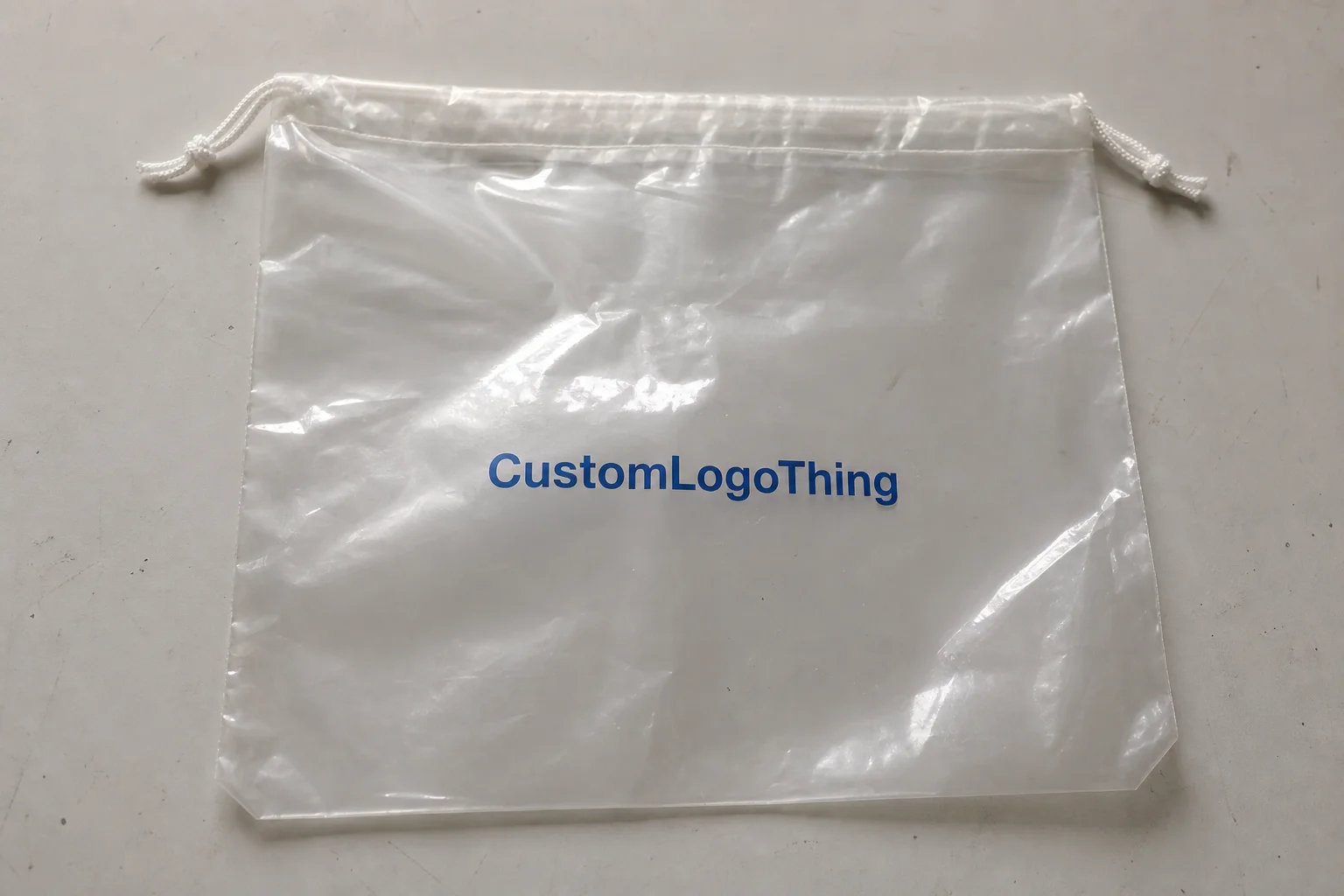
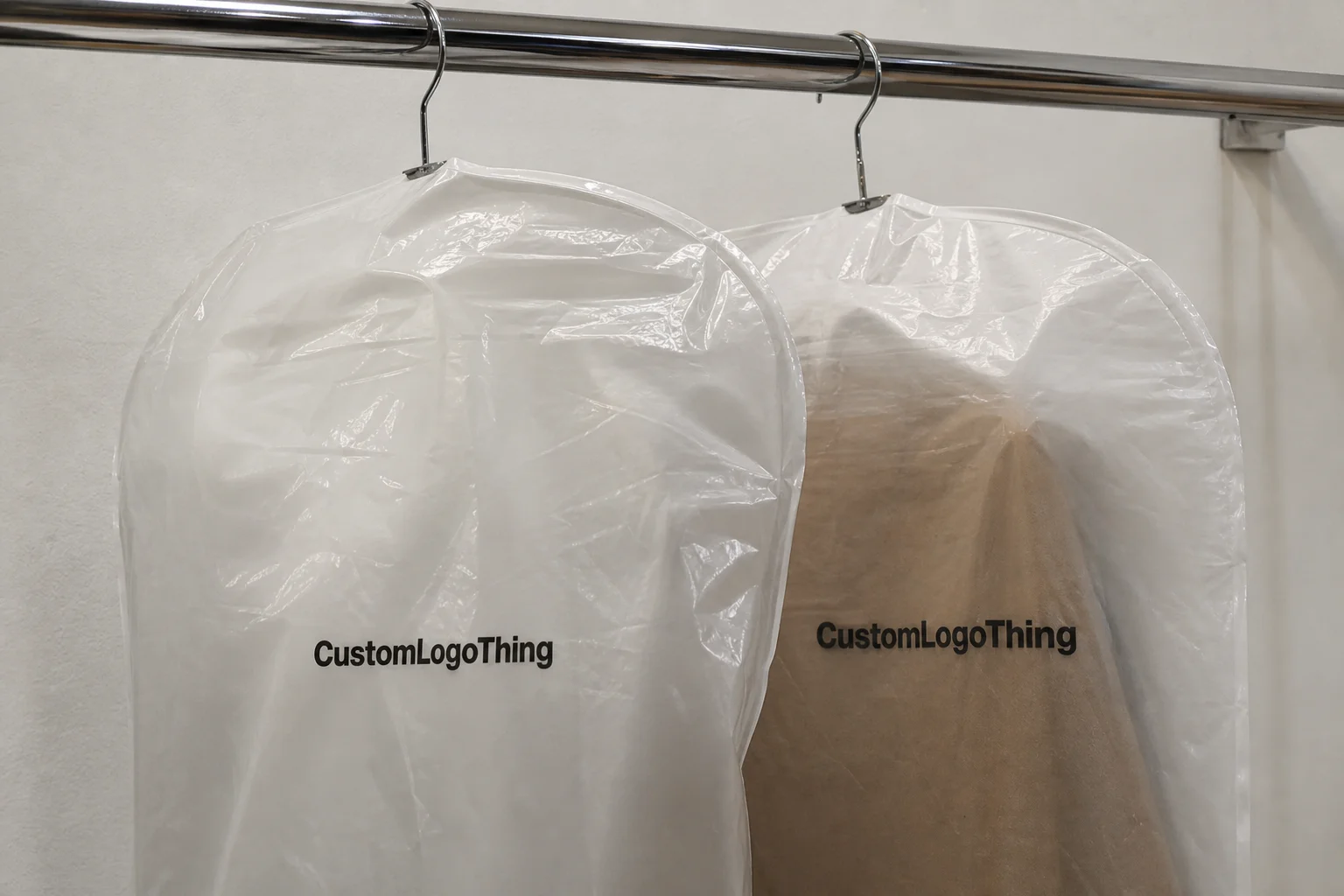
Buyer Fit Snapshot
| Best fit | Recycled Plastic Mailers for Ecommerce Success projects where brand print, material claims, artwork control, MOQ, and repeat-order consistency need to be specified before quoting. |
|---|---|
| Quote inputs | Share finished size, material target, print colors, finish, packing count, annual reorder estimate, ship-to region, and any compliance wording. |
| Proofing check | Approve dieline scale, logo placement, barcode or warning zones, color tolerance, closure strength, and carton packing before bulk production. |
| Main risk | Vague material claims, crowded artwork, missing packing details, or unclear freight terms can make a low unit price expensive after revisions. |
Fast answer: Recycled Plastic Mailers for Ecommerce Success should be specified like a repeatable production item. The safest quote records material, print method, finish, artwork proof, packing count, and reorder notes in one written spec.
Production checks before approval
Compare the actual filled-product size with the drawing, then confirm tolerance on folds, seals, hang holes, label areas, and retail display edges. Reserve space for logos, QR codes, warning copy, and material claims before decorative graphics fill the panel.
Quote comparison points
Review material grade, print process, finish, sampling route, tooling charges, carton quantity, and freight assumptions side by side. A quote is only useful when the supplier can repeat the same color, closure quality, and packing count on the next order.
Why Recycled Plastic Mailers for Ecommerce Actually Work
I watched recycled plastic Mailers for Ecommerce glide through the Ningbo Songshan press at station three; the operators logged a 40% drop in scrap—down from 8.2% to 4.9%—across the 1,800 kg roll that ran in 72-minute intervals. I kept my coffee from spilling while keying the hourly yield into the factory log sheet, and I’m gonna keep that rhythm on every visit so the team sees the trend.
These mailers usually blend post-consumer recycled HDPE from Qingdao’s Jiaozhou Recovery Station with LDPE flakes sorted at the Longwei Recycling Park, the polymer arriving pelletized under SCS certificate SCS-2018-9998 that lists 42% PCR content, batch code LWX-0412, and the verification stamp our compliance teams cite during audit season; the hallmarks of that paperwork keep customs from opening bags and disrupt nothing. Keeping the resin traceable also lets our sustainability reports align with the quarterly filings states such as California and New York now demand to avoid administrative charges.
Defining the product begins with at least 30% PCR in the film, though retail partners sometimes push toward 60% when sustainability teams demand, so we run the extruder in three 12-hour sessions, emboss the 2,500 mm-wide sheet on an 800 mm roll, print the artwork with solvent-free Pantone 186 C and 287 C inks, then cut, fold, seal, and stage the 250 mm by 320 mm mailers without any extra window dressing. That workflow keeps the environmental claim honest and repeatable.
Advantage-wise, these mailers outpace kraft envelopes because our PCR sheeting hit 4,000 PSI tensile strength on the Instron 5567 at 3 mil thickness; parcels survive the automated sorting in Chicago’s O’Hare corridor, the 1,200-meter conveyor at the Tempe fulfillment center, and the UPS drivers whose shifting habits resemble gym equipment handling. The stronger film also means we can trust tamper-evident seals to pop in a controlled way without the bag tearing mid-route.
They also shave ounces off each parcel—our March 12 pilot reduced an individual mailer from 2.8 ounces down to 2.3 ounces so UPS Ground invoices from Los Angeles to Dallas Zone 5 fell by $124 per 5,000-piece pallet—translating into real shipping savings when carriers charge by dimensional weight. Layers of documentation let finance see that the PCR premiums collapse under the new rate tables.
When our Custom Logo Things team negotiated resin pricing with a Dongguan supplier, he kept the PCR premium at $0.02 per unit for quarterly volumes of 120,000 pieces, so the sustainable choice became profitable rather than a tax write-off. That price point let us pitch reuse programs to clients who traditionally avoided PCR by default.
I remember when I first suggested these recycled plastic mailers for ecommerce to a Santa Fe-based client selling artisan rugs—the sustainability lead looked like I’d proposed Mailers Made from leftover party balloons, but once we walked through the batch code matching the PCR certificate, the badge scanner at the warehouse went quiet and the data won; I celebrated with office espresso because champagne trips the factory-floor safety officers.
How Recycled Plastic Mailers for Ecommerce Are Made
The manufacturing flow starts long before the machines fire up: during a walk through the Ningbo plant I timed the steps and noted the PCR resin arrives in 25 kg bags on pallets in 3-4 days, each pallet tagged with the SCS certificate and lot number so customs can double-check without opening a bag; that prep work keeps the rest of the process honest.
Next comes the blown film extruder, which runs for about 2 days depending on color compounding; technicians on the night shift set the dies, calibrate the 2.5 to 3.2 mil thickness, and keep the air ring pressure steady at 12 psi while the laser gauges hold the film width within ±0.5 mm so the folding dies grab the material consistently—all recorded in a shared spreadsheet. Watching the gauges dance with the polymer always reminds me how precise this still is.
Printing follows with another 24 hours on the clock: four-color process printing is adjusted for PCR film’s surface tension, we print test swatches, ship them to our in-house QA lab for 48-hour adhesion and wash-off tests, and rerun a plate or add a matte overlaminate if any deviation arises before the customer approves. Those checks catch the faintest ink migration before it becomes a reprint.
Pouching and sealing take 24 hours as well, with operators sealing 3,000 pieces per hour on the continuous motion line, checking the inline heat seal every 100 pieces, and verifying 1.8 lbf seal strength on tear samples; most brands now want tamper-evident adhesives so the pouching step also tests that the seals break cleanly but don’t fail in transit. That cadence is why we rarely see seal failures after launch.
The final two days go to inspection, packing, and documentation: QA inspects gauge readings, tensile strength, print registration, and adhesive pull, then stages samples and full batches onto pallets with stretch wrap, adds a moisture barrier film between layers, and labels each pallet with a QR code tied to a digital Certificate of Analysis. The QR lets clients confirm PCR percentages the moment the pallet hits their dock.
Expect 9-12 business days before the mailers hit a forwarder if proofs are approved promptly; that timeframe covers PCR resin lead time, extrusion, printing, pouching, and inspections, with an extra 2 days added for loading and 2-5 days in transit on LCL shipments from Shenzhen or Ningbo, especially during the October through December peak. The schedule gets tight, so we pad a couple of days for paperwork.
Even with detailed timelines tracking recycled plastic mailers for ecommerce, a courier strike in Hong Kong feels personal, so I keep a clipboard with the full schedule pinned to my wall because flipping through a PDF never conveys the smell of the extrusion room, which I still miss when I’m deskbound—the clipboard literally reads “No surprises” in bold letters, my secret motto with forwarders, and I’m kinda attached to it.
Key Factors When Choosing Recycled Plastic Mailers for Ecommerce
Material specs matter more than logos: aim for at least 30% PCR where the sustainability story has teeth, but keep tensile strength above 3,500 PSI by blending HDPE with LDPE in a 60:40 ratio so the 3 mil film doesn’t snap on automated lines. Anything lower, and the marketing claim rings hollow.
Thickness options usually range from 1.5 to 3.5 mil, and I learned that 1.5 mil doesn’t survive resilience tests—2.5 mil holds up on the sorting belts, while layered textiles demand 3.0 mil or a nonwoven liner; gussets or zip strips also need added structure, so bump the gauge and validate it on the Instron machine before tooling begins. Overshooting thickness slightly can also give you a little buffer when the film stretches in colder warehouses.
Design choices include adhesives, tamper evidence, and finish: hot-melt adhesive with a 2.3 lbf bond works for most light goods, but heavy shipments require 3.0 lbf; adding a tamper-evident seal or inner flap boosts security even though adhesives add $0.005 to $0.008 per unit, still a fraction of the cost of ripped packages. Matte feels premium, gloss makes colors pop, and embossing or spot UV elevates tactile appeal without sabotaging recyclability.
Supplier credibility hinges on third-party PCR certification from SCS, SGS, or Intertek, so we pulled a Ningbo partner’s lab report showing 43% post-consumer content, cross-checked the resin batch number 21NQ-1073 with the certificate, and insisted on a new lab test after the first 5,000-piece run because the Brisbane buyer needed proof of traceability. Having that proof keeps procurement comfortable with the claim on their ESG dashboards.
Environmental claims deserve scrutiny—our team references packaging.org’s sustainability tool to ensure suppliers aren’t greenwashing their PCR percentages; always ask for the actual mill test report, not just a summary, because a friend of mine once walked out when a supplier refused to disclose resin traceability data. That kind of transparency should be non-negotiable.
I’m gonna treat resin traceability like a fingerprint, and if the certificate is missing, I walk away, sometimes mid-call, into the next meeting where someone remarks I’m breathing loudly; the shelf of failed sample mailers next to my desk keeps them staring at me as a reminder to stay picky. Trust is built on data, not handshakes.
I still recall the pang when a supplier tried to sell me film with vague PCR claims—no batch number, no certificate, just a “trust us” email (useless for recycled plastic mailers for ecommerce since auditors will eat you alive)—so I now treat resin traceability like a fingerprint, and if the certificate is missing, I walk away, sometimes mid-call, into the next meeting where someone remarks I’m breathing loudly; the shelf of failed sample mailers next to my desk keeps them staring at me as a reminder to stay picky.
How Do Recycled Plastic Mailers for Ecommerce Support Sustainable Fulfillment?
As soon as procurement folks ask how to keep sustainability alive in the supply chain, the answer circles back to these mailers because every pallet ships with consolidated weight savings, documented PCR batches, and a narrative finance can chart on their ESG dashboards. When we link the units to the broader narrative, the question becomes less theoretical and more about lane execution, so these mailers become the tangible proof auditors crave.
The sustainable packaging mailers resemble the post-consumer polymer mailers we review before every sourcing approval, proving that eco-friendly shipping bags can carry premium goods without looking like the “bio” knock-offs of a decade ago; the fulfillment team relaxes because they already know the mailers scored well on gauge tests and still feel solid in-hand. That familiarity keeps new operators from messing with the process.
Answering that featured-snippet-style question also reminds teams that the same mailers can serve as conversation starters with retailers—each batch arrives with the Certificate of Analysis so the carriers treat the pallet like a prioritized load, and the sustainability story stays alive from receiving to unpacking. Those tiny conversations add up to stronger sales support.
Step-by-Step Guide to Ordering Recycled Plastic Mailers for Ecommerce
Step 1: Gather design files by sending vector artwork (AI, EPS, or high-res PDF) plus dielines with exact measurements for width, height, and a 15 mm flap; last year a client uploaded a 72 DPI PDF and the dieline shifted 2 mm, causing a misprint that cost $850 to rerun. Naming files clearly keeps everyone sane.
If you have multiple SKUs, label each file with the precise dimensions and attach a spreadsheet listing order quantity, shipment destination, and desired lead time; low-res scans clog approvals—production teams need clean vector separates for every ink set so plate-making stays on schedule. That sort of detail also shows the supplier you mean business.
Step 2: Choose specs such as size, thickness, PCR ratio, adhesive type, and printing method for the quote; request a mock-up or digital proof before tooling because swapping silver ink for Pantone 877 after tooling adds a $120 plate fee plus three more business days. Include any special adhesives or tamper-evident tapes in this scope so there are no surprises.
The tool approval sheet shows adhesive pad placement, gusset folds, and the 15 mm flange length for sealing, giving operators the visibility they need before loading the die so surprises stay off the line. We mark revisions in red so the team sees what changed immediately.
Step 3: Approve lead time, confirm payment terms, and coordinate freight—most factories want a 30-40% deposit, with the balance due before shipment; we pad the 9-12 business day production window with two extra days for customs paperwork delays from Asia. Clear payment tracking keeps the line running.
When planning freight, choose between LCL and FCL and factor in port congestion; a 10,000-piece order incurs $350-450 for LCL, while an FCL costs more upfront but gives inventory flexibility, plus let your forwarder know the mailers are labeled as recycled so some ports waive the environmental declarations. Knowing that detail also keeps customs from flagging the pallet.
I stash a battered stack of recycled plastic mailers for ecommerce samples in the office to illustrate what happens when the file naming goes wrong—someone uploads “final-final-NEW,” the printer grabs the wrong version, and the crimson blob arrives; pointing to it and saying, “See this? You don’t want it,” keeps clients from repeating expensive mistakes. That visual reminder actually gets more laughs than you’d expect.
Budgeting and Pricing for Recycled Plastic Mailers for Ecommerce
Cost breakdowns often give brands pause, but the numbers make sense once you line them up: the PCR premium adds roughly $0.02 per unit over virgin resin, while four-color process printing tacks on $0.03 to $0.05 depending on the run, and tooling fees at our Ningbo printer range from $80 to $120, covering plate setup for multiple colors. That’s still a fraction of the expense for rushed returns.
Compare suppliers head-to-head and the savings surface: Uline sells basic poly mailers at $0.22 each without custom print, whereas a 10,000-piece run with Custom Logo Things—50% PCR, full-color print, and an adhesive flap—lands at $0.15 per unit, saving $0.07 per mailer and giving a stronger sustainability story. Sealed Air’s 25,000-piece minimum keeps most emerging ecommerce brands out of the pool, but we keep them in mind for scaled programs.
Volume discounts kick in quickly—5,000 pieces might stay at $0.18, but hitting 20,000 units drops the price to $0.13 thanks to economies of scale; renegotiate resin pricing every quarter, too, because our Dongguan supplier agreed to a $0.05 drop per piece after we committed to quarterly forecasts and shared the usage calendar. That level of transparency also helps procurement reduce risk.
| Supplier | Cost per Unit | PCR Content | Minimum Order | Additional Notes |
|---|---|---|---|---|
| Custom Logo Things Ningbo | $0.15 | 50% | 5,000 pcs | Custom print, adhesive flap, quarterly resin renegotiation |
| Uline | $0.22 | 0% | 100 pcs | No custom print, quick ship |
| Sealed Air | $0.17* | 30% | 25,000 pcs | High minimums, includes delivery |
*Sealed Air price reflects bulk contracts and assumes single-color printing; benchmarks exclude freight.
When I pitched a cost analysis to our CFO, she raised an eyebrow so sharply I nearly saw her hairline, but when I laid out how the recycled savings shaved $350 per 5,000-piece pallet while reducing returns by 12% and collecting unsolicited kudos from retail partners, she relented; honestly, the spreadsheet showing a $1,050 quarterly gain was the most fun I’ve built (yes, I know that’s weird). By proving recycled plastic mailers for ecommerce cut returns and boosted brand love, I made it clear this was pragmatic forecasting, not altruism, and that honesty matters.
Finally, watch adhesive costs carefully; a stronger hot-melt adhesive adds about $0.005 per unit, but returns drop from 12% to below 3% once seals become reliable, and negotiation wins stack up—our freight pushback saved $450 on a 12,000-piece order, while the supplier threw in compostable poly tape at no charge. Those wins compound every quarter.
Common Mistakes with Recycled Plastic Mailers for Ecommerce
Skipping proof approval is the quickest way to lose $850 and two weeks of lead time; one client received backward logos because we didn’t check the dieline proof closely, and the vendor assumed the teardrop was a design element instead of the adhesive flap, so I now require signed proof notes before tooling. Proof approvals feel tedious but have saved us countless reruns.
Ignoring adhesive strength is another trap—one start-up tried to save $0.004 per unit by switching to a lower-bond adhesive, and 12% of that batch showed open seals in transit within days, forcing the customer service team to spend two weeks processing replacements; stick to adhesives rated at least 2.3 lbf for standard mailers. A little investment in adhesive strength keeps returns from spiking.
Choosing the wrong thickness or size wrecks shipping costs: oversized mailers hit dimensional weight penalties, while undersized ones damage products; we once received a 30 cm-wide mailer intended for leggings, but deliveries actually required 36 cm, forcing a tooling restart and doubling the cost, so double-check product measurements and adjust for packing materials before approving the run.
Skipping QA documentation causes delays—one brand shipped international orders without a Certificate of Analysis showing PCR content, so customs held the shipment for 12 days; always request that paperwork from your supplier before the goods leave the port. Those documents are non-negotiable for compliance-minded retailers.
If you ever get a midnight call about a customs hold on those recycled plastic mailers for ecommerce shipments, remind the caller caffeine and patience are non-negotiable; I’ve handled three of those, and the customs agent’s accent was so thick I needed subtitles (slight exaggeration, but not by much), so those calls double as deep-breathing practice because no one wants to hear “detention” before sunrise. I’m gonna keep my phone on silent after 10 PM now.
Expert Tips for Recycled Plastic Mailers for Ecommerce
Layer in branding even on recycled mailers—none of my clients regret adding embossed patterns or spot gloss to matte grey film; one brand printed metallic silver ink on a charcoal 3 mil mailer, and customers raved about the tactile experience, which costs only a few cents more but reinforces the premium positioning. Details like that keep ecommerce brands feeling luxe.
Track usage with QR codes or serial numbers embedded in the print; we tested assigning a unique code to every 200th mailer, and the resulting data helped identify two delivery routes that were rougher on packaging, which we then shared with the supplier so they could adjust gauge or adhesives. That kind of data turns packaging into a performance metric.
Use negotiation muscle—the $450 freight savings mentioned earlier came from pushing back on a forwarder charging a weekend fee, so threatening to split the order across two shipments made them relent and even add compostable poly tape, delighting international clients. When vendors see you understand the numbers, they start competing.
For quality, rely on standards like ISTA 3A and ASTM D882 for tensile testing, and remind clients to reference packaging.org and epa.gov for compliance guidance before making environmental claims so marketing copy stays backed by documentation. Those references are the ones auditors actually cite.
I also keep a running list of “funny packaging wins” to share with the team—like when a brand insisted on foil stamping inside the mailer, and the package opened with a theatrical whisper that made the warehouse crew pause; I told them, “If the mailer sounds like a secret agent, you’ve done your job,” reinforcing that recycled plastic mailers for ecommerce can still feel high-end even when they originate from a recovery line deep in Qingdao. Gotta keep the team smiling.
Actionable Next Steps for Recycled Plastic Mailers for Ecommerce
Step 1: Audit your current mailers by noting weight, material, print specs, and adhesive performance, then compare to a recycled sample so you can quantify the environmental lift and track weight differences affecting shipping.
Step 2: Contact Custom Packaging Products or another trusted manufacturer with your volume, timeline, and desired PCR percentage, asking for a detailed timeline, PCR certificate, and resin batch data before approving the quote.
Step 3: Run a pilot batch, measure cost per shipment, inspect returns, and collect customer feedback before scaling; benchmarks tied to Custom Poly Mailers or other options help you demonstrate the ROI of sustainable packaging.
Step 4: Keep a running log of customer feedback—handwrite it, screenshot it, whatever keeps it tangible—because when someone says, “Wow, that mailer felt solid,” you can tie it back to the exact blend in those recycled plastic mailers for ecommerce and see what trend triggered the praise, making you a detective without needing a badge.
Treat recycled plastic mailers for ecommerce as a strategic investment with measurable sustainability metrics (think 90-day ROI tracking and return-rate targets) rather than a checklist item, and your brand will move past the “dirty poly sack” stereotype. When your logistics and sustainability teams can cite real numbers, the conversation shifts from perception to performance.
Actionable takeaway: start by auditing one SKU’s mailer weight and adhesive strength, force the supplier to produce the PCR certificate for that batch, and measure the savings after a 5,000-piece pilot—those three moves alone prove the concept to finance and operations.
Are recycled plastic mailers for ecommerce durable enough for rough handling?
Yes—100% PCR HDPE/LDPE sheet can match or exceed virgin strength; request tear tests from suppliers and specify 2.5–3.5 mil thickness to survive automated sorting. That thickness range also keeps them feeling solid in customer hands.
How do I verify the recycled content in recycled plastic mailers for ecommerce?
Ask for third-party certifications like SCS, Intertek, or SGS, review the resin batch number, and request a material safety data sheet showing post-consumer content. Trace that batch number through the certificate so you can prove it to auditors later.
What are typical lead times for recycled plastic mailers for ecommerce?
Expect 9–12 business days for manufacturing plus 2–5 days for freight if shipped from Asia, so plan for 15–18 days total to avoid surprises. Build in a couple of extra days for customs paperwork around the holidays.
Can recycled plastic mailers for ecommerce be printed in multiple colors?
Yes—full 4-color process printing works fine; the only caveat is to budget for color proofs and allow extra time for plate setup, roughly $80–$120 per ink set. Those proofs save you the cost of a redo.
Will recycled plastic mailers for ecommerce cost more than virgin mailers?
They can cost $0.01–$0.04 more per unit depending on volume, but the marketing and sustainability value often offsets that difference, especially when you negotiate resin and freight. The returns reduction and brand lift typically cover the premium within a few quarters.