Restaurant Folding Cartons Cost: What Buyers Should Know
restaurant folding cartons cost looks like a tidy procurement line until it starts behaving like a domino row. Board grade, structure, coating, artwork coverage, and quantity all pull the price in different directions. A carton that saves a fraction of a cent can still end up expensive if it buckles in a hot bag, wicks grease, or needs staff to rebox food at the counter. The invoice is only the first page.
From a buyer's perspective, the real question is not just what the quote says. It is what the carton costs after handling losses, repacking labor, spoilage, and reorder mistakes are counted. That is why restaurant folding cartons cost should be read as unit price plus performance, not print alone. A lower number on paper does not automatically mean lower spend in the kitchen.
Custom Logo Things works from that reality. A good spec sheet, a board matched to the food, and a structure suited to the serving environment can cut waste faster than shaving the last penny off a quote. The aim is simple: protect the product, present the brand well, and keep restaurant folding cartons cost under control without paying for features that do nothing useful. That is the kind of tradeoff buyers actually live with.
I once watched a well-known sandwich program switch to a cheaper carton that looked fine in a sample. On the line, though, the side panel softened after fifteen minutes under heat lamps and the stack started to sag. The reorder that followed did not just erase the savings. It also ate through labor time and made the team look sloppy in front of customers. That is the part suppliers rarely print on the quote.
Restaurant Folding Cartons Cost: Why the Cheapest Quote Can Cost More
The cheapest quote grabs attention because it feels decisive. Then the cartons arrive too light, too soft, or too eager to spring open in a warm delivery bag. The apparent savings disappear into spills, returns, extra napkins, and the labor cost of fixing what should have held together in the first place. That is how restaurant folding cartons cost climbs after the purchase order is already locked.
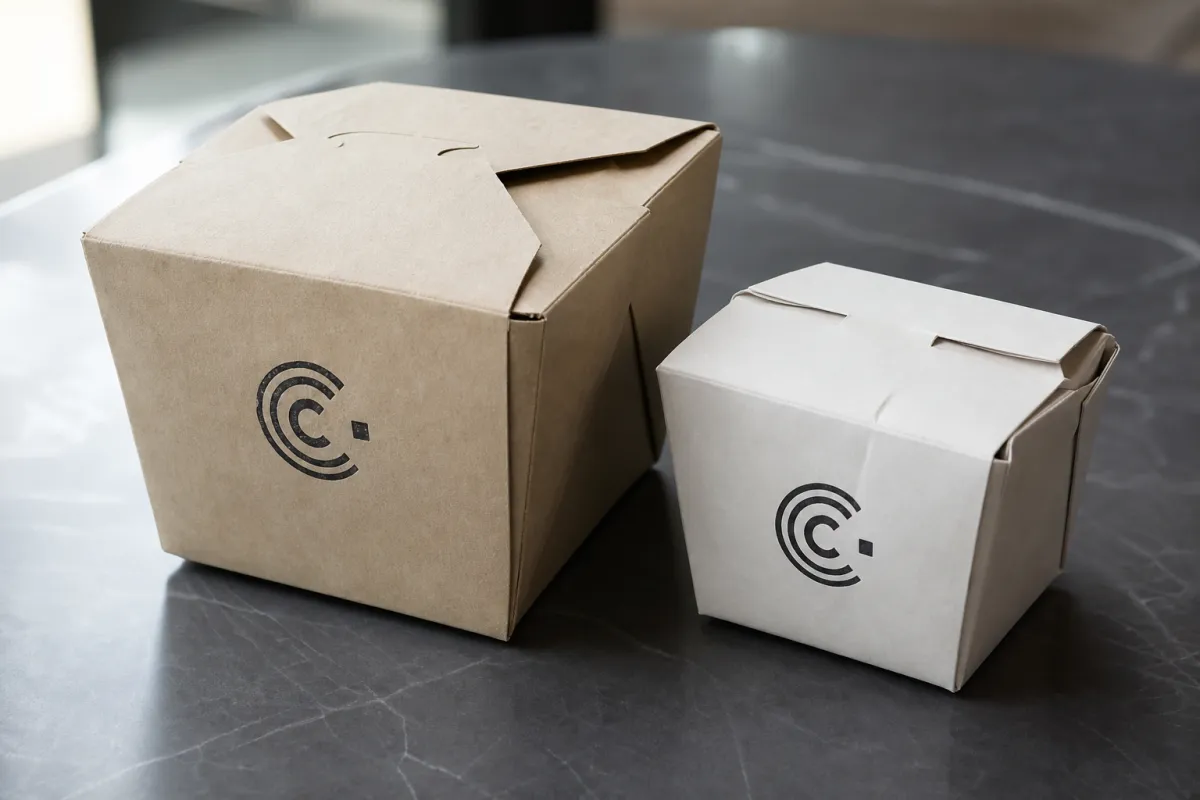
A folding carton is not just a printed sleeve with a logo. It has to keep its shape under heat, resist crushing in a stack, and survive rough handling from prep to pickup. A slightly stronger board, a smarter glue pattern, or a lock tab that actually stays locked can improve economics more than a tiny print discount ever will. Service tells the truth faster than a spec sheet does.
Small structural changes can have outsized effects. A tighter tuck style may stack better in a prep area. A deeper lock tab can reduce failures in transit. A cleaner fold line can speed up opening at the counter, which matters when staff are moving through a lunch rush and the kitchen is already loud. Those choices may nudge the quote upward, but they can lower the real landed cost by reducing damage and rework. In many cases, restaurant folding cartons cost is decided by the fold, not the artwork.
A carton that looks inexpensive on paper can be the most expensive one on the floor if it slows the line or fails in transit.
Buyers need to compare total cost of ownership. That includes spoilage risk, packing speed, reorder consistency, and whether the carton actually fits the item it is meant to carry. If a carton trims waste by even 1% across a chain or recurring program, the slightly higher restaurant folding cartons cost can pay back faster than a cheaper but weaker option ever will. Spread across 20,000 meals a month, 1% is not a rounding error anymore. It is real money.
Consistency matters just as much as raw price in foodservice. If carton dimensions drift from run to run, stack height changes, shelf presentation slips, and line workers lose time adjusting. Buyers should ask whether the quote reflects the same board grade, the same coating, the same dieline, and the same delivery terms. Comparing unlike quotes makes restaurant folding cartons cost look lower than it really is, which is exactly how bad procurement decisions get dressed up as savings.
There is also a quiet risk in over-optimizing for a sample. A sample carton may feel rigid because it is handled one at a time. A production carton has to survive nested packing, pallet compression, delivery vibration, and a storeroom that is sometimes a little too warm or a little too humid. That gap between sample and reality is where many buyers get tripped up. The first quote looks fine, and then the first truckload says otherwise.
Product Details: What Restaurant Folding Cartons Need to Do
Restaurant folding cartons do more than transport food. They have to hold shape, protect the meal, and present the brand cleanly at the counter, in a delivery bag, or on a display shelf. If the carton is flimsy, the restaurant folding cartons cost problem shows up as broken product and customer complaints. If the carton is overbuilt, the restaurant folding cartons cost problem shows up as wasted material and inflated freight. Packaging gets punished either way.
The menu item should drive the design. Burgers need grease resistance and a closure that stays shut under pressure. Sandwiches need a front panel that looks clean and opens without tearing. Pastries need stiffness without crushing a delicate finish. Fried foods often need venting so steam does not soften the board too quickly. Combo meals may need partitions or inserts so sauces, sides, and mains do not collide. Each use case changes restaurant folding cartons cost in a different way, and those differences are rarely equal.
Material choice sits near the center of the equation. SBS board is often selected for sharp print quality and a cleaner retail look. Solid unbleached sulfate, or SUS, can fit jobs where strength and economy matter more than a bright white surface. Recycled paperboard can support sustainability targets, though stiffness and surface performance should be checked carefully. Coated board, especially with aqueous or barrier coatings, can improve grease resistance and help the carton keep its appearance longer. Those decisions shape both restaurant folding cartons cost and the customer experience that follows it out the door.
Closures and functional details matter too. A simple tuck end may work for a dry bakery item. An auto-lock bottom or reinforced corner may be a better fit for heavier food or cartons that need extra rigidity in transit. Windows can lift shelf appeal, but they also require careful placement and the right film if the carton gets handled often. Vents help with hot food. Food-contact compliant coatings protect graphics and reduce soak-through. Each feature affects restaurant folding cartons cost because each one changes material use, setup, or finishing.
Some buyers separate branding from structure, as if the outside and the mechanics live in different worlds. They do not. The way a carton opens, stacks, and seals can matter as much as the logo on the front. A restaurant can look polished in a mockup and still lose the customer if the carton collapses under a sauce cup or a stack of fries. The structural side is not cosmetic. It is part of the value hidden inside restaurant folding cartons cost.
There is a sourcing angle too. If the carton needs documented fiber sourcing, ask for FSC certification and request the paperwork early. For shipping and handling performance, many teams use distribution testing benchmarks from ISTA so packaging is judged by more than appearance. Those checkpoints are practical, not decorative, and they often prevent costly surprises later. Surprises are expensive; a carton that fails on a truck can wipe out the margin on a whole run.
Buyers who want the carton to feel more premium without overspending usually get better results by improving the tactile and structural touchpoints rather than piling on expensive embellishments. A clean die-cut shape, a stable tuck, and a coating that fits the food often do more for restaurant folding cartons cost than a heavy finish that adds little function. A small improvement in how the carton feels in hand can matter more than a shiny effect no one remembers two minutes later.
That is especially true for repeat service brands. I have seen operators choose a slightly softer matte finish over a glossy one because the matte board hid scuffs and fingerprints better during busy pickup windows. The carton cost was a touch lower, yes, but the real win was operational: fewer complaints, less visible wear, and a more consistent brand look after the food left the store. Cheap is not always the bargain people think it is. Sometimes the quieter choice is the smarter one.
Specifications That Move Restaurant Folding Cartons Cost
Specification details are where restaurant folding cartons cost starts to move in visible ways. Board caliper, carton size, die complexity, print coverage, number of colors, and finishing all change the quote. A small bump in board thickness raises raw material use, yet it can also add enough stiffness to prevent crushing. The cheapest board is not always the least expensive once the carton has to survive a full service cycle.
Carton size is a bigger driver than many buyers expect. A larger carton is not just more paper. It can lower sheet yield on press, increase shipping volume, reduce pallet efficiency, and take up more room in a kitchen or warehouse. Even modest dimension changes can alter restaurant folding cartons cost because the packaging no longer nests or sheets as efficiently. A half-inch can matter more than a fancy ink effect.
Structural features bring their own costs. Auto-lock bottoms require different converting steps than a basic tuck carton. Reinforced corners add material and setup time. Grease barriers and barrier coatings may increase the quote, but they can also reduce waste by keeping the carton usable longer and making line speed more predictable. In a busy foodservice operation, a carton that opens, fills, and closes cleanly often saves more than it costs.
Print coverage changes the number in a few different ways. Heavy ink coverage can increase press time and finishing requirements, especially if the carton uses full-bleed artwork on both sides. A design with fewer colors may be more economical, but only if the brand still reads clearly. In practical terms, restaurant folding cartons cost is often driven by how much of the board is being converted, printed, cut, folded, and packed rather than by the logo alone.
Tooling fees and setup charges deserve attention as well. A new dieline, a new dieboard, or a special emboss or deboss detail can add one-time costs that do not show up in the unit price until they are spread across the order quantity. A complete quote should separate one-time tooling fees from recurring unit cost. If those numbers are blended together, restaurant folding cartons cost becomes hard to compare across suppliers and even harder to defend internally.
Here is a simple table buyers can use to think through the tradeoffs:
| Spec Choice | Typical Cost Impact | Practical Effect |
|---|---|---|
| Lightweight board | Lower unit cost, but sometimes higher damage risk | Good for dry, low-load items if stack pressure is minimal |
| Midweight SBS or coated kraft board | Moderate unit cost | Often a balanced option for print quality and stiffness |
| Auto-lock bottom | Higher setup charges and converting cost | Improves stability for heavier or delivery-focused meals |
| Barrier or aqueous coating | Small to moderate increase in cost per piece | Helps with grease resistance and presentation retention |
| Premium print finish | Higher finish cost and possible added tooling fees | Stronger retail appearance, especially for shelf display |
A spec sheet should be complete enough to quote accurately the first time. Dimensions, board grade, coating, print count, folding style, delivery format, and target quantity should all be listed clearly. Missing details force revisions, and revisions create unreliable pricing. In many cases, the hidden expense in restaurant folding cartons cost is not the carton itself but the back-and-forth needed to define it. A rushed spec can cost more than an honest one.
Buyers should also think about where the carton will sit before use. A carton stored in a humid prep area needs different protection than one kept in a dry back room. High-volume delivery and takeout programs should ask whether the board can hold up under heat and condensation for the full hold time. Those conditions belong in the cost equation even if they never appear in the artwork file. That is why restaurant folding cartons cost is inseparable from application details.
Another spec that quietly affects cost is tolerance. If a carton needs tight fit to hold a sandwich insert, sauce cup, or divider, the die has to be cut and maintained more precisely. That can mean slightly higher tooling cost and a bit more press setup time. But it also means fewer jams and fewer damaged cartons. Precision is not free, though it usually pays for itself faster than a loose, sloppy fold ever will.
Restaurant Folding Cartons Cost, Pricing, and MOQ Breakpoints
Pricing usually drops as quantity rises, though it does not fall in a straight line. It moves in breakpoints tied to sheet utilization, press setup, converting efficiency, and freight economics. A 5,000-piece order may not cost twice as much as a 2,500-piece order, and a 10,000-piece run may only be a small step above it. The shape of restaurant folding cartons cost depends on how well the job fits the production plan. Paper mills and converters reward efficiency, not hope.
MOQ matters for the same reason. For stock-sized cartons with custom print, a lower MOQ may be possible because the structure already exists and only the graphics need to be set up. Fully custom cartons usually require a higher first run because the die, tooling, and press setup have to be justified. Buyers who ask about MOQ early can avoid wasted time and keep from approving a spec that looks attractive but fails commercially. restaurant folding cartons cost and MOQ travel together whether procurement likes it or not.
A useful quote should include more than the unit price. Look for a line-item breakdown that shows tooling or die cost, proof charges, freight, packing style, and any finishing charges. Ask whether cartons are packed flat, bundled, or case-packed, because the packing format changes both labor and shipping efficiency. If a supplier hides setup charges inside a vague lump sum, you cannot tell whether the quote is truly competitive. That makes restaurant folding cartons cost much harder to manage over time.
Bulk pricing can be useful, but it should only be compared after the specs match. One quote may be lower because it uses a thinner board, a simpler coating, or a looser tolerance. Another may look higher because it includes better support for greasy items or a stronger closure that lowers failure rates. Comparing apples to apples is the only fair way to judge restaurant folding cartons cost. Anything else is a guessing game with a spreadsheet attached.
Here is a practical range buyers often use as a starting reference for small to mid-size runs, assuming a standard foodservice carton with custom print and no unusual finishing:
- Basic stock-style custom print: roughly $0.18-$0.28 per piece at 5,000 units, depending on coverage and board choice.
- Midweight custom structure: roughly $0.24-$0.40 per piece at 5,000 units when the dieline and coating need more work.
- Higher-end premium finish: roughly $0.35-$0.60 per piece when special coating, complex die work, or heavy print coverage is required.
Those ranges are not promises. Freight, seasonal paper pricing, production location, and market conditions can shift the number. Even so, they help show how restaurant folding cartons cost can be controlled by trimming unnecessary structure or Choosing the Right board for the actual food item. The wrong paper choice can cost more than a prettier box ever returns.
For a buyer comparing quotes, a useful rule holds up well: the lower number is only better if the carton performs the same job. If the quote is cheaper but the board is weaker, the coating is lighter, or the structure is less stable, the landed cost can rise once complaints and damage are counted. That is the point where restaurant folding cartons cost stops being a procurement number and starts becoming an operations issue. Operations usually notices first.
In serious foodservice programs, cost per piece should be paired with fill-line speed and failure rate. A carton that costs a little more but cuts down on rework may lower total spend across a month of service. That becomes even more obvious in recurring orders, where consistency matters and small changes in spec create visible differences across locations. Buyers who track restaurant folding cartons cost over multiple runs usually make better decisions than buyers who only compare one quote at a time.
One more point on MOQ: the lowest minimum is not always the smartest order size. Storage, shelf life of printed inventory, and menu variability all matter. If a restaurant changes packaging for seasonal items or limited-time offers, overbuying can trap money in cartons that age out before they are used. In that situation, the best restaurant folding cartons cost is the one that fits reorder rhythm, not the one that sounds cheapest in bulk. Cheap inventory that sits is still inventory.
Process and Timeline: From Spec Sheet to Shipment
The path from request to shipment usually follows a predictable sequence: inquiry, spec review, quote, dieline confirmation, artwork setup, proof approval, production, finishing, packing, and freight booking. Each step matters because one missing detail at the start can create a delay at the end. The fastest jobs are the ones where the carton dimensions, board choice, coating, and print files are ready before the quote is issued. That keeps restaurant folding cartons cost and timing aligned from the first conversation.
Timeline risks tend to show up in three places. First, the dieline may be incomplete or outdated, which means the structure needs to be rechecked before artwork can be finalized. Second, the artwork may not be print-ready, especially if the file has low-resolution logos, mismatched colors, or missing bleeds. Third, the buyer may change dimensions after proofing has started, which resets parts of the approval process. Each of those problems can extend lead time and push restaurant folding cartons cost upward through extra revisions.
Simple reorders usually move faster than new custom structures. A repeat job with the same carton, same board, and same artwork often moves through production much faster than a new design with special coatings or extensive full-coverage printing. Buyers should think in terms of file readiness plus production complexity. When both are clean, restaurant folding cartons cost is easier to hold steady and the schedule is easier to trust.
Realistic lead time guidance depends on the job, but a straightforward custom restaurant folding carton project often needs around 12-15 business days after proof approval. More complex structures can take longer if tooling, print setup, or coating steps are involved. Freight time is separate, and buyers should never treat production days and transit days as the same thing. A quote that ignores shipping timing can make restaurant folding cartons cost look better than the actual landed schedule, which is a common and avoidable mistake.
Early technical review is worth the effort. A fast but inaccurate approval can create more delay than taking time up front to confirm the spec. That is especially true for cartons that need to hold greasy, hot, or stackable food items. You want the carton to be right before it is printed in volume, not after 10,000 pieces are already on the dock. In real operations, that is where restaurant folding cartons cost turns into schedule risk if the process gets rushed.
For buyers shipping cartons through mixed freight or parcel channels, distribution expectations should be checked against the route. Packaging that looks fine in a warehouse may still fail after vibration, compression, or temperature swings. That is one reason many teams refer to FSC for fiber sourcing documentation and to distribution standards like ISTA for performance planning. The standards do not set your price, but they reduce uncertainty, and reduced uncertainty is one of the cleanest ways to control restaurant folding cartons cost. Uncertainty is a hidden line item.
From a production standpoint, the buyer should be ready with the carton dimensions, target quantity, food type, coating preference, print files, and whether the carton must be shelf-ready or delivery-ready. That information shortens quoting time and improves the accuracy of the final number. Better input almost always leads to better restaurant folding cartons cost control. Bad input makes everyone slower.
If you are trying to move quickly, one practical habit helps a lot: send the spec and ask for the quote at the same time, but do not force production to guess at missing details. A half-finished spec usually creates a half-good price. That is not efficiency. It is just confusion wearing a suit.
Why Choose Us for Custom Restaurant Folding Cartons
Custom Logo Things is built around the realities of foodservice packaging, not just polished renderings. Restaurant cartons have to deal with grease, speed, stacking pressure, and repeat ordering, and the design has to work both on the line and in the customer's hands. That is why our approach to restaurant folding cartons cost starts with use case, not decoration. A pretty box that fails in service is still a failure.
We help buyers think through board selection, structural strength, print setup, and finishing options so the carton fits the actual menu item. A burger box, a pastry carton, and a sandwich carton do not need the same build, even if they share a similar footprint. Sorting out those details early can reduce waste and keep restaurant folding cartons cost focused on what matters. The wrong default is expensive in ways the quote never mentions.
Quality control matters in practical terms. Dimensional checks keep the carton from drifting out of spec. Print alignment protects brand presentation. Glue performance affects how well the carton holds in use. Pack-out consistency matters because restaurant teams need predictable cartons that arrive flat, clean, and easy to store. Every one of those points has a labor cost attached, and labor cost is part of restaurant folding cartons cost whether it is listed on the invoice or not. Labor tends to show up later, with interest.
We also think a clear decision process beats a pile of vague options. Buyers usually do not need a dozen guesses. They need two or three well-structured choices that show where the money goes. One option may be a value-engineered version, another may be a balanced spec, and a third may be a premium build for more demanding food or presentation requirements. That is a much better way to manage restaurant folding cartons cost than guessing from one round number.
For brands that need repeatable results, consistency is often the hidden win. A carton that reorders cleanly without dimensional drift or unexpected print changes saves time across procurement, receiving, and store-level use. That kind of reliability does not always show up in a line-item quote, but it shows up in the total restaurant folding cartons cost over multiple runs. The quiet savings are usually the most durable ones.
Honestly, the best supplier relationship is the one that helps a buyer make a cleaner decision faster. That means fewer revisions, fewer surprises, and a more honest breakdown of tooling fees, setup charges, and bulk pricing. If a quote is clear, the decision is easier. If the quote is vague, the cost gets buried in assumptions, and that is exactly how restaurant folding cartons cost gets out of hand. Vague pricing almost always finds a way to become expensive.
We also keep an eye on the unglamorous details that prevent headaches later. Are the cartons packed in a way that protects the print during transit? Will the pallet pattern make unloading easy for a store team? Does the carton open the same way every time, or does the fold need a second tug? Those questions sound small. They are not small once 30 locations are opening the same box every day.
Next Steps: Get an Accurate Restaurant Folding Cartons Cost
The cleanest way to get a real answer is to prepare the spec before requesting pricing. Send carton dimensions, target quantity, food type, coating preference, artwork files, and whether the carton needs shelf-ready display or delivery-ready durability. The more complete the input, the more accurate the restaurant folding cartons cost estimate will be. Missing details create noise, and noise creates bad numbers.
It also helps to request two or three quote scenarios. Ask for a standard spec, a value-engineered spec, and a premium spec. That comparison shows which features matter most and which ones are optional. Buyers often discover that one upgrade improves performance a lot, while another adds expense without changing the result much. That kind of comparison is one of the easiest ways to control restaurant folding cartons cost. It also makes internal approvals easier, which is never a bad thing.
If the carton will hold greasy, hot, or stackable food items, ask for a sample or a prior dieline review before production starts. A small sample check can reveal closure issues, board weakness, or coating gaps before anything goes to press. That can save far more money than the sample itself costs, because it prevents avoidable reprints and the kind of disappointment that makes restaurant folding cartons cost harder to justify later. One failed run can erase a lot of optimism.
For buyers who want the most useful quote, ask for a line-item breakdown that shows unit cost, MOQ, tooling fees, setup charges, freight, and finishing. That format makes it much easier to compare offers side by side and to understand where each dollar is going. It also gives procurement, operations, and marketing a shared view of the job, which makes restaurant folding cartons cost easier to approve. Shared visibility reduces debate.
Send the spec sheet, confirm the MOQ, and ask for a detailed restaurant folding cartons cost estimate that separates one-time charges from recurring unit price. That is the fastest path to a carton that fits the menu, the budget, and the production line without paying for waste, delays, or guesswork. If you want the practical takeaway in one line: define the food, define the hold time, define the spec, and the price usually gets a lot more honest. The quote should answer the question, not create a new one.
FAQ
What affects restaurant folding cartons cost the most?
Material choice, carton size, and board thickness usually have the biggest effect because they change both raw material usage and press efficiency. Print coverage, coatings, and die complexity matter as well, especially when the carton needs grease resistance or a premium retail finish. Freight, packing style, and order quantity can change the landed cost enough to matter more than a small difference in unit price, so buyers should look at restaurant folding cartons cost as a total package rather than a single quote line. The cheapest per-piece figure can lose its advantage very quickly once waste enters the picture.
What is a typical MOQ for restaurant folding cartons?
MOQ depends on whether the carton is a stock size with custom print or a fully custom structure with its own dieline and tooling. Larger, fully custom jobs usually need a higher first run to make setup efficient, while simpler reorders can sometimes be produced in lower quantities. The best way to judge MOQ is to compare the required quantity against your menu mix, storage space, and reorder frequency, because that is where restaurant folding cartons cost meets inventory reality. A lower MOQ is useful only if the cartons move before they age out.
How long does it take to produce custom restaurant folding cartons?
Timeline depends on artwork readiness, proof approval, structure complexity, and whether special coatings or finishing are needed. Straightforward reorders can move faster, while new designs usually take longer because the dieline, proofing, and setup steps must be confirmed carefully. The fastest path is to submit complete specs early so the quote and production schedule are built on accurate information, which helps keep restaurant folding cartons cost and delivery timing aligned. A clean start usually beats a rushed correction.
Can I lower restaurant folding cartons cost without lowering quality?
Yes, often by simplifying the structure, limiting unnecessary print coverage, or choosing a board that meets performance needs without overbuilding the carton. Better sheet utilization and cleaner carton dimensions can reduce waste and improve pricing without changing the customer-facing look much. The goal is to remove cost drivers that do not improve performance, not to cut essential features like strength or food-safe protection, because that is how restaurant folding cartons cost stays efficient without hurting the product. Smart cuts are not the same as blind cuts.
Do restaurant folding cartons need special coatings for greasy food?
Often yes, because grease can soften uncoated board, stain graphics, and weaken the carton during service or delivery. Aqueous coatings, barrier coatings, and other food-contact compliant finishes can help control soak-through and preserve presentation. The right coating depends on the food, holding time, and whether the carton will be used in counter service, takeout, or delivery, so the coating choice should be built into restaurant folding cartons cost from the beginning. Leaving it out of the spec is usually where trouble starts.