Restaurant embroidered beanies material thickness guide: what thickness really changes
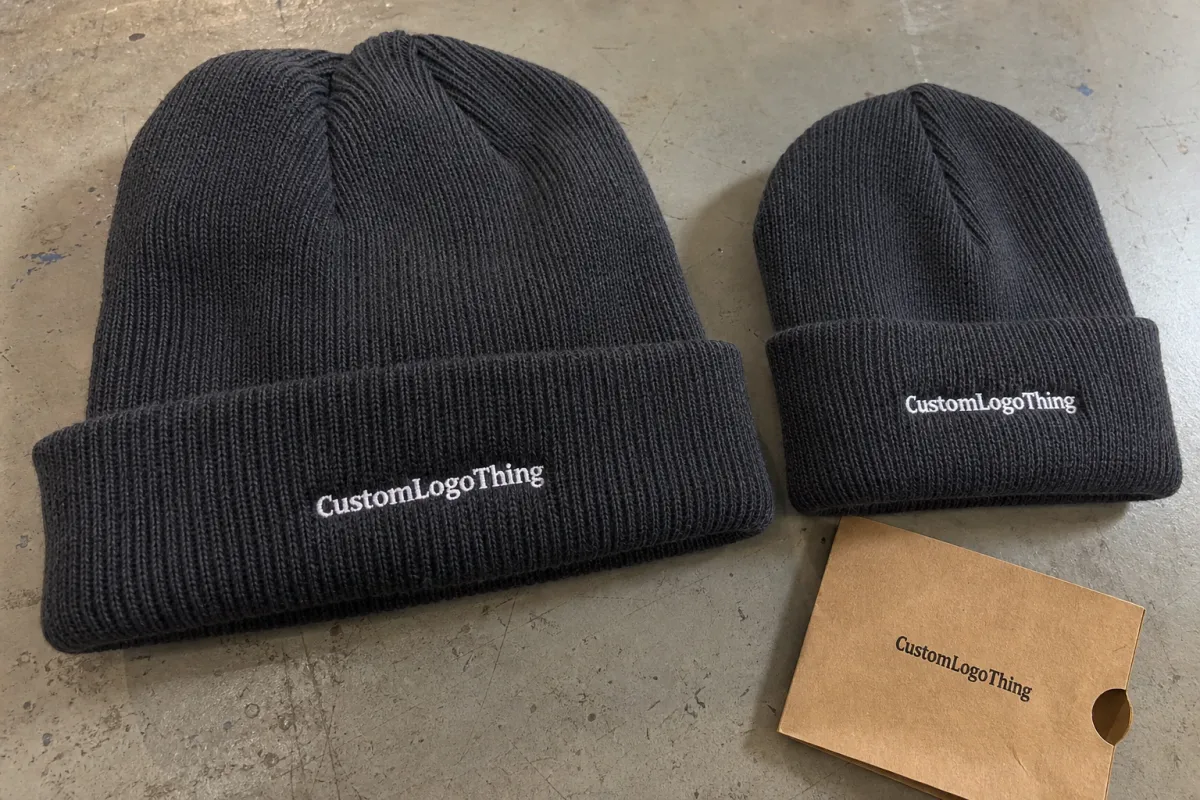
A restaurant Embroidered Beanies Material thickness guide sounds technical until you see the same problem show up in a sample: the hat looks fine on paper, then the logo gets buried, the cuff feels wrong, or the crew rejects it because it is too hot to wear through a shift. Thickness is not a style detail. It changes how the beanie sits on the head, how embroidery reads, and how long the piece stays useful in a working restaurant.
The right thickness depends on three things: the job, the climate, and the logo. A beanie for a morning delivery team is not the same purchase as a beanie for a line cook working under heat lamps. One needs more insulation. The other needs less bulk and better breathability. If you treat all staff the same, the order usually misses somebody.
Thickness also changes the way the beanie ages. Thin knits can feel light and neat at first, but they may stretch out or lose shape faster if the yarn is weak or the gauge is loose. Thick knits feel premium in hand, though they can overwhelm small artwork and trap heat. The sweet spot for most restaurant uniforms is usually a midweight cuffed beanie with a tighter knit and a logo that is simple enough to survive real wear.
That balance matters because restaurant uniforms are judged quickly. Staff want comfort. Managers want consistency. Guests notice the logo first. If the beanie misses any of those, the product becomes expensive clutter.
How knit thickness affects embroidery results
Embroidery behaves differently on every knit surface. A smooth, tightly knitted beanie gives the needle a cleaner path and lets the threads settle into the fabric. A chunky or loose knit forces the thread to bridge more texture, which makes fine detail harder to hold. That is why the same logo can look crisp on one style and muddy on another.
Thicker beanies are not automatically better for embroidery. They are only better if the design is built for that surface. Bold letters, short words, and simple icons usually read well. Thin scripts, tiny badges, and layered line art do not. The more the design depends on delicate edges, the more the knit needs to cooperate. Most of the time, it will not.
The real issue is distortion. Knit fabric stretches, then tries to recover. If the beanie is too soft or too loose, the stitch area can tunnel, pucker, or twist after repeated wear. That is especially obvious around curved text and dense fill areas. A logo may look fine in a production photo, then start to warp once the hat is pulled on and off a few times.
For approval, ask for a stitched sample on the actual beanie style, not a flat swatch. Flat fabric tells you very little about cuff behavior, tension, or how the embroidery sits on a rounded crown. A supplier that only shows a screen mockup is skipping the part that matters.
It also helps to think in terms of visual scale. On a heavy knit, small logos disappear faster than people expect. A mark that feels proportionate on a flat art board can shrink visually once the surface adds texture and bulk. If the logo needs sharp legibility from a distance, keep the design simple and give it enough width to breathe.
Key factors: yarn, knit gauge, lining, and fit
Material thickness is only one layer of the decision. Yarn type, knit gauge, lining, and fit all decide whether the beanie works as uniform gear or ends up feeling like promotional merch.
Acrylic is still the most practical choice for many restaurant orders. It is consistent, cost-effective, and easy to reproduce across a run. It also handles color matching well, which matters when the hat needs to match the brand palette instead of wandering off into a near-match that looks off under dining room lighting. Wool blends add warmth and structure, but they cost more and can feel heavier on the head. Cotton or cotton blends breathe better, so they make sense for warmer kitchens, indoor service, or teams that wear the beanie for longer stretches.
Knit gauge is the detail most buyers do not notice until it is too late. A tighter gauge means more stitches per inch and a smoother surface. That usually gives better embroidery clarity. A looser gauge feels softer and more relaxed, but it leaves more texture for the thread to fight with. If the logo is small, a loose gauge is rarely your friend.
Lining changes both warmth and volume. Single-layer beanies are lighter and easier to wear in active service. Double-layer or lined beanies bring more insulation and usually hold shape better, but they also add bulk. That can be useful for winter delivery crews and outdoor staff. It can be miserable for anyone moving fast in a warm kitchen.
Fit matters more than people expect. A cuffed beanie gives a predictable embroidery zone and keeps the logo visible. A slouch style looks relaxed, but it can swallow the mark if the knit is too soft or too tall. For restaurants, that usually makes cuffed styles the safer option because they hold a cleaner visual line across the team.
Practical rule: if the beanie needs to look neat from across the room, start with a midweight cuffed knit. If it needs to fight cold weather, move heavier only after you confirm the logo still reads cleanly.
| Beanie type | Feel | Embroidery behavior | Typical unit price range | Best use |
|---|---|---|---|---|
| Lightweight acrylic | Soft, low bulk | Clean for small logos if the knit is tight | $3.20-$5.50 | Indoor staff, mild climates, lower budgets |
| Midweight cuffed acrylic | Balanced and structured | Best all-around stitch clarity | $4.40-$7.20 | Most restaurant uniforms |
| Chunky wool blend | Warm, substantial | Can distort fine detail if the logo is too small | $6.80-$10.50 | Cold-weather crews, premium merch |
| Double-layer or lined knit | Heavy, insulated | Stable surface, but bulk can limit fine detail | $7.50-$12.00 | Outdoor delivery, winter service |
That table is a starting point, not a promise. Yarn blend, yarn count, cuff size, embroidery density, and order volume all move the final number. The cheapest option can become the most expensive if it pills, stretches out, or gets rejected by staff because it feels wrong on day one.
Process, timeline, and turnaround for custom beanies
Custom beanies usually move through the same production path: artwork review, material selection, knit setup, stitch test, sample approval, production, finishing, and packing. The order sounds simple. The delays come from the details people skip.
Artwork quality is one of the biggest bottlenecks. A blurry PNG, a logo with too many color changes, or text that is too small for the chosen knit will slow the process immediately. The thicker the beanie, the more careful the stitch test needs to be, because a bulky surface leaves less room for sloppy thread placement. If the supplier has to resize the logo three times to make it behave, the clock starts moving.
For stock beanies with standard embroidery, lead times are often around 10-15 business days after proof approval, depending on quantity and workload. Custom knit styles, lined constructions, or unusual color combinations usually need more time. Three to five weeks is a common planning window, and more complicated projects can take longer. Rush service exists, but it narrows your material choices and leaves less time for corrections. That is a trade, not a miracle.
Turnaround also depends on approval discipline. The fastest orders are the ones that lock the material, cuff style, logo placement, and stitch sample before production starts. The slow orders are the ones where someone keeps changing the logo after sampling begins. Every revision has a cost. Sometimes the cost is money. Sometimes it is the entire schedule.
There is a quality-control side to this too. A solid supplier should check stitch tension, logo placement, knit consistency, color matching, and measurement before packing. For restaurant orders, I would also want them to inspect cuff symmetry and head opening recovery. If those are off, the beanies will look uneven on staff even if the logo is perfect.
Packaging matters at the end of production. If the order is going to multiple restaurant locations, ask how the beanies are folded and packed so they arrive ready to distribute. Recycled poly bags, kraft paper sleeves, and FSC certified cartons can help presentation without adding much complexity. If shipping is rough, corrugated cartons protect shape better than loose packing. For transit performance standards, ISTA is the reference point at ista.org. For certified fiber sourcing, fsc.org is the place to verify FSC claims.
Cost, MOQ, and unit pricing tradeoffs
Thickness affects price because it changes how much yarn goes into the hat, how long knitting takes, and how much finishing work is needed before embroidery even starts. Heavier yarns, tighter knits, extra lining, and more structured cuffs all raise cost. That is normal. The surprise is usually not the unit price itself. It is how fast the total climbs once the spec becomes more complex.
Several other variables matter just as much. Stitch count, logo size, number of thread colors, packaging choice, and shipping method all move the final figure. A small left-chest style mark on a stock beanie is one kind of buy. A large center-front logo on a thick double-layer knit with custom packaging is a different purchase entirely.
MOQ changes with construction. Stock styles often allow lower quantities because the base product already exists. Fully custom knits tend to need higher minimums because the factory has to spread setup costs across more pieces. That matters if you only need a few hundred units for a small group or a seasonal rollout.
Ask for pricing at 100, 300, 500, and 1,000 pieces. That makes the break points visible. Sometimes the jump from one quantity band to the next is small. Sometimes it drops enough to justify ordering early and holding inventory. You do not find that out by asking for one quote and hoping for the best.
MOQ and thickness also affect how much risk you carry. A thicker custom knit may look stronger in the sample room, but if you cannot use the full run, it is a bad fit. A more moderate style that works for staff, fits the logo cleanly, and stays within budget is usually the smarter operational choice.
| Order factor | What usually happens | Buyer impact |
|---|---|---|
| Thicker yarn | Uses more material and takes longer to knit | Higher unit cost |
| Lining or double layer | Adds warmth and more construction steps | Higher price, more bulk, better cold-weather use |
| More stitch detail | Requires a cleaner surface and more production care | Higher risk of distortion on loose knits |
| Lower MOQ | Less room to spread setup costs | Higher price per unit |
Step-by-step spec guide for choosing the right thickness
Picking the right thickness gets much easier if you stop treating it as a style question and handle it like a production spec.
- Start with the work environment. Indoor service, outdoor shifts, delivery routes, and cold-weather crews need different warmth levels. Do not pick the hat before you define the job.
- Decide how visible the logo needs to be. Small text and detailed art push you toward a smoother knit. Simple logos can survive more texture, but even then, a cleaner surface is usually better.
- Request two material options. A midweight sample and a heavier sample make the difference obvious once they are embroidered. Compare fit, drape, and stitch clarity on actual heads, not just on a flat table.
- Specify the construction in plain production language. Include material blend, knit gauge, cuff style, lining, logo placement, and the intended wear environment. "Nice and soft" does not help a factory. "Midweight cuffed acrylic with tight gauge for front-of-house" does.
- Approve in the right order. Lock the beanie style first, then the artwork placement, then the stitch sample, then production. Reversing that order is how people end up paying for avoidable corrections.
A useful starting point for many restaurant teams is a midweight cuffed beanie in acrylic or an acrylic blend, with a logo around 2 to 3 inches wide. That range is not sacred. It just tends to preserve readability without making the hat feel oversized.
If the team needs a more premium hand feel, wool blends can work well, but they should be tested for comfort and care. Some blends look great in winter and become a problem in warm kitchens. That is why sample wear matters as much as the spec sheet.
For brands that care about presentation, packaging can be part of the spec too. Recycled inserts, kraft sleeves, and tidy carton packing are easy wins if the supplier can handle them. They do not fix a weak product, but they do keep the delivery from feeling careless.
Common mistakes that make restaurant beanies feel wrong
The first mistake is buying from a photo. Product photography hides stretch, weight, and rebound. A beanie can look tailored online and still feel floppy, stiff, or too hot once it is embroidered and worn in service. Always ask for the actual fabric description and a stitched sample.
The second mistake is overdesigning the logo. Thin script, tiny icons, and intricate outlines rarely improve on a knit surface. They usually become harder to read and more expensive to produce. Clean marks win because they hold together under texture.
The third mistake is choosing a beanie that is too thin because it looks sharp in a mockup. That is a fast way to end up with something that rides up, loses shape, or looks cheap after a few wears. Staff notice that immediately. Guests do too, even if they never say it.
The opposite problem is just as common. Some orders go too thick, too warm, and too bulky because someone wanted the hat to feel premium. If staff keep removing it during service, the hat is not solving a real need. It is just creating one.
Durability is not the same as thickness. Yarn quality, wash behavior, and pilling resistance matter just as much. A well-made midweight beanie can outlast a heavier one if the material and construction are better. That is especially true in restaurant use, where hats get worn, removed, stuffed into bags, washed, and worn again.
One more thing: do not accept fuzzy answers about wash care or embroidery limits. A supplier should be able to tell you how the beanie is expected to perform after repeated laundering, where the embroidery should sit, and what logo details are too fine for the knit. If they cannot explain the tradeoffs, the spec is probably too loose.
Next steps: specify the beanie before you request a quote
Before asking for pricing, build a spec that a production team can actually use. Gather the logo files, choose cuff or slouch, define the season and staff role, and narrow the thickness to two realistic options. That saves time and avoids back-and-forth that does nothing except slow the order down.
Then ask the supplier for the pieces that change the result: knit gauge, material blend, embroidery method, sample timing, MOQ, price breaks by quantity, and packing method. If the logo is small or important to brand presentation, request a stitched sample. A promise is not a sample.
Check the shipping format too. If the order can be packed in FSC certified cartons with recycled materials and basic shape protection, good. If not, make sure the beanies will still arrive folded cleanly and ready to hand out instead of crushed into something that looks tired before anyone wears it.
The useful version of a restaurant Embroidered Beanies Material Thickness guide is simple: choose a knit that fits the work, supports the embroidery, and holds up after real shifts. Anything else is just decoration with a price tag.
How thick should restaurant embroidered beanies be for staff uniforms?
Midweight is usually the safest starting point for restaurant teams because it balances warmth, comfort, and logo clarity. Go thinner for indoor or fast-moving service roles; go thicker only if the crew works in genuinely cold conditions. If the logo is small or detailed, choose a smoother knit before you add more bulk.
Does a thicker embroidered beanie always look more premium?
No. Thick can look substantial, but it can also make the hat feel bulky and reduce stitch sharpness. Premium usually comes from the right mix of knit quality, fit, cuff structure, and embroidery placement. A clean midweight beanie often looks better on staff than an oversized winter cap.
What material is best for restaurant embroidered beanies with logo work?
Acrylic blends are common because they are consistent, cost-effective, and hold shape well. Wool blends add warmth and structure, but they can feel heavier and cost more. Cotton or cotton-rich blends work when breathability matters more than maximum winter warmth.
How does beanie thickness affect price and MOQ?
Thicker construction usually increases unit cost because it uses more material and often needs more production steps. Custom knit or lined styles may also raise MOQ because factories need to spread setup costs across more units. Ask for quotes at several quantities so you can see the real price curve instead of guessing.
What should I ask before ordering custom restaurant beanies?
Ask about knit gauge, material blend, embroidery method, sample timing, MOQ, and final turnaround. Confirm where the logo will sit and whether the beanie is meant for indoor, outdoor, or mixed-use staff. Request a stitched sample if the logo is small, detailed, or especially important to the brand.


