The lowest quote usually looks better before anyone checks the details. A restaurant PVC Garment Bags Unit Cost review should surface those details early, because the first number in an inbox is rarely the number that survives sampling, packing, and freight.
For restaurant buyers, the bag is not decorative packaging. Housekeeping needs something that wipes down quickly. Banquet teams need storage that keeps uniforms presentable between events. Chefs and service staff need a bag that holds its shape, protects against dust and moisture, and does not leave a harsh plastic smell in a storage room. That is why a serious restaurant pvc garment bags Unit Cost Review has to go past catalog photos and compare production-ready samples, not polished renderings and vague promises.
The catch is simple: cost rises when the spec gets real. Add a zipper upgrade, a hanger opening, reinforced seams, thicker film, or print, and the price moves. That is normal. What is not normal is pretending those changes are free. Buyers who compare unit cost and landed cost instead of only the headline number usually make the cleaner decision.
A useful quote should show the bag price, print price, carton price, and freight impact separately. If those pieces are blended together, you are not comparing suppliers. You are guessing.
What a Restaurant PVC Garment Bags Unit Cost Review Really Reveals
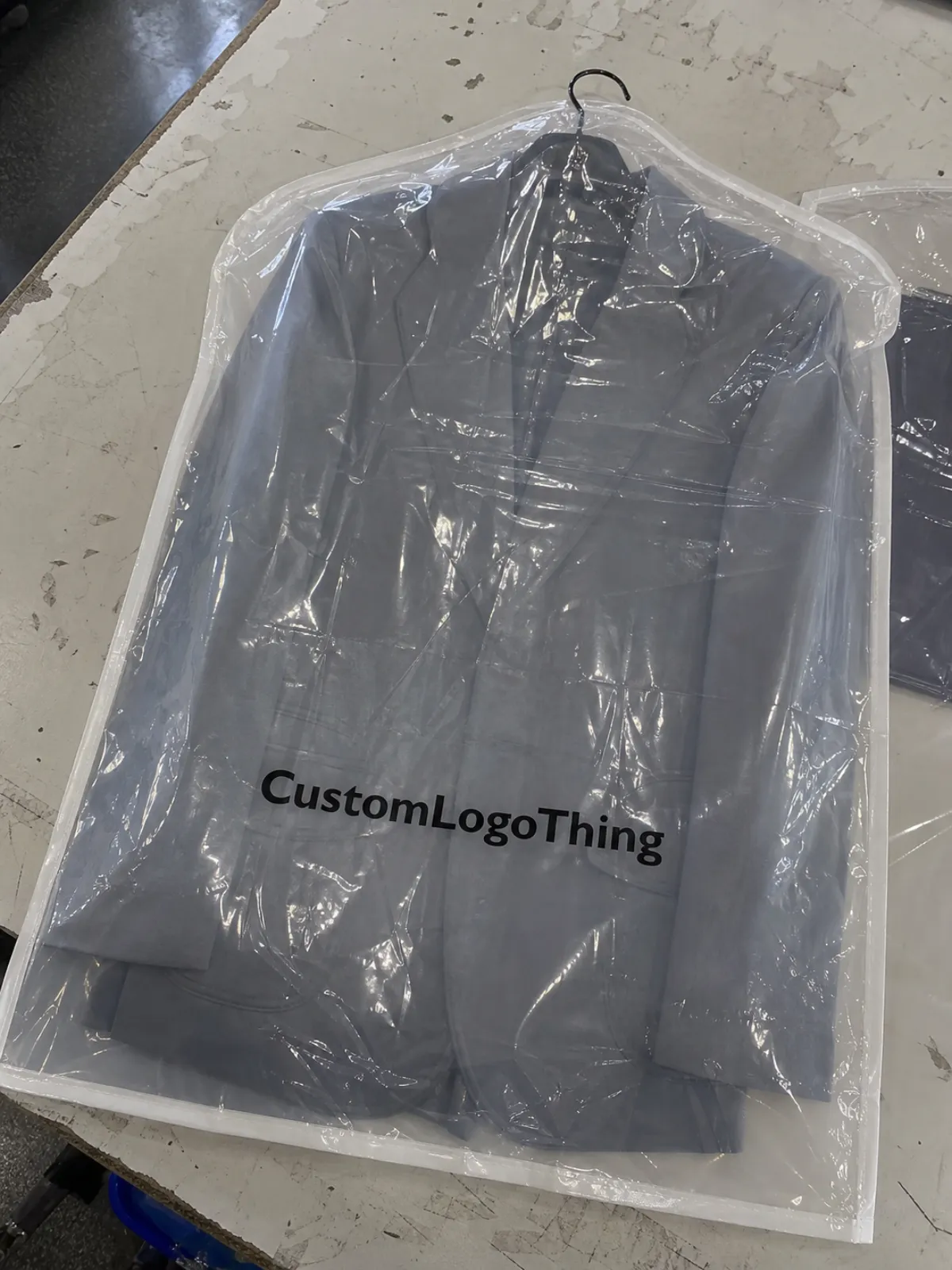
A proper restaurant pvc garment Bags Unit Cost Review is really a durability review with a price tag on it. The buyer is not paying for plastic alone. The real value sits in film thickness, closure quality, seam control, and whether the tenth bag still looks like the first one. For hospitality use, clarity matters because staff need to see what is inside. Odor matters because a strong chemical smell turns a storage solution into a complaint. Easy wiping matters because back-of-house gear gets handled, stacked, dragged, and cleaned far more often than a catalog sample would suggest.
A low quote can hide weaker material or a simplified build. Restaurant laundry rooms, banquet closets, and uniform racks are hard on anything that gets touched every day. Bags get unzipped, re-zipped, lifted by the hanger opening, compressed in cartons, and scraped against shelving. A bag that looks fine on a desk can crack, cloud, or deform after repeated handling. That is why a buyer should ask for a sample that matches the final spec, not a “similar” one that conveniently leaves out the expensive parts.
Think in terms of actual use. Housekeeping may need hanging garment bags for shirts, aprons, and pressed jackets. Banquet staff may need longer bags for chef coats and trousers. Front-of-house uniforms may need clearer film and cleaner branding. The right product is the one that survives daily abuse without looking tired after two weeks. Not the photo. The photo never has to work a shift.
Also, a quote should reflect the full buying picture, not just the factory side. If the supplier only shows bag price and ignores freight, packaging, or pack count, that quote is incomplete. A restaurant buyer should compare samples, ask for the shipping carton spec, and look at cost per piece after packaging and transit are added. Otherwise the “cheap” option becomes expensive later, usually with little drama and a lot of invoice line items.
One more thing gets overlooked: consistency across the run. A sample can look good even if the line is not stable enough to repeat it at scale. For garment bags, small shifts in seam width, zipper alignment, or film gauge show up fast once the order reaches a few hundred pieces. That is why a real review checks not just whether the bag works once, but whether it can be made in volume without drifting off spec.
PVC Grades, Thickness, and Build Choices That Change Performance
Soft PVC and semi-rigid PVC are the two versions most buyers should compare first. Soft PVC folds more easily, packs flatter, and usually keeps the entry price lower. It fits restaurant back-of-house storage well, especially where the bag will be moved often and tucked into compact spaces. Semi-rigid PVC has more body, holds its shape better, and gives the bag a more premium feel. It also resists sagging when a garment is heavy or packed tightly.
Thickness changes the whole experience. In practical terms, 0.18-0.25 mm works for lighter storage needs and lower budgets. 0.25-0.35 mm feels sturdier, resists cracking better, and gives a stronger impression of quality. Above that range, the bag starts to feel more structured, but cost climbs, packing efficiency drops, and some buyers discover they do not need that much material. For cold-room use, a little extra thickness helps because flimsy PVC gets stiffer and less forgiving when temperatures fall.
Build choices matter just as much as film thickness. A zipper can be single-track, double-pull, or a heavier-duty closure depending on how often the bag opens. A hanger slot needs enough room for the hook without tearing the top edge. A gusset helps bulky coats and mixed uniform sets sit properly instead of crushing the shape of the bag. Reinforced seams are worth the extra money when staff handle the same bag every day. Clear window placement can help, but only if it is sized and positioned to support operations instead of looking like decoration.
Odor level and stain resistance deserve more attention than they usually get. A strong plastic smell can transfer to garments stored for long periods. Staining around the zipper area or seam line is more likely when PVC quality is inconsistent. Ask for a sample that has sat for a few days after production. Freshly made material can behave differently from a sample that has had time to off-gas. That matters if the bag will hold uniforms in a warm storeroom or near laundry equipment.
There is no universal spec. There is only the spec that fits handling pattern, climate, storage space, and replacement tolerance without turning the bag into an overpriced liability.
Size, Closure, and Branding Specs That Affect Day-to-Day Use
Size is where buyers waste money fastest. Too small, and the bag fights the garment. Too large, and you are paying for extra film, bigger cartons, and more shipping air. Common working sizes for restaurant use often sit around 24 x 40 in for shirts and lighter uniforms, 24 x 48 in for chef jackets and mixed sets, and 26 x 54 in or similar for longer coats or multi-piece storage. If aprons are stored separately, they usually do not need the same height. If uniforms are packed with trousers or jacket sets, the extra length earns its keep.
Closure choice affects speed more than people expect. A full-length zipper is usually the safest choice for everyday operations because it protects the garment and lets staff open the bag quickly. A two-way zipper helps when the bag is long or the team needs faster access to the middle. A top hanger opening should be sized correctly so the hanger hook slides through without tearing the edge. If the opening is too tight, staff will force it. If it is too loose, dust protection drops. Simple as that.
Branding should look deliberate, not loud. PVC accepts branding differently from paperboard or fabric, so buyers should keep print expectations realistic. One-color logo printing, a clean label panel, or a discreet insert card usually looks better than filling the surface with too much ink. If the logo must sit on transparent film, confirm visibility at actual viewing distance. A print that looks crisp in a proof can look muddy on clear PVC if the line weight is too fine. That is not the supplier being difficult. That is how the material behaves.
Carton pack count matters because storage and warehouse handling affect operating cost. If bags nest efficiently, cartons ship tighter and stack cleaner. If they do not, the warehouse pays for extra volume every time. Ask for the pack count per carton, carton size, and whether bags are folded individually or nested in sets. A few millimeters here and there can change pallet count faster than buyers expect. That is also where landed cost gets sneaky. A better folding method can lower freight even if unit price stays flat.
- Chef coats and shirts: shorter, lighter bags with clear visibility and simple zipper access.
- Aprons and mixed uniforms: medium height with a bit of gusset room and a clean hanger slot.
- Banquet or event storage: longer bags with stronger seams and more shape retention.
- Brand presentation: restrained print that reads cleanly on clear or frosted PVC.
Unit Cost, MOQ, and Quote Breakdown for Bulk Orders
The cleanest way to read bulk pricing is to break it apart. Material cost is one piece. Labor and assembly are another. Printing, if any, adds its own line. Packaging, carton sizing, and inland freight sit on top. Then there are setup charges and tooling fees, which are the parts that make small orders feel unfair. They are not unfair. They are just honest about scale.
For restaurant buyers, the best quote is not the lowest one. It is the one that names the same finished size, the same film thickness, the same zipper style, the same print method, and the same packing method as the other bids. Without that, the low number is just a trap with nicer typography. If one supplier quotes a loose bag with a thin zipper and another quotes a reinforced version with a tighter finish, the price spread means very little.
- Material: PVC film, zipper tape, hanger hardware, and any reinforcement strips.
- Labor: cutting, sealing, zipper insertion, and final assembly.
- Print or branding: logo setup, color matching, and surface preparation.
- Packaging: polybagging, carton print, inserts, and nesting method.
- Freight: carton volume, weight, and delivery route.
Here is a realistic ladder for restaurant garment bags:
| Option | Typical Build | MOQ | Unit Cost Range | Best Fit |
|---|---|---|---|---|
| Stock-style clear PVC bag | Basic zipper, light film, no print | 500-1,000 pcs | $0.38-$0.70 | Simple uniform storage and lower-volume buyers |
| Semi-custom restaurant bag | Midweight film, hanger opening, one-color logo | 1,000-3,000 pcs | $0.78-$1.45 | Housekeeping, banquet teams, and repeat handling |
| Fully custom branded bag | Heavier film, reinforced seams, custom carton spec | 3,000-5,000+ pcs | $1.35-$2.60 | Stronger presentation, tighter control, higher wear |
Those numbers are a buying range, not a promise. Size, film thickness, zipper grade, logo coverage, and carton count can move the price faster than people expect. A heavier bag does not cost more only because of resin. It costs more because it handles differently, ships differently, and usually needs more careful assembly.
Watch the fee structure. Some suppliers quote a low cost per piece and then add print prep, carton art, and sample charges later. Others bundle those items into the unit price. Both approaches can work if they are clear. The problem is the quote that hides them until the first invoice. For small-to-mid runs, setup charges around $30-$120 and tooling fees that can land in the low hundreds are common enough to plan for. If the build is unusually shaped or uses custom hardware, those numbers can rise.
Buyers should also ask how the supplier handles rejects. A quote looks attractive until the factory explains that only a fraction of overrun is usable or that minor shade differences are acceptable within a wider range than expected. For clear PVC garment bags, consistency matters more than dramatic perfection. If the zipper aligns, the seams hold, the bag folds cleanly, and the print stays readable, the order is doing its job. That is the standard worth paying for.
Lead Time and Production Steps From Sample Approval to Shipment
A clean production schedule is simple on paper and slightly annoying in real life. It starts with inquiry, then spec confirmation, then sample making, then sample revision if needed, then mass production, inspection, and dispatch. Most delays happen because the spec was not finished early enough. A buyer who spends thirty extra minutes on dimensions, logo placement, and closure style often saves a week later.
For stock materials and straightforward builds, lead time is often 7-12 business days after sample approval. For fully custom PVC garment bags, a more realistic window is 15-25 business days, especially if there is printing, special packing, or new tooling. If the order needs a custom zipper pull, unusual hanger opening, or a nonstandard bag shape, build time can stretch further. That is not slow. That is normal production.
The approvals that slow orders the most are usually small and repetitive: artwork files that need cleanup, dimensions that still need confirmation, zipper type questions, carton labeling, and shipping method. Air freight can shorten transit time, but it rarely saves the full order if the sample stage is still open. Sea freight lowers the shipping cost, but it needs planning. Nobody enjoys paying a rush fee because the team forgot to decide on a carton size.
Rush production can be possible, but it changes the tradeoffs. The first thing that tightens is planning buffer. The next thing is labor scheduling. Freight speed may improve if the supplier has a faster dispatch lane or you switch to air. What usually does not change is the need for proper sample approval. Skipping that step is how buyers end up paying twice: once for the bag, and once for the correction.
If your supplier understands packaging testing, ask what they use for transit checks. Outer cartons that go overseas should survive compression and rough handling. The ISTA standards framework is a useful reference point for that conversation. If you need paper inserts or carton board with responsible sourcing, ask for FSC-certified materials. That does not fix a weak bag, but it does clean up the parts of the order that do not need to be messy.
Inspection matters here too. For PVC garment bags, a practical QC pass usually checks seam alignment, zipper glide, hanger-opening reinforcement, visible scuffing, odor level, and whether the folded bag springs back too much in the carton. A bag can be technically acceptable and still be awkward to pack or annoying to use. Those are not the same thing, and operations teams know the difference within a day.
Why Direct Factory Pricing Matters for Restaurant Orders
Direct factory pricing is useful because it shows where the money goes. A good factory quote separates the bag, the setup, the sample fee, the tooling fee, and freight. That gives the buyer room to compare apples with apples. A trading-company quote can still work, but only if it is equally transparent. If the structure is vague, the number is not really a number. It is a sales tactic with a calculator attached.
Manufacturing capability matters more than most buyers want to admit. A supplier that works cleanly with PVC film, zipper insertion, seam control, and carton packing is easier to trust than a seller that can only forward a photo. Ask what materials they source, how they inspect seams, and whether they have produced similar hospitality storage items before. You do not need a grand story. You need proof that they can repeat the same build more than once without wandering off spec.
Compare suppliers using the same spec sheet. Same size. Same film thickness. Same closure. Same logo coverage. Same carton count. Same delivery city. That sounds basic because it is basic. Yet many low quotes are built on thinner material or a lighter zipper that would fail the first real workload. If the quotes are not matched, the lower number can be pure theater.
A direct factory quote also helps when something needs adjustment. A zipper that snags, a top opening that is too tight, or a print that is too faint can be corrected faster when the people making the bag are also reading the feedback. That usually means fewer surprises, better repeatability, and a more honest path to the next reorder. For restaurant buyers, that matters more than polished pitch language.
Direct pricing also exposes the hidden cost of indecision. Changing the spec after sampling often means new cutting, fresh artwork, rework on packaging, or a delay while material is reordered. A supplier can usually absorb one small revision. Two or three revisions turn a clean order into a slow one. The factory did not fail. The brief was incomplete.
Next Steps for a Fast, Accurate Quote and Sample Review
If you want a fast quote, send the spec instead of the wish list. The supplier needs the finished size, expected quantity, logo file, closure type, target thickness, and delivery city. If the bag has a hanger opening or gusset, say so. If the order needs individual folding, hanging cards, or carton marks, include those too. The cleaner the brief, the cleaner the quote.
I also recommend asking for two options: one spec that meets the minimum job requirement, and one that improves durability. That gives you a real comparison instead of a vague price conversation. In many restaurant programs, the slightly heavier film wins because the bag survives longer and reduces replacement frequency. That is especially true for banquet teams and uniform storage that gets touched every day.
Use this sample checklist before approval:
- Odor: check for strong PVC smell after the sample has sat for a few days.
- Seam strength: pull lightly at corners and zipper ends.
- Clarity: confirm the bag looks clean enough for storage and quick identification.
- Zipper action: open and close it several times without snagging.
- Hanger fit: make sure the hook passes the opening without stress.
- Carton packing: confirm fold count, pack count, and box size.
Keep one eye on the bag and the other on the workflow around it. If the team has to fight the opening, hunt for the right size, or re-fold a bag every time it comes out of the carton, the spec is wrong even if the sample looks acceptable on a desk. Small operational annoyances turn into big ones after a few hundred uses.
For the final decision, compare total landed cost and durability together. A bag that is a few cents cheaper but tears early is not cheaper. That is just a smaller headache with a bigger invoice later. The best restaurant pvc garment bags Unit Cost Review is the one that shows exactly what is being bought, what is being paid for, and how long the bag will keep doing its job without embarrassing anyone in the storage room.
What does a PVC garment bag price review usually include?
Material grade, thickness, bag size, closure style, printing, packing method, and freight all affect the final number. A useful review separates unit cost from setup fees and shipping so the buyer can compare real landed cost instead of a partial quote.
What MOQ should I expect for custom restaurant garment bags?
Stock-style bags usually allow lower minimums than fully custom builds. MOQ rises when you add custom sizes, special thickness, printed branding, or nonstandard hardware. The more unique the spec, the less room there is for tiny runs.
How long is the typical lead time after sample approval?
Stock materials move faster; custom specs take longer because setup and QC are more involved. Shipping method matters too, so air and sea freight can change the total schedule a lot. For planning, the sample stage matters just as much as production time.
Can restaurant PVC garment bags be branded with a logo?
Yes, most buyers use printing, labels, or insert cards depending on the surface and budget. Logo size, color count, and print location should be confirmed before sampling to avoid rework. On clear PVC, simple usually looks better than crowded.
What details do I need for an accurate quote on garment bag pricing?
Send the finished size, expected order quantity, target thickness, closure type, artwork, and delivery address. If you want a strict comparison, ask for a second quote with the same spec and packaging terms. Otherwise the numbers will not mean much.
If you compare total landed cost, sample quality, and repeat-use durability side by side, a restaurant pvc garment bags Unit Cost Review stops being a guessing game and starts doing actual buying work.

