The restaurant takeaway Mailer Boxes Material guide starts with a simple truth I have seen play out more times than I can count: a carton can look beautiful on a proof and still fall apart the moment it meets hot rice, steam, sauce, and a delivery bag wedged into the back seat of a car. Any serious restaurant takeaway mailer boxes material guide has to begin with structure, barrier performance, and the way the pack behaves after thirty minutes of real handling. Print matters, sure, but it sits behind survival. Corners go soft, lids bow, and logos stop helping once the meal leaks into the board.
Choosing restaurant takeaway Mailer Boxes Material is really about food protection, brand presentation, and waste control all at once. Weak board can make a polished menu feel cheap in a hurry. A well-built carton can make a modest meal feel deliberate and cared for. Packaging carries three jobs at once: it contains the food, gets through transport intact, and shapes the customer’s first impression before the lid even opens.
Thickness gets a lot of attention because thicker sounds safer. Sometimes that instinct pays off. More often it just creates extra weight, higher cost, and storage headaches that do not show up until the boxes land on the dock. A practical restaurant takeaway mailer boxes material guide looks at menu style, delivery distance, humidity, stacking pressure, and print finish. The best carton is not the heaviest one. It is the one that works in the actual service flow without inflating the budget.
Restaurant takeaway mailer boxes material guide: why the wrong board fails fast
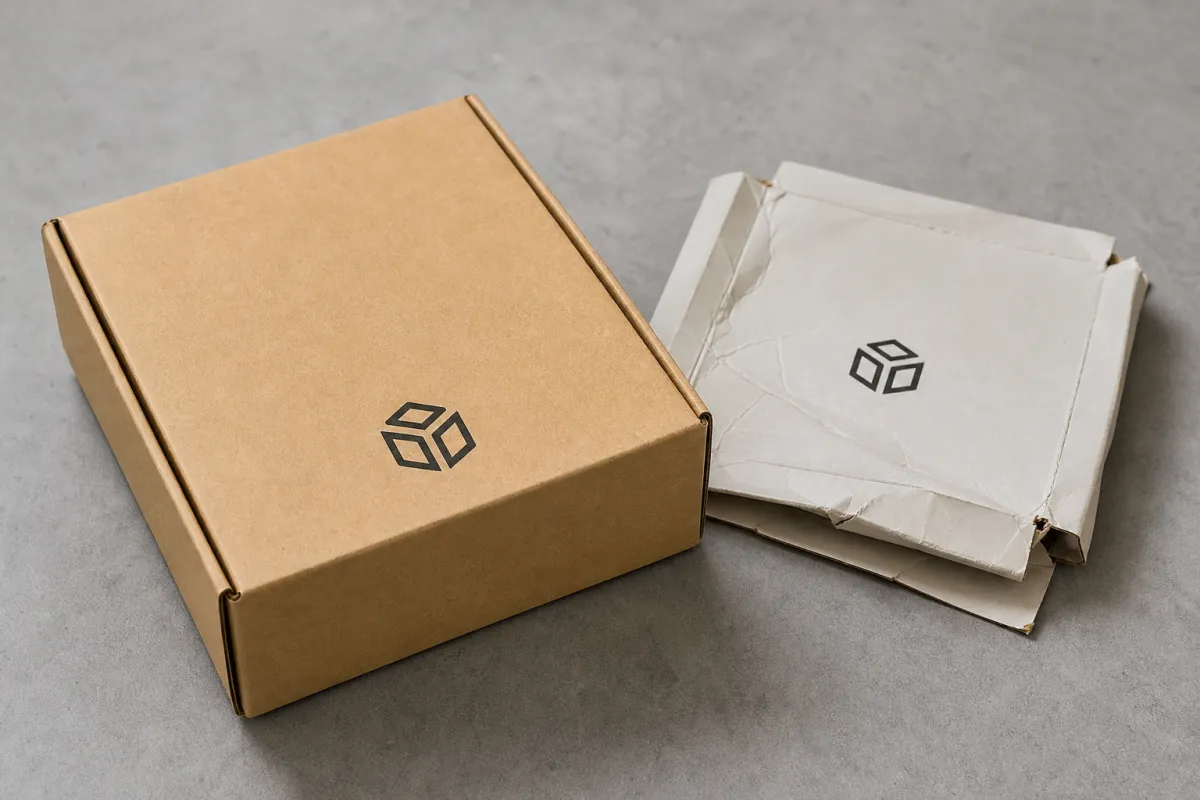
A hot, saucy meal can turn a clean-looking carton into a warped shell before the customer even opens the bag. That outcome catches people off guard because the sample looked fine in a studio or a showroom. A restaurant takeaway mailer boxes material guide is not a hunt for the thickest sheet on the market. It is a match between the material and the forces it has to handle: heat, grease, compression, and rough movement. If the board softens, closures pop. If the lid bends, stacks slip. If oil stains the surface, the whole presentation looks careless even when the food is excellent.
Material selection has more layers than many buyers expect. Paperboard grade matters, corrugated structure matters, coatings matter, and the interaction between those layers matters just as much. A 300gsm sheet with no barrier is not the same as a coated 350gsm board. Corrugated cardboard also comes in different builds. E-flute, B-flute, and double-wall structures behave very differently under load. A useful restaurant takeaway mailer boxes material guide separates those choices instead of pretending a single number can answer everything.
There is a financial side too. Solid packaging protects food, cuts leakage, and helps the restaurant look organized. Weak packaging adds costs in the form of remakes, refunds, extra napkins, sleeves, and customer complaints that chew up time. A clear restaurant takeaway mailer boxes material guide should show how material choice affects margin. The lowest-cost board can turn into the most expensive option once failures start piling up.
The useful mindset shift is simple. Do not ask what is thickest. Ask what survives the menu, the route, and the storage conditions without wasting money. A good buyer chooses the lightest build that still passes the real test. That is the whole point.
The prettiest box is the one that still looks intentional after it has been stacked, shaken, and carried up three flights of stairs.
For wider context on shipping performance and distribution testing, the packaging field has solid references, including resources from ISTA. If recycled fiber claims matter, the chain-of-custody rules from FSC are worth reading before anything goes to print.
Restaurant takeaway mailer boxes material guide: how it behaves in real delivery
A box rarely fails in a quiet sample review. It fails in motion. The useful restaurant takeaway mailer boxes material guide question is how the pack holds up from packing table to doorstep. That path includes stacking in the prep area, vibration in a delivery vehicle, temperature swings, condensation, rough handling, and sometimes a long wait before opening. Weak board shows its flaws quickly.
Stiffness controls how much the carton bends under pressure. Flute structure adds crush resistance and creates air space that helps during transit. Caliper affects fold quality and how well the board keeps its form after die-cutting. Coating changes moisture resistance and grease behavior. None of those specs works alone. A strong restaurant takeaway mailer boxes material guide ties them together rather than treating one measurement as a cure-all.
Lighter materials reduce freight cost and make flat storage easier. Heavier materials help on longer routes, stacked transport, and meals that carry more liquid weight. That tradeoff is real. Some buyers overbuild because they want peace of mind, then discover the cartons take over shelf space and push unit cost upward. Others go too thin and end up with leakage complaints and replacement orders. The middle usually holds the margin.
Meal kits and food-adjacent shipments sometimes need more than one packaging layer. A mailer box can carry the brand while a protective outer sleeve or Custom Poly Mailers handle another part of the shipment. That does not replace food-safe structure. It separates shipping protection from food containment, which keeps one material from doing two jobs badly. A restaurant takeaway mailer boxes material guide should draw that line clearly.
Many restaurant programs land somewhere between plain paperboard and heavy corrugated board. Kraft paper facings can support a more natural look, and recycled materials can reduce environmental impact if the construction is honest about it. If the goal is recyclable board, say so plainly. If the goal is FSC certified stock, ask for the certificate number rather than a vague promise. If post-consumer content matters, get the percentage in writing. Green claims are easy. Verifiable claims are what belong on the box.
Key factors that decide restaurant takeaway mailer boxes material
The strongest restaurant takeaway mailer boxes material guide starts with the menu, not the carton. Fried food, saucy food, chilled desserts, and dry bakery items stress packaging in different ways. Fried items need grease resistance and some venting. Saucy dishes need spill control and board that stays firm. Chilled items bring condensation into the picture. Dry pastry boxes can focus more on presentation and compression resistance than barrier.
Food profile first
Ask direct questions. What is the heaviest item? What is the greasiest item? What is the hottest item? How long is the route? If the answer changes by location, the material should change too. That is why a restaurant takeaway mailer boxes material guide needs to be menu-specific. A ramen bowl does not behave like a burger meal. A bakery order does not need the same wall strength as a family dinner box.
Grease resistance matters more than many teams expect. Uncoated board absorbs oil fast, which leaves the pack looking tired even when the structure still holds. Aqueous coatings, food-safe barrier coatings, and laminated liners can help, though each choice affects recyclability and print feel. Biodegradable packaging only makes sense when the structure, coating, and inks support the claim. Otherwise the label is just marketing theater.
Branding and printability
Some materials accept print beautifully. Others fight every step of the way. Paperboard usually gives cleaner graphics and tighter color control. Corrugated builds add strength, but the flute and liner combination can soften image detail and make solid color fills less predictable. In a restaurant takeaway mailer boxes material guide, printability is part of the decision, not an afterthought. Brands that rely on deep dark backgrounds, metallic accents, or fine type need a substrate that can carry those details.
Scuff resistance deserves attention too. Gloss can look polished but may show scratches during delivery handling. Matte and soft-touch finishes can feel premium, yet they can also show grease marks if the coating is weak. Kraft paper supports a more natural food-forward look, especially on simpler artwork. Natural does not automatically mean durable, so the material still has to earn its place.
If the packaging system is growing across multiple formats, it helps to treat the box as one part of a larger set. That is where Custom Packaging Products can keep the structural language aligned across boxes, sleeves, inserts, and delivery packaging. A restaurant takeaway mailer boxes material guide works best when it considers the full unboxing path, not one carton in isolation.
Storage and sustainability
Storage gets ignored because it feels ordinary, and ordinary problems tend to cause the biggest headaches. Flat-packed cartons can look compact until humidity makes the board curl. Recycled materials are a smart move, but recycled fiber can react more strongly to moisture if the structure is weak or the finish is wrong. A restaurant takeaway mailer boxes material guide has to account for warehouse conditions, not only the restaurant counter.
Think about how much room the team actually has. If the boxes arrive in large bundles, does the prep area have dry shelving? Are the cartons used daily or only during busy seasons? Can staff pull one out without damaging the stack? Small details like these decide whether the packaging helps service or slows it down.
- Choose lighter paperboard for short routes, dry items, and lower freight pressure.
- Choose corrugated cardboard for heavier meals, longer handling chains, and better crush protection.
- Choose a hybrid build when branding matters but the box still needs extra stiffness.
- Choose recycled and FSC certified stock when sustainability claims matter and you can document them.
Restaurant takeaway mailer boxes material cost: what drives pricing
Price is usually where bad decisions hide. A restaurant takeaway mailer boxes material guide needs to explain what moves cost so quotes can be compared without distraction. Board grade is the first lever. Thickness comes next. Coating, print colors, die cuts, inserts, and custom sizing all raise the total. A custom shape with full-color inside print and a specialty finish is not a simple carton. It is a more complex build, and complexity always shows up on the invoice somewhere.
MOQ matters because setup time gets spread across the run. Smaller quantities usually push unit cost upward. That does not mean the lowest unit quote is the best choice. Overstocking a carton that the restaurant cannot move turns packaging savings into dead inventory. That is a tidy way to lose money while feeling disciplined. A practical restaurant takeaway mailer boxes material guide keeps the focus on the right order volume first, then the price.
Ask for the full quote stack. Do not stop at factory price. Ask about tooling, prepress, sample fees, freight, packing method, and landed unit cost. Ask whether the quote assumes standard paperboard, a coated liner, or a heavier corrugated build. A supplier can make two materials sound similar on paper while the performance gap is enormous. That trick has been around as long as box tape.
| Material option | Typical use case | Estimated unit cost at 5,000 pcs | Strengths | Tradeoffs |
|---|---|---|---|---|
| 18pt coated paperboard | Light meals, bakery items, premium printed presentation | $0.28-$0.55 | Sharp print, lower weight, easy to flat-pack | Less crush resistance, weaker on very greasy items |
| E-flute corrugated cardboard | Most takeaway meals, moderate stacking, better transit protection | $0.42-$0.78 | Better stiffness, better crush control, versatile structure | Higher cost, bulkier storage, print is less fine |
| B-flute corrugated | Heavier meals, longer routes, higher compression loads | $0.60-$1.05 | Strong protection, better stacking, better durability | More expensive, larger footprint, heavier freight |
| Hybrid paperboard + insert | Premium brand presentation with extra structural support | $0.75-$1.25 | Good appearance, added stiffness where needed | More components, more setup, more assembly time |
| Paperboard plus secondary poly mailer layer | Multi-item shipping or outer protection around boxed sets | $0.55-$1.10 | Improves shipping protection, adds moisture resistance | Not a substitute for food-safe box performance |
Those numbers move with size, print coverage, coating, and shipping lane, so treat them as working ranges rather than fixed promises. Even so, they show the pattern clearly. The cheapest material is not always the cheapest program once spoilage risk, reprints, and customer service time enter the picture. A solid restaurant takeaway mailer boxes material guide keeps the conversation centered on total cost, not just purchase price.
Hidden costs tend to be the ones that hurt most. Weak testing leads to reprints. Soft cartons lead to damage claims. Tight deadlines trigger premium freight. If a box needs an extra sleeve because the board choice was too light, the supposed bargain becomes more expensive right away. Packaging does that. It hides the real bill until service starts.
Step-by-step guide to choosing restaurant takeaway mailer boxes material
A restaurant takeaway mailer boxes material guide works best as a sequence instead of a mood. Start with a menu audit. List the heaviest item, the greasiest item, the hottest item, and the farthest delivery route. That gives you the real load profile. Short routes with dry items can stay light. Longer routes with steamy food need more barrier and more stiffness.
- Audit the menu. Identify the items that create heat, moisture, grease, and weight.
- Set a spec target. Decide on crush resistance, moisture control, print finish, and closure style.
- Shortlist two or three materials. Keep one budget option, one middle option, and one upgraded option in play.
- Order exact-size samples. Do not test a generic shape that looks nothing like the real pack.
- Test with real food. Use your actual ingredients, actual bags, and actual delivery timing.
- Revise before you commit. Change the spec now, not after a full run is already in motion.
The sample stage carries more weight than many teams admit. A clean carton on a desk tells you very little. A box filled with food, sealed, shaken, and left for half an hour tells a lot. A serious restaurant takeaway mailer boxes material guide should force that kind of test. If the carton is going to fail, it should fail before 5,000 units are printed.
One useful rule stays true across most programs: pick the lightest material that passes the real test. If two materials both survive, take the one that still looks good and stores cleanly at the lower cost. If a box only works because it is massively overbuilt, the spec is probably too expensive. A restaurant takeaway mailer boxes material guide should reward restraint, not brute force.
Once the material is locked, finalize the dieline, artwork limits, and reorder triggers. The next order then moves faster and cleaner. Teams should not revisit the whole spec every time they need boxes. That creates delay and confusion. Keep a repeatable file set, hold the board spec steady, and assign one person to own changes.
Process and timeline for restaurant takeaway mailer boxes material orders
The production path looks simple on paper and gets messy in practice. A restaurant takeaway mailer boxes material guide should map the process so nobody acts surprised when a custom run takes longer than a weekend. It starts with the brief, then sample, then proof, then approval, then manufacturing, then packing, then shipping. Each stage can move fast if the input is clean. Each stage can stall if someone decides the logo needs one more tweak.
Typical sample lead time often runs 3-7 business days for straightforward structures, though that can stretch with custom construction or specialty coatings. Proofing may take 1-3 business days if artwork is already final. Production commonly runs 12-20 business days for a standard custom order, and special finishes or peak-season queues can add another week or two. Sea freight adds more time. A restaurant takeaway mailer boxes material guide should always separate production time from transit time. Those are different clocks.
Delays usually come from custom tooling, complex print, special barrier coatings, late artwork changes, and cross-border freight. The carton itself is often not the only issue. Trouble usually starts after samples are approved and someone changes the spec. That resets the schedule and the budget. A reliable ship date depends on final artwork and discipline once the run has started.
Testing belongs in the schedule too. ISTA-style handling tests, including drop and vibration checks, help show what happens in transit rather than under perfect lighting. A box that survives a controlled abuse test is a better sign than a handsome mockup. A restaurant takeaway mailer boxes material guide carries more weight when it links the material choice to a test plan instead of a purchase order alone.
Repeat programs need a buffer. A packaging schedule should leave room for promotions, seasonal menu changes, and demand spikes. If the restaurant orders only after the final pallet disappears, the team is already late. Stockouts damage the customer experience and turn logistics into a brand problem.
Common mistakes with restaurant takeaway mailer boxes material
The most common mistake is easy to spot: choosing the cheapest board and then acting surprised when it collapses under steam, sauce, or stacking weight. A restaurant takeaway mailer boxes material guide exists so you do not pay twice. Cheap material plus failures is not savings. It is deferred pain with nicer printing.
Second mistake: skipping real food testing. A clean sample without food says very little about the actual use case. Heat changes the board. Oil changes the surface. Condensation changes the closure. A box can feel excellent in hand and still fail after twenty minutes with a real meal inside. That is why a restaurant takeaway mailer boxes material guide has to insist on full tests rather than desk tests.
Third mistake: over-specing the carton because thicker sounds safer. Thicker can help, but it also raises freight, storage pressure, and unit cost. If the box does not need that much material, the buyer is paying for drama. I have seen teams solve a moisture problem with a stronger board when a better coating would have done the job at a lower cost. That kind of spec is kinda expensive for no real gain. A sharper restaurant takeaway mailer boxes material guide asks what problem the spec is actually solving.
Fourth mistake: ignoring fit. Oversized boxes let contents move around, which hurts presentation and can spill sauces. Undersized boxes crush the food and make closure inconsistent. The dieline should match the meal, the insert, and the handoff method. If staff have to wrestle the carton during pack-out, the spec is wrong. Dinner service does not need extra friction.
Fifth mistake: forgetting storage conditions. Moisture in storage can weaken good packaging before it reaches a customer. Recycled materials and kraft facings need real protection, not wishful thinking. If cartons sit in a humid room, board memory shifts. Flaps curl. Folding gets sloppy. The box loses shape before service even begins. A restaurant takeaway mailer boxes material guide should include warehouse reality, not only print specs.
Recycling claims can get muddy too. Uncoated paperboard is usually easier to recycle. Many corrugated builds are recyclable as well. Add a heavy plastic laminate or a glued-in liner and the story gets more complicated. Check local rules. Check supplier disclosures. Do not invent environmental benefits because the carton happens to be brown.
Expert tips and next steps for restaurant takeaway mailer boxes material
The clearest path forward is straightforward. Ask for three samples: the best-value option, the premium option, and the version the supplier recommends after seeing the menu. That last one often carries the most insight because it comes from someone who has already seen which restaurant takeaway mailer boxes material guide choices fail in production and which ones survive service.
Run a 24-hour real-world test before approval. Fill the carton with the actual meal. Let it sit. Shake it. Put it in a delivery bag. Stack something on top. Check for grease bleed, lid bowing, closure failure, and print scuffing. If you want a formal framework, base the rough handling portion on ISTA-style drop and vibration logic. A restaurant takeaway mailer boxes material guide only earns trust when it ends in a test.
Compare landed unit cost, not just factory price. Freight, tooling, sample charges, and reprint risk all belong in the math. If one option is ten cents cheaper but fails one order in twenty, the bargain disappears fast. That kind of math quietly eats margin. The better move is usually to spend a little more on the right substrate and avoid the chain reaction that follows a weak spec.
Create a one-page spec sheet and keep it in the account file. Include material, dimensions, coating, print limits, stack rules, storage notes, and reorder triggers. If the brand uses several packaging formats, keep the visual system aligned by working with Custom Packaging Products that share the same design language. A restaurant takeaway mailer boxes material guide should help standardize the system, not create a fresh decision every time.
My practical recommendation stays simple. Sample, test, compare, then place a pilot order before scaling up. A pilot order shows how the box behaves across real shifts, real staff, and real delivery conditions. If it passes, reOrder With Confidence. If it does not, fix the spec before the problem gets expensive. That is the real value of a restaurant takeaway mailer boxes material guide: fewer surprises, less waste, and a carton that still looks right when it reaches the customer.
If you are making the decision this week, the next move is clear: pick the lightest material that survives a real-food test, then lock the spec and keep it stable for the next run. That gives you a packaging program that protects the meal, respects the budget, and avoids the last-minute scramble that usually comes from guessing instead of testing.
What restaurant takeaway mailer boxes material works best for greasy hot meals?
Use grease-resistant corrugated or coated paperboard for hot, oily food. Focus on stiffness plus barrier performance rather than thickness alone. Test with the actual menu item, not a dry sample. A good restaurant takeaway mailer boxes material guide usually points toward a coated corrugated build when the route is longer or the food gives off a lot of steam.
Are restaurant takeaway mailer boxes material options recyclable?
Uncoated paperboard and many corrugated builds are recyclable. Mixed laminates, heavy plastic coatings, and glued-in liners can reduce recyclability. Check local recycling rules and ask suppliers for material disclosures. If you need FSC certified stock or recycled materials content, ask for documentation before approval. A restaurant takeaway mailer boxes material guide should treat recyclability as a spec, not a slogan.
How do I compare restaurant takeaway mailer boxes material quotes?
Compare the exact substrate, coating, print count, and MOQ on every quote. Ask for landed unit cost, including freight and tooling, not just the factory price. Request sample photos or pre-production samples before approval. A restaurant takeaway mailer boxes material guide is much easier to use when every quote is measured against the same test.
What affects lead time for restaurant takeaway mailer boxes material orders?
Custom sizes, special coatings, and print complexity usually add time. Proofing delays and factory queues often matter more than the carton itself. Keep artwork final early if you need a reliable ship date. If the program is seasonal, build a buffer into the schedule. A restaurant takeaway mailer boxes material guide is only useful if it helps you plan before the rush begins.
How do I choose between lightweight and heavy restaurant takeaway mailer boxes material?
Choose the lightest material that passes your grease, crush, and transit tests. Heavier builds make sense for long routes, stacked transport, or premium presentation. If the box survives only because it is overbuilt, you are probably paying too much. That is the practical core of any restaurant takeaway mailer boxes material guide: enough protection, not theatrical overkill.

