Restaurant Takeaway Shopping Bags Bulk Orders Made Simple
If you are searching for restaurant takeaway shopping bags bulk, you are usually past the “nice packaging” stage and into the part where the bag has to work every single shift. The wrong one rarely gets noticed at the counter, but it gets remembered fast when a hot container sags, a grease spot shows through, or a handle fails halfway across the parking lot.
For dine-in leftovers, delivery pickups, and grab-and-go sales, restaurant takeaway shopping bags bulk buying gives a restaurant one consistent carry-out standard instead of a patchwork of emergency purchases that never quite match the meal, the brand, or the load. That consistency matters more than people think, because packaging is one of those small details that quietly shapes how finished an order feels.
Why restaurant takeaway shopping bags bulk orders matter on service day
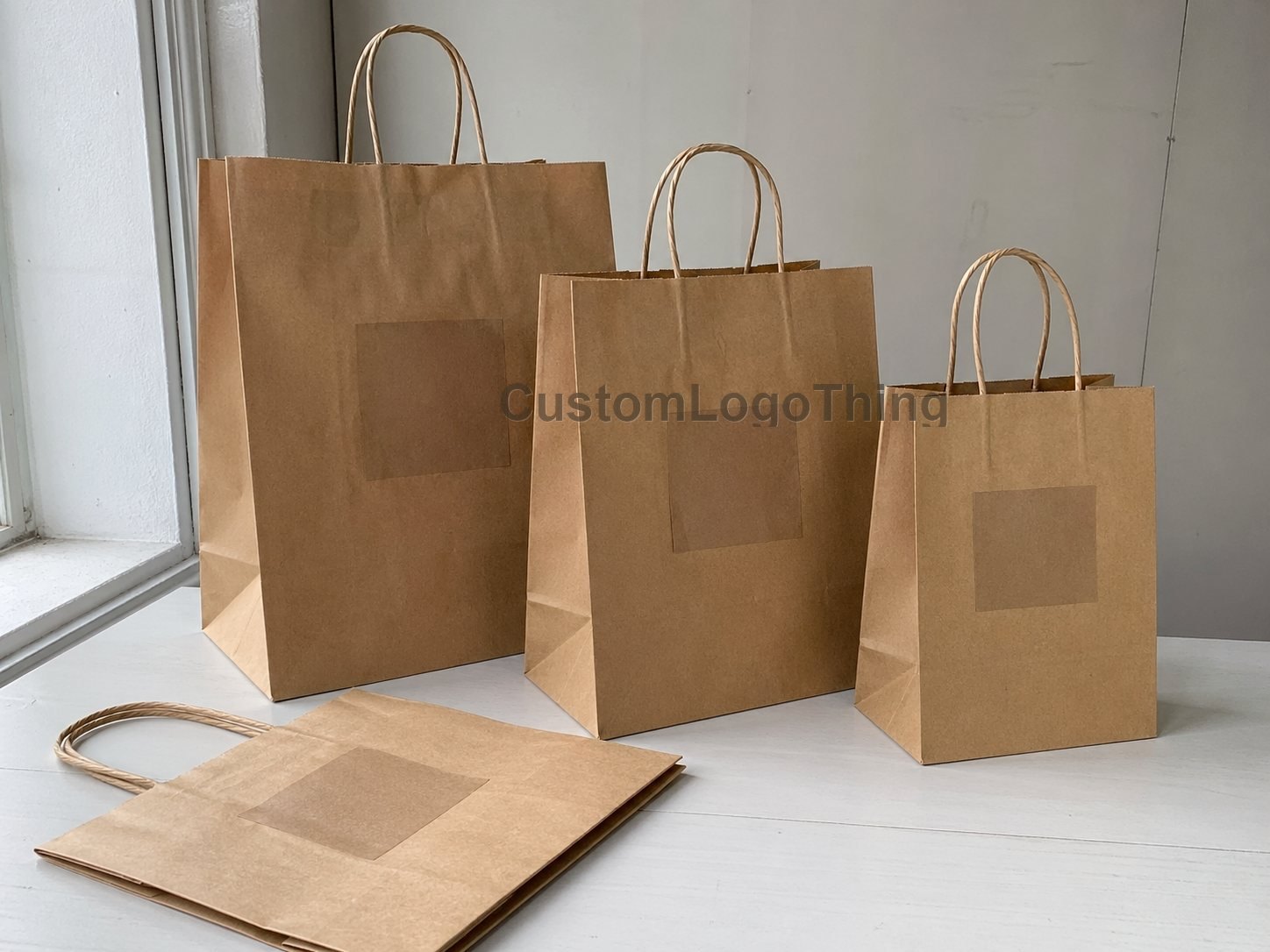
Restaurant takeaway shopping Bags Bulk Orders matter because service day is not a theory exercise. It is a stack of real meals, real hands, and real movement through doors, parking lots, elevators, and car seats, which means the bag must hold weight, stay upright, and keep the order looking intentional from the pass to the customer’s final stop.
In day-to-day service, restaurant takeaway shopping bags bulk purchasing helps staff move faster because they are not sorting through odd sizes or mismatched packaging during a rush. When every bag fits the same range of boxes and containers, the team can pack, hand off, and move on without second-guessing whether the handles will cut in or the gusset will collapse.
That matters for presentation as much as function. A takeaway bag is part transport, part brand touchpoint, and part reassurance, because once the customer leaves the restaurant, the bag is carrying your name through public spaces. Restaurant takeaway shopping bags bulk orders turn that moving display into something repeatable instead of accidental.
There is also a clean business side to it. Bulk buying reduces emergency reorders, smooths out packaging spend, and makes inventory planning far less chaotic. From a buyer’s point of view, restaurant takeaway shopping Bags Bulk Ordering is easier to forecast when the same bag spec serves dine-in leftovers, delivery handoffs, and off-premise bundles.
If the bag fails in the parking lot, the packaging spec was wrong from the start. The customer will not think about paper grade or handle construction; they will think the order should have been packed better.
That is why restaurant takeaway shopping bags bulk decisions should start with service reality, not with artwork alone. A strong logo is useful, but it cannot make up for a narrow opening, a weak bottom fold, or a handle style that is fine for a pastry box and questionable for two entrée containers and a drink.
When order volume is predictable, restaurant takeaway shopping bags bulk purchasing also lets restaurants keep a steady look across locations, shifts, and seasons. A chain operator, a cafe with a catering arm, or a busy independent kitchen all benefit from the same simple idea: the carry-out bag should feel like part of the service, not an afterthought.
I have seen teams try to save a little by buying whatever was on hand that week, and it almost always created more work later. The bag size changed, the handles felt different, and staff had to keep guessing which orders needed double-bagging. That kind of inconsistency gets old fast.
restaurant takeaway shopping bags bulk: materials, handles, and print options
Material choice is where most restaurant takeaway shopping bags bulk orders succeed or fail. Kraft paper is usually the first place buyers start because it has a familiar natural look, acceptable stiffness, and a cost profile that works well for high-volume use. White paper gives a cleaner presentation and can make dark logos stand out, while reinforced stock is the better fit when the load is heavier or the brand wants a more premium hand feel.
For most restaurant takeaway shopping bags bulk programs, kraft paper lands in the practical middle. It usually hides handling marks better than bright white stock, and it pairs well with simple one-color branding. White paper makes sense when the restaurant wants a brighter retail impression, especially for dessert shops, cafe counters, or fast-casual concepts where the bag is visible in every order handoff.
Handle style changes the way the bag feels in use. Twisted paper handles are common because they offer a good balance of strength and comfort, flat handles can work well for lighter loads and a simpler look, and die-cut handles create a cleaner retail appearance but need careful load testing before they are used for heavier takeaway runs. Restaurant takeaway shopping bags bulk orders should match the handle to the actual service load, not to a catalog photo.
Printing should be treated the same way. One-color logo work is usually the most economical and the easiest to keep crisp across a large run. Multi-color branding can look polished, but it adds setup complexity and cost, especially if the artwork has fine type or a lot of coverage. In restaurant takeaway shopping bags bulk production, the safest print placement is often the center panel where the logo stays visible while the customer is carrying the order.
There is a real difference between a bag that just carries food and a bag that carries food while still looking composed. Gussets, bottom reinforcement, and light moisture resistance all change the way the bag performs with soups, boxed meals, beverage pairs, and bakery items. If the menu has warm containers or anything with condensation, restaurant takeaway shopping bags bulk specifications should include enough structure to resist softening during the short trip home.
A useful rule of thumb: if the menu items are varied, the bag should be designed for the worst normal case, not the easiest one. A bag that handles a single sandwich box may not handle two entrée boxes plus utensils plus a sauce cup. Restaurant takeaway shopping bags bulk buying works best when the paper grade, handle type, and print plan all match the same real-world weight range.
For buyers comparing materials, the goal is not to pick the fanciest stock. It is to choose the one that fits the menu, the brand image, and the carry distance. That is the practical heart of restaurant takeaway shopping bags bulk ordering, and it is where a careful spec saves more money than a cheap bag ever will.
One more practical point: if the restaurant serves hot soup, oily noodles, or anything with steam, ask how the paper behaves after a few minutes in a warm bag. Some papers hold up fine while dry but start to soften at the fold when condensation builds. It is a small detail on paper and a very annoying one in the hand.
Specifications that keep bags upright, clean, and easy to carry
Restaurant takeaway shopping bags bulk specifications start with dimensions, because a bag that is too narrow, too shallow, or too short creates problems before the customer even leaves the counter. Buyers should review finished width, gusset depth, and height, then check the folded and glued dimensions so the printed bag actually matches the usable opening and interior volume.
The opening matters as much as the height. Wide menu boxes, drink carriers, side items, and catering add-ons need a top opening that does not pinch shut the moment the bag is filled. If the top rolls in or the gusset bows too tightly, restaurant takeaway shopping bags bulk orders can look fine on paper and still fail in front of the customer.
That is why load testing should use the restaurant’s actual containers, not generic sample cartons. Put in the exact boxes, cups, and bottle counts that the staff handles on a normal order, then lift, carry, and set the bag down several times. Restaurant takeaway shopping bags bulk testing should check for handle pull, bottom stress, and whether the bag tips when the contents shift.
For menu sets that include oily foods or warm items, ask about grease resistance, liner treatment, or a more appropriate uncoated stock. If the restaurant uses recycled content or wants a lower-impact paper choice, make that part of the brief early so the spec is aligned with procurement goals from the start. Restaurant takeaway shopping bags bulk orders are easier to approve when the practical and environmental requirements are written together instead of separately.
A good specification sheet usually includes all of the following:
- Finished dimensions with width, gusset, and height measured after production.
- Paper weight in gsm or lb basis so the stock can be compared directly.
- Handle type and length for comfort and carrying distance.
- Print coverage showing whether the logo is one-color, multi-color, or repeated.
- Reinforcement details for the bottom and handle attachment points.
- Special finish notes such as moisture resistance or a plain uncoated look.
For shipping and transport abuse testing, ISTA provides widely used test protocols that are helpful when a package is likely to move through repeated handling. If your sourcing policy also cares about paper certification, FSC is a practical reference for responsibly managed fiber. Neither one replaces a real fit test with your own containers, but both give restaurant takeaway shopping bags bulk buyers a better framework for judging quality.
In simple terms, specifications protect the order from guesswork. If the bag is being used for a single pastry box, the requirements can be lighter. If it needs to hold hot entrées, sauces, and drinks, the spec has to reflect that load. Restaurant takeaway shopping bags bulk buying works best when the paperwork is honest about how the bag will actually be used.
That honesty is also what keeps the packaging conversation grounded. It is tempting to choose a size by eye and hope it works, but a few millimeters can decide whether the bag stands upright or folds in on itself. A buyer who gets the measurements right saves the kitchen from a lot of quiet frustration later.
Cost, pricing, MOQ, and quote factors for restaurant takeaway shopping bags bulk orders
Pricing for restaurant takeaway shopping bags bulk orders is shaped by size, stock grade, handle style, print coverage, and quantity. Bigger runs almost always lower the unit cost because the setup work, printing calibration, and production preparation get spread across more bags, but the relationship is not linear; a heavier paper, a larger format, or more print colors can move the number up quickly.
MOQ exists for a reason. Custom printing requires setup, proofing, and production calibration, and those costs have to be absorbed somewhere. That is why restaurant takeaway shopping bags bulk quotes often start at a minimum order quantity rather than a single carton. The cleaner the artwork and the more standard the size, the easier it is to keep that minimum reasonable.
For a useful ballpark, a standard Custom Kraft Paper takeaway bag in a common service size might land around $0.18-$0.28 per unit at 5,000 pieces, depending on print coverage and reinforcement. Heavier stock, white paper, or more complex artwork can move that toward $0.25-$0.45 per unit, while larger repeat runs often bring the price down. Restaurant takeaway shopping bags bulk buyers should treat those numbers as planning ranges, not fixed quotes.
The most accurate quote comes from a clean request. Send the bag dimensions, quantity, artwork files, color count, handle preference, and any packaging or delivery needs. When those details are missing, the quote usually has to be revised later, which slows down restaurant takeaway shopping bags bulk ordering and makes it harder to compare options fairly.
There are also clear places to save without cutting quality. Standard sizing is usually cheaper than a fully custom shape. One-color print is often enough for strong brand recognition. Ordering by usage forecast, rather than by a vague yearly guess, keeps inventory from sitting too long. And if the load is light, there is no reason to pay for a reinforced build that the kitchen will never use.
Here is a practical comparison that buyers can use as a starting point:
| Option | Typical look | Common use | Typical MOQ | Ballpark unit price at 5,000 pieces |
|---|---|---|---|---|
| Kraft paper, twisted handle | Natural, dependable, easy to brand | Everyday takeaway, leftovers, lunch boxes | 1,000-3,000 | $0.18-$0.28 |
| White paper, flat handle | Brighter, more retail-oriented | Cafes, bakery boxes, lighter orders | 1,000-5,000 | $0.20-$0.30 |
| Reinforced kraft, twisted handle | Heavier hand feel, stronger bottom support | Hot entrées, multi-container orders | 3,000-5,000 | $0.24-$0.38 |
| Premium printed paper, coated finish | Smoother print surface, more polished appearance | Upscale pickup, gift-style takeaway | 5,000+ | $0.32-$0.55 |
If your volume is recurring, our Wholesale Programs page is a useful place to think through the economics of repeat ordering before you lock in a custom spec. That matters because restaurant takeaway shopping bags bulk pricing gets much easier to manage once the team knows what the typical monthly usage looks like.
From a buyer’s point of view, the cheapest bag is not the one with the lowest quote. It is the one that arrives, carries the actual order properly, prints clearly, and does not force the staff to double-bag or improvise under pressure. Restaurant takeaway shopping bags bulk purchasing should be judged on that full picture, not just the line-item price.
Budgeting this way also makes reorders less stressful. If the restaurant knows the true bag consumption rate, it can place a second order before the shelf runs dry, instead of scrambling for a last-minute substitute that does not match the rest of the packaging.
Process and timeline: artwork approval, sampling, and lead time
The production path for restaurant takeaway shopping bags bulk orders is usually straightforward, but it moves faster when the first brief is complete. It starts with the quote request, then a proof or mockup, then sample approval if needed, followed by production, packing, and final shipment. Each step matters because a small artwork correction is easier to fix before printing than after the run has started.
Artwork prep is one of the biggest speed factors. Clean vector files, exact logo colors, and a layout that fits the panel size all shorten the approval cycle. If the artwork has low-resolution images or tiny text, expect extra proof rounds. Restaurant takeaway shopping bags bulk orders move more efficiently when the logo can be placed cleanly without squeezing important details into the gusset or handle area.
The actual production window depends on the print method and the quantity, but a common range for standard custom work is often 12-15 business days after proof approval. Larger runs, multi-color printing, or additional sample checks can extend that to 15-25 business days, and freight time is separate. Restaurant takeaway shopping bags bulk planning should always include shipping transit, especially if the order needs to arrive before a promotion, holiday rush, or catering launch.
Once production begins, the schedule normally includes setup, printing, drying or curing when the ink system needs it, converting, gluing, packing, and final quality checks. The fastest orders are usually the ones with the least ambiguity. Restaurant takeaway shopping bags bulk buyers who send dimensions, artwork, and usage notes in one clear package tend to get cleaner proofs and fewer back-and-forth messages.
Planning inventory around lead time is just as important as approving the art. If a restaurant uses 2,000 bags a month and the quoted lead time is 2-3 weeks plus transit, reorder when stock drops to the buffer level rather than waiting until the last carton is already open. That sounds simple, but it prevents a lot of rushed purchasing and expensive fallback packaging.
Peak periods deserve an even larger buffer. Catering spikes, holiday menus, local events, and weather swings can all move volume quickly. Restaurant takeaway shopping bags bulk buyers who keep a small safety stock usually avoid the awkward moment when the kitchen is busy and the packaging shelf is empty.
Most delays are easy to prevent. Missing artwork, unclear dimensions, and late proof changes are the usual culprits. A clear order packet makes the process feel calm, and calm is valuable in packaging because it gives the production team room to check details properly instead of rushing past them.
Personally, I always tell buyers to assume there will be at least one small revision, even on a clean order. That mindset helps everyone stay realistic. It is not a problem; it is just how print and production work when accuracy matters.
Why choose us for bulk takeaway packaging
At Custom Logo Things, the value is in spec matching, not in noisy claims. Restaurant takeaway shopping bags bulk customers need bags that fit the menu, hold up in use, and print consistently from one reorder to the next, and that is the standard we aim to support with clear material guidance and practical sizing advice.
Communication matters just as much as the bag itself. Buyers usually want fast answers on dimensions, artwork setup, delivery timing, and what kind of handle or paper grade will suit the load. Restaurant takeaway shopping bags bulk orders go more smoothly when the quote conversation feels technical, honest, and easy to follow.
There is also a lot of value in plain-language manufacturing guidance. A restaurant does not need a lecture on paper theory; it needs to know whether a twisted handle is better than a flat handle, whether the paper weight is enough for boxed meals, and whether the artwork should be simplified to protect print quality. That is the kind of practical help that makes restaurant takeaway shopping bags bulk buying less stressful.
For recurring programs, consistency is everything. Reorders should look and feel like the original order, and they should fit the same containers without staff guessing at the packing line. If you are managing repeat purchasing, our Wholesale Programs page can help frame the discussion around ongoing volume, not just one-off pricing.
Restaurant takeaway shopping bags bulk buyers also benefit from a supplier who understands that packaging is part of service, not decoration. The bag has to survive handling, protect the food, and still carry the brand with enough neatness that the customer feels the order was packed with care. That is a simple standard, but it is the right one.
For restaurants that need a second ordering cycle, the goal is to make the reorder easier than the first. Keep the spec, the print placement, and the quantity pattern stable, then only adjust what the menu or volume actually changes. That approach saves time, cuts error risk, and keeps restaurant takeaway shopping bags bulk programs dependable over the long haul.
And if something in the spec does not actually help the kitchen, we would rather say so plainly. That honesty can save a lot of money and a fair bit of frustration, which is kind of the point.
Next steps: what to prepare before you request a quote
Before you request pricing, measure the containers you actually use. Count the bottle pairs, box stacks, sauce cups, and any oversized items that must fit together. Restaurant takeaway shopping bags bulk quotes are always more accurate when the dimensions come from the real service setup instead of an estimate written in a hurry.
Then gather the brand assets. Have the logo file ready, note the preferred colors, decide how much of the bag should be printed, and set a target quantity that reflects both average usage and peak weeks. If delivery timing matters, include the location and the date you want the order in hand, because restaurant takeaway shopping bags bulk lead times are easier to manage when the deadline is explicit.
A simple decision order usually works best: choose the material first, confirm the size second, select the handle style third, and then decide on print coverage and finish details. That sequence keeps restaurant takeaway shopping bags bulk buying grounded in actual use, which is usually where the best packaging decisions come from.
If you want the quote process to move quickly, send all of those details in one message. The cleaner the brief, the faster the proof, and the fewer corrections needed before production starts. For restaurant takeaway shopping bags bulk programs, that is the difference between a packaging order that feels predictable and one that keeps eating staff time.
When the bag spec is right, the order feels routine in the best possible way. It carries the meal, protects the presentation, and keeps the brand visible without making the kitchen work harder than it should. That is the real purpose of restaurant takeaway shopping bags bulk ordering: steady performance, sensible cost control, and a carry-out experience that holds together from counter to customer.
The clearest takeaway is this: measure your real containers, choose the paper and handle for the heaviest normal order, and send those details with your artwork and quantity in one request. Do that, and restaurant takeaway shopping bags bulk ordering becomes a practical purchasing decision instead of a guessing game.
Frequently Asked Questions
How many restaurant takeaway shopping bags bulk should I order for a busy week?
Base the quantity on average daily covers, not just peak days, so you do not overbuy for a short spike. Add a safety buffer for delivery surges, catering, and repeat orders of the same menu bundle. For restaurant takeaway shopping bags bulk planning, reorder when stock reaches your lead-time buffer instead of waiting until the last carton is already open.
What size works best for restaurant takeaway shopping bags bulk orders?
Choose the size around your largest standard container, then confirm the gusset can hold the full stack without pinching. If you carry drinks or multiple boxes, test both height and width so the order sits flat and upright. A quick physical fit test with your real packaging is more reliable than guessing from dimensions alone, especially for restaurant takeaway shopping bags bulk orders.
Are kraft bags strong enough for greasy takeaway meals?
Yes, if the bag stock, handle style, and reinforcement match the load and the menu items are packed correctly. For grease-heavy or warm items, ask about moisture resistance and bottom strength before you place the order. Always test with the exact containers your team uses, especially for soups, sauces, and boxed entrées, because restaurant takeaway shopping bags bulk performance depends on the full package system.
What affects MOQ and pricing for bulk custom takeaway bags?
MOQ and price usually change with material choice, print colors, bag size, and total quantity. Custom setup and production preparation make smaller runs cost more per bag than larger repeats. Standard sizing and simpler artwork often reduce cost without sacrificing the final presentation, which is why restaurant takeaway shopping bags bulk buyers should send a complete spec before asking for a quote.
How long does production usually take after artwork approval?
Timing depends on the print method, quantity, and whether a sample or proof revision is needed first. Clear artwork and fast proof approval shorten the path to production. Build your reorder schedule around the quoted lead time so service is not interrupted, and if you are ordering restaurant takeaway shopping bags bulk for a promotion or holiday rush, leave extra time for freight.

