Buyer Fit Snapshot
| Best fit | Printed Shopping Bags Bulk Order projects where brand print, material claims, artwork control, MOQ, and repeat-order consistency need to be specified before quoting. |
|---|---|
| Quote inputs | Share finished size, material target, print colors, finish, packing count, annual reorder estimate, ship-to region, and any compliance wording. |
| Proofing check | Approve dieline scale, logo placement, barcode or warning zones, color tolerance, closure strength, and carton packing before bulk production. |
| Main risk | Vague material claims, crowded artwork, missing packing details, or unclear freight terms can make a low unit price expensive after revisions. |
Fast answer: Printed Shopping Bags Bulk Order: Specs and Pricing should be specified like a repeatable production item. The safest quote records material, print method, finish, artwork proof, packing count, and reorder notes in one written spec.
Production checks before approval
Compare the actual filled-product size with the drawing, then confirm tolerance on folds, seals, hang holes, label areas, and retail display edges. Reserve space for logos, QR codes, warning copy, and material claims before decorative graphics fill the panel.
Quote comparison points
Review material grade, print process, finish, sampling route, tooling charges, carton quantity, and freight assumptions side by side. A quote is only useful when the supplier can repeat the same color, closure quality, and packing count on the next order.
Printed Shopping Bags Bulk Order: Specs and Pricing
A printed Shopping Bags Bulk order is a packaging decision, not a swag decision. The bag leaves the counter, rides in a car, sits on a desk, gets reused, and keeps showing your brand long after the receipt is forgotten. That is real value. Not the cheap little thrill of a low quote.
The lowest price on paper is rarely the smartest buy. A good program balances material, size, print coverage, handle comfort, and delivery timing so the bag feels right in the hand, protects what is inside, and keeps your branding consistent without forcing last-minute reorders or awkward substitutions.
Why Printed Shopping Bags Bulk Order Can Lower Cost Per Use
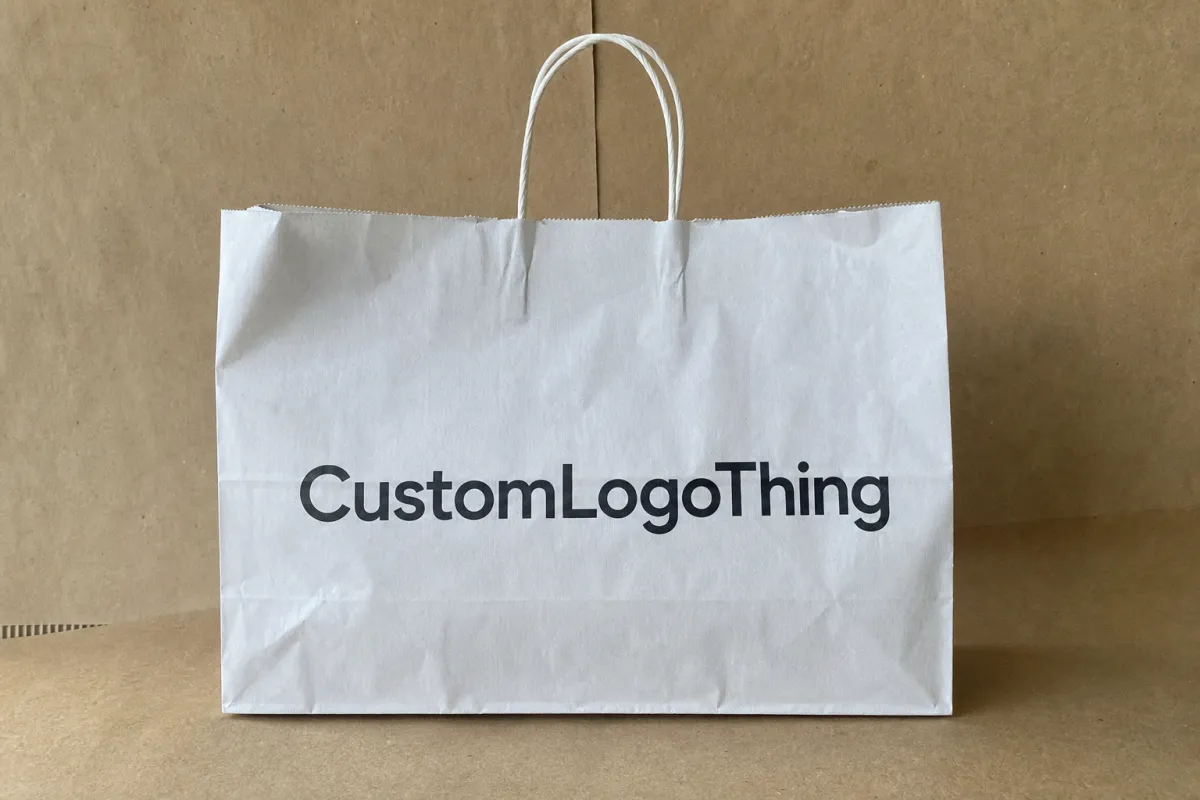
Most buyers fixate on unit price. That is the easy number. The better metric is cost per use. A shopping bag does not stop working at checkout. It moves through the parking lot, the office, the trunk of a car, and sometimes into a second or third use. Every extra trip gives the print another impression without another sale attached to it.
Bulk ordering changes the math because fixed production costs get spread out. Prepress, artwork cleanup, plate preparation, press setup, die cutting, handle attachment, and freight coordination all take time and labor whether you order a few hundred bags or several thousand. Once those setup steps are absorbed into a larger run, the unit price usually drops in a way that makes sense for retail programs, events, and recurring brand use.
From a packaging buyer’s point of view, the savings show up in fewer rush fees, fewer one-off reorders, and a steadier supply for store staff. A small order can look cheaper in the moment and still become expensive later if the size is wrong, the handle fails under load, or the brand has to accept weak print quality just to get something fast.
Cost per impression matters. A better bag can beat a bargain option if it holds up longer, keeps its shape, and presents the logo cleanly. That matters for boutiques, gift shops, trade shows, hospitality counters, and any brand that wants the bag to feel like part of the purchase instead of an afterthought tossed into the pile.
The bag should survive the handoff, the car ride, and the second use. If it only looks good at the register, it has not done its job.
That is also why buyers should compare the printed Shopping Bags Bulk order against the whole store experience, not just the invoice. A bag that is a little heavier, a little stiffer, or a little more carefully printed can support the brand in ways a thin generic bag never will. In a retail setting, the bag is often the last physical touchpoint a customer sees. It should not feel accidental.
For chains and multi-location stores, the bigger advantage is consistency. If the same bag holds up in a flagship store, a seasonal pop-up, and a warehouse outlet, staff do not have to explain why the presentation changed. That sounds minor until a customer notices the difference and assumes the brand cut corners.
Choosing the Right Printed Shopping Bags for Your Order
The right bag starts with the selling environment. A boutique handling apparel and gifts may want a structured paper bag with rope handles and a matte or soft-touch finish. A trade show or product launch may need a lighter paper bag that prints sharply and moves quickly through high volume. A grocery counter or busy retail floor may need a more durable reusable format that can take repeated use without collapsing into a wrinkled mess.
Paper bags remain the most common retail choice because they print cleanly and feel familiar to customers. Kraft paper gives a natural, grounded look and works well for eco-minded branding. Coated paper creates a smoother print surface for detailed logos, solid color fields, and premium finishes. Recycled paper suits brands that want a lower-impact look and a straightforward materials story, as long as the print expectations match the fiber blend instead of fighting it.
Reusable options such as non-woven polypropylene or woven polypropylene fit programs where the bag will stay in circulation. That makes them useful for grocery promotions, membership programs, seasonal campaigns, and events where the bag itself becomes a carry item for several trips. The upfront cost is higher than basic paper, but the return can be strong if the bag lasts long enough to justify it.
Handle choice changes both feel and function. Twisted paper handles are economical and practical for many paper bag programs. Flat paper handles can reduce cost on certain styles. Rope handles add a more premium feel and usually improve comfort during longer carry times. Die-cut handles can work well for lighter loads or a cleaner modern look, though they are not the right answer for heavier merchandise unless the body construction is reinforced.
Finish matters more than many buyers expect. Matte lamination reads softer and less reflective. Gloss makes color look brighter and more saturated. Soft-touch gives a richer tactile feel, especially on boutique or gift packaging. Natural uncoated kraft gives a more earthy impression, but fine type and delicate artwork need careful handling so the print does not sink into the grain of the paper.
The best bag is not always the most premium-looking one. It is the bag that matches the product weight, holds up in transit, prints cleanly, and supports the customer experience without wasting material. A jewelry brand may need a small refined bag with restrained print coverage. An apparel store may need a deeper gusset and stronger handle attachment because folded garments create a different kind of stress inside the bag.
That is why sample comparisons help. Ask for one version that reflects the ideal presentation and one that simplifies the material or finish. The difference is usually obvious once both options are in hand. A mockup can hide a lot. A physical sample does not.
Practical buyer scenarios make the choice clearer:
- A cosmetics brand shipping small gift sets usually benefits from a coated paper bag because dense color and fine typography read better on a smoother surface.
- A farm shop or natural foods retailer often prefers kraft because the texture matches the product story and holds up well for simple one- or two-color printing.
- A holiday pop-up that expects heavy foot traffic may choose a standard paper bag with a reinforced bottom instead of a flashy finish that does nothing for durability.
- A membership or loyalty program can justify a reusable bag if customers are likely to carry it again and again.
Specs That Control Print Quality, Strength, and Finish
Good quoting starts with the specification sheet. Bag dimensions, gusset width, paper weight or film thickness, handle style, print coverage, and finish all influence price and performance. If those details are vague, the quote will be vague too. That usually means revisions later, and revisions are where schedules go to die.
For paper bags, the two measurements that matter most after size are paper weight and construction. A lighter kraft bag might use 120-150 gsm paper for general retail carry, while a heavier premium bag may use 157-250 gsm coated stock with lamination for a more polished surface. Reusable bags are usually discussed by fabric weight or material thickness rather than paper gsm, and the intended load should be clear from the start.
Artwork quality is another major variable. Spot color printing can be efficient and crisp for simple logos. Full-color process printing handles gradients, photo elements, and more detailed brand graphics. Registration tolerance matters on small logos and fine lines, especially on textured kraft paper, where the sheet surface can make tiny type look softer than it does on smooth coated board. Reverse type also deserves extra care because heavy ink coverage can fill it in.
Strength-related details deserve the same attention as design details. Reinforced top edges, cardboard inserts, double-thick bottoms, and securely attached handles all help the bag carry weight without stretching or tearing. If the bag will hold bottles, boxed goods, folded apparel, or gifts with corners, the structure has to match the load. A bag can look fine empty and fail the second it gets packed.
Size selection should be tied to the actual product, not just the shelf width. Measure the product with its packaging, then allow room for easy insertion, a clean fold at the top, and a comfortable carry profile. A too-small bag bunches the product and strains the seams. A too-large bag wastes material and lets the contents slosh around in transit.
Useful packaging choices should stay tied to the real job of the bag. Insert cards, hang tabs, and specialty closures make sense only if they support display, handling, or protection. If they do not improve the experience, they just add cost and complexity. Fancy for the sake of fancy is still expensive filler.
For technical guidance on packaging performance and transit stress, many teams refer to general industry resources such as ISTA for test method references and the Packaging School and packaging industry resources for broader packaging context. For paper sourcing discussions, the FSC system is often part of the conversation when buyers want chain-of-custody documentation.
Practical spec checklist:
- Bag size - width, gusset, and height in clear units.
- Material - kraft, coated paper, recycled paper, or reusable non-woven.
- Weight or thickness - gsm for paper, gauge or equivalent for film/fabric.
- Handle type - twisted paper, flat paper, rope, die-cut, or reinforced.
- Print method - spot color, process color, foil, or special finish.
- Load requirement - what the bag must carry without failure.
One more technical point: the same artwork can behave differently across materials. A 1-color logo that looks sharp on coated paper may need thicker strokes on kraft. Fine outlines can blur on textured stock. Small text can disappear faster than a designer expects. A production-minded supplier should flag those issues before the order goes to press, not after.
Printed Shopping Bags Bulk Order: Cost, Pricing, and MOQ
Printed shopping bags bulk order pricing comes down to a handful of predictable factors. Material choice has the biggest effect, followed by size, print coverage, handle style, finish, and whether the bag needs custom tooling or a nonstandard structure. A simple one-color kraft bag is far easier to produce than a laminated, full-color premium bag with rope handles and a reinforced top edge. Surprise, the complicated thing costs more.
MOQ, or minimum order quantity, exists because setup has a real cost. A press does not care whether a run is 500 pieces or 5,000 pieces; the operator still has to prepare the machine, verify color, load material, and check registration. Converting equipment has the same issue. Once those costs are spread across enough bags, the unit cost becomes far more efficient. That is why many suppliers set minimums based on production economics rather than arbitrary sales rules.
It also helps to separate unit price from landed cost. Unit price is only part of the story. Packing method, carton count, freight distance, fuel surcharges, residential delivery, storage, and rush handling can change the total quite a bit. A quote that looks lower on paper may end up more expensive once shipping and cartonization are added.
Here is a practical comparison that buyers can use as a starting point. These are directional figures, not fixed quotes, because actual pricing changes with artwork coverage, quantity, freight, and the level of reinforcement.
| Bag Type | Typical Use | Usual MOQ Range | Directional Unit Price | Notes |
|---|---|---|---|---|
| Kraft paper with twisted handles | Boutiques, gift shops, basic retail carry | 500-2,000+ | $0.22-$0.48 | Good value for simple branding and moderate loads |
| Coated paper with rope handles | Apparel, cosmetics, premium retail | 1,000-5,000+ | $0.45-$1.05 | Better print surface and stronger presentation |
| Recycled paper with printed logo | Eco-positioned retail and events | 1,000-3,000+ | $0.26-$0.58 | Natural texture may soften fine detail |
| Reusable non-woven bag | Grocers, promotions, repeat-use programs | 500-5,000+ | $0.55-$1.20 | Higher upfront cost, longer service life |
Those ranges explain why standardizing saves money. Stick to a common size. Keep the number of ink colors under control. Use a familiar handle style. Those choices usually trim cost without hurting the presentation. A custom size or special finish can still be worth it, but it should earn its place by improving the carry experience or brand impact, not by sounding fancy in a meeting.
Another useful point: the savings from a larger run are often bigger than buyers expect. At 1,000 pieces, setup cost still weighs heavily on every bag. At 5,000 or 10,000 pieces, the same setup gets diluted, and the per-unit price often drops enough to justify a larger stock position if storage is manageable. That matters for seasonal retail, multi-store use, and recurring promotion cycles.
Savings usually come from a few practical moves:
- Reduce color count - one or two colors can cost less than full process printing.
- Use standard sizes - custom dimensions often add tooling and planning time.
- Pick proven materials - common kraft or coated stocks are easier to source.
- Order ahead - avoiding rush production protects the budget.
- Match the bag to the load - overspecifying strength can add cost without value.
If you are comparing quotes through a procurement team or a repeat-buy program, the Wholesale Programs page is the easiest place to start planning larger quantities and recurring supply. Think in terms of reorder rhythm, not just the first shipment. The first run is only part of the story.
One more thing buyers often miss: minimums are not always the real barrier. The real issue is whether the spec fits the volume. A high-end laminated bag may look good in a spreadsheet and still be the wrong choice if the program only needs a few seasonal drops. In that case, the cheaper path is not cutting corners. It is choosing a spec that matches the actual use pattern.
Process, Timeline, and Production Steps
A clean production process saves money and reduces stress. Most orders move through the same basic workflow: inquiry, specification review, quote approval, artwork check, proofing, production, packing, and shipping. If any step is missing information, the project slows down and the timeline stretches. Packaging projects love doing that.
Prepress is where many avoidable delays start or end. The artwork team checks file resolution, font outlines, bleed, safe zones, and color references. Pantone targets may need to be adjusted depending on material surface, because kraft paper, coated board, and reusable fabrics all hold ink differently. A logo that looks crisp on a screen can behave very differently on a textured bag face.
Proof approval is the buyer’s chance to catch practical issues before production begins. This is the point to check logo placement, handle position, bleed, size, spelling, and any special notes about color. If the bag has multiple panels, make sure the front, back, and side gussets are all reviewed. Small mistakes are much cheaper on a proof than after thousands of bags are already in motion.
Timeline depends on complexity. A straightforward paper bag with standard material and simple print can often move faster than a custom size with lamination or specialty handles. If tooling must be created, if the bag has unusual dimensions, or if the order needs a special finish, extra lead time is normal. Freight distance also matters, especially if the bags are shipping in cartons across regions or into a distribution center with delivery rules.
Common delay points include:
- Missing vector artwork or low-resolution logo files.
- Late approval on proof color, size, or placement.
- Back-and-forth on material choice after the quote is already issued.
- Freight changes after production has started.
- Requests for rush delivery after the schedule is already committed.
For many standard programs, a realistic planning window is often 10-15 business days from proof approval for simpler runs, while more involved custom work can take 15-25 business days or more depending on the finishing steps and sourcing. That is not a promise. It is a practical planning range that helps buyers avoid last-minute gaps on store shelves.
A good pre-order checklist keeps the process moving:
- Confirm bag dimensions and gusset depth.
- Decide the material and finish.
- Count the print colors and send vector artwork.
- State the target quantity and reorder expectation.
- Share the delivery ZIP and any freight restrictions.
- Approve the proof promptly once the details are correct.
Common production questions, including artwork setup and ordering basics, are also covered in the FAQ, which is useful when a purchase team needs a quick reference before requesting a quote.
For buyers with tighter launch dates, the safest schedule is the one with a cushion. A proof that is approved on Monday and a freight booking that depends on a Friday event is not a plan. It is a hope. Hope is not a production method.
Why Choose a Manufacturer for Bulk Printed Bags
Buying directly from a manufacturer gives the buyer more control over the practical details that shape the final result. Specs are clearer, communication tends to be tighter, and there is less chance of the order getting translated incorrectly as it moves between sales layers. That matters when a bag has to meet a size target, carry a defined load, and print a logo with the right visual balance.
Technical support is one of the biggest advantages. A manufacturer can help compare paper weights, handle options, reinforcement choices, and finish types based on the actual application. That kind of guidance is useful because a bag that works for a lightweight promotional kit may fail in a retail setting where the contents are heavier, sharper-edged, or more irregular in shape.
Sampling and proofing also work better when the production path is direct. Buyers can verify handle strength, print placement, fold quality, and overall presentation before approving a larger run. In practice, that is where a lot of preventable disappointment gets removed from the process. A sample may reveal that a logo is too close to the fold line, a color reads darker than expected on kraft, or a handle length needs to be adjusted for carry comfort.
There is also a supply-side advantage. Reorders are easier to manage when the original specs are controlled by the same source that made the first run. That helps brands that run seasonal campaigns, open new locations, or need a consistent program across multiple stores. If a buyer plans a repeat order, the repeat should match the first shipment closely enough that the customer never notices a change in appearance or feel.
For packaging teams that care about responsible sourcing, the manufacturer can also align the material conversation with the right paper or recycled content options. That does not mean every bag needs to make an environmental claim, but it does mean buyers can choose a construction that fits brand standards and the documentation their team needs. If a paper supply chain needs certification, FSC is one of the common references.
What matters most is process control. A manufacturer helps keep the order grounded in measurable details: material, size, print method, finish, lead time, and shipping terms. That is a better foundation than vague promises, especially for buyers who need the bags to arrive on schedule and match the approved proof.
There is also a trust issue here. A supplier that can explain why a certain paper weight is being recommended, or why a handle style should be reinforced for a bottle-heavy load, is giving you useful information. A supplier that only repeats “premium” over and over is selling a vibe. A bag needs more than a vibe.
What to Do Next Before You Place the Order
Before you request quotes, gather the practical inputs that shape the job. You will get better pricing and fewer revisions if you already know the bag dimensions, approximate quantity, artwork format, budget target, and delivery ZIP. If you are replacing an existing bag, send the current sample or exact measurements so the new run can be matched properly.
If the bag size, finish, or print coverage is new, ask for a sample or proof review. That step is especially useful when the order will be large enough to matter or visible enough to affect brand perception. A small proofing expense is usually far cheaper than a full run that misses the mark on color, handle strength, or presentation.
It also helps to compare two quote scenarios side by side. One should reflect the ideal spec, and the other should simplify one or two variables, such as the finish or print coverage. That gives you a clean view of where the money is going and which changes actually matter to the customer experience.
Before you approve production, confirm these points:
- Lead time from proof approval to shipment.
- Freight method and whether shipping is included.
- Carton count and pallet expectations if applicable.
- Reorder path for repeat buys or seasonal restocks.
- Artwork ownership and file retention for future runs.
The strongest buying decision is the one that matches the bag to the real job, not the prettiest spec sheet. A well-planned program keeps the printing clear, the carry comfortable, and the supply predictable, which is exactly what most retail teams need.
That is the practical way to approach a printed shopping bags bulk order: choose a construction that fits the merchandise, compare landed cost instead of headline price, and make sure the proof matches the in-store experience you want customers to remember.
If the goal is a clean, repeatable order, the best next move is simple: lock the dimensions, choose the material, count the print colors, and confirm the freight terms before the quote goes out. That gives you a real comparison instead of a stack of numbers that only look comparable.
Frequently Asked Questions
What is the typical MOQ for a printed shopping bags bulk order?
MOQ varies by material, print method, and bag style, but bulk orders usually start where setup costs become efficient. Standard sizes with simple print layouts often allow lower minimums than custom dimensions, laminated finishes, or special handle constructions. A good supplier will tie the MOQ to your actual usage so you do not overbuy inventory or pay for a run that is too small to price well.
What affects printed shopping bags bulk order pricing the most?
Material selection, bag size, print coverage, color count, handle type, and finish usually have the biggest impact. Higher quantities typically reduce unit cost because setup and production overhead are spread across more bags. Rush timing, reinforcement, and custom tooling can raise the final price, so it helps to compare the quote with and without those upgrades before making a decision.
How long does a bulk printed shopping bag order usually take?
Simple standard orders can move quickly once artwork is approved, while custom sizes and specialty finishes take longer. Most timelines depend on proof approval, material availability, production queue, and freight distance. The fastest way to stay on schedule is to send complete specs and print-ready files at the start, then approve the proof as soon as the details are correct.
What artwork do I need for a printed shopping bags bulk order?
Vector files are usually preferred because they scale cleanly and hold line detail better than low-resolution images. You should provide logo placement, color references, and any font or sizing notes needed for accurate prepress review. If the artwork is not finalized, ask for a proof check before production begins so the file can be corrected before the order reaches press.
Can I order different sizes in one printed shopping bags bulk order?
Yes, but mixed sizes are usually quoted separately because each size has its own setup, material use, and packing requirements. If you need several sizes, compare the total landed cost against a simplified standard-size plan. A supplier can also help determine whether one shared design across multiple sizes is more efficient than building a separate spec for each bag.
Are recycled or FSC-certified options available?
Often, yes. Recycled paper and FSC-certified paper are common requests, but the exact option depends on the supplier’s sourcing and the construction you choose. If your team needs chain-of-custody documentation, ask for it before the order is quoted so there are no surprises during approval.

