Ceramic Studio Drawstring Bags Bulk Ordering Guide
Ceramic studio drawstring bags bulk can solve a problem that shows up again and again in pottery retail: the work is beautiful, fragile, and often awkwardly shaped, yet the packaging still has to look composed, feel easy to carry, and protect the piece on the way home. A mug with a handle, a small bowl with a glaze rim, an ornament with a loop, or a paired gift set rarely fits neatly into a standard box without extra filler and a fair amount of fuss. A drawstring bag gives that sale a cleaner handoff.
For a ceramic studio, packaging does more than move an item from counter to customer. It frames the work, supports the price point, and leaves a tactile impression that lasts after the sale. Ceramic studio drawstring bags bulk are worth serious consideration because they keep that impression consistent across market days, gallery pickups, class sales, and wholesale orders, all while making the packing process easier on the staff behind the table. I have watched plenty of studios lose time to packaging on busy weekends, and a bag that packs quickly can be a quiet lifesaver.
Why ceramic studio drawstring bags bulk solve a common retail problem
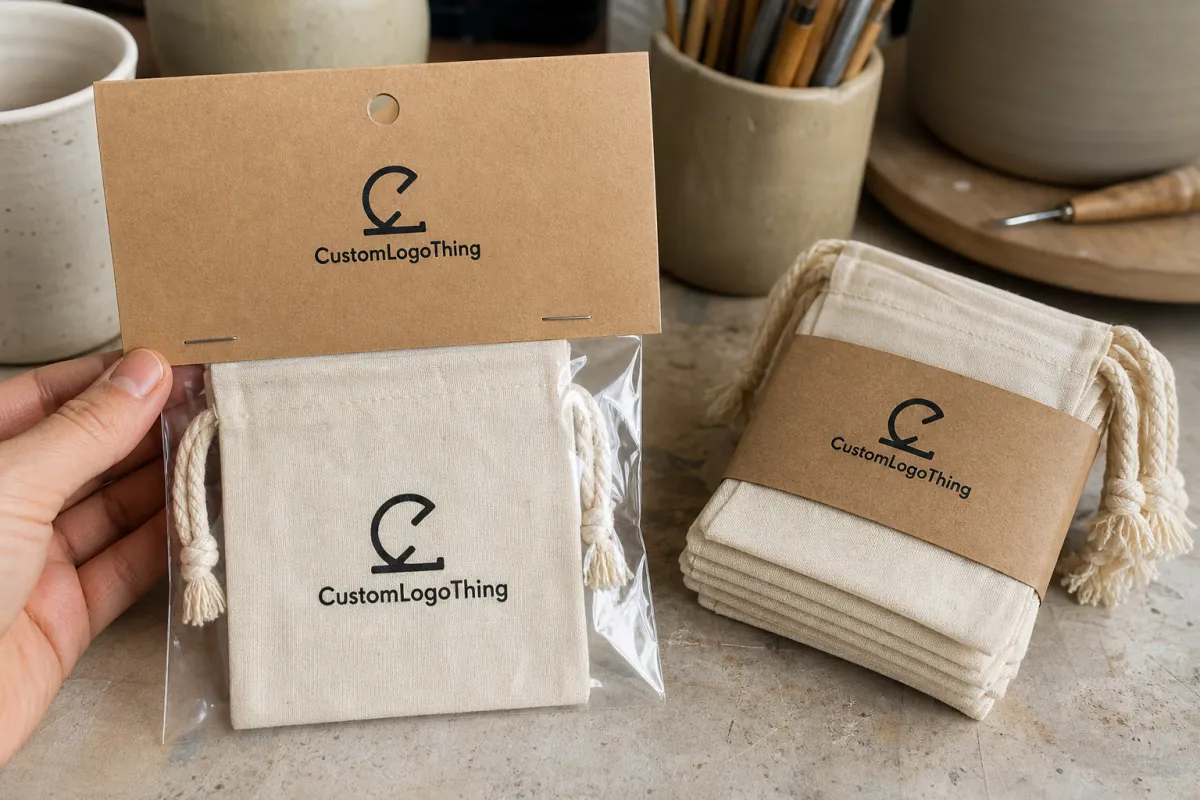
Ceramic shops rarely sell perfectly standardized items. The mix usually includes mugs of different heights, bowls with wide rims, cups with handles, small lidded jars, ornaments, and wrapped sets that need to stay together without rattling around in transit. Ceramic studio drawstring bags bulk help with that variety because the bag can adapt to the item instead of forcing the item into a shape it does not have.
That flexibility matters in the real world of retail. A customer buying one mug wants a quick, polished handoff. A customer choosing a pair of cups or a small gift set wants the package to look intentional without adding a stack of tissue, stickers, and tape. Ceramic studio drawstring bags bulk reduce that packing friction, which keeps the line moving and cuts down on repacking when a piece shifts or a box runs too loose. That kind of small operational win sounds minor on paper, but on a market table it adds up fast.
Packaging also carries hidden labor costs. Each extra fold, seal, or wrap takes time. Over a full weekend market, a holiday rush, or a long class pickup window, those seconds become hours. A studio can spend money on labels and tissue and still end up with a package that feels improvised. Ceramic studio drawstring bags bulk replace that patchwork with one repeatable package that can be used the same way every time.
The bag does not disappear after the sale. Customers often reuse it for a gift, a storage pouch, or a small household item, and that keeps the studio name in sight longer than a disposable wrap ever could. That extra lifespan gives ceramic studio drawstring bags bulk more value than packaging that vanishes the moment the customer gets home.
A careful handoff does more than protect a pot. It tells the buyer the studio pays attention all the way down to the last detail.
That is why ceramic studio drawstring bags bulk fit so well in steady class sales, holiday pop-ups, gallery events, and wholesale replenishment. Once a studio is packing dozens or hundreds of items, the bag stops being decoration and becomes part of the working system. Ceramic studio drawstring bags bulk answer a practical retail problem in a way that still feels warm and handmade.
Ceramic studio drawstring bags bulk: sizes, fabrics, and branding options
Size is the first choice that shapes the rest of the order. For ceramic studio drawstring bags bulk, the most useful formats usually fall into three groups: small pouches for ornaments or tiny accessories, medium bags for mugs and cups, and larger bags for gift sets or paired pieces. Small retail bags often sit around 4 x 6 inches or 5 x 7 inches. Medium options commonly land near 6 x 8 inches or 7 x 9 inches. Larger presentation bags can run 8 x 10 inches, 10 x 12 inches, or more depending on the shape of the ceramic item.
I usually tell buyers to size around the largest regular item, then leave enough room for tissue, a care card, or a folded receipt. A bag that is too tight slows the packer down and can make the opening feel awkward. A bag that is too large lets the piece shift and loses that neat, finished feeling at the counter. With ceramic studio drawstring bags bulk, a little planning at the sizing stage prevents a lot of frustration later.
Fabric choice changes the whole experience in the hand. Cotton muslin gives a soft, natural look that suits a studio with a relaxed handmade feel. Canvas has more body, more structure, and a more substantial touch, which can work well for pieces that deserve a premium presentation. Polyester blends usually offer a smoother print surface, more consistent color, and less wrinkling during storage. There is no single right answer here. The best material depends on how the bag will be used, how much print detail is needed, and whether the bag is meant to be reused often.
Branding is where many packaging orders either get too loud or stay too plain. A simple one-color logo on the front panel often does the job with the least noise. A woven label can feel refined on a natural fabric, while a heat transfer may suit a sharper graphic mark. Full coverage printing is rarely the best move for pottery packaging unless the studio brand already leans heavily into bold retail graphics. Ceramic studio drawstring bags bulk usually feel strongest when the branding supports the work instead of fighting for attention.
It helps to think about the bag in three places: on display, in the customer’s hand, and at home after the piece has been unpacked. A bag that looks attractive on a shelf but pills quickly or prints unevenly will not age well. Ceramic studio drawstring bags bulk should hold up through handling and still look composed after the customer has used the bag a few times.
| Fabric | Look and feel | Durability | Branding fit | Typical use | Budget note |
|---|---|---|---|---|---|
| Cotton muslin | Soft, natural, understated | Moderate | Good for one-color logos and simple marks | Ornaments, small mugs, care kits | Usually the lowest custom entry point |
| Canvas | Heavier, more structured, premium hand feel | High | Very good for crisp logos and woven labels | Mugs, cups, small gift sets | Often costs more, but holds up better |
| Polyester blend | Cleaner surface, more uniform color | Moderate to high | Good for sharper print detail and consistent branding | Retail handoff, event giveaways, repeat-use bags | Useful when print clarity matters most |
| Lined or heavier weave options | Smoother interior, fuller body | Very high | Best for premium presentation | Delicate glazed pieces, sets, higher-ticket items | Worth the upgrade for fragile work |
Brand placement matters as much as the fabric itself. A centered logo creates a clean retail feel, while a smaller mark tucked near the lower corner can feel more studio-led and less promotional. Fine type usually prints better on a smoother surface. Bolder graphics can tolerate more texture. That is one reason ceramic studio drawstring bags bulk should be sampled before a larger run is approved.
If the order needs to fit into a broader packaging plan, it helps to think about the bag the same way buyers think about cartons or shipping materials. Organizations such as ISTA focus on transit and handling testing, which is useful context if the bag becomes part of a shipping workflow. FSC is useful to review for studios that want responsibly sourced paper tags, care cards, or outer cartons to sit alongside the bag program. Ceramic studio drawstring bags bulk fit naturally into that larger packaging picture.
One practical note: mixed assortments usually need more than one bag size. A single universal pouch sounds convenient until it starts slowing down the packing table, and that gets kinda annoying after the tenth order in a row. Two or three useful sizes often work better than forcing every item into one compromise. Ceramic studio drawstring bags bulk are easiest to manage as a small system that reflects the actual product mix.
Material specifications that protect pottery, glazes, and small sets
Packaging for ceramics has to do more than look pleasant. It has to reduce rubbing, keep pieces from shifting, and prevent glaze from knocking into glaze while the order moves from the studio to the car, or from the studio to a shipping carton. Ceramic studio drawstring bags bulk should be judged on the details that matter in use: fabric weight, seam quality, cord type, closure behavior, and how the bag holds up after repeated opening and closing.
Fabric weight is a good starting point. Light muslin can be fine for ornaments or very small items, but a thicker weave gives more confidence for mugs, bowls with rims, or anything with a handle that might snag the opening. Double-stitched seams and reinforced stress points near the cord channel matter because those spots take the most strain. A cord that moves too freely can make the bag feel weak. A cord that catches too much slows packing. Those are small details, yet they determine whether ceramic studio drawstring bags bulk feel polished or flimsy.
The inside dimensions should be matched to the object, not just its height. A mug with a wide handle needs more side room than a simple cup. A shallow bowl needs less depth, but the opening may still need extra width so the rim does not rub. A two-piece set needs enough space for both items to sit without pressing hard against each other. Lined bags can soften contact and help protect glossy or satin glazes that show scuffs quickly.
Here is the practical checklist I would use before approving production for ceramic studio drawstring bags bulk:
- Fabric weight: enough body to avoid looking limp or see-through.
- Stitching: even side seams and reinforced stress points near the cord channel.
- Cord type: smooth enough to open quickly, secure enough to stay closed in transit.
- Inside room: sized for the item plus any tissue, card, or padding.
- Color behavior: low risk of transfer or fading after handling.
- Print placement: positioned so the logo stays visible when the bag is tied.
Color choice deserves more thought than it often gets. Natural cotton gives a studio look that feels honest and familiar. Black, deep green, navy, or warm gray can make a logo stand out while hiding light storage marks. Bright colors can work for seasonal campaigns, but if the bag has to carry the brand through an entire year, a neutral tone usually stays more flexible. Ceramic studio drawstring bags bulk tend to work best when the color supports the pottery rather than competing with it.
Colorfastness is another quality check that should not be skipped. Reusable bags need to keep their color after handling, storage, and friction against other materials. If the bag is part of a premium gift set, the print should stay clear where folds or seams might interrupt it. A proof review often reveals details that a quote never shows, such as a logo sitting too close to a seam or fine text landing in a spot where it will disappear on the fabric.
If the studio ships work, the bag should also behave properly inside a larger package. It may not be the only layer of protection, but it should not create extra abrasion or slide around unpredictably in a carton. The same careful thinking behind ISTA transit testing applies here: reduce movement, protect surfaces, and keep handling predictable. Ceramic studio drawstring bags bulk work best when they fit into the rest of the package instead of competing with it.
Cost, pricing, and MOQ for ceramic studio drawstring bags bulk
Price depends on more than bag size. For ceramic studio drawstring bags bulk, the main cost drivers are fabric choice, stitch complexity, print method, number of colors, order quantity, and any added labeling or finishing work. A plain muslin pouch will usually price very differently from a lined canvas bag with a printed logo and woven tag. Buyers get better results when they compare the full build, not just the line item at the top of the quote.
Bulk pricing tends to improve as quantities rise because setup costs spread across more pieces. That applies to cutting, sewing, printing, and inspection. There is still a point where ordering far more than you can actually use becomes wasteful. If a studio moves only a few hundred gift bags a season, a huge run can tie up cash and storage space for too long. Ceramic studio drawstring bags bulk should match sell-through in the real shop, not just the neatest number on a spreadsheet.
MOQ means minimum order quantity. In plain terms, it is the smallest run a supplier will accept for a particular configuration. Minimums exist because artwork prep, cutting, print setup, and production alignment all take labor before the first finished bag is made. That is true for plain orders and custom orders alike. Once those fixed steps are covered, larger runs usually become more efficient per unit. Ceramic studio drawstring bags bulk make the most sense once the studio knows the bags will stay in regular use.
| Order size | Plain bag estimate | One-color printed estimate | What usually changes |
|---|---|---|---|
| 500 pieces | $0.75-$1.30 each | $1.10-$1.85 each | Higher setup cost per unit; useful for testing a design |
| 1,000 pieces | $0.45-$0.85 each | $0.70-$1.20 each | Better spread of setup costs; good for active retail use |
| 5,000 pieces | $0.18-$0.40 each | $0.28-$0.62 each | Lower unit cost; best for steady demand and events |
| 10,000 pieces | $0.14-$0.32 each | $0.22-$0.52 each | Strong unit economics, but storage and sell-through matter more |
Those numbers are a planning range, not a quote. The real price depends on whether the bag is cotton, canvas, or a blend, whether the logo is one color or several, and whether you want a woven label or a custom hang tag. Ceramic studio drawstring bags bulk become easier to budget once they are compared against the current packout stack.
That comparison should include labor, not just materials. If the current package uses a box, tissue, a sticker seal, and a care card, the unit cost may look acceptable until assembly time gets added in. A drawstring bag can reduce the number of steps at the packing table. For a small studio, that time savings can matter as much as the material price difference. Ceramic studio drawstring bags bulk should be measured by total packout cost, not only by the bag itself.
Another budget point deserves bluntness: do not under-spec the bag just to save a few cents. A bag that tears, pills, or prints poorly can cost more in replacements and customer frustration than a better-built run would have cost up front. Honest buying looks at the whole life of the package. Ceramic studio drawstring bags bulk are a working packaging tool, and good tools rarely come from choosing the thinnest option available.
For studios that sell across several seasons, keeping the bag design stable usually makes more sense than changing the format every time. Stable artwork and repeatable sizing make forecasting easier and reorders simpler. Once the size and print position are proven, ceramic studio drawstring bags bulk can become a dependable part of the brand system instead of a fresh decision every cycle.
Process, timeline, and lead time from proof to delivery
A clean process saves time and avoids expensive mistakes. For ceramic studio drawstring bags bulk, the usual path is straightforward: Request a Quote, confirm the size and material, approve the artwork, review the proof, produce the bags, inspect the order, pack it, and ship it. The fewer guesses in the first two steps, the smoother the rest of the job tends to be.
Most delays happen before production begins. Missing vector artwork can slow logo prep. A last-minute size change can force a new proof. Unclear branding placement can add another round of review. If you already know the bag needs to hold a mug with a wide handle or a bowl with a nested lid, say so early. Ceramic studio drawstring bags bulk move faster when the supplier has exact dimensions and a clear use case from the start.
Lead time depends on how much is customized. Stock bags usually move faster than fully custom sewn pieces. A simple printed order can often take roughly 12 to 18 business days after proof approval, while more customized builds or larger quantities may need 20 to 30 business days or longer. Specialty fabrics, multiple print colors, and added labeling can stretch the schedule further. Ceramic studio drawstring bags bulk should always be planned around the actual delivery date, not only the first number shown on a quote.
Shipping needs to be part of the timeline from the start. If the bags are needed for a market weekend, a class launch, or a gallery opening, the order has to leave room for transit and receiving. A well-produced run can still miss the target if it arrives after the event. That is why buyers should work backward from the handoff date rather than forward from the purchase date. Ceramic studio drawstring bags bulk are easier to manage when the calendar is built around the studio schedule.
Here is the practical sequence I recommend:
- List the items the bag must hold and note the largest dimensions.
- Choose the material and color based on the desired look and handling needs.
- Send clean logo files and identify the preferred print position.
- Review the proof carefully for size, spelling, and seam placement.
- Confirm the target delivery window before approval.
The fastest order usually starts with clear dimensions and a finished logo file.
If the studio also needs paper tags, product cards, or outer cartons, it helps to keep those items in the same production conversation so the package feels coordinated. Responsible paper sourcing and clear handling standards matter, and they are easier to keep straight when the whole packaging plan is mapped early. That is another reason ceramic studio drawstring bags bulk should be treated as part of a packaging system instead of a one-off purchase.
Why Custom Logo Things is a dependable packaging partner
Custom Logo Things is a good fit for studios that want practical packaging advice instead of vague sales talk. For ceramic studio drawstring bags bulk, the value comes from clear specs, realistic sizing guidance, and packaging suggestions that match how a ceramic business actually sells, stores, and ships work. A supplier should help you avoid oversizing, undersizing, or making the order more complicated than it needs to be.
That matters because ceramic packaging is rarely generic. A studio selling cups at a farmers market has different needs from one filling wholesale gift orders or managing class pickup bags. Custom Logo Things can help match bag construction, logo placement, and order quantity to those real operating patterns, which makes the packaging easier to use every day. Ceramic studio drawstring bags bulk work best when the supplier understands that a bag is part of the retail workflow, not just a printed object.
For reorders, consistency is everything. Once a studio approves a size and print layout, it should be able to come back and get the same result again without rebuilding the whole setup. Straightforward communication on proofs, timelines, and repeat runs makes that possible. Buyers using the Wholesale Programs page can start with a structured packaging conversation instead of piecing the plan together from scratch. Ceramic studio drawstring bags bulk are much easier to manage when the reorder path is clear.
There is also a brand consistency angle that studios feel quickly, even when customers do not say it out loud. The bag is often the first tactile impression of the studio outside the pottery itself. If the fabric, printing, and finish stay steady from order to order, the customer sees a brand that pays attention. If the bag changes every time, that impression gets muddy. Ceramic studio drawstring bags bulk help solve that by giving the studio one repeatable format that can move through markets, classes, and wholesale fulfillment.
From a practical standpoint, a dependable packaging partner should answer questions like: Will this logo print cleanly on that weave? Is the cord strong enough for repeated use? Should the bag be lined for this set? How much room should we leave for a care card? Those are the questions that separate a usable packaging plan from a pretty sample. Ceramic studio drawstring bags bulk benefit from that level of detail.
If the studio wants to compare options before committing, it is worth reviewing broader bulk packaging orders and thinking through retail, gifting, and storage needs together. A smart order does more than lower unit cost. It reduces confusion in the back room and at the register. Ceramic studio drawstring bags bulk should make the whole operation easier to run.
Next steps to order ceramic studio drawstring bags bulk
The cleanest way to start is with a simple item list. Note the exact products you plan to pack, the approximate dimensions of each one, and how many units you move through in retail, events, and shipping. If a mug, a bowl, and a gift set all need different bags, list them separately. Ceramic studio drawstring bags bulk are much easier to quote accurately when the supplier sees the real mix.
After that, gather logo artwork, decide on the material and color, and choose the main purpose of the bag. Is it mainly for display packaging, transit protection, or both? That answer affects the construction choice. It also helps to decide whether the bag should feel more natural and handmade or cleaner and more retail-focused. Ceramic studio drawstring bags bulk can support either direction, but the choice should be deliberate.
Then Request a Quote with your target quantity, branding needs, and desired turnaround. That lets the pricing, MOQ, and Lead Time be reviewed together, which cuts down on back-and-forth. If you are preparing for a holiday launch or a busy market season, ask for a schedule that leaves room for proof approval and shipping. Ceramic studio drawstring bags bulk should be ordered with enough lead time to avoid rushing the final review.
Finally, plan storage and reordering. Drawstring bags stack well, but they still need a dry, clean place to stay in shape. The workflow matters too: who fills them, where the care card goes, and how many units should be on hand before a reorder starts. Ceramic studio drawstring bags bulk work best as a steady rotation item, not as a last-minute scramble.
If you want packaging that helps handmade work look polished without feeling overdone, ceramic studio drawstring bags bulk are a strong place to start. They protect the piece, improve the handoff, and keep the brand visible after the sale, which is exactly what good packaging should do. For a pottery studio that wants consistency, convenience, and a better customer impression, the practical move is simple: measure the largest item you sell, pick a fabric that matches how the bag will be handled, and request a proof before you commit to the full run.
What size works best for ceramic studio drawstring bags bulk orders?
Match the bag to the largest piece you pack regularly, then leave a little room for tissue or a care card. Small pouches work well for ornaments and jewelry-style items, while medium sizes fit mugs, small bowls, and gift sets more cleanly. If your assortment is mixed, two or three practical sizes usually work better than forcing every item into one bag. Ceramic studio drawstring bags bulk are easiest to use when the size matches the product, not the other way around.
Can ceramic studio drawstring bags bulk be printed with a logo?
Yes. Most studios choose one-color or two-color logo printing, woven labels, or a simple brand mark on the front panel. For a handmade look, subtle placement often reads better than full-coverage graphics. The best method depends on the fabric, the detail in the logo, and how crisp you want the final result to look. Ceramic studio drawstring bags bulk can be branded in a way that feels polished without overpowering the pottery.
What is a typical MOQ for ceramic studio drawstring bags bulk?
MOQ depends on size, fabric, and whether the bags are plain or custom printed. Custom print runs usually have a higher minimum because setup and production costs have to be spread across the order. If you need a smaller test run, ask for the most cost-effective stock option or a limited custom sample plan. Ceramic studio drawstring bags bulk usually become more efficient once the order reaches a volume that justifies setup work.
How long does production take for ceramic studio drawstring bags bulk?
Production time depends on artwork approval, material availability, print method, and order quantity. Simple orders move faster than heavily customized bags with multiple colors or specialty fabrics. A safe plan is to confirm the delivery date before approving the final proof so the schedule can be built around it. Ceramic studio drawstring bags bulk are much easier to manage when the calendar is set early.
Are ceramic studio drawstring bags bulk reusable for retail and gifting?
Yes, and that is one of their strongest advantages. Reusable drawstring bags work well for retail handoff and gifting because they feel finished, travel well, and keep the brand visible after the sale. A durable fabric and a secure closure make the bag more likely to stay in use instead of being discarded. Ceramic studio drawstring bags bulk are often chosen for that exact reason: they keep doing useful work after the customer leaves the store.

