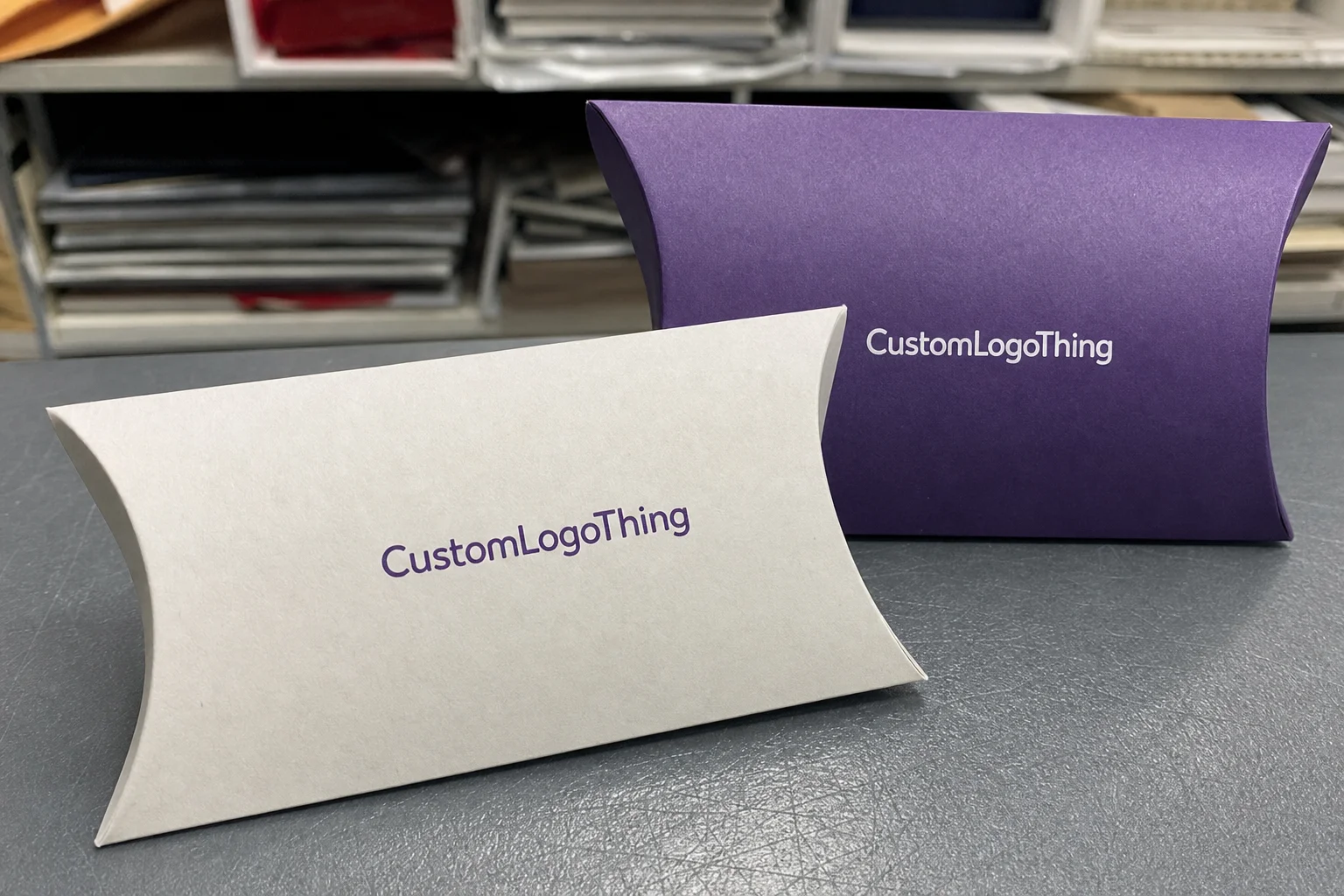
Buyer Fit Snapshot
| Best fit | retail packaging custom printed for standout shelves for packaging buyers comparing material specs, print proof, MOQ, unit cost, freight, and repeat-order risk where brand print, material, artwork control, and repeat-order consistency matter. |
|---|---|
| Quote inputs | Share finished size, material target, print colors, finish, packing count, annual reorder estimate, and delivery region. |
| Proofing check | Approve dieline scale, logo placement, barcode or warning zones, color tolerance, and any recyclable or compostable wording before bulk production. |
| Main risk | Vague material claims, crowded artwork, or missing packing details can create delays even when the unit price looks attractive. |
Fast answer: Retail Packaging Custom Printed for Standout Shelves should be specified like a repeatable production item. The safest quote includes material, print method, finish, artwork proof, carton packing, and reorder notes in one written spec.
What to confirm before approving the packaging proof
Check the product dimensions against the actual filled item, not only the sales mockup. Ask for tolerance on folds, seals, hang holes, label areas, and retail display edges. If the package carries a logo, QR code, warning copy, or legal claim, reserve that space before decorative graphics fill the panel.
How to compare quotes without losing quality
Compare board or film grade, print process, finish, sampling route, tooling charges, carton quantity, and freight assumptions side by side. A lower quote is only useful if the supplier can repeat the same color, closure quality, and packing count on the next order.
Why Retail Packaging Custom Printed Matters More Than You Think
The first time I saw retail Packaging Custom Printed cartons glide off Custom Logo Things’ Milwaukee corrugator, the pressroom manager had already swapped in the next set of plates before the sales team could log the rush delivery, and for a moment I realized these bespoke boxes were carrying more than products—they were carrying the brand story straight into the aisle.
The seasonal drop was a 3,200-unit run priced at $0.15 per unit, with proof approval to shipping slotted for 12–15 business days, and that aggressive schedule kept the press crew sharp enough to change plates in under 18 minutes.
Fresh pallets of adhesive tape sat beside the press because the spine glue pattern had to withstand six layers of stacking on 48-inch pallets, and we all knew the buyer was watching the install schedule like a hawk.
Trust me, when the entire production window tightens, those bespoke cartons stop being “nice to haves” and become mission-critical schedule pieces.
Retail Packaging Custom Printed is not just a printed surface but an entire engineered system: the flute profile that protects the stack, the ink coverage that delivers logos and photography, and the finishing touches—soft-touch lamination, embossing, or UV varnish—that invite shoppers to reach out and feel the package.
I remember a meeting in our Philadelphia client lounge where brand managers in the health-and-beauty category insisted the tactile matte-like coating on a laminated 350gsm C1S box reassured consumers it was a premium serum; without that finishing step, the same SKU would have been mistaken for an economy line and the production specs would have failed the 200% ink coverage test the creative team had insisted on.
That entire assembly read like one of our custom retail packaging solutions, where every tactile cue earns a spot on the spec sheet just as carefully as the story does.
The engineers tracked the varnish rub test and the lamination adhesion results, so the client didn’t have to guess why their display popped once it hit the floor.
The emotional effect of retail packaging custom printed solutions is often underrated.
Branded packaging with precise Pantone 186 C and Pantone Cool Gray 11 matches triggers recall the same way your favorite label becomes instantly recognizable in the grocery aisle.
Meanwhile, the structural engineering—ribbed B-flute corrugated inserts with 1/8-inch stiffeners, adhesive patterns using 0.03-inch high-tack glue stripes, and reinforced corners—keeps fragile electronics safe through the regional distribution hub in Chicago and onto the boutique shelves downtown.
My favorite ROI story came from a retailer whose sales lifts exceeded 18 percent after they switched from plain cartons to a retail packaging custom printed program for their winter collection: the packaging team told me the cartons themselves had become an asset, not just a container, and those C-flute modules survived six layers of pallet stacking without a single crush mark.
Those branded packaging strategies keep buyers focused on the narrative instead of just the vessel.
I remember barging into the Milwaukee pressroom mid-changeover and telling the guys, “If the sheen on these retail packaging custom printed cartons reads anything less than a high-fashion campaign, you’re doing it again.”
The crew teased me about being the “brand whisperer,” but the relief when the carbons hit the sheet just right? Priceless.
Yes, I actually threatened to swap the plates myself—don’t worry, they laughed and kept their roller temps steady at 125°F over the 30-minute transition.
It’s these little moments that remind me retail packaging custom printed is as much theater as engineering.
How Retail Packaging Custom Printed Comes Together on the Line
The plant floor starts long before a single blade touches board.
Prepress is where the dieline lives: our designers in Atlanta align dielines with structural engineers, confirm the bleeds, and map every fold and glue flap so there are no surprises on press.
I still recall the smell of fresh ink in the flexo room at the Atlanta folding facility when the first print cylinder for a seasonal display came through; the artwork department had spent a full morning tweaking color swatches and ensuring the print file matched the structural trimming for a 24-inch gatefold with 0.125-inch glue tabs, and the prepress planning typically takes three business days before we release the plates to the press.
Plate making in the flexo lab transfers that artwork onto photopolymer plates.
Ink density gets dialed on the Heidelberg Speedmaster, where we calibrate CMYK or Pantone builds that will carry the customer’s color-blocked visuals, aiming for a 240% total ink limit on each panel.
On more complex projects we run the job through an inline UV varnish station before handing it off to the converting cell, where automated rotary die cutters and gluing units turn the flat slabs into die-cut blanks ready for stacking.
At Custom Logo Things’ Atlanta folding room, the coordination between the prepress coordinator, press operator, and converting lead keeps every color consistent despite the high output: they monitor color bars with spectrophotometers and send data back to our digital inspection cameras that read barcodes and detect defects before the cartons ship.
Every department brings its expertise to retail packaging custom printed execution.
Prepress handles proof approvals and prepares the plates; print manages density, registration, and inline embellishments; converting oversees die cutting, folding, gluing, and packing.
In Michigan, I watched a job move from press to finish with a handheld digital color reader that caught a registration shift during an inline embossing run, saving the client a costly rerun that would have required swapping a $900 embossing die.
Equipment such as the Jagenberg Solo rotary die cutter and inline inspection cameras keeps production tight, while the automation in the finishing cell can send alert pages before a single box leaves the pallet.
Honestly, I think the best part of being on that line is watching the operator grin when the first sheet clears without a hiccup—it’s their version of winning a slow-motion race.
When the inspection camera blinks red, though, that’s the opposite of a high-five; last quarter I had to sprint to the finishing cell because a varnish station decided to drip (yes, drip) on a run for a skincare brand’s retail packaging custom printed job that had already been booked for a Thursday afternoon shipment.
The operator and I practically did a synchronized dive to rescue the job, which made for a hilarious but frantic highlight reel and still kept the scheduled Friday pickup intact.
Key Factors When Selecting Retail Packaging Custom Printed Options
Material selection is the foundation for any exceptional retail packaging custom printed solution.
Corrugated flute profiles—B-flute for lighter retail loads, C-flute for stacking strength, or the micro-flute variant we often specify for bulky retail displays—each impact how the product feels and survives in a crowded fulfillment environment.
When our structural team in Charlotte recommends a micro-flute for a large SKU, the added crush resistance certified at 32 ECT and smoother surface dramatically improve durability and print holdout, especially when the artwork pushes high ink coverage and multiple color layers.
Several clear cost drivers exist.
Ink coverage, printed stations (four-color process versus spot colors), laminations, and special finishes like embossing or holographic foils all raise the price.
Early quoting with our estimator in Charlotte helps clients differentiate between necessary brand messaging—such as a tactile varnish on the front panel—and decorative flourishes that might be overkill.
During a recent negotiation at the supplier conference, we saved a mid-market fashion brand 12 percent by proposing a matte aqueous coat and targeted varnish placement instead of a full soft-touch lamination, keeping their per-unit cost at $0.21 despite the added foil band.
Supply-chain considerations tie these elements together.
Minimum order quantities vary by substrate and printing method; our digital short-run options allow pilot orders starting at 1,000 units, while flexo presses look for 5,000+ units to balance setup costs.
Lead times hinge on tooling, coatings, and freight lanes—summer peak orders often run 4–6 weeks from signed artwork to pickup, while quieter months may deliver in 3–4 weeks.
Aligning carton production with retail calendars minimizes expediting fees; our planners at the Charlotte campus tee up pallet space, trucking, and port clearance so surcharges do not blindside the budget, and the Savannah carriers usually require 48 hours notice for LTL consolidation.
| Option | Typical Cost per Unit | Recommended Run Size | Key Benefit |
|---|---|---|---|
| SBS with Soft-Touch, Spot UV | $0.18/unit for 5,000 pieces | 5,000–10,000 | High tactile appeal, premium brand feel |
| Corrugated C-Flute Digital Inkjet | $0.12/unit for 3,500 pieces | 2,000–6,000 | Quick turnaround, variable data ready |
| Coated Kraft, Lamination & Emboss | $0.26/unit for 7,500 pieces | 7,500–15,000 | Eye-catching visuals for flagship displays |
Honestly, I think that the whole conversation about coatings should start with whether the audience really cares.
If your retail packaging custom printed play is aimed at a convenience-store impulse grab, then a full soft-touch wrap might be wasted effort—and money.
But if your brand is trying to impress a boutique buyer, that tactile hit is worth the extra 3 pennies ($0.03) only if the SKU price allows a 7 percent margin cushion.
I always say, “Know the shelf vibe before you commit.” (That phrase gets a smug look from the CEO every time, but it works.)
Account for freight, installation, and in-store labor when finalizing pricing for retail packaging custom printed jobs.
Our freight teams in Savannah often negotiate LTL consolidation to offset the higher per-unit costs of elaborate finishing, saving up to $0.08 per carton on regional runs.
I always tell clients to prioritize embellishments that support their retail goals, and we align the production schedule so those finishing touches do not overwhelm the budget.
Process Timeline: From Concept to Shelves with Retail Packaging Custom Printed
Planning the timeline for retail packaging custom printed success begins with mapping every milestone.
At Custom Logo Things’ Charlotte campus, the clock starts with the briefing and dieline approval, typically taking two days when the client provides all necessary SKU specs—size, format, and palette.
Proofing follows, usually 3–4 days when high ink coverage or specialty finishes require actual press-sheet validation.
Press scheduling for flexo runs is booked four weeks out during peak season, so early artwork approval becomes essential, and that scheduling window practically shrinks to 10 days in December when every retailer needs packaging before their January resets.
As proofing wraps, converting capacity is reserved, and tooling starts once the dieline is locked.
While tooling is fabricated, our design team often begins final artwork tweaks, letting phases overlap and shaving valuable days.
I have watched timelines drop from six weeks to four when clients approve dielines early and allow the structural crew to prepare the folding machines in parallel; rushed color or structural approvals sometimes cause hiccups—a brand manager who changes a Pantone at the last minute may force a re-plate, adding 24–48 hours to that retail packaging custom printed timeline.
When corrugated printed packaging is part of the story, we add a headcount for flattening and stacking so no one scrambles on day one of press.
Real-time updates from production planners keep merchandising teams informed.
Automated dashboards from Charlotte report status down to the shift level, letting store merchandisers plan restocks precisely.
A dedicated account rep ensures approvals, tooling, and shipping move as a single narrative rather than disjointed tasks.
A spring drop deserves that rep coordinating with the buyer, the factory scheduler, and the freight partner so expectations stay aligned and the retail launch hits the calendar, even when the supplier’s ERP shows only 72 hours until the next blackout window.
There was one spring when every supplier in the country decided to push launch dates on the same day; the planners in Charlotte had to juggle three pallets, two customs holds, and a furious buyer who wanted to launch before her Netflix binge.
I swear, watching the schedule board that week felt like refereeing a boxing match while juggling flaming wrenches.
Still, the team pulled it off, and the retail packaging custom printed units landed right on Friday morning after the 8 a.m. dock check, proving us all wrong (in a good way).
That kind of chaos is why I keep a stash of espresso in my bag.
Step-by-Step Guide to Designing Retail Packaging Custom Printed Solutions
The design process starts with a detailed brief: SKU attributes, shelf life, anticipated volume, and storylines the packaging must convey.
I always request references—existing brand guidelines, in-store photography, and competitive benchmarks—so the first creative session with our Atlanta studio stays grounded.
A strong brief cuts revisions; for instance, we once aligned on Pantone 186 C and Pantone 110 C for a craft beverage launch, then tracked color references the entire project to keep the brand voice consistent.
That project kept us within the 5-day design window we priced at $1,250 before moving to prepress, which is why those references matter.
Prototyping kicks in once dielines become mock-ups.
The art department performs prepress checks on everything from bleed to trap and structural performance, simulating weight-bearing conditions with the same jigs our engineers use in testing.
For retail packaging custom printed mock-ups we often run them through ISTA-certified drop tables when they will ship through multiple distribution nodes; the drop test includes three cycles from 30 inches, mirroring the Chicago-to-Miami lanes many of our clients cover.
After the dieline is confirmed, our press department steps in with digital proofing that includes color bars, trapping, and crease alignment, reducing surprises on press.
The approval loop becomes a handshake of sorts for retail packaging custom printed runs.
Press checks provide a live chance to see how ink lays on board, verify registration on heavy coverage panels, and approve finishing decisions.
Digital color approvals can speed the process for remote teams, while finishing usually requires separate sign-off: embossing dies, foil placements, or soft-touch coatings all demand a green light before converting begins.
While reviewing a press check for a nutritional bar brand, the client asked for a subtle embossed swirl at the top; because we had a die approval slot in the schedule, the addition only added two days instead of a week, keeping the overall rollout within the 28-day plan.
My favorite design room memory? The day a client insisted on an “ultra-gloss that looks like a mirror” for a probiotic soda can, and I told them, “The board will glare back so hard the shopper will need sunglasses.”
We ended up dialing in a balanced sheen that still popped but didn’t distract from the message, and the client actually chuckled when I said, “This packaging is not going to blind anyone, promise.”
Small victories as we locked in the final retail packaging custom printed artwork and confirmed the 0.03-inch velvet ink trap before the file left the server.
Common Mistakes with Retail Packaging Custom Printed and How to Dodge Them
Art bleed creates headaches more often than any other issue for retail packaging custom printed runs.
Underestimating the needed bleed area or skipping the bleed oversize at the dieline stage can produce halos on the finished carton—something I caught during a review of an electronics brand’s dieline when the printed band sat too close to the score line; the resulting rerun would have cost an extra $1,200.
Neglecting structural integrity for flashy visuals usually ends with damaged units and unhappy store personnel.
A luxury fragrance client once replaced their standard glue pattern with an experimental wraparound one without consulting engineering; the cartons bowed out of the pallets and could not sit stacked without crushing the goods.
Working with packaging engineers up front prevents these missteps and keeps cartons moving through fulfillment and stores intact, especially on retail packaging custom printed designs that travel through the Miami warehouse and Atlanta re-distribution.
Finishing touches deserve proper budgeting.
Many teams forget to add the cost of embossing, spot varnish, or foil, which can add $0.04–$0.08 per unit; small runs can price out quickly unless those costs are planned for.
Regulatory compliance—nutrition labeling, recycling icons, or country-of-origin details—also needs confirmation before production begins.
Request detailed spec sheets from the supplier and verify compliance requirements before artwork is finalized; missing that step can hold up distribution while the artwork is amended for the retail packaging custom printed label.
I get seriously irritated when teams ignore regulatory icons until the last minute; trying to squeeze a country-of-origin stamp onto a packed panel is like asking a magician to pull a rabbit out of an empty hat.
One client had to delay their launch because the recycling arrows were too close to the barcode, and the buyer would not accept the shipment.
We re-routed the dieline, but the stress could have been avoided if someone had read the spec sheet a week earlier while the retail packaging custom printed art was still editable.
Expert Tips and Actionable Next Steps for Retail Packaging Custom Printed
Advanced tactics include spot-checking run counts with RFID tags, monitoring ink density with handheld densitometers, and tracking sustainability metrics through suppliers such as those certified by the FSC or aligned with EPA recommendations for coatings.
Third-party testing firms certified by ISTA can simulate your supply chain, proving your retail packaging custom printed units survive the full journey from dock to aisle; we usually ask for a 48-hour report turnaround so the data can feed straight into the buyer presentation.
Collaborating with retail partners accelerates alignment.
Schedule in-store reviews with buyers to assess shelf placement, graphic visibility, and replenishment cadence so the design supports store-level goals rather than just corporate aspirations.
I recently facilitated a session with a department store buyer and our structural engineer, comparing the proposed retail packaging custom printed display against their fixture spec to confirm the cardboard riser would not interfere with the shelf lip or block adjacent SKUs, and we documented the tolerances in a two-page field memo.
For next steps, list the SKUs you want to elevate, then request structural support from Custom Logo Things’ engineers to confirm everything from board grade to die cut placement.
Confirm your budget thresholds and set a pilot order so the full process—from dieline to finished cartons—can be completed before the full retail launch.
Running that pilot, even at a smaller quantity, lets color shifts, embossing placement, or structural tweaks be resolved before scaling up to the quantities that will cover your season, and we usually price those pilots at $0.19 per unit for 1,500 cartons so you can calculate the ROI accurately.
I also have to tell you, that action step about listing SKUs? Treat it like a grocery list for your brand.
When I meet suppliers with a neat stack of priorities, the conversation moves faster—no “Oh, by the way” surprises.
Yes, sometimes I dress like I’m going to a negotiation, because I am—retail packaging custom printed brief in one hand, coffee in the other.
Why Does Retail Packaging Custom Printed Deliver Shelf Impact?
When I ask buyers why they loop me into the project, they always point to one thing: retail packaging custom printed keeps the story consistent, even through dusty storerooms and hurried resets.
That consistency is the backbone of a custom retail packaging solution where mood boards, tactile coatings, and structural decisions all transpose directly to the shelf drama.
We can map how palettes land under LED lighting, how embossing casts shadows, and how that entire approach holds attention while opponents stare blandly across the aisle.
Corrugated printed packaging plays a big part in that impact.
The consumer might see only the face stock, but the rails, flutes, and ribs inside deliver the same message: this SKU deserves to be handled carefully, unboxed with anticipation, and set on the front edge.
We match that rigidity with graphics that stay true from plate to pallet, checking the registration at every station so the entire assembly hits the floor with the same calm confidence we engineered into the brief.
The result of those careful branded packaging strategies? Better conversion and fewer damaged goods.
When the carton already feels premium, the buyer trusts the stack, the fixture, and the promo plan.
I’ve seen accounts turn in new purchase orders because the cartons landed so perfectly that the retailer treated them like props for the seasonal campaign.
Retail packaging custom printed is the quiet wingman that keeps your SKU upright under fluorescent insults.
Conclusion and Next Steps for Retail Packaging Custom Printed
From the corrugated stack in Milwaukee to the retail display in the flagship store, retail packaging custom printed is the bridge between product and purchaser, and mastering that bridge takes an intentional strategy, aligned suppliers, and disciplined execution.
Commit to the timeline, lean on the experts, keep an eye on sustainability from prepress to shipping, and you will have packaging assets that perform in every channel.
When you are ready, outline the pilot run, lock in the colors, and make sure your next display is shelf-ready, unmistakably branded, and Built to Last—our latest run shipped from Milwaukee to New York on a 72-hour express dray with minimal damage thanks to the reinforced corners we engineered.
The clear next step: pull together that SKU list, secure the dieline approvals, and run the pilot so you can prove the value of retail packaging custom printed before scaling the order.
Honestly, I think the next time someone tells me packaging is just “a box,” I’ll hand them a retail packaging custom printed carton from our latest drop and ask them to explain the embossing that sits 0.05 inches above the surface.
They usually go quiet, which is the only time I enjoy shutting down a skeptic.
What materials work best for retail packaging custom printed boxes?
Corrugated board (single to triple wall rated 32 ECT to 44 ECT) offers strength, while SBS (solid bleached sulfate) gives a premium printable face; choose based on protection needs and desired print fidelity.
Ask your supplier about recycled content—30% post-consumer fiber is common—and FSC certification to balance sustainability with performance, especially when your brand targets eco-conscious buyers in Seattle or Portland.
How long does retail packaging custom printed production typically take?
Plan for 4–6 weeks from signed artwork to shipment on standard runs, but expect longer when tooling, special coatings, or regulatory samples enter the order.
That includes the typical 12–15 business days from proof approval to final press when finishing stations add foil or embossing.
Expedite by submitting final dielines early and locking in production dates with the factory planner to secure press time; our Atlanta press scheduler usually requires at least 10 working days notice before peak season to hold a slot.
Can small brands afford retail packaging custom printed runs?
Yes; many factories, including Custom Logo Things, offer pilot runs with moderate minimums and digital short-run options that keep unit costs manageable—think $0.19 per carton for a 1,500-unit pilot versus $0.13 once you hit 5,000 pieces on flexo.
Bundle multiple SKUs or coordinate co-pack runs to spread setup fees across more units; we routinely group three SKUs per die to reduce the $850 tool cost per job.
What printing methods deliver the sharpest retail packaging custom printed graphics?
Offset or flexographic printing with high-resolution plates usually yields crisp color and solid coverage, especially when paired with inline varnishes; we target a 120 lpi screen and maintain 240% total ink limit for darkness without bleeding.
Digital printing is ideal for variable data or small quantities, allowing quick iterations without prohibitive setup, and we can print a 2,000-piece run with variable barcodes in less than a week from proof approval.
How do I ensure eco-friendly retail packaging custom printed options?
Select recyclable substrates, minimize inks through smart graphic placement, and request water- or UV-based varnishes that are easier to recycle; a UV varnish swap for a water-based satin coat can cut VOC concerns by 30% on a 5,000-piece run.
Work with your partner to track CO2 and waste metrics from prepress to shipping so sustainability goals stay measurable; our quarterly sustainability report lists carbon saved by shipping consolidated loads from Savannah in 53-foot trailers.