Buyer Fit Snapshot
| Best fit | Retail Packaging Custom Printed projects where brand print, material claims, artwork control, MOQ, and repeat-order consistency need to be specified before quoting. |
|---|---|
| Quote inputs | Share finished size, material target, print colors, finish, packing count, annual reorder estimate, ship-to region, and any compliance wording. |
| Proofing check | Approve dieline scale, logo placement, barcode or warning zones, color tolerance, closure strength, and carton packing before bulk production. |
| Main risk | Vague material claims, crowded artwork, missing packing details, or unclear freight terms can make a low unit price expensive after revisions. |
Fast answer: Retail Packaging Custom Printed: Artwork Proof, Packing Count, and Landed Cost should be specified like a repeatable production item. The safest quote records material, print method, finish, artwork proof, packing count, and reorder notes in one written spec.
Production checks before approval
Compare the actual filled-product size with the drawing, then confirm tolerance on folds, seals, hang holes, label areas, and retail display edges. Reserve space for logos, QR codes, warning copy, and material claims before decorative graphics fill the panel.
Quote comparison points
Review material grade, print process, finish, sampling route, tooling charges, carton quantity, and freight assumptions side by side. A quote is only useful when the supplier can repeat the same color, closure quality, and packing count on the next order.
Retail packaging custom printed gets judged in seconds. A buyer spots the box, scans the shelf, and decides whether the product feels worth the price before they ever touch it. That is why retail packaging custom printed is not a decoration choice. It is a sales decision, a shipping decision, and a waste decision if the spec is wrong.
Good packaging does more than hold the product together. It frames value, protects the contents, keeps retailers from complaining, and tells customers the brand knows what it is doing. Bad packaging does the opposite. Usually with enthusiasm. Usually at a cost.
I have watched buyers approve a package in 30 seconds and then spend 30 minutes dissecting why another one felt cheap. That gap says a lot. The box is doing a lot of the talking before the product gets a word in. If the package is flimsy, the brand starts behind. If it feels deliberate, the product gets a fair shot.
If you are weighing packaging options, the real question is blunt: what does the box need to do, and what can you spend without sabotaging the job?
What Retail Packaging Custom Printed Really Means
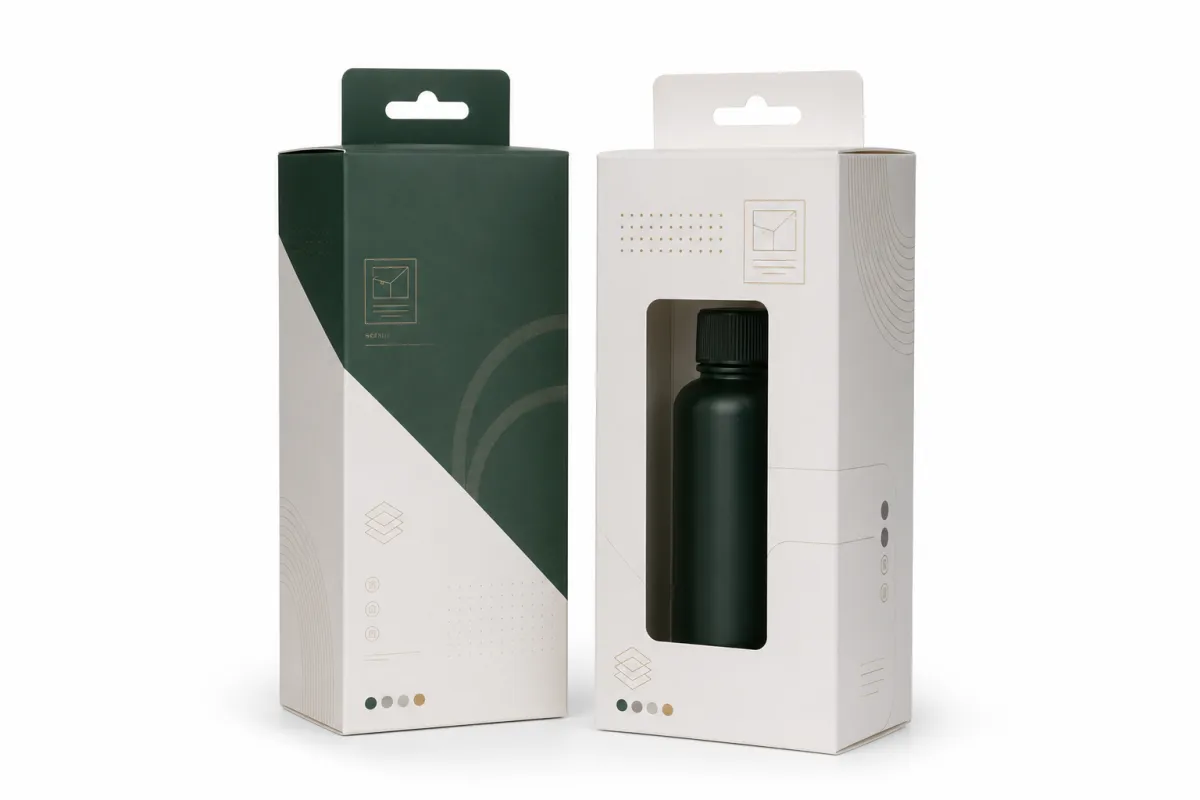
Retail packaging custom printed means packaging built for one product or one product line, with artwork, structure, and branding designed into the final box, carton, sleeve, or display. Not pulled from a generic shelf. Not slapped together from whatever was cheap. Not the kind of package that looks like it lost a fight with procurement. It is packaging made to represent the product, and the first impression often happens before anyone touches the item inside.
That can take a few forms. Folding cartons for cosmetics or supplements. Mailer boxes for direct-to-consumer launches. Counter displays for small retail runs. Sleeves, inserts, and shipping-ready outer cartons. The common thread is control. The packaging is shaped, sized, and printed for a specific purpose, which is why retail packaging custom printed usually beats stock packaging in crowded categories.
Stock packaging has one easy advantage: speed. It is cheap to source, and setup is usually simple. The tradeoff shows up fast. Less control over shelf presence. Less control over fit. Less control over package branding. A stock box might shave a few dollars off the front end, then cost more through product movement, returns, or a weak shelf impression. Retail packaging custom printed gives you control over the whole experience. That is usually the point.
From a buyer’s point of view, retail packaging custom printed affects three things at once. First, perceived value. Second, compliance, including barcodes, warnings, and required copy. Third, opening experience, which is a plain way of saying whether the customer feels pleased or slightly annoyed after unboxing. That is not fluff. It shapes how the product is remembered.
Short version: retail packaging custom printed is not about adding ink for decoration. It is about building packaging design around the product, the channel, and the customer expectation. Done well, it supports conversion, reduces damage, and makes the brand look deliberate. Done badly, it looks like the packaging was chosen in a meeting no one wanted to attend.
For brands starting from scratch, it helps to compare existing Custom Packaging Products and figure out which structure fits the product before obsessing over finishes. That order matters. Pretty art cannot rescue the wrong box size.
There is a real sustainability angle here. Retail packaging custom printed can cut waste when you Choose the Right board, avoid oversized cartons, and skip decorative extras that do nothing except drive up cost. A tighter fit means less filler. A smarter structure means fewer damaged units. Better for product packaging. Better for the person staring at the invoice.
And yes, “eco-friendly” claims need proof. FSC certification, recycled content statements, and transport testing are only useful if they match what is actually in the spec. Greenwashing is still greenwashing, even if the box has kraft paper and a leaf on it.
“A good retail box should do three jobs at once: protect the product, carry the brand, and not annoy the person who has to stock or open it.”
How Does Retail Packaging Custom Printed Work?
Retail packaging custom printed usually starts with a brief, not a design file. A useful brief includes product dimensions, weight, retail channel, target quantity, and the finish level you actually need. That last part gets ignored all the time. A matte folding carton for a shelf display behaves differently from a corrugated mailer built for shipping abuse. If the brief is vague, the quote will be vague. Vague quotes are where budgets disappear.
The next step is structure. A printer or packaging supplier builds a dieline, the flat template that shows folds, panels, glue tabs, and cut lines. If the dieline is wrong, the artwork is wrong. If the artwork is wrong, barcode placement, panel alignment, and fold behavior can go sideways fast. Retail packaging custom printed depends on this stage more than most brand teams realize, because a clean file on screen can still fail at the creases.
Then comes print method selection. Digital printing usually fits shorter runs, versioned artwork, or launches that may change quickly. Offset printing makes sense when you need crisp detail, tighter color control, and larger volume. Flexographic printing can work for some high-volume corrugated jobs, especially where speed and repeatability matter more than tiny detail. None of these is magic. Each has a sweet spot, and retail packaging custom printed gets better when the method matches the job instead of the sales pitch.
Proofing saves money. A digital proof catches layout mistakes, spelling errors, missing legal copy, and bad barcode placement. A physical sample catches the parts the screen cannot show: whether the board feels flimsy, whether the lid fits, whether the fold lines line up, and whether the finish feels expensive or cheap. Retail packaging custom printed should never go to production on hope alone. Hope does not catch defects.
Most standard jobs move through this sequence:
- Product measurements and packaging brief
- Dieline setup and structural confirmation
- Artwork placement and copy review
- Digital proof approval
- Physical sample or pre-production sample
- Production printing and converting
- Finishing, packing, and shipment
Simple retail packaging custom printed runs can move in a few weeks once artwork is final. Structural changes, custom inserts, foil, embossing, or spot UV add time. If the supplier needs tooling or a specialty material, the schedule stretches again. That is normal. Packaging is not an instant switch.
For buyers comparing options, it helps to browse custom printed boxes and match the structure to the product before chasing quotes. The right box shape usually saves more than the cheapest print line.
Key Factors That Shape Quality, Cost, and Shelf Impact
Material choice is the first big decision in retail packaging custom printed. Folding carton stock such as 14pt to 24pt SBS works well for lightweight retail products that need sharp print and a clean shelf look. Corrugated board, including E-flute and B-flute, handles shipping and stacking better. Rigid board gives a more premium signal, but it adds cost and weight. Kraft paper creates a natural look, which fits organic or eco-minded brands. Each material says something, whether you planned it or not.
Print quality comes next, and it matters more than most buyers admit. Color consistency, line sharpness, and small text legibility are not extra polish. They are the point. A box that looks rich in a mockup can still print flat under retail lighting if the ink coverage is off or the art was built poorly. Retail packaging custom printed should look strong from arm’s length and still hold up when someone lifts it under harsh store lights.
Finishes change both cost and perception. Matte lamination feels calm and modern. Gloss adds energy. Soft-touch feels premium, though it can wear down if the product gets handled a lot. Spot UV draws attention to a logo or product name. Foil adds shine, but too much of it can make the package look busy. Embossing and debossing add texture without shouting. Retail packaging custom printed works best when the finish supports the message instead of trying to win a volume contest.
Structural design should match the product, not the mood board. A tuck-end carton might suit a lightweight beauty item. A mailer box fits subscription and DTC shipping better. A tray-and-sleeve can work for presentation-heavy products. Inserts matter too. If the product rattles around, the packaging is failing even if the artwork is gorgeous. Good product packaging protects the item first, then looks good. That order matters.
There is also the compliance side, which feels boring right up until it costs money. Barcode placement needs quiet space around it. Legal copy may need specific panel sizing. Food, supplement, and cosmetic packaging can carry regulated text requirements. Some retail packaging custom printed projects also need tamper evidence or retailer-specific labeling. If you are shipping by parcel, test against accepted transport methods and damage risk; organizations such as ISTA outline useful packaging test standards. If you need paperboard with a chain-of-custody claim, FSC explains certification basics.
Practical rule: spend money where customers actually look and touch. Front panel. Closure. Texture. Structure. Save money on hidden sides, oversized decoration, and decorative extras that do not move product. Retail packaging custom printed gets expensive fast when brands treat every surface like a billboard.
- Best for print clarity: SBS folding cartons and smooth coated boards
- Best for shipping strength: corrugated cartons with proper flute selection
- Best for premium feel: rigid board with soft-touch, foil, or embossing
- Best for natural look: kraft stock with restrained ink coverage
One more thing: do not trust the mockup too much. Retail packaging custom printed can look fantastic on screen and still fail in hand if the board is too thin, the finish is off, or the fold lines feel awkward. The hand test matters. People buy with their eyes, then justify with their hands. And yes, sometimes the sample looks a little weird on the table and still works perfectly in a store. Packaging is kinda annoying like that.
Retail Packaging Custom Printed Costs, Pricing, and Tradeoffs
Retail packaging custom printed pricing usually comes down to size, substrate, print coverage, quantity, finishing, and whether you need tooling or inserts. A small folding carton with simple one- or two-color print is a very different quote from a rigid box with foil, soft-touch lamination, and a custom insert. That sounds obvious, yet buyers still compare quotes as if every box were interchangeable. It is not. It never is.
The biggest pricing trap is staring at the unit price and ignoring the rest. A box quoted at $0.22 each can cost more than a $0.28 box if the first one carries a high setup fee, expensive freight, or a minimum order that forces you to overbuy. Retail packaging custom printed should be judged on landed cost, not headline cost. Otherwise you are just buying a cheap number and calling it a plan.
Quantity matters because setup cost gets spread across more pieces. A 1,000-piece order usually has a higher unit cost than a 5,000-piece order. A 10,000-piece run may bring the price down again, but then storage and cash flow enter the chat. There is no prize for buying more boxes than you can use in the next few months. Overstock sits there. It does not sell products. It just takes up space and cash.
Here is a practical way to compare retail packaging custom printed options:
| Option | Typical Use | Approx. Unit Cost | Strengths | Tradeoffs |
|---|---|---|---|---|
| Stock box with label | Fast launches, test runs | $0.10-$0.40 | Low setup, quick turnaround | Weak shelf presence, limited fit control |
| Custom folding carton | Light retail products | $0.18-$0.65 | Clean print, strong branding | Less protection than corrugated |
| Custom corrugated mailer | DTC and shipping retail goods | $0.55-$1.80 | Better protection, strong unboxing | Higher freight, larger footprint |
| Rigid premium box | Luxury or gift packaging | $1.50-$5.00+ | Premium feel, strong presentation | Higher cost, heavier shipment |
Those ranges are not sacred. They move with board choice, print method, location, and the amount of decoration you pile on top. They are still useful enough to stop people from pretending every packaging budget can do everything. Retail packaging custom printed is built on tradeoffs. Better finish, better strength, better speed, or better price. Usually not all four.
Where should you spend? On the front panel, the closing mechanism, and any tactile feature that makes the pack feel intentional. Where can you save? On hidden panels, internal areas nobody sees, and decorative extras that raise cost without improving shelf performance. That is the kind of decision retail packaging custom printed rewards.
Ask for three tiers if you are comparing suppliers:
- Good: functional structure, standard print, simple finish
- Better: upgraded board, stronger color control, one premium detail
- Best: premium structure, specialty finish, custom insert, tighter presentation
If a supplier only gives one quote, they are probably steering you toward their favorite setup, not necessarily the best one for your brand. A better move is to compare a baseline spec and two upgrades. Retail packaging custom printed becomes easier to buy when you can see what each change costs.
For teams still defining the spec, the safest move is to request a quote from Custom Packaging Products with your dimensions, board target, and quantity tiers spelled out. That gives you something real to compare instead of a dreamy number with no context.
Step-by-Step Timeline for Retail Packaging Custom Printed
A typical retail packaging custom printed project follows a predictable path, even if the people involved act like every job is unique. The steps are briefing, dieline creation, artwork placement, proof review, sample approval, production, inspection, packing, and delivery. Skip one step, and the schedule gets messy. Rush one step, and quality usually pays for it.
Simple retail packaging custom printed projects can move in roughly 10-20 business days after proof approval, depending on quantity and production method. More complex jobs with custom structures, specialty finishes, inserts, or retailer compliance checks can take 3-6 weeks or more. If tooling is needed, add time. If the artwork is not final, add time. If the team has to “circle back” five times, add even more time. Packaging is willing to wait. Shipping dates are not.
The bottlenecks are usually dull. Missing dimensions. Unclear barcodes. Late legal copy. Slow feedback. Someone forgot the Pantone reference. Someone else assumed the printer would fix it later. That is not how retail packaging custom printed works. The printer is not there to read minds. The job moves fastest when the brand sends final copy, exact measurements, and one person who can approve without creating a subcommittee.
If you want to speed up a project without turning it into a disaster, do these things early:
- Measure the product with actual calipers or a reliable ruler, not eyeballing it.
- Confirm whether the box is for shelf display, shipping, or both.
- Lock the copy before design starts, especially legal text and barcode numbers.
- Ask for the correct dieline before placing artwork.
- Approve samples quickly and with a written checklist.
Rush orders do happen. A launch gets moved up. A retailer changes the date. A trade show appears out of nowhere and suddenly everyone wants packaging tomorrow. Retail packaging custom printed can sometimes be accelerated, but the tradeoff is usually higher cost, fewer finish options, and less room for revisions. Faster is rarely free. Annoying, but true.
Best practice: treat packaging like a production asset, not a last-minute art project. Brands that plan early usually get better retail packaging, less waste, and fewer emergency reprints. Brands that wait until launch week usually get expensive lessons instead.
One useful habit is to build a simple packaging calendar before you commit. For example:
- Week 1: brief, dimensions, structure selection
- Week 2: dieline and artwork review
- Week 3: proof and sample sign-off
- Week 4-5: production and inspection
- Week 6: packing, shipping, receiving
That kind of map keeps retail packaging custom printed grounded in reality. No guesswork. No magical thinking. Just a sequence That Actually Works.
Common Mistakes With Retail Packaging Custom Printed
The first mistake is designing for the mockup instead of the shelf. A mockup can look polished on a presentation slide and still vanish in the store. Retail packaging custom printed has to compete with loud neighboring packs, awkward shelf heights, and ugly lighting. If the structure and contrast do not work in the real display environment, the pretty render is just slide deck wallpaper.
The second mistake is forgetting the product inside. A weak insert, a loose fit, or the wrong board strength creates damage, returns, and bad first impressions. You can have strong package branding and still ship a product that arrives dented, rattling, or bent. That is not a packaging win. It is an expensive lesson.
The third mistake is asking the printer to do something the material cannot do. Tiny type on dark backgrounds. Heavy full-bleed color on a low-grade stock. Foil in a fold area that will crack. Impossible expectations are not clever. They are a fast way to make retail packaging custom printed more expensive and less reliable.
The fourth mistake is skipping sample review. A digital proof is useful, but it does not tell you how the fold behaves, how the carton closes, or how the finish looks under actual light. A physical sample is where the truth shows up. If the sample feels too flimsy or too tight, fix it before the production run. One sample can save a lot of money.
The fifth mistake is ordering too tightly. If the launch works, your best problem is demand. But if you ordered only enough retail packaging custom printed units for a perfect forecast, you may end up scrambling for a second run while customers are waiting. A modest cushion is usually smarter than pretending demand will obey a spreadsheet.
Here are the errors I see most often:
- Ignoring retailer requirements for barcode space or labeling
- Using a finish because it looks premium, not because it fits the product
- Choosing a structure that protects poorly during transit
- Approving artwork before confirming the dieline
- Ordering a quantity that leaves no room for launch demand
If you are building retail packaging custom printed for a crowded aisle, remember this: buyers rarely reward cleverness that hurts usability. They reward clarity, fit, and confidence. Fancy is fine. Confusing is expensive.
Expert Tips and Next Steps for Better Packaging Decisions
Start with the channel, not the decoration. Shelf display, shipping, and in-store handling should shape the structure first. A package that has to survive parcel shipping needs different bones than a package that sits neatly on a retail shelf. Retail packaging custom printed gets easier to manage when the structure decision happens before anyone starts fighting over foil colors.
Use one strong brand signal instead of five weak ones. Maybe the color carries the look. Maybe the texture does. Maybe the structural shape does the heavy lifting. If the box is trying to say everything at once, the result is usually noise, not premium. Good packaging design is selective. It knows what to say and what to leave out.
Ask suppliers for samples that prove the hard parts, not just the pretty parts. You want fit, folding behavior, coating quality, and print clarity. Retail packaging custom printed should be checked in hand, under the kind of light your customer will actually see. If the supplier hesitates to provide a sample or dodges board specs, that is a signal. Usually not a flattering one.
Write a clean packaging brief before you request quotes. Include dimensions, product weight, quantity, delivery deadline, target finish, and budget range. Add whether the packaging must be shelf-ready, mailer-safe, or both. That one page can save days of email churn. It also helps you compare quotes like a person who expects answers instead of guessing why one supplier is $4,000 higher than another.
For brands balancing budget and presentation, a phased approach often works well. Start with a core retail packaging custom printed spec that covers fit, structure, and brand basics. Then decide whether premium finishes belong on the first run or the second. Not every launch needs foil, embossing, and three layers of lamination. Some do. Most do not. The category and the margin decide that.
If you need a starting point, compare a few options on Custom Packaging Products and narrow the field by structure first, then finish, then price. That order saves time because it keeps you from falling in love with a box that cannot do the job.
Here is the practical next-step sequence I recommend:
- Measure the product and note the retail channel.
- Collect two or three competitor boxes for reference.
- Request quotes across at least three quantity tiers.
- Ask for one digital proof and one physical sample.
- Compare landed cost, not just unit price.
That process gives you something usable. It keeps retail packaging custom printed tied to real specs, not vague design opinions. And if you are choosing between several suppliers, the best one is usually the one that asks sharper questions, not the one that makes the prettiest promises.
What is retail packaging custom printed, and when should I use it?
It is packaging built for your product with your artwork, structure, and retail branding baked into the final spec. Use retail packaging custom printed when shelf presence, product fit, or brand consistency matters more than the absolute cheapest box. It makes the most sense in crowded categories where package branding can influence whether a customer even picks the item up.
How much does retail packaging custom printed usually cost?
Price depends on size, material, quantity, print coverage, and finish complexity. A simple retail packaging custom printed carton might sit in the low cents per unit at scale, while a premium rigid box can move into the dollars. Always ask for landed cost, because freight, setup, and sample charges can make a “cheap” quote surprisingly expensive.
How long does retail packaging custom printed take to produce?
The schedule usually includes dieline setup, proofing, sample approval, production, and shipment. Simple retail packaging custom printed jobs can be ready in a few weeks once artwork is final, while custom structures and special finishes add time. If the deadline is tight, send final dimensions, final copy, and one decision-maker from the start.
Which materials work best for retail packaging custom printed?
Folding cartons work well for lighter retail products that need clean print and a tidy shelf look. Corrugated boards are better if the package has to ship well. Rigid board fits premium products where the feel of the box is part of the sale. The right material for retail packaging custom printed depends on product weight, retail handling, and how much protection the box has to provide.
What files do I need for retail packaging custom printed?
You usually need print-ready artwork, a correct dieline, vector logos, and final copy. Use the right bleed, safe margins, and color mode so the printer is not guessing. A proof checklist helps confirm barcodes, legal text, and panel placement before production. That is how retail packaging custom printed avoids expensive surprises.
Final takeaway: retail packaging custom printed works best when you treat it like a business tool, not a decoration exercise. Choose the structure for the product, the material for the channel, and the finish for the customer experience. Do that, and retail packaging custom printed can lift shelf appeal, cut waste, and make your brand look a lot more intentional than the competition.

