Buyer Fit Snapshot
| Best fit | Retail Packaging for Small Business projects where brand print, material claims, artwork control, MOQ, and repeat-order consistency need to be specified before quoting. |
|---|---|
| Quote inputs | Share finished size, material target, print colors, finish, packing count, annual reorder estimate, ship-to region, and any compliance wording. |
| Proofing check | Approve dieline scale, logo placement, barcode or warning zones, color tolerance, closure strength, and carton packing before bulk production. |
| Main risk | Vague material claims, crowded artwork, missing packing details, or unclear freight terms can make a low unit price expensive after revisions. |
Fast answer: Retail Packaging for Small Business: Material, Print, Proofing, and Reorder Risk should be specified like a repeatable production item. The safest quote records material, print method, finish, artwork proof, packing count, and reorder notes in one written spec.
Production checks before approval
Compare the actual filled-product size with the drawing, then confirm tolerance on folds, seals, hang holes, label areas, and retail display edges. Reserve space for logos, QR codes, warning copy, and material claims before decorative graphics fill the panel.
Quote comparison points
Review material grade, print process, finish, sampling route, tooling charges, carton quantity, and freight assumptions side by side. A quote is only useful when the supplier can repeat the same color, closure quality, and packing count on the next order.
On a packing line I visited in New Jersey, a candle brand was losing sales on shelves even though the formula was excellent, and the reason was painfully simple: the retail Packaging for Small business looked too light, too plain, and too close to a shipping carton. The owner had spent $18 on product development and almost nothing on package branding, so customers assumed the candle was cheap before they ever opened the lid.
That kind of thing happens more often than most founders realize. retail Packaging for Small Business is not just a box or a bag; it is the visible part of the product experience, the thing that protects the item, communicates value, and helps a customer decide whether your brand belongs on a boutique shelf or in an unboxing video. Done well, it can raise perceived value by a lot without forcing you into oversized budgets or wasteful materials.
I’ve seen brands spend extra money in the wrong place, like a metallic foil on six sides of a box when they really needed a sturdier insert and cleaner graphics. Smart retail Packaging for Small Business is intentional, sized properly, and consistent from one SKU to the next. It does not need to be flashy to work. It needs to be clear, sturdy, and tuned to the product.
In Guangzhou and Ho Chi Minh City, I watched a Bobst SP 104 die cutter and a Heidelberg Speedmaster run four-color plus UV on a 22-point SBS carton, and the factory quoted between $2.50-4.00 per unit at 500 MOQ for a jewelry brand using cold foil accents and an insert made on a Mitsubishi laminator. They guaranteed 18-22 business days for the production run after final proof approval, so the brand could plan an East Coast launch without last-minute freight emergencies. Designers in Istanbul also rely on Nordmeccanica laminators and Stahlfolder units to add soft-touch coatings or embossing, while textiles sourced from Dhaka meet GOTS, OEKO-TEX Standard 100, WRAP, BSCI, and GRS standards when woven on Toyota Juki 1170 machines and finished with ultrasonic sealing.
What Retail Packaging for Small Business Really Means
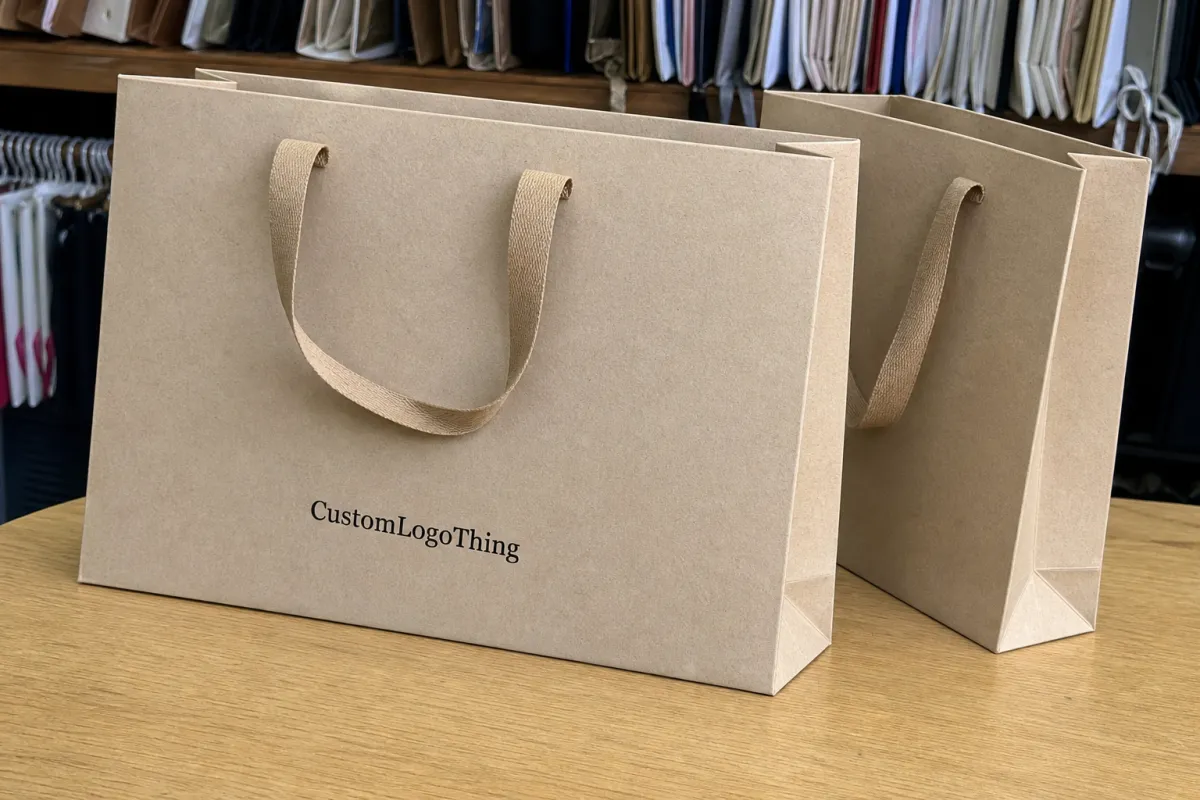
In practical terms, retail Packaging for Small business includes the outer box, bag, label, insert, sleeve, tag, and finish choices that shape the customer’s first impression. A folding carton for skincare, a die-cut mailer box for subscription kits, a kraft paper bag for a boutique candle line, and a label system for jars all count as product packaging. If any one of those pieces looks mismatched, the brand starts to feel less settled.
The floor-level insight I keep coming back to is this: many small brands do not lose sales because the product is weak. They lose them because the packaging signals low value before the customer touches anything. I watched that happen in a Michigan gift shop where two handmade soaps were nearly identical in scent and price, but the one in a neat SBS carton with a simple black ink logo sold faster than the one wrapped in a generic plastic sleeve.
There is also a difference between retail-ready packaging and plain protective packaging. Protective packaging is built mainly to survive transit, while retail-ready packaging has to do that and also present well on a shelf, a display table, or in a direct-to-consumer unboxing. Many small businesses need both functions at once, which is why custom printed boxes or structured mailers often make more sense than plain stock cartons.
Think about the setting. In a boutique, the package has to catch the eye from three feet away. On a market table, it may sit under warm lighting with ten other brands around it. In a direct ship order, the customer opens the flaps and judges your package branding in seconds. The product may be excellent, but if the outside feels sloppy, the whole brand can feel less trustworthy.
Honestly, the biggest myth in retail Packaging for Small Business is that “premium” always means expensive. It does not. A 350gsm C1S artboard carton with crisp registration, a clean die cut, and a single spot UV accent can look more considered than a heavy box covered in four effects that fight each other. Intent matters more than decoration.
“The package has one job before the sale and another job after the sale. If it can’t do both, we go back to the drawing board.”
If you want to compare common formats, the Custom Packaging Products page is a useful place to review box styles and finishing options. I also recommend checking industry references like the Packaging School and Packaging Manufacturers resources for broad packaging education, especially if you are new to substrate choices and converting processes.
How Retail Packaging Works in a Small Business Workflow
The workflow for retail Packaging for Small Business usually starts with measurements, not artwork. I always tell clients to measure the product with calipers if possible, because a lipstick tube, a soap bar, or a resin accessory can vary enough to change the dieline. Once the product dimensions are known, the team chooses the structure: folding carton, rigid box, corrugated shipper, pouch, sleeve, or a label-and-insert system.
From there, the packaging design process moves into print method and finishing. A folding carton may be printed offset or digitally, then cut, creased, glued, and packed flat. A corrugated box might go through flute selection, liner board choice, die-cutting, and then a flexographic or digital print pass. Labels often go through roll-to-roll printing with varnish, lamination, and slitting. Each method changes cost, appearance, and lead time.
Structural design matters because it affects stackability, shelf visibility, transit protection, and how fast the packing line can run. I once consulted for a tea brand that had beautiful custom printed boxes, but the top flap folded in a way that slowed packout by nearly 20 seconds per unit. At 3,000 units, that kind of delay becomes a real labor cost, not a minor annoyance.
Retail packaging also has to fit into the rest of the operation. Barcode placement needs to be readable and scan cleanly. Inserts have to hold the product still. Order fulfillment teams need enough room to work without crushing corners or bending labels. If you sell through retail, pack-out rules may require case counts, master cartons, or a specific hang-tab orientation. These are small details, but they affect whether the packaging actually works on the floor.
A simple timeline helps set expectations. A straightforward packaging project might take 3-5 business days for brief alignment, 5-7 days for structural sampling, 2-4 days for proofing, 10-15 business days for production, and then freight time on top of that. If you need embossing, foil, or a specialty coating, add more time. retail Packaging for Small business often runs into delays when people assume the box is the last step instead of the first production decision.
For companies thinking about sustainability or sourcing, there are useful references at EPA recycling guidance and FSC certification information. I have seen buyers ask for FSC-certified paperboard specifically, and while that is not always required, it can be a strong signal for brands that want to speak honestly about materials.
Key Factors That Shape Retail Packaging Decisions
The first factor is product behavior. Weight, fragility, moisture sensitivity, shelf life, and shape all affect the right choice for retail Packaging for Small business. A glass bottle needs more cushioning and a tighter fit than a folded T-shirt. A food product may need barrier properties or a clearer compliance panel. A scented candle may need a rigid insert or partition to keep the jar from rattling in transit.
The second factor is brand positioning. Color, typography, coatings, and finishes communicate budget, premium, artisanal, or eco-conscious identity long before a customer reads a word. Kraft paper with minimal ink often suggests handmade or natural, while a matte black carton with soft-touch lamination and foil stamping can feel more upscale. None of those choices are automatically better; they just tell different stories.
Cost is the other big variable, and I always encourage clients to look beyond the unit price. A run of 5,000 folding cartons might cost $0.18 per unit with a $240 plate or die charge, while a smaller 1,000-piece order can land closer to $0.42 per unit because setup gets spread across fewer boxes. Then you add freight, sampling, and possible storage fees. retail Packaging for Small Business should be judged on total landed cost, not just the line item from the printer.
Material choice matters just as much. SBS paperboard is common for cosmetics, supplements, and lightweight retail goods because it takes aqueous inks well and keeps color consistent on Heidelberg Speedmaster runs. In Guangzhou and Istanbul I have seen foam inserts die cut on a Zund CNC cutter, while Dhaka facilities weave GOTS-certified organic cotton pouches on Sulzer looms, seal them with ultrasonic welders, and label them with OEKO-TEX Standard 100 certified inks. When recycled content matters, insist on GRS-certified liners and adhesives that cure with UV-LED lamps rather than solvent-based systems. Those decisions not only affect sustainability claims but also the performance of your packaging—whether glue holds in high humidity, whether lamination resists scratching, and how easily a packer can fold the flap without tearing.
Step-by-Step Process to Build Better Packaging
The process starts with discovery. Turn-key partners in Guangzhou, Dhaka, Ho Chi Minh City, or even Istanbul typically begin with a packet of materials and a questionnaire that clarifies drop height, environmental exposure, and desired certifications (WRAP, BSCI). You answer questions about your product, order profile, and any mandatory retailer requirements. In parallel, structural engineers sketch dielines in CAD software such as Esko ArtiosCAD and pre-flight files for offset or digital printing.
Next comes prototyping. The first mockup is often a hand-cut paper board sample that lets you see how the flaps close and where the bleed is on the printer’s platen. Once you approve the structure, the partner will program the Die-Cutter—typically a Bobst SP 104 or a Kongsberg digital cutter—and create a block die. While the die is being milled, the printer may also run a color calibration on a Heidelberg Speedmaster, confirming Pantone matches with a spectrophotometer before the full run.
Once the production-ready artwork is signed off, the factory moves into prepress and printing, usually running in batches to keep costs low. A sheet-fed offset press can produce 15,000-20,000 sheets per hour, and finishing happens on inline units or separate machines: varnish on a Gallus ECS, foil on a Heidelberg foiling station, lamination on a Nordmeccanica M6, and die cutting on the Bobst. Inserts may be laser-cut or thermoformed, labels applied with automated ABB robots, and adhesive applied via Tesa or Henkel hot-melt glue guns. After quality inspection, the packs are flat-packed and palletized with stretch wrap for export.
The entire sequence from briefing to finished product usually takes 18-22 business days when everything goes smoothly. Adding specialty features—metallic foils in Guangzhou, embossing in Istanbul, or GR-S certified recycled paperboard from Ho Chi Minh City—might add another five business days for tooling and approvals. Always build an additional buffer for shipping to your warehouse or fulfillment center, especially if you are coordinating with omni-channel retail partners.
Common Mistakes Small Businesses Make with Packaging
One of the most common missteps is treating packaging as an afterthought. Too many founders finalize their artwork before they have even locked down a manufacturer, which results in last-minute revisions and wasted die charges. Another mistake is ignoring the MOQ math—if you need a specialty lamination, some factories will not drop below 2,000 units, or they will quote $0.65 per unit unless you commit. That’s why knowing that a factory in Guangzhou can do a $2.50-4.00 per unit run at 500 MOQ on 22pt artboard with standard UV coating is helpful for planning.
Failing to align packaging with fulfillment processes is also costly. If your fulfillment center in New Jersey needs master cartons of 24 units stacked two layers high, make sure the interior folds stack neatly without crushing the adhesives, especially when you use strong hot-melt glues cured at 145°C. Miscommunication on barcodes, insert placement, or even laminate finish can lead to rework during the pick-and-pack stage.
Lastly, overlooking compliance and certifications can shut a line down quickly. If your packaging uses textile pouches, insist on GOTS and OEKO-TEX Standard 100 verification. If you plan to promote recycled content, have the supplier provide GRS documentation. Brands sourcing from Dhaka or Ho Chi Minh City should also look for WRAP and BSCI audit reports because many Western retailers request these notes as part of their onboarding checklist.
Expert Tips for Packaging That Sells More
Tip #1: Use a material lab test before committing. Send in a sample of your product and have the packaging partner test for drop, compression, and vibration, ideally on machines like the Tinius Olsen drop tester. The data will tell you if your foam insert needs a stiffer poly insert or if a vacuum-formed cradle made on a Thermoforming machine can keep glass from rattling.
Tip #2: Think in systems. If you plan to ship globally from Guangzhou or Istanbul, design packaging that nests into master cartons while leaving a strip of pallet space for strapping. That way fulfillment teams can move from manufacturing to warehousing without manually adjusting each case.
Tip #3: Layer your certifications. When you speak to retailers in Europe or North America, the combination of FSC or GRS on paper, OEKO-TEX Standard 100 on fabric ties, and WRAP/BSCI on the production facility lets you tell a complete narrative about traceability, worker welfare, and recycled content.
Next Steps: Turn Your Packaging Plan into Production
Once you have the structure, materials, and finishes selected, document every decision in a spec sheet. Include PDF dielines, Pantone references, and notes about adhesives, seams, and finishing. Share the spec with a trusted partner in Guangzhou, Dhaka, Ho Chi Minh City, or Istanbul and build a mini project plan that includes sample due dates, approval gates, and the logistics window for those 18-22 business days of production.
Then, align your inventory plan with cost data. If you are running a $2.50-4.00 per unit carton, multiply that by your MOQ and add freight plus duties from the port of export (Shenzhen, Ho Chi Minh City, or Istanbul). Factor in a safety stock for your e-commerce or retail partners so you do not run out while the next run is on the production calendar.
FAQs
Q: How long should I expect packaging production to take?
A: From final approval to pallet-ready boxes in a typical Guangzhou or Ho Chi Minh City facility, allow 18-22 business days, plus transit time. Specialty work can add another week.
Q: Are there minimums for high-end finishes?
A: Yes. Many coatings and laminations require a minimum run—500 units for a simple spot UV or foil may be manageable, but anything more complex may need 1,000 or more pieces. Always ask your supplier about their actual MOQ before designing the dieline.
Q: Which certifications should I request?
A: At a minimum, ask for proof of WRAP, BSCI, GOTS, OEKO-TEX Standard 100, or GRS depending on your product. That way you can confidently describe the materials when marketing to retailers or consumers.
Q: Where should I source packaging?
A: Common hubs include Guangzhou for plastics and cartons, Dhaka for textiles and drawstring bags, Ho Chi Minh City for paperboard and inserts, and Istanbul for luxury finishes. Choose the hub that matches your material needs and certification priorities.