A torn seal is not a minor packaging flaw. In retail, it can turn into a write-off, a customer complaint, or a product that never makes it to shelf because the handoff no longer looks trustworthy. If you are asking for a retail tamper evident bags quote, the real question is not only unit price. It is how much loss, rework, and store-level friction the bag prevents.
That distinction matters because packaging problems rarely stay inside packaging. A loose seal can force a manager to recheck inventory, delay a pickup order, or reject a shipment that arrived looking compromised. A few cents saved per bag can disappear fast if the format fails in transit, shifts during stockroom handling, or makes the store team slower at checkout.
Retail buyers tend to get better results when they treat the bag as a control device rather than a wrapper. The right structure makes tampering obvious, keeps product presentation consistent, and survives the actual workflow: packing, staging, transport, display, and final handoff. That is the standard a useful quote should be measured against.
Why seal failure in retail packaging costs more than the bag
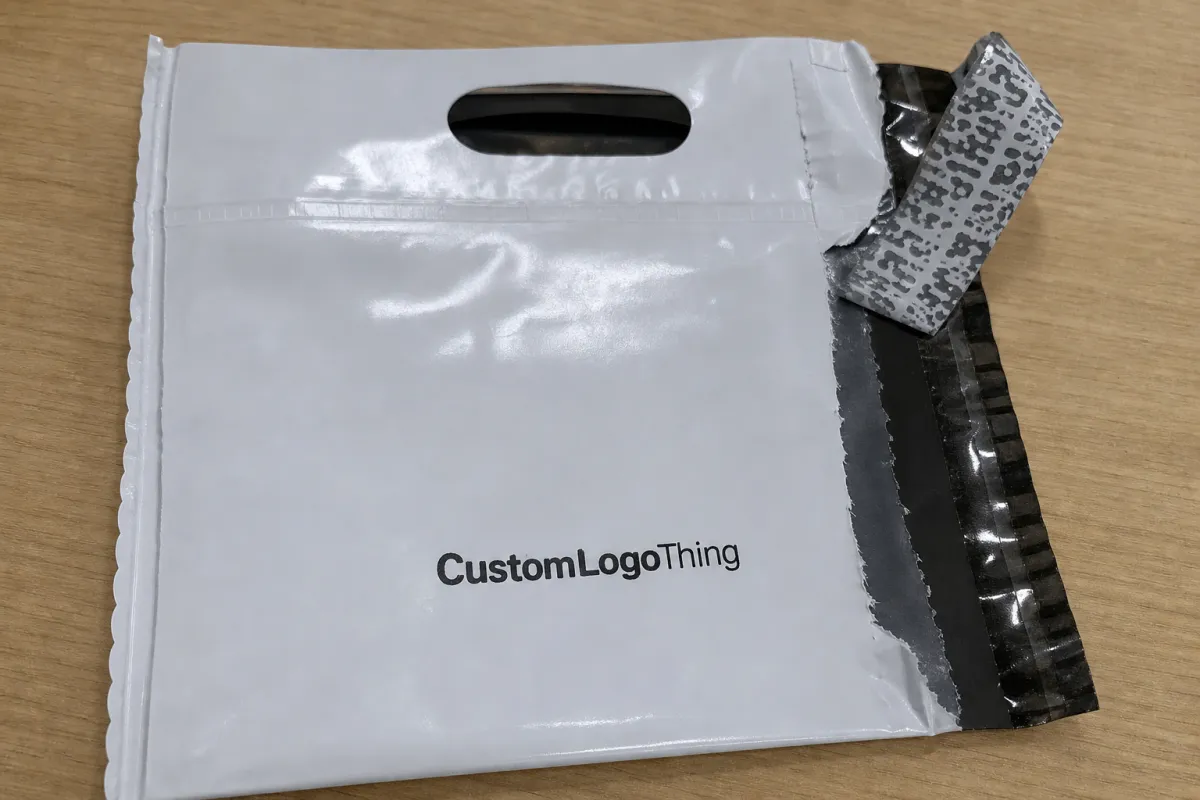
Tamper-evident bags go through more hands than most buyers expect. They are packed by one person, verified by another, moved again in the back room, and sometimes opened only after a customer questions the seal. Each touch creates a chance for the closure to fail, the film to scuff, or the evidence strip to look disturbed. The bag may still be physically intact, but if it no longer looks intact, the retail value has already dropped.
That is why seal performance matters as much as film appearance. A one-time adhesive strip that lifts early creates doubt even if the product inside is untouched. A tear notch that opens too easily can suggest rough handling. A reclosable design can be convenient for returns, but convenience is not the same thing as visible tamper evidence. Buyers need to decide which failure mode costs more in their operation.
Retail teams usually experience these failures before procurement does. A cosmetics kit arrives with a weak closure. A pharmacy order gets held for extra verification. A high-value accessory gets returned because the security feature looked compromised. None of those events reads like a packaging issue in a spreadsheet, but all of them create labor and reduce confidence.
For that reason, buyers should care about test references, not just marketing language. Seal strength is commonly checked with ASTM F88, which measures the force needed to separate a seal. Film tensile properties are often referenced with ASTM D882. For transit resistance, ISTA-style distribution testing is a better proxy than a visual inspection alone. No buyer needs to become a lab technician, but those standards help separate a serious supplier from a seller who only knows how to quote a price.
In practical terms, a supplier should be able to tell you the target peel range, the seal band width, and the acceptable visual defect rate. For a retail program, a typical peel target might sit around 1.5-3.0 lbs/in for pressure-sensitive closure structures, while the seal band itself is often 8-12 mm wide to give enough contact area without wasting material. If the supplier cannot discuss those numbers, the quote is probably missing the real risk profile.
“A low-cost bag that forces extra verification is not really low-cost.”
The math gets uncomfortable quickly. A 2% defect or failure rate on a 50,000-unit program means 1,000 problem bags. Even if only a fraction of those lead to write-offs, the indirect cost can exceed the apparent savings from the cheapest quote. That is why a strong retail tamper evident bags quote should reveal risk, not hide it.
Bag styles, tear-open features, and closure options that fit retail workflows
Bag style should match how the item moves through the store. A clear format is useful when staff need to verify contents without opening the pack. Opaque or tinted films fit better when privacy matters, such as pharmacy handoff, premium goods, or any product where the customer should not see the contents until pickup. That choice affects more than appearance; it changes how quickly the order can be processed.
Closure design is the other half of the equation. Adhesive strips are common because they are easy to train on and easy to audit. Tear notches make opening obvious, which is useful when the operation cares about visible evidence of first use. Reclosable zippers can help with returns or repeated handling, but they weaken the single-use story unless the package also has a separate tamper mark.
Stock formats are fine for simple programs, but they become clumsy when the product shape is unusual. Too much extra space lets the item shift, which puts stress on the seal and makes the bag look improvised. Too little space creates bulging corners and can cause the film to split at the edges. Custom sizing usually solves both problems at once, though it raises setup expectations.
For retail programs, the most common material stack is LDPE or LLDPE with a pressure-sensitive adhesive strip, sometimes paired with CPP for higher stiffness or a PET/PE laminate when the bag needs a more premium print surface. If sustainability is a priority, recycled PE with GRS-certified recycled content is a real option, provided the supplier can document chain of custody. Where the package includes a textile label, drawstring, or reusable pouch component, buyers can also ask for GOTS or OEKO-TEX Standard 100 depending on the application.
Here is a practical comparison buyers can use before requesting samples:
| Option | Best use | Typical MOQ | Indicative unit price | Notes |
|---|---|---|---|---|
| Clear stock security bag | Fast-turn retail kits, accessories, and standard items | 3,000-5,000 | $0.08-$0.15 at 5,000 MOQ | Lowest setup cost, limited flexibility on size and print |
| Custom printed clear bag | Branded handoff and controlled merchandising | 5,000-10,000 | $0.14-$0.26 at 5,000 MOQ | Print proofing, plate setup, and color matching add time and cost |
| Tinted or opaque security bag | Privacy, asset control, and premium retail goods | 5,000-10,000 | $0.16-$0.31 at 5,000 MOQ | Reduces visibility, which can be useful or a drawback depending on the aisle |
| Fully custom retail format | Exact fit, special opening method, and branded workflow | 10,000+ | $0.20-$0.42+ at 10,000 MOQ | Best fit control, but tooling, proofing, and validation are more involved |
The right answer depends on the retail path. If an associate needs to scan, verify, and hand off the order in under half a minute, the format should stay simple. If the product must remain private until pickup, opacity and closure behavior matter more than display. A good retail tamper evident bags quote should make those tradeoffs visible early.
Dimensions, film thickness, and print specs buyers should lock in
Dimensions are where many custom projects start to slip. Buyers often provide a rough size, then discover that the usable interior is smaller than expected once the seal band, closure zone, and any tear feature are factored in. A proper spec should show finished width, height, gusset if used, seal allowance, and dimensional tolerance. If the item is rigid, corners need room. If the item is soft, compression needs to be controlled so the seam is not overstressed.
Film thickness affects both durability and handling. Around 2.0 mil can work for light cosmetics or flat retail items with little edge pressure. A 3.0 to 4.0 mil structure is often safer for harder edges, heavier kits, or bags that will be touched repeatedly before delivery. Thicker film is not automatically better. It adds cost, can reduce flexibility, and may make sealing less forgiving on some equipment. The right gauge is the one that matches the actual handling route.
Material choice matters too. LDPE gives a familiar balance of flexibility and clarity. LLDPE improves puncture resistance and sealability. CPP can improve stiffness and seal characteristics in certain constructions. PET blends are often used when a stiffer feel or better print presentation is needed. If the package needs a more controlled appearance, the film structure should support that without becoming brittle at the fold lines.
Print specs should be locked before proofing starts. Logo placement, warning text, barcode area, batch code location, and any store instructions all influence the layout. The most effective tamper message is usually short and visible. Dense copy gets ignored. A single clear instruction often does more than a paragraph of legal wording.
Buyers who need records should ask for more than a mockup. A complete specification sheet should include artwork files in vector format, Pantone references if color matters, a dimensional drawing, seal position, material build-up, and target tolerances. For most retail bags, a dimensional tolerance of +/- 2 mm on smaller formats and +/- 3 mm on larger formats is a realistic benchmark to discuss during sampling.
Thickness should also be tied to actual measurements, not assumptions. A supplier should confirm micrometer readings at multiple points across the film, usually with a tolerance window of about +/- 8% to +/- 10% depending on the construction. If the film is printed, buyers should also ask for ink adhesion checks so the artwork does not smear during handling or carton friction.
Retail tamper evident bags quote: what drives cost and MOQ
Price is driven by more than size. The biggest cost factors are film resin grade, bag dimensions, seal design, print colors, special closures, and inspection requirements. A plain clear stock bag can be quoted quickly because the process is simple: film extrusion, slitting, bag making, and carton pack-out. A custom retail format adds design review, print plate work, proofing, and sometimes a dedicated cutting or sealing tool.
MOQ usually rises when the specification gets tighter. A plain stock item may start at 3,000 to 5,000 units. A printed custom bag typically starts at 5,000 units, while fully custom structures often land at 10,000 units or more. That is not just a sales preference; it reflects setup time on the blown film line, flexo or gravure print unit, sealing machine, and inspection workflow.
Lead time tracks the same pattern. If artwork is ready and no structural changes are needed, a simple order can move in 18-22 business days after proof approval. A printed custom bag with new tooling commonly takes 25-35 business days, especially if a physical pre-production sample is required. For urgent programs, ask the supplier whether they can do a digital proof within 24-48 hours and a sample within 5-7 business days.
Cost can also shift based on compliance documentation. If you need GRS paperwork for recycled content, or social compliance such as WRAP or BSCI, the supplier may need extra audit evidence and batch traceability. Those costs are usually small compared with production, but they should still be visible in the quote so the buyer understands what is included.
As a practical example, a 10 x 13 inch clear retail security bag in LDPE/LLDPE at 5,000 units might land around $0.11-$0.18 per unit, while a 2-color printed version in the same size may move to $0.16-$0.24 per unit. Add an opaque film, a stronger adhesive strip, or custom tear-open features, and the quote can move another 10% to 25%. Buyers should compare not just the unit price, but the total landed cost including freight, cartons, and any sample charges.
The cleanest quotes spell out packaging by carton count, inner pack count, gross weight, and freight basis. If a supplier only gives a single price and no specification detail, it is hard to tell whether the quote covers a 2.0 mil film or a more durable 3.0 mil structure, whether print is one color or four, or whether the adhesive strip is standard or high-tack.
Process, proofing, and lead time from brief to shipment
A reliable supplier should have a visible process. It usually starts with a brief review: size, material, closure, print coverage, quantity, and target use case. Next comes a technical drawing or dieline, then a digital proof. If the structure is custom, the supplier should issue a pre-production sample before mass production begins. That sequence catches problems earlier and avoids redoing an entire run.
The sample path should be specific. A good workflow is: 1) confirm the product dimensions and closure method, 2) review artwork and regulatory text, 3) approve the digital proof, 4) produce a physical sample, 5) test fit and opening behavior, and 6) sign off on the pre-production sample. If any one of those steps is skipped, the first full run becomes the test, and that is where expensive mistakes happen.
Inspection should happen at more than one point. Incoming resin and additives should be checked for grade consistency. In-process checks should confirm film thickness, seal width, print alignment, and cut accuracy. Final inspection should verify carton count, barcode readability, lot traceability, and packaging integrity. For many retail buyers, an AQL 2.5 final inspection is a sensible baseline, with tighter checks for high-value or regulated goods.
Machine capability matters too. A supplier making retail tamper-evident bags should be able to explain whether the film is produced on a blown film line or a cast line, whether printing is done with flexographic or gravure equipment, and whether the seal is made with heat seal bars, impulse sealing, or a pressure-sensitive adhesive system. That detail is not trivia; it affects consistency, cost, and whether the bag behaves the same from batch to batch.
For lead time planning, the safest assumption is to build in 2 to 3 weeks for sampling and approval, then 2 to 5 weeks for production depending on complexity. Simple stock orders may ship faster, but the moment custom print or custom dimensions enter the picture, buyers should plan around the longer end of the range. A supplier who promises unusually fast turnaround should still be able to explain where the time is saved.
Shipping documentation should include the final approved spec, carton labels, lot number, and a photo record of the finished goods. If the order uses recycled content or certified materials, the batch paperwork should match the certificate scope. For textile-based components, buyers can ask for GOTS or OEKO-TEX Standard 100 certificates where applicable; for factory systems, WRAP or BSCI status can be useful supporting evidence; for recycled resin programs, GRS documentation should be current and traceable to the shipment.
What separates a reliable supplier from a basic price-only vendor
Reliable suppliers talk in process terms, not just price terms. They can explain material options, show a sample path, confirm tolerances, and quote a realistic lead time. They usually ask for the same core information every time: size, quantity, art files, use case, closure type, and any compliance requirement. A price-only vendor usually asks for one thing: the lowest possible specification that can still be called a bag.
Certification language is another tell. Real suppliers can show current documentation and explain the scope. For packaging programs, GRS is relevant when recycled content is part of the build. WRAP or BSCI can support social compliance expectations. OEKO-TEX Standard 100 is relevant when a textile component or direct-contact soft good is involved. GOTS matters if the program includes organic cotton or other certified textile elements. A credible supplier should never use those terms casually or out of scope.
Inspection discipline also separates the serious vendor from the weak one. Ask whether they check seal strength, print registration, dimensional accuracy, and barcode scanability before shipment. Ask whether they record the lot number and keep a retained sample. Ask whether they can share a basic control plan. If the answer is no to all of those, the quote may be low because the risk has been pushed onto the buyer.
Good suppliers also understand how retail teams use the bag. They can recommend a closure that opens cleanly at the handoff counter, a film that does not distort under fluorescent lighting, and a format that stacks flat in a stockroom. That kind of practical detail saves time for operations teams and reduces avoidable complaints later.
Finally, the best vendors are transparent about tradeoffs. They will tell you that a thicker film improves puncture resistance but adds cost. They will tell you that a premium print finish can increase MOQ. They will tell you that a custom tamper-evident strip needs more validation than a stock adhesive closure. Those are the conversations that lead to a usable quote instead of a cheap surprise.
What to send next for a precise sample request and purchase quote
If you want a clean quote, send a complete brief instead of a one-line inquiry. Include the finished bag size, preferred material, closure style, print colors, quantity, and target use case. If the bag must support a retail workflow, describe how staff open it, verify it, and hand it off. The supplier can only price what it can visualize.
It also helps to provide the non-negotiables up front. If you need a 3.0 mil film, say so. If you need recycled content, specify whether you want GRS documentation. If the item will touch skin or soft goods, mention whether OEKO-TEX Standard 100 or GOTS is relevant. If the factory must meet WRAP or BSCI expectations, say that before proofing starts. That is much faster than revising the order after sample approval.
A useful request package usually contains the following: product photos, target dimensions, artwork files, packaging instructions, desired MOQ, estimated annual usage, sample shipping address, and the inspection standard you expect. If the bag will be used in a regulated channel such as pharmacy or high-value handoff, include any label text or barcode requirements so the supplier can reserve space in the layout.
For speed, ask for three things in the first reply: a sample quote, a production quote at your target MOQ, and the lead time for both a stock version and a custom version. That gives you a direct view of the cost difference between a quick solution and a tailored one. It also exposes whether the supplier understands the project well enough to price it properly.
Most buyers get the best outcome when they ask for one production-ready sample and one functional sample. The production-ready sample checks final appearance, print, and dimensions. The functional sample checks seal strength, tear behavior, and fit in the real workflow. When both pass, the retail rollout is much less likely to create avoidable support issues.
FAQ
What is a realistic MOQ for retail tamper evident bags? For stock formats, 3,000-5,000 units is common. For custom printed bags, 5,000-10,000 units is more realistic. Fully custom structures often start at 10,000 units.
How much should I expect to pay? A simple clear stock bag may fall around $0.08-$0.15 per unit at 5,000 MOQ. Custom printed or tinted versions often land around $0.14-$0.31 per unit depending on size, film thickness, and print coverage.
How long does production take? Simple stock orders can ship in 18-22 business days after approval. Custom projects usually need 25-35 business days, plus sample time if artwork or tooling is new.
Which certifications matter most? GRS is relevant for recycled content, WRAP and BSCI support social compliance, and OEKO-TEX Standard 100 or GOTS can matter when a textile or direct-contact soft component is involved. Always confirm scope and certificate validity.
What should I inspect on the first sample? Check seal strength, tear behavior, fit, barcode readability, print registration, film thickness, and whether the closure still looks tamper-evident after handling. If any of those fail, adjust before mass production.
What is the best way to reduce quote risk? Send the exact size, material, print file, quantity, and use case. Ask for a sample, a production drawing, and inspection checkpoints in writing before approving the order.

