Buyer Fit Snapshot
| Best fit | Returnable Poly Mailers for Ecommerce projects where brand print, material claims, artwork control, MOQ, and repeat-order consistency need to be specified before quoting. |
|---|---|
| Quote inputs | Share finished size, material target, print colors, finish, packing count, annual reorder estimate, ship-to region, and any compliance wording. |
| Proofing check | Approve dieline scale, logo placement, barcode or warning zones, color tolerance, closure strength, and carton packing before bulk production. |
| Main risk | Vague material claims, crowded artwork, missing packing details, or unclear freight terms can make a low unit price expensive after revisions. |
Fast answer: Returnable Poly Mailers for Ecommerce: Film, Print, MOQ, and Carton Packing should be specified like a repeatable production item. The safest quote records material, print method, finish, artwork proof, packing count, and reorder notes in one written spec.
Production checks before approval
Compare the actual filled-product size with the drawing, then confirm tolerance on folds, seals, hang holes, label areas, and retail display edges. Reserve space for logos, QR codes, warning copy, and material claims before decorative graphics fill the panel.
Quote comparison points
Review material grade, print process, finish, sampling route, tooling charges, carton quantity, and freight assumptions side by side. A quote is only useful when the supplier can repeat the same color, closure quality, and packing count on the next order.
Most return headaches start as packaging problems dressed up like shipping issues. If a mailer rips, bulges, or refuses to close again, the customer does not blame the film gauge; they blame the brand. I have watched teams spend weeks tuning checkout copy and then lose the whole impression to a bag that split at the seam. That is why returnable poly Mailers for Ecommerce deserve more attention than they usually get. The right spec can cut waste, protect margin, and keep the return experience from turning into a small disaster.
Here is the blunt version: returnable poly mailers for ecommerce are not about making returns pleasant. They are about making them less annoying, less expensive, and less likely to generate customer service emails that drain time on both ends. Choose the wrong one and you pay twice, once on the outbound trip and again on the way back. In reverse logistics, that matters more than most teams admit.
A returnable mailer only saves money if the customer can understand it in five seconds and reuse it without wrestling the package like it owes them rent.
Returnable Poly Mailers for Ecommerce: What They Solve
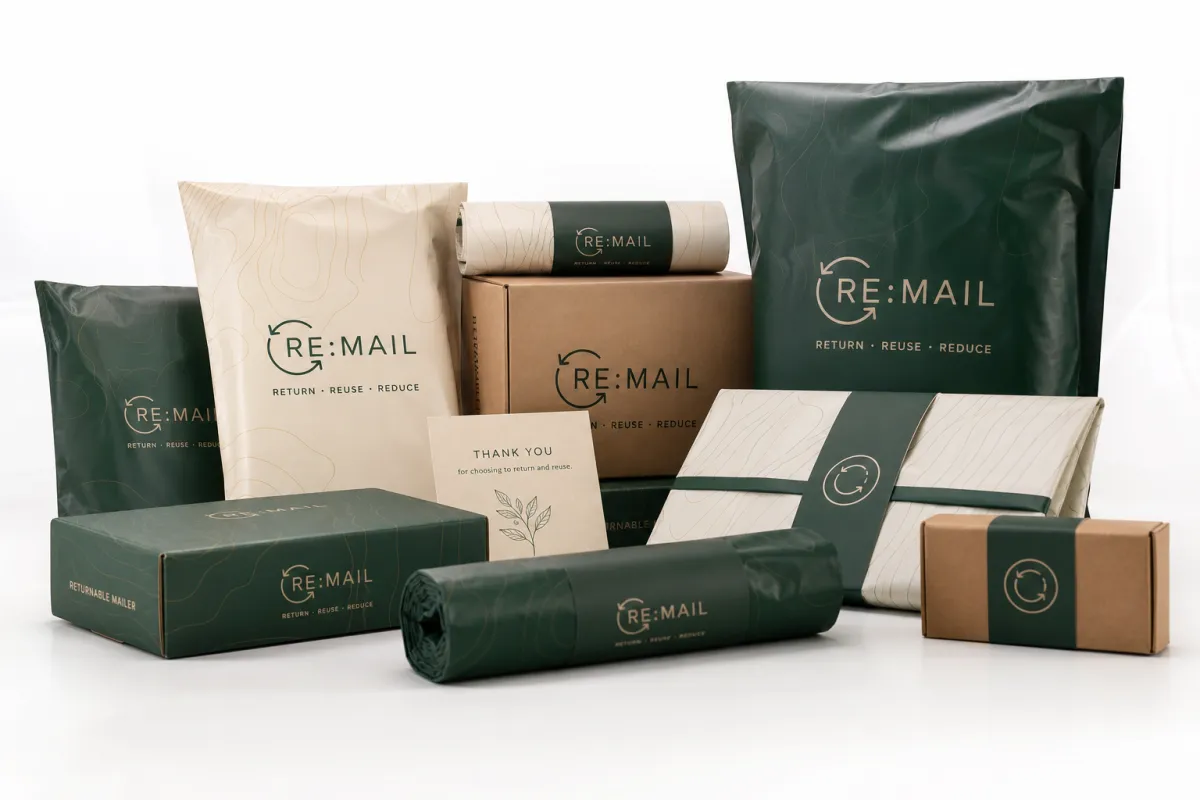
The practical surprise is that a lot of return pain comes from the package itself, not the return label. In a messy reverse-logistics flow, the mailer is often the first weak point. If the film tears too easily, if the seal is weak, or if the opening method is confusing, the return process becomes a scavenger hunt. Returnable poly mailers for ecommerce solve that by giving the customer a package that can survive a second trip without needing a new outer shell.
In ecommerce terms, a returnable mailer has three jobs. First, it needs to protect the outbound shipment. Second, it needs to open in a controlled way so the customer can access the item without destroying the whole bag. Third, it needs to close again with enough strength to get back through a warehouse, a carrier network, and a receiving dock. That is a different assignment from a plain poly mailer, which only has to make one trip and then fail quietly.
The difference between basic mailers and returnable poly mailers for ecommerce usually shows up in the closure system and the film construction. A standard bag may use a single peel-and-seal strip and little else. A returnable version often adds a second adhesive strip, a tear-strip design, or a fold-back return path so the same package can be resealed after the customer tries the product on, checks fit, or decides the color was a mistake. That happens. Frequently. Humans are picky, and ecommerce has built an entire economy around that fact.
Some teams call these resealable mailers, but the better versions are really return-ready packaging built for reverse logistics. That distinction sounds fussy until you compare a package that simply closes again with one that actually survives handling, sorting, and a second delivery network. Those are not the same thing.
These mailers are most useful for soft goods and light, non-fragile items: apparel, socks, swimwear, accessories, small textiles, and similar products that do not need rigid crush protection. If you are shipping ceramics, bottles, or anything with edges that can punch through thin film, you are asking the wrong package to do the wrong job. Returnable poly mailers for ecommerce help the categories that already fit the format. They are not magic, just a better fit for the job.
From a margin point of view, the value is simple. Fewer damaged returns. Fewer complaints about hard-to-use packaging. Lower need for a second box on the way back. Less product waste because the customer can actually reuse the outbound package instead of stuffing the item into some random envelope and hoping the tape survives. That is the real win, and it shows up in places finance teams can see.
Brands also like the fact that returnable packaging can support a cleaner brand experience. A custom-printed exterior, a clear return strip, and straightforward instructions make the mailer feel intentional instead of improvised. If you are already evaluating Custom Poly Mailers, this is the point where you decide whether you want a bag that merely ships or a bag that participates in the return system.
How Do Returnable Poly Mailers for Ecommerce Work?
The workflow is simple, which is exactly why people manage to botch it. A product ships in the primary seal. The customer opens the mailer, removes the item, and then either folds the package back down or uses a built-in return strip to close it again. If the design is good, the return path takes seconds instead of minutes. If it is poor, the customer improvises with scissors, tape, and whatever is within reach.
There are a few common closure systems in returnable poly mailers for ecommerce. The first is a double adhesive strip, where one seal is used for outbound shipping and a second seal is exposed after opening. The second is a peel-and-seal plus tear-open design, which lets the customer open one section without destroying the whole package. The third is a fold-back system, where the opening and closing points are organized so the same flap can be pressed back into place. Each method has tradeoffs. The more intricate it gets, the more you need clear instructions and clean print.
What has to survive the round trip? More than people think. The film needs enough abrasion resistance to handle a conveyor, a delivery van, and a return trip across the network. The adhesive needs enough grab to hold after the first opening. The print should stay readable if you want branding or handling instructions to remain visible. And if there is a barcode, QR code, or return label window, placement matters because a label stuck over a seam or fold can fail fast. Packaging never stays theoretical for long.
If you want a technical benchmark, ask suppliers for film properties instead of vague claims. A converter may share tensile data under ASTM D882 or dart impact numbers under ASTM D1709. For shipment abuse, ISTA test procedures are a sensible starting point, especially if you want to check drop resistance and handling performance under more than one condition. See ISTA testing guidance for the kind of distribution abuse test logic that should be part of the conversation.
Returnable poly mailers for ecommerce work best on soft goods because the package itself does not have to do the job of a rigid carton. That said, you still need enough film integrity to keep the item protected on the second trip. A 2.0 mil film might be fine for a light garment in a calm route. A 2.5 or 3.0 mil film can make more sense if the route is rough, the item has awkward folds, or your warehouse handling is not exactly delicate ballet.
There is also a customer behavior piece that brands ignore at their own risk. A mailer that is easy to open but obvious to reseal will get used. A mailer that demands instructions nobody reads will end up folded wrong, taped wrong, or tossed in the trash with the item. That is why the best returnable poly mailers for ecommerce are not just stronger; they are simpler and easier to recognize at a glance. The package has to do some of the explaining for you.
Key Factors in Choosing Returnable Poly Mailers for Ecommerce
Size comes first, and yes, size matters more than most buyers want to admit. Too much empty space means the product shifts around, which makes the mailer look sloppy and can stress the seal when the customer tries to reuse it. Too little space means the item is hard to insert, hard to open, and awkward to reseal. For returnable poly mailers for ecommerce, a tight fit is not clever. It is just irritating.
Start with the product folded dimensions, then leave room for opening, repacking, and a clean second seal. For apparel, that often means testing two sizes instead of assuming one will cover the entire assortment. A small tee and a bulky hoodie are not the same packaging problem, despite what a spreadsheet might hope. A practical size test can save you from buying a thousand bags that are almost right, which is the packaging equivalent of buying shoes a half size off and pretending they will stretch.
Film gauge is the next tradeoff. Lighter gauges reduce unit cost and can work well for lower-risk shipments. Thicker gauges raise durability, reduce tear risk, and usually improve the odds that the mailer survives a second journey. For many apparel programs, 2.5 mil is a sensible middle ground. For rougher routes or more frequent returns, 3.0 mil gives you more breathing room. Anything thinner should be tested, not guessed. Guessing is how freight becomes a mood.
Seal quality matters more than fancy graphics. A good-looking bag with weak adhesive is just expensive disappointment. Look for a seal that closes cleanly, holds after opening, and is wide enough to compensate for customer handling. A narrow adhesive strip may work in a lab. In a real apartment with bad lighting and a customer who just wants to finish the task, it often does not.
Opacity and print coverage also affect the experience. If the contents are visible and that visibility creates a trust problem, choose a more opaque film or a print layout that hides what should stay hidden. If you want brand impact, custom print can help, but not at the expense of function. The return strip and tear-open feature still need to be obvious. The package should not require a decoder ring.
For brands that want consistency across the shipping stack, it helps to think beyond the mailer. If you are coordinating inserts, cartons, and shipping materials together, Custom Packaging Products can keep the look and handling logic aligned so the returnable mailer does not feel like it came from a different department.
One more thing: tamper evidence matters. A customer should know whether the package has been opened before. The tear feature should make that clear without making the reseal messy. That balance is the sweet spot for returnable poly mailers for ecommerce. Too obvious and the package looks damaged. Too subtle and the customer cannot tell how to use it.
If you are evaluating material sustainability, do not let a green claim do the thinking for you. Some films use recycled content, and some are made from structures that are easier to explain in waste programs. If sustainability language is part of the brand promise, the packaging should match it. The EPA has a practical overview of broader recycling and waste-reduction priorities at EPA recycling guidance, which is a better reference than a vague claim printed in ten-point type.
Here is the part buyers actually need: the right choice is not the prettiest bag. It is the bag that fits the product, survives handling, reseals cleanly, and does not require support tickets to explain. That is the whole point of returnable poly mailers for ecommerce.
Returnable Poly Mailers for Ecommerce: Cost and Pricing
Price depends on more variables than a lot of sellers like to admit. Size, film thickness, print coverage, adhesive system, recycled content, and order quantity all affect the quote. A plain stock bag is cheaper than a custom-printed one. A mailer with two adhesive strips costs more than one with a single closure. A thicker film costs more than a thinner one. None of that is mysterious. It is just manufacturing.
For rough planning, stock returnable poly mailers for ecommerce often land around $0.11 to $0.18 per unit at moderate quantities, depending on size and closure design. Custom printed options usually move into the $0.18 to $0.32 range. Heavier gauge or more complex returnable structures can run $0.24 to $0.40 or more, especially if you want larger sizes, higher print coverage, or specialty material blends. At higher volumes, unit cost drops. At lower volumes, the setup cost stings a little. That is normal.
The mistake is focusing only on sticker price. Cheap mailers can create hidden costs that are much uglier than the invoice. A torn return bag means a replacement shipment or a second packaging method. A confusing closure means customer service time. A package that opens in transit means damage, refund friction, or both. In other words, the “cheap” option can become expensive with surprising efficiency.
| Option | Typical Unit Cost | Best For | Tradeoff |
|---|---|---|---|
| Stock single-seal mailer | $0.11-$0.18 | Low-risk outbound shipping | Usually not ideal for reuse |
| Returnable mailer with double adhesive | $0.18-$0.32 | Apparel, accessories, soft goods | Higher cost, better return flow |
| Heavier custom printed returnable mailer | $0.24-$0.40+ | Brands with higher return rates | Best performance, strongest branding |
| Recycled-content returnable mailer | $0.22-$0.38+ | Programs with sustainability goals | Needs careful spec review and testing |
That table is a planning tool, not a quote sheet. Actual pricing shifts with print coverage, lead time, and freight. Still, it helps to think in ranges instead of hoping a supplier can somehow beat physics. Returnable poly mailers for ecommerce should be priced against the whole return cycle, not just the outbound shipment.
Here is a decent rule of thumb. If a better mailer reduces damaged returns by even a small percentage, the extra unit cost can pay for itself quickly. One avoided replacement shipment, one avoided service call, or one avoided refund dispute can cancel out a lot of packaging spend. That is why the lowest bid is often the least informed decision in the room.
If you are comparing options, ask suppliers to quote at least three quantities, such as 5,000, 10,000, and 25,000 pieces. That shows how unit pricing moves with volume. Ask them to break out film thickness, adhesive type, and print coverage so you can see what actually drives the number. A quote that hides all the details is usually hiding something.
Step-by-Step Process and Timeline for a Returnable Mailer Rollout
The rollout should start with samples, not with a giant purchase order. Get a few sizes. Test them with actual products. Open them. Reseal them. Ship them through a few real handling conditions. If the mailer cannot survive a normal warehouse shift and a customer opening it with average patience, it is not ready. That is the only honest standard.
A reasonable process for returnable poly mailers for ecommerce looks like this: request samples, confirm size and gauge, test the seal and tear path, review the print proof, approve the artwork, and then run a production sample before full run. If you are adding a return strip or a custom instruction panel, test the wording carefully. People skim. They do not study packaging like graduate students.
Timeline depends on complexity, but a realistic plan often looks like 3 to 7 business days for sample review, 1 to 2 rounds of revisions if the fit or copy needs work, 12 to 20 business days for production after proof approval, and a few more days for freight depending on the shipping lane. Faster is possible, slower is also possible, and both usually depend on how final your artwork and sizing decisions are before you ask for a quote.
The operational details matter just as much as the bag. Decide where the return label lives. Decide whether the customer prints it, receives it in the box, or accesses it through a portal. Write short, simple resealing instructions. Keep the copy visible and practical. The ideal instruction card is not a lecture. It is a tiny map.
Warehouse process matters too. Packers need to know how the mailer is folded, where the product sits, and whether the seal should be pressed once or twice. If you introduce a new format and the team hates using it, that feedback is valuable. A design that slows the pack line by ten seconds per order can erase a lot of packaging savings. People often forget that labor is part of the packaging cost. Strange, but true.
A pilot is smarter than a blanket rollout. Start with one SKU or one product family that already sees a meaningful return rate. Measure return friction, customer comments, damage rates, and how often the bag actually gets reused. If the pilot works, scale it. If it stumbles, fix the problem before it spreads across the catalog. That is how grown-up packaging decisions are supposed to work.
For brands building the program from scratch, it helps to keep the packaging stack organized around the SKU, not around abstract packaging ideals. You can pair the mailer with inserts, branded tape, and a simple return instruction card so the whole system feels connected. The goal is not a beautiful spreadsheet. The goal is a return flow that a warehouse worker and a customer can both follow without complaining.
Common Mistakes with Returnable Poly Mailers for Ecommerce
The biggest mistake is choosing a thin, cheap bag that looks fine on outbound shipment but falls apart when reused. That is a classic false economy. Returnable poly mailers for ecommerce only work if the return path is real. If the film tears the first time the customer opens it, the mailer is not returnable. It is merely hopeful.
Another common miss is overcomplicating the design. Too many instructions. Tiny text. Multiple arrows. A QR code nobody scans. A fold sequence that assumes the customer will think like a packaging engineer. They will not. They have laundry, dinner, and a dozen other things to do. The package should explain itself quickly. If it needs a tutorial, some of the value is already gone.
Bad sizing causes more trouble than most brands expect. A mailer that is too large lets the contents shift and can make the reseal clumsy. A mailer that is too small makes the product hard to remove and even harder to close again. Bulky apparel is the usual offender here. It seems fine in a prototype, then the actual size run arrives and the folds are thicker than anyone planned for. Suddenly the “simple” packaging solution is holding grudges.
Warehouse workflow is the hidden failure point. If the pack line hates the mailer, adoption falls apart. If the tear feature is awkward, staff will ignore it. If the seal requires too much pressure, it will not be consistent. A great spec on paper means very little if it does not fit the way your team actually packs orders. Packaging is not a poster. It has to survive the hands that use it.
There is also a branding mistake that shows up a lot. Brands spend money on bright custom print, then bury the return instructions in a corner like they are embarrassed by them. If the bag is branded as a premium item, the return logic should look just as deliberate. Otherwise the package says, “We thought about this,” and then immediately proves it did not.
One more thing: do not ignore what happens after the customer opens the package. Some bags look great outbound but become ugly, wrinkled, or hard to read after the first tear. If the return strip becomes invisible, the customer will fail the second seal. That is a design flaw, not a user flaw. The user is doing their best with the tools you gave them.
If you want a cleaner comparison set, sample a few versions side by side and inspect them after opening, resealing, and a short shipping simulation. That is the only way to see whether the mailer really supports returnable poly mailers for ecommerce or just pretends to.
Expert Tips and Next Steps for Rollout
Test two or three sizes instead of betting everything on one mailer that looks good in a flat spec sheet. Flat spec sheets lie by omission all the time. The same product can behave very differently once it is folded, packed, and resealed. Returnable poly mailers for ecommerce need real handling tests, not a hopeful thumbs-up from someone staring at a PDF.
Ask for samples and then abuse them a little. Open them with different hand positions. Reseal them twice. Leave them in a warm area for a bit and see whether the adhesive still performs. Try a basic drop test. If you want a more formal framework, use an ISTA-style testing mindset and compare the results against your own packing standards. A supplier who gets annoyed by testing is telling you something useful. I kind of trust the one who says, “Yes, let’s see what breaks.”
There is a simple launch plan that works well. Pick one return-heavy SKU, use the new mailer on that group only, and track the basics: return rate, customer complaints, damage claims, and how often the package is successfully reused. If the numbers improve, expand to the next product family. If not, change the closure or the size before scaling. That is a lot cheaper than discovering the flaw after the whole catalog has been printed.
It also helps to ask the right practical questions before you order:
- What film gauge are we actually buying, and is it enough for a second trip?
- Does the reseal path make sense without instructions buried in small print?
- Will the return label sit on a flat area, not over a fold or seal?
- Can the warehouse pack this without slowing down?
- Is the returnable feature strong enough to matter, or just decorative?
If you want the branding to match the function, make the mailer part of a larger packaging system instead of treating it like a one-off line item. That is where a coordinated set of Custom Packaging Products can help, especially if you want the return mailer, inserts, and other customer-facing packaging to feel like they belong in the same family.
For teams with a higher return rate, I usually recommend building the shortlist around three practical buckets: a lower-cost stock option for baseline testing, a mid-tier custom returnable option for most orders, and a heavier-duty version for the products that cause the most trouble. That gives you room to compare unit cost against actual performance instead of pretending one bag should solve every category.
My honest advice? Do not overbuild the first version. Most brands do better with one strong return feature, a sensible film thickness, and clear instructions than with a package stuffed full of extras nobody asked for. A simple, well-sized, well-labeled system beats an overdesigned one nine times out of ten. That is especially true for returnable poly mailers for ecommerce, where the customer has to use the thing without thinking too hard.
If you are ready to move, build a shortlist, request pricing at a few volume tiers, and map the warehouse flow before you approve art. The point of returnable poly mailers for ecommerce is to save money and reduce friction, not to create a prettier problem with a bigger invoice. Start with the item, the route, and the return path. The rest is just packaging theater.
Are returnable poly mailers for ecommerce durable enough for a second shipment?
Yes, if the film is thick enough and the closure system is designed for resealing instead of just first-use shipping. Look for decent tear resistance, a strong adhesive strip, and enough surface area to close the bag cleanly after opening. Returnable poly mailers for ecommerce work best for soft goods and lightweight items, not fragile products that need rigid protection. In testing, the bag should still feel like a package after the first opening, not a crumpled apology.
How much do returnable poly mailers for ecommerce usually cost?
Stock versions are usually the cheapest, while custom printed or multi-adhesive versions cost more per unit. Price changes with size, film thickness, print coverage, and order quantity, so the unit cost drops as volume rises. The cheapest mailer is not always the best deal if it creates damage, return friction, or extra customer service work. On a per-return basis, paying a few cents more can be the less expensive path.
What size should I choose for returnable poly mailers for ecommerce?
Start with the product dimensions, then leave enough room for easy insertion and clean resealing. A tight fit is risky because customers need space to open, repack, and close the mailer again. Testing two sizes is usually smarter than guessing, especially for apparel or items with awkward folds. That little bit of extra room often saves a lot of frustration later.
Are returnable poly mailers for ecommerce recyclable?
It depends on the exact material mix and local recycling rules, so do not assume every poly mailer is curbside recyclable. Single-material films are easier to explain and often easier to route through specialty recycling streams. If sustainability claims matter to your brand, print disposal or recycling guidance directly on the package. Honest labeling beats fuzzy environmental language every time.
How do I set up a returnable poly mailer process for ecommerce?
Choose the mailer, decide where the return label lives, and write simple resealing instructions for the customer. Test the full flow in-house: packing, opening, resealing, and receiving the return back at the warehouse. Roll it out on one product line first so you can fix problems before scaling it across the catalog. That keeps the learning small and the waste lower.


