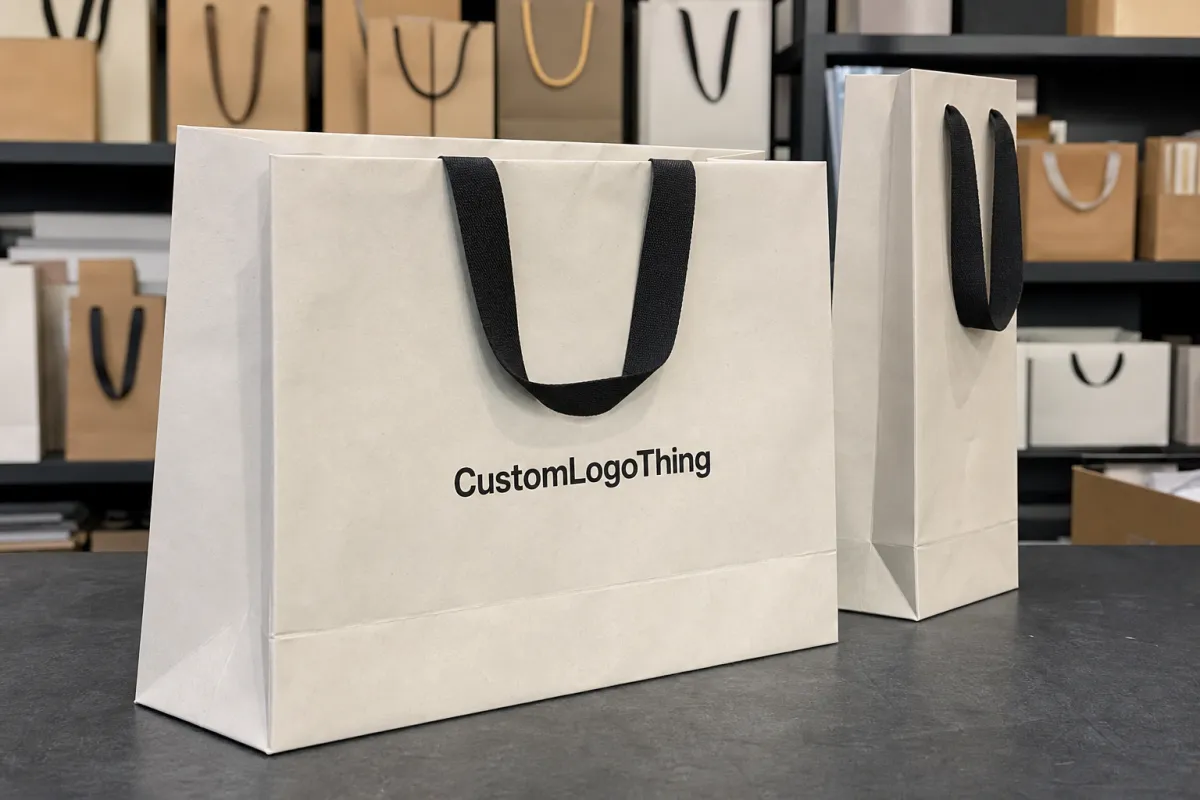
Buyer Fit Snapshot
| Best fit | Reusable Poly Mailers Wholesale projects where brand print, material claims, artwork control, MOQ, and repeat-order consistency need to be specified before quoting. |
|---|---|
| Quote inputs | Share finished size, material target, print colors, finish, packing count, annual reorder estimate, ship-to region, and any compliance wording. |
| Proofing check | Approve dieline scale, logo placement, barcode or warning zones, color tolerance, closure strength, and carton packing before bulk production. |
| Main risk | Vague material claims, crowded artwork, missing packing details, or unclear freight terms can make a low unit price expensive after revisions. |
Fast answer: Reusable Poly Mailers Wholesale: Specs, Pricing & MOQ should be specified like a repeatable production item. The safest quote records material, print method, finish, artwork proof, packing count, and reorder notes in one written spec.
Production checks before approval
Compare the actual filled-product size with the drawing, then confirm tolerance on folds, seals, hang holes, label areas, and retail display edges. Reserve space for logos, QR codes, warning copy, and material claims before decorative graphics fill the panel.
Quote comparison points
Review material grade, print process, finish, sampling route, tooling charges, carton quantity, and freight assumptions side by side. A quote is only useful when the supplier can repeat the same color, closure quality, and packing count on the next order.
Reusable Poly Mailers Wholesale is rarely the flashy choice, and that is exactly why it works. The package that survives shipping, opens cleanly, closes again, and still looks presentable after handling is usually the one that pays for itself. The cheap mailer that splits at a seam or arrives scuffed may look like a savings on paper, then turn into a replacement cost, a damaged return, and a customer who remembers the packaging more clearly than the product.
Buyers searching for reusable Poly Mailers Wholesale are usually solving a practical problem, not chasing decoration. They need a mailer that protects the item, supports exchanges or returns, and keeps unit cost steady across large orders. That decision usually turns on six details: size, film thickness, closure style, print quality, MOQ, and lead time. Miss one of those and the whole order can feel off, even if the sample looked fine in a photo.
For teams comparing Custom Poly Mailers, Custom Packaging Products, and broader Wholesale Programs, the real goal is balance. The mailer needs enough strength to handle the trip without paying for material or decoration that does not add value. That is the point where reusable Poly Mailers Wholesale becomes a sensible purchasing decision instead of an upgrade for its own sake.
Reusable Poly Mailers Wholesale: Why Buyers Switch
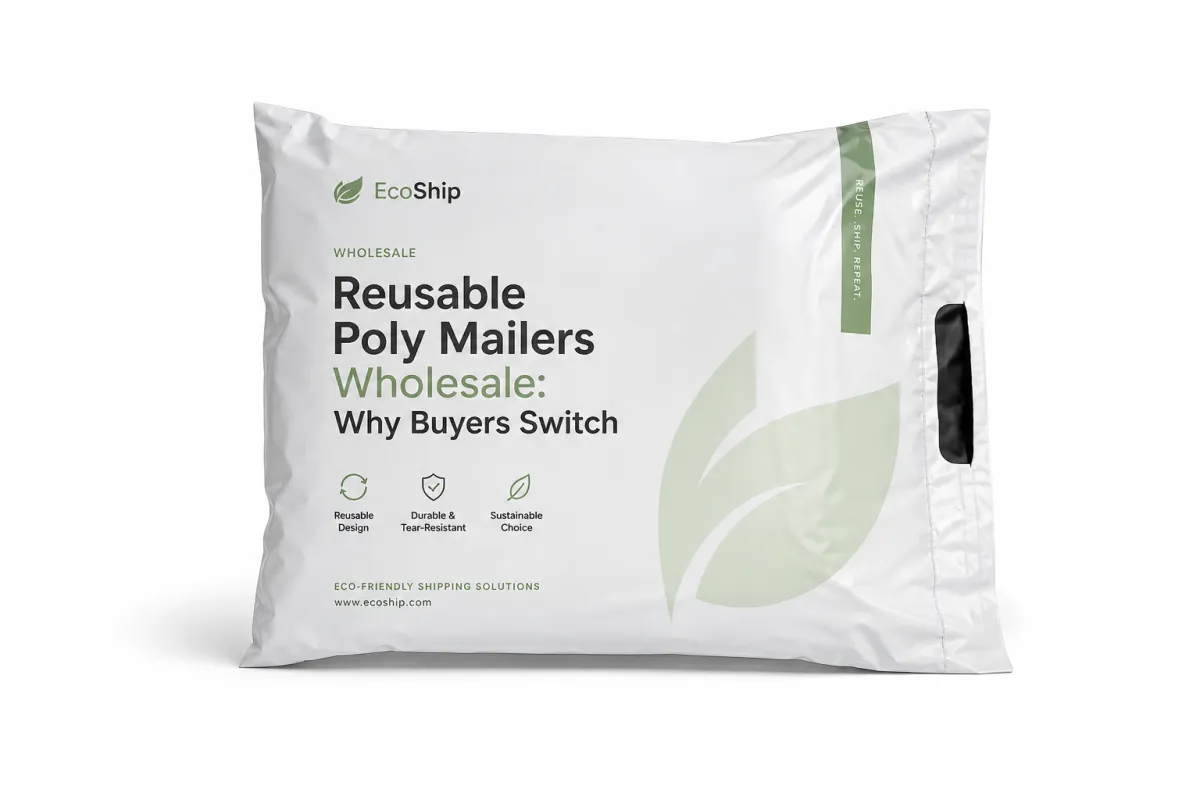
Reusable poly mailers wholesale makes sense for sellers who ship constantly and do not want to keep buying replacements for packaging that should have lasted longer. DTC apparel brands, subscription businesses, marketplaces with exchange-heavy order flows, and ecommerce teams with repeat shipments all run into the same issue: a mailer that can make the first trip but falls apart the moment a customer tries to use it again is not really reusable.
The switch usually starts after a few predictable failures. Standard poly mailers are fine for one-way shipments, yet they often wear badly once a customer opens them. The flap tears, the adhesive grabs lint, the body wrinkles, or the seam gives way under a second round of handling. A mailer designed for reuse needs a cleaner opening, a stronger body film, and a closure that still works after the first delivery. That matters for exchange programs, try-at-home models, and any order that may return through the same package.
Brand perception plays a role too. A bag that arrives intact and still looks organized after opening gives a better impression than a flimsy mailer that feels disposable from the start. Buyers do not need a lecture to understand that fewer replacements usually means less waste. They do need proof that the package can hold up in real shipping conditions. For that reason, reusable poly mailers wholesale is better judged by cost per use than by cost per piece.
The choice is usually operational rather than emotional. Teams want lower replacement frequency, less damage, and a packaging format that does not complicate fulfillment. That keeps attention on the mailer as a shipping tool instead of a decorative sleeve.
- Repeat shippers need fewer replacements and better handling tolerance.
- Subscription brands need a mailer that opens cleanly and still holds up on the return trip.
- Apparel sellers need enough structure for folded garments, inserts, and return labels.
- Ecommerce teams need steady pricing and a spec they can reorder without reworking the whole setup.
One common mistake is buying the thickest-looking bag and assuming that makes it the best value. That is not always true. Some heavy-film mailers cost more to ship, take up extra storage, and still fail at the closure point. In packaging reviews I have seen, the bag that looked toughest on a spec sheet was sometimes the one that performed the worst once it went through real warehouse handling. A better approach is to match film strength, dimensions, and seal design to the product inside. Soft goods can usually use a simpler structure. Products with zippers, boxed accessories, or sharp corners need more puncture resistance and better seam control.
That is why reusable poly mailers wholesale should be evaluated with a careful eye. Durability, closure security, and cost per use should come before broad claims. If the bag cannot survive the shipping path and still work after a second opening, it is not truly reusable. It is only thicker than average.
What Reusable Poly Mailers Are Made For
Reusable poly mailers wholesale is built for shipping situations where the package may be opened, inspected, and used again. Retail shipping is the obvious use case, but the range is wider than that. Return-to-sender workflows, exchange programs, subscription shipments, sample kits, and branded ecommerce orders all benefit from a mailer that can survive a second round of handling. If a package may travel back through the system, the closure needs to be part of the design from the beginning.
Construction matters more than many buyers expect. A reusable mailer usually includes an outer polyethylene film, reinforced side and bottom seals, and some form of resealable closure. That closure may be a dual-adhesive strip, a peel-and-stick return flap, or a design that allows the customer to seal the bag again without destroying it. The film needs enough flexibility to fold back into shape, but it also has to resist moisture and handling without cracking or splitting.
There is a real difference between “reusable” and “thicker.” Thickness alone does not guarantee reuse. A bag can be heavy and still unpleasant to open. It can also look durable while the adhesive fails after one repack. A true reusable design should open cleanly, reseal reliably, and keep enough structure to protect the contents after the first shipment. That is the standard buyers should test against.
Common product types include standard poly mailers, resealable mailers, dual-adhesive return mailers, and reinforced reusable styles. Standard poly mailers usually sit at the lowest price point. Resealable mailers add a second closure point. Dual-adhesive return mailers are common in ecommerce returns because the customer can use the same package for the trip back. Reinforced reusable styles are a better fit for heavier apparel, shoes in soft packaging, or shipments that see more abuse in transit. For a starting point, the Custom Poly Mailers page can help narrow the options around reuse needs.
Many buyers also assume a mailer that looks eco-conscious will automatically perform in a return cycle. That assumption causes trouble. Some bags are fine for one opening and nothing more. The adhesive is weak, the film creases badly, or the print scuffs after a single pass. That means wasted money and wasted time. Reusable poly mailers wholesale should be tested the same way any shipping component is tested: open it, close it, shake it, drop it, and see whether the closure still works after real handling.
Shipping abuse tests give better guidance than polished catalog language. Packaging buyers often look to ISTA methods for transit behavior, and the general approach is useful even if a full certification is not part of the project. The idea is simple: the mailer should survive the route you actually use, not a perfectly gentle version of it. The Institute of Packaging Professionals offers practical packaging resources at packaging.org, and ISTA publishes transport testing information at ista.org.
A reusable mailer only deserves the name if the customer can open it, close it again, and trust it with the same product category. Anything less is just a thicker shipping bag with a nicer story.
That is the practical filter. Catalog language can sound polished, but shipments do not care. Reusable poly mailers wholesale should support the product, the customer, and the return flow without creating friction.
Reusable Poly Mailers Wholesale Specifications That Matter
Spec sheets are the point where reusable poly mailers wholesale either becomes easy to approve or turns into a back-and-forth mess. Buyers should compare line by line rather than by broad product names. Dimensions come first. A mailer that is too tight creases the contents and puts stress on the seam. A mailer that is too large wastes material and can increase dimensional weight in some shipping setups. The size should match the item after folding, bagging, and adding any packing slip or return insert.
Film thickness is the next line that matters. Many suppliers express thickness in microns or mils, depending on the market. Thicker is not automatically better, but there is a floor. Lightweight apparel in a controlled warehouse can usually use a moderate film. Heavier garments, bundled items, or products with sharper edges need more puncture resistance. If the contents can poke through the bag or catch the seam, the mailer is underspecified.
Closure type deserves close attention. A single peel-and-seal strip can work for one-way shipping, but reusable designs often need a second adhesive strip or a more durable reseal area. Some buyers also ask for dual-seal structures so the same mailer can move outbound and then back through returns. That only helps if the adhesive can handle dust, handling, and imperfect customer use. No package performs well if the closure turns into a lint trap after a couple of touches.
Print area and finish matter just as much. If the mailer carries a logo, slogan, QR code, or sizing note, the print has to stay legible after handling. Matte finishes tend to hide scuffs better. Gloss can create a brighter presentation, but scratches show more easily. One-color logos are usually quicker and cheaper to repeat. Full-color art can look sharp, though it raises cost, proofing time, and the chance of color mismatch on reorder.
- Dimensions: match folded product size plus flap and insert allowance.
- Film thickness: balance puncture resistance with cost and shipping weight.
- Seal type: confirm whether the closure supports a second use.
- Opacity: protect privacy for apparel, printed materials, and branded products.
- Finish: matte for scuff control, gloss for brighter presentation.
- Print area: keep branding visible after opening and resealing.
A solid spec checklist saves time before quoting begins. Send the item dimensions, desired mailer size, target quantity, print colors, finish, and whether the package needs to support returns. Add the destination country, because freight can change the landed cost more than many buyers expect. That discipline is what keeps reusable poly mailers wholesale useful: the same inputs go into every quote, so the comparison stays honest.
Material details matter too. Polyethylene grade, co-extrusion structure, seam reinforcement, and puncture resistance all affect performance. Co-extruded film can help balance strength and flexibility, while a weak single-layer design may look acceptable in samples but struggle under repeated use. Buyers shipping into humid or cold environments should also ask about moisture resistance and low-temperature performance. Some films become less forgiving in cold transit, and that is not a minor issue if your freight spends time in trucks or warehouses without climate control.
If recycled content is part of the spec, ask for proof of the claim rather than assuming the bag is greener because the marketing says so. Not every reusable mailer needs recycled material, and not every recycled claim tells the full story. The better question is whether the material choice supports the shipping job, the return flow, and the budget without creating new problems. That is where reusable poly mailers wholesale earns its place.
Reusable Poly Mailers Wholesale Pricing, MOQ, and Cost Drivers
Reusable poly mailers wholesale pricing moves for a few clear reasons, and buyers should not let anyone blur them together. Size is the first one. Bigger bags use more film, more print area, and more freight space. Thickness is the second. Heavier film costs more material and often pushes the bag into a higher price band. Closure style matters as well, because a dual-adhesive or return-friendly structure takes more production steps than a basic mailer.
Print coverage can change pricing more than some buyers expect. A small one-color logo on a stock white or gray bag is usually the least expensive setup. A full-bleed design, custom color film, or complex artwork with multiple print stations raises the cost. Custom colors also make reorders less predictable, because matching tone across production runs is never as effortless as a sales sheet makes it sound.
MOQ exists because setup takes time and money. The press has to be prepared, artwork has to be approved, film has to be ordered, and production time has to be scheduled. Stock reusable mailers often have lower MOQs because the base item already exists. Custom printed or specialty return-style mailers usually carry higher minimums. That is normal. If a supplier claims a tiny custom run at a low unit price, check where the hidden charges go. They usually show up in another line item.
A practical pricing framework helps buyers compare quotes without getting lost in the details. Small runs usually sit in the highest unit-cost bracket, especially with custom print or a special closure. Mid-volume orders tend to improve quickly because setup is spread across more pieces. Large orders unlock the best landed cost, but only if warehouse space and demand can support the inventory. There is no prize for buying more packaging than the business can actually use.
Typical pricing ranges can look like this, depending on size, print coverage, and closure style:
| Mailer Type | Typical MOQ | Typical Unit Price | Best For | Main Tradeoff |
|---|---|---|---|---|
| Stock reusable poly mailers | 500-1,000 pcs | $0.16-$0.30 | Fast replenishment, basic branding | Less customization |
| Custom printed reusable mailers | 2,000-5,000 pcs | $0.22-$0.48 | Branded ecommerce orders | Higher setup and proofing effort |
| Dual-adhesive return mailers | 3,000-10,000 pcs | $0.28-$0.60 | Return-heavy apparel and subscription flows | More expensive closure system |
| Heavy-duty reusable styles | 5,000+ pcs | $0.35-$0.75 | Higher abuse transit, stronger products | More material, more freight, more storage |
Those ranges are a useful starting point for buyer conversations. Actual quotes depend on artwork complexity, destination freight, and whether the supplier is pulling from stock or running a custom order. For reusable poly mailers wholesale, freight can represent a much bigger share of landed cost than expected, especially on lower-value bags where shipping weight and carton count matter.
Hidden costs are where budgets get hurt. Setup fees, plate charges, sample charges, color revision fees, rush production, and freight surcharges all add up. If multiple quotes are being compared, ask for the same line items on every proposal. A quote that looks cheaper by unit price may lose once freight and artwork revisions are included. Smart buyers ask for total landed cost, not just the piece price. Reusable poly mailers wholesale is a procurement decision, not a sticker-price contest.
Storage is another cost driver. A lower MOQ can protect cash flow, while a higher MOQ can reduce reorder headaches and improve price tier. The right answer depends on inventory turnover. If a team ships 5,000 units a month, a 10,000-piece run may work well. If volume is irregular, a smaller order can protect against dead stock. It is not dramatic, but it is how packaging budgets stay under control.
For buyers who want a cleaner sourcing path, pairing mailer purchases with broader Wholesale Programs can simplify quoting and freight decisions. That helps especially when sourcing stickers, inserts, or folding cartons at the same time. Fewer separate freight events usually make the total spend easier to manage, and that kind of practical coordination saves real money.
Process, Sampling, and Timeline for Wholesale Orders
Reusable poly mailers wholesale orders move faster when the buyer sends complete information on the first pass. The cleanest path usually starts with spec review, then quote, then artwork approval, sample check, production, packing, and shipping. Skip one step and the order slows down anyway, only with more messages and more chances for confusion.
Sampling is worth the time in a few cases. New sizes need sample checks because fit is often wrong on the first attempt. New print jobs need proof review because artwork can shift, fade, or sit too close to the closure. Any reusable design should also be tested for open-and-reseal behavior before production. If the return strip fails on the sample, there is no reason to hope the full order will fix itself later. The sample exists for that exact reason.
Timeline depends on whether the item is stock or custom. Stock reusable mailers can move quickly if inventory is available and the artwork is simple. Custom Printed Mailers usually take longer because proofing, setup, and production all add time. Many buyers should budget about 12-15 business days from proof approval for standard custom jobs, with longer windows for large orders or busy seasons. Rush orders can happen, though they carry higher cost and less room for error.
The quickest way to keep the schedule tight is to send the right inputs in one message: dimensions, quantity, print file, shipping address, deadline, and whether the mailer needs to support returns. If the team is still deciding between sizes, send the product measurements and ask for a recommendation. That beats sending a rough guess and restarting the process after the sample arrives.
- Confirm the item size: measure the product after folding, bundling, or boxing.
- Set the function: outbound only, return-friendly, or dual-use.
- Choose print needs: logo only, simple branding, or full custom coverage.
- Request samples: verify closure, fit, and handling before mass production.
- Approve with clarity: confirm quantity, freight destination, and delivery deadline.
Buyers should also ask for quality checkpoints before production starts. That can include film thickness confirmation, seal strength checks, print proof approval, carton counts, and outer packing standards. If the supplier cannot explain how each one is handled, that is a warning sign. The point of reusable poly mailers wholesale is to reduce risk, not add more of it.
Quality checkpoints are not busywork. They keep mistakes from landing in the freight bill. A wrong size can look close on screen and be useless in the warehouse. A color mismatch may not matter to engineering, but it matters to brand teams. A weak closure can pass a quick glance and still fail after the customer opens the mailer. Sampling matters because a new spec should not be guessed into production.
Shipment and transit behavior are often assessed using industry testing principles, and buyers should think that way even when formal certification is not part of the order. The packaging should survive the route it actually takes. If it is going through parcel networks, rough handling, temperature swings, or return loops, it should be tested for those conditions. That is how reusable poly mailers wholesale stays practical instead of theoretical.
Why Choose Us for Reusable Poly Mailers Wholesale
Buyers do not need a pep talk. They need a supplier that can keep the spec steady, quote clearly, and avoid unnecessary surprises. That is the real value behind reusable poly mailers wholesale with Custom Logo Things. The aim is not to push the most expensive option. The aim is to match the right material, closure, and print setup to the shipment so the mailer performs and the budget stays controlled.
Consistency matters more than flashy promises. A dependable supplier should be able to repeat the same size, film, closure style, and print result across reorders. That matters for seasonal replenishment and for programs that need multiple production batches over time. If the second order behaves differently from the first, the packaging plan starts to feel unstable. Good sourcing removes that friction.
Support also matters in a very practical way. Many buyers need help deciding between a standard reusable style, a resealable version, or a return-friendly dual-adhesive design. Some need a size recommendation because the apparel folds differently than expected. Others need artwork guidance so the logo remains visible after the first use. We can help with those decisions without turning the process into a lecture.
Here is how to evaluate any supplier, including us:
- Response speed: do they answer with real numbers, not vague promises?
- Transparency: are MOQ, freight, and setup fees explained up front?
- Sample quality: do samples match the quote and the intended use?
- Production reliability: can they repeat the same spec on reorder?
- After-sale support: do they help if the size, print, or closure needs adjustment?
If a supplier can only sell the idea of sustainability but cannot explain thickness, closure, or cost per use, keep moving. Packaging buyers already have enough to manage. The right partner should narrow the choices, not make them more confusing. That is especially true for reusable poly mailers wholesale, where the wrong spec can make every shipment more expensive than it should be.
The strongest suppliers also help buyers avoid overbuying. Starting with a tested size and scaling after performance is confirmed is usually smarter than ordering a huge run before the bag has proved itself with the actual product mix. Practical packaging is rarely about bravado. It is about controlled decisions and repeatable results.
If you are comparing options across Custom Packaging Products, Custom Poly Mailers, and broader Wholesale Programs, look for a partner that keeps the process straightforward. Clear quoting, clear specs, and direct guidance usually beat loud claims. That is the working definition of useful.
Next Steps for Your Reusable Poly Mailers Wholesale Order
If the research phase is done and the order is next, keep the next step simple. Confirm the product size, estimate monthly volume, decide whether the mailer needs a return function, and choose the print style that fits the brand. That gives enough detail to request a real quote for reusable poly mailers wholesale instead of a rough estimate that will need a dozen follow-up emails.
Then ask for four things at once: a quote, a sample, a spec sheet, and a freight estimate to the destination. That is the cleanest way to compare suppliers. If one vendor can provide all four quickly and another cannot, the difference usually shows up later in production too. Speed matters, but clarity matters more.
The smartest buying path is usually the simplest one: start with one tested size, confirm the closure and print, then move into the best volume tier after the sample proves itself. That keeps waste down and lowers the chance of getting stuck with the wrong bag in a storage room. Packaging inventory is not where most teams want surprises.
Use this short checklist before you order:
- Measure the product after folding or bundling.
- Set your target quantity and reorder frequency.
- Decide if the mailer needs a return seal.
- Confirm print coverage and finish.
- Ask for sample approval before mass production.
Strong buying decisions come from concrete details, not optimism. If the mailer is too weak, too small, too expensive, or too hard to reuse, the cost shows up later in damaged shipments and customer complaints. That is why reusable poly mailers wholesale should be treated as a performance purchase first and a branding purchase second.
The cleanest next step is to measure the packed product, choose one target SKU, and request a sample that proves the closure can be opened and resealed twice before you place the order. That one check usually tells you more than a polished quote ever will.
FAQ
What is the minimum order for reusable poly mailers wholesale?
MOQ depends on whether you want stock mailers, custom print, or a special closure style. Stock options usually start lower, while custom runs need higher volume because setup costs need to be spread across more pieces. Ask for MOQ by size and print method, not just one blanket number, because reusable poly mailers wholesale can vary a lot by spec.
How do I choose the right size for reusable poly mailers wholesale?
Measure the product after folding or boxing, not just the flat item dimensions. Leave room for the flap, closure, and any insert cards or return labels. If you ship multiple SKUs, pick the most common size first and test one backup size for edge cases. That keeps reusable poly mailers wholesale from becoming a storage problem.
Are reusable poly mailers wholesale orders waterproof and tear-resistant?
Most are built to resist moisture and handling, but performance depends on film thickness and seam quality. Ask for puncture and tear details if you ship sharp-edged or heavy items. A reusable design should keep its structure after opening and resealing, not just survive the first shipment. That is the whole point of reusable poly mailers wholesale.
What print options work best for reusable poly mailers wholesale?
Simple logos and bold branding usually deliver the cleanest result and the easiest reorders. Full-color print can work well, but it may raise cost and require tighter artwork control. Check print placement against the closure zone so the logo is still visible after the mailer is reused. That keeps reusable poly mailers wholesale looking intentional instead of cluttered.
How long does a wholesale reusable poly mailer order take?
Stock items ship faster because they do not need custom production. Printed or custom-sized orders take longer because artwork approval and manufacturing both add time. The fastest way to keep lead time tight is to send specs, quantity, artwork, and delivery address in one shot. That gives reusable poly mailers wholesale the best chance of arriving on schedule.