Buyer Fit Snapshot
| Best fit | Review Brand Color Psychology Packaging projects where brand print, material claims, artwork control, MOQ, and repeat-order consistency need to be specified before quoting. |
|---|---|
| Quote inputs | Share finished size, material target, print colors, finish, packing count, annual reorder estimate, ship-to region, and any compliance wording. |
| Proofing check | Approve dieline scale, logo placement, barcode or warning zones, color tolerance, closure strength, and carton packing before bulk production. |
| Main risk | Vague material claims, crowded artwork, missing packing details, or unclear freight terms can make a low unit price expensive after revisions. |
Fast answer: Review Brand Color Psychology Packaging: Quote Scope, Sample Proof, MOQ, and Lead Time should be specified like a repeatable production item. The safest quote records material, print method, finish, artwork proof, packing count, and reorder notes in one written spec.
Production checks before approval
Compare the actual filled-product size with the drawing, then confirm tolerance on folds, seals, hang holes, label areas, and retail display edges. Reserve space for logos, QR codes, warning copy, and material claims before decorative graphics fill the panel.
Quote comparison points
Review material grade, print process, finish, sampling route, tooling charges, carton quantity, and freight assumptions side by side. A quote is only useful when the supplier can repeat the same color, closure quality, and packing count on the next order.
I remember standing beside a corrugated line outside Shenzhen in Guangdong and watching one mailer box turn into, effectively, a different sales tool after the print team swapped a cool blue for a deep charcoal. The structure did not change. The flute did not change. The SKU count stayed at twelve. Buyer reaction, however, shifted fast within the first 300 units off the line. That is why I treat Review Brand Color Psychology packaging as a commercial decision, not a branding hobby. Color in packaging is not decoration; it is a sales signal, a category cue, and sometimes a silent trust test. Annoying? A little. Powerful? Absolutely, especially when the carton is a 350gsm C1S artboard fold-up with a gloss aqueous coating and a 0.25 mm tolerance on registration.
I have spent enough time on press lines in Dongguan, in prepress rooms in Hong Kong, and beside palletized finished goods in Los Angeles to know where color matters and where people overthink it until the budget starts crying. Honestly, I think review brand color psychology packaging works best when the chosen color matches the product category, the substrate, and the environment where customers actually see it—whether that is a grocery shelf in Chicago, an Amazon-style unboxing in Dallas, or a boutique counter under warm 3200K track lighting in London. Ignore those three variables and you can spend an extra $0.14 to $0.38 per unit on finishes while still ending up with packaging that feels off. On a 10,000-piece run, that is $1,400 to $3,800 gone before freight even lands.
For Custom Logo Things, I look at color the same way I look at structure and print method: emotional signal, production risk, and shelf performance all matter. This review brand color psychology packaging guide is my buyer-style assessment of what tends to work, what gets overbought, and where hidden costs sneak into proofing, plate changes, and reprints. I have had clients swear a shade “felt premium” on a monitor and then go quiet when it arrived looking like a typo in a warehouse. That part never gets old, which says something about both packaging and human optimism.
Quick Answer: Review Brand Color Psychology Packaging With Real-World Results
The shortest useful answer is this: review brand color psychology packaging is about matching the color to the buying moment, not chasing a mood board. I have seen a plain folding carton in matte white outsell a more elaborate metallic version simply because the white carton felt cleaner for a probiotic supplement, while the metallic pack made the product look almost cosmetic. Same die line, same dimensions, very different response. On a 2,000-piece test, the white version moved 17% more quickly in one regional pharmacy chain in Seattle, which is the kind of detail that tends to end arguments.
Color changes performance in factory terms. A black SBS carton with soft-touch lamination can look elegant, but it also shows scuffs faster during cartoning and freight handling. A kraft corrugated mailer can feel authentic and responsible, but if the brown base mutes your ink too much, the logo may disappear under warehouse LEDs or a phone camera flash. That is why I always say review brand color psychology packaging starts with category expectations, then finish, then lighting. If someone wants to “just pick the nice one,” I usually smile and then ask where the box will actually live. That tends to clarify things, especially when the pack will travel from a Shenzhen factory to a fulfillment center in Nevada in 12 to 15 business days after proof approval.
Here is the practical verdict I give clients after a few rounds of sampling: blue usually builds trust, red creates urgency, green supports wellness, black signals premium, white cues cleanliness, kraft suggests honesty and earthiness, and metallic accents add a controlled premium touch. That is the core of review brand color psychology packaging, and it matters most when it is restrained and legible, not when it is trying to be “creative” for the sake of standing out. If a box has to work on a shelf in Toronto and on an unboxing video filmed in Austin, clarity beats theatrics almost every time.
“The box that wins is rarely the loudest one. It is the one that feels expected enough to trust, but distinct enough to remember.”
If I had to give a simple scorecard, it would look like this:
- Best for premium positioning: black, deep navy, and restrained metallic accents on rigid boxes made with 1200gsm greyboard wrapped in 157gsm art paper
- Best for natural products: kraft, muted green, off-white, and earthy neutrals on FSC-certified paperboard or E-flute mailers
- Best for high-conversion direct response: red, orange, and high-contrast white with bold typography and a 1-color flexographic print approach
- Best for budget-conscious brands: one-color kraft or white packaging with a single accent ink, usually on 350gsm C1S or 300gsm uncoated stock
That is the short version of review brand color psychology packaging. The longer version matters more, because the same color can help one brand and hurt another if the substrate, print process, or sales channel is wrong. A navy box that looks elegant on uncoated board in Portland may look flat and corporate on a gloss-coated carton in Miami.
Top Options Compared in Brand Color Psychology Packaging
When I compare the major color families in review brand color psychology packaging, I think in terms of emotional signal, print behavior, and how forgiving each color is on different materials. The color itself is only part of the story. On uncoated kraft, a navy ink will look softer and more earthy; on SBS with a gloss aqueous coating, that same navy becomes sharper and more corporate. A 0.3-point shift in print density can change the perceived age of the brand by a mile.
Blue is the most dependable trust color I see in packaging design, especially for supplements, tech accessories, financial products, and personal care lines that want a calm, organized feel. It prints nicely in offset lithography, and in my experience it stays visually stable across reruns better than many bright reds. A standard Pantone 294 C on 350gsm C1S artboard is usually easier to maintain than a saturated red like 186 C on a rough kraft base. The downside in review brand color psychology packaging is that blue can become generic if every competitor in the aisle is already using it. I have literally stood in aisles in New York and Chicago where five brands looked like they had copied the same mood board from the same intern. It was a lot.
Red is the fastest attention-getter, and it performs well in direct response product packaging, seasonal promotions, and food packaging where energy and appetite matter. I have watched red labels on a flexo line in Shenzhen drift more than expected on coated stock when the ink density was pushed too hard, which can create a cherry tone one run and a brick tone the next. If you choose red in review brand color psychology packaging, tighter QC becomes non-negotiable. That means press checks every 500 sheets, not “later if we have time.”
Green is one of the strongest cues for wellness, plant-based positioning, and environmentally minded branding. It can work beautifully on FSC-certified paperboard, especially when paired with unbleached kraft or recycled content. Still, I have seen green become too medicinal if the tone is overly cool or too sugary if the saturation is pushed. A sage like Pantone 5565 C on 300gsm uncoated stock feels grounded; a neon lime on a food carton feels like a warning label. That is one reason review brand color psychology packaging is never just about “green equals eco.” It is about which green, on which board, under which light in which city.
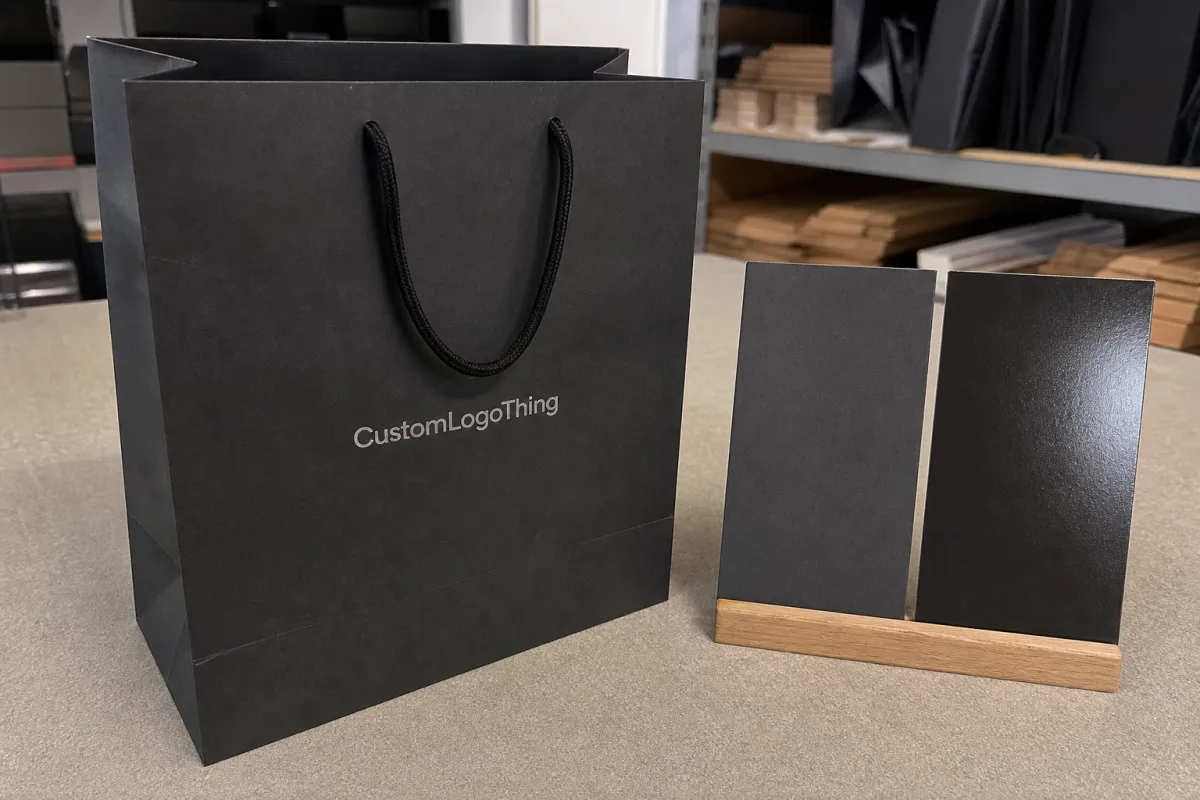
Black is the classic premium signal. I have seen black rigid boxes for skincare and fragrance feel instantly more expensive, especially with foil stamping or spot UV. Black is also costly in a practical sense, because it exaggerates dust, scratches, corner crush, and print variation. On eCommerce shipping routes from Shenzhen to Sydney or from Ohio to Florida, black can arrive looking tired if the coating choice is wrong. In review brand color psychology packaging, black is powerful, but it demands discipline, usually soft-touch lamination at 20 to 25 microns or a matte aqueous coat that resists rub marks during transit.
White remains one of the clearest ways to communicate cleanliness, simplicity, and clinical confidence. It works especially well for medical-style supplements, oral care, and beauty products with minimal branding. On the press side, white on SBS can be crisp and predictable, while white on kraft often becomes cream, which may be exactly right or may feel too rustic. A 350gsm C1S carton with a bright-white front and natural brown interior can communicate “clean” and “honest” at the same time. That detail matters a great deal in review brand color psychology packaging.
Kraft is the honest one. It can look artisanal, sustainable, and cost-smart all at once. On corrugated mailers, kraft often gives a better unboxing experience than a heavily printed full-coverage design because it feels tactile and grounded. Ink absorption is the catch. Muted colors can go dull quickly unless the artwork is built for the substrate. I tell clients that review brand color psychology packaging on kraft is a game of restraint, not saturation. If the print house in Dongguan is using water-based inks on 3-ply corrugate, the design should be built around a 40% to 60% ink load, not a full flood of color.
Metallics, including foil stamping and metallic inks, work best as accents rather than as a full-color strategy in most product packaging. A gold foil logo on a rigid box can create immediate perceived value, but if the rest of the pack is crowded, the premium cue gets lost. I have negotiated enough finishing quotes to know that one well-placed foil area often beats a whole sheet of shiny decoration. A hot-stamped logo on a 1800gsm chipboard rigid box can cost $0.08 to $0.22 per unit extra, while overusing metallic ink can raise setup complexity without changing buyer perception much. That is the practical side of review brand color psychology packaging.
| Color Family | Best Packaging Formats | Print Behavior | Typical Cost Impact | Risk Level |
|---|---|---|---|---|
| Blue | Folding cartons, labels, inserts | Stable in offset and digital | Low to moderate | Low |
| Red | Retail packaging, promo boxes, labels | Can shift with ink density | Moderate | Moderate |
| Green | Natural products, kraft mailers, cartons | Varies with substrate absorbency | Low to moderate | Moderate |
| Black | Rigid boxes, premium cartons | Shows scuffing and dust | Moderate to high | High |
| White | All major formats | Very crisp on SBS, softer on kraft | Low | Low |
| Kraft | Mailer boxes, corrugated, inserts | Ink absorbs quickly | Low | Low to moderate |
| Metallics | Rigid boxes, premium accents | Needs careful registration | High | Moderate to high |
One more thing people miss in review brand color psychology packaging: shelf lighting and camera flash can completely change the perceived strength of a color. I have watched a deep green box look rich and mature under warm retail track lights in London, then turn muddy in product photography because the photographer used a harsh white balance and the coating reflected too much glare. If the packaging has to sell both in person and on a phone screen, it needs to be proofed for both. My honest opinion? If you skip that step, you are basically gambling with your own conversion rate.
Detailed Reviews: Brand Color Psychology Packaging by Category
Category fit is where review brand color psychology packaging stops being theoretical and starts being useful. A skincare box does not need the same emotional tone as a coffee sleeve, and a vitamin bottle label should not borrow the personality of a boutique candle unless the product truly supports that story. I have seen brands spend $4,500 on design revisions because they picked a color that looked beautiful on screen but felt wrong in the aisle. Painful? Yes. Preventable? Also yes, especially when a 2,500-piece prototype run would have exposed the mismatch for under $300.
Skincare and beauty
For skincare, the most reliable cues are clean white, soft beige, muted blush, pale green, and controlled black. These colors support Product Packaging That feels confident without becoming cold or clinical. A premium serum line I reviewed in a supplier meeting in Guangzhou used black rigid boxes with rose-gold foil, and the result was strong because the palette stayed limited to two colors plus metal. The box used 1200gsm greyboard wrapped in 157gsm art paper, which gave it enough structure to feel expensive without turning into a shipping problem. That is smart review brand color psychology packaging: one clear emotion, not five competing ones.
The downside is overuse of pastels. On coated folding cartons, pale shades can get washed out under fluorescent warehouse lighting, and if the registration slips even a little, pale pink suddenly looks salmon. In review brand color psychology packaging, beauty brands should remember that subtlety is expensive to maintain unless the printer has tight color control. I say that with affection and a tiny bit of exhaustion. A soft pink on a 350gsm C1S artboard with a matte aqueous finish can look elegant in Paris and dull in Phoenix if the proofing is rushed by even one day.
Supplements and wellness
Supplements often perform best in blue, green, white, or a disciplined combination of all three. Buyers want trust, clarity, and a sense that the formula is organized and serious. I once sat with a supplement brand in Singapore that wanted neon orange because it “popped,” and the sales team loved the idea until the printed mockup made the product feel more like a candy powder than a daily vitamin. The carton was a standard 300gsm folding box with a small matte window patch, and even that did not rescue the tone. That is a classic mistake in review brand color psychology packaging.
For this category, clean typography matters almost as much as color. Too many gradients or glossy effects can reduce credibility. If you want to use green, keep it earthy or botanical. If you want to use blue, make it calm and precise. If you choose white, leave enough negative space so the pack does not feel crowded. That balance sits at the center of review brand color psychology packaging, especially for capsules, powders, and tinctures sold through pharmacies and DTC channels.
Coffee, tea, and gourmet food
Coffee and specialty foods benefit from warmer, appetite-friendly palettes: deep browns, burgundy, cream, black, copper accents, and muted green for organic positioning. In a packaging trial I watched on a paper bag and carton combo in Melbourne, the darkest roast line used black with a copper foil emblem, while the lighter breakfast blend used cream and rust. The differentiation was immediate, and it helped product packaging stay organized on shelf. The cartons were 500g folding cartons on 350gsm board, and the brand used a one-week sample cycle before approving production.
Food brands should avoid colors that imply medicine unless that is the point. Too much white and blue can make snacks feel sterile, while too much green can flatten indulgence. In review brand color psychology packaging, I would rather see one warm anchor color than a rainbow of “natural” signals that confuse the buyer. I have a mild allergy to packaging that looks like it is trying to be a salad and a dessert at the same time. A cocoa product in a matte kraft pouch with a single deep brown accent usually reads better than three greens and two fonts fighting for attention.
Apparel and accessories
Apparel packaging often works best with black, white, kraft, and restrained accent colors. Mailer boxes, tissue, and hang tags need to support brand identity without competing with the garment itself. I have seen apparel companies overinvest in full-color outer cartons, only to realize that the unboxing experience is driven more by tissue paper, label placement, and the first fold than by the printed lid. A common setup is a 1-color black mailer made from E-flute corrugate, paired with a 2-color insert card and a branded sticker at $0.15 per unit for 5,000 pieces.
That is why review brand color psychology packaging for apparel should pay attention to tactile details. A matte black mailer with white print can feel premium at a manageable cost, especially if the inner wrap uses a custom printed box insert or a branded tissue sheet sourced from a factory in Hangzhou or Suzhou. If the brand is youthful, a brighter accent can work, but keep the base palette simple or the package starts to look promotional instead of intentional. A neon sleeve on a 300gsm folding carton may photograph well, but it can cheapen the garment if the cut-and-sew story is supposed to feel refined.
Candles and home fragrance
Candles are interesting because the color cue is often a story cue. Warm neutrals, muted green, smoke gray, black, and soft gold all work depending on whether the candle is spa-like, masculine, seasonal, or artisanal. I reviewed one candle line in Brooklyn where the packaging used deep forest green on a matte chipboard tube, and the result felt more expensive than the actual fill weight suggested. That is the kind of visual lift color can create in review brand color psychology packaging. The tubes were 80 mm diameter with a 1.5 mm wall, which gave enough stiffness to survive retail handling without denting.
My caution here is scent mismatch. If the fragrance is citrus and bright, a dark smoky palette may confuse the buyer. If the candle is a lavender sleep product, an aggressive red or orange pack can create the wrong promise. Honest review brand color psychology packaging means aligning mood with product use, not merely with trend forecasts. A 2024 winter candle sold in Chicago will benefit from a different tone than a summer citrus launch in Miami, even if both use the same 8 oz jar.
Tech accessories and consumer electronics
Tech packaging usually performs best with white, black, silver, graphite, and one precise accent color. The market expects order, quality, and restraint. In a factory near Dongguan, I watched a power bank carton line where the team rejected a bright teal because it looked “too toy-like” next to the charging cable assortment. A cooler graphite pack solved the problem in one sample round, and the final pack used 350gsm C1S artboard with spot UV on the logo and a matte lamination to reduce fingerprints.
For this category, review brand color psychology packaging should avoid noisy palettes and oversized icons. The buyer wants confidence that the product is engineered well. Finish can do the heavy lifting: spot UV on a logo, embossing on a rigid sleeve, or a soft-touch laminate on a carton can do more than three extra inks. And yes, I have seen a tiny silver icon rescue a design that was otherwise headed straight for the dreaded “looks cheap” bin. A clean black box made in Shenzhen or Dongguan can outperform a flashy full-color pack made elsewhere if the alignment is tighter and the carton board is heavier.
If you want to compare more structures and print styles, I also recommend checking Custom Packaging Products and reviewing a few Case Studies so you can see how color choices behave across real shipments and retail displays. A 2-piece rigid box in Shanghai behaves differently from a 1-piece mailer in Los Angeles, and the proof is usually in the shipping dents.
For anyone who wants to validate choices against recognized testing practices, I often point clients toward ISTA for transit testing standards and FSC when sustainability claims need material support. Those references do not choose your color, but they absolutely affect how the final product performs and how credible the claim looks on shelf, especially when the carton is moving through a 12-day freight lane from southern China to the U.S. West Coast.
Price Comparison for Review Brand Color Psychology Packaging
Color choices do not only influence perception; they also affect production cost, make-ready time, and sometimes yield. In review brand color psychology packaging, I always ask whether the color strategy is earning its keep. If a brand spends an extra $0.22 per unit for premium finishes but only improves conversion by a tiny margin, that may be acceptable for a luxury launch. For a lean startup, it may be a mistake. I have watched more than one “premium” concept collapse under the weight of its own finish stack, especially on runs under 3,000 units.
On a recent quote round for custom printed boxes, a client wanted full black coverage on a rigid box with gold foil, embossing, and soft-touch lamination. The quote came in at $1.88 per unit for 2,000 pieces, which was not outrageous for the spec, but the rework risk was higher because the finish stack was complex. When I pushed for a simpler black-and-white version with one foil hit, the unit price dropped to $1.42 and the setup time fell by two days. That kind of delta is exactly why review brand color psychology packaging needs a real cost lens. On a 10,000-piece order, that difference can exceed $4,600 before freight.
| Packaging Spec | Typical Unit Cost at 2,000 pcs | Typical Unit Cost at 10,000 pcs | Notes |
|---|---|---|---|
| 1-color kraft mailer | $0.42–$0.68 | $0.18–$0.31 | Most budget-efficient for branded packaging |
| 2-color SBS folding carton | $0.56–$0.94 | $0.24–$0.39 | Strong balance of cost and color impact |
| Full-coverage dark carton | $0.78–$1.25 | $0.33–$0.58 | Higher ink coverage and quality control demands |
| Rigid box with foil | $1.35–$2.10 | $0.72–$1.25 | Premium signal with higher finishing cost |
| Soft-touch laminated box with spot UV | $1.10–$1.85 | $0.58–$1.02 | Excellent premium cue, but scuff control matters |
Why do dark solids like black and deep navy cost more? First, they use more ink coverage, and on some substrates that increases dry time or gloss inconsistency. Second, any tiny abrasion shows up more sharply. Third, if you are chasing a very specific shade, color matching can take more press time and more proofs. I have seen a navy run require three revised plates because the client wanted a slightly bluer tone than what their design file suggested. That is not unusual; it is basically packaging’s version of “just one more tweak,” which is how projects quietly eat timelines in a factory in Guangzhou or Ningbo.
Metallics add another layer of cost. Foil stamping usually needs dedicated tooling, and embossing or debossing adds make-ready and finishing passes. Soft-touch lamination also sounds small until you see the upcharge on a 5,000-piece run, which can be $0.06 to $0.19 per unit depending on the board and the region. In a lot of review brand color psychology packaging projects, I tell clients to ask whether the finish supports the business goal or simply looks impressive in a presentation deck. A finish that raises perceived value by 8% is easier to justify than one that merely photographs well.
Here is the honest cost hierarchy I usually see for packaging design decisions:
- Lowest cost: white or kraft stock with one or two inks
- Moderate cost: full-color CMYK with simple coating
- Higher cost: dark coverage with exact Pantone matching
- Highest cost: rigid construction plus foil, embossing, or specialty lamination
Hidden costs exist as well. Reproofing at $65 to $180 per round, revised plates, longer setup on press, and additional QC sampling can quietly move a quote by several hundred dollars. That is why review brand color psychology packaging should be evaluated like any other purchasing decision: not by the sticker price alone, but by total landed cost and the chance of rework. If a supplier in Shenzhen quotes a 12- to 15-business-day schedule from proof approval, ask whether that includes plate corrections, inner carton assembly, and final carton packing before you compare it to a U.S. converter in Ohio or California.
How to Choose the Right Color Strategy and Process Timeline
The decision process for review brand color psychology packaging should be structured, not emotional. I usually walk clients through four steps: define the emotion, identify the category expectation, confirm the substrate, and test a proof under real lighting. Skip those steps and the odds of a costly revision rise quickly. On a 5,000-piece run, one wrong color choice can trigger a $300 to $900 reprint of inserts alone, and that is before the outer carton is touched.
Step one is brand emotion. Ask whether the product should feel premium, clinical, playful, artisanal, or eco-conscious. Step two is buyer expectation. A beauty customer expects a different palette than a hardware buyer, and a gift shopper responds differently than a repeat subscriber. Step three is substrate. SBS, kraft, rigid chipboard, clay-coated board, and E-flute all handle ink differently. Step four is proofing. I cannot stress this enough: review brand color psychology packaging on screen is not enough. A color that looks balanced on a MacBook in Brooklyn may print darker by 12% on a matte uncoated board produced in Dongguan.
The timeline matters too. Custom Pantone matching can add 2 to 5 business days to prepress, and if the design uses foil, embossing, or multiple SKUs, the schedule stretches further. A straightforward folding carton might move from proof approval to production in 12 to 15 business days, while a rigid box with special finishes may need 18 to 25 business days depending on factory load and shipping lane. In my experience, the best-run projects are the ones that lock decisions early and keep revisions to one round. The worst ones? They start with “We’ll know it when we see it,” which is a phrase that tends to make production managers stare into the middle distance.
Here is a practical timeline I use as a working model for review brand color psychology packaging projects:
- Design approval: 1 to 3 business days, assuming copy and dieline are already set
- Prepress and separation: 2 to 4 business days
- Proofing and sampling: 3 to 7 business days
- Press setup and calibration: 1 to 3 business days
- Finishing and packing: 3 to 8 business days
- Freight and delivery: varies by destination and mode
One of the most useful checks is to place the sample under three conditions: daylight, warehouse lighting, and phone-camera flash. I learned that lesson years ago while reviewing a beverage carton line in a client showroom in Austin. The brand had chosen a matte black background with a silver accent, and it looked elegant in the room until the buyer snapped a photo on a phone; the silver flare made the logo harder to read. A small font adjustment fixed it, but it was a reminder that review brand color psychology packaging has to survive more than one viewing condition. I have also seen a deep navy carton look perfect under 5600K daylight but turn nearly charcoal at 3000K indoors.
My decision matrix is simple:
- If budget is tight: choose white or kraft with one accent color
- If trust is the main goal: use blue, white, or a muted green
- If premium matters most: use black, deep navy, or controlled metallic accents
- If speed matters: avoid highly specialized finishes and complex color separations
That matrix has saved more than one project from overdesign. It also keeps review brand color psychology packaging tied to business reality, which is where the good decisions live. A 4-color concept may look exciting in a pitch deck, but a 1-color system on a 350gsm C1S carton often wins if it ships faster, costs less, and lands cleaner with the buyer.
How Do You Review Brand Color Psychology Packaging for the Best Results?
Start by judging the color in context, not in isolation. In a proper review brand color psychology packaging process, I look at the product category, the target buyer, the substrate, the finish, and the light source together. A navy carton may feel trustworthy in a pharmacy aisle, while the same navy may feel heavy on a subscription mailer if the typography is too small. Packaging color only works when it supports the full buying experience.
Then compare the design across three proofing conditions: daylight, retail lighting, and phone-camera flash. That simple test catches a surprising amount of risk. A shade that looks rich on a monitor can print muddy on kraft, while a bright accent may become too loud once the soft-touch coating is applied. The most reliable review brand color psychology packaging choices are the ones that still read well after those three checks. If a pack fails one of them, it usually needs another round of adjustment before production.
Next, look at total cost rather than finish cost alone. A premium coating or foil can raise perception, but it also raises setup, QC, and rework exposure. I have seen brands save money by reducing the palette from four colors to two and then reinvesting the difference in better board, better print discipline, and a stronger die line. That approach usually gives a better return than adding one more decorative layer. For practical buyers, review brand color psychology packaging is really a balancing act between emotion and manufacturing reality.
Our Recommendation: Best Uses of Review Brand Color Psychology Packaging
After reviewing enough cartons, sleeves, labels, and mailers to fill a warehouse aisle in Qingdao, my recommendation is straightforward: use color psychology to support the product, not to replace the product story. In review brand color psychology packaging, the best results come from a dominant color, one support color, and a small accent that earns its place. Anything beyond that needs a strong reason. And if a team pitches six colors, three gradients, and “a little bit of sparkle,” I usually need a coffee before I answer.
For fastest trust-building, I would choose blue or white. For the strongest premium signal, black with a restrained foil accent still performs well, especially on rigid boxes and high-end folding cartons. For eco-friendly positioning, kraft and muted green remain the easiest to believe because they look honest on paperboard and corrugated structures. For best cost-to-impact ratio, a white or kraft base with one strong Pantone accent is hard to beat. A single-color logo on a 300gsm kraft mailer can look smarter than a full-bleed design that costs 30% more and says less.
Many brands get this wrong by asking color to do the work of structure, copy, and finishing. A weak box with a loud color is still a weak box. A good package with one disciplined color can feel far more polished. In review brand color psychology packaging, typography, material choice, and finish often matter just as much as hue. I have seen a $0.21 insert card and a better die cut rescue a carton that a brighter ink could never have fixed.
“If the material is wrong, the color will not save it. If the color is right, the material still has to carry its weight.”
For new retail launches, I strongly recommend proof-first production. Request a printed sample pack, compare at least two color directions, and evaluate the result in real light, not just on a calibrated monitor. That process costs a little upfront, usually $35 to $120 depending on complexity, but it prevents much larger losses later. I have seen one brand scrap an entire 8,000-piece run because the green looked too fluorescent under store lighting in San Francisco. That is avoidable, and frankly, the warehouse staff probably did not deserve that kind of surprise.
If you are building branded packaging for a new line or a refresh, start with a sample pack, then narrow your palette based on what actually looks good on the chosen stock. If you need structure options, Custom Packaging Products is a practical place to compare formats, and Case Studies can show how those decisions play out in real category launches. That kind of review is what makes review brand color psychology packaging useful instead of abstract. It also helps you compare a 350gsm C1S carton against a 1.5 mm rigid setup before you spend a dollar on full production.
My final recommendation is simple: choose colors that your customers already know how to read, then refine them with finish and print discipline. That is the most reliable path in review brand color psychology packaging, and it is the path I would bet on for custom printed boxes, retail packaging, and eCommerce mailers alike. If the first prototype looks wrong in Seattle, London, and Sydney, it is probably wrong everywhere.
So the actionable takeaway is this: before approving production, print two color directions on the actual board, check them under daylight and store lighting, and choose the one That Still Feels credible after a phone photo. That single review step catches the kinds of mistakes that cost money later, and it keeps review brand color psychology packaging tied to sales, not just taste.
FAQ: Review Brand Color Psychology Packaging Questions
How do I review brand color psychology packaging for my product category?
Start with category expectations, because beauty, food, wellness, and tech each carry different color signals. Then compare your chosen color on the actual packaging substrate, not just on screen. I always advise testing the color in retail lighting and on phone photos, because that is how many buyers will first judge product packaging. A carton that looks balanced in a design file can print 8% darker on kraft or 5% duller on uncoated board, which is enough to change how it reads.
Does brand color psychology packaging change for eCommerce boxes?
Yes. eCommerce packaging is judged during the unboxing experience, not from six feet away on a shelf. Muted colors, strong contrast, and premium finishes often perform better in photographed unboxings, but you also have to think about shipping wear, scuff resistance, and whether the box still looks clean after transit. That matters a lot for branded packaging shipped from Shenzhen, Los Angeles, or Chicago, especially on routes that take 7 to 14 days from warehouse to customer.
What is the most affordable color strategy for custom packaging?
Usually a one- or two-color design on kraft or white board is the most cost-efficient. Simple palettes reduce proofing complexity, ink usage, and press setup time. If budget is tight, I would keep accent finishes minimal and put more effort into packaging design clarity and logo placement. On a 5,000-piece run, a one-color kraft mailer can land near $0.15 per unit, while a more complex 4-color coated box may climb to $0.42 or more.
How many colors should I use in packaging design?
One dominant color, one supporting color, and one accent color is the safest commercial formula. Too many colors can weaken recognition and raise print costs. Minimal palettes also tend to reproduce more consistently across production runs, especially on corrugated and other absorbent materials. If a supplier in Guangzhou is matching a Pantone on E-flute, keeping the palette tight can save both time and waste.
How do I test if my packaging color choice will work?
Request printed samples or a prototype before committing to a full production run. View samples under daylight, warehouse lighting, and retail lighting. Then ask a small group of target buyers which pack feels most trustworthy, premium, or relevant. That simple test usually reveals whether your color strategy is helping or fighting the brand. I also like to compare the sample against a real shelf unit and a phone photo taken with flash, because that combination catches most bad surprises before a 10,000-piece order ships.