Buyer Fit Snapshot
| Best fit | Review of Packaging Cost Trackers for projects where brand print, material claims, artwork control, MOQ, and repeat-order consistency need to be specified before quoting. |
|---|---|
| Quote inputs | Share finished size, material target, print colors, finish, packing count, annual reorder estimate, ship-to region, and any compliance wording. |
| Proofing check | Approve dieline scale, logo placement, barcode or warning zones, color tolerance, closure strength, and carton packing before bulk production. |
| Main risk | Vague material claims, crowded artwork, missing packing details, or unclear freight terms can make a low unit price expensive after revisions. |
Fast answer: Review of Packaging Cost Trackers for: Material, Print, Proofing, and Reorder Risk should be specified like a repeatable production item. The safest quote records material, print method, finish, artwork proof, packing count, and reorder notes in one written spec.
Production checks before approval
Compare the actual filled-product size with the drawing, then confirm tolerance on folds, seals, hang holes, label areas, and retail display edges. Reserve space for logos, QR codes, warning copy, and material claims before decorative graphics fill the panel.
Quote comparison points
Review material grade, print process, finish, sampling route, tooling charges, carton quantity, and freight assumptions side by side. A quote is only useful when the supplier can repeat the same color, closure quality, and packing count on the next order.
A careful review of packaging cost trackers can keep a buyer out of the oldest packaging trap: the quote that looks cheap until freight, board swaps, waste, and rework show up like they own the place. The number only tells the truth if the tracker reflects real production inputs. A small shift in corrugate grade, print coverage, insert count, or pallet pattern can move landed cost more than the unit price suggests. I have watched teams miss that by a mile because the first screen looked tidy and the second screen hid the messy stuff.
That is why a review of packaging cost trackers is not just a software check. It is a buying exercise with teeth. The tool has to reflect how packaging is built, quoted, and reordered. For Custom Printed Boxes, retail packaging, inserts, labels, and other product packaging programs, the right system helps teams compare options quickly, defend decisions internally, and keep estimate drift from chewing through margin later.
From a packaging buyer's point of view, the best tracker answers three questions without a cleanup session: what changed, why it changed, and what it costs once the job moves from estimate to production. A solid review of packaging cost trackers makes those answers visible early. That matters whether the order is a small pilot run or a repeat program with a short approval window. Nobody wants to rebuild a quote because one finish option was entered as a note instead of a cost driver. That gets old fast.
Most people get caught by the same mistake. They compare unit cost, then discover the quote ignored waste allowances, plate charges, tooling, or a freight lane that changes the whole picture. A strong review of packaging cost trackers cuts that risk by exposing the full cost path, not just the headline number. Cheap on paper is a lovely way to lose money later.
"The cheapest-looking tracker can become the most expensive option if it hides setup, freight, or revision changes behind one blended number."
That is the lens used throughout this review of packaging cost trackers: not hype, not feature lists for their own sake, but the pieces that matter in a real procurement cycle. If a tool cannot track revisions cleanly, if it cannot show a buyer what changed between quotes, or if it cannot help justify a reorder decision, it is half a solution at best. A proper review of packaging cost trackers should show whether the tool helps reduce approval cycles, improve estimate accuracy, and keep margin visible before a purchase order is issued.
Review of Packaging Cost Trackers: Product Details That Matter
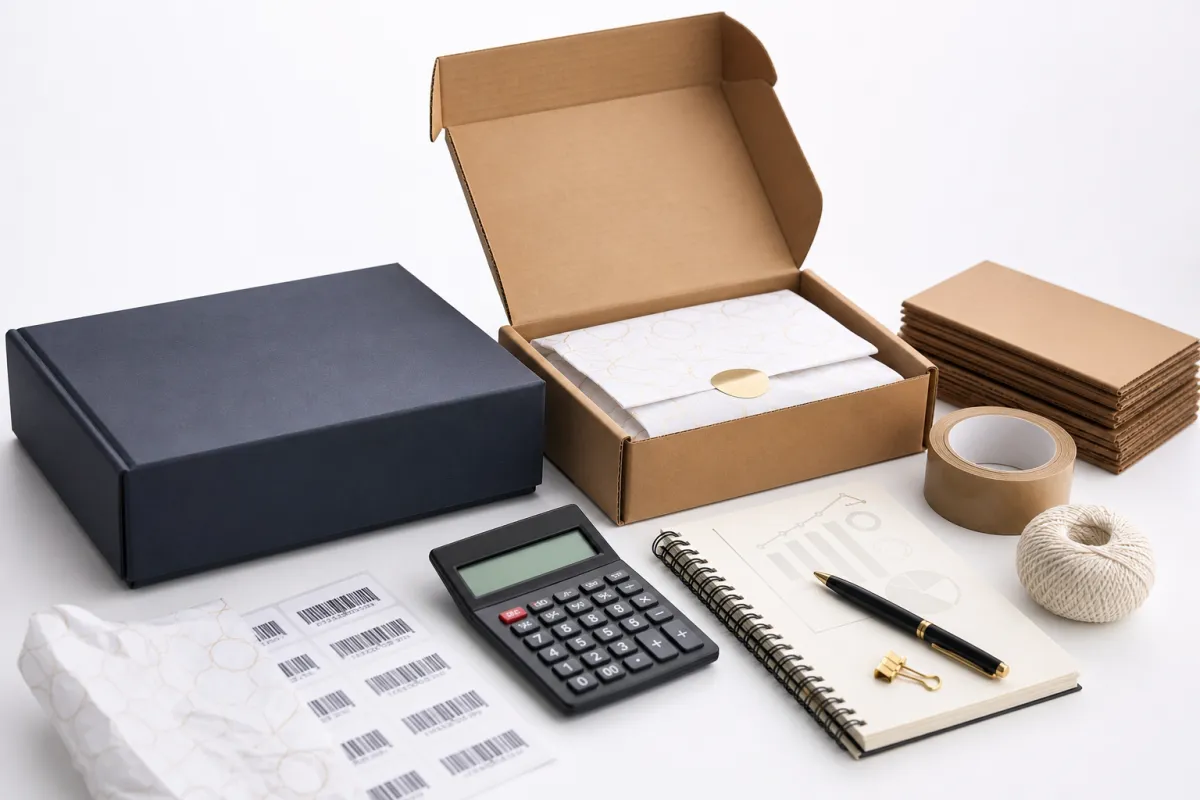
In a practical review of packaging cost trackers, the first check is simple: does the tool do more than multiply a quantity by a unit rate? A real tracker should handle quote comparison, material and labor breakdowns, version control, and historical pricing references. That matters because packaging programs rarely stay still. A carton can move from kraft to SBS, a printed mailer can pick up a coating, or a rigid box can add a foam insert and suddenly the cost model is no longer simple. The tracker should still keep pace.
Packaging teams tend to use these tools most effectively for jobs that repeat or evolve: branded packaging kits, display cartons, subscription mailers, custom cartons, labels, and mixed-SKU programs that reorder on a schedule. A useful review of packaging cost trackers checks whether the system can support those use cases without forcing every new quote to start from zero. If the buyer needs to rerun the same spec at 2,500 units, 5,000 units, and 10,000 units, the tool should make that comparison clean and readable. It should not make people squint at three tabs and a spreadsheet that has clearly been through a rough month.
The operational details matter just as much. Reusable templates save time. Shared notes keep sales, estimating, and procurement aligned. Exportable reports make it easier to bring numbers into internal approvals. User permissions matter too, because not everyone should be able to overwrite a model finance already approved. A realistic review of packaging cost trackers should test whether these functions are easy to use under pressure, not just whether they exist on a product page. Feature lists are cheap. Clean execution is the part that costs money.
Here is a simple way to separate a basic calculator from a true tracker during a review of packaging cost trackers:
| Tool Type | What It Usually Shows | Best Use Case | Common Weak Spot |
|---|---|---|---|
| Basic calculator | Unit cost from quantity and a few inputs | Fast rough estimate | Hides setup, freight, and revision history |
| Spreadsheet model | More detailed formulas and manual inputs | Small teams that need flexibility | Version control can get messy quickly |
| Packaging cost tracker | Quoted cost, material, labor, change log, and comparison view | Programs with repeat orders and multiple scenarios | Only useful if data is entered consistently |
That table sits at the center of a good review of packaging cost trackers, because the buyer is really choosing a decision system, not just a calculator. A tool that only spits out a number may still work for a one-off sample, but it is weak for ongoing packaging design, margin control, and repeat production. For Custom Printed Boxes and other branded packaging programs, the difference shows up fast when artwork changes, tooling changes, or the customer asks for a second quote at a new volume.
There is also a sourcing angle that does not get enough credit. A tracker that stores prior jobs can help identify which suppliers hold their numbers across repeat runs and which ones drift once the order grows. That matters in retail packaging, where buyers often balance image, speed, and budget while still needing predictable reorders. A thorough review of packaging cost trackers should confirm that the history is easy to search, easy to compare, and easy to explain to finance.
For teams that want to compare product options, it helps to pair any review of packaging cost trackers with actual samples from a packaging partner such as Custom Packaging Products. Seeing real structures, finishes, and board options makes the numbers easier to validate, especially when a design team is comparing different carton styles or insert counts. A tracker can tell you a lot, but it cannot hold a sample in your hand. Annoying, sure. True, also yes.
A final detail in this section: check whether the tool supports notes about package branding choices such as spot UV, embossing, foil, soft-touch lamination, or a plain uncoated finish. Those details can change print setup, waste, and sometimes the practical lead time. A meaningful review of packaging cost trackers should show whether the software captures those realities or leaves them buried in a side email thread.
Review of Packaging Cost Trackers: Specifications to Verify
The best review of packaging cost trackers gets technical here, because the specification fields are where accuracy lives or dies. Check whether the tracker supports the right unit measures: finished dimensions, caliper, flute type, board basis weight, print area, quantity breaks, and tolerance ranges that affect production. If the system cannot tell E-flute from B-flute, or a 16 pt SBS carton from a heavier board, the quote may look polished while the math is wrong.
Packaging is full of variables that do not show up in a simple unit price. Die-cut complexity, tooling, coatings, inserts, bundling, palletization, and multi-piece kitting all change the labor story. A good review of packaging cost trackers should verify whether those inputs can be separated cleanly or whether they are forced into one blended line. In practice, blended lines make it harder to explain where cost is moving and harder to compare suppliers fairly.
This is also where production stages matter. Prototype, pilot, and full production often use the same design intent but not the same economics. A tracker should let the buyer adjust the model without rebuilding the job from scratch, because a packaging program may move from one sample to a 1,000-unit test to a 10,000-unit reorder in a short span. A disciplined review of packaging cost trackers should confirm that the data model can evolve with the project instead of freezing it in one stage.
Use the following checklist during a review of packaging cost trackers:
- Dimensions: finished size, inside size, and any fold or tuck allowances.
- Material: caliper, basis weight, flute grade, liner type, and recycled content if relevant.
- Print: number of colors, coverage area, varnish, coating, foil, or embossing.
- Structure: die-cut, glued, stitched, reverse tuck, mailer, rigid set-up, or insert system.
- Assembly: hand pack, automated pack, kitting, bundling, or special insertion steps.
- Logistics: freight assumptions, pallet pattern, carton count, and ship region.
These fields are not decoration. They are the difference between a quote that reflects the real run and a quote that only looks right until the first purchase order lands. A thoughtful review of packaging cost trackers should ask whether the tracker can carry enough detail for product packaging programs with mixed components, because the cost of an insert, a divider, or a nested tray can matter as much as the box itself.
Standards matter too. In testing and qualification, many teams compare packaging to ISTA transport test methods or use ASTM-based validation practices to judge whether the pack will survive the supply chain. For sustainability and sourcing, some buyers also ask whether board or paper components are FSC-certified, which can be checked through FSC. A serious review of packaging cost trackers should show whether the tool leaves room for those qualification notes, because compliance is not always captured in the same field as cost.
One detail many teams miss is print coverage. A carton with full-bleed coverage and heavy ink use can cost more than a similar box with lighter coverage, even if the dimensions are identical. That is common in branded packaging and premium retail packaging, where finish decisions affect both the look and the production path. A grounded review of packaging cost trackers should confirm that print coverage is a live input, not a hidden assumption.
For buyers comparing custom packaging products, the spec review should also ask whether the system recognizes different run behaviors. A small embossed rigid box might carry a higher setup burden than a folded carton, while a simple mailer may be cheaper per unit but less efficient at higher volumes. A useful review of packaging cost trackers makes those tradeoffs visible without forcing the buyer to guess.
Pricing, MOQ, and Total Cost in Packaging Cost Trackers
Pricing analysis is where a review of packaging cost trackers becomes commercially useful. The buyer should never stop at unit cost alone. Setup charges, plate charges, tooling, minimum order quantity, and any per-run handling fees all need to be visible. A low unit price can still be the wrong choice if the setup is high enough or if the run size creates waste that cannot be used later. In packaging, MOQ is not a footnote; it is a planning constraint.
For a typical custom box program, the landed picture can vary in a wide band. A straightforward folded carton might land around $0.18-$0.28 per unit at 5,000 pieces, depending on board, print coverage, and finishing. A more complex rigid box or insert-heavy kit can move much higher, especially if tooling, hand assembly, or special coatings are part of the order. Those are directional ranges, not promises. A careful review of packaging cost trackers should make those price bands visible and should also show what happens at 2,500 units, 5,000 units, and 10,000 units, because the curve matters more than a single line.
MOQ deserves attention because a larger run can create dead inventory, storage pressure, or cash tied up in materials that will sit on a shelf. That is especially true for custom printed boxes tied to a seasonal launch or a promotion with a short shelf life. A good review of packaging cost trackers should ask whether the system helps buyers compare savings against storage cost, obsolescence risk, and the chance of a future artwork change. Otherwise the lowest quote is just a prettier trap.
Freight changes the story more often than people expect. If a supplier is closer to the shipping destination, the unit cost may look slightly higher while the landed cost is actually lower. Split shipments can also add cost because a production run is not always delivered in one clean drop. A serious review of packaging cost trackers should verify that freight can be broken out from material, so the buyer can see exactly which line moved and why.
Here is a practical way to compare scenarios in a review of packaging cost trackers:
- Use the same spec, same art assumptions, and same destination region.
- Run at least three quantities, such as 2,500, 5,000, and 10,000 units.
- Record setup, tooling, freight, and any post-production handling separately.
- Check whether the unit cost drops in a believable way as volume rises.
- Look for hidden steps, such as special packing or manual insert assembly, that may not be obvious in the headline number.
A clean review of packaging cost trackers also helps procurement and sales speak the same language. Procurement wants landed cost and risk. Sales wants speed and a number that can be defended. Operations wants a spec that can actually be produced without constant clarification. If the tracker can support all three views, it becomes more than an estimating tool; it becomes part of the decision record.
This matters in custom printed boxes because the cost of a small design change can be surprisingly large. An extra print color, a matte coating, or a tighter register tolerance may only add a fraction of a cent in one place while raising setup or waste elsewhere. A complete review of packaging cost trackers should make those relationships visible instead of burying them inside a single blended price.
If a tracker can show the difference between a basic run and a premium finish run, that is a strong sign. A plain kraft mailer might carry one cost profile, while a foil-stamped presentation box carries another because the tooling, make-ready, and finishing steps are different. A solid review of packaging cost trackers should capture those distinctions in a way a buyer can explain during an internal approval meeting.
What Should a Review of Packaging Cost Trackers Include?
A useful review of packaging cost trackers should include the full cost stack, not just the quote total. That means unit price, setup, tooling, freight, waste, revision control, and reorder behavior. If the tool cannot show how a spec moves from prototype to pilot to production, it is missing the part that actually matters. Pretty dashboards do not fix bad assumptions.
The review should also test whether the data survives a real procurement workflow. Can a buyer compare options side by side? Can finance see the assumptions behind the landed cost? Can operations check whether the spec is actually buildable? A serious review of packaging cost trackers should answer those questions without a support ticket marathon. If you need three meetings to find one freight assumption, the tool is not doing its job.
And yes, it should cover supplier consistency too. If one vendor holds pricing across runs and another quietly drifts every time a volume changes, the tracker needs to make that obvious. That is the difference between a tool that helps you buy and a tool that merely stores numbers.
I also like to see whether the system makes exceptions visible instead of burying them. Things like rush charges, partial shipments, replacement inserts, and art corrections do happen. A tracker that pretends otherwise is polite, but not useful. A strong review of packaging cost trackers should give those exceptions a home so they can be managed instead of hand-waved away.
Process and Timeline: How the Review Should Be Run
A useful review of packaging cost trackers follows a repeatable process. Start with one packaging spec, not five. Enter the same assumptions into each system being tested. Keep the quantity bands identical. If one tool gets different material, a different freight zone, or a different insert count, the comparison is already skewed. The cleanest evaluations use one job and one benchmark quote, then compare outputs line by line.
Timing matters more than many buyers admit. If a tracker takes hours to produce a usable estimate, it may slow down promotions, reorder decisions, or customer approvals. A practical review of packaging cost trackers should measure turnaround time from data entry to useful quote, not just whether the software can eventually produce an answer. A fast answer that needs constant cleanup is not fast at all. It is just hurried.
Revision handling is another point worth testing. Packaging specs often change after artwork is reviewed, structural testing is completed, or the customer asks for a better finish. The tracker should keep the previous version, identify what changed, and preserve approval notes so that a buyer can explain the delta later. In a proper review of packaging cost trackers, revision history is not a nice extra; it is basic control against confusion.
A good trial run should include one real job and one repeat order. The first job checks whether the numbers line up with the actual quote. The second checks whether the system stays consistent when the project is rerun with fresh quantities or a slight spec change. That kind of review of packaging cost trackers is particularly useful for teams managing retail packaging programs where the same structure may be reordered with a different finish, insert count, or ship location.
A buyer can evaluate the process with a simple timeline:
- Step 1: Gather dimensions, material, print details, quantity, and destination.
- Step 2: Enter the same data into each tracker or quote model.
- Step 3: Compare unit cost, setup cost, freight, and revision notes.
- Step 4: Rerun one scenario at a different quantity to check the cost curve.
- Step 5: Confirm the report can be shared internally without heavy editing.
That workflow sounds simple, but it catches a surprising number of issues. A clean review of packaging cost trackers often reveals whether a tool is designed for quoting or only for rough estimating. It also shows whether the data structure fits your team. Some groups care most about sales speed. Others care about procurement discipline. Others care about the production floor being able to actually build what was sold. The best tracker serves all three without forcing every team to work in a different file.
From an operational standpoint, a useful review of packaging cost trackers should also account for lead-time risk. If a supplier can quote quickly but cannot support the needed production window, the quote is incomplete. If a tracker includes a note on estimated lead time, proof approval timing, and post-approval changes, the buyer gets a more realistic picture of what will happen after the order is placed. That is especially helpful for custom carton programs that depend on print readiness and insert availability.
One more practical point: a tracker should make it easy to compare branded packaging against a simpler version of the same item. That comparison is often where the best decision lives. A premium finish may be worth the higher unit cost if the pack supports the shelf story, the opening experience, or a product launch. A careful review of packaging cost trackers gives the buyer the structure to compare those choices without guessing.
What To Do Next After the Review
Buyers should choose a partner who understands packaging construction as well as pricing discipline. That is the difference between a generic output and a quote that reflects what actually happens on a production line. A manufacturing-first approach improves a review of packaging cost trackers because material yield, setup realities, print coverage, and timing are considered from the start, not added later as corrections. That usually leads to better decisions and fewer surprises during reorder season.
In practical terms, the next step is a side-by-side internal review. Pull one current spec, one recent quote, and one target reorder case. Then compare the outputs against the same assumptions. If your team is sorting through custom printed boxes, inserts, or a bundled retail pack, it is also worth pairing the numbers with physical samples from Custom Packaging Products so the design, structure, and pricing all line up. A strong review of packaging cost trackers should make that comparison easier, not harder.
Here is the action plan I would use on a real buying desk. First, confirm the spec in plain language: dimensions, board, print, finish, and quantity. Second, identify the most expensive assumption, because that is often where savings or risk sits. Third, compare landed cost at several volume bands instead of trusting one number. Fourth, ask whether the tracker preserves the history of every revision and approval note. A disciplined review of packaging cost trackers should leave you with a clear path, not a pile of assumptions.
If a program includes FSC-certified materials, special testing, or export requirements, build those into the review too. The point is not to make the model complicated for its own sake. The point is to make sure the cost model is honest enough to support the order once it moves into production. A serious review of packaging cost trackers will always be about fit: fit for the material, fit for the line, fit for the timeline, and fit for the margin target.
So the final takeaway is simple: run one live spec through the tracker, compare it against an actual supplier quote, and separate the assumptions that drive cost from the assumptions that only sound tidy. If the tool cannot show setup, freight, MOQ, revision history, and landed cost without a bunch of handholding, it is not ready for real buying decisions. That is the bar. Everything else is decoration.
For packaging programs that affect shelf appeal, shipping damage, and repeat ordering, that kind of discipline is worth more than a lower headline number. It keeps the team honest, and honesty is still cheaper than rework.
What should I compare in a review of packaging cost trackers?
Compare landed cost, not just unit price, so freight, setup, tooling, and waste are visible. A good review of packaging cost trackers also checks whether the same spec can be reused across several quantity scenarios without silently changing assumptions. Look for output that procurement, sales, and operations can read without extra cleanup.
How do packaging cost trackers handle material and freight changes?
Good tools let you separate material from freight so you can see which part of the quote moved. A strong review of packaging cost trackers should also confirm that revision history is preserved, because that helps explain why a reorder is higher or lower than the last run. If freight is bundled into one line, the tracker should still let you inspect it separately for planning.
Are packaging cost trackers useful for custom box pricing?
Yes, especially when the box has structural differences, print changes, inserts, or quantity breaks. A careful review of packaging cost trackers is most valuable when a buyer needs to compare several packaging formats with the same customer requirements. The system should account for die tooling, board grade, and run size, not just a basic formula.
What minimum data do I need before I start a pricing review?
Have dimensions, quantity, material type, print requirements, and destination ZIP or shipping region ready. Include any special finishing, inserts, coatings, or assembly steps that could change labor or setup. If you have a prior quote or sample, use it as a benchmark so the new review of packaging cost trackers can be checked for accuracy.
How can I validate a packaging cost tracker before buying it?
Run one real job through the tracker and compare the result with an actual supplier quote. Test a second scenario with a different quantity so you can see whether the pricing curve makes sense. Ask whether the system keeps revision history and approval notes, because those features matter once the program is live. That kind of review of packaging cost trackers is usually the fastest way to separate useful tools from weak ones.

