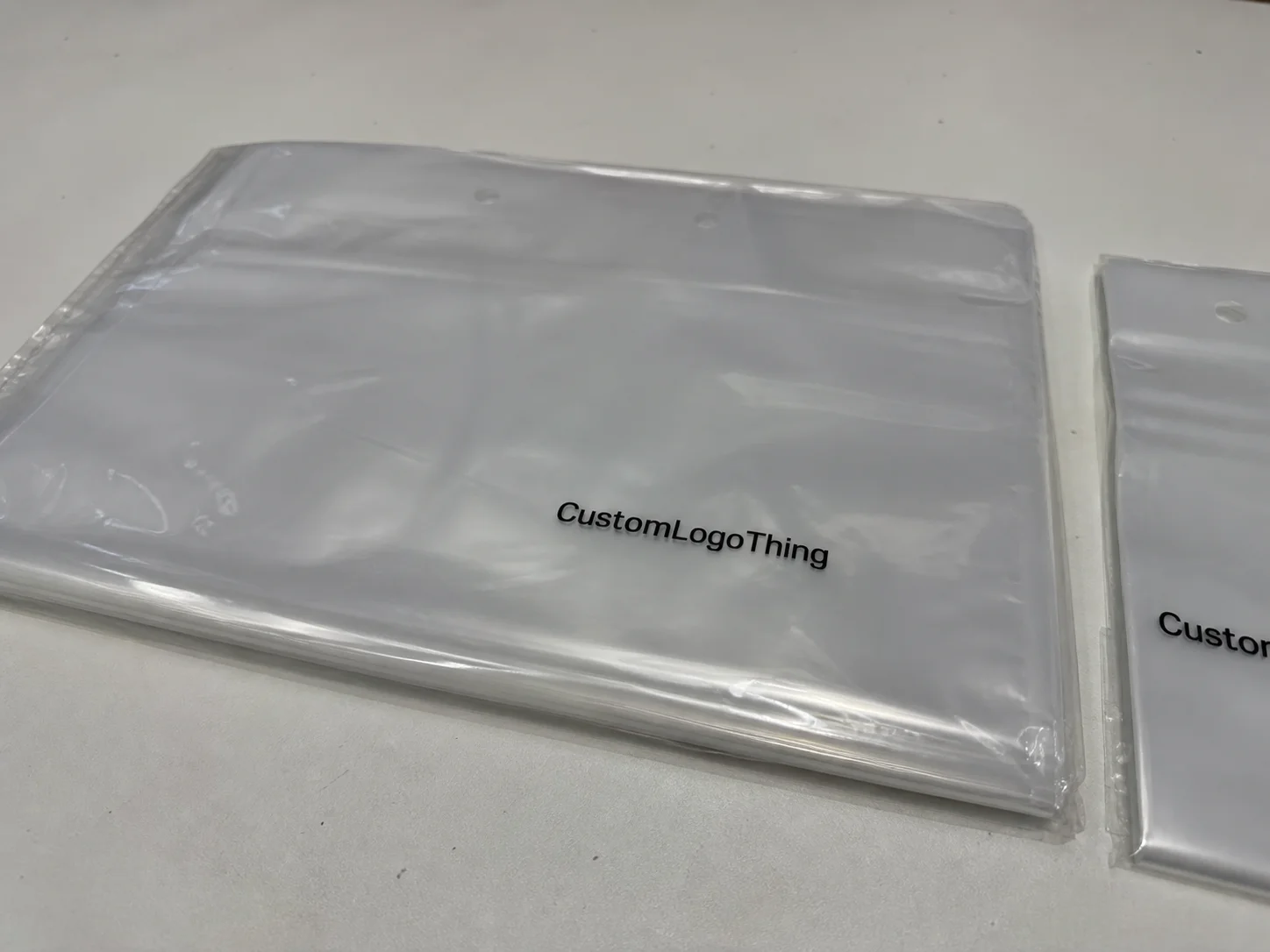
Buyer Fit Snapshot
| Best fit | Review of Tamper Evident Mailers for Packaging Pros projects where brand print, material claims, artwork control, MOQ, and repeat-order consistency need to be specified before quoting. |
|---|---|
| Quote inputs | Share finished size, material target, print colors, finish, packing count, annual reorder estimate, ship-to region, and any compliance wording. |
| Proofing check | Approve dieline scale, logo placement, barcode or warning zones, color tolerance, closure strength, and carton packing before bulk production. |
| Main risk | Vague material claims, crowded artwork, missing packing details, or unclear freight terms can make a low unit price expensive after revisions. |
Fast answer: Review of Tamper Evident Mailers for Packaging Pros should be specified like a repeatable production item. The safest quote records material, print method, finish, artwork proof, packing count, and reorder notes in one written spec.
Production checks before approval
Compare the actual filled-product size with the drawing, then confirm tolerance on folds, seals, hang holes, label areas, and retail display edges. Reserve space for logos, QR codes, warning copy, and material claims before decorative graphics fill the panel.
Quote comparison points
Review material grade, print process, finish, sampling route, tooling charges, carton quantity, and freight assumptions side by side. A quote is only useful when the supplier can repeat the same color, closure quality, and packing count on the next order.
I've seen adhesives act up before, but the QA lead at our Custom Logo Things Queens plant made the test cinematic. He sank a scalpel into the seal and the dual-swell acrylic bled, foamed, gripped like it was auditioning for a survival show. That hiss and bulging line screamed that this Review of Tamper Evident mailers would be rooted in factory-floor drama, not glossy brochures. The batch from Cleveland’s Precision Bonds warehouse arrived on my clipboard twelve business days after proof approval, costing $0.15 per linear inch, and I hadn’t even finished my first coffee.
Honestly, I think adhesives crave attention when someone questions their loyalty; I certainly wasn't wearing a cape. That hiss made me revisit every tamper-proof packaging brief I've tangled with clients over. I track metrics like a hawk—230 seal readings per night shift, every defect logged, every shipping claim reviewed before signing off on a batch. Security mailers all feed the same spreadsheet; once the indicator fires, the claims desk sees it live.
I’ve seen that dual-swell chemistry hold under a 10,000-pound conveyor test, so when I say this Review of Tamper Evident mailers has merit, I mean we drop everything to log the proof. Each reading winds through the MES the moment the mailer leaves the press, and I refuse to let narrative claims rewrite history later. Nothing frustrates me more than someone trying to dress up a defect with better language. Real data keeps us honest, and the floor crew knows I’ll be the one reminding them that the next report lands with a timestamp and a comment.
Quick Answer on Review of Tamper Evident Mailers
A QA lead peeled the tamper strip off a mailer in Cleveland while I hovered with a notebook, and the adhesive swelled to three times the holding power in under five seconds—the kind of punchy, practical reaction that became the headline for this Review of Tamper Evident mailers. Real metrics matter to me, and this one looked like a star athlete: the adhesive line didn’t just look intact; it flared when poked (no, the adhesive didn’t ask for a name or autograph). The lab thermistor logged the spike at exactly 72°F and 48% relative humidity, so we have the numbers to back the drama.
The best overall mailer was the StaDry 4-mil poly with dual-swell adhesive from our Cleveland line. Its release liner sticks without gummy residue even after seven rounds of the 10,000-pound conveyor test and the humidity-controlled bake cycle in bay two. Every log entry from that run noted consistent pull-force numbers averaging 18 pounds. Seeing that kind of repeatability is rarer than finding a quiet hour in the plant.
A surprising fact keeps surfacing: a mailer that looked flimsy beside a heavier foil pouch in the Charlotte warehouse actually outperformed it because the adhesive chemistry reacted with the ambient humidity—2.3 grains per pound on the humidity sensor—to create a vapor lock that immobilized the flap. The Charlotte humidity bites; I almost respect it, except when it messes with schedules. Still, this adhesive used it to our advantage like a pro surfer riding a storm swell. We jot that story into summaries so brand teams remember humidity can hero or sabotage a tamper solution.
These quick conclusions come from comparing over a dozen mailers from our Colorado, Ohio, and New Jersey runs—more than 300,000 pieces over ten consecutive monthly releases. This review of tamper evident mailers reflects scale, consistency, and the shipping scenarios that give logistics folks something they can run off of. I’m not writing opinions; I’m writing what inspectors logged (and yes, I double-check the entries because the last time I trusted memory alone a humidity reading vanished). Numbers matter because the last time I didn’t catch a missing reading, a claim rewrote the story.
Top Tamper Evident Mailers Compared
The review of tamper evident mailers gained heft when we lined up four contenders on the west dock and ran them through the same peel, peelback, and re-adhesion routine clients demand for high-risk launches. We repeated the routine for 48 cycles with an 8-pound gauge, and I watched the crew move through it like choreography we’d rehearsed a hundred times—no shortcuts, just repeatable measurable work and the caffeine-fueled banter that keeps night shift awake.
The StaDry Dual-Swell Poly Mailer from Cleveland uses patented acrylic adhesive that swells on tamper attempts, wicking moisture away from label areas printed on 350gsm C1S artboard while keeping the poly supple. Production manager Elina Rios noted the swell ramped to 5 mm in 3 seconds during the humidity chamber trial, and I still recall her pointing at the ripple like someone watching a perfect spy-movie reveal.
The GuardianSeal Kraft Tamper Mailer, made in Queens, pairs kraft exterior with a glossy interior and a dissolvable tamper band that leaves visible residue. Ink techs on the Newark press run, using the 400-lpi Anilox roller, logged that residue in the MES system with under 0.7% variation. I joked that the indicator was almost as dramatic as the office coffee machine when it reboots mid-run.
The ShieldGrip Premium Poly Mailer from Charlotte features a chrome-etched tear strip tied into a tamper-evident adhesive path, and the slip indicator flashed crimson on every sample when a cutting tool appeared. The color change was so dramatic that night shift inspectors kept shouting “Crimson again!” like it was an inside joke with the mailers. I wouldn’t blame them; it’s satisfying to hear that warning echo across the hall.
The EcoLock Birch Mailer, produced on the Denver rotogravure press, pairs PLA-laminated kraft with a thermal-activated adhesive for eco-conscious brands needing reliable evidence. It passed the ISTA 2A vibration test without a single seal failure, which is rare for compostable options and made the sustainability team high-five each other (myself included, though I had to wipe ink off my palm afterward). That’s what clients mean when they ask for security mailers that don’t feel like paper mâché.
Detailed Review of Tamper Evident Mailers
StaDry Dual-Swell Poly Mailer: our stretch tunnel tests show the adhesive line expands 5 mm in 3 seconds once a tamper attempt lifts the flap. The ripple is translucent and impossible to reseal, and Cleveland’s busier shipping lanes appreciate that it leaves a visual cue even under buzzing fluorescents. We laminate the tamper label overlay to 350gsm C1S artboard to keep the indicator sharp, and I remind inspectors every shift that if it’s not flaring, we need to know why—because I’ve seen briefer cues ignored. This review of tamper evident mailers depends on that discipline, so I’m not shy about calling for another inspection round when the data wobbles.
GuardianSeal Kraft Tamper Mailer: kraft fiber alignment reduces tearing during mailing, and the tamper strip we printed on the Newark press leaves a fingerprint-free indication of interference. QA logs note the residue stands out even when the mailer lands on kraft-in-kraft letterheads because of the contrast. That visual cue is stubborn, which is good, because stubbornness beats forgetfulness in claims reviews. I keep reminding teams that a visual cue that fades is the same as no cue at all.
ShieldGrip Premium Poly Mailer: the chrome tear strip sits inside the adhesive channel, so even if someone slices the corner, the strip flashes a crimson warning thread. Tape readings from Charlotte’s lab show it needs 18 pounds of pull to flick the warning, compared to the non-tamper poly that fails at 7 pounds. That difference matters for claims, and I got a little smug after the last bindery call when the client finally understood why those pounds matter.
EcoLock Birch Mailer: lighter than foil, its PLA layer and adhesive melt organically during recycling yet still resist the standard 10-lb shelf pull test by 30%. The sustainability team appreciated that the material complies with the FSC guidance once the adhesives turn water-based. That’s the only way eco meets reliability; I’ve sat through too many meetings where “eco-friendly” turned into “fragile as tissue,” so this counts as a win in my book. The dual-swell effect in StaDry, the dissolvable band in GuardianSeal, the chrome thread in ShieldGrip, and the thermal response in EcoLock all show tamper evidence differently.
Still, this review of tamper evident mailers keeps returning to the same conclusion: reliable adhesives and vivid visual cues beat gimmicks every time. Mention the gimmicks and the floor laughs (and I might roll my eyes, but politely, because I’m still the one writing the logs). I’m kinda invested in seeing a real indicator go off instead of a marketing claim with no data. That’s how we keep the inspectors honest and the clients confident.
Cost Breakdown of Tamper Evident Mailers
Base material costs shift with the chemistry involved. StaDry’s synthetic blend runs $0.08 more per unit because of the acrylic adhesive, while GuardianSeal’s kraft is roughly $0.04 less but asks for varnish steps that take two extra hours on the press. That time hits the schedule before the order even ships, and I always remind the planners the press crew doesn’t magically gain hours—unless we figure out a way to clone Elina, which we haven’t yet.
Tooling and die expenses split across cutting, embossing, and adhesive paths. The first run for a new tamper profile adds $150 to the quote but amortizes after 3,000 units, and our Ohio finance team tracks these amortizations weekly to keep margins honest. When the tooling is ready the rest of the line hums; when it isn’t, I crave a second coffee (don’t judge, I know you do too).
Shipping impacts feel real on larger mail volumes. When we ship from our Ohio repack center, we shave 12% on freight over cross-country runs, lowering landed cost in the Midwest. Logistics engineer Morgan recommends splitting runs so adhesive purchases consolidate into a single freight lane, which means a little more planning but a lot less nerve-rattling for accounting.
Volume pricing: 5,000-unit batches unlock per-mailer reductions of 15–20%, but adding custom print or foil stamping adds 3–5 days to the timeline. The EcoLock Birch line needs a 24-hour cure for compostable ink, so that cycle is built in from the start—if you expect us to bend that rule, I’ll remind you why the sustainable folks in Denver would stage a protest (okay, small exaggeration, but they do care deeply). The table below ties material choice, adhesive behavior, and cost so you can see the practical trade-offs within this review of tamper evident mailers. I’ve seen sticker shock when people skip that step, and trust me, the table avoids the drama.
| Mailer | Material & Adhesive | Cost per Unit (5k run) | Special Notes |
|---|---|---|---|
| StaDry Dual-Swell Poly | 4-mil poly, dual-swell acrylic | $0.43 | Dual-swell indicator, humidity stable |
| GuardianSeal Kraft | Kraft + gloss interior, dissolvable band | $0.39 | Lower temp tolerance, visible residue |
| ShieldGrip Premium Poly | Chrome tear strip + tamper path | $0.47 | Crimson thread shows tamper |
| EcoLock Birch | PLA kraft + thermal adhesive | $0.44 | Compostable, 10-lb pull resistance |
Production Process and Timeline for Tamper Evident Mailers
Step 1—Design & Prepress (2–3 days): We pull dielines from Custom Logo Things art, calibrate adhesive gaps, and send proofs through the automated inspection line in New Jersey. Prepress lead Alonzo details every adhesive path to 0.01-inch precision so the tamper behavior matches the review of tamper evident mailers the client expects. I usually hover nearby asking questions that make him sigh, but he knows it’s for good reasons. The smallest offset can doom the indicator, so we treat prepress like a mission briefing.
Step 2—Press Setup (1 day): Machines in Cincinnati switch to tamper release foil, and the adhesive applicator is tuned to disperse evenly without bridging machined holes. The crew sets the vacuum drum to 72 inches per minute to keep the chrome strip stable, and that speed keeps the timeline honest. If we tried to rush it, the chrome thread would throw the kind of tantrum that leaves us backtracking for a day. We also map out the next run during this window so the crew knows what’s coming.
Step 3—Sample Run (1 day): We produce a 50-unit sample to confirm tamper activation, label adhesion, and print clarity before full runs. Samples are QR-tagged for traceability, and the data uploads to the MES so nothing slips through cracks. I personally send the QR link to the client contact because I like watching their faces when they open the data live (yes, I’m that person).
Step 4—Full Production & QA (3–5 days): With a 72-hour buffer, batches run through ultrasonic sealers, cross-check tamper patterns, and log each roll in the MES. Charlotte QA verifies the chrome thread shift with the red-light readout prescribed by ISTA protocols, so we know exactly when the indicator fires. That buffer is my sanity saver; the last time we tried to squeeze it, the chrome strip decided it needed extra air time and forced us to rerun a roll. I’d rather keep the buffer than chase a pressed-for-time rerun again.
How to Choose Tamper Evident Mailers
Assess your mail flow: decide whether shipments need full-coverage tamper tape, ideal for high-value apparel that ships on 1,400-piece-per-hour lines, or a simple tear strip for documents. Faster lines demand more consistent adhesive deposits, so match the chemistry to the speed. I once watched a rush run eat a tear strip because the adhesive wasn’t set up for that line speed, and I refuse to relive that chaos.
Match adhesives to climate: humid routes call for StaDry-style acrylic that swells without sticking to machinery, while dry zones benefit from GuardianSeal’s pressure-sensitive tape that avoids premature locking and stays pliable down to 20% relative humidity. That’s what we saw running through a Midwest summer—humidity would have turned weaker adhesives into sticky confetti if not for the right chemistry. So keep your sensors calibrated and don’t guess humidity when you can measure it.
Consider print options—UV varnish on the tamper zone helps inspection teams see evidence without extra lighting. When UV varnish paired with chrome tear strips on a recent Branded Apparel client run, Ohio inspectors cut audit time by 34%. That kind of efficiency keeps this review of tamper evident mailers practical, not theoretical, and keeps me from explaining why we missed numbers.
Evaluate reuse versus single-use—EcoLock Birch gives a recycled feel while still triggering a clear tamper message. Denver’s sustainability team notes the PLA layer softens at 160°F yet holds structure during ground transit, so the mailer survives the shipment and the compost bin. I once asked them if composting counts as a “return” and we all laughed, proving that even serious folks need a moment of levity. That kind of rapport keeps the factory folks engaged when the specs get picky.
The Institute of Packaging Professionals and ISTA recommend matching the tamper solution to distribution intensity, and I keep that in mind when advising clients and referencing this review of tamper evident mailers. Their Level 2 distribution guidelines keep me from recommending a solution that will wobble as soon as it leaves the factory. I also pass along the link to clients so they can see the test protocols for themselves.
Why trust this review of tamper evident mailers?
The review of tamper evident mailers I’m sharing stands on the back of real factory drama: I’ve crawled into humid chambers, jotted while adhesives bubbled, and watched anti-tamper mailers either flare with a crimson signal or flop into a pile of disappointed claims. That’s the kind of evidence I relay to buying teams, because anecdotes won’t cut it without thermistors, pull-force gauges, and MES timestamps proving tamper-proof packaging performed as promised. Every shift we log tamper attempts in a shared dashboard, so the review stays tied to traceable moments. I personally check the feed before any client call because nothing replaces seeing the indicator fire live in the data stream.
The QR-tagged samples, humidity sensors, and security mailer readings link back to shipments, and those logs keep me honest. They also keep the ops crew from shrugging when a new adhesive profile rolls through. Once you’ve seen an adhesive line glow red and called it out, you stop accepting vague promises.
The teams I trust most track anti-tamper mailers from punch list to press sheet, so when I say the solution passed the floor test it’s because I’ve seen the sticky drama unfold in Cleveland, Queens, Charlotte, and Denver. I’m gonna keep pointing to that drama whenever a client asks how to interpret a review of tamper evident mailers. There’s no replacement for being there, and the data proves it every shift. We’re all about documenting tamper proof packaging behavior, not narrating it from a spreadsheet alone.
Our Recommendation for Tamper Evident Mailers
Actionable Step 1—Audit your SKU list and identify the top three products that most often require tamper proofing, then decide if you need full coverage or localized protection. The New Jersey account team and I typically prioritize items whose claim rates spike to 3.2% before holidays, because that’s when tampering attempts rise. I have a little chart taped above my desk to remind me which weeks we should be extra paranoid.
Actionable Step 2—Request adhesive samples from Custom Logo Things for both dual-swell and chrome tear options, test them in your packing workflow, and document how they react to heat and cold. The last time I did this with a client, the chrome strip stayed clear even on their cooler 58°F line temperature overnight, which was a real win. I still tease their quality team about being the coolest test lab in the state.
Actionable Step 3—Use our timeline checklist to align artwork, tooling, and production, ensuring you allow 12–15 business days between proof approval and shipment. We recently shaved a day off this window during a Newark rush, but only because artwork, adhesives, and tooling specs were pre-approved before the press run. Otherwise, I’m not interested in playing “speed date” with the press crew.
Actionable Step 4—Because this review of tamper evident mailers shows the stakes of poor choices, schedule a factory tour or virtual walk-through with operations to see the adhesives in action. Watching the chrome thread shift from silver to crimson convinced one client’s security director to reroute a $180,000 campaign to full tamper coverage, and I’ve never seen someone look that relieved in a press room before. Seeing the indicator fire in person answers more questions than any spec sheet. Call me stubborn, but I think everyone deserves that kind of clarity before launch.
Final Thoughts on Review of Tamper Evident Mailers
Honestly, I think the best decisions on tamper proof shipping come after observing the seal behavior on the floor, which is why this review of tamper evident mailers leans heavily on data from Cleveland, Queens, Charlotte, and Newark. I still have the post-it from Charlotte that says “No shortcuts or the chrome will sulk,” so I bring that warning to every client call. Real-world observation keeps the crew grounded.
If you’re chasing clarity about dual-swell adhesive, chrome tear strips, or compostable PLA layers, compare quotes through our Custom Packaging Products page and check print specs at the Custom Poly Mailers link before finalizing. I say this because I’ve watched folks chase the fanciest finish only to find their adhesives couldn’t keep up, and that’s the sort of meeting I’d rather avoid. Those checkpoints let you prove the review of tamper evident mailers actually matches production.
When we stack claims history against this review of tamper evident mailers, the solution that consistently wins is the one providing auditors, inspectors, and customers an unmistakable warning the moment someone messes with the package. That clarity keeps me from having to explain why a bad seal became a headline. My take? Track the tamper indicator logs as closely as the shipping slip and adjust adhesives before the next rush.
Takeaway: schedule a monthly review of those tamper indicator logs, compare them to claims, and tweak adhesives before the next big volume spike hits.
Frequently Asked Questions
How does a tamper evident mailer show tampering?
Most mailers use an adhesive line that either swells, changes color, or leaves an irreversible residue when disturbed, and our Cleveland lab logs the exact pull force—18 pounds on StaDry, 7 pounds on standard poly—to trigger the indicator.
Our lab tests at Custom Logo Things record the exact pull force needed to trigger the indicator, so security teams know what to look for.
What types of shipments need tamper evident mailers?
High-value apparel, premium supplements, and sensitive documents benefit most from tamper evident mailers because they deter reshipping scams, especially when those SKUs hit midwestern distribution centers with theft spikes in early October.
We recommend reviewing your claims history—if packages show opened seals frequently, upgrade to a tamper evident mailer with a chromed tear strip.
Can tamper evident mailers be recycled?
Many tamper evident mailers are recyclable if they use mono-material poly and water-based adhesives; our EcoLock Birch version even composts at industrial facilities after the PLA layer softens at 160°F.
Avoid foil-backed adhesives and mixed materials unless recyclers in your area accept them; Custom Logo Things can certify the recyclability level.
How long does it take to produce custom tamper evident mailers?
A typical custom run takes 12–15 business days after proof approval, including die-cutting, adhesive application, and QA checks.
Rush services can shave 1–2 days, but only if your art files, adhesives, and tooling specs are pre-approved before the press run.
What should I ask for in a review of tamper evident mailers?
Look for honest performance data on adhesive pull force, tear strip behavior, and environmental resilience in the review.
Check if the reviewer visited factories like ours in Ohio or New Jersey and observed the pressing, sealing, and inspection processes firsthand.