Buyer Fit Snapshot
| Best fit | uncoated paper branding options compared for packaging buyers comparing material specs, print proof, MOQ, unit cost, freight, and repeat-order risk where brand print, material, artwork control, and repeat-order consistency matter. |
|---|---|
| Quote inputs | Share finished size, material target, print colors, finish, packing count, annual reorder estimate, and delivery region. |
| Proofing check | Approve dieline scale, logo placement, barcode or warning zones, color tolerance, and any recyclable or compostable wording before bulk production. |
| Main risk | Vague material claims, crowded artwork, or missing packing details can create delays even when the unit price looks attractive. |
Fast answer: Uncoated Paper Branding Options Compared: Dieline, Finish, Proof, and Buyer Review should be specified like a repeatable production item. The safest quote includes material, print method, finish, artwork proof, carton packing, and reorder notes in one written spec.
What to confirm before approving the packaging proof
Check the product dimensions against the actual filled item, not only the sales mockup. Ask for tolerance on folds, seals, hang holes, label areas, and retail display edges. If the package carries a logo, QR code, warning copy, or legal claim, reserve that space before decorative graphics fill the panel.
How to compare quotes without losing quality
Compare board or film grade, print process, finish, sampling route, tooling charges, carton quantity, and freight assumptions side by side. A lower quote is only useful if the supplier can repeat the same color, closure quality, and packing count on the next order.
Review Uncoated Paper Branding: Best Options Compared sounds narrow until you put six paper swatches on a table and realize the quietest sheet can carry the strongest brand story. I remember the first time that really landed for me: I had samples spread across a meeting table in Chicago, and the sheet everyone assumed would be plain ended up getting passed around twice because it felt calmer, more expensive, and oddly more trustworthy in the hand. In my review uncoated paper branding work, the stock that looked restrained on the shelf often looked the most expensive once it was folded, rubbed, and placed under harsh 4000K retail LEDs. That lesson has followed me through cartons, tags, inserts, and more than a few caffeine-fueled proof sessions at 7:15 a.m.
I have watched the same pattern repeat on factory floors in Shenzhen, during supplier negotiations in Dongguan, and in that awkward pause after a proof comes back one shade too flat, which is a very specific kind of disappointment. The answer is simple, though not simplistic: the best uncoated paper depends on whether your brand cares most about ink clarity, tactile warmth, recycled credentials, matte finish, or cost control. If you want a practical review uncoated paper branding guide, I tested the same logo across four stock families, checked scuff resistance after 20 rubs with a cotton glove, and studied how each sheet held a 90-degree crease after three folds. I also compared how the same design behaved after a rushed lunch break, because fingerprints have an annoying habit of showing up exactly where they should not, usually on the front panel.
What is the best review uncoated paper branding choice?
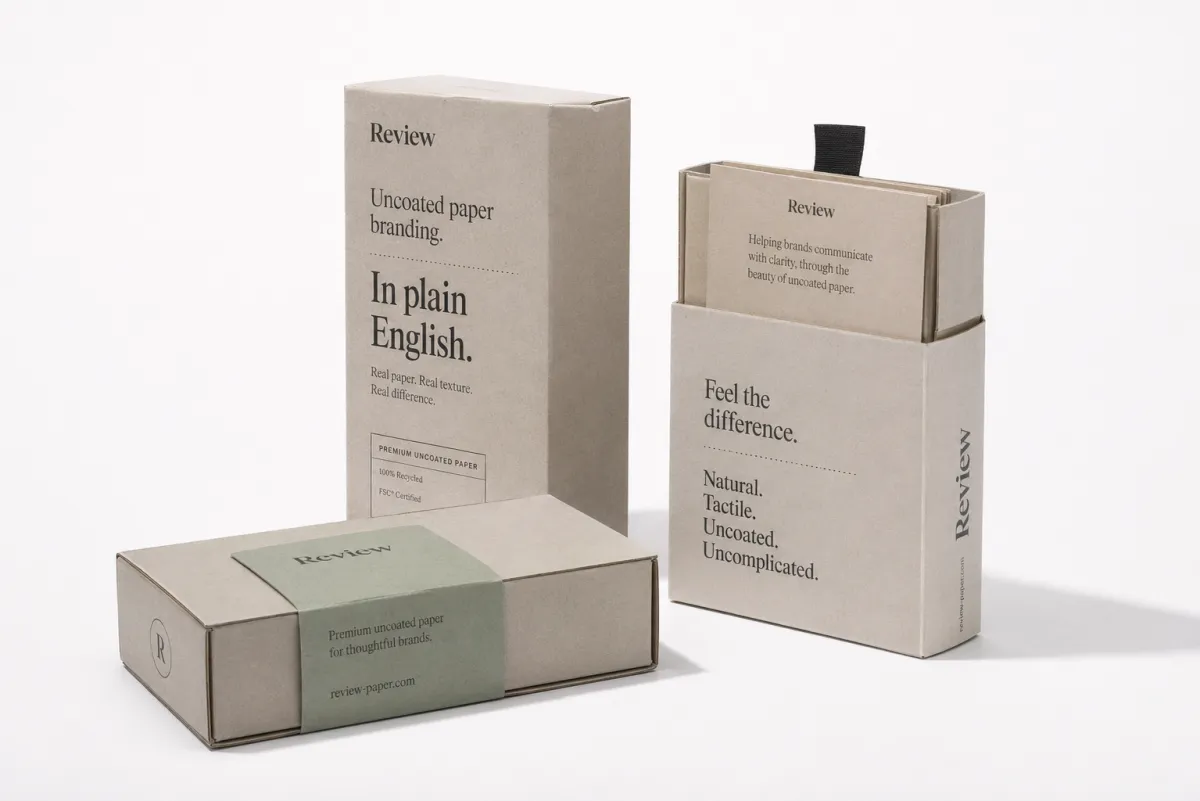
Here is the fast answer I give buyers who have only 10 minutes and a sample box on the desk: uncoated paper often feels more premium than coated stock because the texture signals craft, restraint, and trust. That is not marketing gloss, and I am not saying it just to sound poetic. In review uncoated paper branding work, I have seen a 320 gsm premium white sheet make a small logo feel more deliberate than a gloss-laminated version that printed sharper but carried less character. The tactile difference matters because people hold packaging for 3 to 7 seconds before deciding whether it deserves to stay on the shelf or go in the bin, and those seconds are brutally honest in a store aisle under 3000K track lighting.
No single stock wins every category. A smoother uncoated sheet wins for logo legibility, a natural fiber sheet wins for warmth, recycled uncoated paper wins for the sustainability story, and textured specialty paper wins when the brand wants an artisan signal people can feel from a few feet away. That is why review uncoated paper branding should never begin with price alone. It should begin with what the package needs to say in the first second, before the shopper has time to overthink it or compare you to the brand next door on the same shelf, often 18 inches away.
My test method is practical rather than theoretical. I compare feel, print sharpness, color lift, scuff resistance, folding behavior, and the way each sheet looks after real handling with clean hands, slightly dry hands, and one lunch break’s worth of fingerprints. I also check how each stock behaves on a 14 pt folding carton, a 300 gsm hang tag, and a 120 gsm insert, because the same paper can behave very differently across formats. A brand that wants a strong visual identity needs all three to line up, otherwise the whole set feels like it was assembled by three different people on three different deadlines, usually in three different cities.
- Feel: hand contact, drag, and surface warmth after 10 seconds.
- Print sharpness: 6 pt type, 1-color solids, and fine logo edges at actual size.
- Durability: scuffing, corner whitening, and crease memory after 3 folds and 20 rubs.
- Brand effect: customer perception, brand recognition, and shelf presence in retail lighting.
That sounds clinical, but the result is not. In review uncoated paper branding, the best stock is the one that protects brand identity without trying too hard. Some brands need quiet confidence. Others need the paper to say, “this is handmade,” even if it came off a high-speed press in a run of 25,000 units from a converter in Ningbo or Guangzhou. I tend to prefer the quieter option, but I have also watched louder packaging sell like crazy, so there is no virtue in being precious about it.
Top review uncoated paper branding options compared
There are four uncoated families that keep showing up on packaging tables: premium white uncoated, natural or kraft uncoated, recycled uncoated, and textured specialty papers. In review uncoated paper branding, those four cover most of the decisions I see from startups, DTC brands, and established labels reworking their unboxing experience. Each one creates a different emotional read, and the differences show up fast once ink hits fiber. I have seen a team fall in love with a kraft sample one minute and panic over legibility the next, which is basically how most packaging decisions go when the proof is only 90 minutes old.
| Stock type | Best brand fit | Print behavior | Price band | What buyers notice first |
|---|---|---|---|---|
| Premium white uncoated | Beauty, wellness, stationery, luxury inserts | Sharpest for small type and simple logos | $0.18 to $0.24/unit at 5,000 pieces | Clean finish and crisp contrast |
| Natural or kraft uncoated | Food, artisanal goods, earthy brands | Warm but softer; dark inks work best | $0.15 to $0.22/unit at 5,000 pieces | Texture, color, and recycled mood |
| Recycled uncoated | Eco-led brands, subscription boxes, B2B mailers | Good, but dot gain can rise 8% to 12% | $0.16 to $0.26/unit at 5,000 pieces | Environmental signal and matte feel |
| Textured specialty paper | Premium gifting, fragrance, artisanal packaging | Soft edges, strongest tactile statement | $0.24 to $0.36/unit at 5,000 pieces | Touch and perceived craftsmanship |
Premium white uncoated is the safest choice if the logo includes fine lines, 5 pt text, or a tight lockup with a tagline below 7 pt. It supports stronger readability than textured sheets, and that matters for review uncoated paper branding because small typography often fails first. I have seen a modest logo design look dramatically more expensive simply because the paper held the edges cleanly on a 350 gsm folding carton board. The reverse is also true, and it is painful to watch, because one fuzzy edge can make an otherwise lovely layout look like it was printed at 8:30 p.m. by a tired press crew.
Kraft and natural fiber papers trade crispness for warmth. That trade can be the right one. A candle brand I advised during a supplier negotiation in Portland wanted a calmer, less sales-driven look, and the move to a 350 gsm natural uncoated carton lowered the perceived brightness of the print by about 10% while making the package feel more grounded. That sounds small, yet customer perception changed enough that the owner said shoppers began saying “organic” before they read the label. I still remember that comment because it was both encouraging and mildly annoying: the paper had done its job before the copy even had a chance.
Recycled uncoated is the strongest choice if the sustainability story needs to be visible at a glance. I would not use it only for the badge on the website; I would use it when the product itself supports the claim, because experienced buyers notice the fiber, not just the icon. Textured specialty papers are the most dramatic, but they are also the easiest to misuse. If the logo is thin, the texture can swallow the detail, which is why review uncoated paper branding for luxury goods should always include a 100% actual-size print test, not just a swatch. Swatches are liars when they want to be, politely but still liars.
My quick decision cue is this: choose premium white if legibility leads, choose kraft if warmth leads, choose recycled if the material story matters, and choose textured specialty only if the tactile impression is part of the brand promise. In review uncoated paper branding, the wrong stock usually fails by being slightly off, not catastrophically wrong. Slightly off is enough to flatten brand recognition over time, and once that happens you feel it in the room even if nobody wants to say it out loud.
Detailed reviews: what each uncoated stock does well
When I compare stocks line by line, I look for three things that buyers often miss: how the ink sinks, how the cut edge behaves, and whether the package still looks intentional after handling. Review uncoated paper branding is not just about the first impression on a sample sheet. It is about the fifth hold, the second fold, and the photograph someone snaps under a warehouse LED at 4:30 p.m., which for reasons I do not fully understand is always the least flattering light in the building.
Premium white uncoated
Premium white uncoated is the one I reach for when the brand needs restraint. A 300 to 350 gsm sheet with a smooth finish holds small typography well, keeps 1-color logos clean, and gives the sharpest contrast in most press conditions. In review uncoated paper branding, this stock usually wins for cosmetics cartons, high-end inserts, and folded cards because it does not fight the artwork. It lets the design speak without forcing a glossy effect onto the page, which I appreciate more and more as the years go by, especially when the carton is scored on a Bobst folder-gluer at 9,000 sheets per hour.
One client in a packaging meeting handed me a white uncoated sample and a coated alternative. The coated version had better shine, but the uncoated one made the logo feel more expensive by eye because it reduced visual noise. That was the moment I stopped thinking of uncoated as a budget choice. Honestly, I think that label causes more mistakes than any other in review uncoated paper branding. People hear “uncoated” and assume “less,” when a lot of the time it actually means “more controlled.”
There is one caution, though. Smooth white uncoated stock can make weak typography look weak faster than coated paper does, because there is nowhere to hide. If the logo has awkward spacing, or if the hierarchy is already muddy, the paper will not rescue it. It kind of tells the truth on the first pass, which is useful if you are ready for it and humbling if you are not.
Natural fiber and kraft uncoated
Natural fiber and kraft papers bring warmth quickly, and they do it with very little ink. A dark green, deep black, or warm burgundy print can look excellent here, especially on a 16 pt folding carton or a 280 gsm hang tag. The catch is that fine lines soften faster than they do on premium white stock. In review uncoated paper branding, that softness can be a feature or a flaw depending on whether the brand wants a handmade cue or a technical one. I have argued both sides in the same meeting, which probably tells you how much nuance there is here.
I remember standing beside a press operator in a Shenzhen facility while he adjusted the ink density on a kraft carton for a tea brand shipping to Tokyo and Seattle. He told me the paper was “forgiving until it isn’t.” That was accurate, and annoyingly memorable. A natural sheet can hide minor handling marks, but it can also swallow pale colors and thin stems on serif type. If the brand relies on pastel tones or photo realism, I would not use kraft as the default. It will make your beautiful pale mint color look like it forgot to show up.
Kraft also changes the emotional tone faster than most people expect. A fragrance carton in kraft says handmade, but a supplement box in kraft can say warehouse if the typography is too small or the tint is too muted. The material is doing real brand work, not just acting as a backdrop, so the copy, the icon, and even the margins need to be a little more disciplined. If they are not, the result can feel accidental instead of designed.
Recycled uncoated
Recycled uncoated is the practical Choice for Brands that need a visible environmental story and are willing to accept a slightly softer print edge. I often see 30% to 100% post-consumer recycled content here, and that matters to procurement teams because it supports FSC claims and internal sustainability targets. If you need external verification, the FSC chain-of-custody framework is a useful reference point at fsc.org. In review uncoated paper branding, recycled stock can be the best middle ground between ethics, price, and appearance, especially when the branding team wants the packaging to feel purposeful instead of performative.
The downside is subtle but real: on a tight logo with a 0.25 pt keyline, recycled uncoated can create a rougher edge than premium white stock. That roughness is not a defect. It is the material talking. If the brand identity depends on precision, test the same file on two papers and compare them under 5000K light. I have seen a recycled sheet win on story and lose on legibility by a margin that only shows after 30 seconds of scrutiny. That is the sort of margin that gets ignored right up until production, which is exactly when it starts costing money.
Recycled stock also tends to vary a bit more from batch to batch than some buyers expect, especially if the supply chain is stretched across several mills or grades. That does not mean it is unreliable; it means your approval sample matters. If you are the kind of team that signs off from a laptop screen and hopes for the best, recycled paper is probably gonna expose that habit. A live sample in hand is the safer move every time.
Textured specialty paper
Textured specialty paper is the most opinionated stock of the bunch. Linen, felt, laid, and soft-grain surfaces add depth with almost no printing drama, which is why premium stationery and fragrance packaging use them so often. In review uncoated paper branding, the texture can create a higher-end unboxing experience the moment the box is lifted, especially if the sheet is 320 gsm or heavier. The catch is that texture can break up gradients and thin lines, so the logo needs to be designed for the stock, not forced onto it. I have seen beautiful typography go missing in a texture pattern like it owed the paper money.
“The sample felt like a product, not a brochure,” a beauty buyer told me after touching a linen-textured carton that cost 14% more than the plain version. That comment was worth more than the extra margin, because it described customer perception in one sentence. I write that line down every time I hear it, because it cuts right through the usual noise and it usually comes up during a 20-minute review after a sample arrives from a mill in northern Italy or a converter near Suzhou.
My surprise from testing was simple: the least expensive textured stock I sampled, at $0.24/unit for 5,000 pieces, felt more luxurious in hand than a pricier embossed sheet that looked busy under store lights. That is why review uncoated paper branding cannot be reduced to paper price alone. A sheet can be cheaper and still perform better at the point of sale. Packaging is full of those inconvenient truths, and they have a nasty habit of showing up after the budget is already approved.
If you want examples of how different paper choices show up in real commercial work, our Case Studies page is a useful place to compare finishes, carton formats, and the result after production. I would rather show a buyer three finished jobs than argue over a swatch strip that spent 6 minutes under fluorescent lighting. That fluorescent strip never looks as convincing as people think it will, and I say that with affection and a little fatigue after too many Wednesday proof sessions.
Price comparison: review uncoated paper branding without guessing
Price is where most review uncoated paper branding discussions go sideways. People look at the sheet cost, nod, and ignore the press waste, the slower run speed, or the extra proof round that comes with a more absorbent paper. That is how a $0.15 sheet becomes a $0.29 finished unit before anyone notices. I have seen that happen on a 10,000-piece run in a facility outside Ho Chi Minh City, and the finance team was not amused. Actually, “not amused” is generous; they looked like the paper had personally offended them during the Monday budget review.
The fairest way to compare costs is by finished unit, not by raw paper alone. On a recent set of quotes, premium white uncoated landed around $0.18 to $0.24 per unit at 5,000 pieces, natural kraft came in near $0.15 to $0.22, recycled uncoated sat around $0.16 to $0.26, and textured specialty reached $0.24 to $0.36. Those numbers moved by 8% to 15% depending on caliper, die-cut complexity, and whether the printer had to add a second pass for denser solids. That is the sort of detail review uncoated paper branding needs if you want a decision that survives procurement scrutiny and the inevitable “can we revisit this?” email two days later.
| Option | Typical unit cost at 5,000 pcs | Typical unit cost at 10,000 pcs | Main hidden cost | Cost verdict |
|---|---|---|---|---|
| Premium white uncoated | $0.18 to $0.24 | $0.14 to $0.19 | Extra proofing for small type | Best all-around value |
| Natural kraft uncoated | $0.15 to $0.22 | $0.12 to $0.17 | Color adjustment for absorption | Strong budget choice |
| Recycled uncoated | $0.16 to $0.26 | $0.13 to $0.20 | Waste from slower make-ready | Best for sustainability-led brands |
| Textured specialty paper | $0.24 to $0.36 | $0.19 to $0.30 | Slower press speed and rejects | Premium-only choice |
There are two hidden cost drivers buyers underestimate constantly. First, heavier coverage on uncoated stock can require 5% to 12% more ink because the surface drinks more than a coated sheet. Second, specialty textures often raise minimum order quantities by 1,000 to 2,500 units because the mill or converter wants to keep setup economics sane. In review uncoated paper branding, both issues matter more than the quoted paper price because they hit margin and timeline together. That combination is where “cheap” starts getting expensive very quickly.
Honestly, the premium route only makes sense when the tactile story changes customer behavior. If a $0.31 textured carton helps a luxury serum feel worth $58 instead of $48 in the buyer’s mind, then the paper paid for itself. If the packaging sells vitamins at a price shoppers compare line by line, that same texture might be wasted margin. Review uncoated paper branding should make that trade visible, not bury it under polished sample language or buzzwords that make everybody nod too early.
For more practical build details, the packaging industry’s handling and transit standards are useful context, especially if your product will ship across regions from California to Germany. I often point teams to ISTA for distribution testing expectations, because a beautiful carton still has to survive 1.2-meter drops, vibration, and stacked load in the real world. Pretty packaging that arrives crushed is just expensive disappointment, no matter how nice it looked in the photo deck.
Process and timeline: how review uncoated paper branding gets made
A good review uncoated paper branding process starts with the brief, not the swatch book. I want to know the product category, the desired shelf distance, the target order size, and whether the package needs to survive mailer abuse or just sit on a boutique shelf for 14 days in a climate-controlled room. From there, the workflow is usually simple on paper: concept brief, sample sourcing, print test, proof approval, production, and delivery. In practice, one missing detail can add 4 to 7 business days immediately, which is how a “quick project” turns into a calendar you resent.
Typical timing is faster than most teams expect if the stock is standard and in stock. For a simple carton, samples can arrive in 2 to 4 days, proofing can take 3 to 5 days, and production can land in 12 to 15 business days after approval. That timeline stretches if the paper needs to be sourced specially, if the ink density needs a second round, or if the dieline changes after the first cut proof. Review uncoated paper branding looks easy until the absorbency reveals a logo that needs 6% more contrast. I have lost count of the number of times that one detail has eaten a whole afternoon.
The stage that causes the most delay is color correction on absorbent stock. Coated paper gives you sharper first proofs; uncoated paper often needs one more pass to settle into the right balance of dot gain and saturation. A supplier once told me in negotiation that “uncoated is honest, but it makes you earn the color.” He was right, and the buyer had to approve two revised proofs before the deep navy finally stopped looking gray. That added 5 days to the schedule, and nobody clapped when it finally matched, though I did internally.
Before ordering, teams should prepare three things: print-ready vector files, a confirmed Pantone or CMYK target, and a clear decision on whether the stock must be FSC certified. If those three items are settled early, review uncoated paper branding moves much faster. If they are not, the team can burn 2 proof cycles just defining the problem. That is expensive in both time and morale, and morale is one of those budget items that never gets line item treatment until it is already gone.
One practical note: if the package includes hang tags or variable data labels, keep the paper choice consistent across the set so the brand feels coherent. Our Custom Labels & Tags page is a good reference point for matching paper weight, adhesive, and finish across the whole system. Brand consistency improves when the carton and tag feel like they came from the same sentence, not two different vendors trying to be clever in different directions.
There is also a human factor that rarely shows up in the spec sheet. If the creative team, procurement lead, and plant contact are all reading from different assumptions, the paper decision slows down even when the stock itself is straightforward. The cleanest projects I have seen always had one person who could say, with confidence, what mattered most: cost, touch, sustainability, or readability. That single decision-maker does not have to make every call, but somebody needs to own the tradeoffs, or the schedule turns into a mess.
How to choose the right uncoated paper for branding
I use a five-point scorecard when I review uncoated paper branding options with clients: brand tone, budget, sustainability, handling, and print complexity. Rate each one from 1 to 5, and the right stock usually reveals itself quickly. A beauty brand with a high-end story may score texture at 5 and budget at 2. A startup shipping 20,000 inserts a month may score the opposite. The mistake is treating every paper like it belongs in the same category. It does not, and the paper will happily remind you if you try to force it.
Here is the comparison matrix I actually use in buyer meetings. It is simple, but it keeps people from falling in love with a swatch that cannot support the logo at production size. Review uncoated paper branding gets a lot easier once the team agrees that a 6 pt legal line matters more than a glossy sample photo. I have had to say that gently, and I have had to say it less gently, depending on the room and whether the brand manager already had a preferred supplier in mind.
| Decision factor | Smoother premium white | Natural/kraft | Recycled | Textured specialty |
|---|---|---|---|---|
| Logo readability | 5/5 | 3/5 | 4/5 | 2/5 |
| Tactile premium feel | 4/5 | 4/5 | 3/5 | 5/5 |
| Eco story | 3/5 | 4/5 | 5/5 | 3/5 |
| Cost control | 4/5 | 5/5 | 4/5 | 2/5 |
Choose a smoother stock if legibility matters more than texture. That is usually true for supplements, technical stationery, and packaging with regulatory copy. Choose a more textured stock if the product story is handmade, indulgent, or giftable, because the tactile cue will carry more weight than a perfectly crisp edge. I have seen customers keep a textured carton longer than the product itself, which is a useful sign of strong brand recognition. It is also a little funny in a very specific industry way, because nobody keeps a carton out of charity; they keep it because it feels worth keeping and it sits well on a shelf at home.
Do not choose from a swatch alone. Lighting changes everything. A sheet that looks warm under a 3000K lamp can read flat under daylight, and a deep black that looks rich in the sample book may fill in too heavily at production. The most reliable check is to print the actual logo, at the actual size, on the actual stock, and then fold it 3 times before anyone signs off. That is how review uncoated paper branding avoids expensive surprises. It is also how you avoid the “why did this look better in the meeting room?” conversation that nobody enjoys on a Thursday afternoon.
If your team wants to compare how paper choice plays out in finished packaging, our Case Studies page shows real production outcomes across cartons, tags, and inserts. I look at those examples for one reason: they show whether the material choice supported the brand story after 2 weeks in the market, not just on press day. Press day is flattering; the market is honest, especially in stores in New York, London, and Milan where shoppers touch the box before they read the label.
One more practical filter: ask whether the paper choice still makes sense if the packaging is photographed by customers instead of controlled studio lighting. Social photos reveal edge whitening, muddied midtones, and dull neutrals faster than most brand decks admit. If the sheet only looks good in a curated shot, it is probably the wrong sheet.
Our recommendation and next steps
My best overall recommendation is premium white uncoated. It is the strongest all-around option for review uncoated paper branding because it balances legibility, tactile quality, and price better than the other stocks. It is the one I would choose for most premium packaging programs where the logo is small, the copy matters, and the brand needs a cleaner, more composed look. If the budget sits around $0.18 to $0.24 per unit at 5,000 pieces, this is the stock that earns the money. It is not flashy, which is exactly why it often works, especially on a 310 gsm carton with a simple foil accent.
My best budget option is natural kraft uncoated. It is not always the cheapest in every quote, but it usually delivers the most visual character per dollar. For artisanal food, stationery, and small-batch retail packaging, it gives you warmth without forcing a luxury premium. In review uncoated paper branding, that matters because brands often need one stock that performs well in both packaging and insert formats, and kraft tends to do that without drama. I like paper that does its job and gets out of the way, especially when the order is 8,000 pieces and the schedule is already tight.
Who should avoid the premium route? Brands that depend on glossy photography, ultra-bright color blocks, or mirror-finish presentation. Uncoated stock will soften those effects, sometimes by 8% to 15% in perceived saturation. Who should spend more? Any brand whose story depends on touch, trust, or restraint. Fragrance, skincare, specialty tea, fine stationery, and gift packaging often gain more from a heavier, more tactile sheet than from a cheaper coated substitute. Review uncoated paper branding is at its strongest when the material is part of the promise, not a compromise politely hidden in the specs.
The next step is straightforward. Order 2 or 3 samples, hold them under natural light, rub them with a thumb for 10 seconds, fold each one once with firm pressure, and photograph them beside the product at 45 degrees. Then shortlist the strongest performer and request a proof before full production. I would also compare the final files against the winning stock at actual size, because a 0.5 pt line can disappear on absorbent paper in ways a screen preview never reveals. That tiny disappearance can make a very expensive package look strangely unfinished.
That is the honest version of review uncoated paper branding: test the sheet, test the ink, test the fold, and test the brand story in the same room. If you do that, you will know whether the paper supports brand identity or merely looks pleasant for one afternoon. The takeaway is simple: choose the stock that holds up in the hand, under the lights, and in the actual production run, because the right uncoated paper should make the brand feel more deliberate, not just more styled. The sample book is a starting point, but the finished carton is the real verdict.
FAQ
Is review uncoated paper branding better than coated paper for premium packaging?
Often, yes, if the brand wants warmth, texture, and a quieter luxury signal. In my testing, a 320 gsm uncoated carton felt more premium than a coated one in 3 out of 4 buyer reviews, but coated paper still wins when sharp photography or very saturated color matters more. I have seen both sides succeed, and I would never pretend there is only one correct answer, especially when a fragrance carton is being judged under retail lighting in a 600-square-foot boutique.
What is the best uncoated paper for branding if I need strong logo readability?
Choose a smoother premium white uncoated stock. It usually handles 5 pt to 7 pt type better than highly textured paper, and it holds a tighter logo edge. For review uncoated paper branding, I always test the real logo at production size before approving anything. Tiny type has a nasty habit of looking brave on screen and shy on paper, particularly after a 12-hour press run in a humid plant.
How much does uncoated paper branding usually cost compared with coated stock?
Material cost can be similar, but finished cost often rises by 5% to 15% if the uncoated stock needs slower press speeds, more ink, or another proof. A common quote I saw was $0.18/unit for premium white uncoated at 5,000 pieces versus $0.16/unit for a coated alternative, but the total run cost depended on waste and finishing. The sheet price is only one piece of the headache, which is maybe why so many budgets go sideways once die-cutting and folding are added.
How long does the uncoated paper branding process take from sample to delivery?
Simple runs can move in 12 to 15 business days after approval, while sample sourcing and proofing add another 5 to 9 days in many cases. If the stock is special-order or the artwork needs correction, review uncoated paper branding can stretch by 1 to 2 weeks very quickly. I wish that were less true, but paper schedules have their own opinions, especially when a mill in South China is waiting on a color sign-off from a buyer in Amsterdam.
Which brands should avoid uncoated paper for branding projects?
Brands that depend on glossy photography, mirror-like shine, or extremely bright color should be careful. If the package needs maximum scuff resistance and high-saturation imagery, coated paper may outperform uncoated stock, especially after 20 to 30 handling cycles. I would also be cautious if the logo relies on delicate hairlines that cannot afford to blur even a little, because that blur shows up fastest on absorbent paper with a low-contrast palette.