Buyer Fit Snapshot
| Best fit | rigid boxes practices what in premium packaging for packaging buyers comparing material specs, print proof, MOQ, unit cost, freight, and repeat-order risk where brand print, material, artwork control, and repeat-order consistency matter. |
|---|---|
| Quote inputs | Share finished size, material target, print colors, finish, packing count, annual reorder estimate, and delivery region. |
| Proofing check | Approve dieline scale, logo placement, barcode or warning zones, color tolerance, and any recyclable or compostable wording before bulk production. |
| Main risk | Vague material claims, crowded artwork, or missing packing details can create delays even when the unit price looks attractive. |
Fast answer: Rigid Boxes Practices What in Premium Packaging: Dieline, Finish, Proof, and Buyer Review should be specified like a repeatable production item. The safest quote includes material, print method, finish, artwork proof, carton packing, and reorder notes in one written spec.
What to confirm before approving the packaging proof
Check the product dimensions against the actual filled item, not only the sales mockup. Ask for tolerance on folds, seals, hang holes, label areas, and retail display edges. If the package carries a logo, QR code, warning copy, or legal claim, reserve that space before decorative graphics fill the panel.
How to compare quotes without losing quality
Compare board or film grade, print process, finish, sampling route, tooling charges, carton quantity, and freight assumptions side by side. A lower quote is only useful if the supplier can repeat the same color, closure quality, and packing count on the next order.
Rigid boxes best practices are not about making a box look expensive on a render. They are about getting the product home intact, holding it square inside the structure, opening cleanly in the customer’s hands, and avoiding the quiet costs that show up after approval. I have seen more premium packaging fail from poor fit and weak structure than from bad graphics, which is why rigid boxes best practices should begin with the product, the shipping route, and the real opening experience before anyone debates foil, emboss, or soft-touch.
That is the part most buyers miss. A luxury-looking sample can still fail if the insert is loose, the board is too light, or the lid gaps after a week in transit. I have watched a very polished magnetic box come back from a short freight lane with the corners rubbed dull because nobody checked the pack-out or the carton fit. That kind of miss is annoying, expensive, and honestly pretty avoidable. If you are sourcing custom packaging, it helps to compare structures and inserts early, not after the art is done. For options beyond standard cartons, you can review Custom Packaging Products and use the structure first, decoration second rule to narrow the field. Rigid boxes best practices are really a cost-control system disguised as packaging advice.
Rigid Boxes Best Practices: Quick Answer
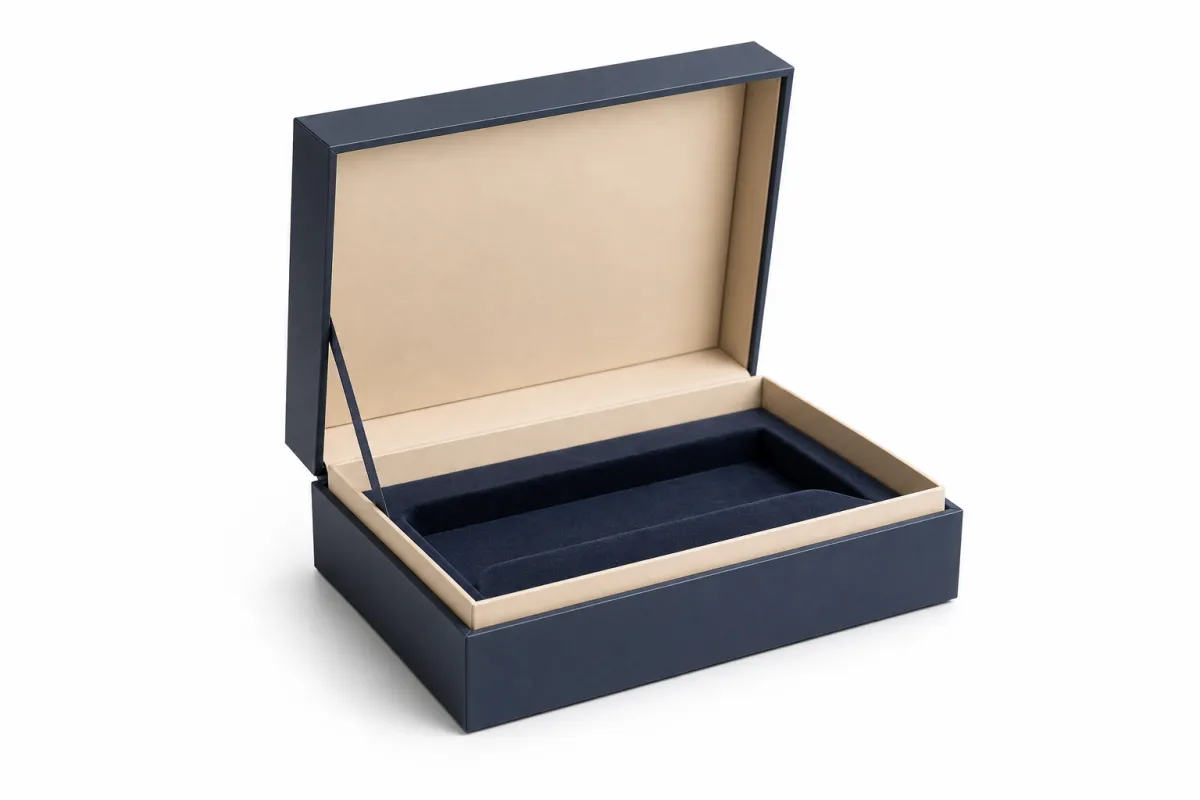
The shortest honest answer is this: choose the board, wrap, insert, and closure around the product first, then add decoration. Rigid boxes best practices work best when the box is treated like a protective device with a brand layer on top, not a branding exercise that happens to hold an item. If the product shifts, the corners crush, or the closure opens too easily, the project failed even if the mockup looked polished.
Most rigid box problems come from fit and structure, not artwork. A beautiful print file cannot rescue a box built with the wrong wall thickness or an insert that was sized to the dieline instead of the actual sample unit. In practice, the box needs enough compression resistance to survive handling, enough internal restraint to keep the product from moving, and enough tolerance control that assembly does not vary wildly from one shift to the next. That is the core of rigid boxes best practices.
My review lens is simple: compare protection, assembly effort, lead time, and the total cost of defects, not just the lowest unit price. A quote that saves twelve cents can become expensive if it creates one extra sample round, a rejected shipment, or a higher damage rate in retail or e-commerce. For premium packaging, that is a false economy. Rigid boxes best practices should always include the cost of failure, because that cost shows up sooner or later.
"If the product can rattle, the box is not finished yet."
That quote sounds blunt, but it reflects what usually goes wrong. The exterior may pass a visual check, yet the real issue appears after the first drop, the first courier scan, or the first time a store associate repacks it. A good brief should name the product weight, shipping method, required finish, acceptable movement inside the box, and target shelf experience. That is how rigid boxes best practices turn into a production-ready specification.
Top Rigid Boxes Best Practices Compared
Different rigid box formats solve different problems, and rigid boxes best practices only work if the structure matches the use case. I would not spec the same build for a perfume set, a metal electronics accessory, and a quarterly subscription kit. The shape may look similar from a distance, but the risk profile is not the same, and the failure modes are not the same either.
| Format | Best Use Case | Unboxing Impression | Protection Level | Assembly Effort |
|---|---|---|---|---|
| Standard setup rigid box | Retail gift sets, cosmetics, small accessories | Clean and familiar | High for shelf and light transit | Moderate |
| Magnetic closure box | Premium launches, executive gifts, limited editions | Strong tactile feel, premium sound | High, depending on insert quality | Moderate to high |
| Drawer style | Jewelry, collectibles, premium samples | Layered reveal, strong presentation | Moderate to high | Higher |
| Book-style box | Brand story kits, media kits, curated launches | Editorial, structured, gift-like | Moderate | Higher |
| Foldable rigid box | E-commerce programs, freight-sensitive shipments | Premium but more practical | High if built correctly | Lower at freight stage, higher at pack-out |
Standard setup boxes are the easiest to source and usually the most reliable for repeat production. They are a strong option for cosmetics and gift sets because they balance appearance with predictable assembly. If the insert is cut accurately, the product sits squarely and the box can tolerate light handling better than many buyers expect. In rigid boxes best practices, this is often the default starting point for a reason.
Magnetic closure boxes win on perceived value. The closure feels deliberate, and that matters in premium categories. Still, the magnet is not free. It adds component cost, assembly time, and a failure point if alignment drifts. A weak closure on a magnetic box feels worse than a basic lid that works properly. That is why rigid boxes best practices never treat magnets as an automatic upgrade.
Drawer styles and book-style boxes are excellent for presentation-heavy programs, but they need tighter tolerances. Drawer friction, ribbon pulls, and flap alignment all depend on accurate die-cutting and stable board stock. These formats can lift the unboxing experience, especially for collectibles and launch kits, yet they also increase labor and raise the chance of a defect if the sample stage is rushed. That tradeoff belongs in any serious rigid boxes best practices review.
Foldable rigid boxes deserve more attention than they get. They usually save freight space, which matters if the origin-to-destination lane is expensive or if you store packaging in bulk before pack-out. The catch is that the folding sequence must be tested with actual staff. If the structure is hard to assemble, the labor cost can swallow the freight savings. Rigid boxes best practices should compare both sides of the ledger, not just the studio photo or the freight quote.
One practical way to compare options is to ask which format survives the worst leg of the journey. A boutique gift box may only need to look flawless on a display table. An e-commerce launch kit has to survive drops, compression, temperature swings, and repeated handling. That is a very different job. I would rather choose a slightly simpler rigid box that stays square and intact than a more ornate one that needs babysitting.
Detailed Reviews: Rigid Box Materials, Wraps, and Inserts
Rigid boxes best practices begin with the board. The outer shell usually relies on chipboard or greyboard in the range of roughly 1.5 mm to 3 mm, depending on product weight, box size, and the desired stiffness. Heavier items and larger footprints need more wall strength, especially if the box will be stacked in a master carton or handled repeatedly on route to a retailer. Thin board can still look fine at first glance, but it bows sooner and telegraphs a cheaper feel.
The wrap material matters almost as much. Art paper, specialty paper, textured wraps, and printed cover stocks each have different scuff resistance and folding behavior. Soft-touch lamination feels rich, but it can mark during packing if the line is not careful. Uncoated textured wraps can hide minor handling wear better, though they may show glue absorption or corner cracking if the wrap is too stiff. Rigid boxes best practices call for testing a wrap on the actual die shape, not just approving a swatch card. A sample sheet on a desk and a finished corner on a real box are two very different things.
Corner performance is a hidden issue. The corner is where the structure, wrap, and adhesive all meet, so any weakness shows up there first. A great finish cannot rescue a poor core because the product still needs crisp edges, stable walls, and enough compression resistance to keep the lid aligned. I have seen otherwise attractive boxes fail simply because the corner wrap puckered or the board memory fought the fold. That is not a cosmetic nuisance; it is a build flaw, and it will keep showing up every time the box gets opened or handled.
Adhesive choice also deserves more attention than it gets. Water-based glue is common, but it must be matched to the wrap and board so it does not warp surfaces or slow production. Too much adhesive can cause waves under the paper. Too little leaves edges lifting after the first temperature change. Rigid boxes best practices are often won or lost in these tiny details, and they are exactly the kind of detail buyers should ask about before approval. A supplier who can explain the adhesive strategy clearly usually understands the build better than the one who shrugs and says, “It’ll be fine.”
Insert selection is where the product either feels secure or feels improvised. Foam inserts are still common for fragile or irregular items, but they are not always the smartest answer. Paperboard trays are better for many retail programs because they are recyclable in more markets and can be printed to support branding. Molded pulp is a stronger sustainability story and can protect well if the geometry is right. Custom die-cut trays work well for precise nesting, especially in cosmetics, electronics, and multipiece kits. Rigid boxes best practices should fit the insert to the item, not the other way around.
Here is a practical rule: if the product is heavy, sharp, or expensive enough to justify a tight lock-in, spend the money on the insert. If the product is light and the box is mostly a presentation shell, a simpler tray may be enough. There is no prize for overengineering every pack-out. The best rigid boxes best practices are usually the ones that remove waste, not the ones that add the most features. I know that sounds almost too practical, but that is usually where the real savings live.
Process control matters too. A healthy timeline usually includes a brief, dieline, sample build, revisions, preproduction approval, then full production. Each step has its own failure mode. The brief may miss product tolerances. The first sample may reveal lid misalignment. Revisions may fix the fit but alter the feel of the closure. Preproduction is where you should catch the last 5 percent of issues, because after that the cost of changes rises quickly. For packaging buyers, that is one of the main rigid boxes best practices lessons: do not compress the schedule so tightly that there is no room to learn from the sample.
Two standards are worth referencing if the box is shipping beyond a simple retail lane. ISTA testing helps evaluate distribution performance, and ASTM methods such as ASTM D4169 are often used to structure transit testing. You do not need to turn your packaging team into lab technicians, but you should ask what test profile the sample was built against. If the box is meant for e-commerce, that question is not optional. For additional context on packaging materials and recyclability, the FSC site is a useful reference point for responsible sourcing, while the ISTA site explains distribution testing principles in plain commercial terms.
Rigid Boxes Best Practices for Pricing and Total Cost
Pricing is where rigid boxes best practices get real. A quote can look low because it excludes the things that later create friction: insert engineering, specialty wrapping, magnet placement, hand assembly, or a second sample round. The cheapest proposal is not always the cheapest project. It is often the one with the most surprises, and those surprises tend to show up after the schedule is already tight.
For a rough commercial framework, a simple setup rigid box might land in an entry range when produced at scale, while a magnetic or drawer format moves into a mid-range premium tier. High-end custom builds with complex inserts, specialty papers, and high hand-labor content can move much higher. The exact number depends on size, finish coverage, freight lane, and quantity, but the pattern is consistent. More touch points usually mean more cost and more risk. Rigid boxes best practices should account for that before the purchase order goes out.
Here is a practical comparison that buyers can use as a starting point.
| Build Tier | Typical Driver | Pros | Cons | Where It Fits Best |
|---|---|---|---|---|
| Entry-level premium | Standard board, basic wrap, simple insert | Lower unit cost, faster approval | Less visual drama, fewer tactile cues | Cosmetics, accessories, modest gift sets |
| Mid-range premium | Magnet, custom insert, specialty print or lamination | Stronger brand feel, better shelf impact | Higher labor and component cost | Launch kits, direct-to-consumer premium items |
| High-end custom | Complex structure, foil, emboss, multi-part insert | Distinctive presentation, elevated perceived value | Longer lead time, higher defect exposure | Luxury gifting, collectibles, executive packaging |
The hidden cost is defects. If a box has a 3 percent reject rate in production, a 2 percent damage rate in transit, and a 1 percent repack issue at fulfillment, the real cost moves quickly. You might still be under budget on paper, but the business case weakens once you include rework and lost customer confidence. That is why rigid boxes best practices should be evaluated against total cost, not just factory pricing. A packaging line that looks efficient on a quote sheet can become a headache once real cartons start moving through the system.
Ask suppliers for itemized quotes. You want to see board grade, wrap stock, print method, magnet count, insert type, assembly labor, and any additional finishing charges separated cleanly. Otherwise, it is impossible to compare apples to apples. A lower number may simply mean one supplier left out a component that another supplier included. Buyers who skip that step often discover the problem only after the first sample shows up looking different from the promise. Rigid boxes best practices start with transparent pricing.
There is also a freight angle. Heavier board, larger dimensions, and non-collapsible builds can increase shipping cost before the product even gets packed. If your order volume is large, stored flat or foldable structures may offset part of that cost. If your volume is small, the labor savings of a simpler setup may outweigh any freight optimization. The best answer changes with scale, which is why rigid boxes best practices should be recalculated for each program, not copied from the last launch. That part gets missed a lot, usually because a previous project had different quantities, different routes, and different tolerance for hand work.
If you need a broader packaging assortment for comparison, Custom Packaging Products can help you see how rigid structures sit next to other custom packaging options. That context matters because the right box is rarely the fanciest one. It is the one that fits the product, the channel, and the budget without creating waste.
How to Choose Rigid Boxes Best Practices for Fit and Timeline
Fit decisions should follow a clear order: product weight, dimensions, fragility, shipping method, shelf display needs, and the opening moment. If you reverse that order, you end up choosing decoration first and engineering second. That is how projects drift into rework. Rigid boxes best practices work best when the product profile leads the conversation, because the product is the thing the box has to protect and present.
Start with accurate measurements. Not nominal measurements. Real measurements after the product has been fully assembled, wrapped if needed, and checked for protrusions. Then define tolerance ranges. A 0.5 mm or 1 mm shift may sound tiny, but it can affect magnet alignment, drawer friction, or insert compression. This is especially true for rigid boxes best practices in electronics and cosmetic kits, where the product must sit centered every time. If the item rotates inside the cavity or rides high by a fraction of an inch, you will feel it in the hand, and the customer will too.
Then map the timeline honestly. Concept approval is only the first gate. After that comes sample development, revisions, production slot booking, assembly, and freight. Complex inserts or specialty finishes add time fast. A realistic schedule often includes enough room for at least one adjustment cycle after the first prototype. If a supplier says a complex custom build can be finished too quickly, ask what they are leaving out. Rigid boxes best practices are rarely compatible with wishful scheduling, and a rushed build usually creates one of two outcomes: a late launch or a box nobody wants to approve.
Use a short checklist before final approval:
- Confirm product dimensions with the actual packed item, not a drawing alone.
- Set a fit tolerance for movement, lid gap, and insert compression.
- Specify finish limits so the wrap, foil, or lamination can survive handling.
- Review carton pack-out so the master carton supports the rigid box during shipping.
- Check assembly time if the box will be packed by hand at scale.
The scenario-based recommendation is straightforward. For luxury gifting, a magnetic or book-style box usually makes sense. For cosmetics, a standard setup box with a well-cut insert often gives the best balance of cost and appearance. For electronics, protection and lock-in matter more than decorative complexity. For collectibles, the opening sequence can be as important as shelf presence. For direct-to-consumer shipments, rigid boxes best practices often point toward foldable rigid or reinforced structures that reduce freight stress while preserving the premium feel.
For readers who want to compare package types beyond the rigid category, it helps to review structure families side by side rather than assuming every premium item needs the same solution. That is one reason packaging teams benefit from a structured product catalog. It forces tradeoffs into the open instead of hiding them inside a “make it nicer” request. And that request, in my experience, is where budgets quietly go off the rails. You can feel the difference between a clear spec and a vague wish pretty fast.
Our Recommendation: The Best Rigid Box Build by Use Case
For luxury gifting, I would usually favor a magnetic closure box or a book-style build with a tight custom insert. The reason is simple: the opening moment is part of the product value. That said, a magnetic closure box only earns its keep if the magnet strength, lid alignment, and wrap quality are all controlled. A weak closure undermines the whole premium message, and rigid boxes best practices should not excuse that.
For cosmetics, a standard setup rigid box often gives the best balance of presentation and cost. Many beauty buyers over-specify the outer shell and under-specify the insert. That is backwards. A bottle, compact, or serum set needs accurate nesting more than it needs an elaborate outer structure. If the product moves, the box feels cheap no matter how much foil is on the lid. That is one of the most common lessons in rigid boxes best practices, and it tends to show up in user complaints long before it shows up in supplier feedback.
For electronics, I care most about protection and anti-movement control. Foam can be useful, but it should not be the default without considering paperboard or molded pulp alternatives. Electronics often benefit from cleaner internal restraint and better pack-out consistency. If the item has sharp edges or sensitive finishes, scuff resistance matters too. I would rather see a simpler outer box with a smarter insert than a highly decorated shell with poor internal support.
For collectibles and limited editions, drawer or book-style boxes can create a memorable reveal. They are especially effective when the contents are light to medium weight and the product value depends partly on presentation. The caution is labor. These styles can push assembly time up quickly, which is fine for small runs but not always smart for high-volume programs. Rigid boxes best practices should never ignore throughput, because a beautiful design that slows fulfillment can create real friction for the team packing it.
For direct-to-consumer shipments, the best overall balance usually comes from a foldable rigid or reinforced setup with a custom insert and a tested outer shipper. That combination protects the product, controls freight, and still feels premium at the consumer level. Not every brand needs the most decorative structure. Sometimes the best build is the one that survives the worst handling without asking for heroic effort from the fulfillment team. Honest answer: that is often the smarter choice.
Here is the plainest judgment I can give. If a premium feature does not improve protection, selling power, or both, it is probably decoration for decoration’s sake. That does not mean decoration is bad. It means decoration should earn its space. Rigid boxes best practices are at their strongest when they connect visual appeal to a measurable benefit. A nice box should do more than sit pretty; it should work.
The best overall balance for many brands is a mid-range premium build: sturdy board, reliable wrap, well-fitted insert, and a closure that feels intentional without becoming fragile or expensive to assemble. That combination is not flashy. It is effective. And effective packaging usually outperforms packaging that only looks impressive in a studio photo, especially once the real product starts moving through production, freight, and customer hands.
Next Steps: Turn Rigid Boxes Best Practices Into a Spec
Turn the project into a one-page spec sheet before you ask for pricing. Include the product dimensions, product weight, shipping method, finish targets, budget ceiling, target quantity, and deadline. Also note whether the box must display well on shelf, survive e-commerce transit, or both. Rigid boxes best practices become much easier to enforce once the spec is written down clearly.
Ask for at least two prototype rounds if the program has any real risk. The first sample usually reveals gross fit issues. The second is where you check magnet strength, insert depth, closure action, and surface durability after handling. If the structure changes materially between rounds, that is not a failure; it is part of getting the box right. What matters is that you do not approve a sample before it has been tested with the actual product. That is where a lot of projects go sideways, kind of quietly, because everyone gets impatient with the calendar.
Compare quotes against the same bill of materials. Every supplier should be pricing the same board, wrap, closure, insert, and labor assumptions. If one quote includes specialty paper and another silently substitutes a basic stock, the pricing comparison is meaningless. Rigid boxes best practices are easier to defend when procurement and design are looking at the same inputs. It keeps the conversation honest, which is a nice change from the usual “why did this come back different?” phone call.
Then test the box like a real shipment, not a studio prop. Use a drop test, corner pressure test, scuff check, and assembly-time review before final approval. If the box is going to retail, test how it behaves under stacking and unpacking. If it is for e-commerce, check what happens after a few rough handlings. Standards such as ISTA and ASTM help structure that process, but the point is practical: if the product survives the test, the design is doing its job. That is the whole reason rigid boxes best practices exist.
One last buying tip. Do not let finishing choices distract from the structure. Foil, embossing, soft-touch, spot UV, and specialty wraps can all add value, but only after the foundation is right. If the board is too light or the insert is loose, extra decoration will not fix the experience. It will only make the failure more expensive. That is why rigid boxes best practices must always end with fit, strength, and shipment readiness.
For buyers building a new packaging program, the smartest move is usually to define the product first, choose the structure second, and assign decoration last. That order saves time, limits surprises, and improves the odds that the final box will actually perform in the market. If you want a simple rule to carry forward, use this one: approve the box only after the actual packed product sits snugly, the closure works cleanly, and the test sample survives handling. That is the practical finish line for rigid boxes best practices.
FAQ
What are the most important rigid boxes best practices for heavy products?
Use thicker board, reinforced corners, and a custom insert that locks the product in place. Test for compression and drop impact, not just appearance, because heavy items create more stress on the walls and corners. Keep the finish durable enough to resist scuffs during packing and transit. Those three steps cover most of the risk in rigid boxes best practices for weight-sensitive products.
How do rigid boxes best practices change for e-commerce shipping?
Prioritize crush resistance and internal movement control over extra decoration. Consider foldable rigid boxes or lighter structures when freight cost matters, but verify that the folding process does not create weak points. Validate the design with shipping-style testing before production, because e-commerce exposes weaknesses much faster than retail shelf display. That is a core difference in rigid boxes best practices for online orders.
Are magnetic closure rigid boxes worth the added cost?
They are worth it when the opening experience is part of the product value. If the box is mostly for protection or transit, a simpler closure may be smarter. Ask whether the magnet adds sales value or only adds expense, then compare the result against your margin. Rigid boxes best practices do not assume the magnet is automatically justified.
What timeline should I expect for a custom rigid box order?
Plan for sample development, revisions, approval, production, and freight separately. Complex inserts or specialty finishes can add time quickly, and rush orders usually cost more while reducing flexibility on materials. If the project has a launch date that cannot move, build in contingency time early. That schedule discipline is part of rigid boxes best practices.
What is the most common mistake with rigid box projects?
Brands often approve the look before they verify fit and durability. That leads to loose products, damaged corners, or costly rework after production starts. Testing the real product in the real box avoids most of those failures, which is why rigid boxes best practices always put structure ahead of decoration.


