Gift paper Bags for Subscription boxes do more than cover a product. They set the first impression, organize the reveal, and help a shipment feel planned instead of improvised. That matters because the customer notices the first branded object they handle, not just the outer carton.
The bag is also a production choice. It affects packout speed, carton fill, print budget, dimensional weight, and how much hand work the fulfillment team has to absorb. The best teams spec it around the real load and the real line, not a mockup that only works in a presentation.
Used well, the bag can hold mixed SKUs, support a premium tier, or simplify the unboxing sequence without adding much bulk. Used poorly, it becomes attractive packaging that creates more problems than it solves.
Why gift paper bags for subscription boxes punch above their weight
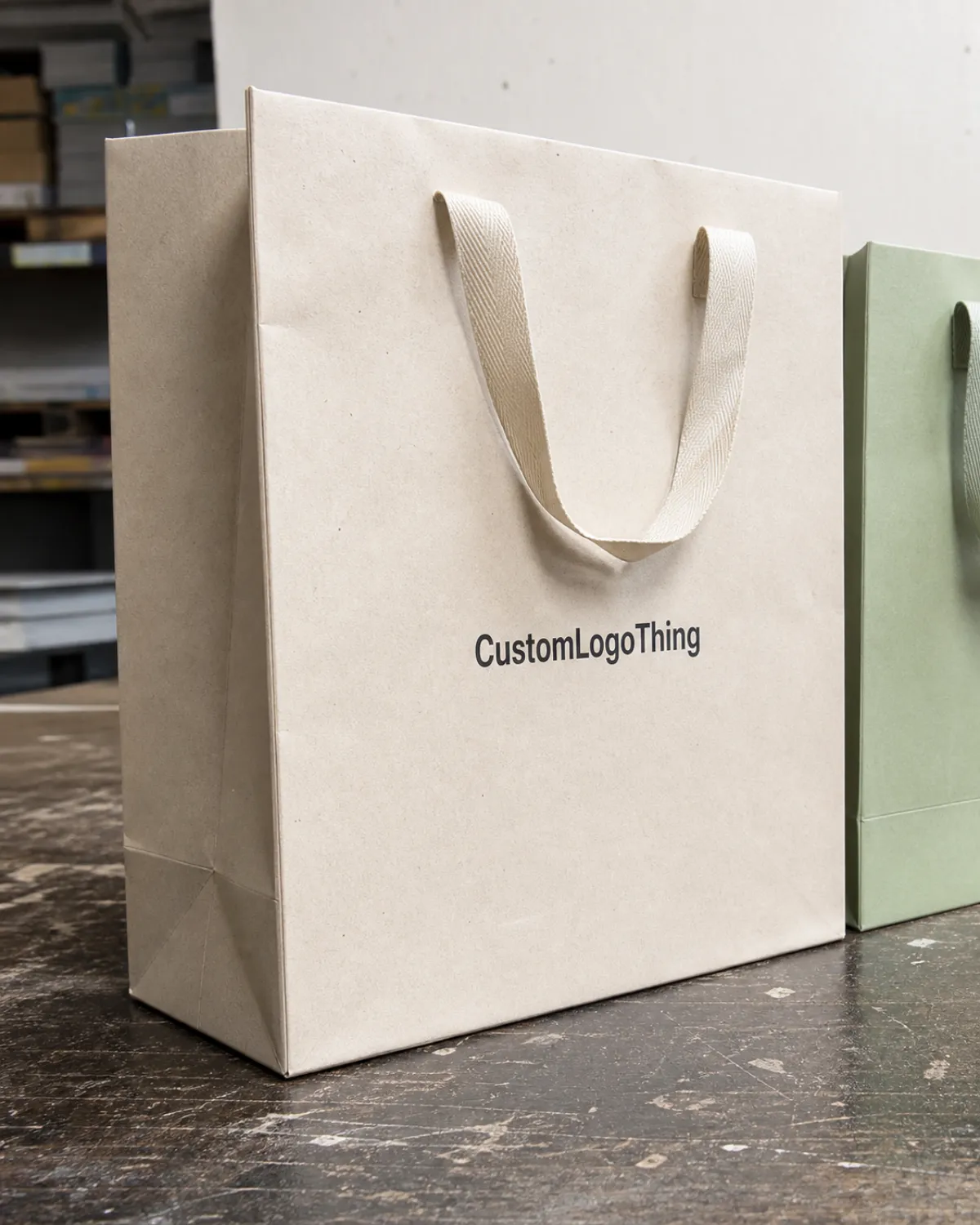
A carton usually gets opened once. A branded bag gets touched, photographed, moved, and sometimes kept. That gives it more visibility than the outer box in many subscription programs, especially when the bag sits at the top of the packout and frames the reveal.
Gift paper Bags for Subscription boxes also solve a practical problem: most kits are not tidy. There are samples, inserts, seasonal pieces, and substitutions that arrive late. A bag contains that variation and keeps the pack from looking rushed.
Compared with tissue, a paper bag gives structure. Tissue collapses and shifts during fast packout. A bag holds shape, defines the reveal, and still leaves room for branding. That combination is why it shows up in beauty kits, apparel drops, gourmet gifts, event mailers, and seasonal subscription boxes.
It also gives the brand a chance at reuse. If the customer keeps the bag, the package continues to work after delivery. That only matters if the build is durable enough to survive actual use, not just one unboxing.
“The bag is often the first branded object a subscriber remembers. The box gets them there. The bag sets the tone.”
The memory effect comes from consistency: stable folds, clean print, and a size that matches the product. A bag that is too large reads lazy. A bag that is too small reads rushed. Either one weakens the premium feel.
How the bag works inside a subscription packout
Packout design starts with sequence. What should the customer see first, and what should stay hidden until the last fold is lifted? A bag can sit on top as a reveal layer, wrap a hero item, or keep smaller pieces together so they do not rattle around in the carton.
The physical details matter more than many buyers expect. Flat size is only the starting point. Gusset depth, mouth opening, fold memory, handle length, and base reinforcement all affect whether the bag slides into place or slows the line. A narrow opening might look elegant on a drawing and become a bottleneck in fulfillment.
For heavy items, the bag should act like a carrier. For light presentation, it can behave like a reveal sleeve. Those are different specs. One needs strength and bottom support. The other needs visual control, easy loading, and a clean printed surface. Mixing the two usually creates overbuilt packaging and higher cost.
- Reveal layer: branding appears first, contents are opened second.
- Organizer: samples, inserts, and loose items stay contained.
- Carrier: the bag leaves the carton and must support weight.
- Premium cue: the bag signals tier, season, or special edition.
That role should drive the rest of the spec. If the bag only lives inside the carton, spend more attention on print alignment and assembly speed. If it leaves the box, weight capacity and handle construction move to the top of the list.
Assembly behavior matters too. A bag can be technically correct and still slow the line if it springs open awkwardly, collapses before insertion, or needs extra hand work to sit square. Buyers usually notice that only after the labor bill starts to rise.
Material, structure, and finish choices that change performance
Two bags can share the same dimensions and feel completely different in use. Paper weight, coating, crease quality, and reinforcement all affect how the bag behaves during production and transit. A 120 gsm kraft bag is not the same as a 170 gsm coated paper bag, even if the artwork is identical on screen.
Kraft is usually the workhorse choice. It suits natural-looking branding, hides some handling marks, and feels grounded rather than glossy. Coated paper gives sharper color and cleaner image reproduction, which helps beauty and fashion programs where print clarity matters. Both can work; neither is universally better.
Handles deserve their own callout. Rope handles feel premium and support heavier loads, but they add material and labor. Ribbon handles read as gift-like but are not ideal for real carrying weight. Die-cut handles are efficient and keep the bag clean, though they are less forgiving when the contents are heavy.
Bottom structure matters just as much. A double-fold base or reinforced insert can keep the bag from bowing when the contents shift. That matters in shipping, but it also matters on the packing table. A bag that does not sit flat slows every unit.
Finish choices change both appearance and durability. Matte hides fingerprints and scuffs better than high gloss. Soft-touch can feel expensive, but it can mark up in transit if the bag rubs against inserts. Foil and spot UV can lift a logo or seasonal graphic, yet both raise cost and can show stress where the fold bends.
Quality control should match the intended use. For light presentation bags, inspect print registration, fold accuracy, and color consistency. For carrier bags, add load testing, handle pull checks, and bottom seam inspection. If the bag is going near fragile goods, run a sample through a drop or vibration test with the full packout.
Sustainability claims need paperwork, not adjectives. Ask for FSC certification if required, verify recycled content if that matters to your spec, and check whether coatings or laminations change recyclability in your target market. Public references such as fsc.org are a better starting point than a supplier’s marketing line.
| Option | Typical Use | Relative Cost | Performance Notes |
|---|---|---|---|
| 120-140 gsm kraft | Light kits, samples, promo inserts | Lowest | Good for presentation; limited carry strength |
| 150-170 gsm coated paper | Premium reveal bags, branded gift sets | Moderate | Crisp print, stronger shelf appeal, more scuff-sensitive |
| Reinforced paper with rope handles | Heavier subscriptions, reusable carrier bags | Higher | Better load support; adds labor and material cost |
| Specialty finish with foil or spot UV | VIP tiers, seasonal drops, limited editions | Highest | Strong visual impact; watch fold wear and budget creep |
For broader testing and material guidance, resources from packaging.org and ISTA are useful. Formal lab testing is not required for every launch, but the logic is helpful when the contents are fragile or the bag doubles as a carrier.
Cost, pricing, and MOQ tradeoffs to model before you order
Unit price only tells part of the story. The real cost includes size, paper grade, printing, handle type, finishing, freight, duties, warehousing, sample charges, and spoilage. A low factory quote can turn into a poor landed cost once those items are added back in.
MOQ changes the economics quickly. Smaller launches pay more per unit because setup and converting costs are spread over fewer bags. Larger recurring subscriptions can get better pricing, but only if the spec stays stable long enough to justify the run. If artwork changes every season and dimensions keep shifting, a high MOQ becomes storage risk.
That is where buyers get caught. They lock in a price that looks good on paper, then pay for it later in obsolete inventory. It is usually safer to order slightly less aggressively than to sit on bags that no longer match the campaign.
A clean quote comparison should normalize the same variables across suppliers:
- Same dimensions and gusset depth
- Same paper grade and finish
- Same handle type and reinforcement
- Same print coverage and color count
- Same delivery terms and allowance policy
For planning, many custom paper bag programs land around $0.18-$0.45 per unit at mid-volume. Premium builds with heavier paper, special finishes, or stronger handles can move well above that. The range is a reality check, not a promise.
Ask about overrun and shortage tolerances before approval. A supplier that includes a small overrun may simplify fulfillment. A supplier that treats every extra unit as a chargeable surprise creates friction later. The same goes for sample approval: if the process is vague, the final shipment is usually where the missing detail appears.
Process, timeline, and production steps from brief to delivery
The production path is usually brief, dieline, proof, sample, production, quality check, and shipment. Straightforward. In practice, the delays happen between those steps, not inside them. A late artwork change or a bad assumption about the proof stage can stall the order.
Color matching is one of the biggest timeline risks. Brand colors that look simple on a screen can require extra proofing on paper, especially on kraft substrates or under special coatings. Custom dimensions can trigger a new dieline review. Specialty finishes can extend production because they need more controlled converting.
A sensible planning window for simpler custom runs is often 12 to 15 business days after proof approval. That can stretch with premium finishes, complicated handle builds, or a supplier that is already running at capacity. For subscription teams, the order should be placed before the packing calendar gets locked.
Before production starts, lock these details:
- Final flat size and gusset depth
- Artwork files and color format
- Carton counts and pack method
- Shipping terms and delivery address
- Acceptable tolerances for print, fold, and finish
For fragile contents, align the bag spec with the packout test plan. The bag is part of the system, but it is not the whole system. If the product can shift, bruise, or puncture a side panel, the carton, inserts, and bag need to be tested together.
A step-by-step ordering checklist for subscription teams
Start with the packed kit, not the empty product. Measure the real configuration, including inserts, filler, wrap, and the variations that show up in day-to-day packout. Subscription boxes are rarely identical from month to month, so the bag has to fit the actual range.
Define the bag’s job before you lock the spec. Is it meant to frame the reveal, hold the contents, or leave the carton and act as a carry bag? Once that is clear, the rest of the decisions become easier. Style, closure, handle type, print coverage, and finish all follow from the job the bag has to do.
Ask for samples and test them like you mean it. Check how fast they assemble, how they behave when stacked, and whether the paper scuffs against the carton or insert. A beautiful sample that fails in a live fulfillment environment is still a failure.
Keep the final spec in one place. Design, procurement, operations, and customer service should all be reading the same dimensions, paper notes, and finish details. One source of truth prevents the familiar problem where everyone remembers a different version of the bag.
If the project touches other branded components, review it alongside broader Custom Packaging Products. That keeps the bag aligned with cartons, inserts, and fillers instead of letting each item drift into its own lane.
Common mistakes and expert fixes
The most common mistake is spec’ing the bag off the product alone. The packed kit is what matters. Add the inserts, the closure, the bulge from soft goods, the odd-shaped sample, and the seasonal variation, then measure again. A bag sized to a theoretical product usually fails on a real line.
Another mistake is forcing too much branding onto a small surface. Dense graphics, too many colors, and heavy effects can make the bag more expensive while making it less readable. A clear mark, enough contrast, and disciplined print coverage often do more work than another finish layer.
There is also the opposite problem: underbuilding the construction. A presentation bag inside the box does not need the same reinforcement as a carrier bag. A carrier bag does. If the structure is mismatched to the use case, either the cost goes up for no reason or the bag fails in the customer’s hands.
The teams that avoid rework do a few things consistently. They simplify the color count. They define acceptable variance before production starts. They approve the sample with the heaviest expected packout, not the nicest one. Catching a problem on a table is cheap; catching it after 30,000 units is not.
Done well, the bag improves the reveal, organizes packout, and supports the brand without bloating the shipment. Done badly, it becomes an attractive nuisance. The difference is specification discipline, realistic testing, and a little restraint.
FAQ
What size paper bag works best for a subscription box packout?
Measure the fully packed kit, not the empty product, then add room for inserts, closures, and the monthly variation that always shows up. A gusset that lets the bag sit flat during assembly is usually safer than one that forces staff to stretch the paper. Test the heaviest configuration before locking the size.
Are handles worth adding to subscription packaging bags?
Sometimes. Handles make the bag feel more reusable and more premium, which helps if the bag leaves the carton or carries a higher-tier kit. They add cost and bulk, though, so a light internal presentation bag does not always need them. Match the handle to the job, not the mood board.
How do I compare pricing from different bag suppliers?
Use landed cost, not just the factory quote. Compare the same dimensions, paper grade, print coverage, finish, freight terms, sample charges, and overrun policy. If one supplier includes better tolerances or stronger construction, that should show up in the comparison instead of getting buried in the fine print.
Can paper bags protect fragile items in a subscription box?
Not by themselves. A paper bag should be treated as a presentation and organization layer, not the only protection. Fragile items still need a sturdy outer carton, internal cushioning, and a packout that prevents shifting. Test the whole assembly if the contents can break, crush, or rub.
What lead time should I expect for custom gift bags?
Plan for brief review, proofing, sample approval, production, quality control, and shipping. For simpler runs, 12 to 15 business days after proof approval is a common production window, but specialty finishes and busy seasons can extend that. Build buffer into the schedule so packaging does not become the bottleneck.
What paper weight is safest for a subscription gift bag?
For light presentation use, 120-140 gsm kraft or a similar range is often enough. For better print and a more premium feel, 150-170 gsm coated paper is common. If the bag carries real weight or leaves the box, step up to reinforced construction instead of assuming thicker paper alone will solve the problem.

