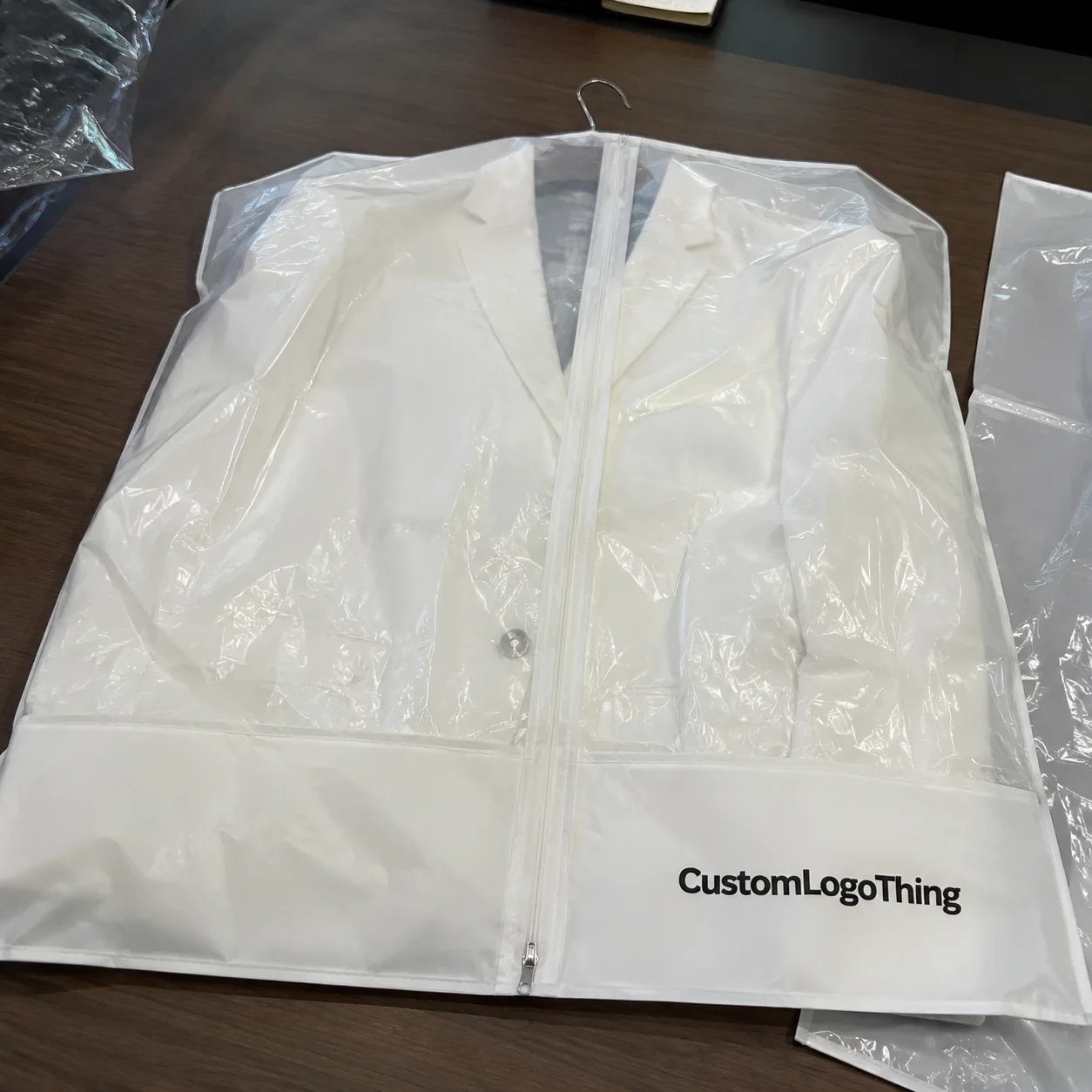
Buyer Fit Snapshot
| Best fit | Self Seal Poly Mailers Manufacturer projects where brand print, material claims, artwork control, MOQ, and repeat-order consistency need to be specified before quoting. |
|---|---|
| Quote inputs | Share finished size, material target, print colors, finish, packing count, annual reorder estimate, ship-to region, and any compliance wording. |
| Proofing check | Approve dieline scale, logo placement, barcode or warning zones, color tolerance, closure strength, and carton packing before bulk production. |
| Main risk | Vague material claims, crowded artwork, missing packing details, or unclear freight terms can make a low unit price expensive after revisions. |
Fast answer: Self Seal Poly Mailers Manufacturer: Film, Print, MOQ, and Carton Packing should be specified like a repeatable production item. The safest quote records material, print method, finish, artwork proof, packing count, and reorder notes in one written spec.
Production checks before approval
Compare the actual filled-product size with the drawing, then confirm tolerance on folds, seals, hang holes, label areas, and retail display edges. Reserve space for logos, QR codes, warning copy, and material claims before decorative graphics fill the panel.
Quote comparison points
Review material grade, print process, finish, sampling route, tooling charges, carton quantity, and freight assumptions side by side. A quote is only useful when the supplier can repeat the same color, closure quality, and packing count on the next order.
Self Seal Poly Mailers manufacturer sounds like a simple search until a shipment starts moving through a parcel network, the flap opens, and a mailer that looked perfect in the sample stage turns into a return, a repack, and a customer complaint. I have seen that kind of mistake eat up the savings from an order pretty quickly, because the real cost is not just the bag itself. It is labor, replacements, reshipping, and the time your team spends fixing a problem that should never have reached the customer.
From resin choice to adhesive layout, from film thickness to print registration, a self seal Poly Mailers Manufacturer shapes whether the mailer performs under real shipping pressure. Apparel, soft goods, and lightweight hard goods all put different demands on the bag, and the difference shows up fast: cleaner packing, steadier closure, fewer damages, and a better presentation when the package lands at the door. Buyers comparing Branded Shipping Bags usually do better when they think like packaging buyers instead of bargain hunters, because the right question is not only what costs less, but what works longer and wastes less time.
Custom Logo Things works with buyers who want Custom Poly Mailers that do more than carry an item from point A to point B. Good orders start with the product, the route, and the brand story. Weak orders start with a low quote and a guess, and that usually means somebody is gonna be disappointed later.
What a Self Seal Poly Mailers Manufacturer Actually Does
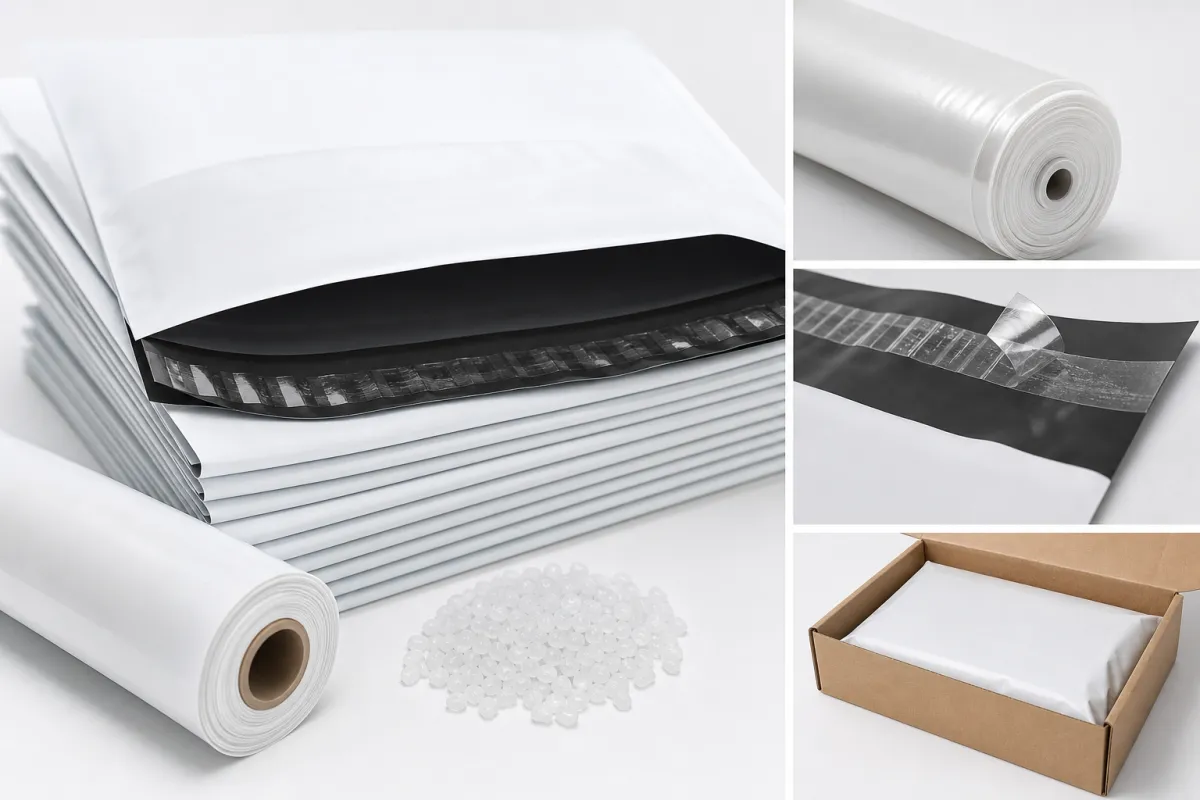
A capable self Seal Poly Mailers manufacturer is not simply printing a logo on a plastic envelope. It is building a shipping component that has to hold up in packing rooms, trailers, sorting hubs, and delivery vans. The process usually begins with resin selection, moves into extrusion or film conversion, then adds the closure system, printing, cutting, and inspection. Every step leaves a mark on the final product. A 2.5 mil film with a weak seam behaves very differently from a 3.5 mil film with a clean, even edge weld.
Those differences show up in the way mailers fail. Some split at the seam. Some lose tack in cold storage. Some wrinkle during packing and make the closure harder to line up. Some print so poorly that the brand looks off-center before the parcel leaves the warehouse. A self seal poly mailers manufacturer controls those variables before the bag ever reaches fulfillment. Film gauge, adhesive strength, pouch dimensions, and print application are not extras; they are the product itself.
Buyers tend to look at unit price first, and that instinct is easy to understand. Procurement teams see a lower number and move quickly. Yet a self seal poly mailers manufacturer that trims cost by thinning the film can create a far more expensive problem later if the bag tears in transit or the seal opens in humid conditions. The real math shows up after purchase: labor, replacement product, reshipment, and customer service time. Once those are counted, the cheapest quote often turns into the most expensive choice.
The best manufacturers also work from use case rather than generic assumptions. An apparel brand sending folded T-shirts needs a different bag from a seller shipping boxed accessories or lightweight cosmetics. A self seal poly mailers manufacturer that understands those differences can recommend the right thickness, closure style, and print area without forcing a buyer into a one-size-fits-all specification.
Put simply, a self seal poly mailers manufacturer takes raw material and turns it into a finished mailer that is sized correctly, seals reliably, prints cleanly, and fits the shipping workflow. That sounds simple only because the complexity stays hidden inside the production line. I still remember the first time I watched a run where the film looked fine on the outside but the seam layout was off by just enough to create trouble in pack-out. Tiny details have a habit of becoming loud once freight gets involved.
“The cheapest mailer is rarely the lowest-cost mailer once you count damage, rework, and returns.”
If you want a wider view of packaging categories beyond mailers, the product range at Custom Packaging Products makes a useful comparison point. It gives buyers a clearer sense of where poly mailers sit relative to boxes, sleeves, and other shipping formats.
Industry standards matter here too. Testing frameworks from groups like ISTA and material references from ASTM help buyers judge abuse resistance, not just appearance. For sustainability claims and recycled content questions, the Packaging Institute offers useful general education, while ISTA is a practical starting point for distribution testing concepts. Those references do not replace supplier testing, but they help keep everyone honest.
How a Self Seal Poly Mailers Manufacturer Builds Film, Seal, and Security
A self seal poly mailers manufacturer usually builds the bag around four pieces of performance logic: the outer film, the inner film surface, the adhesive strip, and the seam geometry. The outer layer carries print and resists scuffing. The inner surface has to let the adhesive bond cleanly. The adhesive strip needs enough tack to hold under pressure, yet not so much that the bag becomes awkward to close. The seam has to survive handling, stacking, and parcel sorting without opening or fraying.
Self-seal closures usually depend on a pressure-sensitive adhesive strip with a release liner or peel-away cover. Once the liner comes off, the buyer folds the flap and presses it shut. The action sounds ordinary, but the details decide whether the closure feels crisp or careless. If the adhesive is off by even a few millimeters, the flap can curl. If the tack is too aggressive, the bag may be hard to open. If it is too light, the seal can fail when the package gets compressed in a tote or carton.
For that reason, a self seal poly mailers manufacturer should send samples that are more than cosmetic proofs. Real closures deserve testing under real conditions: gloved hands, rushed packers, cold rooms, warm rooms, and repeated handling. A sample that looks perfect on a desk can behave differently in a warehouse where speed matters and the pack line never stops for a second look.
There are also upgraded structures worth considering. Dual adhesive strips can support returns. Bubble-lined versions add cushioning for accessories or small electronics. Tear-resistant films help when the item has sharper edges or the route is rough. A self seal poly mailers manufacturer that offers those variants can match the package to the product rather than forcing the product to adapt to the bag.
Security belongs in the discussion too. A clean self-seal closure can show tampering more clearly than a weak flap or a loosely taped envelope. That is not the same as formal anti-tamper packaging, but it does improve the customer’s sense that the shipment arrived intact. For brands that care about presentation, that detail matters more than many buyers expect.
When evaluating a self seal poly mailers manufacturer, check five things on every sample:
- Seal alignment and flap placement
- Opening force and reclosure behavior
- Edge finish and seam uniformity
- Film feel, stiffness, and puncture resistance
- Print clarity, registration, and color consistency
One more practical note: self seal poly mailers are usually chosen for items that are light, flat, and not fragile enough to need rigid protection. Apparel, soft goods, books, supplements, and some flat accessories fit that profile well. If the contents are sharp, heavy, or moisture-sensitive, the self seal poly mailers manufacturer may need to adjust the material structure or suggest a different pack format altogether.
Key Factors That Affect Quality, Pricing, and MOQ
Pricing from a self seal poly mailers manufacturer is driven by specification, not by mystery. The main cost variables are resin grade, film thickness, printing method, adhesive quality, custom sizing, and order volume. If two quotes look similar but one leaves out print coverage or uses a vague thickness description, those quotes are not actually comparable. They may not even be close.
Film thickness is one of the quickest ways for confusion to creep in. Some buyers think in mils, others in microns, and others only know they want the bag “stronger.” For reference, many apparel poly mailers sit around 2.5 to 3 mil, while heavier or more premium builds may move to 3.5 or 4 mil. The right thickness depends on product weight, edge sharpness, and how much abuse the parcel is likely to take. A self seal poly mailers manufacturer should be able to explain that without hiding behind jargon.
MOQ changes the picture too. Smaller runs usually cost more per unit because setup, waste, and scheduling get spread across fewer bags. Larger orders often lower the unit price, but they increase inventory risk. If the design is still being refined, a high MOQ can lock cash into a format that needs revision after the first season. The smarter path is often the smallest run that still gives useful economics.
Here is a comparison buyers can actually use when talking to a self seal poly mailers manufacturer:
| Option | Typical Thickness | Best For | Indicative Price Range | Typical MOQ |
|---|---|---|---|---|
| Budget stock mailer | 2.0-2.5 mil | Low-risk soft goods, internal fulfillment | $0.08-$0.14 each | 1,000-3,000 pcs |
| Standard custom mailer | 2.5-3.0 mil | Apparel, accessories, branded e-commerce | $0.12-$0.22 each | 3,000-5,000 pcs |
| Premium custom mailer | 3.0-4.0 mil | Higher presentation value, better puncture resistance | $0.18-$0.35 each | 5,000-10,000 pcs |
| Bubble-lined custom mailer | Varies by structure | Light protection for delicate flat items | $0.22-$0.45 each | 5,000+ pcs |
Those numbers are directional, not universal. Print coverage, color count, special adhesives, and freight terms can shift them quickly. A self seal poly mailers manufacturer that quotes a low number but leaves out packaging count, tooling, or delivery often looks cheaper than it really is.
Smart quote requests save time. Ask the self seal poly mailers manufacturer to specify dimensions, thickness, closure type, print method, packaging count, carton configuration, and freight terms. Without those details, “apples to apples” comparisons are mostly fiction. Ask about overage assumptions as well. A 2% waste allowance and a 5% waste allowance do not lead to the same final cost.
One more cost gets overlooked often: labor saved by better pack-out. A smoother self-seal flap can shave seconds off every pack. Multiply that by thousands of units and the value becomes real fast. That is why a self seal poly mailers manufacturer should be judged on throughput as well as on cost.
Self Seal Poly Mailers Manufacturer Process and Timeline
The production path is more structured than many first-time buyers expect. A self seal poly mailers manufacturer usually follows a sequence that looks like this: brief gathering, artwork review, material selection, sample creation, approval, production, inspection, and shipment. Each step has a failure point. Miss one and the timeline stretches.
For standard custom work, lead times often land around 12 to 15 business days after proof approval, though that can move faster or slower depending on factory load and freight conditions. Custom sizes, complex print layouts, multi-color graphics, or special adhesive requirements can extend the schedule. A self seal poly mailers manufacturer with a busy production queue will rarely promise miracles. If someone does, ask what gets skipped.
Artwork is a common delay point. Missing bleed, low-resolution logos, or inconsistent brand files can stop production before it begins. Late proof approval is another common snag. A third is changing the size after sampling. That sounds minor, yet even a few millimeters can affect film yield and carton packing. A good self seal poly mailers manufacturer will flag those issues early instead of waiting until the press is already booked.
Seasonal planning matters too. Back-to-school, holiday, and promotional launch periods can tighten capacity and freight windows. If a product launch is locked to a sales calendar, lead time is not a side note; it is part of the schedule. A self seal poly mailers manufacturer that understands launch pressure can help a buyer choose between a standard structure and a more customized one that would take longer to approve.
One useful way to plan is to work backward from the ship date:
- Confirm artwork and size target.
- Request samples or a digital proof.
- Leave time for internal review and corrections.
- Approve the final proof only when the spec sheet is complete.
- Add freight buffer, especially if the order crosses regions or ports.
If you are building a new packaging lineup, the decision should fit the rest of your system. That is one reason it helps to look at About Custom Logo Things and understand how the team approaches branding, practical formats, and production reality. A self seal poly mailers manufacturer is only as useful as the process around it.
For buyers who care about environmental claims, this is also the point to check whether the film includes recycled content, whether the specification works with store drop-off recycling, and whether the supplier can support documentation. The EPA and FSC are not the same thing, and neither one is a substitute for material data, but both are reminders that claims should rest on evidence rather than design language alone. A self seal poly mailers manufacturer should be able to explain what is inside the bag, not just what is printed on it.
Step-by-Step Guide to Choosing the Right Supplier
Start with the use case. What is shipping, how fragile is it, and how much does the unboxing moment matter? A self seal poly mailers manufacturer should be judged against that answer, not against a vague “good quality” promise. A flat apparel order and a packaged accessory order do not need the same solution.
Then compare samples before you compare quotes. That sounds obvious, yet many buyers reverse the order and end up committed to a number before they know whether the mailer fits the product. Look for consistent seam welds, smooth flap release, accurate sizing, and print sharpness. If the sample feels flimsy, it probably is. If the print blurs at the fold, that matters too.
After that, check manufacturing capability. Can the self seal poly mailers manufacturer do custom sizing? Can they support recycled-content film? What print process do they use, and how many colors are practical on the chosen film? Can they hold seal consistency across a full run, not just the first hundred pieces? Those questions tell you more than a polished sales sheet ever will.
Communication speed is another filter. A self seal poly mailers manufacturer that replies quickly, asks the right questions, and sends clean proofs usually stays easier to work with after the order is placed. Slow or vague communication at the quote stage tends to become slower, vaguer communication once a shipment is already late.
A shortlist keeps the work manageable:
- Choose 3 suppliers
- Request 1 sample set from each
- Ask for 1 fully specified quote from each
- Run 1 small pilot order before scaling
That process surfaces quality differences quickly. It also reduces the chance of overcommitting to a self seal poly mailers manufacturer whose strengths do not match your business. If you need Branded Poly Mailers with a low minimum order and stable color consistency, say so early. If speed matters more than custom complexity, say that too.
There is a practical reason to keep the pilot small. A first order is not only a buying decision; it is a test of workflow. Does the mailer pack quickly? Does the print line up with the fold? Does the adhesive behave in the actual warehouse temperature? Does the carton count match what the receiving team expects? A self seal poly mailers manufacturer that helps you answer those questions is worth more than one that only offers a low unit rate.
If the supplier can scale with demand, even better. Reorders should feel boring in the best way: same film, same seal, same color, same pack count. That consistency turns packaging from a recurring problem into a repeatable system.
Common Mistakes Buyers Make With Self Seal Poly Mailers
The first mistake is choosing thickness by instinct. A buyer sees a bag and assumes thicker must be better. Not always. Too much stiffness can slow packing, increase material use, and raise freight weight. Too little film creates puncture risk. A self seal poly mailers manufacturer should recommend the right range based on the item, not on a general preference for “stronger” packaging.
The second mistake is ignoring adhesive performance in real conditions. A seal that works in a showroom may not behave the same way in a cold warehouse or a humid packing area. Pressure-sensitive adhesive can react to temperature, dust, and handling speed. If the flap needs a hard press to make a full bond, that should be obvious before production starts. A self seal poly mailers manufacturer worth trusting will talk about that openly.
The third mistake is over-customizing the first order. Full coverage print, special finishes, custom dimensions, and upgraded closure features can all be useful, but stacking too many variables before the bag has been validated makes the process expensive and slow. It is usually wiser to prove the structure first, then add complexity with the next reorder if it still earns its keep.
The fourth mistake is underestimating operational costs. A bag that saves one cent can cost more in pack time, storage footprint, and freight volume. A mailer that stacks badly may waste shelf space. One that is oversized for the item can increase dimensional weight charges. A self seal poly mailers manufacturer should help with those tradeoffs, not ignore them.
The fifth mistake is vague specification writing. If the quote does not clearly define size, gauge, closure type, print details, and packaging count, the comparison is unreliable. You may think you are reviewing two similar offers when you are actually comparing different products. That is how purchase decisions become messy.
For reference, here are the details I would want on a clean spec sheet from any self seal poly mailers manufacturer:
- Finished size in inches or millimeters
- Film thickness in mils or microns
- Closure type and adhesive style
- Print method, color count, and placement
- Packaging count per carton
- Target lead time and freight terms
Keep that list nearby and most of the usual traps disappear. It also makes reorder conversations much easier six months later, when the team has changed and memory is fuzzy.
Expert Tips and Next Steps Before You Place an Order
Before you commit, request physical samples and test them with the real product, not a dummy load. The difference matters. A self seal poly mailers manufacturer can make a sample look polished, but only your actual item will reveal whether the fit is right. Check whether the mailer closes without bulging, whether the item shifts during handling, and whether the bag tears on a corner or zipper.
Test the seal in the real packing environment too. Press it once, then again, and check whether the bond holds. Leave some samples in a warmer area and some in a cooler area. If the closure behaves differently, that is useful information before the order goes out, not after. A self seal poly mailers manufacturer that welcomes that kind of testing is usually thinking like a partner rather than a vendor.
Print clarity matters more than many teams realize. A sharp logo on the finished mailer does more than look nice; it helps customers identify the brand quickly and makes the package feel deliberate. If the artwork sits too close to the edge, it may distort in sealing. If the ink density runs too high, it may scuff. A self seal poly mailers manufacturer should be able to balance brand visibility with production practicality.
Document a baseline spec sheet before the order ships. That sheet becomes the control document for future reorders. It should include material, size, closure, print, packing configuration, and any tolerances that matter to your operation. If the supplier changes, the spec still protects consistency. If your internal team grows, the spec keeps knowledge from slipping away.
One final point: place a small pilot order before a large custom run whenever the design or the supplier is new. A pilot can expose problems that no artwork proof will catch. A self seal poly mailers manufacturer that supports a pilot run is giving you a lower-risk path to scale, which is exactly what most packaging buyers need.
The next step is straightforward. Compare specs, samples, timelines, and freight terms before choosing a self seal poly mailers manufacturer for the first production run. Do that well, and the packaging stops being a recurring headache and starts behaving like a quiet part of the business. That is the goal, plain and simple.
Keep the selection tied to the rest of your packaging system rather than treating the mailer as an isolated purchase. A branded route that stays coherent across products, mailers, and other pack formats holds up better over time, and it makes every reorder easier to manage.
Self seal poly mailers manufacturer decisions should be grounded in performance, not just price. If you remember one thing, let it be this: the best mailer is the one that protects the product, speeds the pack line, and holds its seal all the way to the customer’s door. That is the standard worth paying for, and it is the standard a good self seal poly mailers manufacturer should meet.
How do I know if a self seal poly mailers manufacturer is using the right film thickness?
Match thickness to the shipped item’s weight, shape, and damage risk. Ask the self seal poly mailers manufacturer for the thickness in mils or microns, not just a vague “heavy-duty” description. Then test at least one sample with the real product, because a 3 mil bag can be ideal for apparel and too light for items with sharp edges.
What should I ask a self seal poly mailers manufacturer about pricing?
Request a quote that separates unit price, printing, tooling, packaging count, and freight. Ask how pricing changes at different volume tiers and minimum order quantities. If the self seal poly mailers manufacturer does not clearly define each cost line, the lowest number may be hiding extras somewhere else.
How long does a custom self seal poly mailers manufacturer order usually take?
Standard orders are usually faster than custom printed or custom-sized runs. Artwork approval and sample sign-off are often the biggest timeline variables, and a new structure can add more time. A self seal poly mailers manufacturer should give you a realistic window, not a guess that ignores proofing and freight.
Can a self seal poly mailers manufacturer help with branding?
Yes, many can print logos, patterns, size marks, and brand messaging directly on the mailer. Ask about proof quality, color matching, and print placement before approving the run. A good self seal poly mailers manufacturer will help the branding support recognition without making the bag harder to seal or read.
What is the best way to compare two self seal poly mailers manufacturer quotes?
Compare the exact same spec set: size, thickness, adhesive type, print details, and packaging count. Review sample quality, not just the lowest unit price, and factor in lead time, freight, and reorder stability. If the quotes come from two different assumptions, the self seal poly mailers manufacturer with the lower headline price may not be the better buy.