Buyer Fit Snapshot
| Best fit | Branded Poly Mailers with Logo projects where brand print, material claims, artwork control, MOQ, and repeat-order consistency need to be specified before quoting. |
|---|---|
| Quote inputs | Share finished size, material target, print colors, finish, packing count, annual reorder estimate, ship-to region, and any compliance wording. |
| Proofing check | Approve dieline scale, logo placement, barcode or warning zones, color tolerance, closure strength, and carton packing before bulk production. |
| Main risk | Vague material claims, crowded artwork, missing packing details, or unclear freight terms can make a low unit price expensive after revisions. |
Fast answer: Branded Poly Mailers with Logo: Film, Print, MOQ, and Carton Packing should be specified like a repeatable production item. The safest quote records material, print method, finish, artwork proof, packing count, and reorder notes in one written spec.
Production checks before approval
Compare the actual filled-product size with the drawing, then confirm tolerance on folds, seals, hang holes, label areas, and retail display edges. Reserve space for logos, QR codes, warning copy, and material claims before decorative graphics fill the panel.
Quote comparison points
Review material grade, print process, finish, sampling route, tooling charges, carton quantity, and freight assumptions side by side. A quote is only useful when the supplier can repeat the same color, closure quality, and packing count on the next order.
Branded Poly Mailers With Logo: A Practical Guide
Branded Poly Mailers with logo do more than carry a shirt, a set of socks, or a handful of accessories from a warehouse to a front porch. A plain shipping bag says the order left on time; a branded bag says somebody paid attention to the details, and customers feel that difference the second they pick it up. For lightweight e-commerce orders, branded poly mailers with logo can lift the whole presentation without adding much weight, bulk, or cost, which is exactly why so many fulfillment teams keep coming back to them.
From the buyer's side, that is the real appeal. You get protection for soft goods, a cleaner look at pack-out, and a repeatable brand surface on the outside of the parcel, all in one format. If you are comparing packaging options, it usually helps to look at Custom Poly Mailers alongside the rest of your ship-ready options in Custom Packaging Products so the outer bag fits the broader system instead of fighting it.
The tradeoff is planning. Size, film thickness, print coverage, closure style, and lead time all affect how the final bag performs, and small mistakes show up fast if the mailer is too loose, too thin, or too busy. I have seen plenty of orders where the art looked great on screen and then the actual bag felt off in hand because the workflow was not considered early enough. Branded Poly Mailers with logo deserve a practical review, not just an artwork approval.
What Are Branded Poly Mailers with Logo?
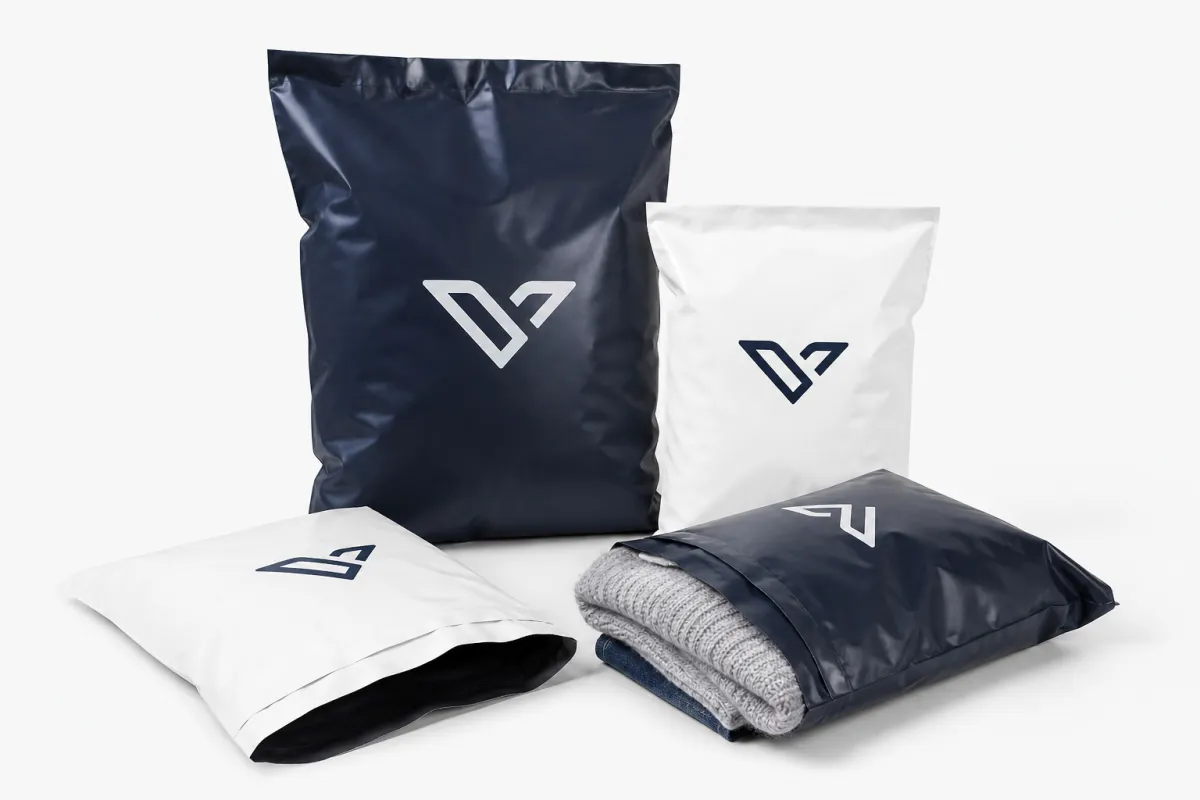
Start with the plain definition. Poly mailers are flexible plastic shipping bags used for soft goods that do not need corrugated protection. Apparel, swimwear, socks, beauty items, light accessories, and many subscription products ship well in this format because the mailer is light, water-resistant, and easy to seal. Branded Poly Mailers with logo add printed graphics or text to that basic structure so the outside of the shipment does some branding work before the customer even opens it.
Picture two orders sitting side by side on a doorstep. One arrives in a generic gray bag with a label slapped on the front; the other arrives in a clean bag with a logo, a pattern, or a short message that matches the brand. The product inside may be identical, yet branded poly mailers with logo change the first impression right away. They act as a recognition cue, a marketing touchpoint, and a signal that the company cared about the full order journey, not just the item inside.
That matters because packaging is part of the product experience now, whether people call it out or not. A bag with a logo can make a small order feel more deliberate, especially for gifts, direct-to-consumer apparel, and subscriptions that ship in soft-goods format. I've watched a plain mailer get tossed into the background while a branded one ended up on social posts, because the outer package felt finished and intentional. Branded poly mailers with logo are not decoration for decoration's sake; they are part of how the shipment speaks for the brand.
Practical rule: if the package is going to be handled by a customer, a receiver, or a warehouse team, the outside surface is doing branding work whether you design it or not.
They fit best where the product is flexible, relatively light, and not fragile. That usually means apparel, hosiery, paper goods, some cosmetics, and accessories that already have their own inner protection. If the order includes rigid parts, sharp corners, or anything that can puncture film, the bag spec needs more care. In those cases, branded poly mailers with logo can still work, but the film gauge and seam quality have to be chosen for the real product, not just the mockup.
For teams trying to tighten presentation without complicating operations, the value is straightforward. Branded poly mailers with logo give you a branded outer layer, a fast pack-out format, and a consistent visual across every shipment. That consistency is one reason they remain common in e-commerce, subscription fulfillment, and direct mail drops where every dollar and every second on the pack line counts.
How Branded Poly Mailers with Logo Work in Shipping
The basic structure is simple, but the details matter. A mailer usually starts with a polyethylene film, either single-layer or co-extruded, then gets formed into a bag with a flap closure and an adhesive strip. Branded poly mailers with logo also need a printable surface that accepts ink cleanly and keeps the artwork readable after folding, stacking, and transit handling. The film, closure, and print are not separate features; they work together as one shipping component.
In production, the sequence is usually film selection, printing, bag conversion, cutting, sealing, and packing for shipment. Flexographic printing is common because it handles repeat orders efficiently once the plate is set up, and it gives clean results on bold logos and simple layouts. That is one reason branded poly mailers with logo often look best when the artwork is direct and high contrast rather than delicate and overworked. Fine lines can get fuzzy, and small reversed type can fill in on film more easily than people expect.
Print placement changes both the look and the economics. Front-only printing is usually the simplest and most cost-controlled option, back-only printing can work for promotional messages, and full-surface coverage creates a stronger visual but uses more ink and setup time. If a brand wants a centered logo with a clean border, the mailer layout has to be planned around the folded bag dimensions, the seal area, and the space needed for shipping labels. Branded poly mailers with logo need that coordination so the final bag still looks intentional after the fulfillment team applies labels and the carrier handles the parcel.
That operational piece is easy to overlook. A good mailer needs to be easy for packers to load, easy to close, and easy to label without hiding the brand. If a mailer is too glossy, too dark, or too crowded, the label can fight the design. If it is too thin, the product can stress the seam or stretch the film during pack-out. Branded poly mailers with logo perform best when the bag is designed for the actual workflow, not just the screen-based proof.
For brands with a broader packaging stack, the mailer is only one piece of the picture. Inserts, tissue, cartons, and labels all shape the customer experience, and the outer bag needs to fit that system rather than clash with it. That is why many teams compare the mailer against the rest of their packaging mix before final approval. A strong outer package can do a lot, but it works best as part of a clear packaging plan.
Branded Poly Mailers with Logo: Materials, Print, and Cost
Material choice is where a lot of buying decisions become real. Standard polyethylene is still common because it is affordable, flexible, and reliable for light to medium shipping loads. Recycled-content films can support sustainability goals, and co-extruded structures can offer better toughness or better opacity depending on the build. Branded poly mailers with logo are not all the same under the ink, so the film should be chosen for the product's weight, shape, and handling risk before the artwork is finalized.
Thickness is usually discussed in mils, and that number matters more than many first-time buyers realize. A lighter 2.5 to 3 mil mailer can work for folded tees or small accessories, but heavier garments, boxed items, or products with sharp edges often need 4 mil or a comparable reinforced structure. If a supplier mentions puncture resistance, seam quality, or dart impact performance, that is useful language. ASTM-style test references, such as impact or tensile benchmarks, tell you more than vague promises about "strong material."
Print variables drive cost too. One-color logos are usually the most economical, especially if the design uses solid shapes and enough negative space. Multi-color designs, large ink coverage, and full-surface graphics add complexity, and that can change both setup cost and per-unit pricing. Branded poly mailers with logo often look best with bold artwork anyway, because flexible film rewards clear forms more than tiny detail. If your package also uses paper components, FSC-certified paper for inserts or cartons can support the broader sustainability story without asking the bag to do every job by itself.
Here is a practical way to think about cost: compare the mailer price against the brand value, the handling savings, and the labor impact. A plain mailer may be cheaper on paper, but if branded poly mailers with logo reduce the need for outer inserts, make the order feel more premium, and help the fulfillment team move faster, the total picture can favor the custom bag. Freight, art preparation, and plate costs also matter, so it helps to ask for the quote in separate lines instead of one blended number. Otherwise, you end up guessing where the real spend sits, and that is never a great place to be when the budget gets reviewed.
The table below gives a realistic planning view. Exact numbers depend on size, artwork, and supplier, but it is a useful starting point for internal budget conversations.
| Option | Typical Spec | Best For | Indicative Unit Cost at 5,000 pcs | Notes |
|---|---|---|---|---|
| Standard polyethylene | 2.5-3 mil, one-color print | Tees, socks, light accessories | $0.18-$0.28 | Good starting point for branded poly mailers with logo when cost control matters |
| Recycled-content film | 3 mil, simple logo layout | Retail programs with sustainability goals | $0.22-$0.35 | Verify opacity, seal performance, and print clarity before approving a full run |
| Co-extruded heavy-duty film | 4 mil, higher puncture resistance | Heavier garments or boxed soft goods | $0.28-$0.46 | Better fit for branded poly mailers with logo that need more abuse resistance in transit |
| Multi-color custom print | 3-4 mil, two or more colors | Launches, promotions, retail unboxing | $0.26-$0.50+ | Artwork coverage, plate count, and ink usage raise the total quickly |
Those numbers are not exact quotes, just a budgeting frame. For a buyer comparing suppliers, the real question is whether the branded poly mailers with logo line item replaces enough other packaging spend to justify the custom build. Sometimes it does. Sometimes it does not, and a clean stock mailer with a label system is the smarter move. Honest comparison beats wishful thinking every time.
If you want to sanity-check the sustainability side, the EPA's recycling guidance is a useful reference point for general consumer disposal behavior and local variability: EPA recycling guidance. For products that need more transit validation, ISTA's testing resources can help frame how packages behave under drop, vibration, and compression conditions: ISTA testing resources. Branded poly mailers with logo should still be judged first by fit and performance, but outside standards help keep the conversation grounded.
How to Order Branded Poly Mailers with Logo Step by Step
The cleanest order starts with measurement. Do not size the bag from the product label alone; measure the packed item, including folds, tissue, inserts, barcode cards, or any inner packaging that gets tucked in with it. A bag that is too tight slows packing and stresses the adhesive flap, while a bag that is too large lets the product shift around and creates a sloppy silhouette. Branded poly mailers with logo work best when the product sits naturally inside the bag with just enough room for a neat seal.
After that, define the structure. Decide on thickness, opacity, closure style, and whether the bag needs extra strength for heavier units or irregular edges. If the product varies a lot within the same SKU family, choose the heaviest packed version as the test case. That prevents surprises later, especially for brands shipping returns, bundled sets, or seasonal items with extra inserts. A slightly larger mailer is often safer than forcing the product into a small size that looks perfect on paper but awkward in the warehouse.
Artwork comes next, and this is where disciplined file prep saves time. Vector files usually reproduce better than low-resolution images, and the colors should be specified clearly rather than described loosely. On flexible film, safe zones, bleed, and print tolerances matter, because the bag gets folded and sealed before it reaches the customer. Branded poly mailers with logo need enough contrast to stay readable after the pack line applies labels and the carrier's equipment takes over.
Before approval, review the proof with a real production mindset. Check logo scale, placement, barcode or label space, text weight, and how the design sits against the chosen film color. If the artwork includes small type, thin rules, or reverse-out details, ask for a sample or a clearer mockup. That extra hour can prevent a costly run that looks fine on screen but weak on the actual bag. For companies that want a starting point for artwork and format decisions, the product pages in Custom Poly Mailers are a useful benchmark.
Here is a simple approval checklist that keeps the process moving:
- Measure the packed product with inserts and closure space included.
- Choose the film based on product weight, puncture risk, and opacity needs.
- Prepare vector artwork and confirm logo size, colors, and print placement.
- Check the proof for label space, legibility, and seam-adjacent graphics.
- Approve only after a sample review if the order is large or the item is premium.
That sequence is especially helpful for branded poly mailers with logo because it forces the buyer to think through the actual pack-out, not just the visual concept. The right bag should help the order move faster, not create a new bottleneck at the end of the line. If a sample feels awkward in hand, it usually becomes more awkward at scale, and that is the kind of headache nobody wants during a launch week.
Process and Timeline for Branded Poly Mailers with Logo
Lead time is a chain, not a single number. Quote review, artwork setup, proof approval, production, quality check, and freight each add time, and every step depends on the one before it. For branded poly mailers with logo, a simple one-color run may move in roughly 10 to 12 business days after proof approval, while custom sizes, heavier films, or more complex artwork often push the schedule to 15 to 20 business days or more. Shipping time sits on top of that, so the real calendar needs buffer.
The fastest orders usually have three things in common: ready-to-print artwork, a clear size spec, and a fast proof review. If the logo file is clean and the design uses one or two strong colors, the press setup is simpler and the approval cycle is shorter. That is one reason branded poly mailers with logo often move more smoothly when the design stays bold and uncomplicated. A busy layout may look energetic, but it can add time if the artwork has to be reworked to fit the film and bag dimensions.
Slowdowns usually show up in predictable places. Missing logo files, late revisions, unexpected size changes, and unclear quantity targets can all delay production. Freight interruptions can add another layer of uncertainty, especially for international shipments or peak-season domestic runs. From a planning standpoint, branded poly mailers with logo should be treated like any other custom production item: the earlier you lock the structure, the less likely the packaging becomes the reason a launch slips.
Custom work also deserves a realistic buffer before a campaign or product drop. If a brand has a seasonal event, a new collection, or a marketing push tied to inventory, the packaging order should be placed well before the launch date. A mailer that arrives two days late can still be a problem if the warehouse is already picking orders. Branded poly mailers with logo are simple in use, but the custom path behind them has enough moving parts that a little extra schedule room is cheap insurance.
I also tell buyers to think in terms of reorder discipline. Once a format works, record the exact bag size, thickness, artwork version, ink colors, and closure spec. That makes the next run easier, faster, and more consistent. It also reduces the chance that a second order feels different from the first one. Reorders are where strong packaging programs start to look like a system instead of a one-off purchase, and that kind of consistency is a quiet advantage.
Common Mistakes When Buying Branded Poly Mailers with Logo
The most common error is sizing the bag for the product name instead of the packed product. A medium shirt may sound simple until you add tissue, a hang tag, a return insert, and a folded shape that needs room to slide into the mailer without wrinkling. Too small and the packer fights the bag all day. Too large and the shipment looks loose, wasteful, and less polished. Branded poly mailers with logo should fit the product the way a good garment fits the body: close enough to look intentional, roomy enough to function.
Film strength is the next place where people cut corners. A bag can look fine on a spec sheet and still tear at the corner seam if the product has edges, zippers, buttons, or rigid add-ons. If the order is heavier than a basic tee, or if it ships with extras, ask for a stronger film or a co-extruded structure. Branded poly mailers with logo are part marketing piece, part shipping material, and the shipping part has to survive real handling. A pretty bag that fails in transit is not a branding win.
Design mistakes are just as common. Fine lines, tiny text, low contrast, and overly detailed art often get lost on flexible film. The artwork may look sharp on a monitor, but the printed result can soften or distort once the bag is formed and sealed. A simple logo, strong spacing, and one clear focal point often outperform a crowded layout. Branded poly mailers with logo usually look better when the design language is confident rather than overworked.
Fulfillment realities matter more than many brands expect. If the bag is awkward to open, hard to close, or hard to label, it slows the line and frustrates the people packing orders. If there is no clean area for a shipping label or barcode, the brand artwork can get covered up at the worst possible spot. A good mailer respects both the customer and the warehouse. That balance is where branded poly mailers with logo earn their keep.
Testing is the final piece many teams skip. A sample run or even a simple mock pack can reveal whether the mailer feels right, seals cleanly, and presents well once packed. That is especially useful for launch orders or high-volume seasonal runs, because the cost of a bad spec shows up fast when the line is already moving. If you are planning a larger rollout, a few samples are a small price to pay for confidence. I know that sounds a little boring, but it saves real money.
Expert Tips and Next Steps for Branded Poly Mailers with Logo
My first tip is simple: keep the design bold enough to read from across a room. Strong logo scale, good spacing, and one or two colors often create a better result than trying to squeeze every brand idea onto the bag. Branded poly mailers with logo are viewed quickly, while someone is loading, scanning, or sorting them, so the design needs to land in a glance. If the customer notices the mailer after the package is in hand, that's a bonus; the main job is to make the shipment feel clean and deliberate from the start.
Second, match the bag to the product before you match it to the brand palette. The right film thickness, closure style, and opacity level matter just as much as the logo. A mailer that looks beautiful but tears in transit is a failed package. A mailer that is a little simpler visually but perfect for the product can support the brand better every day. That is why branded poly mailers with logo should be chosen as a working package, not a decorative object.
Third, request a sample or mockup whenever the run is important. You want to know how the film feels, how the seal closes, how the print reads under warehouse lighting, and how the size behaves with a real packed unit. That kind of physical check is where a lot of small issues show up. If you can catch them before full production, you save time, waste, and frustration.
Fourth, track reorder details with discipline. Save the approved artwork, note the film spec, keep the size and thickness in a simple file, and record any adjustments from the first run. Once a format works, it should be easy to repeat with little friction. That consistency is one of the best reasons to keep branded poly mailers with logo in the packaging mix instead of reinventing the bag every season.
For next steps, I would keep it practical: measure one packed product, set a target unit cost, request a quote with the artwork attached, and compare a few sample options before approval. If you want broader packaging support, the categories in Custom Packaging Products can help you compare what else belongs in the order. If you want to see how other buyers balanced design, budget, and performance, the examples in Case Studies are worth reviewing. Done well, branded poly mailers with logo protect the item, support the workflow, and make the shipment feel intentional from the first scan to the final handoff.
How much do branded poly mailers with logo usually cost?
Cost depends on size, film thickness, print colors, order quantity, and whether you choose standard polyethylene or a recycled-content structure. A larger run usually lowers the unit price, while short runs and multi-color artwork raise it. To compare quotes fairly, ask for separate lines for bag cost, print setup, and freight so you can see where the total is coming from.
What size should I choose for branded poly mailers with logo?
Choose based on the actual packed product, not just the product label size, and leave room for inserts, folds, and the adhesive closure. Test the bag with your bulkiest order variant so it works across real fulfillment scenarios. If you are between sizes, the slightly larger option is usually the safer choice because it packs faster and reduces seam stress.
Are branded poly mailers with logo recyclable?
Many polyethylene mailers can be recycled where film recycling programs are available, but local acceptance rules vary. Recycled-content options can improve the sustainability story, yet they still need to be checked for strength, opacity, and print performance. Any environmental claim should match the actual material spec and the disposal guidance you give customers.
How long does production take for branded poly mailers with logo?
Lead time depends on artwork readiness, proof approval speed, production queue, and freight method. A simple design can move faster, while revisions or specialty materials add days or weeks. Build extra time into launch schedules so packaging does not become the reason orders or marketing campaigns get delayed.
Can I print more than one color on branded poly mailers with logo?
Yes, but each extra color adds setup complexity and usually increases cost on flexible film. Simple, high-contrast artwork often produces the cleanest result and holds up well across repeated runs. If budget is tight, start with one strong color and make the layout work harder for you; that approach still gives branded poly mailers with logo the presence they need without overcomplicating production.


