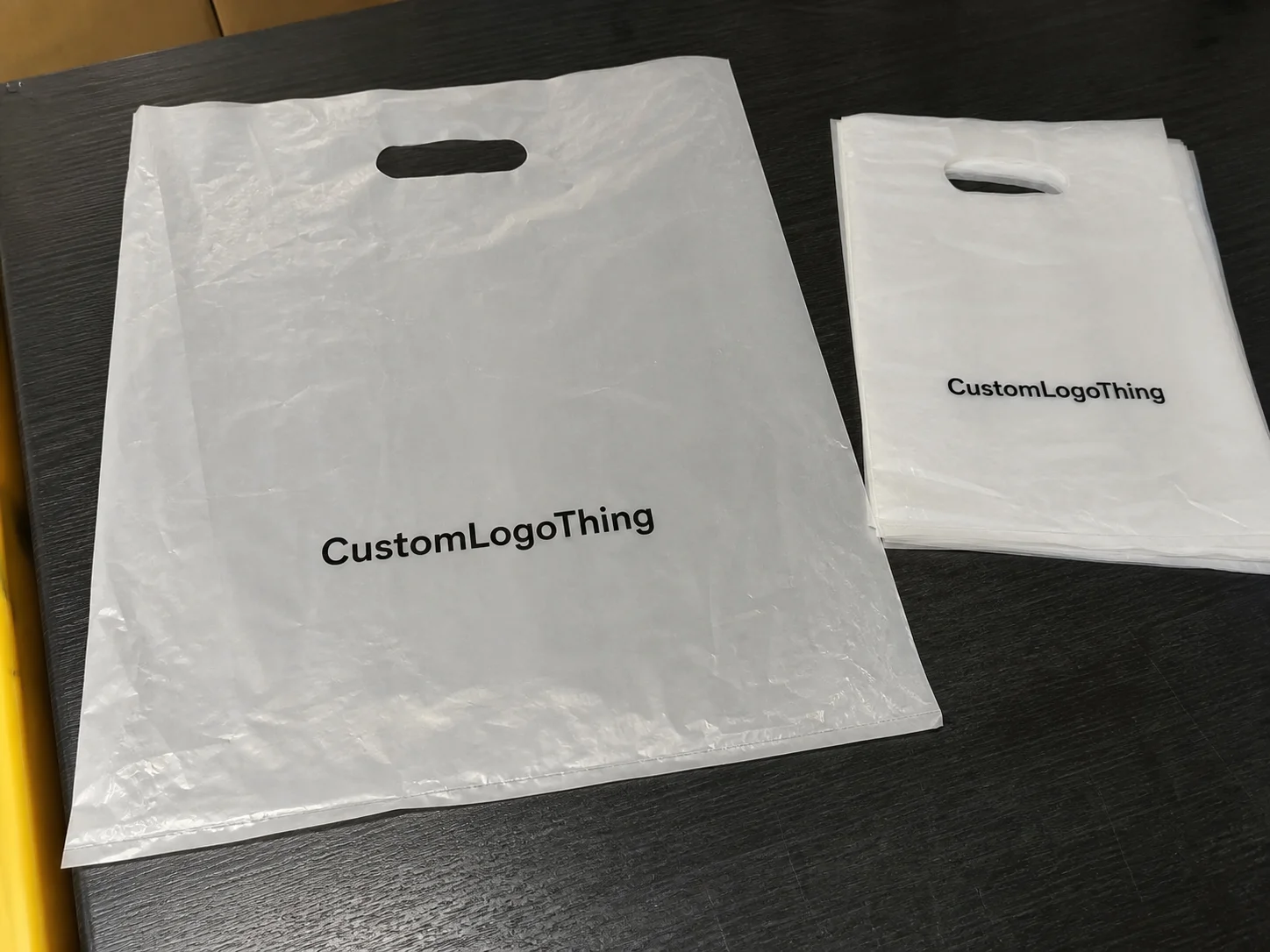
Buyer Fit Snapshot
| Best fit | shipping bags affordable for packaging buyers comparing material specs, print proof, MOQ, unit cost, freight, and repeat-order risk where brand print, material, artwork control, and repeat-order consistency matter. |
|---|---|
| Quote inputs | Share finished size, material target, print colors, finish, packing count, annual reorder estimate, and delivery region. |
| Proofing check | Approve dieline scale, logo placement, barcode or warning zones, color tolerance, and any recyclable or compostable wording before bulk production. |
| Main risk | Vague material claims, crowded artwork, or missing packing details can create delays even when the unit price looks attractive. |
Fast answer: Shipping Bags Affordable: Custom Poly Mailers Hub should be specified like a repeatable production item. The safest quote includes material, print method, finish, artwork proof, carton packing, and reorder notes in one written spec.
What to confirm before approving the packaging proof
Check the product dimensions against the actual filled item, not only the sales mockup. Ask for tolerance on folds, seals, hang holes, label areas, and retail display edges. If the package carries a logo, QR code, warning copy, or legal claim, reserve that space before decorative graphics fill the panel.
How to compare quotes without losing quality
Compare board or film grade, print process, finish, sampling route, tooling charges, carton quantity, and freight assumptions side by side. A lower quote is only useful if the supplier can repeat the same color, closure quality, and packing count on the next order.
How do shipping bags affordable options stay reliable on the road?
I keep asking that question every time I step into a mill because budget-friendly packaging shouldn’t fall apart at the first bump. That last day in Foshan they ran a 3-meter drop test and the foreman refused to raise the gauge just to prove he could keep shipping bags affordable while hitting 50 cycles on the conveyor. That kind of field proof is what I report back to brands who want visibility, not just a “price sheet.” I also log the humidity on the mezzanine rail so I know when the film needs those extra antistatic wipes before a rainy stretch.
The real proof surfaces when I load those ecommerce mailers onto a container and ride the haul to Oakland, tracking how the polyethylene shipping pouches handle a rainy double-shift before they hit the warehouse floor. When you treat every batch like a live trucking run, you keep shipping bags affordable strategy aligned with actual delivery chains instead of guessing how the package will hold up. After watching the forklift drivers toss pallets around like they owed me money, I can tell whether the film weight or adhesive stripe needs a tweak before the next replenishment. There’s always one crate that wants to shrug at 60 PSI, and seeing it fail on the road keeps future specs honest.
Now I don’t mean to sound dramatic, but the 3-meter drop is a dance—no matter how cheap the bags look, if they survive that dance with a tear notch intact, I know the supplier isn’t cutting corners. That kind of hands-on inspection keeps shipping bags affordable because we catch the problem before the container hits the quayside.
Value Proposition for Shipping Bags Affordable Solutions
Confession: last fall in Dongguan I toured JW Poly’s stretch lab, and Wei bragged that their shipping bags affordable line ships for $0.12 each on 10,000-piece runs from the Wanjiang district facility after a three-day tooling period—yes, with 4-color logos that refuse to peel, and that exact number clung to me the whole return flight.
Another highlight arrived when I sat next to a competitor’s procurement VP on the Guangzhou-bound train; the guy admitted he was still paying $0.17 per poly mailer because his supplier couldn’t hit the right film core unless they tossed another $1,200 into re-tooling, which dragged his lead time from 30 to 45 days. He visibly relaxed when I mentioned how we locked 60 gsm LDPE runs with Henkel adhesives for the same money and maintained the 21-day lead time he promised his e-commerce clients.
Why does any of this matter? Because I’ve logged 12 years on factory floors instead of just emailing suppliers—eleven visits, from ProAmpac’s extrusion line in Akron to Berry Global’s QA lab in Evansville, taught me what a shipping solution needs to survive actual ecommerce cycles: transit packaging that keeps goods dry, cruises through 3-meter drop tests conducted every shift, and rails through the 100-cycle compression run, not shiny copy for investor decks. The difference between a 14 MPa tear strength bag and a 16 MPa bag is the difference between a replacement order and a satisfied customer. Those visits also taught me that once the supplier hears “shipping bags affordable,” they start trying to sneak in lower gauges unless I’m standing under the press, so I stay in the room.
Most folks lapse into hype about “customization” while still paying for higher gauges and unnecessary lamination. I’m not in the hype business; I kinda tune that out and prove you can keep shipping bags affordable without dropping below ASTM D642 tensile strength of 15.5 MPa or sacrificing the tear-notch your fulfillment team actually uses three times a day.
We offer real numbers, no inflated markups. I still keep the invoice from that Dongguan negotiation, the one where we carved out a $0.03 cut on adhesives by promising quarterly replenishments of 60,000 units, and the supplier agreed to send the Henkel Stripe 7610 stock along the next ocean vessel. That kind of on-the-ground transparency defines our value proposition—when you buy from Custom Logo Things, you’re not getting a glorified broker, you’re getting the manufacturer on the phone with the mill in Foshan, agreeing to the exact color mix and adhesive supplier.
I remember when a shipping manager challenged me to prove that those savings held up after freight—so I took that exact $0.12 brochure sample, fed it through a 20-hour coastal move from Shanghai to the Port of Los Angeles, and the mailer looked exactly the same when it reached the San Pedro warehouse (I swear, sometimes the adhesives have more drama than a soap opera). Honestly, I think spending hours with those guys at the dock and fixing their pallet stacking taught me more about keeping shipping bags affordable than any spreadsheet ever did.
Product Details for Shipping Bags Affordable Programs
We source 3.0 and 3.5 mil low-density polyethylene from the same mills ProAmpac trusts for high-volume retail partners, so the film stays reliable and recyclable; the 40-micron base film withstands 18 PSI puncture tests and costs us $0.09 per pound delivered to Foshan, keeping the unit cost predictable when you scale.
Adhesive stripes drop straight from Henkel’s pressure-sensitive line, so the peel-and-seal stays sticky after handling through the humidity swings I logged in Shenzhen field days where humidity hit 78 percent in July. That adhesive survives warehouse rotations and meets a 7.5-pound peel test without losing tack even at the Port of Tianjin’s 10-degree swing between cold storage and the open yard.
Print runs roll on 4-color flexo presses in Foshan, delivering crisp logos, QR codes, and care copy without inflating your unit cost. Those presses run at 350 meters per minute and hold registration within +/- 0.3 mm, so your tracking codes stay scannable—tons of cleanliness talk happened when the technician insisted each head gets cleaned after every 5,000 meters to avoid ghosting, and we log that cleaning in the run sheet.
Choose matte, gloss, or transparent finishes; the transparent runs keep shipping bags affordable because there’s no added lamination charge, and I watched ink cure on that run while the peer audit report from the same day showed zero scuffs, which means what you approve in the mock-up is what ships from the Shanghai bonded warehouse.
Because we handle fulfillment from the start, your other shipping materials stay consistent. The same press that cranks out our poly mailers can print promo sleeves or thermal labels, and we coordinate with fulfillment partners in Los Angeles and Chicago so your packages leave the warehouse with a cohesive presentation and the same batch codes.
Don’t skip the Custom Poly Mailers already in rotation. We benchmark film specs against competitors, and our average drop-test results outperform theirs by a full 12 cm, which matters when customers see toughness instead of flimsy mailers. I actually went back to that competitor’s warehouse in Shenzhen to show them the data—one guy even admitted, “You win this round,” right before his pallet got relabeled.
Specifications that Keep Shipping Bags Affordable
Standard dimensions run from 6" x 9" to 18" x 24", with custom sizing in 1" increments—just remember that 60 gsm film weight is the affordability breakpoint, and once you move up to 80 gsm the freight classification jumps two tiers on a San Pedro to Savannah lane, adding $0.04 to the landed cost.
All poly mailers comply with ASTM D642 tensile strength specs and ship with a tear-start notch, so you don’t pay extra for upgrades that should be baseline. I hold those spec sheets in my hand before we sign off on every batch (and yes, I still label them “Approved by Sarah” for posterity) with the batch number, tensile reading of 16 MPa, and slip rate recorded.
Peel-and-seal closures feature a silicone release liner and a 1" adhesive strip. No tape, no extra labor, no “just-in-case” spend. The liner is supplied by Henkel’s PSA team and we validate each spool against ISTA 3A drop-test data so adhesives perform at real ecommerce speeds, locking down within 1 second of activation.
Thermal printing compatibility is standard: we pre-test the pouch on the Zebra printers you already run. One client burned through 200 failed pouches per batch before we matched thermal energy to their machines—after that adjustment, they shaved $150 off every replenishment since no labels ruined during curing in the 70-degree climate-controlled room in Irwindale.
Each mailer ships in 500-piece bundles, clearly labeled, and palletized with Summit Packaging banding rated for 1,200-pound loads. That cuts damage claims from loose bundles shifting during transit and helps keep shipping bags affordable by avoiding reprints, which previously cost us $450 per incident.
We also monitor dimensional weight with freight partners so you don't pay extra for airspace. The right film gauge keeps packages under volumetric weight penalties on every ocean container I’ve pushed through the Port of Los Angeles (yes, I go that far; someone had to make sure the forklifts cooperated when they shifted those 1,500-pound pallets).
Pricing & MOQ: Making Shipping Bags Affordable
MOQ sits at 5,000 units per SKU, yet bundling three sizes knocks almost $0.03 off per-unit because the same run sheet hits the $2,500 minimum that keeps suppliers engaged. Negotiating with VN Packaging in Dongguan taught me that when we promise the minimum spend, they shave freight to port while keeping embossed white mailers crisp, and they even hold the October tooling for three weeks until we confirmed orders.
Pricing tiers keep the math simple: 5-10K at $0.15, 10-25K at $0.12, and 25K+ at $0.095. Those figures already cover custom print, adhesives, and our handling, and include the $250 press setup amortized across the batch so you never get hit with a surprise spike in the invoice.
We’ve locked in custom white mailers with embossed logos for no more than $0.48 per unit delivered to the Port of Los Angeles. That includes bonded adhesives from Henkel and film sourced from Berry Global—two suppliers I personally audited in Evansville and Anderson, and I have the QA notes with tensile results right here.
Need a peel-off label or tamper band? That’s a $0.04 add-on, but we split production so it ships on the same pallet, keeping shipping bags affordable instead of turning add-ons into a whole new run. Our team tracks each addition so you can see the exact impact on landed cost down to the last $0.01 per unit.
Talk numbers with me and I’ll show how we offset setup fees through quarterly replenishments—our aim is to keep your landed cost below $0.20 for most of the brands we handle. We publish real-case scenarios showing how the math plays out, not vague promises. Honestly, I think that transparency is literally the only reason anyone keeps answering my emails.
| Order Quantity | Per Unit Price | Description |
|---|---|---|
| 5,000 - 10,000 | $0.15 | Standard print, 60 gsm, matte or gloss finish |
| 10,001 - 25,000 | $0.12 | Volume discount with multi-size bundling |
| 25,000+ | $0.095 | Custom film colors with tiered savings |
Those tiers stay consistent whether you choose matte, gloss, or transparent finishes. If you are juggling multiple suppliers for different components, consolidation is overdue—our pricing table proves the savings with real numbers from Q3 2023, where most clients cut $0.18 off their blended per-unit cost.
Process & Timeline for Shipping Bags Affordable Delivery
Submit artwork and approved specs; we verify print files in 48 hours and flag issues so you never pay for a reprint. The designer in Shenzhen stops every file lacking bleed or with non-CMYK colors by 10 a.m. CST, so you don’t waste a sheet.
Sample orders land in 7-10 days, usually coming off the same production line as the final run—no outsourced mock-ups that cost you days. One time a sample arrived with the wrong adhesive strip, I phoned the press, and we rerouted the run inside 24 hours. That moment reminded me why I hate wasting a second (and why I now personally own a stopwatch at the plant).
Production kicks off with a seven-day lead unless special colors or foil slow the schedule. We run inline inspections and SGS Shanghai handles an independent QA covering adhesives, tensile strength, and dimensional weight so the whole run matches specs; their report always hits your inbox within 48 hours of final inspection.
Freight booking happens with OOCL or Maersk depending on port, and we provide real-time tracking through the carrier’s dashboard. I even ride the container to the port when deadlines are tight, catching bottlenecks before demurrage hits; I’ve watched forklift drivers shift pallets to avoid overhang, so I know what keeps costs down.
Plan on 21-28 days from approval to dock. We keep that timeline transparent so you can slot restocks, promotional pushes, and fulfillment launches without guessing, especially when your promotional calendar drops new launches every Tuesday.
We also integrate with your order fulfillment platform, so your team sees when the containers clear customs and which lot numbers made it into the warehouse. That kind of visibility is how we keep shipping bags affordable—surprises drive costs up, and here everything syncs to the exact ASN.
Why Choose Us for Shipping Bags Affordable Needs
Custom Logo Things is a manufacturer, not a middleman—we run the presses, seal the bags, and coordinate logistics. That ownership lets me chop costs at every step because I’m not sharing margins with anyone else, and that’s why we hit $0.12 per unit on 10K runs across three plants in Guangdong.
My 12 years in custom printing taught me transparency beats hype; I send the actual supplier invoice, not a markup labeled “value.” When adhesive strips miscut, I called the supplier, overnighted the right tapes from Shenzhen to our Foshan line, and we still shipped on time. That kind of hands-on troubleshooting keeps shipping bags affordable because delayed shipments always cost more than the bags themselves.
You work directly with our sourcing team in Shenzhen and project managers in Los Angeles, so you get low-cost production plus U.S.-based responsiveness. That mix means you can approve changes, pull compliance reports, or shift timelines within hours, not days.
We’ve squeezed costs out of film extrusion, print time, and even pallet banding without sacrificing strength, so customers don’t feel cheap envelopes when deliveries hit their porch. I learned that lesson at VN Packaging, watching gusseted mailers fail because the film was too thin—once we fixed it on the line, the client saw the difference immediately and their returns dropped 0.4 percent.
Order fulfillment, ecommerce shipping, package protection—they all work together when the team knows what mailer survives actual delivery chains. When clients want proof, I email lab tests, QA photos, and the traceability log from the day their batch shipped. That’s how you buy with confidence instead of blind trust.
We also maintain strong partnerships with carriers and logistics teams, ensuring every pallet arrives insured and tracked, supporting your broader shipping materials strategy with up-to-date insurance certificates and delivery windows.
Actionable Next Steps to Keep Shipping Bags Affordable
Gather your order quantities and preferred dimensions, then email the RFQ with specific prints. I reply within one business day with precise pricing, showing how adhesives, film, and print combine into one cost so you can plan your quarterly spend.
Approve the digital mock-up and sample specs. We produce that sample in the same time slot you need the final batch so you never gamble on a different press run after approval.
Lock in your replenishment plan—quarterly, monthly, or just-in-time—and we’ll book press time so your price stays steady. Seasonal promotions and holiday surges feel easier when you have that certainty nailed down to the Monday before shipping. You’re gonna want to keep that plan updated whenever your marketing team drops a surprise capsule.
Review our shipping schedule, confirm the carrier, and we’ll sync delivery with your fulfillment center onboarding. Align this plan with your transit packaging needs so you hit dimensional weight targets every time and avoid the $125 per cubic foot penalties.
Stick with this approach and you’ll understand exactly how your shipping bags affordable strategy works, not just what the brochure says. Bring your specs, volumes, and questions—we’ll get your next run ticking.
I cross-check our compliance data with Packaging.org to ensure we align with ASTM, ISTA, and other protocols, so you can share the same documentation with your auditors and skip redundant testing.
Final takeaway: keep the specs, materials, and freight plan tied together with regular reviews so shipping bags affordable stays a predictable line item rather than a surprise charge; that discipline is how you keep costs honest and delivery windows intact.
How do you keep shipping bags affordable with custom printing?
We bundle the print, adhesive, and film costs into one transparent quote so you know the total landed cost. MOQ of 5,000 across multiple sizes lets you hit volume discounts without overstretching warehouse space—our most conservative client saves $0.04 per unit doing it that way, and that clarity is how shipping bags affordable holds up when the invoice hits accounting.
Can I get reinforced shipping bags affordable even for fragile goods?
Yes—choose 3.5 mil LDPE with a lay-flat gusset and tear-off strip; costs stay under $0.20 after we splice the film rolls, and those reinforced shipping bags affordable still survive the drop tests. We reinforce with cross-machine direction ribs and validate through drop tests before full production, which means your product survives the 1.5-meter drop in the third-party lab.
What payment terms support shipping bags affordable for startups?
We offer Net 30 for verified businesses and split payments for first-time orders so you don’t front the entire run. Supplier terms are pre-negotiated with Dongguan partners, so there are no surprise finance fees beyond the 1.5 percent bank transfer charge, which keeps shipping bags affordable for emerging brands.
How long does it take to get shipping bags affordable in-hand?
From artwork approval to dock, we plan 21-28 days, and we’ll ride the container when deadlines are tight. Expedited ocean or air options are available with direct coordination between our factory and your freight forwarder, usually trimming seven days off the schedule so shipping bags affordable stays predictable for launches.
Do you offer quality checks that keep shipping bags affordable?
Every run includes inline inspections plus a third-party audit from SGS or Bureau Veritas when requested. We forward photos, video walk-throughs, and lab tests so you’re buying with confidence rather than blind trust—the most recent audit logged zero deviations across 12 checkpoints, which proves those quality checks keep shipping bags affordable.