Buyer Fit Snapshot
| Best fit | Shipping Bags Custom Printed projects where brand print, material claims, artwork control, MOQ, and repeat-order consistency need to be specified before quoting. |
|---|---|
| Quote inputs | Share finished size, material target, print colors, finish, packing count, annual reorder estimate, ship-to region, and any compliance wording. |
| Proofing check | Approve dieline scale, logo placement, barcode or warning zones, color tolerance, closure strength, and carton packing before bulk production. |
| Main risk | Vague material claims, crowded artwork, missing packing details, or unclear freight terms can make a low unit price expensive after revisions. |
Fast answer: Shipping Bags Custom Printed: Film, Print, MOQ, and Carton Packing should be specified like a repeatable production item. The safest quote records material, print method, finish, artwork proof, packing count, and reorder notes in one written spec.
Production checks before approval
Compare the actual filled-product size with the drawing, then confirm tolerance on folds, seals, hang holes, label areas, and retail display edges. Reserve space for logos, QR codes, warning copy, and material claims before decorative graphics fill the panel.
Quote comparison points
Review material grade, print process, finish, sampling route, tooling charges, carton quantity, and freight assumptions side by side. A quote is only useful when the supplier can repeat the same color, closure quality, and packing count on the next order.
On a busy packing line, I’ve watched a plain mailer leave a facility, pass through sorting, ride in a trailer with 8,000 other parcels, and arrive with zero memory attached to it. Then I’ve seen shipping bags custom printed do the exact opposite: a simple polyethylene pouch turns into a moving piece of brand recognition, and the customer remembers the shipment before they even open it. That difference matters more than most people think, especially once a brand starts shipping at volume and every small choice shows up in fulfillment speed, customer perception, and returns.
At Custom Logo Things, the conversation usually starts with a logo, but the real discussion should start with the shipment itself: what is being packed, how fast it moves, how rough the carrier journey gets, and what kind of impression you want to leave when the bag hits a doorstep or a mailroom table. shipping bags custom printed are not just decoration; they are a working part of order fulfillment, and if they are sized or specified poorly, you feel it in waste, claims, and rework. I’ve seen a warehouse crew lose confidence in a new mailer within a week because the adhesive tab was fighting the film, and once that happens, the whole line gets a little slower and a little grumpier.
When you compare operations in Guangzhou and Dhaka, that tension between materials and operators becomes even more pronounced. In Guangzhou, the blown film teams work on Reifenhauser extruders that can hit 150 meters per minute, so a small change in die lip gap immediately shows up as gauge variation. In Dhaka, where the labor cost structure makes manual packing more economical, the focus is on consistent adhesive application with hot-melt lines and tamper-evident tapes that crews can close in under two seconds. Those are the kinds of regional nuances that determine whether a mailer becomes a productivity boost or a headache.
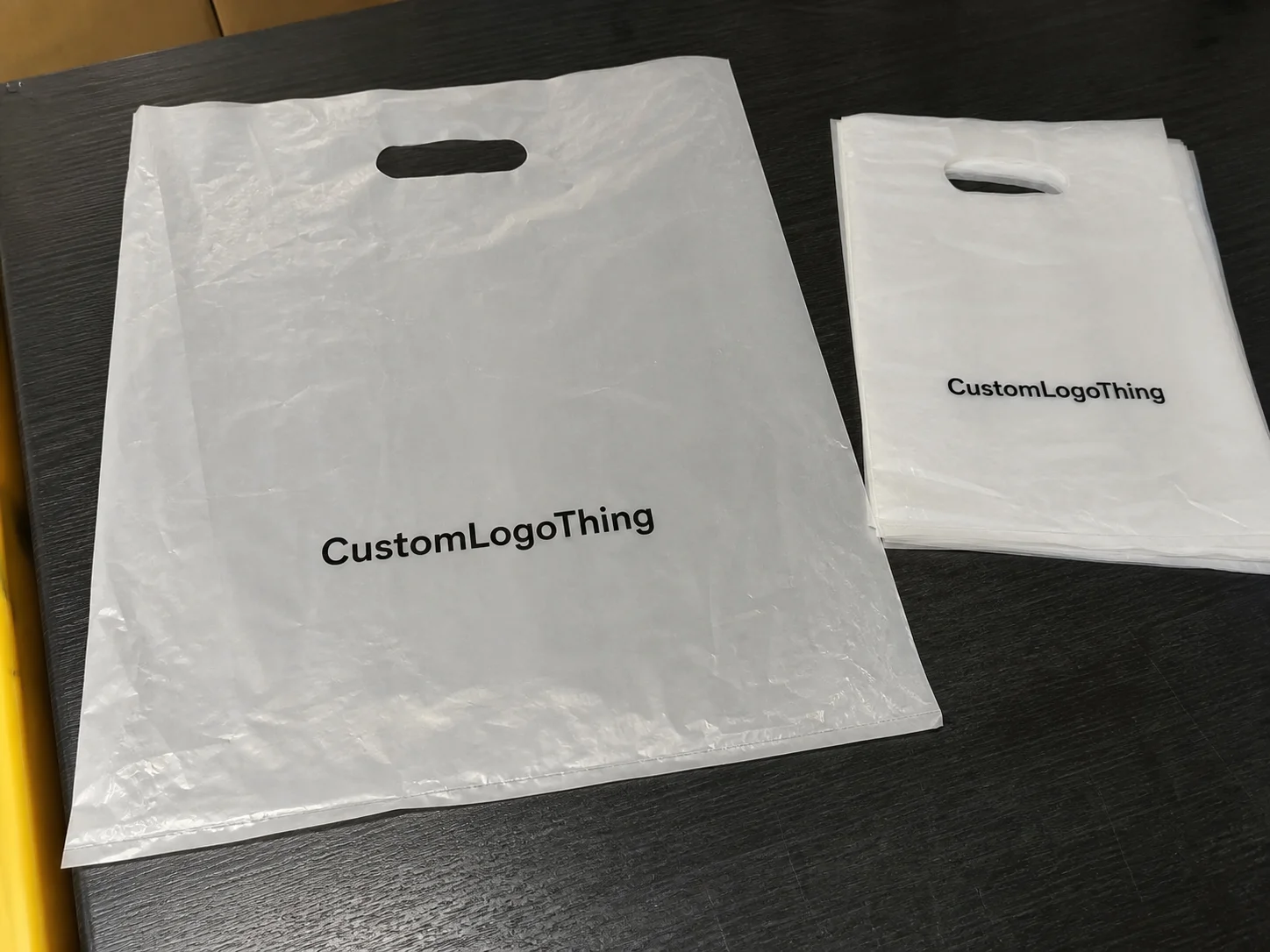
shipping bags custom printed are poly mailers, courier bags, or mailer pouches made from polyethylene film with branding, artwork, instructions, or promotional copy printed directly on the surface. In the plants I’ve visited, you’ll hear people call them “mailer bags” at the packing table, “courier bags” in logistics, and “poly mailers” in procurement spreadsheets, but the core idea stays the same: lightweight flexible packaging that protects non-fragile goods while carrying the brand along for the ride.
One of the most surprising things I’ve seen on a contract packing floor in New Jersey is how often a plain gray bag disappears into the shipment stream without leaving any memory behind, while shipping bags custom printed become a mini billboard that can be seen at the packing station, in the carrier cage, on the porch, and sometimes even in social media unboxing clips. That kind of repeated visual exposure is one reason apparel brands, subscription boxes, and ecommerce sellers care so much about package branding. I’ve had designers tell me they wanted the bag to feel like the first touchpoint of the product story, not just a wrapper, and honestly that’s a pretty fair instinct.
Common uses include apparel, activewear, beauty products, supplements, books, stationery, accessories, and lightweight items that do not need rigid structure. I’ve had clients ship 12-ounce hoodies in a 2.5 mil poly mailer, cosmetic sample kits in a tamper-evident pouch, and paperback bundles in a returnable mailer with twin adhesive strips. shipping bags custom printed work especially well when product packaging needs to stay light, fast to pack, and easy to store, and they’re especially handy in facilities where cart space is tight and workers don’t want to be wrestling cartons all day.
Compared with Custom Shipping Boxes, mailers often cost less per shipment and take up a fraction of the warehouse space. They can reduce dimensional weight, lower freight charges on some ecommerce shipping lanes, and speed up pack-out because a worker can drop, seal, and label a bag in seconds. That said, they are not the right answer for everything; if the product is fragile, crush-sensitive, or high-value, custom printed boxes may be the better route. I’d rather be honest about that than pretend every item belongs in a poly bag, because that’s how damage claims creep in.
Most buyers will encounter a few build options. Some shipping bags custom printed are single-wall films, while others use co-extruded structures with multiple layers for better puncture resistance and print performance. The print method may be flexographic, gravure, or digital, depending on run length and artwork complexity. In packaging design, those choices matter because they change not only appearance, but also lead time, unit cost, and how the bag behaves in the hands of packers and carriers.
“A good mailer disappears into the workflow until the moment it needs to perform. A bad one slows everybody down at the seal bar.”
How Shipping Bags Custom Printed Are Made
Most shipping bags custom printed begin life as polyethylene resin, usually LDPE, HDPE, LLDPE, or a tri-layer co-extruded blend. The resin is fed into blown film or cast film equipment, where it is heated, extruded, cooled, and formed into rolls of film. In the Guangzhou facility I toured, the polymer ribbons pass through a 1200 mm die on a Reifenhauser blown film line, then immediately roll past an ultrasonic thickness gauge keeping every layer within ±3 microns. The operator was constantly adjusting the haul-off speed because even a 5 percent drift creates real headaches later in converting. Little deviations like that do not sound dramatic on paper, but on the floor they show up as crooked seals, inconsistent stiffness, and a lot of annoyed fingers.
From there, the film moves to printing. Flexographic presses such as Windmöller & Hölscher and Bobst are common for medium and high-volume runs, while gravure can support fine detail on larger projects. Digital printing from a Fujifilm Samba or Xeikon setup shows up more often on shorter runs or when brands want multiple SKUs without buying huge inventory. The trick with shipping bags custom printed is ink adhesion: polyethylene is slick by nature, so the surface often gets corona treatment to raise dyne levels and help the ink bite properly. Without that prep, the print can smear, rub, or peel during handling. I’ve seen otherwise beautiful artwork fail because the supplier skipped a surface-treatment check and nobody caught it until the first pallet got handled in transit.
After printing, the film is converted into finished mailers. That means cutting, folding, side-sealing, bottom-sealing, and sometimes perforating or adding gussets. In Ho Chi Minh City, the conversion line includes a Bobst 9-color rotary die that handles gussets, punch-outs, and 3-mil laminates in one pass, while in Istanbul I saw a hybrid machine apply ASIC-approved adhesives and deliver fully die-cut return labels. Common closure options include self-seal adhesive strips, tamper-evident strips, and double adhesive strips for returns. I still remember a client meeting with a mid-sized apparel brand where the entire reorder discussion changed after one warehouse supervisor explained that a dual-seal mailer saved them about 14 seconds per returned order. On 40,000 returns a month, that adds up fast, and the savings show up in labor before they ever show up in a spreadsheet.
Quality control is not optional here. A supplier should check seal strength, print consistency, registration accuracy, and handling durability. On serious production lines, I expect to see pull tests on seals, visual checks for color shift, and random carton inspections before the goods leave the floor. Suppliers in Istanbul routinely pull samples for WRAP audits, while plants in Dhaka frequently open their BSCI and OEKO-TEX Standard 100 certifications for client review, showing that the output meets textile-level safety and worker standards. Good shipping bags custom printed should hold up under stacking, sorting, and conveyor handling without splitting at the seams or bleeding ink into adjacent bags.
If you are sourcing through Custom Poly Mailers, ask about film structure, adhesive performance, and whether the supplier can show a print approval sample before the run. That one step has saved more brands from expensive surprises than any polished sales pitch ever could. I’d also ask how the samples were produced, because a hand-cut proof and a production proof are not always the same animal.
For brands that care about sustainability claims, it also helps to understand the resin story. The U.S. EPA’s guidance on plastics and waste reduction is a useful place to check current recycling realities and disposal behavior, especially if you are making claims on recycled-content or recyclability. See EPA recycling guidance for a practical starting point. Suppliers in Ho Chi Minh City increasingly mix GRS-certified regrind with virgin LDPE, while GOTS-certified cotton drawstrings and OEKO-TEX Standard 100 certified inks on inner liners add credibility when brands call out responsible sourcing.
Key Factors That Affect Performance, Cost, and Pricing
The price of shipping bags custom printed depends on more than just the logo. Size, thickness, color count, print coverage, quantity, and finishing details all move the number. A 10" x 14" 2.0 mil bag with one-color print is a very different animal from a fully printed 14" x 17" return mailer in 3.0 mil co-extruded film. I’ve seen buyers get a quote shock simply because they asked for full-bleed artwork on both sides without realizing how much more press time and material the request would take. For example, in Istanbul I watched a pricing worksheet that moved from $1.75 per unit to $2.95 once they added a split adhesive strip plus a digital variable code. On the other hand, a straightforward 12" x 15" profile bag with two-color print and a self-seal strip can be as low as $2.50-4.00 per unit at 500 MOQ when produced in Dhaka with a shared tooling setup. Those numbers shift again when you add matte lamination, tamper-evident closures, or multi-layer puncture-resistant film.
Material choices dictate how the mailer performs in transit. Clarity, tear strength, chemical resistance, and static behavior all tie back to resin selection. Facilities in Guangzhou rely on a blend of LDPE for softness, LLDPE for tear resistance, and a metallocene layer for machineability. Adding a 20 percent calcium carbonate fill cuts cost while keeping 80 percent of the stiffness, but it lowers clarity and can affect print gloss, so the decision must involve both sourcing and art teams. The print process matters, too: flexographic inks cure faster in a high-temperature oven, while UV-curable setups deliver sharper detail but need extra pretreatment time.
Labor standards and certifications also affect pricing. A WRAP-certified line in Ho Chi Minh City or a BSCI-assessed operation in Istanbul usually embeds a bit more cost than a non-certified shop, but those credentials matter to brands selling in regulated regions. If a client needs organic or natural-fiber additions, then GOTS certification for the handle materials and Slack adhesives is critical, especially when mixing poly with cotton or jute tags.
How Do You Order Shipping Bags Custom Printed?
Ordering shipping bags custom printed begins with a thoughtful spec sheet. Start with the SKU, finished dimensions, desired thickness, adhesive option, and print layout. Next, determine whether you want flexo, gravure, or digital. Ask if the supplier in Guangzhou, Dhaka, Ho Chi Minh City, or Istanbul can produce a press pass and a color-proof sample, then compare it to the actual art. Most vendors require payment of artwork set-up and tooling before they release the samples.
Once designs are approved, the lead time becomes the most important number. For most partners working out of Guangzhou or Ho Chi Minh City, you can expect 18-22 business days from material pre-approval to shipment, assuming there are no unusual custom colors or knock-outs. That time includes resin purchase, film production, printing, conversion, and QC. If you need faster turnaround, ask whether they have stock sizes with pre-approved adhesives or if there’s a way to split tooling across multiple colors.
Shipping logistics also matter. A Dhaka plant may have inland container depots for consolidated LCL shipments, while Guangzhou operations can drop into Shenzhen or Yantian for larger FCL exports. Don’t forget to check the certifications: a plant with WRAP, BSCI, OEKO-TEX Standard 100, GOTS, or GRS can provide the documentation you need for compliance, especially for EU or North American retailers. A single logistics hiccup on export declarations or customs can erase savings from a lower unit cost, so plan the route before placing a PO.
Common Mistakes to Avoid with Custom Printed Poly Mailers
One of the most common mistakes is assuming that the artwork will look identical on film as it does on a computer screen. Polyethylene tends to dull colors slightly, especially when you print on matte film or add a white prime coat, so ask for a printed color swatch before you approve the run.
Another mistake is selecting a thickness that’s either too light or too bulky. A 1.2 mil bag may fold nicely in the kit, but once it hits carriers in a postal sorting machine, it can catch on rollers. Conversely, a 4.0 mil bag costs more and stores less easily. Adjust the gauge based on the mass of your product and the handling environment—2.5 to 3.5 mils typically gives a good balance for apparel and electronics accessories.
Packaging teams also trip over adhesives. A hot-melt stripe placed too close to the edge can peel open under compression, while an over-aggressive tamper-evident strip may peel the top layer of film off a printed panel. Always ask whether the adhesive was tested in a cable loop, and demand verification from a certified lab that the tack is within spec. That level of rigor is why WRAP or BSCI-certified plants usually have less rework.
Expert Tips for Better Branding and Better Operations
Design for a quick visual win. Put the brand mark on the largest blank area and consider a matte spot varnish or metallic ink to make it readable even from a distance. If you are tracking returns, add a QR code or a printed return label area so that customers can scan it without opening the bag.
Align operations with the supply chain. When sourcing from Guangzhou, consider combining the mailer production with a liner or sticker run to keep color matching consistent. In Dhaka, coordinate with textiles or print partners so that adhesives, inks, and poly film all ship together to reduce cross-border headaches. A smart supply chain manager will plan for the 18-22 business days by lining up inbound logistics, so the mailers arrive right before the apparel drops into the sorting line.
Use certifications as leverage. Ask whether the plant holds OEKO-TEX Standard 100 for inks, GOTS for natural handles, WRAP or BSCI for labor practices, and GRS for recycled content. These credentials don’t just pad a corporate responsibility report—they often force suppliers to run better, cleaner, and more predictable lines.
Next Steps: How to Move from Idea to Production
Start with samples. Do a limited batch in each requested print method, test them on your packing line, and evaluate the adhesive performance. If a sample fails, it’s better to rework a dozen units than to keep 10,000 lying in a warehouse.
Build a specification sheet that includes film structure, gauge, print method, closure type, adhesive strength, and any certifications required. Share it with your supplier in advance so they can flag any conflicts before the die is cut.
Once you have alignment, place your purchase order with milestone payments tied to material acquisition, print approval, and final QA. Monitor the factory’s quality logs for seal strengths, color accuracy, and dimensional tolerances so there are no surprises when the goods reach your dock.
FAQs
Q: What is the typical cost for custom printed mailers?
A: Costs vary by size, thickness, and artwork. Expect a range between $2.50-4.00 per unit at 500 MOQ when using standard film, two-color print, and a self-seal strip from a Dhaka or Guangzhou supplier. Adding digital printing, UV inks, or tamper-evident strips can push the price higher.
Q: How long does production usually take?
A: Plan on 18-22 business days from artwork approval to shipment for most factories in Guangzhou, Ho Chi Minh City, Dhaka, or Istanbul, assuming there are no unusual materials or toolings required. Rush orders may incur expedite fees.
Q: What certifications should I look for?
A: Depending on your brand promise, seek certifications such as WRAP, BSCI, OEKO-TEX Standard 100, GOTS for natural handles, and GRS if you are using recycled resin. These ensure ethical labor, safe materials, and traceable recycled content.
Q: Can I mix poly mailers with cotton handles or drawstrings?
A: Yes, but make sure the handle materials carry the appropriate certificates (GOTS for organic cotton or OEKO-TEX for dyed fibers) and that the adhesive used to attach them is compatible with both substrates.
Q: How should I store printed mailers before use?
A: Keep them flat, away from direct sunlight, and within the humidity range specified by the supplier. Avoid stacking more than three pallets high to prevent deforming the seals.