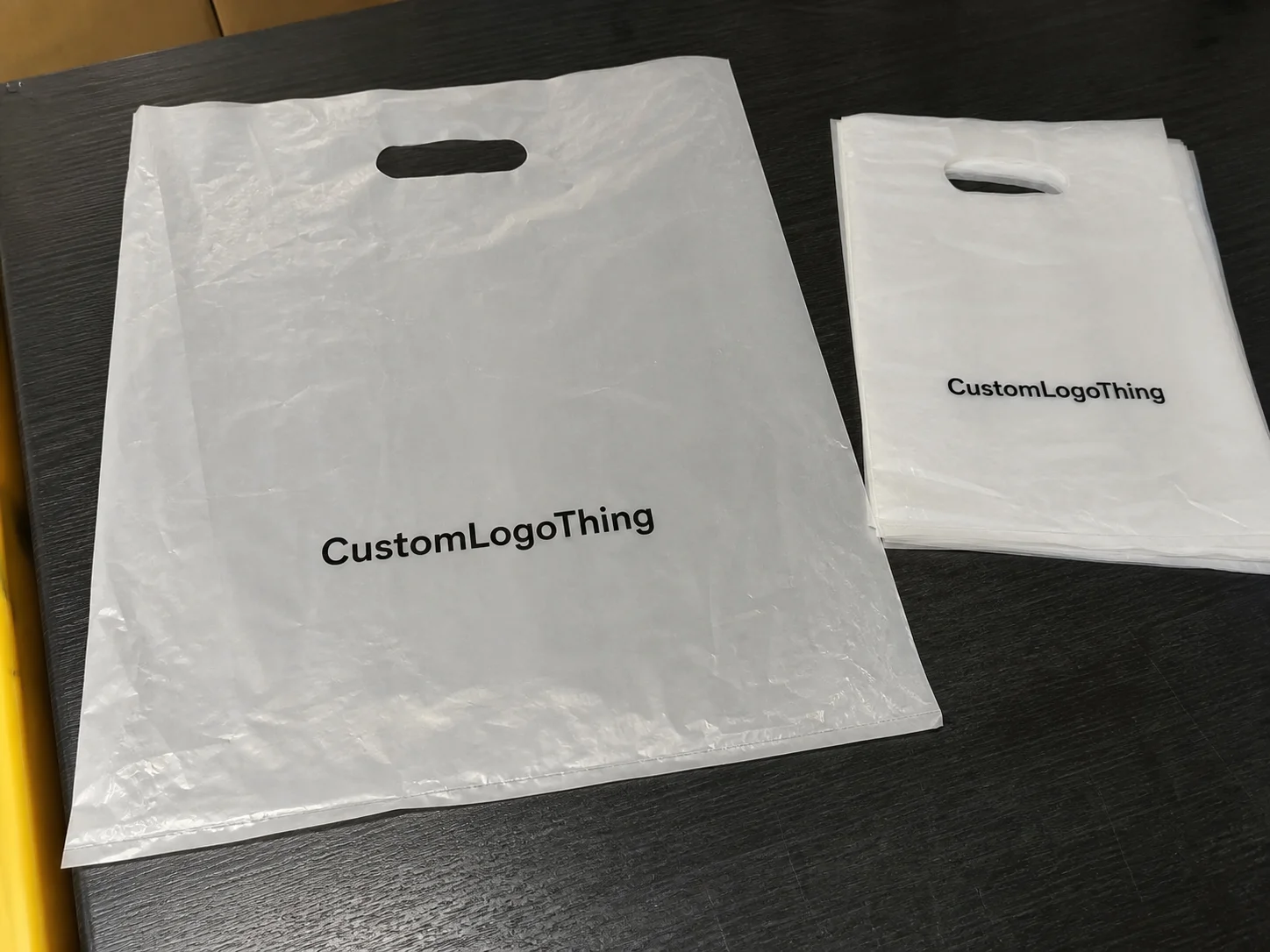
Buyer Fit Snapshot
| Best fit | Shipping Bags for Small Business projects where brand print, material claims, artwork control, MOQ, and repeat-order consistency need to be specified before quoting. |
|---|---|
| Quote inputs | Share finished size, material target, print colors, finish, packing count, annual reorder estimate, ship-to region, and any compliance wording. |
| Proofing check | Approve dieline scale, logo placement, barcode or warning zones, color tolerance, closure strength, and carton packing before bulk production. |
| Main risk | Vague material claims, crowded artwork, missing packing details, or unclear freight terms can make a low unit price expensive after revisions. |
Fast answer: Shipping Bags for Small Business: Film, Print, MOQ, and Carton Packing should be specified like a repeatable production item. The safest quote records material, print method, finish, artwork proof, packing count, and reorder notes in one written spec.
Production checks before approval
Compare the actual filled-product size with the drawing, then confirm tolerance on folds, seals, hang holes, label areas, and retail display edges. Reserve space for logos, QR codes, warning copy, and material claims before decorative graphics fill the panel.
Quote comparison points
Review material grade, print process, finish, sampling route, tooling charges, carton quantity, and freight assumptions side by side. A quote is only useful when the supplier can repeat the same color, closure quality, and packing count on the next order.
I’ve watched plenty of small brands obsess over ad spend while their shipping bags for small business quietly eat up margin in the background. On a packaging line in southern California, I once saw a boutique apparel brand cut packing time by 18 seconds per order just by switching from oversized boxes to the Right Poly Mailer, and that tiny change mattered more than their last social campaign did.
That’s the part people miss: shipping bags for small business are not just “the thing that goes around the product.” They influence order fulfillment speed, package protection, customer perception, dimensional weight, and even how much storage space you need behind the counter. Get them wrong, and you pay for it three times: once in materials, once in labor, and once again in avoidable damage or returns.
And yes, I’ve seen people try to tough it out with whatever mailer was cheapest that month. It usually ends the same way: extra tape, unhappy packers, and a stack of crushed customer complaints that could’ve been avoided with a better spec.
Shipping Bags for Small Business: What They Are and Why They Matter
In factory terms, shipping bags for small business usually means poly mailers, courier bags, or plastic mailing envelopes made for lightweight, non-fragile products that move through ecommerce shipping and direct-to-customer delivery. I’ve seen them used for apparel, accessories, printed inserts, soft home goods, and subscription kits where the product benefits more from speed and moisture resistance than rigid crush protection.
The common film structures are LDPE (low-density polyethylene), co-extruded poly film, and recycled-content blends. LDPE is flexible and forgiving, which is why a 2.5 mil mailer can survive real-world handling better than a flimsy bag that only looks thick on paper. Co-extruded films are popular because they let converters build different layers for strength, print quality, and seal performance. Recycled-content mailers are showing up more often too, but I always tell clients to test them carefully, because “eco” should never mean brittle seams and unhappy customers.
Honestly, I think the best shipping bags for small business are the ones that quietly solve several problems at once. They lower dimensional weight, they take up far less shelf space than corrugated cartons, and they speed packing because a team member can slide in an item, peel a liner, and seal it in seconds. That matters in a 400-order day more than a pretty spec sheet does.
Still, they are not the answer for every product. If you ship glassware, candles in fragile jars, electronics with sharp corners, or anything that needs rigid stacking protection, you should be looking at Custom Shipping Boxes alongside mailers. I’ve seen too many brands try to “save” 8 cents and end up replacing a damaged order that cost them $24 in product, freight, and support time.
For standards-minded buyers, it helps to think in terms of transit packaging performance rather than just packaging appearance. Groups like ISTA and the EPA publish useful guidance around shipping performance and material responsibility, and those references are worth checking when you’re comparing shipping materials. If you care about certified fiber claims in mixed packaging programs, FSC is another solid authority to understand.
How Shipping Bags Work in the Fulfillment Process
The real advantage of shipping bags for small business shows up on the fulfillment table. A box usually means case erection, tape application, void fill, label placement, and sometimes extra tape reinforcement at the seams. A mailer usually means pick the product, insert it, close it, apply the label, and move on. Fewer touchpoints usually means fewer labor errors, especially in busy order fulfillment environments where one distracted packer can slow down the whole lane.
I remember a cosmetics client in New Jersey who had a team of six packing 700 to 900 orders a day. They were using small cartons for folded apparel and accessory bundles, and each order was taking nearly a minute longer than necessary. We swapped in shipping bags for small business with a strong self-seal adhesive strip, and their pack station became less crowded immediately because there was no tape gun, no box corners, and no extra dunnage to manage.
Closure style matters more than people think. A standard self-seal adhesive strip is fine for most outbound orders, but tamper-evident seals add confidence for premium goods, and dual adhesive strips help when returns are part of the sales model. Some brands even specify a second seal line so the customer can re-close the bag after inspection, which is a small detail that often improves the return experience.
Film thickness, seal quality, and gusset design all affect puncture resistance and fit. A flat poly mailer with no gusset can work beautifully for tees and thin garments, but if you’re shipping hoodies or boxed accessories, you may need a wider construction so the item isn’t forced into the seal zone. The bag should cradle the product, not stretch around it like a stressed-out rubber band.
In sorting hubs and conveyor systems, shipping bags for small business face abrasion, compression, scuffing, and a lot of repeated handling. That’s why appearance alone is not the test. I’ve seen gorgeous printed mailers survive retail shelf presentation but fail in a conveyor lane because the seal line was weak and the film was too slick under label adhesive. A packaging supplier should be able to speak to seal width, film gauge, and puncture resistance, not just print color.
Lead time is another practical piece. Stock mailers may ship fast if the size is common, while custom printed Custom Poly Mailers usually require artwork approval, plate or cylinder setup depending on the print method, and production scheduling. In simple terms, sample testing might take a few days, custom printing can add 10 to 15 business days, and freight adds whatever your lane requires. I always advise clients to budget for proof approval time because that’s where most delays actually happen.
Key Factors to Compare Before You Buy
Start with size. The right shipping bags for small business should fit the packed product, not the loose item dimensions. A folded shirt, for example, can jump from 11 inches long to nearly 13 inches once you add a backer card, tissue, and a return insert. Leave enough room to insert the item without fighting the seal, but not so much room that the product slides around inside the mailer.
Thickness is another place where buyers get fooled. More mils are not automatically better. A 2.5 mil co-extruded mailer with a good seal profile can outperform a thicker but poorly made bag, especially if the extra thickness only adds cost and not actual puncture resistance. I’ve compared samples in a Chicago distribution center where the “premium” bag split at the gusset because the film composition was off, while a lighter but better-engineered bag held up through drop tests and cross-dock handling.
Printing method changes both cost and minimum order quantity. Flexographic printing is common for larger runs and keeps unit price efficient once setup is spread across volume. Rotogravure can deliver very fine print detail, but it usually makes sense only at higher quantities because cylinder costs are not small. A simple one-color brand mark or logo can be the most practical answer for many shipping bags for small business, especially if the brand is still testing product-market fit.
Here’s the pricing reality I share in supplier calls: a stock unprinted mailer might land around $0.08 to $0.18 per unit depending on size and thickness at medium quantities, while custom printed versions can run more once setup, plates, and freight are included. If you order 5,000 pieces, a custom bag might look inexpensive on paper and still cost more overall once you add $180 to $450 in setup charges, carton freight, and the holding cost of space in your warehouse. That is not a reason to avoid custom work; it is a reason to compare total landed cost instead of unit cost alone.
There’s also the hidden cost of damage and returns. A bag that saves two cents but increases replacement shipments by even 1.5% is not actually cheaper. I’ve sat in meetings where finance wanted the lowest bid, operations wanted the strongest film, and customer service wanted fewer complaints. The right answer usually sits in the middle, with performance data to back it up.
Sustainability deserves a practical view, not a marketing one. Many shipping bags for small business now include recycled content or downgauged film, which can reduce material usage without hurting package protection. But buyers should still ask how the bag performs under real transit packaging conditions. A lighter mailer that fails in a cold truck dock or humid receiving room is a bad trade, no matter how good the environmental claim sounds.
What should you look for in shipping bags for small business?
Before you place an order, look at the full combination of size, film gauge, closure type, print method, and handling conditions. The best shipping bags for small business are not necessarily the thickest or the most colorful; they are the ones that match your product, your pack station, and your shipping lanes with enough precision that they save time without sacrificing protection. A supplier should be able to explain how the bag will behave in storage, during sealing, and after it passes through carrier networks.
Pay attention to whether the bag has a strong adhesive strip, a tamper-evident feature, or a dual seal for returns. Also consider whether the material is LDPE, co-extruded film, or a recycled-content blend, because each behaves differently in production and transit. For many small brands, the right answer is a mailer that is light, durable, and easy to pack, with enough print area to support branding without crowding the fold lines or seal zone.
Step-by-Step Guide to Choosing the Right Shipping Bag
First, measure your products in packed form. This means the actual dimensions after folding, bundling, inserting cards, or adding sleeves. A catalog measurement does not tell you the full story. I’ve seen a 12 x 9 garment become a 13.5 x 10.5 packed unit once the retailer added tags and tissue, and the original mailer size suddenly became too tight at the seal.
Second, match the mailer to the product category. Shipping bags for small business are ideal for apparel, scarves, socks, lightweight subscription kits, small accessories, printed documents, and soft goods. If your product has corners, heavy edges, liquid components, or anything brittle, you may need a box, inserts, or a hybrid solution. There is no prize for forcing every SKU into the same package type.
Third, test closure and seal behavior with real products, not dummy samples that weigh nothing and behave too neatly. Put the actual item in the bag, close it, shake it, drop it from waist height, and press on the seam. That test sounds simple because it is simple, and it catches more problems than a glossy spec sheet ever will. If your packing staff can’t seal it quickly, your fulfillment line will feel it by lunch.
Fourth, compare stock mailers with Custom Printed Options. Stock is great when speed matters and your volume is still shifting. Custom branding makes sense when your packaging is part of the product experience and you want your shipping bags for small business to reinforce the brand every time the customer opens the parcel. Custom Packaging Products can help you review that balance across multiple formats, not just mailers.
Fifth, build a simple spec sheet. Include size, film gauge, print area, closure type, color count, and reorder point. I like to include a note for the pack station too, such as “store flat in bin A3” or “keep away from heat above 95°F,” because small handling details can affect real-world performance more than people expect.
“We thought the issue was shipping cost, but the bigger problem was the bag size. Once we standardized two mailer SKUs, packing got faster and customer complaints dropped.” — an operations manager I worked with during a multi-brand apparel rollout
Common Mistakes Small Businesses Make With Shipping Bags
The biggest mistake is choosing the cheapest option and hoping it behaves like a premium one. It usually doesn’t. Thin film can split at the seal, moisture can creep in during a rainy dock transfer, and the savings disappear fast when support has to reship orders. I’ve seen this exact pattern repeat in beauty, apparel, and craft goods.
Oversized mailers are another classic problem. If the item slides inside, it can wrinkle, bend, or present poorly when opened. For shipping bags for small business, the opening experience matters because customers read the package as part of the brand. A loose, sloppy package can make a perfectly good product feel cheaper than it is.
Many small brands also forget about carrier handling. Conveyor belts do not care about your branding, and sorters do not care about your logo alignment. Corners, seams, and sharp-edged inserts can puncture thin film, especially when the bag is overpacked. This is where package protection and transit packaging need to be considered together, not separately.
Branding clarity can go wrong too. If the print contrast is weak, the graphics are too crowded, or the logo sits in the wrong area because of fold lines, the bag can look cluttered instead of polished. I learned this on a production run in Shenzhen where a beautifully designed sample turned muddy once the ink density and film tint were combined in full production. The fix was simple: reduce the artwork, increase contrast, and shift the logo placement by half an inch.
Finally, many brands forget returns. If your customers are likely to exchange sizes or send items back, a re-close feature or dual adhesive strip is worth the small added cost. Shipping bags for small business should support the full lifecycle of the order, not just outbound delivery.
Expert Tips for Better Performance and Lower Costs
My first recommendation is always the same: order a small test run before committing to a big volume. A 500-piece pilot can reveal whether the print lines up correctly, whether the adhesive holds in colder temperatures, and whether your team can pack at the target rate. That small trial often saves thousands later.
Second, right-size your SKUs. Too many sizes create slow-moving inventory and clutter the fulfillment area. I usually suggest that smaller brands start with two or three core shipping bags for small business: one for flat apparel, one for medium soft goods, and one optional larger size for bundles or thicker items. That keeps the floor organized and reduces picking errors.
Third, balance thickness, print coverage, and freight efficiency. A heavier film may cost more to buy and more to ship, especially if your supplier is far away or your order quantity is large enough to matter in pallet space. The goal is not the thickest bag. The goal is the best total cost per shipped order.
Storage and handling also Matter More Than people assume. Keep bags flat, away from heat, and separated by size with clear labels. In one Midwest fulfillment center, we shaved nearly a minute off each hundred orders simply by reorganizing mailers into better bins and removing mixed-size stacks from the packing table. That is not glamorous work, but it pays back quickly.
Work with a supplier who can review dielines, explain the film structure, and tell you when your current spec is overbuilt or underbuilt. The right partner should be able to discuss sealing performance, print registration, recycled content options, and how the bag will behave with your specific product type. That kind of guidance is worth more than a cheap quote that only looks good on page one.
If you are comparing broader options beyond mailers, it may help to review a supplier’s full line of Custom Packaging Products so you can coordinate branded mailers with labels, inserts, and outer cartons. For some businesses, a mix of mailers and Custom Shipping Boxes creates the best balance of speed and protection.
Next Steps for Ordering Shipping Bags That Fit Your Business
Start with your top three products and measure them in the form they actually ship. Record the packed size, the weight, and any inserts you include. That simple worksheet makes it much easier to specify the right shipping bags for small business and avoid guesswork during the quote stage.
Then request samples from at least two suppliers. Test them with the people who will actually pack orders, not just with management sitting in a conference room. Real packers spot problems quickly: a seal that is hard to peel, a finish that shows fingerprints, a mailer that feels too slippery, or a size that wastes time because the product needs to be folded twice.
When quotes come back, compare them using full landed cost: bag price, print setup, freight, storage, and waste rate. That last one matters because a lower unit price means very little if the bag creates 3% more damage or slows down order fulfillment. I’ve seen brands save money on the purchase order and lose it in operations within the same quarter.
If branding matters, consider ordering one stock option and one custom option so you can compare speed, look, and cost side by side. That dual-path approach gives you real data instead of opinions. It also lets you keep shipping moving if the custom run is delayed or if you need a fallback during peak demand.
Finally, set a reorder calendar and a short approval checklist. Include dimensions, artwork version, supplier contact, and target reorder point. The simplest systems are often the ones that hold up when volume spikes. That is especially true for shipping bags for small business, where a stockout can stall the pack line in a way that no one notices until the carrier pickup is already at the dock.
Custom Logo Things works with brands that want packaging to do more than just cover a product. If your goal is cleaner fulfillment, stronger branding, and fewer shipping surprises, the right mailer spec is one of the easiest places to start.
A good rule of thumb: choose the bag that fits the product, the pack station, and the carrier network you actually use, then test it under real handling before you buy in volume. That keeps the decision practical instead of theoretical, and it usually saves a small business from making a pricey guess.
FAQs
What size shipping bags for small business should I choose?
Base the size on the packed product, not the loose item dimensions. Leave just enough room for insertion without excessive empty space, and test the top three product shapes before placing a bulk order.
Are poly mailers better than boxes for small business shipping?
Poly mailers are usually better for lightweight, non-fragile products because they reduce shipping weight, storage space, and packing time. Boxes are better when the item needs rigid crush protection or extra package protection in transit.
How much do shipping bags for small business cost?
Price depends on size, thickness, print coverage, quantity, and material type. Custom printing adds setup costs, but it can improve branding and perceived value, so compare total cost rather than unit price alone.
How long does it take to get custom shipping bags made?
Stock mailers ship faster than Custom Printed Mailers. Custom orders usually require design approval, production scheduling, and shipping time, and the lead time depends on quantity, print complexity, and supplier capacity.
Can shipping bags for small business be eco-friendly?
Yes, many options include recycled content or downgauged film. Eco-friendly should still mean durable enough to protect the product in transit, so the best choice balances performance, recyclability claims, and real-world shipping needs.