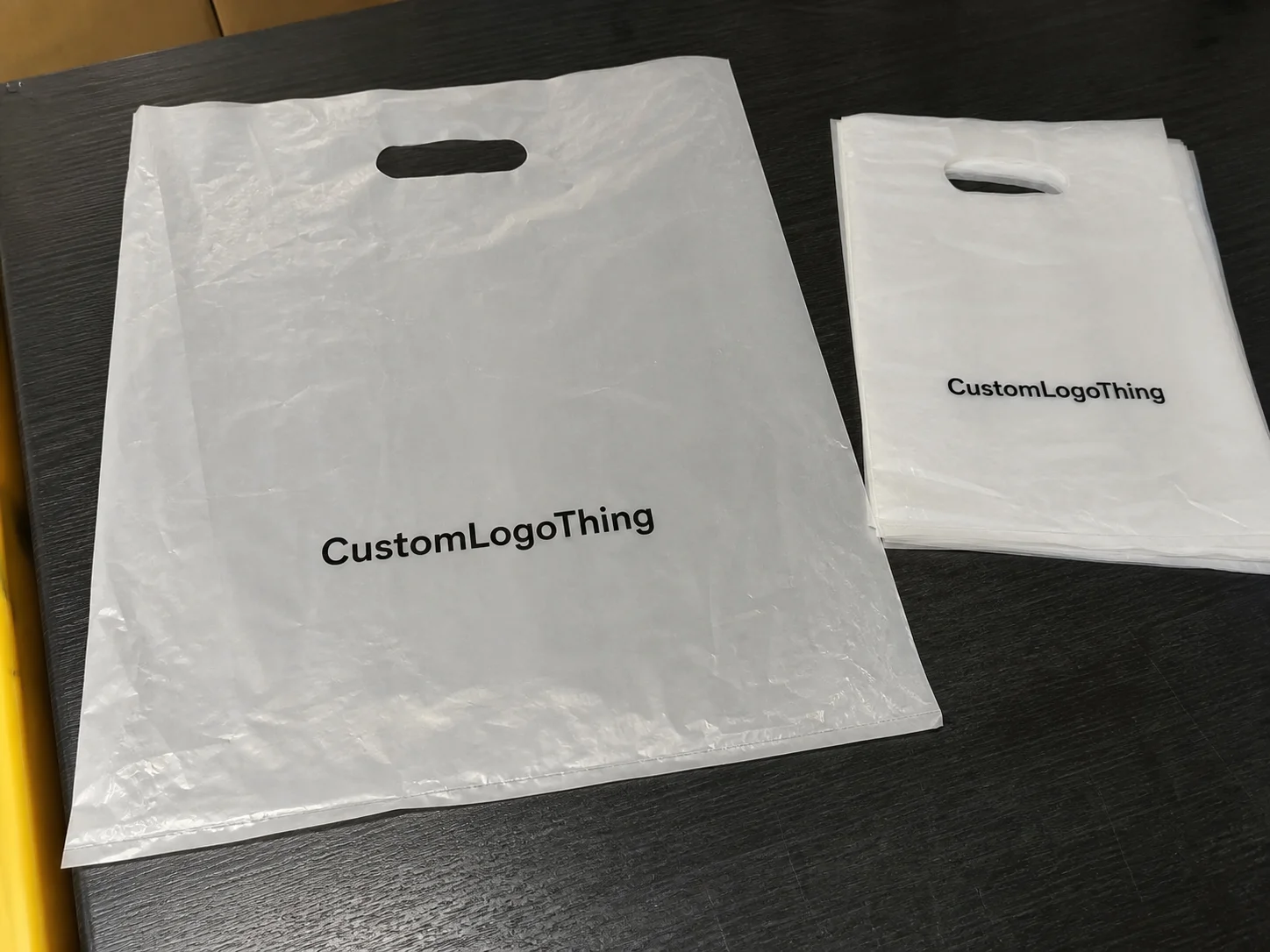
Buyer Fit Snapshot
| Best fit | Shipping Bags with Logo projects where brand print, material claims, artwork control, MOQ, and repeat-order consistency need to be specified before quoting. |
|---|---|
| Quote inputs | Share finished size, material target, print colors, finish, packing count, annual reorder estimate, ship-to region, and any compliance wording. |
| Proofing check | Approve dieline scale, logo placement, barcode or warning zones, color tolerance, closure strength, and carton packing before bulk production. |
| Main risk | Vague material claims, crowded artwork, missing packing details, or unclear freight terms can make a low unit price expensive after revisions. |
Fast answer: Shipping Bags with Logo: Film, Print, MOQ, and Carton Packing should be specified like a repeatable production item. The safest quote records material, print method, finish, artwork proof, packing count, and reorder notes in one written spec.
Production checks before approval
Compare the actual filled-product size with the drawing, then confirm tolerance on folds, seals, hang holes, label areas, and retail display edges. Reserve space for logos, QR codes, warning copy, and material claims before decorative graphics fill the panel.
Quote comparison points
Review material grade, print process, finish, sampling route, tooling charges, carton quantity, and freight assumptions side by side. A quote is only useful when the supplier can repeat the same color, closure quality, and packing count on the next order.
The first thing a customer sees is often the package, not the product. I’ve stood on enough packing lines in Shenzhen and watched enough ecommerce pallets roll out the door to know that brands will sometimes spend heavily on tissue, inserts, and thank-you cards, while the shipping Bags with Logo carrying everything to the doorstep get treated like an afterthought. That’s a costly habit, because shipping bags with logo do two jobs at once—they protect the order and introduce the brand before the box is even opened.
At Custom Logo Things, I think of shipping Bags with Logo as practical transit packaging with a branding job attached. Used well, they can improve package protection, tighten up order fulfillment, and make a simple ecommerce shipping experience feel more deliberate. Used poorly, they tear, stretch, blur the print, and make the whole shipment look cheap. The difference usually comes down to material choice, print method, and how honestly you match the bag to the product inside.
What Shipping Bags with Logo Actually Are
In plain terms, shipping bags with logo are Branded Poly Mailers, courier bags, or custom mailers built to move products safely through the mail while carrying a printed identity on the outside. On a factory floor, that usually means a polyethylene film bag with a pressure-sensitive seal strip, a printed outer surface, and a thickness measured in mils. I’ve seen brands overfocus on the insert card and underfocus on the mailer, even though the bag is what survives the sortation belts, the courier van, the mailroom bin, and the porch landing.
A typical branded poly mailer has a few core parts. The film thickness affects tear resistance and stretch. The seal strip needs enough tack to close quickly without peeling open in transit. The print surface has to hold ink cleanly so the logo doesn’t look washed out. Some mailers include a gusset for extra volume, while flat styles stay slim and simple. Opacity matters too, because a white or black exterior hides the contents better than a translucent film, and that can matter for both security and presentation. All of those details affect how shipping bags with logo perform once the order leaves the warehouse.
I’ve seen shipping bags with logo used most often for folded apparel, accessories, subscription boxes, beauty products, printed merchandise, and direct-to-consumer ecommerce shipments. A small fashion label sending out 200 units a week has very different needs from a cosmetics brand shipping fragile glass jars, but both still rely on transit packaging that looks sharp and closes reliably. If the bag is too thin, the customer notices. If the print is muddy, they notice that too. In packaging, the first impression usually rides on a piece of shipping materials most people barely think about.
“We thought the mailer was just a container,” one apparel client told me after a line audit in southern China. “Then we realized it was the first billboard our customer ever touched.” That was after we switched them from plain stock bags to shipping bags with logo in a 2-color print, and their warehouse team also reported fewer re-wraps because the new film held up better during packing.
That’s the real value here. Shipping bags with logo are not just decoration. They are a packaging tool, a brand cue, and, in many cases, a small but meaningful improvement to order fulfillment.
How Shipping Bags with Logo Protect and Promote
The protective side of shipping bags with logo starts with the material itself. Most are made from lightweight polyethylene film, often low-density polyethylene or a co-extruded blend that balances flexibility with puncture resistance. The seams are heat sealed, which means the bag is formed under controlled temperature and pressure so the edges hold during normal handling. Good mailers also use a pressure-sensitive closure strip, and some add tamper-evident features so the buyer can tell if the parcel was opened before delivery. On busy loading docks, that kind of detail matters more than people expect.
I once watched a mid-sized apparel brand lose an entire week of margin because they chose a thin, uncoated mailer for heavyweight knitwear with metal zippers. The zippers were working against the bag from the inside, and during courier handling a few seams split at the corners. Once we moved them to a thicker construction, the failure rate dropped fast. That’s the practical side of package protection: a mailer only has to fail a few times before the hidden cost becomes obvious.
On the branding side, shipping bags with logo act like a moving billboard. Every handoff point—warehouse picker, truck driver, sorting facility, apartment lobby, customer doorstep—puts the printed surface back in front of another pair of eyes. When the artwork is clear and the finish is clean, the bag reinforces recognition without needing any extra effort from the brand team. A good mailer can also improve the unboxing moment, especially for ecommerce shipping where the outer package is the first physical touchpoint customers have with your business.
The print itself can be done through flexographic printing, gravure, or digital printing, and the right choice depends on quantity, color count, and artwork complexity. Flexo is often a strong fit for larger runs with one to three colors. Gravure can deliver excellent consistency for higher volumes, though tooling costs are higher. Digital printing makes sense for shorter runs or more detailed artwork, especially when a brand wants to test different graphics before committing to a larger order of shipping bags with logo.
There’s also room on the bag for useful information, which is where things get smarter. I’ve helped brands print social handles, QR codes, care messaging, and return instructions without crowding the design. The trick is restraint. A bag can hold more than a logo, but it should never look like a flyer. The strongest shipping bags with logo usually keep the message tight: one bold mark, one supportive line, and plenty of clean negative space.
For brands comparing formats, it helps to remember that shipping bags with logo are just one piece of the broader packaging system. If the shipment needs a rigid structure, Custom Shipping Boxes may be the better fit. If the goal is fast packing and low weight, Custom Poly Mailers are often the sweet spot. And if you’re building a full packaging program, Custom Packaging Products lets you coordinate the whole set instead of treating each item as a separate purchase.
For quality and testing standards, I like to point people toward the practical references rather than the marketing claims. The ISTA test methods are useful when you want to simulate real shipping stress, and the EPA is a good source when your team is weighing recyclability and environmental claims. If you’re sourcing FSC-certified paper inserts alongside plastic transit packaging, FSC is the certification body many buyers ask about.
Key Factors That Affect Materials, Cost, and Performance
Material selection is where most shipping bags with logo projects either win or get expensive later. Low-density polyethylene is still common because it is light, flexible, and cost-efficient. Co-extruded film can improve strength by combining layers with different properties. Recycled-content film may support sustainability goals, though the exact feel and print behavior can vary from one supplier to another. Opaque constructions hide contents better, while translucent versions can reduce material use or create a lighter visual style. There is no universal best choice; the right call depends on the product, the route, and the brand’s tolerance for risk.
Thickness, usually measured in mils, is one of the most important performance variables. A 2.0 mil bag feels very different from a 3.5 mil bag when you stretch it around sharp edges or heavy inserts. Thicker film usually improves puncture resistance and reduces tearing, but it can also add freight weight and material cost. In a warehouse shipping 10,000 orders a month, that small difference can show up in both spend and handling speed. I’ve seen a team save a few cents per bag, only to spend much more on replacements after a run of damaged returns. Cheap shipping materials are not cheap if they fail in transit.
Pricing is driven by more than film thickness. Bag size matters because larger bags consume more raw material and more press time. Print coverage matters because a full-bleed design needs more ink and more setup control than a simple one-color logo in the corner. Tooling and custom sizing can add cost, especially if the order requires a new die, new sealing setup, or special dimensions outside standard stock. Quantity has a big effect too. At 5,000 pieces, the per-unit cost is usually much higher than at 50,000 because the setup is spread over fewer bags. That is why brands ordering shipping bags with logo often find that volume planning pays off faster than negotiating a tiny unit discount.
Here’s a simple way I explain it to buyers: if you want a black mailer with a white one-color logo, standard size, and no special finish, you are asking for a straightforward production run. If you want three Pantone colors, a custom dimension, soft-touch lamination, and recycled-content film, you have a more technical job on your hands. Both can be done, but they do not cost the same. Many first-time buyers underestimate how much artwork complexity affects press time, especially on shipping bags with logo where registration has to stay sharp across a flexible surface.
Fulfillment factors matter too. If your warehouse uses automatic bagging equipment, the seal area, film stiffness, and opening width need to work with the machine. If the product is bulky, the bag has to stretch without causing stress points at the seams. Dimensional weight can also influence the right format, because oversized packaging may cost more to ship even when the item inside is light. A smaller, better-fitted mailer often helps keep ecommerce shipping costs under control while making the parcel look neater on arrival.
In one supplier negotiation I handled, a buyer insisted on the cheapest possible mailer, then discovered their return rate was rising because the bags were barely wider than the product. We changed the spec by just 25 mm on the width and 10 mm on the seal flap, and the issue disappeared. That kind of fix is common with shipping bags with logo: a small dimension change can save a lot of headaches.
How to Order Shipping Bags with Logo
Start with the product dimensions and the shipping method. Measure the item at its widest point, not just its folded size, and account for any inserts, hang tags, accessories, or cartons that go inside. A mailer that fits perfectly in theory can feel too tight in real life once the warehouse team starts packing at speed. I always tell clients to ship a few test samples through the actual order fulfillment process before approving final specs for shipping bags with logo.
- Measure the product in its final packed state, not just on a desk.
- Choose the bag style: flat poly mailer, bubble mailer, gusseted mailer, or tamper-evident bag.
- Prepare artwork in vector format, ideally AI, EPS, or a clean PDF.
- Request a proof and check logo placement, opacity, and seal area.
- Confirm production details such as quantity, carton counts, and freight method.
Style choice should follow product behavior, not brand preference alone. Flat poly mailers are ideal for folded apparel and soft goods. Bubble mailers add cushioning for small fragile items. Gusseted mailers work better when the contents need extra depth. Tamper-evident bags suit security-sensitive shipments or items that must clearly show if they were opened. The best shipping bags with logo are the ones that solve the actual shipping problem first and look good second, though in a strong design the two goals line up naturally.
Artwork prep is another point where experienced buyers save money. Vector files keep edges crisp, especially on flexible films where small image defects can become very visible after printing. Pantone targets help the press operator match color more consistently across batches. A clean logo placement also matters because the bag surface is long and narrow, which can make busy artwork look awkward if the layout is not planned for a mailer shape. When a designer sends over a dense file with ten elements and tiny text, I usually recommend simplifying before the plates are made. That saves time, waste, and a lot of back-and-forth.
Proofing should not be treated as a formality. Review the digital mockup and, if possible, a pre-production sample. Check seal performance by opening and closing the strip a few times. Look at print clarity under warehouse lighting, not just bright office light. Confirm that barcodes, return instructions, or address zones will not clash with the branding if those details are part of the design. In real packaging operations, a design that looks perfect in a PDF can become difficult once the line starts moving.
Timeline usually includes artwork approval, plate or setup preparation, printing, slitting, sealing, counting, carton packing, and freight. Stock-size mailers with simple decoration move faster than fully custom constructions. A typical run can take 12 to 20 business days after proof approval depending on complexity and workload, though the exact timing depends on material availability and factory scheduling. I’ve seen brands promise launch dates before they had proof approval, and that always raises pressure on the order. Planning early is the cleanest path for shipping bags with logo, especially when a seasonal drop or promotion has a hard deadline.
Inside the factory, the process should include checks at multiple points. Film extrusion has to stay consistent. Slitting has to keep widths accurate. Printing needs registration control. Sealing must create a flat, durable closure. Counting and carton packing should protect the bags from scuffing before shipment. When those controls are tight, the final result is a shipping bag that feels easy to use and looks polished in the customer’s hands.
Common Mistakes Brands Make with Custom Shipping Bags
The first mistake is choosing a bag that is too small. It seems harmless on paper, but in practice it strains the seams, makes the closure harder to use, and gives the package a cramped, low-end appearance. I’ve seen teams try to save 2 mm on width and end up with a bag that buckles around the product. With shipping bags with logo, the fit should look intentional, not squeezed.
The second mistake is going too thin on film to reduce cost. Thin film can be fine for very light items, but if the product has a zipper, a corner, or any sharp accessory, the tear risk rises quickly. A few damaged shipments can cost more than the savings from the cheaper material. That is especially true in ecommerce shipping, where the package may travel through multiple handoffs before delivery.
Another common problem is crowded artwork. A logo loses impact when it sits inside a noisy design with too many colors and too much text. Low-resolution files are just as bad. On flexible shipping materials, fuzzy artwork can look even worse because the surface may shift slightly during handling. If the logo has to work hard to be seen, the packaging is doing too much and the brand is doing too little.
Brands also forget to test real shipping conditions. A bag that closes nicely in the office may behave differently in a 90-degree warehouse, on a cold dock, or under rough courier sorting. Machine compatibility matters too if automated packing is part of the workflow. Weather exposure can matter as well, especially for moisture-sensitive products. A proper test should include the actual product, its insert stack, and the route it will travel. Shipping bags with logo are only as good as the conditions they are built for.
Expert Tips for Better Branding, Better Costs, and Better Results
Keep the logo bold and simple. That advice sounds plain, but it works. On a smaller mailer, a large mark with clear spacing will outperform a crowded layout almost every time. I’ve walked through enough printing lines to know that clarity survives shipping better than cleverness. If the brand mark can be recognized from six feet away, the shipping bags with logo are doing their job.
Use one or two brand colors strategically instead of trying to print everything at once. Clean graphics often feel more premium than busy layouts, especially on matte black, white, or recycled-content film. If the brand has a strong primary color, let that lead. If the mailer is for a minimalist label, a single ink color can actually look more upscale than a full rainbow design. More ink is not always better.
Match the bag to the product category. Fashion and accessories often benefit from presentation, so a smooth, well-printed mailer makes sense. Hard goods may need more puncture resistance and a thicker gauge. Beauty brands shipping liquids or glass should pay special attention to package protection and may need a padded or reinforced style. Shipping bags with logo are not one-size-fits-all, and the best buyers know that the product category should drive the construction.
Ask for sample testing under real warehouse conditions. I like to see a test that includes a full pack-out, seal speed checks, and a short transit simulation if possible. You do not need lab theater to learn something useful. Even a simple test of 25 to 50 units can reveal whether the film is too slippery, the seal strip is too weak, or the print smudges under handling. That kind of early feedback is worth far more than a prettier proof file.
Add utility details only when they reduce friction. Return instructions, QR codes, and handling notes can help, but they should earn their place on the bag. If a detail does not improve the customer experience or the warehouse workflow, leave it off. The best shipping bags with logo are easy to understand in one glance and easy to use in a fast-moving fulfillment line.
Practical Next Steps Before You Place an Order
Before you request pricing, build a short spec sheet. Include product dimensions, target quantity, artwork files, shipping method, bag style, preferred thickness, and any must-have features such as tamper evidence or recycled content. That one page can save days of back-and-forth. It also helps vendors compare apples to apples, which is critical if you want true pricing on shipping bags with logo instead of vague quotes.
Request quotes using the same specifications from each supplier. If one vendor is quoting a 2.0 mil standard bag and another is quoting a 2.5 mil custom size with four-color print, the numbers will not tell you much. Compare the actual construction, setup, and freight assumptions. In my experience, the best deal is often the one that fits the operation cleanly, not the one that looks cheapest on the spreadsheet.
Ask for a sample or proof and inspect it with the real product. Check seal quality, logo placement, color accuracy, and whether the mailer feels right when it is fully packed. If the package has to stack in cartons or ride through a fulfillment center conveyor, test that too. Shipping bags with logo should feel like a natural part of your shipping materials, not a special project that falls apart under daily use.
Confirm lead time, carton counts, and freight expectations before you approve the order. A few extra cartons can affect storage. A longer production schedule can affect launch dates. A poorly planned freight route can erase any savings from a lower unit cost. I’ve watched brands buy the right packaging and still create a mess because they ignored the logistics around it. Good transit packaging has to fit the factory, the warehouse, and the carrier network.
My final takeaway is simple: start with function, then design for brand impact, and you will usually end up with shipping bags with logo that look polished, ship reliably, and make every delivery feel intentional. If you want a bag that protects the product, supports ecommerce shipping, and carries your identity clearly, the smart move is not to overcomplicate the process. It is to specify the right material, the right print method, and the right fit from the start.
FAQs
What are the best shipping bags with logo for clothing brands?
Flat or lightly Gusseted Poly Mailers usually work well for folded apparel because they are lightweight, clean-looking, and cost-efficient. If the garments include zippers, buttons, pins, or hard trims, choose a thicker film so the bag holds up better during transit and handling. For many fashion labels, shipping bags with logo in a simple 1-color design give the best mix of presentation and cost control.
How much do custom shipping bags with logo usually cost?
Pricing depends on bag size, film thickness, print colors, quantity, and whether you need custom sizing or special features. One-color logos and larger order volumes usually lower the per-unit price, while multi-color artwork and smaller runs raise it. If you want a ballpark, the real answer comes after spec review, because shipping bags with logo can vary a lot by construction and print coverage.
How long does it take to produce branded poly mailers?
Timeline usually includes artwork setup, proof approval, production, quality checks, packing, and freight transit. Stock-size bags with simple printing move faster than fully custom constructions, so planning early helps avoid rush fees. For most projects, the biggest delay is not the press run itself; it is waiting on final artwork approval for the shipping bags with logo.
Can shipping bags with logo be recycled?
Some poly mailers can be recycled through designated store drop-off programs if they are clean and made from polyethylene film. Recycled-content options are also available, but recyclability depends on the exact construction and local recycling rules. If sustainability is a priority, ask for the material spec sheet and confirm whether the shipping bags with logo meet your market’s recycling requirements.
What logo file works best for custom shipping bags?
Vector artwork such as AI, EPS, or PDF is usually best because it keeps edges crisp during printing. High-resolution PNGs or JPEGs may work for simple projects, but vector files give the cleanest results and the easiest proofing. That matters more on shipping bags with logo than on many flat graphics, because flexible film tends to expose weak artwork faster.