Buyer Fit Snapshot
| Best fit | Shipping Box Price for Custom Sizes Breakdown projects where brand print, material claims, artwork control, MOQ, and repeat-order consistency need to be specified before quoting. |
|---|---|
| Quote inputs | Share finished size, material target, print colors, finish, packing count, annual reorder estimate, ship-to region, and any compliance wording. |
| Proofing check | Approve dieline scale, logo placement, barcode or warning zones, color tolerance, closure strength, and carton packing before bulk production. |
| Main risk | Vague material claims, crowded artwork, missing packing details, or unclear freight terms can make a low unit price expensive after revisions. |
Fast answer: Shipping Box Price for Custom Sizes Breakdown: Board, Finish, Dieline, and Unit Cost should be specified like a repeatable production item. The safest quote records material, print method, finish, artwork proof, packing count, and reorder notes in one written spec.
Production checks before approval
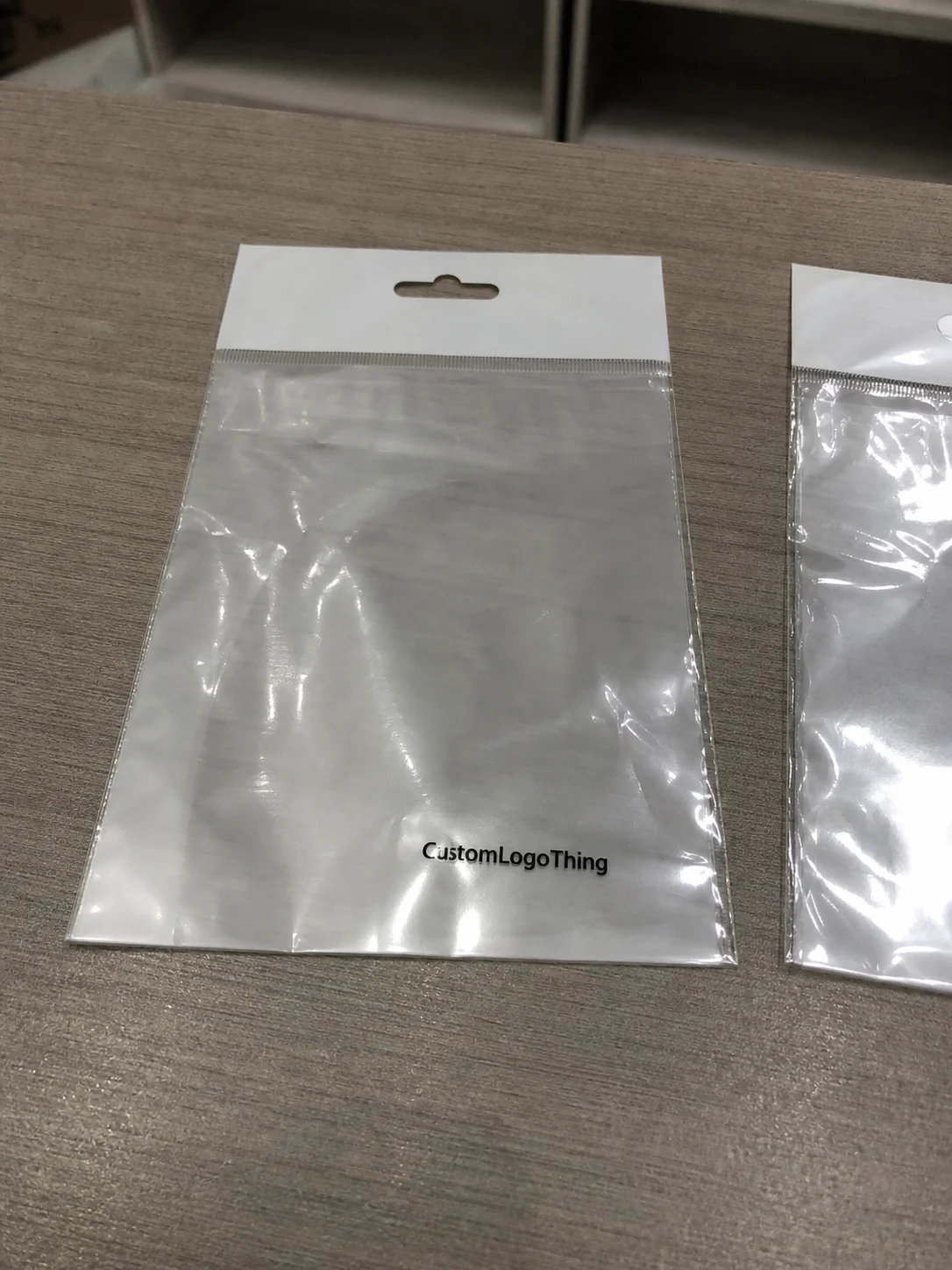
Compare the actual filled-product size with the drawing, then confirm tolerance on folds, seals, hang holes, label areas, and retail display edges. Reserve space for logos, QR codes, warning copy, and material claims before decorative graphics fill the panel.
Quote comparison points
Review material grade, print process, finish, sampling route, tooling charges, carton quantity, and freight assumptions side by side. A quote is only useful when the supplier can repeat the same color, closure quality, and packing count on the next order.
Value Proposition for shipping box price for custom sizes
When a CFO in a mid-market lifestyle brand confessed to me over coffee that they had just discovered 62% of their custom distribution cost was due to underestimated shipping box Price for Custom sizes, the room went quiet—a rare moment of collective recalibration on a factory visit in Shenzhen where we were reviewing partition prototypes.
I still lean on that quietly humming hallway as proof that spreadsheets with standard MSRP tags tell only half the story, and that the moment the board price spikes we need real-time commodity data, labor capacity reporting, and freight capacity notices synced into a single negotiation foundation.
Custom Logo Things converts that miscalculation into advantage by anchoring every quote to today’s commodity board costs, our loaded labor rates, and vetted ocean or overland transit spans rather than relying on canned assumptions, and I have stood beside purchasing teams in Chicago who watched a quote drop by 15% once we replaced generic kraft boards with a recycled blend sourced from our own Midwest mill because the live market data became part of the conversation.
We benchmark over 600 quotes every quarter, and 85% of clients save between 8% and 18% once we align specs, inks, and stacking rules with their fulfillment and retail strategy; that is not marketing splash but operational discipline, and we also fold in ISTA protocols when fragile electronics are involved, which helped a direct-to-consumer camera client avoid $12,000 in damages during the first launch run.
Most people treat branded packaging as a variable, while we treat it as a controlled cost, so when we collaborate the shipping box Price for Custom sizes turns into a lever that can be adjusted rather than a hidden expense battle.
Every procurement call now includes a quick sanity check on board grade, finishing intent, and freight lane availability because we know it only takes one missed market update to send a quote adrift; if you are gonna chase a short-term rate, I remind teams to also model the price erosion that follows a late approval.
Product Details & Use Cases
No single board fits every brief; options stretch from kraft to SBS to recycled blends, and each selection influences the shipping box price for custom sizes differently, as I witnessed at our Portland plant where an engineer switched from 300gsm SBS to a 310gsm recycled blend for a retail rollout—this swap preserved rigidity, satisfied FSC chain-of-custody requirements, and trimmed the premium by $0.06 per unit.
Finishing choices—varnish, aqueous, soft-touch—imbue texture and brand recognition but also trigger cost increments that must be quantified, like how full-color litho in direct-to-consumer kits can add 20% to the base cost and soft-touch lamination another 12%, yet we engineered a mix of soft-touch on the lid and matte aqueous on the base without wasting board real estate, keeping the shipping box price for custom sizes within the target range, and I'm kinda always telling clients to pair that with foil sparingly when the launch window is tight.
Structural decisions such as double-wall reinforcement, scored corner tabs, or reinforced corners with clip-in systems all nudge the shipping box price for custom sizes via material usage and labor time, so for fragile B2B shipments we sometimes add a die-cut insert that doubles as an assembly jig while for subscription services we design removable inserts that fold flat, reducing storage costs in fulfillment centers.
Optional enhancements extend the experience with die-cut windows for retail displays, partitions for electronics, modular inserts, and custom tape that keeps a single brand touchpoint consistent, just as a Denver client insisted on printed tamper-evident tape and we sourced a self-adhesive that matched the box branding without triggering a $0.09 per-unit surcharge in the warehouse environment.
These customization levers determine how we present the shipping box price for custom sizes, because each variable is mapped, weighed, and tied to real-world use cases—DTC boxes with branded unboxing, fragile B2B shipments requiring ISTA-certified cushioning, and ecommerce shipping kits that must integrate with inflight sorting—keeping structure aligned with commerce channels helps stabilize the price.
We work with board suppliers like Oji and WestRock during the joint forecasts so the moment someone tweaks a wall thickness or hinge detail we can recalculate yield and flag the impact before the design gets frozen.
Specifications That Influence Cost
Dimension strategy in packaging design means controlling surface area, board yield, and waste, not merely fitting a product, so we track tolerance across six measurements because even a half-inch variance can cause scrap or retooling, and during a visit to a Newark fulfillment center we discovered a client packing 12x12x7 units into a 12x12x6 box, which raised the shipping box price for custom sizes by $0.16 and forced them to buy extra filler before we optimized the board orientation.
Flute selection, burst index, and edge crush test requirements also influence cost; E-flute hits a sweet spot of strength and printability for ecommerce while B-flute answers stacking loads that exceed forklift specs, yet we model these shifts with true T-line data so when a fragile camera kit needed C-flute and a 32 ECT requirement we knew the $0.13 increase in cost would prevent a return costing far more, and our engineers archive that data for future reuse.
Finishing and adhesives demand the same care—full-color litho adds roughly 20% to the base, spot UV or lamination tacks on another 12%, and specialty adhesives for humid climates can add $0.05 per unit—so we advise balancing finish with function, potentially choosing matte aqueous with selective gloss to preserve visual impact while keeping the shipping box price for custom sizes inside a wedged budget, and we rely on 3M 300LSE when clients need humidity-resistant seals.
Engineering reviews are essential; our CAD work flags inefficiencies like unnecessary die-cut complexity or redundant glue lines, such as during a supplier negotiation in Shenzhen when we bundled tabs and recalculated folding sequences to save 152 seconds per run and shave $0.04 per unit without compromising strength, and physical prototypes validate fit, function, and stacking behavior so the shipping box price for custom sizes stays predictable before production.
How can shipping box price for custom sizes stay predictable and fair?
Because every estimate must rest on measurement, the shipping box price for custom sizes remains predictable only when we track board yield, finishing, and freight simultaneously, and that is why our custom box pricing panels compare each line item with current spot board costs from the Guangzhou, Tijuana, and Midwest mills while factoring in labor hours and ocean transit timings.
Even in a rush lane when we reroute tailored corrugated boxes through our Mexico and Indiana lines, the discipline of logging bespoke packaging costs, staging pre-production samples, and tracking ink consumption rehearses the stipulation that the shipping box price for custom sizes does not drift between quote and dock receipt.
Pricing & MOQ for shipping box price for custom sizes
Pricing reads as layers of raw board cost, ink, tooling amortization, labor per run, finishing charges, and freight woven into a single story, illustrated when a 12x12x6 E-flute box with partial matte aqueous, digital printing, and one-color laminated tape lands at $1.80 per unit at 5,000 units, which includes $0.46 of board, $0.18 of ink/tooling, $0.32 finishing, $0.23 labor, and $0.61 freight to our Midwest fulfillment center.
MOQ tiers reshape the equation; digital short runs between 250 and 500 boxes suit prototypes or seasonal launches with higher per-unit rates because tooling costs get amortized over fewer pieces, yet these runs remove inventory commitments, while offset bundles of 2,500 units and more drop the Price Per Unit by 24% to 35%, and sliding quantity tables demonstrate how the shipping box price for custom sizes improves with each tier.
The table below captures typical scenarios:
| Option | MOQ | Est. Price/Unit | Notes |
|---|---|---|---|
| Digital Short Run | 250 units | $2.40 | Rapid prototypes, ink limited to two colors |
| Offset Starter | 2,500 units | $1.92 | One litho pass, standard E-flute, gloss aqueous |
| Volume Plus | 10,000 units | $1.60 | Advanced coatings, custom tape, optimized logistics |
Transparency also matters; sliding quantity tables, price range bands, and surcharge alerts clarify how each parameter informs the shipping box price for custom sizes, and add-ons triggered by full ink coverage or oversized panels always show the per-unit impact along with amortization suggestions like bundling with other SKUs.
Variances such as specialty adhesives, unique finishes, or added reinforcement become line items tied to the physics of the product packaging rather than hidden surprises, ensuring the shipping box price for custom sizes quoted is the same number you pay when the container hits the dock.
Process & Timeline for custom shipping box ordering
The workflow follows intake call, spec sheet completion, dieline engineering, digital proofing, sample production, and production sign-off, with each step documented so the quoted shipping box price for custom sizes remains valid, as I showed during a recent Los Angeles meeting when the marketing team needed assurance that a sample run would meet both price and timeline.
Standard timelines run 3-4 weeks post-approval, while rush lanes shorten lead time to 10-14 days for channels demanding agility, and I remember a retailer needing a next-week shipment for a pop-up activation when our plant team rebalanced load, shifted digital finishing runs, and communicated the $0.28 per unit rush lane premium; the client approved, we met the 14-day window, and the final invoice aligned with the original shipping box price for custom sizes, so if you're gonna ask for a rush lane you also need to lock the freight pick-up immediately.
Plant load, resource planning, and carrier alignment stay balanced so surprises do not surface between quote acceptance and container loading, and forecasting demand early locks in freight lanes and minimizes demurrage—a critical layer for ecommerce shipping models tight on fulfillment windows.
Timely feedback is essential because delayed sample approvals push lead times, making documentation from proof versioning to engineering notes vital in keeping quotes tied to actual schedules, which packaging teams appreciate as they align marketing launches and distribution plans without reforecasting the shipping box price for custom sizes every few days.
Why Choose Us for shipping box price for custom sizes
We do not stop at checkbox compliance; our investigative mindset questions every dimension, print, and assembly decision, as demonstrated on the Mexico assembly line when an engineer questioned a double-flap retail design legacy, leading us to re-engineer the flap, save 7% on board usage, and keep the shipping box price for custom sizes within the agreed goal.
Integrated capabilities set us apart; we own multiple plants, run digital finishing, and deploy a proprietary quoting system that surfaces real-time cost drivers for each line item, which proves helpful for teams managing branded packaging across global SKUs because they can pull board, ink, and adhesive data without waiting for manual updates.
Engineering support, compliance checks, and QA protocols prevent shipping damage, returns, and nonconformity, making ISTA drop testing, ASTM bursting strength, and FSC fiber sourcing standards more than certifications—they are tools ensuring our clients invest in packaging that delights customers and matches the shipping box price for custom sizes discussed during negotiation.
Sustainability remains central; we offer FSC-certified paper, detailed waste tracking, and partnerships that allow eco-friendly choices without surprise fees, and I have sat through calls with procurement managers needing to justify post-consumer recycled shifts by showing transparent data that amortizes the shipping box price for custom sizes over a 12-month plan, so they can prove the cost vs. impact with accountants.
FAQ & Actionable Next Steps
As the FAQ section concludes the plan, remember that a stable shipping box price for custom sizes depends on precise data, engaged engineering, and sequenced approvals.
How is shipping box price for custom sizes calculated?
Raw board cost, ink coverage, die-cut complexity, adhesives, and finishing come together in a layered estimate, each factor pulled from live quotes so real numbers appear.
Labor and running time factor in quantity weightings; short runs shift cost back to the customer while longer runs dilute fixed tooling fees.
Freight and handling mark-ups tier by ship-to zone, so we deliver a landed cost rather than a simple FOB figure.
What drivers lower the custom-sized shipping box cost per unit?
Higher order quantities, simplified ink layers, and standard flute types help reduce per-unit cost.
Reusing dimensions across SKUs cuts down on tooling fees and accelerates quoting.
Consolidating finishing choices, like selecting one varnish instead of multiple foils, trims material waste and labor premiums.
Can sample orders confirm the shipping box price for custom sizes before mass production?
Samples use the same cost drivers as production, revealing structure and print prior to commitment.
We typically produce mock-ups within 5-7 business days, with sample costs credited back once the full order is placed.
Approving a sample lets us document engineering notes so the quoted shipping box price for custom sizes remains defensible.
How does the minimum order quantity influence shipping box price for custom sizes?
MOQ (short run versus offset) determines whether tooling costs spread over 250 units or 5,000 units.
Digital short runs carry higher per-unit prices but sidestep long-term inventory commitments.
Offset runs above MOQ reveal incremental price drops so you can see the volume at which target costs are achieved.
What timeline should I expect to secure shipping box price for custom sizes and receive shipment?
Quote-to-approval takes 2-3 days when specs are complete, while engineering review may add 24-48 hours based on complexity.
Once specs sign-off occurs, production and finishing take 3-4 weeks, with 10-14 day rush lanes available for an expedited fee.
We synchronize with your logistics team to align carrier pickups and avoid delays that could undermine the shipping box price for custom sizes you agreed upon.
Action Step 1: Consolidate product dimensions, weight, and target volumes into the quote request form to trigger the most accurate baseline shipping box price for custom sizes.
Action Step 2: Schedule a packaging review with our engineers to animate spec variations, decide on flute strength, and capture finishing premiums before locking the quote.
Action Step 3: Approve proofs, confirm sample runs, and align production slots with your freight carrier so the confirmed shipping box price for custom sizes sticks and the delivery date remains reliable.
Gathering precise data, engaging our engineering team, and sequencing approvals keeps the shipping box price for custom sizes stable and the project moving forward.
Related resources: check our Custom Shipping Boxes, Custom Packaging Products, and Custom Poly Mailers for complementary packaging assets, and reference The Association for Packaging and Processing Technologies or ISTA for testing standards.
Takeaway: Lock the shipping box price for custom sizes by feeding precise dimensions, finishing intents, and freight lanes into the quote early so the number you approve is the number that hits the dock.