Buyer Fit Snapshot
| Best fit | Shipping Boxes Custom Printed projects where brand print, material claims, artwork control, MOQ, and repeat-order consistency need to be specified before quoting. |
|---|---|
| Quote inputs | Share finished size, material target, print colors, finish, packing count, annual reorder estimate, ship-to region, and any compliance wording. |
| Proofing check | Approve dieline scale, logo placement, barcode or warning zones, color tolerance, closure strength, and carton packing before bulk production. |
| Main risk | Vague material claims, crowded artwork, missing packing details, or unclear freight terms can make a low unit price expensive after revisions. |
Fast answer: Shipping Boxes Custom Printed: Board, Finish, Dieline, and Unit Cost should be specified like a repeatable production item. The safest quote records material, print method, finish, artwork proof, packing count, and reorder notes in one written spec.
Production checks before approval
Compare the actual filled-product size with the drawing, then confirm tolerance on folds, seals, hang holes, label areas, and retail display edges. Reserve space for logos, QR codes, warning copy, and material claims before decorative graphics fill the panel.
Quote comparison points
Review material grade, print process, finish, sampling route, tooling charges, carton quantity, and freight assumptions side by side. A quote is only useful when the supplier can repeat the same color, closure quality, and packing count on the next order.
On a busy packing line in Shenzhen, I once watched a brand owner open a pallet of shipping Boxes Custom Printed and grin before the first product even went in. That reaction happens more often than people think, because the box is usually the first physical piece of branded packaging a customer touches, and it sets the tone for the whole delivery. I still remember the hum of the conveyor, the smell of fresh corrugated board, and the way the ink held under the fluorescent lights; it was one of those moments that makes the job feel very real.
That is why shipping boxes custom printed are not just about putting a logo on corrugated board. They sit at the intersection of product packaging, protection, and package branding, and the best versions do all three jobs without driving freight bills through the roof. I have seen brands spend money on beautiful inserts and premium tape, then lose the effect because the outer shipper was plain, crushed, or sized badly for ecommerce shipping. That part is kind of painful to watch, honestly, because the fix was usually sitting right there in the box spec.
Why shipping boxes custom printed are more than packaging
Many customers never see the product first, they see the shipper. If the outer carton is clean, well-printed, and sized correctly, shipping boxes custom printed become a marketing asset before the box is even opened. I saw this clearly during a client visit in Dongguan, where a subscription brand had doubled its repeat purchase rate after changing from plain kraft shippers to simple two-color Custom Printed Boxes with a strong panel layout. The owner told me the boxes “felt like the brand finally showed up,” which was a pretty fair summary.
Plain corrugated shippers are built mainly for transport. They protect contents, stack well, and keep unit costs low. Branded outer cartons do that too, but they also carry the logo, message, handling cues, and sometimes a QR code or social prompt. In practice, shipping boxes custom printed can be made from single-wall corrugated, double-wall corrugated, kraft liners, or white-top liners, depending on how much crush resistance and print clarity the job needs. The substrate choice matters just as much as the artwork, and sometimes more.
I usually tell clients to think of the carton as a working part of the brand, not a decorative afterthought. A good box balances print quality, crush strength, transit durability, and cost. That balance matters even more for retail packaging programs that move through warehouses, parcel networks, and sometimes store backrooms before they ever reach the shopper. If the carton buckles in a warehouse corner or scuffs on a steel conveyor, the customer never sees the polished mockup the team approved in the conference room.
shipping boxes custom printed are also useful for practical reasons that get overlooked. A printed panel can show SKU codes, product families, orientation arrows, or unboxing instructions. In one meeting with a skincare brand, I watched their operations manager save nearly 12 minutes per carton at pack-out simply because the printed top flap identified the correct product line faster than scanning each plain box. Those are small gains, but on a 5,000-unit run, they add up fast. Multiply that across a year and you start talking about real labor savings, not marketing fluff.
“We thought the logo was the point. Turns out the box structure mattered just as much.” That was a line from a fulfillment manager I worked with in Ohio after three damage complaints and one costly reprint.
If you are comparing formats, take a look at a dedicated range of Custom Shipping Boxes and then compare those options with other Custom Packaging Products to see how outer cartons fit into the larger packaging system. For lighter shipments, some brands also pair their box program with Custom Poly Mailers when the product weight and breakage risk make sense. The right mix is usually less about trend and more about matching the shipping lane.
How custom printed shipping boxes are made
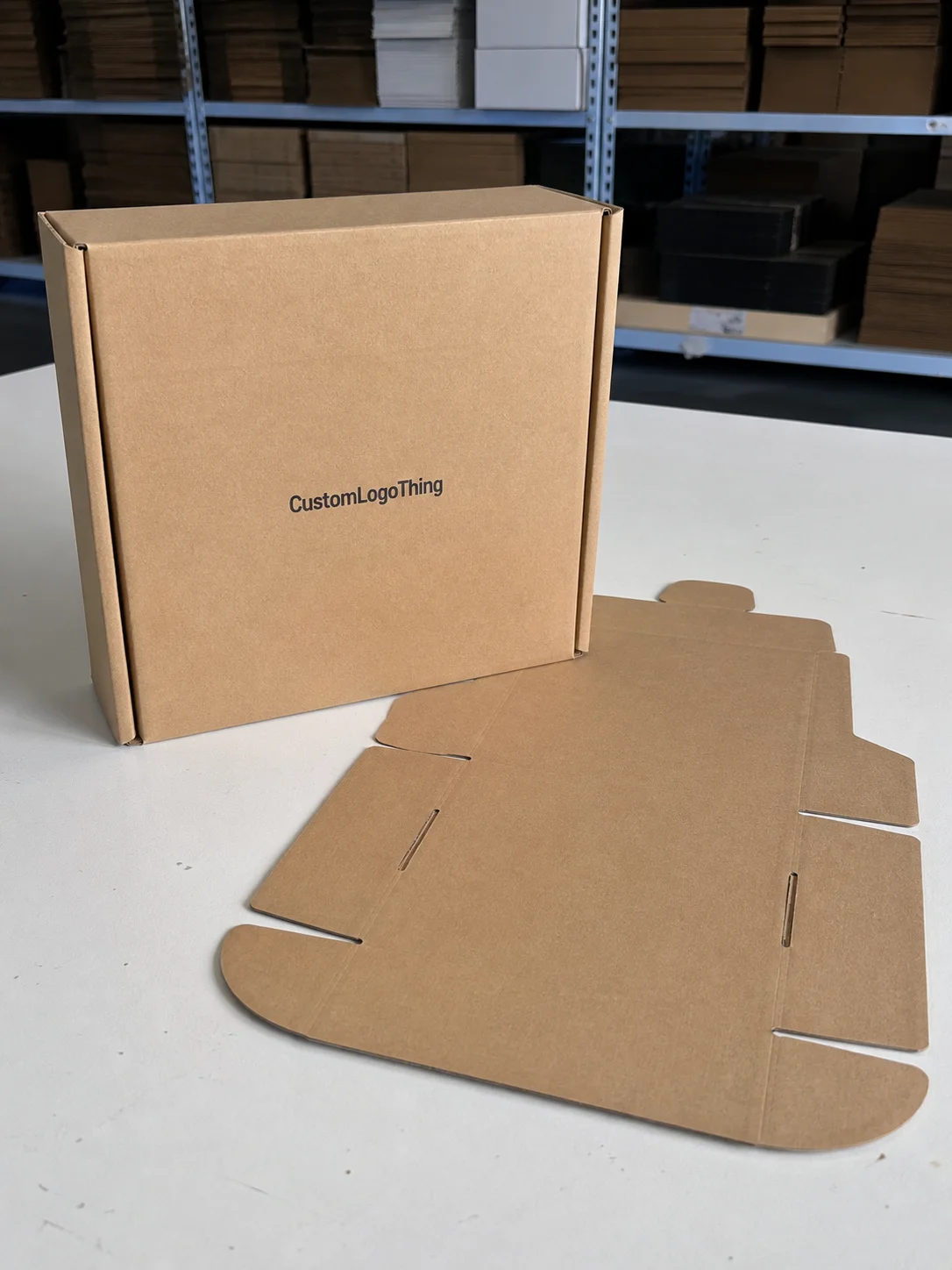
Making shipping boxes custom printed starts with the dieline. That flat layout shows panel sizes, flaps, scores, glue areas, and the exact place where artwork will land after folding. When the dieline is right, everything downstream gets easier. When it is wrong by even 2 mm, the print can wrap badly around a seam or land too close to a tuck. That tiny error can turn into a very visible mistake once the carton is erected and stacked.
From there, the production path depends on print method and box style. Digital printing is often chosen for short runs, frequent design changes, or jobs with detailed graphics and quick turnaround. Flexographic printing is common when the order volume is higher and the design uses fewer colors. Litho-lamination comes into play when a premium appearance is needed, usually on heavy retail-style shippers or presentation cartons that still need shipping strength. In a plant, the difference is easy to spot: digital tends to move faster for small batches, while flexo and litho setups make more sense once the schedule and volume settle down.
On the corrugated line, sheets are fed through scoring, cutting, printing, and converting equipment. The plant may use water-based inks for a cleaner finish and easier handling. Some facilities also add coatings, like aqueous coating or a light varnish, to help the surface resist scuffing during order fulfillment. In my experience, those details Matter More Than people expect, especially when boxes slide across conveyors, shrink-wrap tables, or pallet edges. A carton that looks excellent off the press can pick up rub marks in a single afternoon if the finish is too fragile.
Good shipping boxes custom printed are not just printed and folded. The board grade, flute profile, liner choice, and print method all have to work together. A single-wall C-flute shipper with kraft liners behaves very differently from a double-wall BC-flute carton with a white-top liner. The first is lighter and usually cheaper; the second gives you more stacking performance and often a cleaner face for branding. There is no universal winner here, which is why experienced packaging teams look at the freight path, not just the mockup.
I once sat with a converter in Guangzhou who showed me three versions of the same carton: one with plain kraft, one with a white-top outer liner, and one with a full litho face. The client had assumed the artwork alone would decide the look, but board selection changed the whole result. That is the part many buyers miss. shipping boxes custom printed are a combination of structure and image, and you cannot separate the two without compromising something. The box has to survive the trip first; the branding sits on top of that reality.
For brands serious about sustainable sourcing, it also helps to ask about FSC-certified fiber and chain-of-custody documentation. The FSC standards are widely recognized, and many buyers now ask for them alongside print specs. For general packaging and material guidance, the Packaging School and packaging resources from PMMI are also useful references, especially if your team wants a broader technical vocabulary before ordering. I always tell first-time buyers that a quick conversation about fiber source, ink type, and finishing can prevent a lot of confusion later.
Key factors that affect quality, cost, and pricing
The price of shipping boxes custom printed comes down to a few hard variables: size, board grade, print coverage, number of colors, quantity, and finishing complexity. A small 8 x 6 x 4 inch mailer in one-color flexo is a very different job from a 16 x 12 x 8 inch double-wall shipper with full-panel graphics and a matte coating. Even the same design can price out differently depending on whether the run is 2,500 pieces or 25,000 pieces. That is why a quote without the full specification is usually just a starting point.
Larger runs almost always reduce unit cost because setup is spread across more cartons. Short runs, on the other hand, can make sense for test launches, seasonal promotions, or a new product line with uncertain demand. I have seen brands save money by starting with 3,000 shipping boxes custom printed instead of committing to 30,000, then adjusting the artwork after they saw how customers responded. A smaller first run is not a sign of caution; sometimes it is simply the smarter commercial move.
Tooling and setup deserve attention too. Plates for flexo, die charges, proofing, and prepress adjustments can all show up in the quote. Freight is another line that gets ignored too often. A box that looks inexpensive on paper can become expensive once you factor in pallet density, warehouse space, and the reality that oversized cartons raise shipping costs in ecommerce shipping. A half-inch of wasted space may not sound like much, but across 10,000 shipments it can affect both dim weight and damage rates. I have seen a few bad size decisions snowball into extra pallet positions and a mess of void fill, which nobody enjoys paying for.
Material choice changes the economics in a very practical way. Heavier-duty corrugated may cost more upfront, yet it can save money if it cuts down on crushed corners, returns, and replacement shipments. I have had clients insist on the cheapest board only to discover that the “savings” disappeared after 1.8% of their orders arrived damaged. shipping boxes custom printed should be judged on total landed cost, not just the carton price. That includes labor, damage, rework, and the time your team spends handling exceptions.
There is also the tradeoff between premium print quality and shipping efficiency. Rich full-color graphics look excellent, but heavy ink coverage and special coatings can increase cost and sometimes affect recycling or surface feel. That does not mean you should avoid them. It means the box should match the job. A beauty brand sending sample kits has different needs than a hardware supplier shipping metal parts. If the customer never handles the box for more than ten seconds, fancy coverage may be wasted; if unboxing is part of the sale, the print has real value.
One supplier in Taiwan told me, “Cheap boxes are expensive when they fail.” He was right, and I have seen that lesson repeated on enough loading docks to trust it.
How do you order shipping boxes custom printed?
Start with the product, not the artwork. Measure the length, width, and height of the item, then decide whether the box needs room for an insert, bubble wrap, or void fill. For shipping boxes custom printed, the internal dimensions matter more than the outer look, because the wrong fit causes movement, denting, and sloppy unboxing. If your team skips this part, the rest of the job gets harder very quickly.
Next comes the dieline and artwork placement. Your supplier should provide a flat layout showing exact print areas, bleed, glue zones, and any areas where graphics should not sit. This is where many brands stumble. If the logo sits too close to a seam, it may disappear once the carton is erected. If the barcode lands on a fold, scanners can struggle. Strong packaging design starts with respecting the structure, not fighting it.
After that, ask for a sample or proof. For simple jobs, a digital proof may be enough to confirm artwork placement. For more complex shipping boxes custom printed, I strongly prefer a physical sample or pre-production prototype. I have seen one client catch a 6 mm fit issue on a sample that would have caused 20,000 units of frustration at pack-out. That one decision saved them a rework charge and a missed launch date. You do not want to find out the box is off by a little bit after the pallets are already on a truck.
The timeline usually depends on how ready your files are. If artwork is final and the box style is standard, the process can move quickly. If custom tooling, structural revisions, or special inks are involved, the schedule stretches. A realistic production flow might be 3 to 5 business days for prepress and proofing, 7 to 15 business days for production, and then transit time based on destination. If your shipment has to cross an ocean or clear a busy port, add buffer. Always add buffer. Shipping lanes can get weird, and it is better to be early with a finished prototype than late with an apology.
To keep the project organized, I recommend this sequence:
- Confirm product size and shipping method.
- Choose board grade and box style.
- Request the dieline and place artwork.
- Review proof, colors, and text placement.
- Approve sample or prototype.
- Schedule production and freight together.
Good communication with the supplier matters just as much as the spec sheet. If you need matching inserts, secondary labels, or alternate carton sizes, bring that up early. It is far easier to align a full packaging system once than to patch it together later with rushed revisions. That is especially true if you are coordinating shipping boxes custom printed with another container format such as Custom Poly Mailers for part of the catalog. A quick alignment call can save a lot of back-and-forth later, and that is no small thing when a launch date is already crowded.
Common mistakes brands make with custom printed shippers
The biggest mistake I see is designing for appearance alone. A carton can look sharp on a screen and still fail in the real world if the ECT rating, burst strength, or flute choice is wrong. A 200 lb test carton may be fine for one product line, but not for a heavier shipment or a route with rough handling. If the box is part of a long distribution chain, test it like it will actually be used. That means stacking, vibration, and real warehouse handling, not just admiration from across the table.
Artwork errors are close behind. Low-resolution logos, color expectations based on a monitor instead of a press proof, and designs that wrap awkwardly around seams can all create avoidable problems. I once saw a cosmetics client approve a navy background that printed slightly warmer than expected because they had no physical sample. The boxes were still usable, but their brand team was disappointed because the shade looked different under warehouse lighting versus office lighting. shipping boxes custom printed are only as good as the proofing process behind them, and proofing on a backlit screen is not enough when exact color matters.
Another common issue is ordering a carton that is too large. Extra empty space increases product movement, adds dunnage cost, and can inflate shipping rates. Larger boxes also invite corner crush if the contents do not support the panel walls. A tighter fit, paired with the right insert, usually performs better and costs less in the long run. I have watched teams add more air pillows to compensate for a box that should have been resized from the start, which is basically paying twice for the same mistake.
Lead times get underestimated all the time. Custom tooling, plate creation, revised proofs, and seasonal demand can all push a project out. I have seen brands miss holiday launches because they assumed a quoted production time included art revisions, freight booking, and final delivery. It usually does not. Ask exactly what is included in the quoted timeline for shipping boxes custom printed. A quote with a friendly date on it is not the same thing as a firm schedule with booked capacity.
Finally, the wrong box style can create recurring headaches. A mailer style may work well for lightweight ecommerce kits, but not for industrial parts. A retail-ready shipper may look great in a store, but be awkward for warehouse pick-and-pack. Matching the box to the channel is not optional; it is the difference between smooth order fulfillment and constant warehouse complaints. The wrong carton turns into a long-term operations problem, and operations problems have a way of getting expensive fast.
Expert tips for getting better results from printed shipping boxes
My first tip is simple: design around the carton, not against it. Let the seams, flaps, and panel breaks guide where the artwork goes. A bold logo on the main face and a smaller message on the side panel usually works better than trying to cover every inch with ink. With shipping boxes custom printed, restraint often looks more premium than clutter. There is a clean confidence to a box that knows exactly what it wants to say.
Second, use color strategically. One or two strong brand colors can create more recognition than six colors fighting for attention. I have seen a kraft box with a single deep green panel outperform a busy full-wrap design because it felt intentional. Strong package branding does not always require maximum coverage. Sometimes the printed negative space does more work than the ink itself.
Third, test in the real environment. Drop tests, vibration checks, and transit simulation matter because warehouse handling is not gentle. If your product is fragile, ask whether the carton should be evaluated against ISTA procedures or similar performance tests. Even a basic internal drop test from 30 inches can reveal weak points before production scales. I have watched a beautiful carton fail at the bottom corner after one bad drop, which is a cheap lesson only if you catch it before the run starts.
Fourth, ask for sample materials. Compare a single-wall C-flute sample, a double-wall sample, and if relevant, a white-top liner. Print looks different on each substrate, and the tactile feel can matter to customers. This is where smart buyers distinguish between good shipping boxes custom printed and boxes that merely look acceptable on a quote sheet. A box that feels solid in hand tends to earn more trust, even before the product is opened.
Fifth, keep artwork in vector format whenever possible. Logos, line art, and text should stay crisp at production size. Raster images can work if they are high resolution, but the safest path is a clean vector file paired with a properly built dieline. Also, standardize box sizes across SKUs when you can. Fewer carton sizes usually means simpler inventory control, better pallet utilization, and easier reordering. That sounds boring, maybe, but boring is often what keeps the operation profitable.
Honestly, I think brands overcomplicate their first order. A practical, well-fit box with clear branding often beats an elaborate design that is expensive to print and awkward to ship. If you get the structure right, shipping boxes custom printed can scale with your business instead of fighting it. That is the real win: a carton that works on the line, in transit, and in the customer’s hands.
What to do next when you need custom printed shipping boxes
If you are ready to move forward, the path is straightforward. Define the use case, Choose the Right board, confirm dimensions, estimate quantity, and Request a Quote. For most buyers, that means gathering product measurements, logo files, target order volume, and any carrier or warehouse requirements before you speak with a supplier about shipping boxes custom printed. It helps to have a rough idea of the shipping environment too, since a carton for parcel delivery is not always the same carton you would want for palletized freight.
Bring specifics. A supplier can work much faster when you tell them the product weight, whether you need single-wall or double-wall corrugated, whether the box should support retail display, and whether the job is part of a broader branded packaging program. If you already know your preferred finish, ink count, or liner color, include that too. The more complete the brief, the fewer round trips you will need later.
I also recommend comparing sample boxes side by side. Look at print clarity, rigidity, closure fit, and how the box holds up after being packed and handled a few times. That tiny bit of field testing often separates a decent order from a great one. If the supplier offers a prototype or pre-production proof, take it seriously. A few days spent on proofing is cheap insurance compared with scrapping a full run of shipping boxes custom printed. You do not want to discover a structural issue once the cartons are already staged for dispatch.
For brands looking to expand their packaging system, the box conversation should not stop with the outer shipper. Inserts, tissue, labels, and alternate mailer formats all influence the customer experience and the warehouse workflow. That is why I always advise teams to think in systems, not isolated SKUs. A good carton makes the rest of the product packaging job easier, cleaner, and more consistent. When the outer box, the inner fill, and the shipping method all agree, the whole operation feels calmer and usually costs less to run.
The clearest next step is to request a prototype and a detailed quote from Custom Logo Things. Bring the measurements, artwork, and shipment goals, and you will have a much clearer path to the right shipping boxes custom printed for your brand. From there, the main decision is not whether to print the box, but how to make the structure, finish, and freight plan work together without wasting material or time.
Frequently asked questions
What are shipping boxes custom printed used for?
They protect products during transit while also carrying branding, product messaging, or handling instructions. They are commonly used for ecommerce orders, subscription kits, retail replenishment, and promotional shipments.
How much do shipping boxes custom printed usually cost?
Pricing depends on size, board grade, print coverage, number of colors, and order quantity. Larger runs usually reduce the per-box cost, while short runs tend to have higher setup and unit pricing.
How long does it take to produce custom printed shipping boxes?
Timeline depends on artwork readiness, proof approvals, tooling needs, and factory scheduling. A simple order may move faster, while more complex Boxes with Custom die-cuts or premium printing take longer.
What file type is best for shipping boxes custom printed artwork?
Vector files are usually preferred for logos and text because they stay sharp at production scale. Artwork should follow the supplier’s dieline, bleed, and safe zone requirements before proofing.
Should I choose digital or flexo printing for custom shipping boxes?
Digital printing is often better for shorter runs, faster changes, and rich graphics with less setup. Flexographic printing is often more economical for larger quantities and simpler brand designs.