Buyer Fit Snapshot
| Best fit | Shipping Envelopes for Branded Parcels projects where brand print, material claims, artwork control, MOQ, and repeat-order consistency need to be specified before quoting. |
|---|---|
| Quote inputs | Share finished size, material target, print colors, finish, packing count, annual reorder estimate, ship-to region, and any compliance wording. |
| Proofing check | Approve dieline scale, logo placement, barcode or warning zones, color tolerance, closure strength, and carton packing before bulk production. |
| Main risk | Vague material claims, crowded artwork, missing packing details, or unclear freight terms can make a low unit price expensive after revisions. |
Fast answer: Shipping Envelopes for Branded Parcels: Material, Print, Proofing, and Reorder Risk should be specified like a repeatable production item. The safest quote records material, print method, finish, artwork proof, packing count, and reorder notes in one written spec.
Production checks before approval
Compare the actual filled-product size with the drawing, then confirm tolerance on folds, seals, hang holes, label areas, and retail display edges. Reserve space for logos, QR codes, warning copy, and material claims before decorative graphics fill the panel.
Quote comparison points
Review material grade, print process, finish, sampling route, tooling charges, carton quantity, and freight assumptions side by side. A quote is only useful when the supplier can repeat the same color, closure quality, and packing count on the next order.
Shipping envelopes for branded parcels do more than move an order from warehouse shelf to front door. A plain mailer can do the job mechanically, but it often leaves the brand voice stranded at checkout. The product may arrive intact; the experience still feels unfinished before the seal is broken.
For apparel, accessories, print goods, subscription kits, and other lightweight ecommerce orders, the outer mailer is often the first physical evidence that the brand has made deliberate choices. That makes the decision bigger than many teams expect. A Printed Poly Mailer can protect against scuffs, dust, and moisture while carrying color, logo placement, and a recognizable visual system. A plain bag can ship the same item for less, but it leaves the brand moment underused.
Shipping envelopes for branded parcels sit at the intersection of protection, presentation, and cost control. The right choice depends on the product, the fulfillment workflow, and the postage profile. For some brands, that means a printed poly mailer with one color and a clean return panel. For others, it means a paper-based envelope, a reinforced shipping bag, or a compact corrugated mailer when the contents need more crush resistance and a firmer hand feel.
The sections below map how these envelopes behave in transit, what drives cost and lead time, and how to specify a mailer that fits the order fulfillment process without creating waste, delays, or postage surprises. For brands building a stronger unboxing path, the envelope is not decoration. It is transit packaging with a clear job to do.
What Shipping Envelopes for Branded Parcels Really Solve
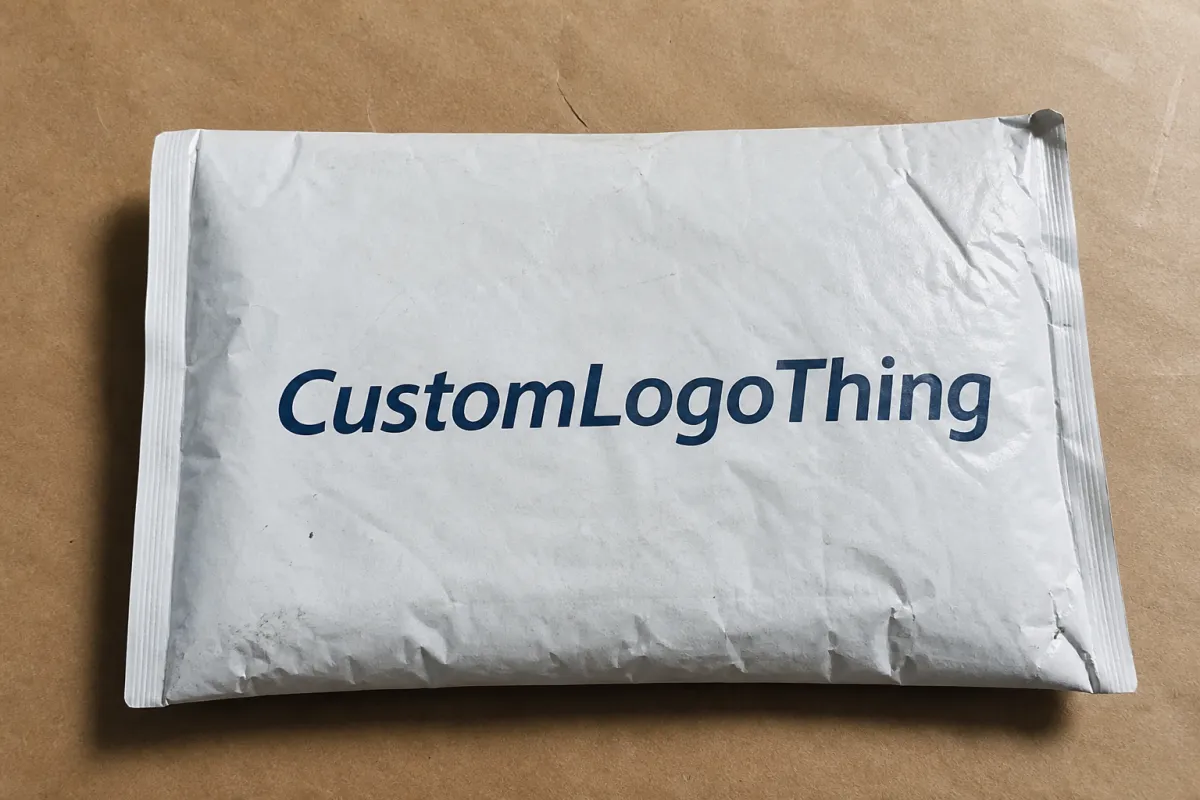
Picture a lightweight order arriving in a gray mailer with no logo, no color, and no visible attention to detail. The product may be correct, but the journey already feels anonymous. That is the gap shipping envelopes for branded parcels are meant to close. They turn a necessary shipping material into a visible part of the brand story.
From a packaging buyer’s point of view, the outer mailer has three jobs. It needs to protect the contents, identify the shipment, and present the brand in a way that feels deliberate rather than accidental. The strongest choice is not always the most elaborate one. It is the envelope that matches the product, the fulfillment method, and the budget. Some lines work best with a bold printed poly mailer and a restrained logo. Others call for a paper mailer, a reinforced bag, or a corrugated option when the product edges need more structure.
Branded mailers fit especially well with items that are light, flat, or folded neatly for transit. Apparel, soft goods, printed inserts, stationery, books, and subscription items often ship well in flexible packaging because the format stays efficient and the outer surface becomes part of the presentation. In ecommerce shipping, that matters because the parcel may pass through several hands before it reaches the customer. A clean exterior can keep the package looking intentional even after the carrier network has done its work.
The outer mailer is both shipping material and brand signal. The balance changes by category. A t-shirt in a folded poly mailer asks for different treatment than a leather accessory with metal hardware or a print set with sharp corners. One item is forgiving. The other punishes sloppy sizing.
Brands usually compare four broad options:
- Branded poly mailers for low-weight, high-volume orders where speed and print impact matter.
- Plain shipping bags for low-cost, utility-first fulfillment where the inside packaging carries the brand.
- Paper mailers for fiber-based presentation and sustainability positioning, especially when the product is light and dry.
- Corrugated mailers for higher protection needs, stronger rigidity, and a more premium structural feel.
That decision affects postage, pack speed, storage space, and reorder planning. It also affects how the customer reads the shipment before the seal is opened. A good branded parcel feels coherent. A weak one feels improvised.
"The outer mailer is often the first proof that the brand cares about details beyond the product itself. If it fits badly, tears easily, or looks like a leftover choice, the rest of the experience starts under strain."
If you want to compare how packaging choices shift across product categories, the examples in Case Studies and the range in Custom Packaging Products are useful starting points. The aim is not to overdesign every shipment. The aim is to choose a shipping envelope that performs well and still feels like it belongs to your brand.
How Shipping Envelopes for Branded Parcels Work in Transit
A standard poly mailer looks simple, but the details decide whether it survives the carrier network. Most are built from one or more film layers, with side seals that hold the body together, a closure flap, and a pressure-sensitive adhesive strip that lets the packer close the parcel quickly. Film gauge, seal quality, and closure design all influence how the envelope behaves once it enters sorting.
In normal transit, the envelope is expected to handle rubbing, stacking, conveyor movement, and moderate exposure to moisture or dust. It is not a substitute for heavy-duty protection around fragile products, but it can do a very good job with soft goods and other lightweight items when the sizing is right. That is why packaging teams often compare thickness in microns or gauge rather than assuming every mailer behaves the same way. A 2-micron difference may sound trivial in a spec sheet, yet across thousands of shipments it can be the line between a clean arrival and a long month of complaints.
The branding layer sits on top of that structure. Exterior print can be a simple logo repeat, a strong color field with a small mark, a full-surface pattern, or a restrained layout that leaves room for labels and operational notes. Some brands print QR codes, social handles, or short copy on the bag; others keep the graphic language minimal so the exterior feels clean and premium. Either route can work. The mistake is asking a flexible surface to carry too much information while it is being folded, sealed, and handled in motion.
Visual branding and physical protection are not the same thing. A polished print job does not make a weak mailer stronger. If the adhesive fails, the seam splits, or the film is too thin for the product edges, the customer notices the breakdown immediately. Design can lift perception. It cannot repair underbuilt transit packaging.
For brands using automated packing lines, the envelope shape and closure style matter as much as the artwork. A mailer that loads quickly, lies flat in a bin, and seals cleanly supports better throughput than one that sticks, wrinkles, or demands repeated adjustments. Hand-pack stations follow the same logic, just with fewer mechanical constraints. Every extra second at pack-out adds labor cost, and labor costs rarely stay tiny for long.
Returns and reorders change the equation too. If the mailer needs to support return shipments, there may need to be a second adhesive strip or a tear-open feature. If the product moves through a warehouse with mixed SKUs, the size range has to be broad enough to fit the real workflow without forcing overstuffed bags. A well-chosen shipping envelope reduces friction both at the packing table and at the customer’s door.
For teams that want formal testing language, the transit side of the discussion often points back to ISTA procedures for package testing. Sustainability claims for fiber-based options may also need support from standards and certification bodies such as ISTA and FSC. Those references do not choose the mailer for you, but they help anchor decisions in recognized practice instead of guesswork.
Cost, Pricing, MOQ, and Quote Drivers
Pricing for shipping envelopes for branded parcels usually comes down to a handful of variables: dimensions, film thickness, print method, print coverage, quantity, finish, and whether the run uses stock material or custom tooling. Once those variables are clear, the quote becomes easier to read. Without them, numbers can look oddly inconsistent, especially when one vendor folds freight into the unit price and another lists it separately.
MOQ, or minimum order quantity, is one of the first points buyers need to understand. Smaller brands may need to order more units than they can use right away because the production run must still be economical for the manufacturer. That can push up the unit price, but it also gives the brand more room for design testing and inventory planning. Larger runs usually bring down the piece price, yet they put more pressure on storage, forecasting, and cash flow. A unit cost that looks low on paper can become expensive if it leaves you with months of unused stock.
There are also hidden or semi-hidden cost drivers. Artwork prep may be simple if the design is a single-color logo, but it becomes more involved when multiple panels, registration-sensitive graphics, or exact brand colors are involved. Print plates or cylinders can add up, depending on the process. Freight can be significant if the order ships from a distant facility or if the cartons are bulky. Even packaging inserts, labels, and carton counts can shift the landed price once the shipment is in motion.
A useful way to compare options is by total delivered cost, not just unit cost. If one supplier quotes a low piece price but high freight and a long lead time, the savings may disappear quickly. Storage matters too. A mailer that stacks efficiently on a pallet can reduce warehousing cost and lower the risk of handling damage.
| Option | Typical Use | Approx. Unit Cost | Tradeoff |
|---|---|---|---|
| Plain poly mailer | Low-cost ecommerce shipping, internal use, basic protection | $0.08-$0.18 | Lowest cost, limited branding |
| Custom printed poly mailer | Branded parcels, apparel, subscriptions, accessory orders | $0.15-$0.45 | Better presentation, higher setup and print complexity |
| Paper mailer | Fiber-forward branding, dry goods, lightweight sets | $0.20-$0.60 | Stronger sustainability story, often higher material cost |
| Corrugated mailer | Higher protection, premium presentation, crush-prone items | $0.35-$1.20 | Best protection, more space and weight in transit |
Those figures move with quantity, coverage, and market conditions, so treat them as working ranges rather than fixed quotes. A 5,000-piece run with a single-color logo can sit near the lower end, while a fully printed multi-panel design with a special finish may land much higher. For many brands, the real question is not whether the mailer is cheap. It is whether it protects the product, supports the brand, and keeps dimensional weight under control.
Dimensional weight deserves special attention. A lighter flexible bag may reduce shipping cost because it keeps the parcel compact, while a boxier format can push the shipment into a higher billing bracket even if the item itself is light. A few centimeters in the wrong direction can change the postage tier. That is one reason flexible transit packaging remains so popular for soft goods and flat products. It protects margin while still giving the order a branded exterior.
Process, Timeline, and Production Steps
The production path for a custom mailer is usually straightforward, but delays tend to land in the same places. It begins with a brief: size, product type, quantity, print coverage, material preference, and any operational requirements such as return strips or barcode zones. From there, the artwork is reviewed, a proof is prepared, and sample approval happens before the full run moves into manufacturing. After production, the cartons are packed, palletized, and shipped.
Where do schedules slip? Most often, the artwork files are incomplete, the proof changes late, or the size specification is not clear enough for the product line. Custom color matching can also add time, especially when a brand wants a deep navy, a muted green, or a black that stays consistent across multiple packaging materials. If the supplier has to stop and clarify details every step of the way, lead time stretches.
Turnaround and lead time are not the same thing. Turnaround may sound fast, but if the file is not ready or the sample is rejected, the total calendar time still expands. Faster schedules are possible when the design is simple, the material is stock, and the approval chain is short. More complex artwork, special finishes, or custom sizing usually require extra days before the run even starts.
For a realistic plan, many buyers build in time for sample review, seal checks, rub resistance checks, and fit testing. A sample should show whether the adhesive closes cleanly, whether the print survives handling, and whether the bag feels right in hand. If the bag is too tight, the contents may stress the seam. If it is too loose, the package can look sloppy and ship less efficiently.
A few practical checkpoints make the process more reliable:
- Confirm the product footprint with inserts, tissue, and accessories included.
- Approve artwork on a real template so logo placement and safe zones are correct.
- Request a physical sample when the package is customer-facing or the product has edges.
- Test in actual fulfillment conditions with the people who will pack the orders.
- Set reorder points early so you are not buying under pressure during a peak period.
Seasonality matters more than many teams expect. A product launch, holiday surge, or campaign spike can consume inventory faster than planned. If the mailer supports a high-volume category, it is worth aligning purchasing with forecasted demand instead of waiting for the shelf to run low. That is especially true when the branded envelope is part of the customer-facing presentation and not just an internal shipping material.
Brands that want a more structured rollout sometimes pair packaging planning with broader operational review. The mix of Custom Poly Mailers and other Custom Packaging Products can be chosen together so the outer mailer, inserts, and secondary packaging all fit the same customer promise and packing workflow.
Key Factors for Choosing the Right Poly Mailer
Size should come first. A mailer that is too large wastes material, looks loose, and can increase shipping inefficiency. A mailer that is too small forces the packer to fight the closure, compress the product awkwardly, or risk seam stress during transit. The best fit usually leaves just enough room for the product, any tissue or insert, and a clean sealed edge without excess bulk.
Material thickness is the next practical question. Thin film may work for soft, low-risk products, but anything with zippers, studs, hardware, corners, or dense folded edges can benefit from a heavier gauge. The point is not to make the package “strong” in a vague sense. It is to match puncture resistance and tear behavior to the item being shipped. A heavyweight fabric hoodie has different demands than a light printed tee.
Print quality also changes the feel of the package. A single-color logo can look crisp and intentional if the spacing is right. Full-surface artwork can be striking, but only if the design respects the wrap area and the way flexible packaging moves during packing and transport. Matte finishes often feel more restrained and premium, while glossy finishes can be brighter and more eye-catching. Neither is automatically better; the right choice depends on the brand language and how the package should feel when the customer touches it.
Sustainability claims need care. A mailer marketed as recycled, recyclable, or lower impact should match the actual substrate and the current claim language. If the bag uses recycled content, buyers should confirm the percentage and the source. If the outer mailer is paper-based, it may still need coatings or linings that affect recyclability. That is where accurate specification matters more than broad environmental language. When buyers want fiber sourcing proof, FSC documentation can be part of the discussion; when they need broader waste-reduction context, EPA guidance can help frame the conversation around materials and disposal.
Fulfillment performance matters just as much as appearance. A good mailer loads easily, seals securely, and gives the packer confidence on the line. It should also resist tampering well enough that the shipment feels intact when it reaches the customer. If the adhesive is inconsistent or the seal tab is too short, packers slow down and errors rise. That is a direct labor cost, not just a cosmetic issue.
For buyers comparing options, the most useful question is usually this: does the mailer support both brand presentation and order fulfillment at the same time? If the answer is yes, the envelope is doing its job. If it only looks good in a mockup, the spec is not finished yet.
Step-by-Step Guide to Specifying Your Order
The cleanest way to specify shipping envelopes for branded parcels is to work from real products, not assumptions. Start by auditing what you ship most often, then group those items by size, weight, fragility, and presentation needs. A single SKU may fit one envelope perfectly, but a broader catalog often needs two or three size families so the packing team can move quickly without forcing bad fits.
Next, choose the smallest workable mailer size for each group. Small is not the goal by itself; usable is the goal. Leave enough room for the product, any insert, and a flat seal edge that closes without stress. If the bag needs to wrap around a bulkier item, the size should account for the real pack-out, not just the item’s flat measurement on a desk.
Artwork should be prepared with a clear layout before the proof stage begins. Logo placement, brand colors, bleed margins, and safe zones all matter, especially on flexible packaging where the surface can shift slightly during sealing. If the mailer needs returns information, a web address, or a QR code, those elements should be positioned intentionally rather than dropped into an empty corner at the last minute. Keep the layout readable when the bag is sealed and folded.
Samples are worth the time. A proof shows design, but a sample shows reality. Check print clarity, seal strength, feel in the hand, and fit with the actual product. If the surface print scuffs during handling, that is a useful warning. If the adhesive takes too much force to close or lifts on a cold day, that matters too. Real fulfillment environments expose issues that a screen mockup cannot.
A small pilot order is often the safest bridge between concept and scale. It gives the team a chance to pack real orders, hear feedback from warehouse staff, and see how the mailer performs in transit. It also shows whether the chosen package protection is enough or whether a small adjustment in gauge, size, or closure style would improve the result.
Once the pilot works, lock the final spec in writing. A basic spec sheet should include:
- Exact dimensions and acceptable tolerance
- Film thickness or material spec
- Print colors and approved artwork version
- Closure type and any return-strip requirement
- Pack count per carton and carton labeling details
- Reorder contact, lead time expectation, and storage notes
That sheet makes reorders smoother and reduces the risk of version drift. It also helps purchasing, operations, and design stay aligned. For brands that want packaging to feel consistent across product lines, the same approach can be applied to Custom Shipping Boxes and other shipping materials so the customer sees a coherent system rather than a cluster of unrelated components.
Common Mistakes That Hurt Branding and Performance
The first mistake is buying a mailer that is too large. Extra space may seem harmless, but it can make the shipment look loose and underplanned. It can also increase dimensional weight and make the package less efficient to store and ship. In ecommerce shipping, that extra bulk adds up quickly across thousands of orders.
The second mistake is treating print quality as more important than material performance. A beautiful graphic cannot rescue a weak adhesive strip or a thin film that splits at the seam. Customers do not separate those problems in their minds. They just see a package that failed. From a brand standpoint, that is more damaging than a simple one-color bag with solid structure.
Third, some designs try to do too much. Overcomplicated graphics can look crowded on flexible packaging, especially when contrast is weak or the wrap area is poorly understood. Fine lines, tiny text, and too many moving parts can disappear once the mailer is sealed and handled. A cleaner layout often performs better because it reads faster and survives transit with less visual noise.
Another common misstep is skipping real-world tests. A package that looks fine in a render may behave very differently when handled by real staff, loaded in a real bag, and pushed through a real carrier network. Rub resistance, seal performance, and fit should all be checked before a full launch. If the bag is part of a larger shipping materials system, it should also be tested with inserts, tape, labels, and any other items that change the final thickness.
Rushing reorders is the fifth trap. Teams sometimes forget to confirm stock levels, artwork versions, or updated pricing until the inventory is already low. That is when lead times feel longer and freight options get more expensive. A cleaner reorder cycle keeps the brand from scrambling and protects margins by avoiding emergency shipping or last-minute substitutes.
There is also a softer failure that is easy to overlook: choosing a package that fits the product technically but not emotionally. If the outer mailer feels flimsy, wrinkled, or inconsistent with the rest of the brand, customers notice even if the item itself is fine. The package should support trust. It should not create uncertainty at the doorstep.
Strong packaging is not just about surviving the carrier network. It is about arriving with the right shape, the right feel, and enough visual order that the customer senses care before opening the parcel.
Expert Tips and Next Steps for a Cleaner Launch
A simple spec sheet is the best tool most brands underuse. Keep dimensions, film thickness, print requirements, approved artwork, carton pack count, and reorder notes in one place. When the team needs to reorder in six months, there should be no mystery about what was approved, what size worked, or which version went to production. That kind of discipline saves time and prevents version drift.
It also helps to run a small internal stress test. A basic drop test, rub test, seal test, and packing-speed test can reveal more than a polished mockup ever will. If the package will be used in a busy fulfillment line, ask the people doing the packing to handle it exactly as they would on a normal day. Watch where it slows them down. Watch whether the closure tab is easy to grab, whether the film slides too much, and whether the final look still feels clean after repeated handling.
Having one backup size or backup print version is another practical move. Seasonal peaks, limited-edition kits, and product changes can shift demand faster than expected. A backup spec keeps the launch from stalling if the preferred size runs short or if a new item needs a slightly different fit. That helps brands with broad catalogs, where one outer mailer rarely suits every parcel.
Coordination matters too. Packaging, operations, and purchasing should all weigh in before the final sign-off. Design may want the largest printable area. Operations may want the fastest pack-out. Purchasing may need the best landed cost. The right answer often sits between those priorities, not at the extreme edge of any one department’s preference.
If the goal is a cleaner launch, the path is usually direct: define the product mix, Choose the Right format, approve the artwork, sample it in real conditions, then place the production order with enough buffer for lead time and freight. That turns shipping envelopes for branded parcels into a repeatable part of the brand system rather than a one-off purchase made under pressure.
For brands that want an outer package that protects the product, respects dimensional weight, and still looks intentional at the door, shipping envelopes for branded parcels are one of the most practical upgrades available. The best version is the one that fits the product first, the workflow second, and the visual identity last. That order matters.
FAQ
What size shipping envelopes for branded parcels should I choose?
Measure the product with any tissue, insert, or accessory pack included, not just the bare item. Choose the smallest size that closes flat without forcing the seam or crushing the contents. Test a few real pack-outs before ordering at scale because fit can change once the item is loaded by a real fulfillment team.
Are shipping envelopes for branded parcels strong enough for lightweight products?
Yes, if the product is lightweight, non-fragile, and free of sharp edges or puncture points. The key is selecting the right film thickness and a reliable adhesive strip for the transit conditions you expect. For anything with hardware, corners, or rigid edges, add internal protection so the contents do not press through the film.
How do shipping envelopes for branded parcels affect cost per order?
The main cost drivers are size, print complexity, quantity, setup, and freight. A lower unit price can still become more expensive if shipping, storage, or overbuying pushes up the landed cost. Compare quotes by total delivered cost and expected usage, not just the sticker price per mailer.
How long does production usually take for branded poly mailers?
Timelines depend on artwork approval, proofing, material availability, print method, and shipping distance. Plan extra time if you need custom colors, detailed graphics, or several approval rounds. A buffer helps prevent a late proof or freight delay from interrupting launch timing or a reorder schedule.
What should be printed on shipping envelopes for branded parcels?
Start with the logo, brand colors, and any short message that supports the customer experience. Keep the layout readable and leave enough safe space so the design still looks clean when sealed. Add operational details only when they truly help, such as returns information, a QR code, or a web address.


