Buyer Fit Snapshot
| Best fit | Shipping Envelopes for Ecommerce projects where brand print, material claims, artwork control, MOQ, and repeat-order consistency need to be specified before quoting. |
|---|---|
| Quote inputs | Share finished size, material target, print colors, finish, packing count, annual reorder estimate, ship-to region, and any compliance wording. |
| Proofing check | Approve dieline scale, logo placement, barcode or warning zones, color tolerance, closure strength, and carton packing before bulk production. |
| Main risk | Vague material claims, crowded artwork, missing packing details, or unclear freight terms can make a low unit price expensive after revisions. |
Fast answer: Shipping Envelopes for Ecommerce: Choosing the Right Fit should be specified like a repeatable production item. The safest quote records material, print method, finish, artwork proof, packing count, and reorder notes in one written spec.
Production checks before approval
Compare the actual filled-product size with the drawing, then confirm tolerance on folds, seals, hang holes, label areas, and retail display edges. Reserve space for logos, QR codes, warning copy, and material claims before decorative graphics fill the panel.
Quote comparison points
Review material grade, print process, finish, sampling route, tooling charges, carton quantity, and freight assumptions side by side. A quote is only useful when the supplier can repeat the same color, closure quality, and packing count on the next order.
Shipping Envelopes for Ecommerce: Choosing the Right Fit
Shipping envelopes for ecommerce do an outsized amount of work for such a small piece of packaging. They protect the product, set the tone for the first physical interaction, and influence postage in ways many teams underestimate. A $14 accessory can feel deliberate and well considered in a tight, clean mailer. Put the same item in an oversized envelope and it starts to look improvised. Customers notice that immediately, often before they even handle the item.
Shipping envelopes for ecommerce also sit at the intersection of package protection, shipping materials, brand presentation, and dimensional weight. The decision is rarely about appearance alone. A buyer has to ask whether the envelope protects the item, survives the carrier network, and avoids paying for unused space. Air is expensive once it shows up on a rate card.
Brands shipping apparel, documents, samples, cosmetics, books, accessories, and other low-profile products usually find envelopes to be the most practical transit packaging option. They weigh less than cartons, pack faster than boxes, and occupy less storage space. That efficiency only works when the format matches the product. A paper mailer that suits flat stationery can fail around a rigid accessory box. A poly mailer may be ideal for soft goods and a poor fit for something with a glossy surface that scuffs easily.
Practical rule: choose the smallest envelope that still allows a clean seal, enough product stability, and the level of protection the route demands. If the item shifts, bends, or rubs, the mailer is too loose or too light.
What Are Shipping Envelopes for Ecommerce, and Why Do They Matter?
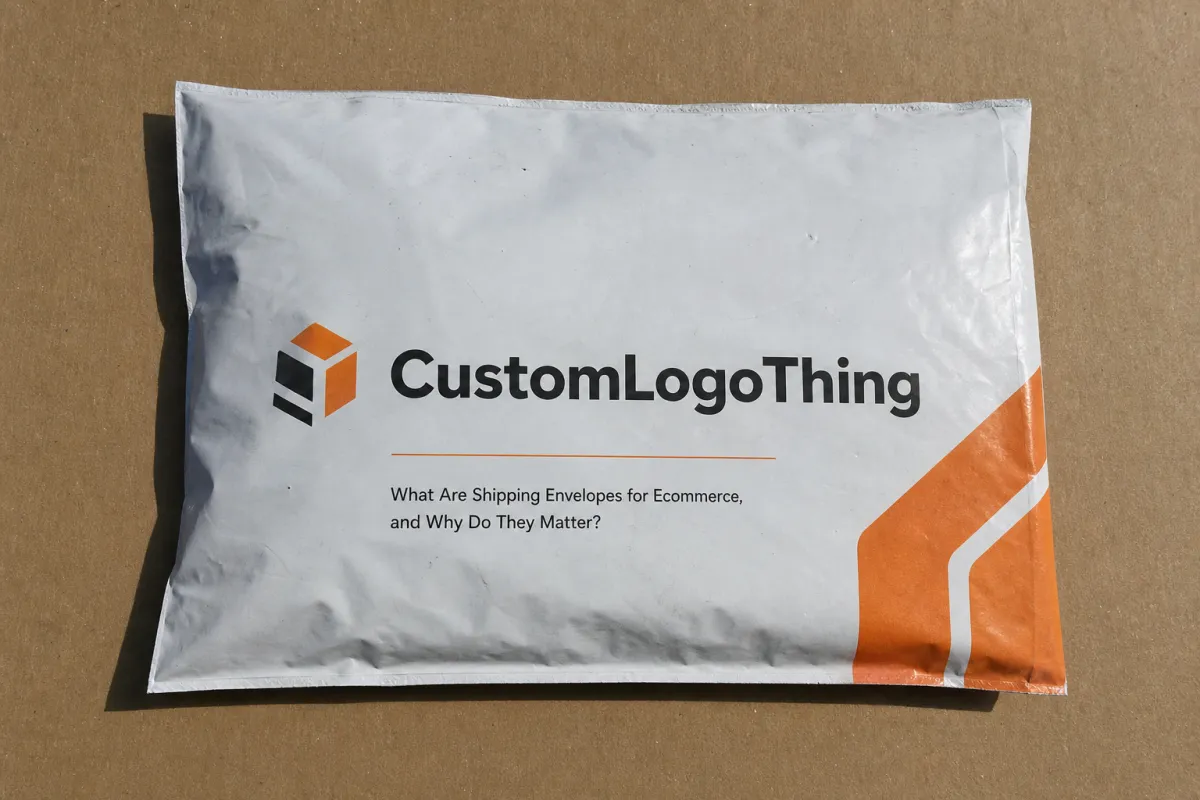
At the simplest level, shipping envelopes for ecommerce are lightweight mailers designed to move small, flat, or low-profile products through parcel networks efficiently. They are useful when a corrugated box would add cost, packing time, and excess cube without adding much protection. Think of them as a packaging category that sits between a basic bag and a full shipping carton.
The category covers several formats. Some are plain paper envelopes for documents or inserts. Others are poly mailers, padded mailers, or paper-based mailers with tear strips and self-seal closures. Some use a single layer of film or kraft paper, while others add a cushion layer for extra protection. Construction matters because the envelope has to resist moisture, scuffing, punctures, and compression while surviving the last mile of transit.
A packaging buyer usually ends up comparing tradeoffs. A carton offers stronger crush resistance, but it increases cube and packing labor. A padded mailer can protect a fragile surface, but it may raise unit cost and material use. A poly mailer is light and efficient, yet not every product can tolerate that level of exposure. The right fit depends on the item and on the way the parcel moves through the carrier network.
That network is not gentle. Parcels get stacked, dropped, sorted, and pushed through conveyor systems. A mailer that looks fine on a desk can disappoint once it meets pressure, vibration, and weather. This is one reason many brands move from guesswork to sample testing before they scale a package format across a whole catalog.
If your assortment is still changing, it can help to compare envelope options against other formats such as Custom Poly Mailers, Custom Shipping Boxes, and broader Custom Packaging Products. The best choice is rarely identical for every SKU.
There is also a branding angle. A clean, well-sized envelope can make a lower-cost order feel polished. A wrinkled, overstuffed, or half-sealed mailer sends a different message entirely. In ecommerce fulfillment, those small signals matter because the package arrives before the product has a chance to speak for itself.
How Shipping Envelopes for Ecommerce Work in Transit
Every envelope has a job to do during transit. Some of that job is obvious. Some of it stays hidden until a shipment fails. A well-built mailer usually has four functional parts: the outer material, any cushioning or reinforcing layer, the closure system, and a tamper-evident opening feature. Together, those parts determine how the mailer performs under pressure, moisture, abrasion, and handling.
The outer layer may be kraft paper, polyethylene film, or a composite structure. Paper can feel more premium and may align with sustainability goals, especially when it includes recycled content or FSC-certified sourcing. Film offers strong moisture resistance and low weight. Padded designs add another barrier between the product and the outside world, which helps with scuff-prone items but adds cost and material volume. The right answer depends on what the product can tolerate.
Envelope performance is easy to misread because failure is not always dramatic. A package does not need to tear open to become a problem. If the seal weakens, if the product shifts inside, or if the mailer flexes enough to bruise a corner, the customer may still see damage even when the outside looks mostly intact. Fit matters for that reason. An item that has room to move has room to fail.
Carriers make the equation more complicated. A shipment may ride in a soft bag on one leg, get compressed by other parcels on another leg, and then face rain or snow at delivery. Longer routes and more handoffs usually raise exposure. A packaging spec that works for regional ecommerce shipping may not hold up when the same product goes nationwide.
Brands that test transit packaging properly often borrow the same logic used in industry standards. The International Safe Transit Association publishes methods for distribution testing, and those tests simulate drops, vibration, compression, and handling stress. A small business does not need a laboratory like a major manufacturer, but the testing mindset still pays off. See the standards body here: ISTA transit testing standards.
One more practical point: a customer’s first touch matters. If the opening is clean and the seal releases as expected, the experience feels controlled. If the mailer arrives scuffed, split, or awkwardly overfilled, the purchase already feels less valuable. Packaging may not create the sale, but it can weaken it quickly.
Key Factors That Shape the Right Envelope Choice
Choosing the right envelope starts with product facts, not aesthetics. Weight, dimensions, fragility, and surface sensitivity are the first filters because they usually decide the format faster than any other variable. A soft T-shirt and a glass accessory do not belong in the same transit packaging spec. Neither do a flat document set and a boxy cosmetic kit.
Product size is the first constraint. Measure the item in its final packed state, not just as a raw unit. If it ships with a sleeve, insert, folded tissue, or thank-you card, include those dimensions. Many brands get into trouble by measuring the product alone and ignoring the real packed footprint. The result is an envelope that is too tight, too loose, or oddly shaped once sealed.
Closure strength comes next. Self-seal adhesive can work well for most low-risk orders, but the adhesive has to survive storage, fulfillment speed, and route conditions. A stronger closure helps when the brand expects returns, wants more tamper resistance, or ships products that ride alongside heavier parcels. A weak seal is a small defect with large downstream costs.
Branding requirements matter more than some teams expect. Print coverage, color accuracy, texture, and finish all change how the envelope feels in hand. A clean uncoated paper mailer can read as restrained and practical. A high-gloss Printed Poly Mailer can feel louder and more promotional. Neither is universally better. The right one depends on the brand promise.
Sustainability deserves a sober look, not a marketing gloss. Recycled content can reduce virgin material use. Paper formats may be easier to explain to consumers who prefer fiber-based packaging. Yet a heavier or oversized mailer can increase freight waste and raise emissions through excess air. A very light envelope that fails in transit can create re-shipments, and those extra trips often erase any environmental gain. Recyclability also depends on local collection systems and whether coatings, inks, or adhesives are accepted. For brands trying to make a responsible choice, the EPA’s materials management resources are a useful reference point: EPA sustainable materials management guidance.
Shipping conditions also shape the decision. Carrier mix, destination, climate, and order volume all matter. A mailer that performs well for local deliveries might not be ideal for long-haul routes or humid regions. A brand shipping most orders into one zone may choose differently than a brand with nationwide coverage. Order fulfillment is never fixed, so the envelope strategy should not be fixed either.
Product risk tolerance matters too. Some items can tolerate a small amount of flex or cosmetic wear. Others cannot. A premium notebook with a bent corner feels damaged even if it remains usable. A beauty item with scuffed outer packaging may trigger complaints even when the contents are fine. The envelope should be selected against that tolerance, not just against the unit price.
There is also a technical detail that affects postage: dimensional weight. Carriers often price shipments based on size as well as actual weight, which means an envelope that stays thin can save more than one that merely weighs less. That does not mean the smallest possible mailer is always the answer. If the envelope compresses the item too hard or fails in transit, the postage savings disappear into damage, refunds, and replacements.
Step-by-Step Guide to Choosing the Right Envelope
The cleanest way to choose well is to work in sequence. Define the product first, then define the protection it needs, then define the envelope structure that delivers that protection at the lowest practical cost. That order matters. Starting with the material before the fit can force the product to adapt to the packaging instead of the other way around.
- Measure the final packed item. Include inserts, sleeves, corner guards, or any protective wrap. Internal dimensions matter more than the marketing name printed on the envelope box.
- Classify the product by risk. Flat apparel, documents, accessories, samples, cosmetics, and fragile items do not need the same format. Surface finish and crush sensitivity should steer the choice early.
- Select the envelope family. Decide whether the order needs a poly mailer, padded mailer, kraft mailer, or a more rigid envelope-like format. Here brands often compare material against handling needs.
- Test closure and seal integrity. Open and reseal if returns are part of the process. Check whether the adhesive holds after storage, pressure, and repeated handling.
- Inspect transit behavior. Ship real products through real routes. Look for bends, scuffs, seal failure, moisture exposure, or customer complaints after delivery.
- Document the approved spec. Record the size, material, closure style, print rules, reorder threshold, and backup option so purchasing does not have to rediscover the answer later.
That final step gets overlooked often. Good packaging is not only about choosing the right item once. It is about creating a repeatable spec that operations can reorder without debate. If the team has to re-evaluate the envelope for every purchase order, the packaging program becomes a time sink.
For ecommerce brands with several product families, standardization is usually helpful. One envelope size may cover multiple SKUs if the fit is disciplined. That reduces inventory complexity, simplifies purchasing, and makes forecasting less error-prone. Fewer shipping material SKUs usually means fewer mistakes in the warehouse.
Sample testing belongs in the process, not as an optional extra. Request a small batch, pack the real item, and compare how each option behaves after transit. If one mailer looks attractive but creates wrinkling, shifting, or a weak seal, that is useful information. The sample is doing its job if it exposes the flaw before production does.
A useful buyer trick is to test with the exact workflow your team will use on launch day. If the envelope is loaded on a fast fulfillment line, test it at that pace. If the product ships folded with tissue and a return insert, include those items. Packaging that works in a lab but slows the line or distorts the product is not actually working.
Cost and Pricing: What Drives the Real Unit Price?
Price is where many teams oversimplify the decision. A lower per-unit quote does not automatically mean a lower total cost. Shipping envelopes for ecommerce are priced by more than the material on the outside. Size, print coverage, closure style, material grade, and order quantity all shape the final number. Freight, storage, proofing, and setup can push the total further.
In practical terms, a mailer that costs less to buy can still cost more to use if it causes higher damage rates, slower packing, or more postage because it is oversized. That is why buyers should compare landed cost, not just factory price. Postage waste and re-shipments can be far more expensive than the envelope itself.
The table below gives a useful buying frame. These are not universal quotes, but they are realistic planning ranges for common ecommerce packaging formats at moderate volume. Actual pricing will vary by print coverage, exact size, paper or film grade, finish, and the number of units ordered.
| Envelope type | Best for | Typical unit price | Protection level | Buying note |
|---|---|---|---|---|
| Plain paper envelope | Documents, inserts, low-risk flat items | $0.05-$0.15 | Low | Good when presentation matters more than cushioning |
| Poly mailer | Apparel, soft goods, moisture-sensitive but non-fragile products | $0.08-$0.22 | Low to moderate | Lightweight and efficient for order fulfillment |
| Padded mailer | Small accessories, cosmetics, books, scuff-prone items | $0.18-$0.45 | Moderate | Adds cushion without moving to a full carton |
| Custom printed mailer | Branded ecommerce shipping, launches, subscription programs | $0.20-$0.70+ | Varies | Print coverage and size usually drive the price more than the base material |
| Paper mailer with recycled content | Brands emphasizing fiber-based packaging and lower material weight | $0.12-$0.35 | Low to moderate | Check strength, seam quality, and moisture resistance carefully |
Minimum order quantity matters just as much. A supplier may quote a very attractive price at 10,000 units, but if your monthly volume only supports 2,000, that bargain can turn into inventory risk. Ask for several break points: 1,000, 3,000, 5,000, and 10,000 pieces are common checkpoints. The tier curve often reveals where the best value actually sits.
Setup fees and tooling can also shift the math. Custom print plates, proofing, dieline changes, and freight surcharges are easy to miss when a quote is first reviewed. A buyer should compare quotes using the same dimensions, closure method, print coverage, and delivery terms. Otherwise the numbers are not apples-to-apples; they are just smaller numbers on a page.
There is another cost that rarely appears on the quote line: labor. If one envelope packs in three seconds and another takes eight because of awkward folds or a stubborn seal, the labor difference becomes meaningful at scale. On high-volume ecommerce shipping programs, packing speed can matter as much as material price. A slow mailer is expensive even when the unit price looks attractive.
Process and Timeline: From Sample Request to Production
Most envelope projects follow a predictable path. A brief is shared. Specs are confirmed. Artwork or mockups are reviewed. Samples are requested and tested. Once approved, the order moves into production. Simple stock orders can move quickly. Custom printed or structurally adjusted envelopes need more time because every extra variable adds another round of checking.
A common mistake is approving a design before the sample has been packed with a real product. A dieline may look correct on screen and still fail in the hand. The same is true for color. A printed finish can look premium in a digital proof and then feel too dark, too glossy, or too flat in production. Sample approval is the moment when those issues surface.
Lead time usually depends on five moving parts:
- Artwork revisions: more rounds of feedback slow the front end of the project.
- Raw material availability: paper grades, film stock, and adhesives can vary by supplier inventory.
- Factory scheduling: busy production windows can push a job back even after approval.
- Freight mode: air is faster, sea is cheaper, and ground falls somewhere in between.
- Seasonal demand: peak ecommerce periods can tighten capacity across the supply chain.
For many custom programs, a practical planning window is often 12 to 15 business days from proof approval for straightforward production. That can stretch if the structure is custom, the artwork is complex, or the order is large. If the supplier needs a new material run or a special finish, expect more time. If a brand waits until inventory is low, the project becomes riskier by definition.
That is why buffer planning is so useful. The best operators reorder before stock reaches the red zone. A small reserve protects against delays, freight disruption, and last-minute demand spikes. In order fulfillment, packaging stockouts are expensive because they interrupt the flow of every order that touches them.
Brands that want to reduce packaging-related surprises often build a simple approval file. It includes the approved size, approved artwork, expected usage rate, reorder trigger, and any backup spec. That documentation turns packaging from a scramble into a controlled purchase item.
Common Mistakes Ecommerce Brands Make With Envelopes
The most common mistake is choosing by appearance instead of measurement. A mailer that looks elegant can still be too small, too shallow, or too flexible. If the product shifts inside, the design has already failed, no matter how polished the exterior seems.
Another mistake is assuming light products always need light protection. A featherweight item can still be fragile if it has corners, coatings, or a surface that scuffs easily. A rigid carded accessory, for example, may need more than a simple poly mailer. Lightweight does not automatically mean low-risk.
Some brands also focus too much on unit price and too little on downstream cost. The difference between a $0.14 mailer and a $0.22 mailer can look significant on paper. If the cheaper version causes even a small increase in damage, the real cost rises quickly through replacements, refunds, support time, and lost repeat orders.
Skipping sample testing is another expensive habit. A screen mockup cannot show bend behavior, seal quality, or how the envelope feels after a route with multiple handoffs. Real transit is messy. Testing should be, too. That is how bad assumptions get exposed before customers do.
Operational fit is easy to ignore as well. If the envelope is awkward for packers to fill, hard to stack, or difficult to store in the warehouse, it drags down productivity. Packaging must work in the hands of the team, not just on a spec sheet. If it slows packing, the labor cost is hiding in plain sight.
Finally, brands sometimes forget the carrier mix. A package that performs well in one lane may not survive another. A local route with gentle handling is a different environment from a long-distance shipment with multiple transfers. Ecommerce shipping is not one standardized journey, so transit packaging should not be treated as one either.
For paper-based programs, material sourcing can matter more than people realize. If a brand wants to communicate responsible sourcing, it should verify claims rather than relying on vague language. FSC-certified paper is a credible route when fiber sourcing matters, and it is worth checking supplier documentation directly: FSC certification information.
One more mistake deserves its own mention: choosing an envelope that protects the item but makes returns awkward. If your category has a high return rate, the opening and reseal behavior matters. A return-friendly closure can reduce customer friction and make the package easier to reuse, but only if the adhesive remains stable after the first opening. That tradeoff is worth testing before launch, not after complaints start coming in.
Expert Tips and Next Steps Before You Order
A practical packaging program usually starts with comparison, not commitment. Build a two- or three-option test set and compare them side by side. One option may be strongest. Another may be fastest to pack. A third may feel best on brand. The point is not to guess; it is to see which tradeoff your business can actually live with.
It also helps to use a simple scorecard. Give each envelope a rating for fit, protection, packing speed, print quality, customer perception, and reorder ease. A scorecard turns what could be a subjective debate into a repeatable decision tool. That matters when several teams are involved and each cares about a different outcome.
Standardization is usually a win when it is possible. Fewer envelope SKUs mean simpler forecasting, cleaner storage, and fewer picking errors. It can also improve purchasing power because larger, more predictable orders are easier for suppliers to price well. If multiple products can share one envelope format without risking damage or wasted space, that is usually worth pursuing.
Negotiation should focus on more than the first purchase. Ask about forecasted volume, reorder cadence, price breaks, and backup supply. Suppliers often price on stability as much as quantity. A brand that can commit to a steady run every quarter may secure better terms than one that buys irregularly, even if the annual total is similar.
For brands deciding between envelopes, mailers, and boxes, the right answer often depends on the product family rather than the brand as a whole. That is why a blended approach can be smart. Small soft goods may move in poly mailers. Scuff-prone or semi-fragile items may move in padded envelopes. Larger, more protective orders may justify a carton. Each format earns its place when it solves a specific packaging problem.
One last operational habit pays off quickly: test live orders before scaling. Ship a small batch through normal ecommerce shipping routes, inspect the results, and compare damage rates against your current packaging. If the envelope passes the fit-and-damage check, then scale. If it fails, the failure is cheap when caught early and expensive when discovered after a seasonal push.
Shipping envelopes for ecommerce work best when they are treated as a purchasing decision, not a default. Measure carefully, test honestly, and choose the format that matches the product, the carrier environment, and the brand experience you want to deliver. If you need one practical takeaway, use this: lock the size, seal, and material only after a real product has been packed, shipped, and inspected on the route it will actually travel. That process catches the problems that spreadsheets miss, and it is usually the difference between a mailer that merely ships and one that arrives looking right.
Frequently Asked Questions
What size shipping envelopes for ecommerce should I choose?
Measure the product in its final packed state, including inserts or sleeves, then choose the smallest envelope that still allows a clean seal and safe fit. Use internal dimensions, not marketing names, because a mailer labeled “large” may still be too tight for your item. It is smart to test one full pack before placing a bulk order.
Are padded shipping envelopes better than poly mailers for ecommerce?
Padded envelopes are better for items that scratch, scuff, or need a little cushioning during transit. Poly mailers work well for flexible, low-fragility products where weight and moisture resistance matter more than padding. The better choice depends on product sensitivity, shipping distance, and your acceptable damage rate.
How do shipping envelopes for ecommerce affect postage costs?
Smaller and lighter envelopes can reduce dimensional weight and help avoid unnecessary carrier surcharges. Oversized mailers may move a shipment into a higher rate tier even when the product itself is lightweight. The right envelope often saves money in postage, packing time, and fewer replacements.
What is the best way to test ecommerce shipping envelopes before ordering?
Order samples from more than one supplier so you can compare fit, strength, and appearance side by side. Ship real products on real routes, then inspect the envelope after transit for tears, dents, seal failure, or moisture exposure. Track damage rate and packing speed, because the best envelope is the one that works in operations, not just on paper.
What MOQ should I expect for custom shipping envelopes for ecommerce?
Stock options may have low minimums, but custom size, print, or material choices usually raise the MOQ. Ask suppliers to quote several volume tiers so you can see where the price drops and where inventory risk starts. If you are testing a new format, begin with a smaller run or sample program before committing to a large production order.