Branded Trucker Caps for Ecommerce: How to Order Well
After the sale, branded trucker caps for ecommerce stay visible. Customers wear them to the gym, to the store, on errands, and at events, so the logo keeps working without another ad purchase attached.
That is the appeal. One useful item can keep showing up long after the order ships.
The catch is that caps are easy to get wrong. A weak front panel, sloppy embroidery, or a fit that sits oddly on the head makes the whole item feel cheap. So the job is not just buying a cap. It is choosing the right shape, the right decoration method, and a landed cost that still leaves room to make money.
A lot of ecommerce teams miss that balance. They start with a mockup, chase the lowest quote, and only notice the production details when the sample looks off in hand. If branded trucker caps for ecommerce are going to sell well, bundle cleanly, or earn repeat use, the spec needs to be set before anyone asks for pricing.
Why trucker caps beat the usual merch pileup
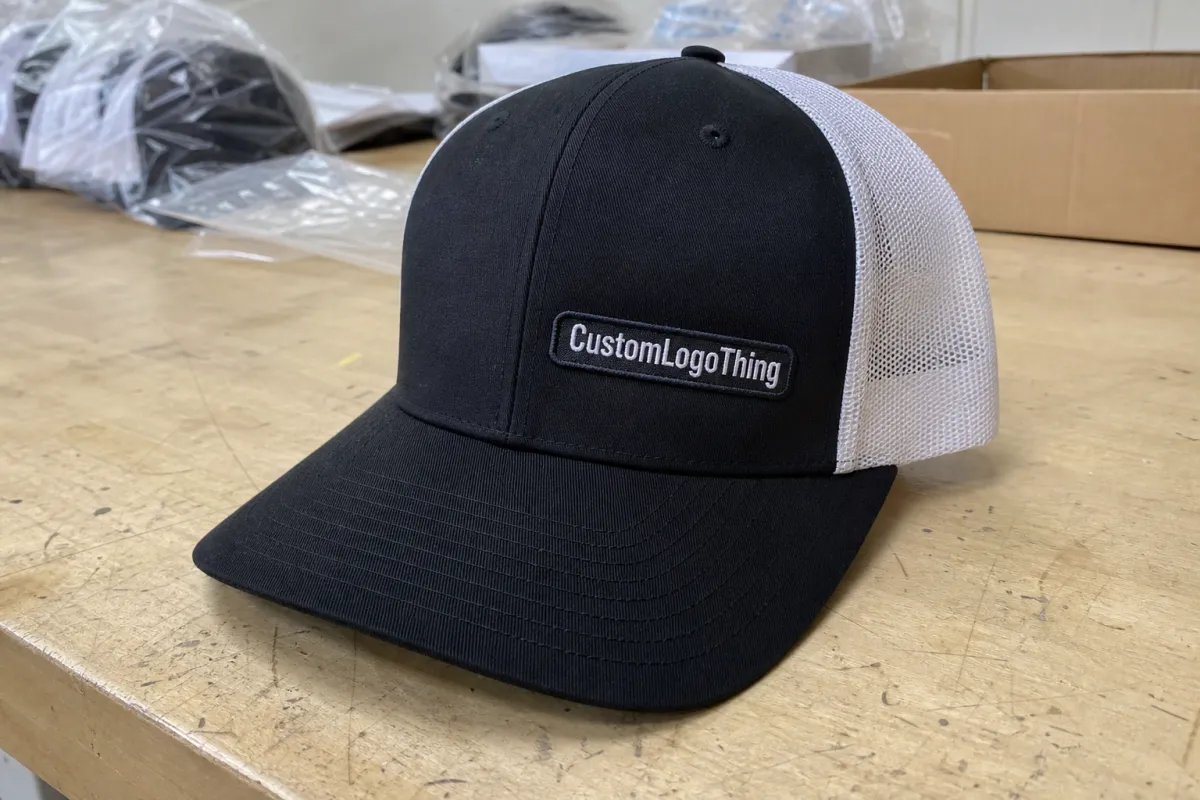
Ecommerce brands do not need another giveaway that gets tossed in a drawer. They need something people will actually wear, and trucker caps do that well. The structured front gives you a clean branding area, while the mesh back keeps the cap casual and familiar.
They are easier to size than tees or hoodies. They feel more like apparel than mugs or desk items. They also let you test demand without locking up money in a huge custom run.
That is why branded trucker caps for ecommerce show up in welcome kits, launch bundles, creator collabs, loyalty drops, and add-on merch.
They travel well too. A cap leaves the house more often than a lot of other merch, which means the branding has to hold up in real life, not just in a clean product photo.
There is a downside. If the cap is bad, everyone sees it fast. Crown height, stitch quality, and fit are impossible to hide. A crooked patch or a front panel that collapses under its own weight makes the item feel like promo stock instead of something worth keeping.
So the aim is not to make a cap with a logo on it. It is to make a cap someone reaches for again without thinking twice.
That is the difference between merch that moves and merch that sits in boxes.
What branded trucker caps for ecommerce actually include
The phrase covers a few build styles. Most teams are choosing between a foam-front trucker, a structured cotton-twill trucker, or a hybrid style with a mesh back and a firmer front panel. Each one changes the look, the decoration options, and the cost.
Core spec choices that matter
Before you ask for pricing, lock down the basics:
- Panel count: five-panel caps give a broader front area; six-panel caps usually read more traditional.
- Crown shape: a higher crown feels classic trucker; a lower crown looks more retail and less souvenir-shop.
- Bill style: flat bills feel sharper and more streetwear; a lightly curved bill is easier for everyday wear.
- Closure: plastic snapbacks are common, but fabric straps and metal closures can lift perceived value.
- Front construction: foam, buckram, and heavier cotton twill all change how the logo sits and how well the cap holds shape.
Decoration can go in a few places. The front panel is the obvious choice. A side hit works better for quieter branding. A woven label on the side or back can make the cap feel closer to retail. Inside tape, underbill printing, and custom sweatbands are smaller touches, but they matter when the cap needs to sit above the basic promo tier.
The use case should decide the finish. A launch giveaway can stay simpler because the bundle carries the experience. A paid add-on needs more polish because the cap itself has to justify the price. A standalone retail cap needs to look finished from every angle, not just in the approved front mockup.
Packaging matters more than teams usually expect. If the cap gets crushed in transit, the customer will not care that the embroidery looked clean on a digital proof. A rigid insert, a simple tissue wrap, or a cap protector can keep the crown in shape and make the first impression better.
If you want a reference point for handling and transit stress, the ISTA standards are useful. For paper mailers or cartons, FSC certification is an easy way to keep the packaging story clean.
A cap can be the cheapest item in the box and still ruin the box if it arrives bent, dusty, or stitched like it was rushed.
Headwear is unforgiving in photos too. A cap that looks fine in a flat lay can look awkward once it is on a head, inside a mailer, or shot under harsher ecommerce lighting.
That is why samples need to be judged as real objects, not just design proofs.
How the production process and timeline work
The production flow is straightforward on paper: artwork review, digitizing or print setup, sampling, bulk production, finishing, packing, and freight. The part that usually slips is the front end, not the factory floor.
Where the time actually goes
Artwork cleanup matters more than most brands expect. A logo that looks sharp on a screen may need to be simplified for embroidery, especially if the text is tiny or the linework is delicate. Digitizing decides whether the stitch path stays clean or turns the cap fuzzy from a few feet away.
Sampling can move quickly or crawl, depending on the build. A first custom run often takes 15-25 business days from proof approval to bulk completion, and it can stretch longer if the decoration is more involved or the factory queue is full. Reorders on an existing spec move faster, often in the 7-12 business day range before freight if the supplier already has the files and measurements.
If someone gives a lead time without production details, are they really giving you a lead time?
Common delay points
- Missing logo files: the only asset is a JPG pulled from a social post, not a clean vector.
- Spec drift: the cap style changes after sampling has already started.
- Color mismatch: brand colors are described loosely instead of matched to a reference.
- Internal approval lag: marketing wants one thing, ops wants another, and no one signs off for days.
- Freight blind spots: the order is done, but the launch calendar forgot shipping time.
A practical lead-time plan is simple enough. For a new branded trucker caps for ecommerce order, budget a few days for spec alignment, one sample round if needed, two to four weeks for production, and extra time for freight and receiving.
If the cap is tied to a launch, work backward from the customer ship date, not the factory ship date. That one detail saves a lot of scrambling.
For seasonal drops or bundle launches, it is usually better to order a little early with a clean spec than to rush a design that is not ready.
Speed helps. Cheap speed gets expensive when the product lands looking tired.
Cost, pricing, and MOQ realities that affect margin
Pricing on trucker caps is not mysterious, but it is easy to misread. A quote usually breaks into a few parts: base cap, decoration, setup, sample, packaging, and freight.
Each piece changes the margin picture. A low unit price can still become a weak buy if the minimum order quantity is too high, the setup fee is steep, or freight pushes landed cost higher than expected.
What actually moves the price
The biggest cost drivers are usually the front construction, the decoration method, and the order size. Foam-front and structured caps are usually cheaper to decorate than a complex patch build. Embroidery often costs less than woven labels plus extra finishing. Larger runs lower the unit price, but only if you can use the quantity before the style goes stale.
MOQ is where teams get pinned down. A factory might quote a great price at 500 units, but if the brand only needs 150 for a test drop, the stock risk outweighs the savings. In that case, a slightly higher unit price can still be the smarter move.
Think in landed cost, not factory cost. A cap that leaves the plant at a nice number can still get ugly once you add packing, freight, duty, and the cost of rework if the first sample misses the mark.
If you are planning a bundle, build the margin model around the whole offer, not the cap by itself. A cap that looks pricey on its own can make sense when it helps raise average order value or supports a higher-ticket kit.
For most ecommerce teams, the real question is not “Can we afford the unit cost?” It is “Can we move enough of these at the target price without sitting on dead stock?”
When a higher MOQ makes sense
A larger MOQ is worth it when the design is evergreen, the audience is proven, and the cap can be re-ordered with little or no change. It also makes sense if the cap is part of a repeatable welcome kit or a core retail accessory.
A smaller MOQ is better when the design is tied to a campaign, a creator collab, or a launch that may not repeat. That keeps the risk lower even if the unit cost is a bit higher.
The best buy is usually the one that matches demand, not the one with the prettiest quote sheet.
Step-by-step guide to ordering the right cap
Ordering gets easier when the decisions happen in the right order. Teams waste time when they chase samples before they know what they want the cap to do.
1. Define the use case
Start with the job. Is this a giveaway, a paid add-on, a retail item, or part of a larger bundle? That answer decides how much finish the cap needs and how hard it has to work on its own.
2. Pick the cap style
Choose the crown height, panel count, bill shape, and closure. If the brand is outdoorsy or workwear-adjacent, a classic trucker usually fits. If the brand leans fashion or streetwear, a lower-profile or five-panel build may be the better look.
3. Set the decoration method
Embroidery is the common choice. Patches, woven labels, and print methods can work too, but the design should match the method instead of fighting it. Thin lines and tiny type need more care than most people expect.
4. Ask for a sample or strikeoff
Do not skip the sample if the order matters. Check the shape, stitch density, color match, and how the cap sits in hand and on head. A digital mockup is not enough when the product will be worn in public.
5. Confirm packaging and shipping
Ask how the cap will be packed so it keeps its shape. If the cap is headed into a launch, get the freight timing into the calendar early. A good product that arrives late still causes a problem.
6. Lock the reorder spec
Once the first run is right, save the exact build. Keep the measurements, materials, decoration files, and packaging notes together so the next order does not turn into a new project.
If the order is likely to repeat, this part is where the real time savings live.
Common mistakes that make caps look cheap
A cap does not need luxury treatment to look good. It just needs the basics done well. Most cheap-looking results come from a small set of predictable mistakes.
- Overcomplicated artwork: tiny details disappear in embroidery and make the logo look muddy.
- Poor color matching: the cap shade and logo color fight each other instead of working together.
- Wrong crown shape: a high crown can feel too tall for some brands, while a low crown can flatten the style.
- Bad fit assumptions: a cap that feels fine on paper can sit awkwardly once it is worn.
- Thin packaging: crushed panels and bent bills make even a solid cap look neglected.
Another easy mistake is trying to make the cap carry too much design. If the front panel is crowded, the embroidery gets lost and the whole piece starts to feel noisy. Simple usually wins here.
Teams also get tripped up by treating the sample as a formality. If the crown is off, the bill sits wrong, or the stitch tension looks loose, fix it before bulk production starts. That one pause can save a much bigger headache later.
There is a temptation to use the cheapest closure, the cheapest fabric, and the fastest turnaround all at once. That combination rarely ends well. Something has to give, and it usually shows up in the final product.
Expert tips for a better merch buy and cleaner next order
The best buys usually come from teams that think past the first order. A cap is easier to scale when the spec is clean from day one.
Keep the design files organized. Save vector art, color references, stitch notes, and packaging instructions in one place. That sounds basic, but it is the difference between a quick reorder and a long back-and-forth later.
Keep one eye on photography too. If the cap is going to live on a product page or in a bundle hero image, make sure the sample photographs well from more than one angle. Some caps look fine in front view and fall apart the moment the side profile shows.
It also helps to plan for a second use case. A cap that can work both as a gift and as a retail item is more useful than one that only fits a single campaign. That flexibility makes inventory less fragile.
For brands that do repeat merch drops, the cleanest next order is usually the one where someone already knows the answers to three questions: what the cap should look like, how it should ship, and what it can cost to still make sense.
If you want a shorthand for better buying, use this: fewer surprises, fewer revisions, fewer dead units.
FAQ
What makes branded trucker caps for ecommerce different from regular promo caps?
They need to work as real product, not just giveaways. That means better fit, better shape, cleaner decoration, and packaging that does not crush the cap in transit.
What decoration method usually looks best?
Embroidery is the safest default for most logos. If the design is too detailed, a patch or woven label can handle it better.
How many units should I order first?
It depends on demand and risk. A campaign drop can justify a smaller run, while a core merch item may be worth a larger MOQ if you know it will sell again.
How long does production usually take?
First runs often take about 15-25 business days before freight. Reorders are usually faster if the spec is already locked.
What is the biggest mistake to avoid?
Rushing the sample. A cap that looks fine in a mockup can still fail in hand, and that is the easiest place to catch problems before they become inventory.

