If you are comparing Silicone Patches for Apparel custom logo options, the real question is usually not whether the patch can be made. It is whether it will still look sharp after wear, laundering, UV exposure, and the occasional rough handling that comes with retail or workwear. For jackets, caps, and uniforms that need a raised logo with a clean edge and a premium feel, silicone often does a better job than flat print and a different job than embroidery.
That is why buyers keep coming back to Silicone Patches for Apparel custom logo work when the brand needs depth, color separation, and a modern finish that does not fray. The material gives you a tactile logo that keeps its shape, which matters in retail programs where presentation and durability have to travel together. It also gives designers more control over edge definition than thread-based decoration can usually deliver.
Why silicone patches stand out on modern apparel
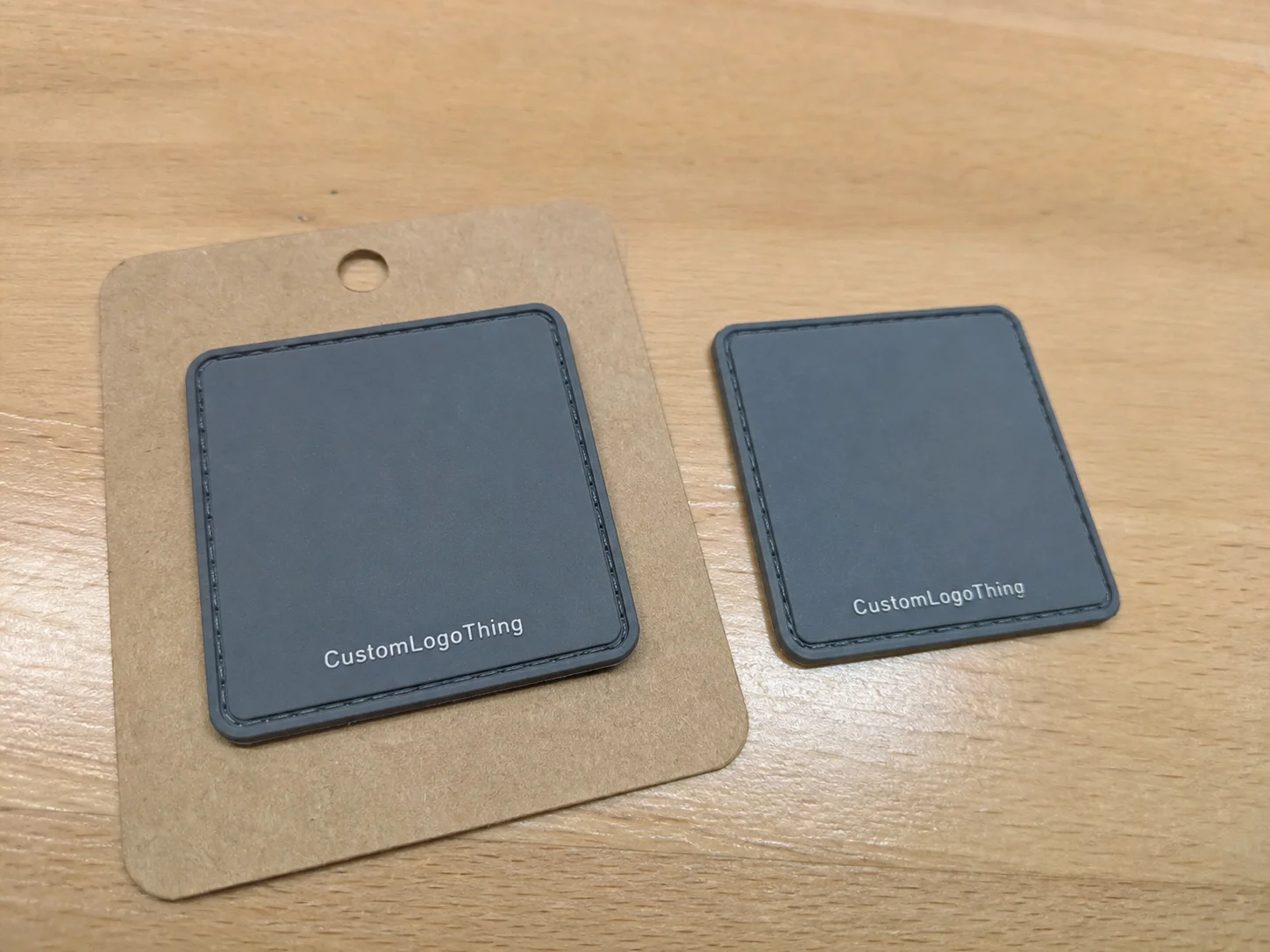
Think about a branded jacket hanging under bright store lighting. A small embroidered mark can look familiar and soft, while screen print may sit too flat for a technical garment. A silicone patch gives the logo physical presence; you can see the edge, feel the relief, and read the shape from a distance, even when the garment is moving.
In practical terms, silicone patches are flexible molded branding pieces that attach to clothing, bags, hats, or outerwear. They are usually made from one or more layers of silicone rubber, then bonded, sewn, or heat-applied to the product. For buyers building broader branded presentation systems, that tactile consistency can tie apparel and packaging together in a way that feels intentional rather than improvised.
Where do they perform best? Hats, jackets, uniforms, sportswear, bags, fleece, denim, and technical shells. Those are the pieces that often need strong branding without loose threads or fuzzy edges. A patch with crisp geometry can be a better fit than embroidery if the artwork has hard corners, narrow letterforms, or a layered look that should stay readable from several feet away.
“The biggest advantage is edge control. Silicone can hold a modern outline and colored recesses without the fray you get from thread-based decoration.”
That edge control is one reason silicone has become so common in sports and outdoor lines. The material keeps detail well, handles contrast nicely, and does not depend on stitch density to communicate the design. For brands that care about first impression, that consistency matters more than many buyers realize.
There is also a production reason these patches are attractive. Once the design is approved and the mold or tooling is set, repeat orders can be very consistent from run to run. That matters for seasonal apparel, uniform programs, and any line where matching prior inventory is part of the job.
How silicone patch construction and application work
Most silicone patches start with vector artwork. That part matters more than people expect. A clean AI, EPS, or PDF file lets the supplier check line thickness, edge radii, and color zones before anything is molded. If the artwork is too detailed, the patch may lose clarity. If it is simplified well, the result can look surprisingly premium.
The typical build includes a silicone face layer, optional raised or recessed details, and a backing method matched to the garment. Some patches are a single molded piece. Others combine layered fills, different surface textures, or a printed or colored base under a silicone top. The exact construction depends on the appearance you want and how the patch will be attached.
Common attachment methods
- Sew-on: Best for denim, canvas, workwear, and garments that will see repeated wash cycles.
- Heat transfer: Useful for many fashion and teamwear applications, but the fabric must tolerate heat.
- Adhesive backing: Good for temporary placement, samples, or short-run promotional apparel.
- Velcro hook-and-loop: Common on uniforms, tactical gear, and interchangeable branding applications.
Each method affects durability, hand feel, and production speed. Sew-on patches are usually the most dependable for rugged apparel, while heat-applied options can create a cleaner surface on a jacket or cap if the fabric and temperature window are suitable. A coated shell or stretch membrane changes the equation quickly, because excess heat can damage the garment before the patch even bonds properly.
Artwork simplification is not a creative insult; it is a manufacturing requirement. Tiny type under about 4–5 mm high, delicate hairline borders, and smooth gradients can disappear or look muddy once translated into molded silicone. A strong logo usually needs bold contours, clear negative space, and a design that still reads if the patch is viewed from an angle or under low light.
There is a practical rule buyers learn fast: if the logo only looks good at full screen zoom, it probably needs revision. The same is true for details that rely on a subtle tonal shift. Silicone does better with decisive shape than with visual tricks.
If you are building a broader branded system, it helps to think about how the apparel piece sits beside the rest of the package branding. A patch that echoes colors, icon style, or finish can reinforce the identity used on hangtags and custom printed boxes, which makes the whole presentation feel more deliberate.
Key design and material factors that change the final result
Thickness is one of the first things buyers should discuss. A higher-profile patch gives stronger visual impact and a more obvious tactile feel, while a flatter build can suit minimalist fashion pieces or lightweight promotional apparel. In practice, many patches fall in the rough range of 1.2 mm to 3.5 mm thick, but the right answer depends on the logo, attachment method, and the fabric underneath.
Surface finish changes the mood of the piece as much as color does. Matte silicone tends to feel more technical and understated, while a gloss finish can create stronger contrast under retail lighting. Multi-color builds are common, but every added color or zone can increase tooling complexity and the chance of minor visual shifts, so simpler often wins unless the brand story truly needs detail.
Color separation is another place where good specs matter. If two adjacent colors are too close in tone, the final patch can lose definition under indirect light or from a few feet away. Strong contrast usually improves readability, especially on smaller patches. Pantone references help, but the actual sample is what settles the issue.
Fabric compatibility is where a lot of orders succeed or fail. A soft fleece jacket behaves differently than a stiff canvas bag. Stretch fabrics move with the body and can stress the bond line, while coated outerwear can be sensitive to heat and pressure. That is why buyers should always specify the exact garment type, not just “shirt” or “jacket.”
Durability depends on the real use case: washing frequency, abrasion, UV exposure, flexing, and whether the item lives indoors or outdoors. A patch on a work vest may need to survive daily movement, grime, and repeated laundering, while a fashion-forward retail piece may need to preserve appearance more than extreme abrasion resistance. ASTM test references, wash testing, and simple wear trials help separate a good-looking sample from a truly dependable production spec.
For packaging and product QA teams that care about handling stress, organizations like ISTA can be useful for thinking through shipment and distribution risks, even though a silicone patch is ultimately a garment component. The point is the same: a product can look perfect in a sample photo and still fail under pressure if the real-world conditions were never considered.
Color consistency also matters across reorders. Silicone can be matched closely, but exact matching still depends on the pigment system, the supplier’s process, and the light source used during approval. If a brand color is mission-critical, physical swatches or retained samples are worth the extra step.
| Patch style | Best use | Typical strengths | Typical tradeoffs |
|---|---|---|---|
| Flat silicone patch | Minimalist fashion, light branding | Clean look, low profile, good color definition | Less tactile depth |
| Raised molded patch | Jackets, hats, sportswear | Strong visibility, premium feel, crisp edges | Can feel stiffer on delicate fabrics |
| Multi-layer patch | Technical and outdoor apparel | More visual separation, bold branding | Higher tooling and setup complexity |
| Hook-and-loop backed patch | Uniforms, tactical gear | Replaceable, functional, reusable | Requires compatible garment or panel |
There is also a packaging angle here. If the patches are going into retail sets, look at how they will be presented alongside folded garments and inserts. Good product packaging can make a simple garment feel more premium, and the patch should support that story instead of fighting it.
Process and timeline: from artwork to finished production
The workflow is usually straightforward, but only if the buyer comes prepared. It starts with a request for specs: size, quantity, color count, backing choice, garment type, and intended use. Then the supplier reviews the vector art and sends a mockup or proof showing the patch shape, color layout, and rough placement.
After proof approval, the supplier may create a sample or proceed directly to tooling and production depending on the order size and complexity. If the patch is simple, full production may move quickly. If it has multiple levels, tiny elements, or a special backing, sample approval often becomes an extra step. That can add several business days, but it is far cheaper than discovering a problem after thousands of pieces are already made.
Typical timelines vary, but a clean order can often move from proof approval to finished production in about 12-20 business days, depending on quantity and method. Small revisions, mold creation, and slower color sign-off are the biggest schedule drivers. If the buyer sends low-resolution art, changes the logo after sampling, or forgets to specify the actual garment fabric, the schedule usually stretches.
Plan for shipping, too. If the patches need to arrive with other branded packaging elements, such as custom printed boxes or folded apparel sets, the total launch plan should include enough buffer for receiving, sorting, and packing. It is a simple thing, but it saves a lot of stress when the retail drop date starts getting close.
A good supplier will ask practical questions instead of only quoting size and quantity. That is a good sign. It usually means they are trying to prevent avoidable problems, not just close the order quickly.
Cost, pricing, MOQ, and quote factors to compare
Pricing for silicone patches for apparel custom logo depends on size, color count, outline complexity, backing method, and total quantity. A 2-inch simple patch in one or two colors will usually be much cheaper than a larger multi-color design with a custom cut shape and sew-on backing. The tooling and setup work have to be spread across the order, so unit cost drops as quantity rises.
For a practical frame of reference, small runs may land in a higher per-unit range because setup is doing most of the work. In many buying scenarios, you may see quotes that behave roughly like this: a low-volume order can be several times more per piece than a 5,000-unit run. The exact numbers vary by supplier, but the pattern is consistent. MOQ is not just a sales term; it reflects mold creation, color separation, and production handling.
Here are the main quote variables buyers should compare on the same sheet:
- Patch size: measured in inches or millimeters, including any border.
- Thickness: thinner profiles may be cheaper, but not always.
- Color count: more colors usually mean more setup and more chances for variation.
- Attachment method: sew-on, heat transfer, adhesive, or hook-and-loop.
- Packaging: individual bags, bulk pack, printed backing cards, or retail-ready presentation.
- Shipping method: air freight costs more; sea freight takes longer but can reduce landed cost.
There are also hidden cost drivers that catch buyers off guard. Rush fees can jump quickly if the schedule is compressed. Sample revisions can add cost if the artwork changes after proofing. Special backing options may need extra materials or handling. And if the order is going into retail packaging alongside other items, the packing labor itself can matter more than people expect.
Another issue is spec drift. If one quote assumes a 2.5 mm patch with heat backing and another assumes a 1.5 mm sew-on version, the numbers are not comparable. A clean comparison protects both budget and expectations. It also avoids the awkward discovery that the cheaper quote solved a different problem.
For buyers managing broader apparel programs, this is also where Custom Packaging Products can fit into the planning process, especially if the patch order is only one part of a larger branded rollout.
Common mistakes to avoid before you approve production
The first mistake is sending artwork that is not production-ready. Raster logos, fuzzy screenshots, and overly detailed gradients are the usual suspects. If the file is not vector, the supplier has to guess too much, and guessing in manufacturing usually ends with revisions.
Another common error is approving a patch without confirming size, thickness, border style, and application method together. A patch that looks great at 3 inches may feel oversized at 4 inches, especially on a cap crown or a chest panel. The same logo can work beautifully on outerwear and feel awkward on a lightweight tee.
Testing is easy to skip and expensive to regret. A wash test on the actual garment fabric can reveal edge lift, adhesive weakness, or an issue with heat exposure. A stretch test on performance fabric can show whether the patch is too stiff for the area where it will be applied. If the patch will be used outdoors, a little UV exposure testing also helps, especially for darker colors and high-contrast branding.
Color drift is another trap. The screen rendering, the proof, and the physical sample may never match perfectly, but they should be close enough to avoid surprises. If a brand color is critical, ask for Pantone references or a physical swatch approval where possible. For a retail line, that small step can protect the whole look of the presentation.
“The easiest order to approve is usually the one that starts with exact specs, not hopeful assumptions.”
One more issue gets overlooked often: edge interaction with the garment. A patch that feels fine on a flat sample can curl slightly on a curved cap panel or sit too stiff across a seam. Placement and panel shape matter, especially with smaller logos. A flat mockup cannot reveal that, but a sample on the real garment often can.
Expert tips for better silicone patch results on apparel
Bold artwork wins more often than crowded artwork. Strong negative space, thicker letterforms, and simple iconography translate more cleanly into silicone. If the design has to be read from a distance, reduce clutter before you reduce size. That makes the patch easier to manufacture and usually more attractive on the garment.
When possible, sample on the exact fabric. A patch may behave one way on twill and another way on coated nylon. That matters for performance wear, outerwear, and workwear, where the fabric finish can affect bond strength and appearance. It is not always necessary, but when the garment is expensive or the order is large, a real fabric test is cheap insurance.
Be clear about the use case from the start. Retail fashion, teamwear, promotional apparel, and industrial workwear all have different expectations. A fashion piece may prioritize profile and appearance. A work shirt may prioritize wash durability and abrasion resistance. A sports line may need flex and weather resistance. The best silicone patches for apparel custom logo orders are the ones where the supplier knows the application before the design is finalized.
Longevity improves when the attachment method matches the laundering schedule. If a garment will be washed often, sew-on may be safer than a lightly bonded adhesive. If the piece must stay smooth and modern, heat application may be better, as long as the fabric can handle it. The goal is not to pick the fanciest method; it is to pick the method that survives the actual use cycle.
Keep an eye on finish consistency across the run. Small changes in curing, color batching, or pressure can produce slight surface differences. These are usually not visible from a normal viewing distance, but on premium apparel they can matter. A production sample should be checked under the same light the buyer will use for sign-off, not under whatever happens to be closest to the packing table.
Finally, think about the whole presentation. If the apparel is part of a launch with inserts, folded pieces, or custom printed boxes, the patch should support the same visual language. Good package branding does not stop at the carton; it extends to every visible surface the buyer touches.
Next steps for ordering silicone patches with confidence
Before requesting a quote, build a simple spec sheet. Include patch size, quantity, garment type, attachment preference, finish, and any color requirements. If you already know the intended fabric, say so. That one detail can prevent a lot of back-and-forth, especially if the garment is stretch, coated, or heavily washed.
Then send clean vector artwork and ask for a proof that shows thickness, border, and placement clearly. If you need a sample, ask early. A sample on the actual fabric can reveal whether the patch feels too stiff, whether the adhesion is strong enough, or whether the scale needs adjusting. That feedback is far cheaper before full production than after inventory is already committed.
From there, decide whether the order needs individual packaging, bulk packing, or pairing with other branded items. If the patches are going into retail packaging, plan for the assembly step so the final presentation looks intentional and consistent. The better you line up production, packaging, and delivery, the easier it is to reorder later with fewer surprises.
For most buyers, the smart path is straightforward: choose a clean design, match the attachment method to the fabric, compare quotes on identical specs, and test the sample before you commit. That is the most reliable way to buy silicone patches for apparel custom logo work without wasting time or money.
For brands that want durable, modern decoration with a premium tactile finish, silicone patches for apparel custom logo can be a strong fit when the art, fabric, and application method are chosen carefully. Get those three pieces right, and the patch usually does the rest.
FAQs
Are silicone patches for apparel custom logo better than embroidery?
They can be better when you want a raised, modern look with crisp edges and stronger weather resistance. Embroidery often suits softer, more traditional branding, while silicone is a strong choice for technical, sporty, or outdoor apparel that needs cleaner shapes and more visual separation.
What fabric works best for custom silicone logo patches on clothing?
Stable fabrics like twill, denim, canvas, and many outerwear shells usually work well. Highly stretchy or heat-sensitive fabrics may need special attachment methods and careful testing before production, especially if the patch will be washed often or exposed to high movement.
How much do silicone patches for apparel custom logo usually cost?
Price depends on size, color count, complexity, backing type, and quantity. Lower quantities typically cost more per unit because setup and tooling are spread across fewer pieces, while larger runs can reduce unit cost if the spec stays consistent.
What is the usual turnaround for custom silicone patches?
Timeline varies based on artwork readiness, proof approvals, sample needs, and production quantity. Clean vector files and fast approvals usually shorten the overall turnaround, while repeated revisions, mold changes, or special application methods add time.
Can silicone patches be washed and worn outdoors often?
Yes, when they are properly specified and attached for the garment and use case. Durability improves when the patch style, backing, and fabric are matched to the expected wash and wear conditions, and a quick sample test helps confirm that fit before full production.


