For a skincare brand, packaging can become a cost center faster than the product team expects. That is why matte Zipper Bags MOQ for skincare brands gets asked early, not late: once a founder compares a flexible pouch against a rigid jar or bottle, the economics usually shift. A matte zipper bag can look premium, ship lighter, and take up far less shelf and warehouse space than hard packaging, which matters when you are moving sample-size serums, sheet masks, wipes, or refill kits.
The visual argument is just as strong. Matte finishes cut glare, photograph better under bright retail lighting, and give even a small launch a more finished look. In practice, the package is doing part of the branding work before the customer ever opens it. That matters for direct-to-consumer skincare brands that need shelf presence without paying for a rigid container structure they do not actually need.
Below, I break down the real tradeoffs behind matte Zipper Bags MOQ for skincare brands, including unit cost, print options, barrier specs, and the production details that push pricing up or down. Two pouches can look almost identical in a mockup and still behave very differently on a filling line.
Why skincare brands switch to matte zipper bags faster than expected
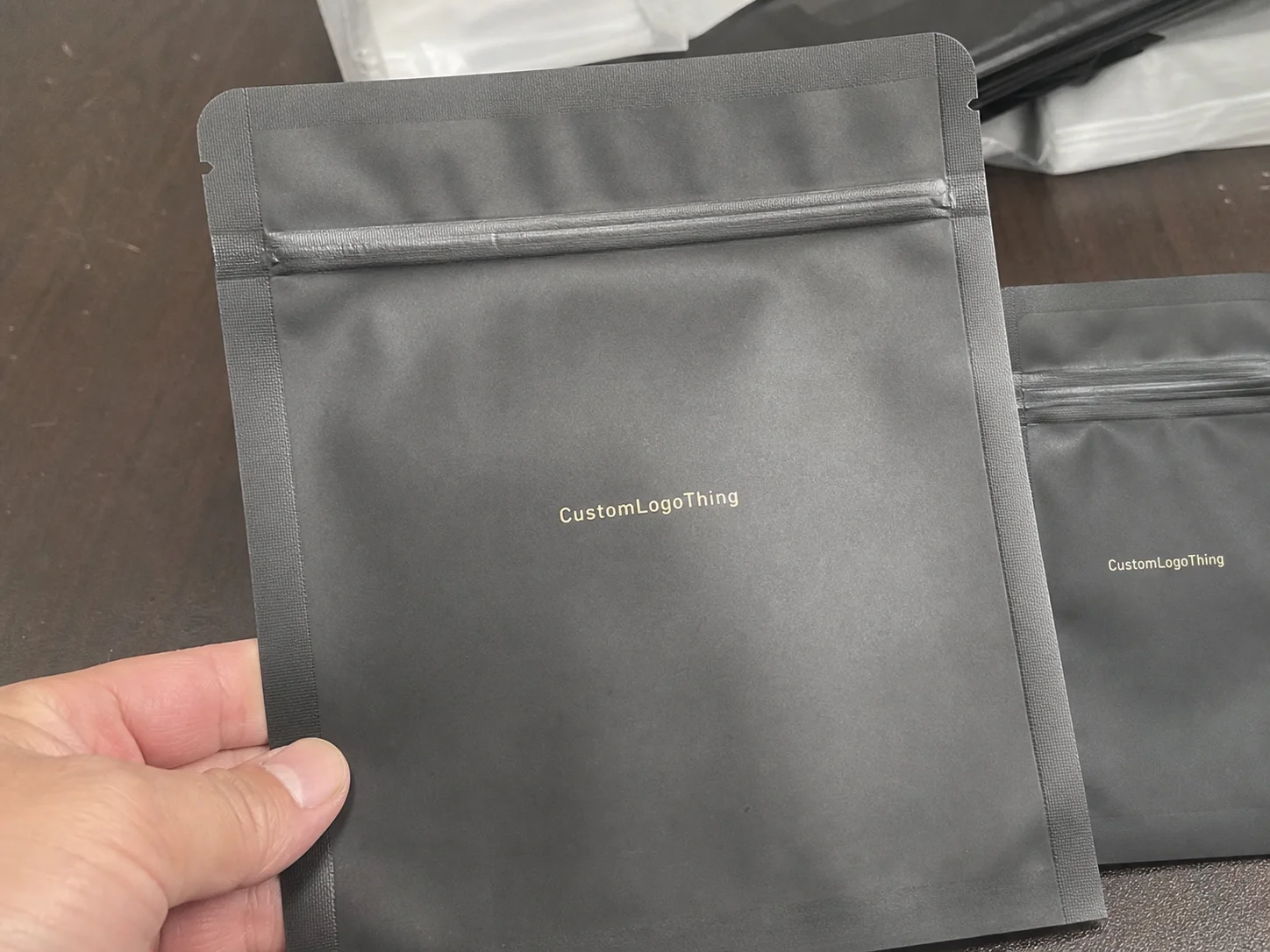
There is a predictable pattern here. A brand starts with a few hero SKUs, then adds travel kits, refill packs, or launch samples, and suddenly the packaging mix gets messy. Rigid containers may still make sense for a mainline serum, but for flat pouches, wipes, or mask refills, a matte zipper bag often offers the cleaner commercial answer. The reason is straightforward: lower freight weight, easier storage, and less empty air moving through the supply chain.
Flexible packaging has a logistics advantage that buyers sometimes underestimate. A carton of flat pouches generally occupies less warehouse volume than a similar number of rigid jars or bottles, and that can influence landed cost as much as the printed price. If your storage is limited, the savings show up twice: once on inbound freight and again on handling. For brands selling into retail, that also matters on the back end, where case packing, replenishment, and shelf restocking all benefit from a format that is easier to stack and move.
The MOQ decision becomes part of the product strategy. A small launch with a few hundred units has different economics from an established product that sells through reliably every month. That is why Matte Zipper Bags MOQ for skincare brands should be tied to forecast, not just to a supplier's published minimum. A useful question is simple: is this a test run, a seasonal drop, or a replenishment item?
A lot of teams overpay because they start by specifying the container they know best, not the container that fits the use case. A flexible pouch can carry a premium look without the material weight of a rigid box or jar. It is not always the answer, but for sample-size serums, cleansing wipes, sheet masks, and refill pouches, it often is.
"The cheapest packaging is the one you can reorder without reworking your line, your artwork, or your cash flow."
Matte zipper bag styles and what actually changes the look
The word "matte" covers several different constructions, and they do not perform the same way. A matte laminate can sit over a printed film to soften glare. A frosted matte film gives a more translucent cosmetic feel. Soft-touch matte adds a velvety surface that feels more premium in hand, but it can also change how inks read. Windowed versions add product visibility, which is useful when the formula itself is visually appealing or when you want the consumer to see fill level.
For closure style, the most common choice is a standard press-to-close zipper. It is simple, familiar, and generally the lowest-cost option in a custom pouch run. Some brands ask for tamper-evident details for retail confidence, especially if the bag holds a refill or a product that could be opened in transit. Child-resistant style closures may be relevant for certain regulated categories, but they are not a default skincare requirement. The function should match the risk profile, not the marketing language.
Shape matters too. Flat pouches are efficient for sample packs and single-use products. Stand-up pouches work better for refillable powders, bath soaks, or larger quantities that need shelf visibility. Gusseted bags give more volume without forcing a bulky rigid format. Custom-shaped pouches are possible, though they usually bring higher setup charges and less price flexibility.
Branding options influence the final appearance more than many teams expect. Surface printing is the usual route for a custom pouch. Labels can work for short-run tests, though they rarely feel as premium as a printed matte finish. Spot UV can create contrast against a matte background, but use it carefully; too much gloss can dilute the look you were trying to achieve. Color contrast matters, especially with light-toned skincare branding where pale inks can disappear on matte films.
Practical use cases break down like this:
- Sheet masks: light barrier needs, high visual appeal, strong retail graphic impact.
- Travel kits: compact format, zipper convenience, repeated handling.
- Refill pouches: better puncture resistance and seal reliability.
- Powders and scrubs: structure and zipper strength matter more than a window.
- Wipes: moisture retention and easy reseal performance are critical.
Specifications that matter for skincare formulas
The bag has to work with the formula, not just with the brand palette. For skincare packaging, the first question is barrier. If the product is sensitive to oxygen, moisture, or light, the laminate structure has to support that. Common structures include PET/PE for general use and PET/AL/PE where higher barrier protection is needed. Aluminum layers add protection, but they also affect recyclability claims and can raise the cost per piece. For some formulas, a metallized barrier film can be a middle ground, though it is not interchangeable with true foil if oxygen and light exposure are the main concern.
Thickness is another practical decision. Thicker films usually improve puncture resistance and give the pouch a sturdier hand feel. Thinner films can lower material cost, but they are less forgiving if the bag will be squeezed, stacked tightly, or filled with a product that shifts in transit. For creams, gels, and water-based formulas, the seal and zipper strength matter as much as the printed finish. A beautiful bag that leaks is a return waiting to happen.
There is also a difference between "looks fine in a proof" and "survives a warehouse." The bag needs enough seal width for the fill weight, enough headspace for the zipper to close cleanly after filling, and enough tolerance in the film so the graphics still register correctly after sealing. If the art file is built too close to the edges, the production crew has less room to compensate for slight movement during cutting and sealing.
From a production standpoint, you want to check seal integrity, zipper pull performance, and leak resistance before mass rollout. If the pouch will travel through distribution centers, parcel networks, or store backrooms, a basic drop test is not enough. The packaging standard most teams should reference here is ISTA for shipping simulation and stress testing. It does not solve every problem, but it gives you a practical framework for validating packaging before you tie up working capital.
Labeling and compliance also deserve attention. You need room for ingredients, batch codes, barcodes, recycling statements, and any warning text that applies to the formula. If the artwork is crowded, the matte surface can help visually, but it does not create more real estate. The print area must be planned up front. I have seen teams reduce font sizes too aggressively just to fit in one more marketing line. That usually creates a readability problem at retail.
Before approval, ask for testing that covers:
- Drop performance with product inside
- Squeeze and compression checks
- Seal line inspection after filling
- Zipper open-close durability
- Shelf-life validation for the actual formula
If sustainability claims matter, check the substrate and the claim language carefully. The U.S. EPA has clear guidance on packaging and recycling claims at epa.gov/recycle. That matters because buyers now ask tougher questions than they used to. A recyclable claim that is not supportable can become a commercial liability.
Pricing and MOQ: what drives your unit cost
This is where buyers usually need the most clarity. The MOQ is not just a number pulled from a catalog. It is the point where setup, materials, color matching, and press time become economically sensible for the supplier. For Matte Zipper Bags MOQ for skincare brands, the minimum often changes based on whether you are ordering stock-style dimensions or a fully custom printed pouch.
Several things drive unit cost:
- Bag size: larger dimensions use more film and often more seal area.
- Film structure: barrier laminates cost more than basic structures.
- Print colors: more colors usually mean more setup complexity.
- Zipper style: standard closures cost less than specialty features.
- Finish: soft-touch matte typically costs more than a standard matte laminate.
- Volume: bigger runs reduce cost per piece.
The rule is simple: lower MOQ usually means higher cost per piece. Larger runs do the opposite. That tradeoff is often the difference between a launch that looks affordable on paper and one that actually supports margin. For many small-run skincare pouches, the unit price can sit in the low cents to several tens of cents depending on size, print coverage, and film structure. Premium barrier builds and soft-touch finishes can move higher. A 1,000-piece order may keep cash risk low, but the per-unit cost can still be materially above a 5,000-piece or 10,000-piece run.
To compare options intelligently, request pricing at multiple breakpoints. Do not stop at one number. Ask for 1,000, 5,000, and 10,000 units. That is the only way to see whether the MOQ premium is worth paying or whether a larger purchase gives you better bulk pricing. If the supplier cannot explain where the price breaks come from, the quote is incomplete.
| Option | Typical use | MOQ behavior | Relative cost per piece | Notes |
|---|---|---|---|---|
| Stock matte zipper bag | Testing, short runs, promo kits | Lower MOQ | Lower to moderate | Limited branding flexibility |
| Custom printed matte pouch | Core retail SKU | Moderate MOQ | Moderate | Better brand control, setup charges apply |
| High-barrier matte laminate | Oils, actives, longer shelf life | Higher MOQ | Higher | Material cost and testing can add to price |
| Soft-touch premium pouch | Prestige skincare | Usually higher MOQ | Higher | Finish can raise tooling fees and lead time |
Do not ignore the hidden costs. Plates, color matching, freight, insert cards, master cartons, and sometimes even secondary packaging requirements can move landed cost more than the printed quote suggests. For a true comparison, ask for a line-item quote that separates the bag cost from setup charges and shipping. That makes it easier to compare suppliers without getting trapped by a low headline number. It also reveals whether the supplier is quoting a real production package or just the printed film.
If you need a good internal benchmark, compare your pouch pricing against similar work in our Case Studies and use the FAQ for basic ordering questions. It will save time if your team is still sorting out whether the launch belongs in a custom run or a lower-risk stock format.
Process and lead time from artwork to shipment
The ordering sequence should be predictable. A good supplier will move through quote request, spec confirmation, artwork review, sample approval, production, quality check, and shipment. When any one of those steps is rushed, the job becomes less stable. Packaging is not mysterious; it is just sequence-sensitive.
The biggest delays usually come from incomplete information. Missing dimensions force rework. Late barcode files delay proofing. Changing the barrier spec after the quote can trigger another sample round. If the pouch structure needs more validation, lead time extends again. From a buyer's standpoint, that is why the earliest packaging conversations should happen before the launch calendar is locked.
Simple stock-format orders can move faster than fully custom, multi-color, or high-barrier builds. A clean, lower-complexity pouch order may be ready in roughly 12 to 15 business days after proof approval, while a more detailed custom run can take longer, especially if samples need to be revised or if the line has to be rescheduled for a color change. If your launch depends on influencers, retail resets, or seasonal windows, build in buffer time. Packaging delays tend to appear late and then get expensive quickly.
Sampling deserves more respect than it usually gets. Digital mockups are useful for design approval, but they do not tell you how the zipper feels or how the seal behaves after filling. Physical samples are the better choice when the product contains oils, actives, heavy refills, or anything likely to stress the closure. For export programs or larger compliance-sensitive projects, some buyers also ask for transit validation against shipping standards before they sign off on final artwork.
A practical review process usually includes one round for structure, one for print, and one for filling. That sounds slow, but it is often faster than fixing a missed detail after production begins. A single missing barcode version, a wrong zipper orientation, or a poorly placed seal line can delay shipment more than an extra sample would have.
How packaging specs support scaling skincare brands
Scaling brands do not just need a pouch; they need repeatability. That means consistent print quality, color control from reorder to reorder, and bag construction that behaves the same across runs. One off-color batch or a weak zipper can trigger returns, consumer complaints, and unnecessary pressure on the brand team. In skincare, packaging is part of the product promise.
A consultative packaging process helps reduce revision cycles. Size recommendations matter because fill volume affects pouch dimensions more than many founders expect. Finish selection matters because soft-touch, standard matte, and frosted films all communicate differently. Print setup guidance matters because logos, small text, and shade matching can shift once you move from screen to production film.
Operationally, matte zipper bags make sense for both direct-to-consumer and retail channels. They store flat, ship efficiently, and are easier to pack in secondary cartons than rigid alternatives. That reduces warehouse clutter and can simplify replenishment. For a growing brand, those details influence cash flow in a way that design mockups never show. They also make forecasting easier because the carton cube is more predictable.
There is a clear divide between brands that specify packaging by aesthetics and brands that specify packaging by use case. The second group usually gets fewer surprises. They ask for the exact fill weight, closure type, print count, target finish, and storage conditions. They also request a realistic reorder plan instead of treating the first purchase as a one-off experiment. That is how you keep matte zipper bags MOQ for Skincare brands aligned with demand rather than with guesswork.
Another practical point is shelf-life drift. A formula that stays stable in a jar may behave differently in a pouch if the barrier is underbuilt or the seal area is too thin. If the product contains actives, oils, or water-sensitive ingredients, the packaging spec should be part of the stability discussion, not an afterthought after the brand team has already approved the artwork.
If you build the spec around the formula, the shelf life, and the channel, the bag does its job from the first shipment to the fifteenth. That is the standard worth aiming for.
Next steps to lock in the right pouch spec
Start with a quote request that includes exact dimensions, fill weight, closure type, print count, and target finish. That gives you a real comparison instead of a rough estimate. If you are comparing vendors, insist on the same spec across quotes. Otherwise the pricing will look comparable when it really is not.
Ask for MOQ tiers and lead times for both stock and custom options before you commit to a launch date. A good supplier should tell you where the price breaks are and what happens to cost per piece as volume changes. That is how you avoid overbuying just to chase a lower number.
Prepare artwork files early. Brand colors, logo files, barcode data, and compliance copy should be ready before proofing begins. If your pouch is going to hold active ingredients, oils, or heavy refills, order a physical sample and run product testing. That step is not a luxury. It is a cheap insurance policy against seal failures and customer complaints.
Finally, build a reorder plan that reflects actual monthly usage. The first order should balance cash flow, inventory risk, and the matte zipper bags MOQ for skincare brands. That is the cleanest way to buy smarter: not just cheaper, but with fewer surprises, fewer revisions, and a package that does the job from the first shipment to the fifteenth.
FAQ
What is a practical MOQ for matte zipper bags for skincare brands?
MOQ depends on whether the bag is a stock format or a fully custom printed pouch. Smaller test runs are usually more realistic with simpler specs and fewer print colors. Higher barrier films, special finishes, and custom sizing typically raise the minimum. For buyers comparing quotes, the key is to ask where the breakpoints change, not just what the lowest number is.
Do matte zipper bags work for oily or water-based skincare products?
Yes, if the film structure and seal strength match the formula. For oils, creams, and gels, barrier performance and leak resistance matter more than appearance. Always confirm compatibility with product testing before mass production. A pouch that looks good but swells, leaks, or loses seal integrity is not a usable package.
How do I compare pricing between different pouch options?
Compare identical specs: size, material, print method, zipper style, and finish. Ask for tiered pricing at several quantities so unit cost changes are visible. Include freight and setup fees so the true landed cost is clear. If one quote is much lower, check whether it leaves out barrier upgrades, print setup, or carton costs.
How long does production usually take after artwork approval?
Lead time varies by complexity, sample approval status, and current production schedule. Simple stock-style orders move faster than fully custom printed runs. Artwork changes after approval can extend the timeline quickly. A realistic schedule also leaves room for a correction round if the first proof exposes a barcode issue or a margin problem.
Can I get samples before placing a full order?
Yes, and samples are strongly recommended for skincare packaging. A sample lets you test zipper feel, seal strength, print clarity, and product fit. Physical samples are especially useful for products with oils, actives, or refill formats. If your formula is sensitive to oxygen or moisture, sample testing should include storage and transport conditions, not only a bench-top inspection.


