The skincare Soft Touch Poly Mailers Unit cost review starts with a simple question: does the mailer feel premium enough to support the brand before the customer opens it? That first touch shapes perception quickly. A matte, soft-feel exterior made from coextruded polyethylene film with a soft-touch finish makes a shipment look more deliberate, which is why these mailers show up in skincare sample kits, subscription refills, influencer mailers, and light ecommerce orders.
For buyers, the decision is not about trend chasing. It is about the quote-sheet tradeoffs: unit cost, print quality, protection, lead time, and whether the order can be repeated without surprises. If you are comparing custom poly mailers with cartons or plain bags, the finish, film gauge, and minimum order quantity can change the economics more than expected. Once the specs are locked, the math gets much easier. For most programs, the useful buying window starts around 500-1,000 pieces and scales into 5,000-10,000+ piece runs once the artwork and size are stable.
Why Soft-Touch Mailers Change the Buying Decision
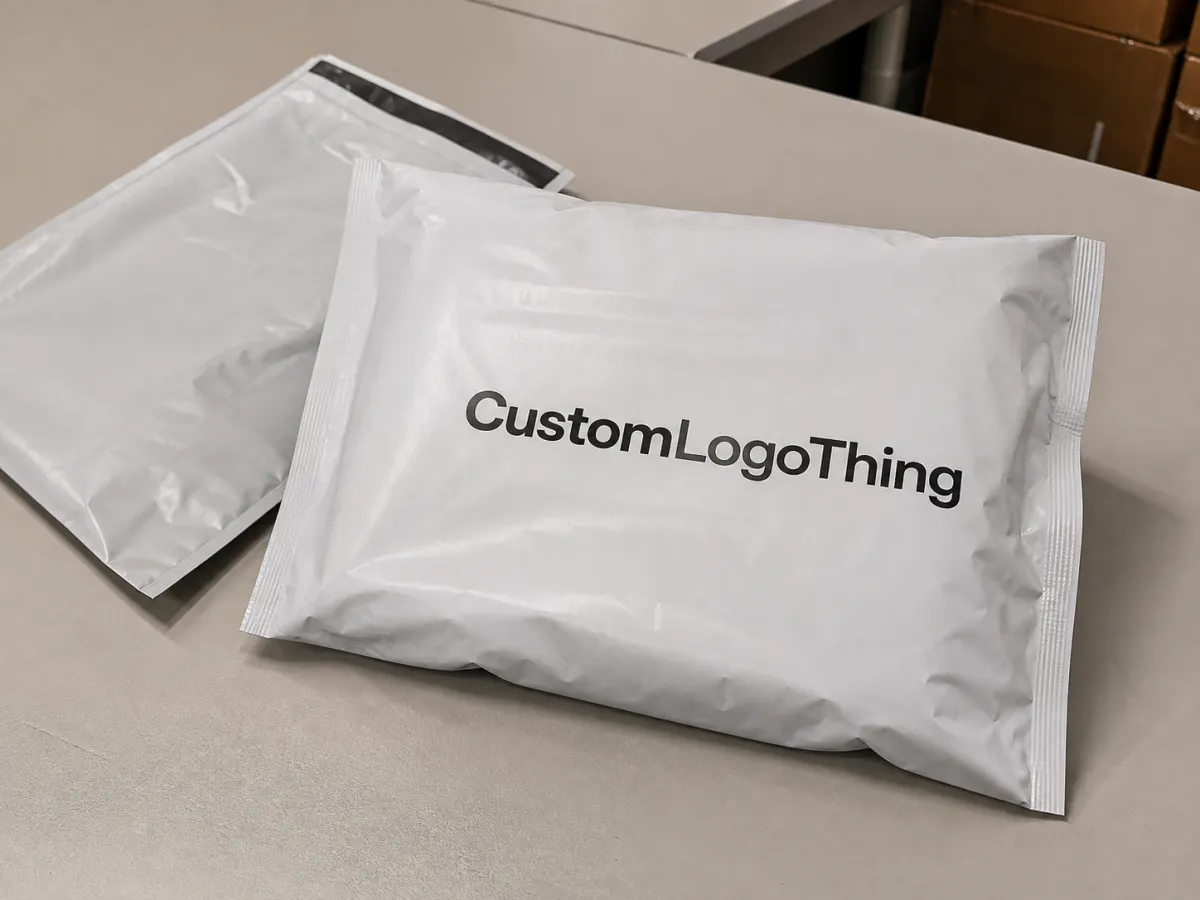
Soft-touch changes the decision because it makes a flexible package feel intentional instead of incidental. A glossy poly mailer reads as basic fulfillment packaging. A matte soft-touch surface feels quieter, more controlled, and more expensive, which fits skincare brands built around calm, texture, and trust.
That is why this review should begin with the customer experience, not just the price. In many DTC orders, the mailer is the first branded object the buyer sees after checkout. If the item inside is a serum, a lotion refill, or a sample trio, the outer package becomes part of the product story.
The format also fits specific use cases. Sample kits need something that photographs well. Subscription refills need predictable cost so margins do not get squeezed later. Influencer drops need a premium feel without the freight penalty of a rigid box. Lightweight ecommerce orders need protection that does not add unnecessary dimensional weight.
Buyers usually compare three things first: appearance, protection, and cost structure. The appearance should stay clean after carrier handling. The protection should resist scuffs and punctures. The cost structure should make sense at the actual MOQ, not just at an ideal volume. Ignore one of those and the order may look fine in a spreadsheet while failing in use. A well-made mailer usually starts with LDPE/LLDPE or a coextruded PE blend in the 2.5-4.0 mil range, depending on the product weight and route.
What the Material, Seal, and Finish Need to Deliver
A soft-touch poly mailer is still a poly mailer. It is not a rigid carton or luxury box with corners and inserts. It is a flexible film package with a tactile surface treatment that improves hand feel while staying light and efficient. That is the appeal: premium presentation without turning the package into something heavy, bulky, or expensive to ship.
The base film is usually coextruded polyethylene in the 2.5 to 4 mil range, depending on product weight and shipping conditions. Thicker film can improve puncture resistance and make the bag feel more substantial, but more film is not automatically better. For a small lotion sample, 2.5 to 3 mil may be enough. For bundled skincare sets or a pouch packed with insert cards, 3.5 to 4 mil is a safer place to start. If recycled content is part of the brief, ask for GRS-certified recycled PE and clear percentage documentation on the quote and carton label.
The seal deserves the same attention as the film. A self-seal strip has to close cleanly and stay closed through handling, conveyor sorting, and the occasional rough trip. If the adhesive is weak, the mailer can open in transit. If the lip is poorly aligned, the seal can wrinkle or fail to sit flat. For repeat production, buyers should ask for seal-width control, adhesive peel testing, and a simple burst or pull test before the run is approved.
Soft-touch finish affects more than appearance. It can reduce glare, hide fingerprints, and make printed logos read more clearly against the background. For skincare branding, that muted matte look usually works better than gloss because it feels controlled and photographs well under harsh light. In production, that finish is typically achieved through a matte coextrusion layer or a soft-touch coating matched to the print system, usually gravure or flexographic printing depending on artwork complexity and run size.
If a buyer wants a baseline for performance testing, standards from ISTA are a practical reference point. Packaging teams often use ISTA procedures to think about drop, vibration, and transport stress, even when the final pack is simple. For compliance and supplier screening, ask whether the factory holds WRAP or BSCI audit results for social compliance, and request lot-level QA records for film thickness, seal integrity, and print adhesion before shipment. For sustainability context, the EPA’s packaging and waste reduction resources at epa.gov are useful when a brand is balancing presentation with waste claims.
Sizes, Thickness, and Print Specs That Protect Margin
The first sizing question is simple: what fits inside the mailer without stressing the seal? Flat mailers work best for slim skincare SKUs, such as tubes, sample sachet packs, and small refill pouches. Wider formats are better for bundled kits, printed inserts, and promo cards. Oversized bags can solve a shipping problem quickly, but they also raise material cost and can make the parcel look underfilled.
Thickness affects feel, puncture resistance, and freight efficiency at the same time. A heavier gauge can make the package seem more durable, but overbuilding the film usually adds cost without meaningful protection. For many ecommerce programs, the sweet spot is the lightest spec that survives the route and still presents well on arrival. Common production specs include 60-100 micron film, with 75-90 micron being a practical middle ground for many skincare mailers.
Print specs need the same discipline. A single-color logo often gives the best cost control. Two or three colors can still be affordable if the artwork is clean and coverage stays moderate. Full-coverage graphics, inside printing, or white ink underlays add setup complexity and can move the quote fast. Registration tolerance matters too, especially if the art depends on fine lines or tight borders. Buyers should ask for a digital proof, then a printed strike-off or pre-production sample to confirm ink density, color match, and edge alignment before mass production starts.
A common mistake is treating the mailer like a mini billboard. Strong branding does not require maximum coverage. A restrained design on a soft-touch base can look more premium than a crowded print and is usually easier to reproduce consistently.
A practical rule: define the product size first, then the bag size, then the artwork. Reversing that order is how teams end up paying for a prettier package that ships badly.
Useful spec choices by use case
- Sample kits: smaller footprint, 2.5-3.0 mil film, simple one-color branding, and a pre-production sample before approval.
- Subscription refills: mid-gauge film, reliable seal, repeatable print placement, and consistent bag tolerance across reorders.
- Influencer mailings: stronger matte presentation, cleaner print finish, room for inserts, and controlled color matching across lots.
- Bundled ecommerce orders: wider format, 3.5-4.0 mil film, better puncture resistance, and reinforced seal quality.
Skincare Soft Touch Poly Mailers: Unit Cost, MOQ, and Quote Drivers
A skincare soft touch poly mailers unit cost review has to start with order size, because quantity changes pricing more than almost anything else. Small runs spread setup charges, labor, and tooling across fewer units. Larger runs lower the per-piece cost, but only if the design and specs stay stable. At 500 MOQ, a custom soft-touch mailer can land around $2.50-$4.00 per unit; at 1,000 pieces, many quotes fall into the $1.20-$2.10 range; at 5,000 pieces, $0.38-$0.82 is more typical for a straightforward one- or two-color build.
The main price drivers are predictable: size, film thickness, print coverage, number of colors, finish, and total quantity. Some suppliers quote tooling separately, while others fold it into the unit price. That is why the lowest quote is not always the best quote. The real number is the landed cost, not just the bag price. Ask whether the quote includes plate charges, packaging, carton marks, and any color-matching fee, because those line items can shift the total by 8-15% on a small run.
| Order Tier | Typical Spec | Approx. Unit Cost | Best Fit |
|---|---|---|---|
| 500 pieces | Simple print, standard size, light-to-mid gauge film | $2.50-$4.00 | Launch tests, samples, and small campaigns |
| 1,000 pieces | One-color to two-color print, soft-touch finish, moderate coverage | $1.20-$2.10 | Early repeat orders and controlled ecommerce runs |
| 5,000 pieces | One to two colors, soft-touch finish, moderate coverage | $0.38-$0.82 | Growing ecommerce and repeat refills |
| 10,000+ pieces | Stable artwork, fixed size, streamlined packaging spec | $0.22-$0.48 | Scaled replenishment and seasonal rollout programs |
MOQ is not just a number to negotiate down. It is a reflection of how the factory runs the line. A supplier using gravure printing, custom plates, and a dedicated bag-making line usually needs a higher minimum than a shop running shorter flexographic jobs. If the artwork changes every order, the true MOQ rises because setup time rises with it.
When a buyer wants a lower entry point, the best lever is usually simplification: fewer colors, a standard bag size, no inside print, and no specialty embellishments. That combination can keep the quote accessible while preserving the premium soft-touch feel. A sample fee is common at this stage, often refunded or credited back against a confirmed order if the final PO moves forward.
Process, Timeline, and Production Steps From Proof to Ship
Most buyers want one thing here: a predictable schedule. A realistic custom soft-touch poly mailer timeline is usually 5-7 business days for sample making, 1-2 business days for proof approval, and 18-22 business days for production after final approval, assuming the artwork is locked and no material shortage interrupts the run. If the order needs special recycled content, a new plate set, or a color match revision, add time for those steps.
The production sequence is usually straightforward. First comes artwork confirmation and dieline review. Then the factory prepares print plates or digital files and produces a pre-production sample. After approval, the film is extruded or pulled from stock, printed on a gravure or flexographic press, cured, slit, sealed, and cut to size. The final step is packing, carton labeling, and a shipment inspection before dispatch.
Inspection should not wait until the end. Good suppliers check film gauge during extrusion, confirm ink adhesion after printing, inspect seal width and tack during bag making, and verify finished dimensions against the spec sheet before cartons are closed. For shipment release, it is reasonable to ask for random AQL sampling, drop-test confirmation, and photo documentation of the packed cartons. A simple checklist catches most problems before they become a chargeback.
Factories that run this well usually have a clearer QC rhythm than a buyer expects: incoming resin verification, in-process thickness checks, print registration checks, seal-strength checks, and final carton count verification. That is the difference between a one-time quote and a repeatable supply chain.
For brands with tighter calendars, ask whether the supplier can stage production in batches. Splitting a 10,000-piece order into two 5,000-piece lots can reduce risk if the launch depends on a hard date, although it may increase total unit cost slightly.
What Sets a Reliable Supplier Apart on Repeat Orders
A reliable supplier makes the second order easier than the first. That usually means they keep a master spec sheet, a locked color reference, and a saved dieline that can be rerun without guesswork. It also means they do not quietly change the film blend, adhesive, or print process after the sample is approved.
Good factories are transparent about what they can control and what they cannot. They will tell you when a special matte finish needs a different line, when a recycled-content request changes the film properties, or when a tight deadline means the packaging spec has to be simplified. That honesty matters more than a polished quote.
For compliance-minded buyers, certifications matter because they reduce follow-up work. WRAP or BSCI helps screen social compliance. GRS supports recycled-content claims when the recycled resin chain of custody is documented. If the supplier offers any additional testing, ask for the actual reports rather than a logo on a brochure. A real certificate number and date are more useful than a generic statement.
Repeat-order reliability also shows up in the QC routine. A better supplier will keep print targets, adhesion logs, and finished bag measurements tied to the PO. That makes it possible to compare lot against lot if the mailer arrives slightly lighter, glossier, or looser than expected.
How to Request a Quote, Compare Samples, and Place the Order
The fastest way to get a useful quote is to send a spec package, not a vague idea. Include the bag size, film thickness, quantity, print colors, finish, sealing style, and whether the order needs recycled content or any social compliance documentation. If the supplier has to guess, the quote will be broad and usually optimistic.
Ask for three things in the sample step: a digital proof, a blank or plain-material reference sample, and a printed pre-production sample. The proof confirms layout. The blank sample confirms hand feel and thickness. The printed sample confirms color, finish, and logo placement. If the sample feels right but the print is off, the order is not ready.
Before placing the PO, compare the supplier response against a short checklist: unit price at your actual MOQ, lead time in business days, plate or setup fees, sample cost, packaging method, and the inspection standard they use. If the factory cannot explain how they check dimensions, seals, and print quality, that is a warning sign even if the price looks attractive.
Once the order is approved, keep the last signed proof, the final spec sheet, and the photo of the approved sample in one place. Those three items make reorder conversations much faster and reduce the risk of silent changes later.
If the goal is a premium but practical presentation, the simplest path is usually best: a fixed bag size, 2.5-4.0 mil PE film, a restrained one- or two-color print, a verified seal, and a supplier that can show real QC checkpoints. That combination is what keeps the package looking upscale while the cost stays manageable.
FAQ
What is the best MOQ for a first order?
Most first-time buyers start at 500-1,000 pieces so they can test branding and shipping performance before scaling.
How long does production usually take?
A typical schedule is 5-7 business days for samples and 18-22 business days for mass production after final approval.
What certifications should I ask for?
For social compliance, ask about WRAP or BSCI. For recycled content, ask for GRS documentation. If the supplier makes any sustainability claim, request the actual certificate number and date.
What is the most important QC checkpoint?
Seal strength and print adhesion are the biggest early warnings, followed by bag dimensions and film thickness consistency.
How can I keep costs under control?
Use a standard size, limit the color count, avoid inside printing, and lock the spec before asking for the final quote.