The blank beanie is rarely the villain. Buyers searching for a Logo Patch Beanies unit cost breakdown need more than a nice mockup and a suspiciously low starting price. The patch, attachment method, setup charges, packing, freight, and quantity usually decide whether the order feels smart or painfully underquoted.
Logo Patch Beanies work because they create a retail-level look without forcing buyers into a fully custom knit program. For brands, teams, breweries, outdoor shops, employee kits, and merch drops, a stock cuffed beanie with the right patch often looks cleaner than knitting the logo directly into the hat. Direct embroidery still has a place, but ribbed knit stretches. Fine lettering gets jumpy. Small shapes lose their manners.
A patch gives the logo its own controlled surface. Woven patches can hold small type. Leatherette patches add a premium look without genuine leather pricing. PVC patches deliver color consistency and durability. The tradeoff is simple: patches may cost more than basic embroidery on tiny orders, but they can protect the brand mark much better across the full run.
Practical buyer rule: if the logo has small text, thin lines, or a badge shape, price the patch option before settling for direct embroidery. Cheap branding is only cheap until it looks cheap.
Logo Patch Beanies Unit Cost Breakdown: What Actually Moves the Price
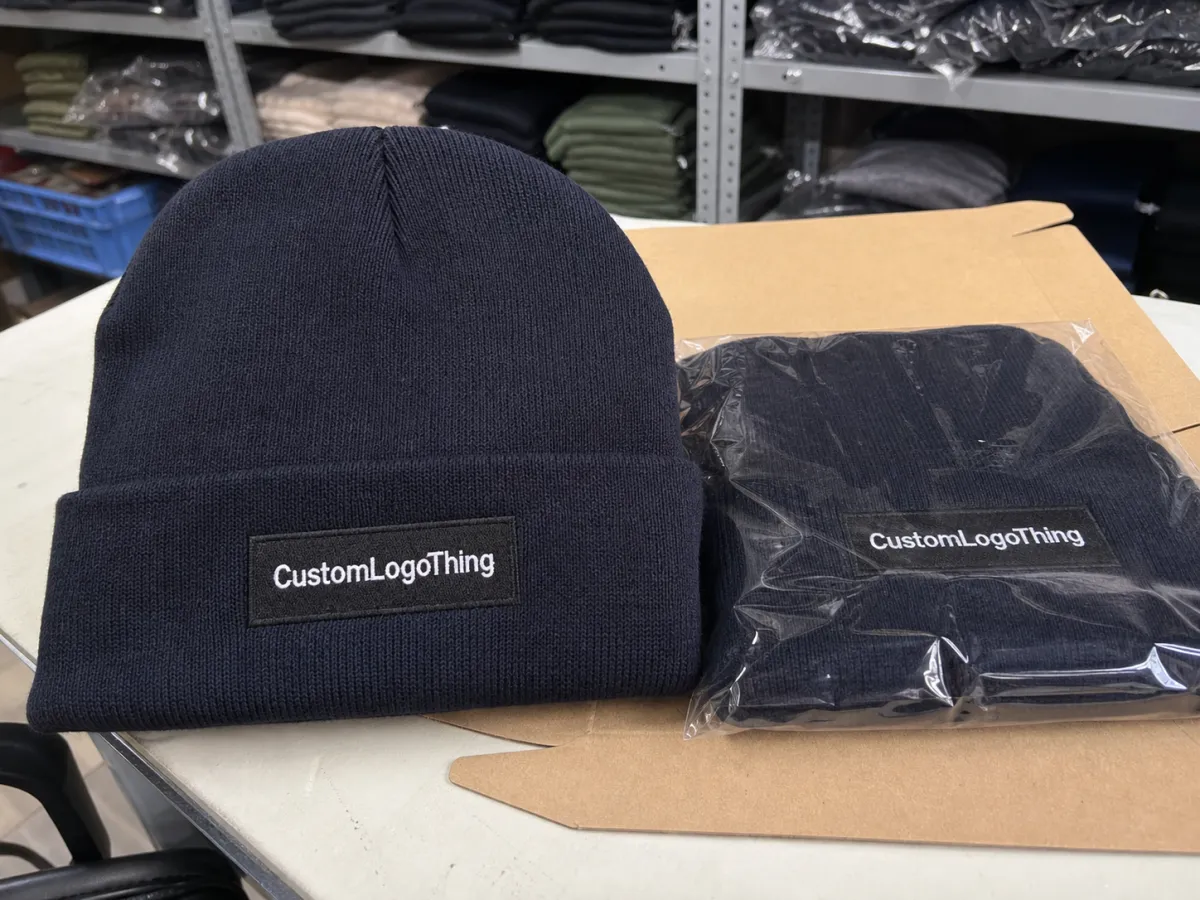
A real logo patch Beanies Unit Cost Breakdown starts with the finished product, not just the beanie. The cost per piece usually includes the blank hat, patch production, patch application, proofing, setup charges, packing, freight, and sometimes duties or delivery fees. If one of those lines is missing, it did not disappear. It is probably waiting for you later.
For stock cuffed acrylic beanies, the blank may be the simplest part of the quote. A basic blank can sit in a reasonable range, while the finished branded unit rises because patch labor and setup are spread across the order. On 100 pieces, every setup fee hurts. On 500 pieces, the same fee becomes less dramatic. Math is rude like that.
Patch beanies also carry stronger perceived value than many low-cost promotional hats. A clean 2-inch woven patch on a stable cuff can look ready for a merch wall, not just a giveaway bin. That matters if the beanie will be sold for $18-$30, added to a premium employee kit, or bundled into a holiday box.
These are the cost drivers that move pricing fastest:
- Patch material: woven, embroidered, leatherette, PVC, sublimated, rubber, and genuine leather all price differently.
- Patch size: a 1.5-inch patch and a 3-inch patch do not use the same material, labor, or production time.
- Patch shape: circles, rectangles, and simple shields usually run cleaner than detailed die-cut shapes.
- Attachment: sewing is common and durable, while heat application depends heavily on patch backing and knit material.
- Quantity: MOQ and bulk pricing change the unit cost more than most first-time buyers expect.
- Packing and freight: beanies are soft, but cartons still take space. Bulky cartons can punish a fake-low unit price.
Use the cost breakdown as a buying tool, not a spreadsheet fantasy. If a quote looks too neat, ask what is excluded.
Patch Style Choices That Change the Beanie Price Fast
Patch type is one of the fastest ways to change the finished unit cost. The right choice depends on logo detail, quantity, brand position, and how the beanie will be used. A staff giveaway has different pressure than a retail merch drop. Not every premium patch is worth buying, and not every budget patch looks bad. Annoying, but true.
Woven Patches
Woven patches are usually the clean choice for small lettering, thin lines, and detailed brand marks. They use woven thread rather than raised embroidery stitches, so edges can look sharper. For a 2-inch patch on a standard cuffed beanie, woven is often a strong mid-range option with good logo clarity. If your mark has tiny type, start here.
Embroidered Patches
Embroidered patches feel classic and textured. They are good for bold logos, simple shapes, and outdoor-style branding. Tiny type is the weak spot. Thread density matters, border quality matters, and cheap thread work looks like a craft project. Nobody needs that sitting front and center on a forehead.
Leatherette and Genuine Leather Patches
Leatherette patches are popular for boutique brands, breweries, outdoor merch, and coffee shop retail because they look premium without genuine leather pricing. They can be laser-engraved or debossed depending on the material. Genuine leather costs more, varies more, and needs more care in production, but it can make sense for higher-end programs where material feel matters.
PVC, Rubber, and Sublimated Patches
PVC and rubber patches are durable, modern, and strong for color consistency. They usually carry higher tooling fees or mold charges, especially for custom shapes. Sublimated patches are useful for full-color artwork, gradients, and photographic detail, although they can feel flatter than woven or embroidered patches.
| Patch Type | Best For | Typical Cost Position | Watchout |
|---|---|---|---|
| Woven | Small text, detailed logos, clean edges | Mid-range | Can look flat if the design needs texture |
| Embroidered | Bold logos, classic merch, textured branding | Low to mid-range | Tiny lettering can get messy |
| Leatherette | Boutique, outdoor, brewery, retail programs | Mid-range | Engraving contrast depends on material color |
| PVC or Rubber | Durable color logos and modern branding | Mid to high | Mold or tooling fees can raise small-run costs |
| Sublimated | Gradients, full-color art, photographic detail | Mid-range | Less dimensional than thread or molded patches |
Shape also affects labor and waste. Circles and rectangles are boring for a reason: they are efficient. A custom die-cut mountain goat with antlers and a banner may look fun on screen, but production still has to make it cleanly at beanie size.
Beanie Specs Buyers Should Lock Before Requesting Pricing
Vague specs create vague pricing. Vague pricing is where surprise fees go to breed. Before asking for pricing, lock the basics: beanie style, material, cuff type, patch material, patch size, patch placement, quantity, packaging, deadline, and delivery location.
Common beanie body types include cuffed beanies, slouch beanies, fisherman beanies, pom beanies, waffle knit beanies, and rib knit beanies. For most branded patch orders, cuffed acrylic beanies are the cost-efficient workhorse. They are stable, widely available, easy to wear, and familiar to buyers. Not glamorous. Very useful.
Material choice changes both pricing and positioning. Acrylic is budget-friendly, color-stable, and common for promotional and merch programs. Cotton feels softer and more casual, but it can stretch differently. Wool blends cost more and carry a more premium outdoor feel. Recycled yarn and performance blends can support sustainability or activewear positioning, though availability and MOQ may narrow the options.
Cuff height deserves more attention than it gets. A taller cuff often gives the patch a cleaner landing area and reduces distortion once the beanie is worn. A short fisherman cuff can look sharp, but the patch needs to be sized carefully. A 3-inch patch on a shallow cuff is not bold. It is cramped.
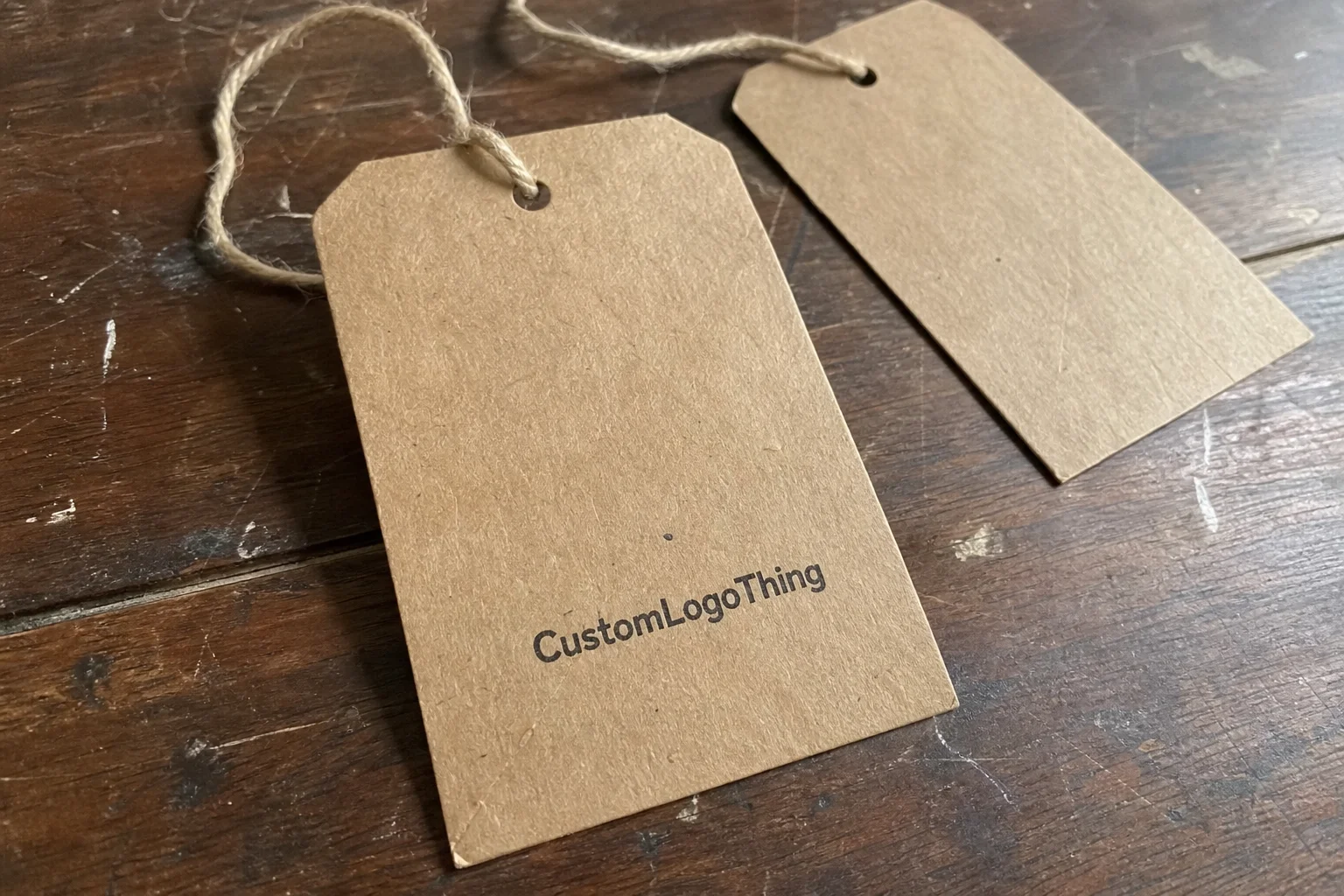
Color selection affects cost and timing. Stock colors move faster and usually cost less. Black, heather gray, navy, forest, charcoal, cream, and burgundy are common because people actually buy them. Custom yarn colors require higher MOQs, longer production, and tighter approval steps. If a program includes paper-based hang tags or retail packaging components, buyers may also want to review sourcing standards such as FSC.
Private label add-ons can lift the whole program. Inside woven labels, hang tags, belly bands, custom polybags, barcode stickers, carton labels, and retail-ready case packs all add cost, but they may be necessary for stores, fulfillment centers, or brand shops. Ask early. Adding barcode stickers after packing is exactly as irritating as it sounds.
Unit Cost, MOQ, and Quote Variables to Check Line by Line
No single number fits every order. A proper logo patch Beanies Unit Cost Breakdown depends on beanie quality, patch type, order volume, packaging, freight, and delivery terms. Small runs often carry higher per-unit costs because setup, proofing, and labor are spread across fewer pieces.
As a rough buying frame, 100 finished patch beanies may cost meaningfully more per piece than 250 or 500 because fixed costs have fewer units to hide inside. A stock beanie with a woven or embroidered patch may land in one range, while a PVC patch with a mold, custom packing, and air freight lands somewhere else entirely. Anyone promising one universal number is selling confidence, not accuracy.
Check these quote lines before comparing vendors:
- Blank beanie: style, material, color, cuff, and size profile.
- Patch production: patch type, size, shape, border, colors, and backing.
- Patch attachment: sewing, heat application, or another approved method.
- Setup charges: digitizing, laser setup, mold fees, or tooling fees.
- Sample fee: physical sample, pre-production sample, or production photo approval.
- Packing: individual polybags, belly bands, hang tags, barcode stickers, or master cartons.
- Freight and duties: shipping method, delivery location, customs, and final delivery terms.
Ask whether the quoted unit price includes patch application. Some quotes separate patch production from sewing. Cute trick. Not cute on an invoice.
Delivery terms matter too. EXW means the goods are priced at the supplier location, and you handle the rest. FOB usually means the supplier gets goods to the export point, then freight continues from there. Delivered pricing means the quote includes transport to your destination, though duties, taxes, and accessorial fees still need confirmation. Compare apples to apples, unless you enjoy being surprised by freight bills.
Request tiered pricing at three quantities, such as 100, 250, and 500 units. Sometimes the price break at 250 is meaningful. Sometimes it is barely worth the extra inventory. The only way to know is to see the numbers in the same format.
Process and Timeline From Artwork Approval to Delivery
The production path is straightforward when the specs are clean: quote request, artwork review, digital proof, sample or pre-production photo, bulk production, quality check, packing, shipping, and delivery. The trouble usually starts when artwork arrives as a tiny screenshot or the delivery address appears three days after packing.
Vector files are preferred. AI, EPS, SVG, or clean PDF files usually give production the best starting point. High-resolution PNG files can work if the logo is simple, but fine type, gradients, distressed textures, and tiny outlines need review. A good supplier should tell you if the artwork needs simplification before production, not after 500 beanies are decorated.
Proofing is not a rubber stamp. Confirm patch size, patch colors, border style, beanie color, placement, orientation, and attachment method. Review the proof at actual patch size. A logo blown up on a 27-inch monitor will lie to you. Small letters that look acceptable on screen may disappear at 1.75 inches wide.
Physical samples take longer and cost more, but they reduce risk for retail launches, brand shops, investor kits, employee welcome boxes, and large promotional runs. For smaller giveaways, a digital proof plus pre-production photo may be enough. That depends on your risk tolerance and how strict the brand standards are.
Lead time varies. Stock beanies with standard woven or embroidered patches can often move faster than custom-dyed yarn, molded PVC patches, or retail packaging programs. Custom yarn colors, special labels, molded patch tooling, and individual barcode stickers add steps. Build a buffer if the beanies are tied to a launch, trade show, employee kit, or holiday drop. Shipping companies are not emotionally invested in your deadline.
Quality and transit standards matter for larger programs. For packaged goods moving through distribution, testing frameworks from groups such as ISTA can help buyers think about carton handling, compression, and shipping risk. A beanie is soft. A crushed retail carton still looks bad.
Quality Checks That Prevent Cheap-Looking Patch Beanies
Quality control is not just counting cartons. For patch beanies, the details that matter are patch alignment, edge finish, stitching consistency, color accuracy, cuff height, and beanie shape. A crooked patch can ruin an otherwise decent product in one second flat.
Ribbed knit is tricky because it stretches. The patch has to look right when the beanie is worn, not only when it is lying flat on a table. Placement that looks centered on a flat cuff can shift once the fabric expands. That is why pre-production photos or samples are useful, especially for first orders.
Common problems include crooked patches, puckering around the patch, loose threads, fuzzy logo edges, inconsistent cuff height, and color drift from the proof. Color matching is not magic, either. Exact Pantone matching depends on the patch material and production method. Woven thread, PVC, leatherette, and sublimation all interpret color differently. A bright orange in PVC may not match an orange thread perfectly. Manage that expectation before bulk production.
Attachment method matters. Sewing is common and durable for most patch beanies. Heat press can work for certain patches, but it is not right for every knit or patch material. Too much heat or pressure can flatten the knit, distort the cuff, or weaken adhesion over time. If the beanie will be washed, worn outdoors, or sold as retail merch, durability deserves more weight than shaving a few cents.
Ask for production photos before the full run ships, especially on first orders or tight brand-standard projects. You want to see patch position, beanie color, stitch quality, and packing style. If the lettering disappears in the proof, it will not magically become crisp in bulk. Simplify tiny logo details early. Pride is expensive.
A clean cost breakdown should include enough quality control detail to protect your margin. A retail-ready beanie can sell, gift, or promote properly. A sloppy patch beanie becomes closet clutter with a logo on it.
How Custom Logo Things Builds Cleaner Quotes for Patch Beanies
Custom Logo Things builds quotes around the actual finished product: the beanie, patch, decoration method, packaging, shipping path, and delivery needs. That sounds basic. Plenty of quotes skip half of it anyway.
The goal is transparent pricing, not one mysterious number with missing fees tucked behind it. A proper logo patch beanies unit cost breakdown helps buyers see why a woven patch may price differently from leatherette, why PVC may need tooling fees, and why retail packaging changes packing labor. If you are comparing vendors, that structure matters.
The team can recommend a patch type based on the logo, order quantity, beanie style, and intended use. A detailed badge logo may need woven. A simple outdoor mark might look excellent on leatherette. A full-color mascot may call for sublimation. A modern brand icon might work best as PVC if the quantity supports the mold cost.
Manufacturing flexibility also matters. Stock beanies make sense for faster programs and lower MOQs. Custom beanies can make sense for larger branded runs, especially if you need custom yarn colors, unique knit patterns, or private label finishing. Retail add-ons such as inside woven labels, hang tags, belly bands, barcode labels, and case-pack instructions should be planned before production, not after the cartons are sealed.
Artwork support belongs in the cost conversation. Fine lines may need thickening. Small text may need to be removed or enlarged. Patch dimensions may need adjusting so the logo fits the cuff instead of bullying the artwork into a bad shape. Honestly, sometimes a woven patch on a good cuffed acrylic beanie beats an expensive patch on the wrong blank. Premium parts do not rescue poor decisions.
Freight and packing should be considered early because a cheap unit price can get wrecked by bulky cartons and bad shipping assumptions. The point is not to make the quote look artificially low. The point is to make the final delivered order make sense.
Next Steps Before You Order Custom Patch Beanies
Before requesting pricing, gather the details that affect the quote. You do not need a 40-page spec packet. You do need enough information to avoid vague estimates and surprise charges.
- Send a vector logo file if available, or the highest-resolution artwork you have.
- Choose the beanie style: cuffed, fisherman, slouch, pom, waffle knit, or another body.
- Pick one or two patch options to compare, such as woven versus leatherette or embroidered versus PVC.
- Share the quantity range, deadline, and delivery location.
- List packaging needs, including polybags, hang tags, belly bands, barcode stickers, or retail cartons.
- Ask for quantity breaks at 100, 250, and 500 units so the bulk pricing is visible.
- Confirm whether setup charges, samples, packing, freight, and duties are included or separate.
Do not ask for every possible variation unless you enjoy slow quoting and muddy decisions. Pick two realistic patch directions and compare them properly. Review the proof at actual patch size, not zoomed in until every impossible detail looks possible. For first-time programs, large orders, and retail launches, request a sample or at least a pre-production approval photo.
Use the logo patch beanies unit cost breakdown to send cleaner specs, compare quotes honestly, and avoid buying the cheapest option that becomes expensive later. The best order is not always the lowest unit cost. It is the one that looks right, lands on time, and does not hide half the bill until the end.
FAQ
What is included in a logo patch beanies unit cost breakdown?
A proper logo patch beanies unit cost breakdown should include the blank beanie, patch production, patch attachment, setup charges, proofing or sampling, packaging, freight, and any duties or delivery charges. If a quote only shows one unit price, ask whether patch application and shipping are included. Those are common places for surprise costs.
What is the typical MOQ for custom logo patch beanies?
MOQ depends on patch type and beanie style. Stock beanie programs usually start lower than fully custom knit beanies, while custom yarn colors, molded patches, and private label packaging may require higher quantities. Higher volume usually improves the cost per piece because setup, labor, and patch production are spread across more units.
Which patch type is cheapest for logo beanies?
For many orders, woven or embroidered patches are the most cost-efficient options, depending on logo detail and quantity. Leatherette can be affordable and premium-looking, while PVC, rubber, and genuine leather usually cost more because of material, tooling fees, or setup requirements. Cheapest is not always the best visual choice. Annoying, but accurate.
How long does production take for logo patch beanies?
Lead time depends on artwork approval, patch type, beanie availability, order size, packaging, and shipping method. Stock beanies with standard patches move faster. Custom colors, molded patches, retail packaging, and physical samples add time. Slow artwork approval is one of the most common delays, and it is completely avoidable.
How can I lower the unit cost of logo patch beanies without making them look cheap?
Use a stock beanie color, keep the patch size reasonable, simplify tiny logo details, and compare pricing at multiple quantities. Do not automatically pick the lowest-cost patch. A slightly better patch on the right beanie often gives better perceived value than a bargain option that looks flimsy. That is the point of reviewing the full cost breakdown before you buy.