staples personalized labels may look like a small detail, but in apparel they affect how a garment is judged before it is worn. A label that scratches, curls, fades, or lands in the wrong place makes the product feel rushed. A clean, durable label does the opposite: it supports the brand without distracting from the garment.
For clothing buyers, labels sit at the intersection of branding, compliance, and production control. They have to fit the fabric, survive handling, and arrive on schedule. If you are comparing formats for a new line, start with the garment itself and work outward. The label needs to match the fabric, stitching plan, care requirements, and packaging flow. Browse our Custom Labels & Tags options early if you want to avoid designing around the wrong construction later.
What Staples Personalized Labels Mean for Clothing Lines
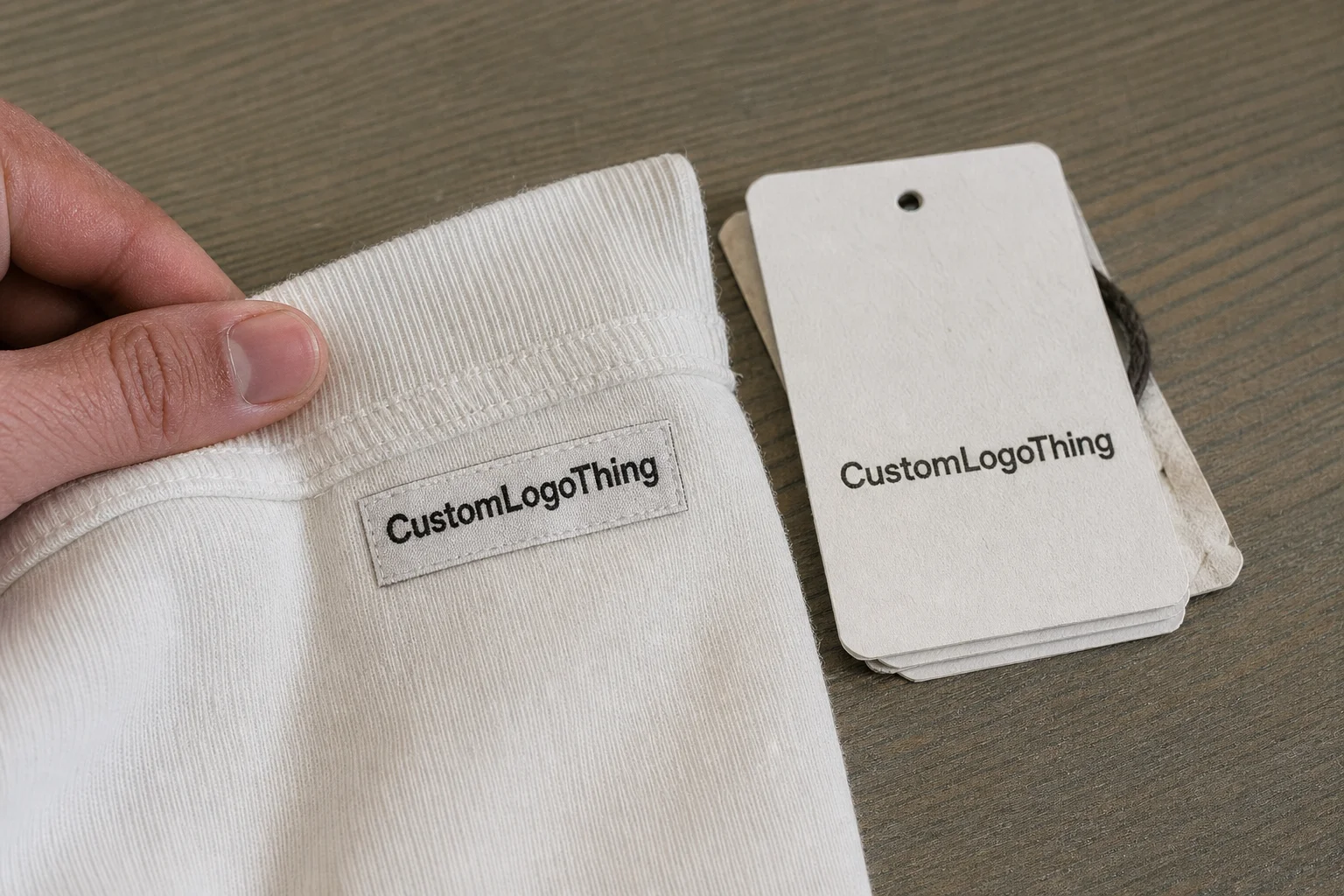
The phrase staples personalized labels can cover several apparel components: Woven Neck Labels, printed size labels, care labels, hang tags, retail stickers, and temporary packing labels. The format matters less than the job it has to do. A back-neck label carries the brand and size. A care label carries fiber content, wash instructions, and origin details. A hang tag communicates pricing or collection identity. Temporary labels help with SKU control, shelf organization, or warehouse handling.
These are related, but they are not interchangeable. A soft tee may need a label that is comfortable against skin. A premium hoodie may need a tag that looks refined on a retail shelf. A workwear item may need stronger wash resistance and clearer compliance text. The label is often the first physical proof of quality, so the wrong material or placement can reduce perceived value quickly.
Label planning should happen with the garment spec, not after. Seam allowance, fabric stretch, wash cycle, and packing method all affect what works. A design that looks fine in a mockup can become a production problem if it does not match the stitch method or the textile. That is why buyers should separate brand labels from compliance labels early. A logo is not a substitute for fiber content, country of origin, or care information.
For clothing lines that need multiple label types, the main decision is not whether to add a label but which construction supports the product. A woven label is usually the safest choice for repeated laundering. Printed satin can be better for softer hand feel. Paper Hang Tags make sense for retail presentation, but they are not a replacement for a sewn-in care label.
How the Production Process and Timeline Work
The production workflow is simple when the brief is specific. It starts with file intake: the supplier checks artwork, text, dimensions, colors, and intended use, then confirms whether the job fits a woven, printed, sewn-in, hang tag, adhesive, or temporary label format. The proof should show scale, placement, folds or cuts, and any attachment detail that changes how the label is made.
If the order needs a physical sample, the schedule changes. A digital proof often takes 1 to 2 business days. A sample or strike-off can add another 3 to 7 business days depending on construction and capacity. Once the proof is approved, production commonly runs 7 to 15 business days. Shipping is separate, so buyers should not treat the production estimate as the full lead time.
Most delays happen before production starts. Missing artwork, unclear Pantone references, or vague placement notes can stall the proof cycle. So can uncertainty about attachment method. Sewn-in, folded, heat-seal, adhesive-backed, and temporary labels all behave differently, and the factory needs that detail upfront to avoid rework.
Rush service exists, but it is only useful when the spec is already locked. If the label must survive laundering, pass compliance review, or match a retail launch date, compressing the schedule too far can remove room for correction. Packaging and transit should also be part of the timeline. Standards from groups such as ISTA are helpful when labels and packaging have to survive sorting, compression, and repeated handling before the garment reaches the shelf.
Pricing Factors That Affect Your Quote
Label pricing is driven by material, size, print method, quantity, finishing, and shipping. Two labels with the same logo can price very differently if one is woven into polyester and the other is printed on satin or paper stock. Buyers sometimes compare quotes without looking at construction details, then assume one vendor is overpriced. In practice, the quote may simply reflect a better material or more finishing work.
MOQ changes the math quickly. Small runs spread setup costs across fewer pieces, so the unit price goes up. Larger runs lower the per-label cost because file prep, machine setup, and finishing are divided across more pieces. A rough planning range for small apparel label orders is often $0.12 to $0.45 per unit, while premium constructions or specialty finishing can run higher. Setup charges often fall around $40 to $150, and rush fees may add 15% to 30%, depending on the factory and deadline.
| Label option | Typical use | Common unit range | Buyer notes |
|---|---|---|---|
| Woven polyester sewn-in label | Brand neck labels, size tabs, care labels | $0.18 to $0.45 | Durable under repeated laundering and gives a more finished retail look |
| Printed satin label | Soft-touch garments, lingerie, children’s wear | $0.12 to $0.30 | Comfortable against skin, but check wash resistance and edge finish |
| FSC-certified paper hang tag | Retail branding, pricing, seasonal messaging | $0.10 to $0.35 | Paper stock, coating, stringing, and shape all change the final cost |
| Temporary adhesive or retail sticker | SKU control, short-term merchandising, pack-out | $0.08 to $0.22 | Useful for short-term identification, not for long wash cycles |
For a fair comparison, ask for a line-item quote that separates setup, unit cost, finishing, and shipping. That reveals whether the lowest headline price is actually the lowest landed cost. It also helps you compare custom labels without guessing what is included.
Paper-based hang tags deserve specific attention. FSC-certified stock often costs a little more, but that premium can be worth it when the brand is making sourcing claims or selling into markets that expect visible paper stewardship. Confirming stock weight, coating, and finish before release can prevent a reprint and keep the label system consistent with the garment presentation.
Choosing Materials, Backing, and Size for Clothing Use
Woven polyester is the most common choice for sewn-in labels because it holds detail well and stands up to laundering. Printed satin has a smoother hand and suits soft garments, intimate apparel, and children’s clothing where skin feel matters. Cotton can work for a natural or heritage look, though it may not hold tiny text as sharply. Printed synthetics are practical when the buyer needs crisp text, barcodes, or a lighter-weight structure.
Backing matters as much as the face material. A sewn-in label needs the right fold style, stitch allowance, and edge finish so it lies flat and does not scratch the wearer. A heat-seal label can work on certain fabrics, but only if the garment substrate can handle the application temperature and adhesive chemistry. Adhesive-backed labels are fine for short-term retail use, yet they should not be treated as wash labels. On delicate base fabrics, the wrong adhesive can leave residue or distortion.
Size is often underestimated. Small labels look refined until the logo, fiber content, and care text are squeezed into too little space. A neck label that is too short may force the type below a readable size. A care label that is too narrow can wrap into a cluttered block. The content should determine the size, not the other way around.
Wash performance and abrasion resistance should match the end use. A fashion tee worn a few times is not the same requirement as a uniform, children’s wear, or workwear that will see repeated cycles. If the garment needs to hold up after many washes, ask what testing method the supplier uses and whether the print or weave has been checked for rubbing, fading, and edge wear.
For buyers with sustainability claims, specificity matters. A paper hang tag can be made on FSC-certified stock, but that says nothing about the garment label itself. Recycled yarn in a woven label is useful only if the legibility, feel, and wash performance still pass. Vague green language is easy to print. Evidence is harder, and it is the part that matters in review.
Step-by-Step Ordering Checklist for a Clean Proof
A clean proof starts with clean input. Before you Request a Quote for staples personalized labels, gather the brand artwork, exact label copy, garment type, quantity, target delivery date, and placement notes. If the line includes multiple sizes or variants, list them separately instead of hiding them in one general request. That alone can avoid a correction cycle.
- Send artwork in a usable format, ideally vector files for logos and clean text files for copy.
- State the label type clearly: woven, printed, sewn-in, hang tag, adhesive, or temporary attachment.
- Specify dimensions, fold style, attachment method, and any seam or edge constraints.
- Provide color references if the brand needs exact matching, especially for logos and background shades.
- Confirm content details such as fiber content, country of origin, care symbols, and size marking if required.
- Set quantity by variant so the supplier can quote the real run instead of a rough estimate.
- Assign one internal approver so the proof does not bounce between people with different opinions.
“The cleanest orders are the ones where the buyer makes the decisions once, writes them down, and keeps the approval path short.”
A digital proof should be the first checkpoint, not the last. If the label will sit on a hero product, premium garment, or launch item with a fixed ship date, ask for a physical sample before release. That is especially useful if the piece uses fine text, small icons, or an attachment method that has not been tested on the actual fabric.
Review the proof at final size, not zoomed in on a monitor. Tiny text that looks acceptable at 300 percent can disappear once the label is produced. A designer, product manager, and production lead should all review the same version before approval, not different interpretations of it.
Common Mistakes That Cause Delays, Reprints, or Wear Problems
The biggest label failures usually come from rushed assumptions. A buyer approves a mockup without checking the smallest text. The seam allowance turns out to be too tight. The logo looks sharp on screen but breaks apart at production size. Those mistakes are expensive because labels are small; one error can affect an entire carton of garments.
Material mismatch is another common problem. A finish that looks premium in a digital rendering may not survive laundering, abrasion, or repeated folding. Vague language causes its own trouble. If the brief says “make it look premium,” the production team still has to decide whether that means matte or gloss, woven or printed, thick or soft, folded or cut edge. If the buyer does not define the spec, the factory has to interpret it.
Late changes create their own mess. Quantity changes can trigger a fresh setup. Artwork sent late can push the schedule back. Skipping sample approval may save a few days and cost a few weeks if the final result is wrong. Labels also have to coexist with care text, barcodes, size markers, and garment stitching. They are part of the product, not separate from it.
If your label includes barcode or QR elements, test them at the final print size. A code that scans on a mockup can fail if it is printed too small or on a textured surface. For garments stored, packed, or shipped in bulk, ask whether the labeling plan has been checked against the packing flow, not just the design file.
Expert Tips and Next Steps Before You Place the Order
The simplest way to manage label sourcing is to use a one-page spec sheet. Put the brand name, label type, dimensions, artwork version, color references, quantity, target ship date, and approval contact in one place. That gives design, purchasing, and production the same reference point. It also makes quote comparison easier because every supplier is pricing the same job.
A few habits reduce cost and rework:
- Ask for a digital proof before anything goes to production.
- Ask for a sample if the garment is a launch item, premium item, or compliance-sensitive item.
- Request a line-item quote so setup, rush service, and shipping are visible.
- Confirm whether the supplier includes minor revisions or charges for each proof change.
- Keep one person accountable for approval so the final decision does not drift.
If your program includes paper components such as hang tags or branded inserts, confirm whether the stock is FSC-certified and whether the finish matches the rest of the presentation. If the order needs broader packaging coordination, Custom Labels & Tags can be a useful starting point for keeping the labeling system consistent across garments and retail packaging.
The most reliable approach is straightforward: compare quotes on the same spec, approve the proof at actual size, and leave enough time for a correction if the sample reveals a problem. That is the difference between labels that support the launch and labels that become a late-stage distraction.
What are staples personalized labels used for on clothing?
They are used to identify and brand garments, often on neck labels, size labels, care labels, or retail packaging. The right format depends on whether the label must be sewn in, printed, attached temporarily, or built for repeated laundering.
How much do staples personalized labels usually cost per unit?
Unit cost depends mostly on quantity, material, print complexity, and whether the order includes setup or specialty finishing. Smaller orders usually cost more per label, while larger runs spread setup costs across more pieces.
What turnaround should I expect for staples personalized labels?
Turnaround usually includes proof time, sample approval if needed, production, and shipping, so the fastest option is not always the simplest. Complex materials, color matching, or rush requests can extend or compress the schedule depending on factory capacity.
Which material is best for washable apparel labels?
Woven polyester and durable printed synthetics are common choices when the label must hold up to repeated laundering and abrasion. For softer hand feel, satin or similar finishes can work well, but the buyer should confirm durability against the intended wash cycle.
Can I order a small MOQ for staples personalized labels?
Yes, but small runs often carry a higher unit cost because setup time is spread across fewer labels. If low quantity matters, ask for the minimum order up front and confirm whether a digital proof or sample is included.

