Buyer Fit Snapshot
| Best fit | Sustainable Hang Tags Wholesale for Retail Packaging projects where brand print, material claims, artwork control, MOQ, and repeat-order consistency need to be specified before quoting. |
|---|---|
| Quote inputs | Share finished size, material target, print colors, finish, packing count, annual reorder estimate, ship-to region, and any compliance wording. |
| Proofing check | Approve dieline scale, logo placement, barcode or warning zones, color tolerance, closure strength, and carton packing before bulk production. |
| Main risk | Vague material claims, crowded artwork, missing packing details, or unclear freight terms can make a low unit price expensive after revisions. |
Fast answer: Sustainable Hang Tags Wholesale for Retail Packaging should be specified like a repeatable production item. The safest quote records material, print method, finish, artwork proof, packing count, and reorder notes in one written spec.
Production checks before approval
Compare the actual filled-product size with the drawing, then confirm tolerance on folds, seals, hang holes, label areas, and retail display edges. Reserve space for logos, QR codes, warning copy, and material claims before decorative graphics fill the panel.
Quote comparison points
Review material grade, print process, finish, sampling route, tooling charges, carton quantity, and freight assumptions side by side. A quote is only useful when the supplier can repeat the same color, closure quality, and packing count on the next order.
Sustainable Hang Tags Wholesale looks modest on a cost sheet. On a shelf, it can carry more weight than a line of copy ever will. Shoppers rarely pause to inspect a sourcing claim printed on the back of a carton, yet they do notice what a tag feels like in the hand. That split-second contact matters. Paper, edge finish, stiffness, and print clarity all register before the product story has a chance to speak. For retail buyers comparing packaging systems, sustainable hang tags wholesale gives them a practical route to recycled content, FSC-certified fiber, and plastic-free construction without rebuilding the entire package around it.
Wholesale buying magnifies every choice. One tag is one decision. Ten thousand tags are a system. A mismatch in color, a paper stock that looks cheap under store lights, a delayed replenishment cycle, or a flimsy board that bends in transit can ripple across SKUs, locations, and seasonal launches. The smarter path is less theatrical and more exacting. Durability, color accuracy, print legibility, and end-of-life recyclability deserve the first look. After that, the buyer can decide whether the order supports apparel, accessories, cosmetics, or gift packaging.
Custom Logo Things works with buyers who need repeatable packaging rather than one-time experimentation. That is why this guide stays grounded in production facts: materials, specs, price structure, MOQ behavior, turnaround, and the steps that keep a reorder from turning into a rescue mission. If your direction is already set, move directly from review to a quote through Custom Labels & Tags or compare broader procurement options through Wholesale Programs.
Sustainable Hang Tags Wholesale: Why the First 2 Seconds Matter
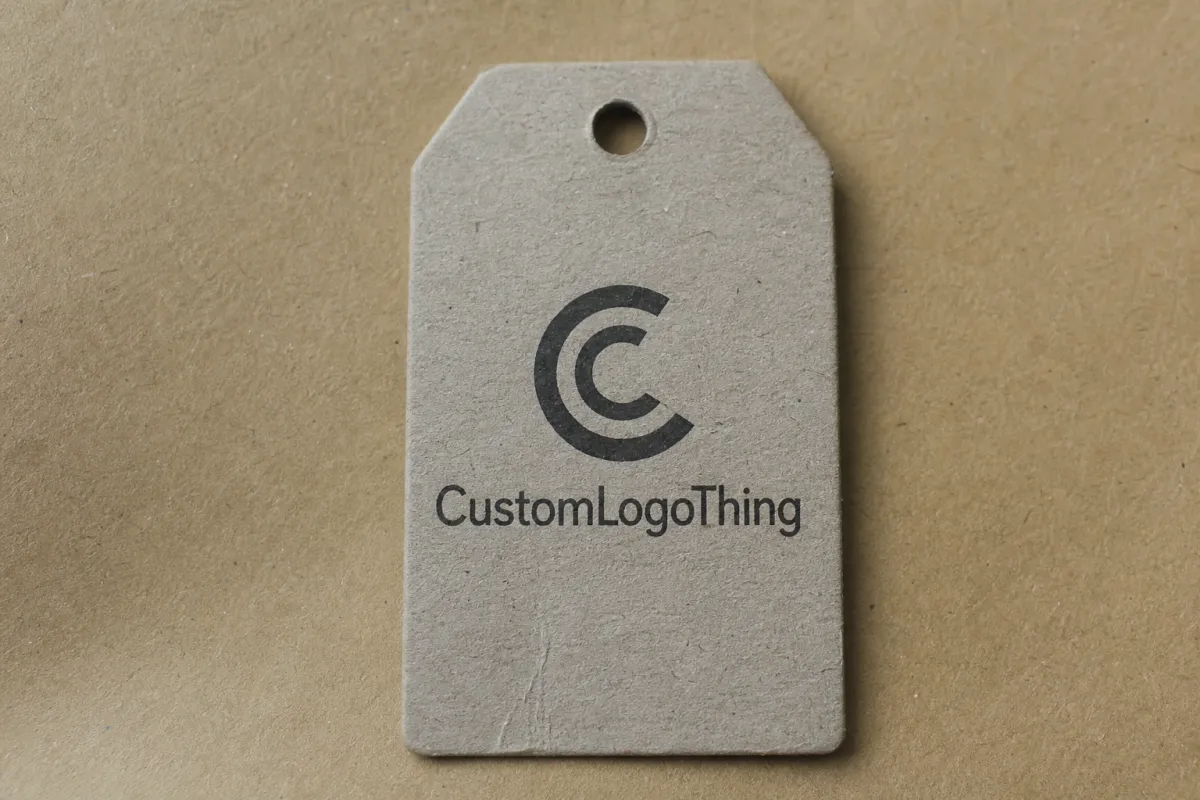
Retail packaging is a stage, and the hang tag gets one of the strongest spots. A box may sit still. A tag gets handled. It swings, bends, gets scanned by the eye, and ends up in the hand. That motion changes perception. Sustainable Hang Tags Wholesale can communicate more, faster, than a long sustainability paragraph tucked elsewhere on the package. A shopper may never open the carton in the store, but they will notice whether the tag feels intentional or like an afterthought.
Many brands undershoot that moment. They invest heavily in photography, then attach a generic tag that weakens the whole presentation. Recycled paper, FSC-certified fiber, and plastic-free assembly offer a cleaner signal. They show intent without turning the package into a sermon. The message is simple: the brand thought about the object, not just the campaign.
Consistency is where wholesale buyers feel the difference. If one SKU uses stiff white board, another uses soft kraft, and a third arrives with a glossy laminated finish, the line starts to lose its shape. The same problem shows up across stores. Sustainable hang tags wholesale gives procurement teams one visual baseline for dozens of products, then leaves room to change copy, barcodes, or seasonal promotions without rebuilding the core specification. That saves approval time and lowers the odds of mixed stock landing in the warehouse.
There is a structural advantage too. Tags are one of the few retail packaging components where sustainability can be visible without changing every other element of the system. A brand might not be ready to convert inserts, cartons, sleeves, and void-fill all at once. Fine. Start with the tag. A well-made tag creates a credible sustainability cue while the rest of the package stays stable. That is why sustainable hang tags wholesale is often the first upgrade approved by a buyer who needs to show progress without triggering operational chaos.
From a packaging buyer's perspective, the strongest tag does three things at once: supports the product, fits the brand, and stays simple enough to reorder. That sounds obvious. In practice, it is where programs drift. The most useful sustainable hang tags wholesale orders are the ones that are easy to specify, easy to inspect, and easy to repeat.
“A tag is not a throwaway line item. It is a small, visible decision that can make the rest of the package feel more deliberate.”
Technical references help keep the decision honest. FSC certification sets expectations for responsibly sourced fiber, while EPA guidance on paper and paper products gives buyers a better framework for recycling and material selection. For shipment durability and carton handling, ISTA testing helps brands think about distribution stress before a launch goes live. See the official references at FSC and EPA paper and paper products guidance, and for transit performance, ISTA. One practical caveat: recyclability still depends on the full build, including coatings, inks, adhesives, and local collection rules. A tag can be paper-based and still be difficult to recover if the finish is too heavy or the attachment is non-paper.
I have seen buyers lose a launch week because a tag stock looked fine in a PDF but arrived too soft to hold its shape near a garment hook. The lesson was not that sustainability was the problem. The problem was ignoring the physical reality of the tag.
With sustainable hang tags wholesale, the real question is not whether the concept sounds good. The real question is whether the tag still looks credible under store lighting, whether it survives shipping, and whether the next reorder matches the first one. That standard is not glamorous. It is the standard buyers should defend.
Materials, Shapes, and Print Options That Fit the Brand
Material choice sets the tone before the design even lands. Recycled cardstock is usually the most direct option for sustainable hang tags wholesale because it balances print quality, cost, and availability. FSC-certified paper is another common path, especially for brands that want documented fiber sourcing. Kraft board brings an earthy visual cue and usually signals less coating, less shine, and a more natural finish. Cotton-rich sheets sit at the premium end of the market, with a softer feel that buyers often reserve for gifts, boutique apparel, or higher-margin accessories.
Shape changes both branding and cost. Standard rectangles are efficient because they fit common dies and gang-run planning. Rounded corners soften the look and reduce edge wear. Custom die-cuts give the brand more personality, though they add setup time and can increase waste if the outline is complex. Folded tags are useful when the product story needs more surface area, but they are not always the most material-efficient choice. For sustainable hang tags wholesale, the best shape is usually the one that supports the message without creating production drag.
Print method matters just as much. Digital printing is flexible, especially for shorter runs, versioned copy, or launches with several SKU-specific tags. Offset printing usually becomes stronger at higher quantities because it supports tighter color control and better price efficiency on larger orders. Spot colors help keep brand-critical hues consistent, which matters more than many teams admit. A green that shifts muddy on a hang tag can make the whole package feel cheaper.
Finishing should protect recyclability rather than fight it. Aqueous coating is often a safer choice than heavy lamination because it adds protection without turning the tag into a mixed-material problem. Soy-based or low-VOC inks are common sustainability-friendly options. Selective varnish can create contrast without coating the full surface. For stringing, cotton cord, paper string, or fiber ties are cleaner than plastic attachments. Those details may seem small, but in sustainable hang tags wholesale, the attachment method can shape the end-of-life story as much as the paper itself.
Texture changes perceived value. A recycled sheet with visible fiber gives an honest tactile cue. A smoother board handles fine detail better and often prints barcodes more cleanly. Opacity matters if the tag is double-sided or carries a lot of small type; a thin stock can look economical, but it may also show through and weaken the message. Buyers choosing sustainable hang tags wholesale should think about the tag in the hand, not just the proof on the screen. If a tag will sit beside premium apparel or personal-care packaging, a slightly heavier stock often reads as more credible than a very thin sheet with a dramatic design.
Useful comparisons beat vague claims. A premium apparel line may benefit from a 16pt FSC board with one-color offset print and matte aqueous coating. A cosmetics brand might choose a smoother recycled stock to preserve small typography. A startup testing a new line could use digital printing on a standard rectangle to keep cash tied up elsewhere until the product proves itself.
| Option | Typical Use | Sustainability Signal | Common Cost Impact | Lead Time Impact |
|---|---|---|---|---|
| Recycled cardstock | Apparel, accessories, general retail | Recycled fiber, plastic-free feel | Usually the most economical | Fast on standard sizes |
| FSC-certified paper | Branded retail programs, multi-SKU lines | Documented responsible sourcing | Slight premium over basic stock | Similar to standard paper |
| Kraft board | Natural, earthy, handmade positioning | Fiber-first look, low-gloss presentation | Moderate; depends on print coverage | Normal, unless custom die-cut |
| Cotton-rich sheet | Gift goods, boutique items, premium sets | Premium fiber content and tactile appeal | Higher than standard paper | Can be slower if specialty stock is needed |
| Folded custom tag | Story-driven products, instructions, QR content | More content in one tag, less extra paper elsewhere | Higher due to structure | Longer because of die and fold steps |
For buyers comparing sustainable hang tags wholesale options, the strongest quote is rarely the cheapest line item. It is the one that balances print clarity, brand fit, and production efficiency. A cleaner spec usually wins over a flashy finish that slows the job down and creates waste. The reverse is also true: a cheap quote that ignores assembly time or freight can become expensive once the tags are actually moving through the warehouse.
Specifications for Sustainable Hang Tags Wholesale Orders
Before asking for a quote, lock the basics. The most useful sustainable hang tags wholesale brief includes finished size, stock weight, print sides, hole diameter, string type, quantity, and shipping destination. Those details give the producer enough information to price accurately and help the buyer compare options without getting buried in revision cycles. If the tag is going on apparel, accessories, skincare, or subscription boxes, include the product category as well. The use case changes what matters most.
Stock weight is one of the most misunderstood variables. A lighter tag often lowers freight and reduces material use, but it can feel too soft on premium goods. Heavier board creates a stronger sense of value and is often better for outerwear, jewelry, or gift items. In sustainable hang tags wholesale, there is no universal best thickness. The better question is whether the board supports the perceived price of the product and the handling stress it will face before the sale.
Artwork requirements should be treated as production requirements, not design suggestions. Ask for the dieline early. Build with bleed, usually 0.125 inch or the shop's preferred margin. Keep critical text inside the safe area. Use vector logos or high-resolution press-ready files. Confirm whether the design is one-sided or double-sided, because that changes both cost and layout decisions. If barcodes or QR codes are included, give them generous quiet zones and test them before final approval. These steps are plain, but in sustainable hang tags wholesale, plain mistakes create the most expensive delays.
Consistency across a wholesale run depends on more than the file. Batch matching, cut tolerance, edge quality, and carton labeling all affect how the order lands. If a brand is ordering multiple SKUs, each variation should be clearly separated in packing notes and carton marks. That helps warehouse teams receive the job without opening every bundle. It also lowers the chance that a launch kit gets mixed during intake.
Here are practical spec examples that work well in retail packaging:
- Apparel: 2 x 3.5 inch or 2 x 4 inch tag, 14pt to 16pt recycled or FSC board, matte print, cotton cord or paper string.
- Accessories: Slightly heavier board, often 16pt to 18pt, with one- or two-color printing and a clean hole punch.
- Skincare: Smooth recycled stock, fine typography, and space for batch or ingredient notes if needed.
- Subscription boxes: Folded or oversized tags for promotional copy, QR codes, or reorder instructions.
That last point matters. A tag can do more than hang. It can guide a product story, provide care instructions, promote a refill program, or point to a reorder portal. Sustainable hang tags wholesale becomes more valuable when the tag pulls extra duty without becoming cluttered. The best examples carry one main message and one secondary function. Once the tag tries to do five jobs, the hierarchy falls apart.
One detail gets missed far too often: hole size and placement. A tag with a hole too close to the edge can tear during handling. A hole that is too small can slow assembly or force a different string. That sounds minor until the warehouse team has to attach ten thousand units by hand. Sustainable hang tags wholesale should account for actual assembly labor, not just graphic design.
Buyers also need to define carton and label logic. If the run includes multiple SKU versions, ask whether tags can be flat-packed in labeled bundles. If the tags will be inserted into polybags or attached by the brand, make sure the specification reflects that. A clean spec sheet saves time later, and in sustainable hang tags wholesale, time saved usually translates into fewer errors. It also keeps receiving teams from sorting mixed bundles by eye, which is a poor way to run a launch.
Pricing, MOQ, and What Changes the Unit Cost
Pricing for sustainable hang tags wholesale comes down to a handful of predictable levers. Quantity is the biggest. Stock choice comes next. Print coverage, finish, shape complexity, and manual assembly follow behind. If a buyer wants a standard rectangle, one-color print, recycled stock, and flat packaging, the unit price usually stays in a comfortable range. If the job adds custom die-cutting, multiple inks, premium texture, folded construction, or pre-assembly, the price rises quickly. That pattern is not mysterious. It tracks material use and machine time.
MOQ, or minimum order quantity, is where many first-time buyers get surprised. A higher MOQ often lowers unit cost because setup is spread across more pieces. That does not mean the total spend is lower, only that the per-tag price becomes more efficient. For pilot launches, digital print may support smaller runs. For broader retail rollouts, offset can make more sense. Sustainable hang tags wholesale should be priced in tiers so the buyer can see the break between a test run, a reorder, and a full-scale launch.
To keep the economics clear, compare options on the same size and print logic. If one quote uses recycled board and another uses cotton-rich stock, the comparison is not apples-to-apples. Ask for at least two or three approved material options with the same art and dimensions. That is the cleanest way to see where a brand can save money without weakening the sustainability signal.
Here is a practical price framework buyers often use as a reference point, not a promise. On common retail-sized tags at mid-volume, simple recycled or FSC paper stock can fall around $0.06-$0.14 per unit, depending on coverage and assembly. Premium fiber-rich boards, more complex shapes, or folded tags can move into the $0.12-$0.28 per unit range. A lot depends on whether the job is 1,000 pieces or 10,000, and whether the tags arrive flat or assembled. That spread is normal. Sustainable hang tags wholesale is a materials and setup business, not a commodity race to the bottom.
Hidden costs are where budgets get hurt. Setup fees, plate charges on offset runs, proofs, freight, and rush production can change the final number more than the ink itself. A buyer may approve a quote because the unit price looks attractive, then discover the freight on a small split shipment is doing more damage than the print. That is why a tiered quote matters. Ask for pricing at multiple quantities, and ask whether freight is included or billed separately. You want the full picture before approval.
Not every saving is worth taking. Standard shapes usually reduce waste and simplify die inventory. Fewer inks can help. Simpler finishes often preserve recyclability and keep the job moving. Consolidating SKU versions into a common base spec is another strong move. For sustainable hang tags wholesale, the most efficient programs are usually the ones that make small design changes inside a stable production framework.
| Order Type | Typical MOQ Behavior | Unit Cost Trend | Best For |
|---|---|---|---|
| Pilot digital run | Lower MOQ, faster to launch | Higher unit cost, lower setup pressure | Testing a new SKU or message |
| Standard wholesale run | Mid-range MOQ, balanced planning | Good price efficiency | Seasonal retail and recurring products |
| High-volume offset run | Higher MOQ, strongest economies of scale | Lowest per-unit cost at volume | National rollouts and multi-location programs |
One practical question separates a serious quote from a shallow one: what happens at the next tier? If the price drops meaningfully at 5,000, 10,000, or 25,000 pieces, the buyer can make a smarter inventory decision. That matters in sustainable hang tags wholesale, where the cost per piece is only one part of the equation and reordering speed matters almost as much.
Process and Timeline: Artwork, Proofing, Production, Delivery
The workflow for sustainable hang tags wholesale should be simple on paper and disciplined in practice. It usually begins with a quote request, then moves to spec confirmation, artwork submission, proof approval, production, inspection, and shipping. The order is not complicated, but each step has a job to do. If the buyer rushes past the proof stage, the chance of a costly correction rises. If the spec is incomplete, the project slows before it reaches the press.
Proofing is the safety net. It catches size errors, dieline problems, copy mistakes, color shifts, and barcode placement issues before the run begins. Good proofing does not just show what the tag looks like. It confirms what will actually be produced. In sustainable hang tags wholesale, that matters especially because natural papers and recycled stocks can shift slightly in tone and texture from one batch to the next. Buyers should expect some variation, but not surprise variation.
Realistic timing depends on the job. A standard digital run with final artwork and a common shape may move through proofing and production in roughly 7-12 business days after approval. Offset runs, specialty stocks, or custom die-cuts often need 12-18 business days or more. Add time if the job lands during a busy seasonal window or if the buyer needs multiple proof rounds. Sustainable hang tags wholesale is faster when the artwork arrives press-ready the first time.
Shipping adds another layer. Domestic freight is usually the most predictable for timing. Air shipping can shorten the calendar, but it can also make the freight line look heavy. Consolidated ocean shipping often makes sense for larger international orders, though it requires more patience. The right mode depends on launch date, budget, and whether the tags are feeding a pilot or a full rollout. Buyers should define the deadline before they define the shipping method.
Here is a simple example. A buyer requests a quote on Monday, submits final art on Wednesday, approves the proof on Friday, and enters production the next week. If the tag is a standard size and stock, the job may ship shortly after production ends. If the same order uses a custom die-cut and a premium fiber sheet, the timeline lengthens. That is normal. What matters is that sustainable hang tags wholesale is planned around the actual lead time, not wishful thinking.
Good process also reduces warehouse problems. Clear carton counts, SKU labels, and packing slips make receiving easier. If tags are packed by style or size, note that on the PO. If the buyer wants a specific carton count for store distribution, say so early. A well-run sustainable hang tags wholesale project saves time both in production and at intake.
Another detail that separates smooth orders from messy ones is communication on substitutions. If the selected stock goes out of inventory, ask how closely the alternate matches in thickness, color, and print behavior. A minor paper substitution can be harmless. A change in brightness or surface smoothness can alter the whole look. Buyers who treat sustainable hang tags wholesale as a controlled process tend to get better results than buyers who approve changes by email without checking the sample. That extra check is minor compared with the cost of reprinting a launch batch.
Why Buyers Choose Our Wholesale Program Over Generic Options
Generic tag sellers tend to compete on price alone. That sounds efficient until a buyer needs a repeat order, a SKU expansion, or a packaging update that has to match the last run exactly. Our wholesale program is built for buyers who care about consistency. Sustainable hang tags wholesale works best when the material guidance, quote format, proofing, and reorder history are all easy to track. That reduces the time procurement teams spend rebuilding the same order from scratch.
Operational clarity matters. Multi-SKU brands need a tag partner that can keep specifications organized across product families. If one style uses recycled cardstock and another uses FSC-certified board, the files should still live in a clean, repeatable system. A good wholesale program does not just ship product. It cuts down admin work. That is a real cost, even if it never appears on the first invoice.
Support has value too. Buyers need sample guidance, responsive quoting, clear minimums, and a straightforward path to reordering. They also need packaging that arrives in a state the warehouse can receive without extra sorting. Those are not luxury features. They are table stakes for sustainable hang tags wholesale, especially for brands that launch often or work across multiple channels.
Compared with generic options, the most obvious weakness is inconsistency. A tag that looks fine on a single test order can become a headache if it cannot be repeated at scale. Color drift, hidden setup charges, vague minimums, and unclear packing standards all create friction. A wholesale program should reduce that friction. It should make the second order easier than the first. That is the point.
For teams that already use Custom Labels & Tags, the benefit is even clearer. Tag and label systems can be aligned by stock, print logic, and finish so the brand looks coordinated across packaging touchpoints. That matters in retail, where a buyer often sees the hang tag, the label, and the carton in one pass. If those pieces feel disconnected, the brand feels less disciplined. Sustainable hang tags wholesale helps close that gap.
Procurement teams keep returning to structured wholesale programs for a simple reason: fewer surprises. A quote that clearly identifies the stock, quantity, assembly, and freight assumptions is easier to approve. A production team that knows the expected turnaround is easier to schedule. A reorder file that already contains the approved spec is faster to release. Sustainable hang tags wholesale is not just about tags. It is about making the next purchase less risky than the last one.
Actionable Next Steps to Order Sustainable Hang Tags Wholesale
If the goal is to move from interest to purchase, keep the process tight. Start by choosing the material and size. Then request a sample or proof. Then submit the final quantity for pricing. That three-step path keeps the decision anchored in visible facts instead of abstract claims. For sustainable hang tags wholesale, the right sample often answers more questions than a long email thread ever will.
Send the quote request with the details that actually move pricing: dimensions, quantity, print sides, artwork file, deadline, and shipping ZIP or postal code. If you have a dieline, include it. If you do not, say whether the shape should be standard or custom. If the tags need to support barcodes, QR codes, or care instructions, note that upfront. The faster the brief, the faster the response. That is especially true for sustainable hang tags wholesale orders that need multiple versions.
A side-by-side comparison of two or three approved stock options is usually the smartest final step before approval. One stock may feel more premium. Another may cost less. A third may be easier to recycle or match across future runs. The point is not to chase the most expensive paper. The point is to choose the paper that fits the product and the margin. That is how sustainable hang tags wholesale protects both the brand story and the budget.
- Confirm the material, size, and print method.
- Approve a sample or digital proof with all copy checked.
- Lock the quantity, timeline, and shipping plan before release.
Before you place the order, verify the MOQ, the proof approval window, the expected production time, and whether the run is a pilot launch or a full rollout. That last question matters more than many teams expect. A pilot can justify digital print and a lower quantity. A full rollout usually needs stronger price efficiency and a stricter reorder plan. Sustainable hang tags wholesale should match the stage of the product, not just the ambition of the launch.
One final reason to be deliberate: a tag is a small object, but it moves through design, production, receiving, and retail display. Any weak link in that chain creates avoidable work. A disciplined sustainable hang tags wholesale order removes those weak links before they cause problems. That is the practical advantage, and it is why buyers who care about packaging quality tend to repeat the same process once they find a spec that works. The best takeaway is simple: choose the structure first, then the finish, then the quantity, so the tag supports the product instead of competing with it.
If you are standardizing packaging across a growing line, sustainable hang tags wholesale is usually the cleanest place to start. A clear spec, a testable proof, and a reorderable format are what keep the next run predictable.
FAQ
What does sustainable hang tags wholesale usually include?
It usually includes recycled or FSC-certified paper, custom printing, standard hole punching, and optional string or fastener assembly. Buyers can also request flat packing, SKU labeling, and specific carton counts for easier warehouse handling. The final spec set depends on whether the tags are for apparel, gifts, cosmetics, or another retail category. In most cases, sustainable hang tags wholesale is flexible enough to fit all of those uses without changing the basic production flow.
What is the usual MOQ for sustainable hang tag wholesale orders?
MOQ depends on size, stock, print method, and whether the tag uses a standard shape or custom die-cut. Digital printing can support smaller pilot runs, while offset often makes more sense at higher volumes. A quote should clearly show the minimum quantity and the price break at the next tier. That is the cleanest way to compare sustainable hang tags wholesale options without guessing where the real efficiency begins.
How much do sustainable hang tags wholesale prices change by material?
Cost changes with paper weight, fiber content, custom textures, and whether the stock needs special finishing. Simple recycled paper often costs less than specialty cotton-rich or premium textured boards. The best way to compare is to request pricing on two or three approved stocks with the same size and quantity. That keeps the sustainable hang tags wholesale comparison honest and helps the buyer see whether the premium is justified by the look and feel.
What artwork do I need before requesting a quote for sustainable hang tags wholesale?
Send the finished size, quantity, print sides, and any dieline or shape reference you already have. Provide a vector logo or press-ready file, plus color preferences and any copy that must appear on the tag. If you have a target launch date, include it so the producer can confirm the realistic timeline. The more complete the brief, the faster sustainable hang tags wholesale pricing can be returned without a chain of corrections.
How long does production usually take for sustainable hang tags wholesale?
Timing depends on proof approval, print method, finishing, and shipment distance. Standard wholesale orders often move faster when the artwork is final and the shape is already defined. Rush requests are possible in some cases, but they usually increase unit cost and reduce material flexibility. For most buyers, sustainable hang tags wholesale works best when the schedule includes enough room for proofing and shipping without forcing a last-minute compromise.