Buyer Fit Snapshot
| Best fit | Printed Hang Tags Wholesale for Custom Branding Projects projects where brand print, material claims, artwork control, MOQ, and repeat-order consistency need to be specified before quoting. |
|---|---|
| Quote inputs | Share finished size, material target, print colors, finish, packing count, annual reorder estimate, ship-to region, and any compliance wording. |
| Proofing check | Approve dieline scale, logo placement, barcode or warning zones, color tolerance, closure strength, and carton packing before bulk production. |
| Main risk | Vague material claims, crowded artwork, missing packing details, or unclear freight terms can make a low unit price expensive after revisions. |
Fast answer: Printed Hang Tags Wholesale for Custom Branding Projects should be specified like a repeatable production item. The safest quote records material, print method, finish, artwork proof, packing count, and reorder notes in one written spec.
Production checks before approval
Compare the actual filled-product size with the drawing, then confirm tolerance on folds, seals, hang holes, label areas, and retail display edges. Reserve space for logos, QR codes, warning copy, and material claims before decorative graphics fill the panel.
Quote comparison points
Review material grade, print process, finish, sampling route, tooling charges, carton quantity, and freight assumptions side by side. A quote is only useful when the supplier can repeat the same color, closure quality, and packing count on the next order.
Printed Hang Tags Wholesale for Custom Branding Projects
Printed Hang Tags Wholesale is one of those purchases that can look modest on a spreadsheet and still carry a lot of weight at the point of sale. A customer picks up the tag before they notice the stitching, the candle wax, or the gift box structure, and that first touch quietly sets expectations for quality, pricing, and brand care. For Custom Logo Things, the real question is not whether the tag looks attractive in a mockup; it is whether it prints the same way every time, arrives on schedule, and supports repeat orders without eating into margin.
That matters because the tag often has to carry the front-end message in a space barely larger than a business card. One side can hold a logo, size, and price. The reverse can handle origin details, care instructions, a barcode, a QR code, or a short brand story. Handled well, it keeps packaging clean and focused. Handled poorly, it reads like an afterthought pasted onto the product at the last minute.
Printed Hang Tags Wholesale: Why They Sell Faster
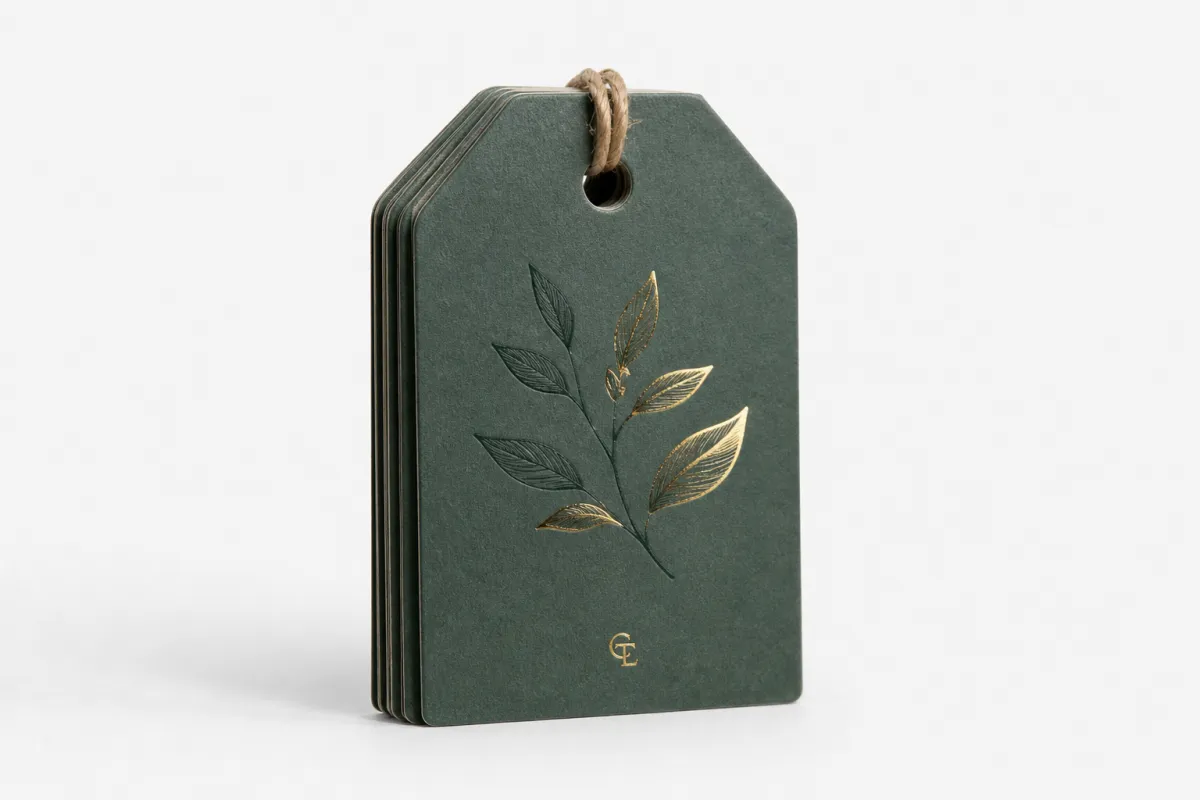
A tag is not just an identifier. In retail, it behaves like a tiny proof sheet. Printed Hang Tags wholesale works because it lets brands keep that proof consistent across many SKUs, seasonal launches, and reorder cycles without paying one-off pricing every time a style shifts. That kind of consistency matters more than many buyers expect. A shopper standing in front of three similar products will often notice the cleaner, heavier, better-printed tag before they notice a small difference in stitching or material finish.
From a packaging buyer's angle, Printed Hang Tags wholesale solves three problems at once: cost control, presentation control, and speed. A small apparel line, a boutique rebrand, or a gift-box program can all use the tag to make the product look retail-ready rather than improvised. That is not marketing fluff. It is a practical response to the way customers read value in the first few seconds. A 500-piece seasonal drop still needs polish, even if the budget is tighter than a 10,000-piece run.
Many teams make the same mistake with hang tags: they try to make the tag say everything. It should not. A strong tag is compact by design. It carries the facts that help a customer decide: price, size, fabric content, origin, and a short brand story. It can also include a QR code that sends shoppers to care instructions or product details, which keeps the physical tag easier to read. That balance is why printed Hang Tags Wholesale appears so often in apparel, accessories, home goods, candles, and premium gift packaging.
A hang tag is not decoration. It is a sales tool that sits in the customer's hand for three to five seconds, and those seconds matter more than most brand decks admit.
For brands building a broader packaging system, this is also where Wholesale Programs become useful. One order can align tags, labels, and inserts so every product in the line speaks the same visual language. If a brand needs related components, our Custom Labels & Tags category is a natural companion reference, especially for teams trying to coordinate several packaging pieces without creating a production headache. That kind of coordination is one reason printed hang tags wholesale often performs better than ad hoc print buying.
The decision usually comes down to a simple question: if the tag touches the product, carries pricing or compliance details, and needs to be ordered in enough volume for consistency to matter, printed hang tags wholesale is usually the right path. The sections that follow focus on the practical tradeoffs that affect the quote, the timeline, and the finished result.
Printed Hang Tags Wholesale Product Details and Use Cases
At its core, a hang tag is a printed card with a job to do. The spec starts with stock, size, shape, print coverage, and attachment method. After that come the finishing details: one side or two, matte or gloss, reinforced hole or plain punch, string or ribbon, standard rectangle or custom die-cut. Those choices are not ornamental extras. They affect how printed hang tags wholesale behaves on press, how it feels in the hand, and how well it survives packing, shipping, and store handling.
Use cases stretch farther than many buyers expect. Apparel is the obvious one, but accessories, home goods, candles, handmade products, and premium gift packaging all use printed hang tags wholesale to make pricing and brand information easier to absorb. A candle tag may need fragrance notes and burn-time guidance. A leather goods tag may need origin and material claims. A boutique home brand may use the tag to explain care instructions and the story behind the collection. The tag does not need to say everything, only the right things in the right order.
- Apparel - size, price, fabric content, care basics, and a clean brand mark.
- Accessories - logo, SKU, material callout, origin, and optional barcode.
- Home goods - product name, use instructions, safety notes, and a QR code.
- Gift packaging - a polished brand message, occasion note, or short thank-you line.
- Handmade or premium goods - material story, limited-edition number, or maker details.
Single-sided and double-sided layouts are the two most common structures. Single-sided tags work well when the front needs to stay visually quiet and the back only needs a short line of text or a barcode. Double-sided tags work better when the front carries branding and the reverse handles operational information. In a high-SKU environment, printed hang tags wholesale often works best when the back side is used consistently for structured data. That keeps the front of the tag visually stable across product lines while the back absorbs the variables.
Hierarchy matters more than decoration. The logo should usually be visible first. After that, the price or size should be easy to spot, followed by the supporting copy. If a tag is crowded, the customer has to work too hard, and that slows the sale. A 2.125 x 3.5 inch tag may be enough for a compact brand story, while a 2 x 4 inch or square format can give more room for layouts that need better spacing. For premium presentations, printed hang tags wholesale can also support custom shapes that echo the product category, though custom cutting always changes the economics.
There is a practical discipline to all of this. The best hang tags do not try to imitate a brochure. They act like a retail signal, then get out of the way. That is the part that many design reviews miss, and it is why a supplier who understands production can save a project from becoming too clever for its own good.
Materials, Sizes, and Finishes for Printed Hang Tags Wholesale
The material choice shapes the entire buying experience. For printed hang tags wholesale, the most common options are coated cardstock, uncoated paper, kraft stock, textured paper, heavyweight board, and specialty materials for premium or natural-brand positioning. Coated stocks hold sharp graphics and fine type well. Uncoated stocks feel more tactile and can read as more editorial or handmade. Kraft stock signals an earthier position, while textured paper adds a quieter luxury feel without needing much decoration.
Thickness matters because it changes both durability and perception. A 14pt card can work for price-sensitive runs, but 16pt, 18pt, or heavier board often feels more premium in hand. That extra stiffness can help a tag sit flatter on a hanger and resist bending during packing. For many brands, the tactile difference is enough to justify the small step up in cost. In printed hang tags wholesale, feel is rarely just feel; it is part of the product's perceived value.
Sizes range from standard rectangles to custom die-cut shapes. Common choices include square tags, narrow vertical tags, rounded-corner rectangles, and shapes that follow a logo outline or product silhouette. Standard sizes are usually easier to price, easier to proof, and easier to reorder. Custom sizes are useful when the brand wants more shelf impact or needs to fit unusual data. A good supplier will tell you whether a custom shape will create extra waste or require a separate die, because those details change the final quote for printed hang tags wholesale.
Finish selection is where a lot of expensive mistakes begin. Matte finish helps with readability and tends to photograph cleanly. Gloss can make color pop and works well for bold graphics, though it may feel less restrained. Soft-touch adds a velvety handfeel that many premium buyers like, but it is not the right answer for every category. Foil stamping, embossing, debossing, and spot UV each add a distinct tactile layer. Used carefully, they create strong shelf presence. Used carelessly, they can feel ornamental and push the cost past what the product can support.
Practical production details matter too. Hole punching, eyelets, ribbon or string attachments, bleed allowance, safe zones, and Pantone matching all belong in the brief. If a brand uses tight color standards, it should share the reference early. If artwork has fine lines or small type, the proof should be checked at actual size. Good printed hang tags wholesale work depends as much on layout discipline as on material choice.
If sustainability is part of the product story, ask about FSC-certified paper. The Forest Stewardship Council explains chain-of-custody expectations clearly at fsc.org, and that matters for brands that want paper claims to hold up under scrutiny. A recycled or responsibly sourced stock can be the right choice, but only if the finish and print method still support the look the brand needs. That is where a careful supplier earns its keep in printed hang tags wholesale. And just to be honest, recycled content is not automatically the same as FSC certification, so it is worth asking for the actual paperwork rather than assuming the label tells the whole story.
| Stock / Finish | Best Use | Typical MOQ | Typical Unit Price at 5,000 pcs | Practical Note |
|---|---|---|---|---|
| 14pt coated card, matte | Apparel basics and multi-SKU runs | 500-1,000 | $0.08-$0.14 | Clear print and controlled cost; lighter feel than premium board. |
| 16pt uncoated paper | Natural, minimal, or handmade positioning | 500-1,000 | $0.10-$0.18 | Good for writing, stamping, or softer visual systems. |
| 18pt kraft board | Eco-leaning brands and rustic packaging | 1,000-2,000 | $0.12-$0.20 | Texture reads well, but color matching is less saturated. |
| Soft-touch with foil | Premium apparel, accessories, and gift sets | 1,500-3,000 | $0.28-$0.65 | Higher visual lift, more setup steps, and more proofing discipline. |
Pricing, MOQ, and Quote Factors for Printed Hang Tags Wholesale
Price only tells the truth when the spec is identical. That is the main lesson in printed hang tags wholesale. A quote that looks cheaper on paper may be using lighter stock, a smaller size, a simpler attachment, or a less demanding finish. The smart comparison is line for line: same stock weight, same dimensions, same print coverage, same finishing, same quantity, same packaging terms. Anything less is a comparison of guesses, not a comparison of offers.
The biggest cost drivers are easy to spot. Stock weight comes first, followed by size, number of print colors, finishing complexity, die-cut shape, and whether custom attachments are included. A simple one-color tag on standard board might sit in a modest range, while a full-color tag with foil, embossing, and a custom shape can climb quickly. For many buyers, the useful question is not "What is the cheapest tag?" but "What spec gives the best shelf effect for this product category?" That is where printed hang tags wholesale becomes a brand decision as much as a sourcing decision.
- Stock - heavier or specialty paper increases cost and often improves feel.
- Print coverage - full-color fronts, backs, and ink-heavy graphics cost more than sparse layouts.
- Finish - foil, embossing, spot UV, and soft-touch add setup and run time.
- Shape - standard cuts are cheaper than custom dies.
- Quantity - higher quantities lower per-unit cost, especially on repeated runs.
- Attachments - stringing, eyelets, and ribbon options can change labor cost.
MOQ means minimum order quantity. In practice, the MOQ for printed hang tags wholesale moves up or down depending on the stock and finish. A simple uncoated tag may support a lower minimum, while a foil-stamped or custom-die-cut version may need a larger run to keep production efficient. Buyers should ask for MOQ against the exact spec, not a generic number, because a 500-piece plain tag and a 2,500-piece soft-touch foil tag are not remotely the same production challenge.
Common hidden or overlooked charges deserve attention early. Tooling or die fees can appear on custom shapes. Proofs may be free or may carry a small setup charge. Rush handling changes the economics. Shipping can be more than expected when the run is heavy or split across locations. Reprints happen, and split shipments can add handling. If a quote for printed hang tags wholesale leaves out these items, the final invoice often looks less pleasant than the first estimate.
There are ways to save without weakening the brand. Standard sizes are one of the easiest. Fewer finish layers help. Consolidating several product variants into one run can lower cost per unit. Reusing a tag structure across collections reduces setup complexity. Even something as simple as limiting the number of ink colors or keeping the back side functional instead of decorative can bring the project back into a more efficient pricing bracket. In other words, printed hang tags wholesale does not require a stripped-down look; it rewards disciplined specification.
For buyers who want a quicker frame of reference, ask for three quote levels: baseline, enhanced, and premium. That makes the tradeoff visible. A baseline tag might use a standard board and one finishing step. An enhanced version may add soft-touch or a heavier stock. A premium version might include foil, embossing, and a custom shape. Seeing those options side by side helps a brand decide where the extra spend actually improves the sale. That approach is much more useful than a vague "good, better, best" pitch.
If you are comparing vendors, ask each one to quote the same art file and the same packaging assumptions. Otherwise, one supplier is pricing a real job while another is pricing a rough idea, and the numbers will never line up cleanly.
Production Process, Proofing, and Timeline for Wholesale Hang Tags
The production path for printed hang tags wholesale is straightforward, but only if the brief is clean. A typical order moves through request, specification review, dieline setup, proofing, approval, print production, finishing, quality check, packing, and delivery. Each stage is simple on its own. The friction comes from missing copy, unclear dimensions, late artwork changes, or color references that shift from one run to the next.
Here is the order most teams should expect:
- Brief and quote - quantities, dimensions, stock, finish, and delivery window are confirmed.
- Artwork setup - the dieline is prepared or checked against the approved layout.
- Proofing - digital proof, and sometimes a physical sample, is reviewed.
- Approval - the customer signs off on text, color direction, and layout.
- Production - printing, cutting, finishing, and attachment work are completed.
- Quality control - quantity, print clarity, trim accuracy, and finish consistency are checked.
- Packing and ship-out - the tags are counted, packed, and sent to the destination.
Most delays happen before the press ever starts. Missing vector files slow setup. Unclear hierarchy causes proof revisions. New logos or poorly defined color references can create back-and-forth that adds days. If a buyer wants printed hang tags wholesale on a hard launch date, the fastest route is to send final artwork, final count, ship-to details, and the exact stock or finish preference in the first message. That sounds basic, but it is where many timelines get lost.
Timeline depends on complexity. A simple tag with a standard shape and clean artwork can often move through production faster than a premium version with foil, embossing, or a custom die-cut shape. In many cases, standard printed hang tags wholesale orders can be ready in roughly 8-15 business days after proof approval, while more specialized work may need 12-20 business days or more. Shipping time is separate. If the project is tied to a retail floor date, the safest planning move is to build a buffer rather than assume the shortest possible run time.
For products that ship as part of a broader retail kit, transit protection matters too. Packaging that includes tags, inserts, and branded components should be checked for scuffing, corner damage, and shifting during transport. The ISTA test methods are useful here because they give a recognized framework for distribution testing. Not every order needs formal testing, but the method matters when a launch cannot afford damaged presentation on arrival. That is especially true for printed hang tags wholesale bundled into larger packaging programs.
Ask for samples if the project uses a new stock, a new finish, or a highly specific color match. A low-cost sample can save a full run from a bad surprise. Good proofing is not about slowing the order down; it is about removing uncertainty before production starts. In the tag category, that tends to pay for itself quickly.
One more practical point: if your artwork includes tiny type, thin strokes, or pale ink on a dark background, review the proof under the same kind of light the product will sit under in store. A monitor can be generous. Paper is less forgiving, which is why the final check matters.
Why Choose Us for Printed Hang Tags Wholesale Orders
Custom Logo Things is built to act like a packaging partner, not a loose print broker. That distinction matters in printed hang tags wholesale because the work depends on repeatability. Buyers want consistent color, accurate trimming, dependable proofing, and a schedule that does not wobble when the order gets larger or the finish gets more detailed. A team that understands the product can control those variables better than a vendor that only sees a file and a shipping address.
The strongest operational advantage is simple: fewer handoffs. A generic print vendor may be good at one part of the workflow, but every extra transfer creates risk. If one team reviews art, another handles production, and a third manages packing, small errors can multiply. A packaging-focused supplier can shorten that chain. For printed hang tags wholesale, that means fewer misunderstandings about dielines, fewer lost notes about attachment placement, and fewer delays caused by spec drift. Those are not glamorous benefits, but they are the ones that protect a launch.
There is also value in practical guidance. Many buyers know what the tag should communicate, but not which stock, finish, or size will make that message work on the hanger. A good partner helps separate brand preference from production reality. A heavier board may feel ideal until it starts stretching the budget. A foil accent may look strong in a mockup but fail if the logo is too fine. In printed hang tags wholesale, the right answer often sits between design ambition and retail practicality, and the best suppliers understand that tension.
Color control matters too. A reprint should look like the first run, not like a cousin of it. That becomes even more important for brands with seasonal colors, multi-category packaging, or strict visual identity rules. If a collection launches in spring and reorders in fall, the tag needs to stay close to the original target. A supplier that treats printed hang tags wholesale as a repeatable system, not a one-off job, is usually the safer option for brands that care about continuity.
For teams coordinating more than one packaging component, the wider program matters just as much as the tag. That is where Wholesale Programs help align multiple orders into one production logic. It also helps to keep related components organized through Custom Labels & Tags so the brand voice stays consistent across the full package. A retailer may not spell that out in a meeting, but they will notice it instantly on the shelf. Printed hang tags wholesale is one of the easiest places to achieve that effect without overspending.
Compared with a generic vendor, a focused packaging partner usually delivers clearer specs, fewer errors, and a smoother path from approved art to finished goods. That does not guarantee every order is perfect. Nothing does. It does mean the process is more predictable, and predictability is worth real money when the product has a launch date.
And if you have ever had a tag run that looked fine in a PDF but felt flimsy in person, you already know the difference a production-minded review makes. That is the kind of mistake that only shows up after a box is opened, and by then it is too late to fix cheaply.
Next Steps: Ordering Printed Hang Tags Wholesale Without Delays
The fastest way to get printed hang tags wholesale right is to define the spec before asking for the quote. Start with quantity, dimensions, stock, finish, attachment style, and the exact copy that must appear on the tag. If the tag needs a barcode, QR code, fabric content, or origin statement, include that too. A quote based on partial information usually becomes the one that causes the most revisions later.
Before you send the file, prepare the artwork package in a clean way. Final logo files, copy, Pantone references if needed, dieline requirements, and shipping details should all live in the same handoff. If the project includes multiple versions, label them clearly. If the order needs a specific launch window, say so early. That kind of preparation gives the team a fair shot at accurate pricing and a realistic schedule for printed hang tags wholesale.
A short proofing round is smart whenever the project uses a new stock, a custom shape, or a premium finish. If readability is the priority, review the type size at actual scale. If the tag has a dark background or a metallic finish, check how the color and contrast behave under store lighting. A tag that looks perfect on a monitor can fail in print if the hierarchy is too delicate. That is why printed hang tags wholesale should be approved with the real use case in mind, not only the design file.
Lock the delivery window early, especially for seasonal launches, product drops, or retail rollouts tied to a fixed in-store date. Leave room for proof changes, production, and shipping. Standard tags can move quickly, but premium finishes and custom specs usually need more time than a last-minute launch plan allows. If the margin is thin, timing discipline becomes even more important.
Printed hang tags wholesale is ultimately a buying decision with a short, practical checklist: define the spec, request the quote, approve the proof, and schedule production. Do those four things in order, and the tag becomes a stable part of the brand system instead of a recurring source of delay. For Custom Logo Things, that is the point: printed hang tags wholesale should support the sale, protect the timeline, and arrive looking exactly like the brand said it would.
What is the usual MOQ for printed hang tags wholesale?
MOQ depends on stock, size, and finishing, so a simple uncoated tag often has a lower minimum than a foil-stamped or custom-die-cut version. For printed hang tags wholesale, standard runs are usually easier to price at 500-1,000 pieces, while premium builds may need a higher minimum to keep production efficient. Ask for MOQ against the exact specification so you can compare options fairly.
How long does printed hang tags wholesale production take?
Lead time usually includes proofing, production, finishing, and shipping, so the full timeline is longer than the press time alone. Simple tags can move faster than specialty orders with foil, embossing, or custom shapes. For printed hang tags wholesale, sending final artwork and delivery details early is the easiest way to reduce approval delays and keep the schedule realistic.
What files do I need for printed hang tags wholesale artwork?
Send vector logo files, final copy, dimensions, and any dieline or layout notes so the production team can set up the tag correctly. If you need a specific brand match, include color references as well. For printed hang tags wholesale orders with variable data, provide that information in a clean spreadsheet or approved format so it can be placed without manual cleanup.
Can I order multiple designs in one printed hang tags wholesale run?
Yes, but the cost depends on whether the designs share the same stock, size, and finishing, or require separate setups. Grouped designs can lower complexity when the base spec stays consistent across all versions. For printed hang tags wholesale, ask how versioning affects unit cost before you approve the run so the pricing reflects the real setup work.
Which finish is best for premium printed hang tags wholesale?
Matte works well when readability matters most, while foil, embossing, or soft-touch can create a more elevated feel. The best finish depends on the product category, lighting, and how the tag will sit on the shelf or hanger. For printed hang tags wholesale, choose the finish that supports the brand story instead of adding decoration that does not improve impact.
If you are planning a run now, the most reliable next move is to finalize the spec sheet before the art gets approved. Get the dimensions, stock, finish, quantity, and attachment details locked first, then proof the file at actual size. That one step saves time, keeps the quote honest, and gives printed hang tags wholesale the best chance of arriving ready to work on the product, not just look good in a folder.

