Buyer Fit Snapshot
| Best fit | Custom Hang Tags Wholesale Pricing projects where brand print, material claims, artwork control, MOQ, and repeat-order consistency need to be specified before quoting. |
|---|---|
| Quote inputs | Share finished size, material target, print colors, finish, packing count, annual reorder estimate, ship-to region, and any compliance wording. |
| Proofing check | Approve dieline scale, logo placement, barcode or warning zones, color tolerance, closure strength, and carton packing before bulk production. |
| Main risk | Vague material claims, crowded artwork, missing packing details, or unclear freight terms can make a low unit price expensive after revisions. |
Fast answer: Custom Hang Tags Wholesale Pricing: Material, Adhesive, Artwork, and MOQ should be specified like a repeatable production item. The safest quote records material, print method, finish, artwork proof, packing count, and reorder notes in one written spec.
Production checks before approval
Compare the actual filled-product size with the drawing, then confirm tolerance on folds, seals, hang holes, label areas, and retail display edges. Reserve space for logos, QR codes, warning copy, and material claims before decorative graphics fill the panel.
Quote comparison points
Review material grade, print process, finish, sampling route, tooling charges, carton quantity, and freight assumptions side by side. A quote is only useful when the supplier can repeat the same color, closure quality, and packing count on the next order.
Custom Hang Tags wholesale pricing can reveal something awkward about retail: a small rectangle of paper can change how a product is judged before anyone touches the product itself. I have seen a $90 sweater read as bargain-bin simply because the tag looked thin and rushed. The same sweater, paired with a heavier card, sharper print, and cleaner finish, suddenly felt like it belonged on a different shelf. That is not hype. It is a buying signal, and shoppers react to it fast.
Brands that order packaging know the real job is not hunting the cheapest tag. It is keeping the spec tight, the print legible, and the cost under control without ending up with stock that curls at the corners or color that goes flat under store lights. Custom Hang Tags wholesale pricing should protect margin while still delivering a tag that feels like part of the product, not an afterthought stapled on at the last minute.
After reviewing quote sheets for apparel, accessories, gift goods, and private-label retail, one pattern shows up again and again: the quote looks simple until you break it into the parts that actually move cost. What does the order include? Which specs raise the unit price? How do setup fees change the landed total? What does the supplier need before the number means anything? The same logic applies across Custom Labels & Tags, Custom Packaging Products, and related package branding decisions.
Custom Hang Tags Wholesale Pricing: Why Cheap Can Backfire
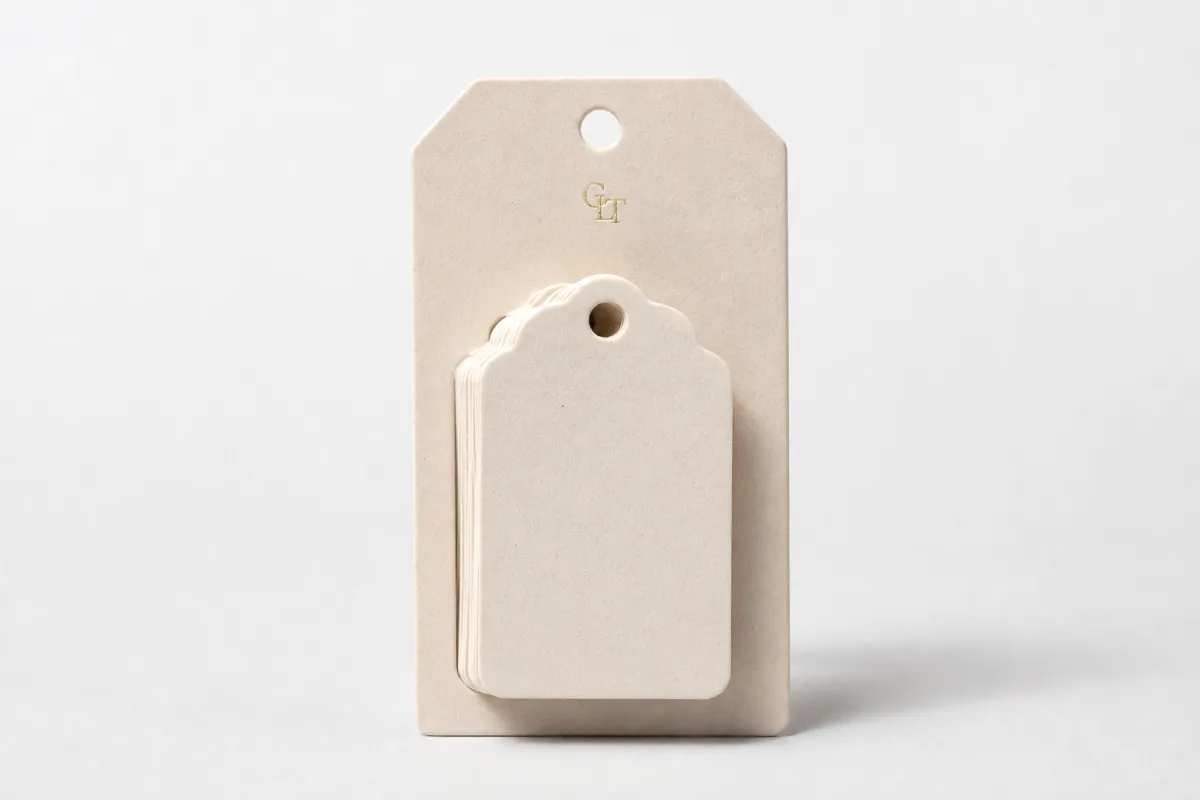
Custom Hang Tags wholesale pricing looks straightforward until two quotes land on your desk with almost the same headline number and one of them has quietly downgraded the stock, trimmed the coverage, and shaved the finish into something that feels closer to office stationery than retail packaging. A 250gsm tag might save a little on paper, but if the card buckles in the hand or the ink reads dull, the brand pays for that decision somewhere else. Usually on the shelf. Sometimes on the reorder.
The lowest bid is rarely the best value when the result bends, fades, or looks generic the second a shopper picks it up. Tags sit right against the garment, bottle, candle, or accessory. They are part of the first impression, and first impressions do not give many second chances. A tag that feels weak can make a strong product feel less considered.
A hang tag is small, but it still carries the first read on quality. If the tag feels flimsy, the product feels cheaper. Simple as that.
custom Hang Tags Wholesale pricing matters because three pressures are always pulling at the same time: brand image, production budget, and reorder speed. Buyers often chase the lower quote without asking what changed between versions. Did the supplier switch from coated stock to a lighter uncoated sheet? Did they remove one side of print? Did they drop the fastener and call it savings? Those are not minor adjustments. They are the whole calculation.
For apparel, accessories, handmade goods, and premium gifts, the tag is not just an identifier. It can carry price, care instructions, origin, product story, and a quiet statement about the brand's standards. A careless tag can drag down an otherwise polished package. That is why custom hang tags wholesale pricing should be treated as a design decision with financial consequences, not a line item to skim past.
If the goal is to stop overspending, the answer is rarely to buy the absolute cheapest option. A better approach is choosing the simplest spec that still protects the product story. Fewer variables. Cleaner artwork. A finish that belongs with the rest of the packaging instead of fighting it. That combination usually keeps both the look and the invoice in line.
Product Details: What a Wholesale Hang Tag Package Includes
A wholesale hang tag order is more than a printed shape on card stock. At minimum, custom hang tags wholesale pricing should include the material, print method, cut shape, hole punch, and attachment method. If a supplier quotes only the print and paper, the number is incomplete. It is a teaser, not a real price.
Many buyers also need to decide whether the tag is one-sided or double-sided, whether the finish is matte or gloss, and whether the form stays standard or moves into custom die-cut territory. Each choice changes the production path. Each choice also changes how the tag fits into the broader packaging system, especially when the brand uses coordinated inserts, boxes, sleeves, or labels.
The use cases are easy to spot once you look across categories. Fashion brands use tags for size, fabric, origin, and price. Handmade makers use them to reinforce a personal, crafted tone. Beauty brands often use them for usage notes or ingredient highlights. Gift packaging teams use tags for seasonal messages or a short brand story. In every case, custom hang tags wholesale pricing depends on how much information the tag has to carry and how polished that message needs to feel.
Before requesting a quote, the basics should already be decided. Size. Quantity. Material. Print sides. Finish. Attachment. If those details are still floating, the quote will float too, and the final invoice usually lands a little higher than expected. That pattern repeats often enough to be predictable.
For teams that want a broader packaging vocabulary, the Packaging School resources help with terminology and production basics, while the FSC site is useful if certified paper matters to your brand story. Paper decisions carry more weight than many buyers assume, especially when packaging needs to support a sustainability claim instead of just mentioning one.
There is also a quiet advantage in knowing what to leave out. Embossing, foil, and heavy lamination can elevate a tag, but they can also clutter the spec and eat into margin faster than the marketing team expects. A simple tag does not have to look plain. It has to look deliberate. custom hang tags wholesale pricing usually rewards discipline, not excess.
A good wholesale package can be described in one clean sentence: paper stock, print method, size, punch, fastener, finish. If that sentence turns into a paragraph, the order may already be doing too much for the budget it has been given.
Specifications That Shape the Final Look and Feel
Paper stock is the first lever. A 300gsm C1S tag will usually feel lighter than a 350gsm or 400gsm artboard, while kraft stocks tell a different story altogether. custom hang tags wholesale pricing shifts as the stock gets thicker, more textured, or more specialized. That is not a mystery. More material usually means more cost, and more handling usually means more labor.
A crisp retail look often pairs well with coated artboard and sharp print. A natural, handmade look usually fits uncoated stock or kraft. The best choice depends on the product and the promise behind it. A premium cosmetic line and a hand-thrown ceramic mug do not need the same paper language. They are selling different ideas, and the tag should understand that difference.
Print method changes the quote just as quickly. One-color print is typically simpler to run than full-color artwork with heavy ink coverage. Dark backgrounds, rich blacks, and saturated reds can behave differently on press, especially when a supplier is running multiple tags on the same sheet. That is one reason custom hang tags wholesale pricing climbs when the design gets more visually demanding.
Size is another decision buyers underrate. Small tags keep the message compact and efficient. Larger tags create room for storytelling, care notes, and product details. Shape matters too. A standard rectangle is easier to produce than a custom die-cut, while a custom silhouette can give a brand a more distinctive edge. The issue is not whether the shape looks good. The issue is how many additional steps the shape demands.
Finishing options can move a tag from basic to polished, but they only help when they support the product. Rounded corners, embossing, debossing, foil, lamination, and grommets all affect both appearance and unit cost. A soft-touch finish can feel excellent on a premium line. Put it on every SKU without thinking, and the budget starts paying for style that may not return anything measurable on the shelf.
Paper-based branded packaging carries another layer of trust. If marketing claims recycled content or responsible sourcing, the material choice should support the claim with documentation, not wishful language. Buyers do not need a lecture on ethics. They need a supplier who can keep the spec accurate, repeatable, and honest from one run to the next.
The simplest rule is often the best one: fewer variables mean fewer surprises. If the artwork is already busy, resist the urge to pile on every possible finish. custom hang tags wholesale pricing becomes easier to manage when the spec sheet stays lean and the final tag still looks intentional.
Custom Hang Tags Wholesale Pricing: What Drives Unit Cost
custom hang tags wholesale pricing is built from a handful of predictable elements: quantity, stock, print coverage, finishing, and packing. The more work the tag requires, the higher the unit cost tends to be. That sounds obvious, yet buyers still compare quotes as if all tags were born equal. They are not. A tag printed on light stock with a basic punch is a different object from a die-cut piece with foil and packing labor attached.
Quantity is usually the strongest lever. Setup work spreads across more units as the order grows, so the per-tag cost drops. A quote for 1,000 pieces will almost always look less attractive than a quote for 5,000 pieces, even when the production steps are nearly the same. That is why asking for several quantity tiers is one of the fastest ways to understand custom hang tags wholesale pricing in real terms.
Setup fees matter most on smaller runs. A $60 to $150 setup charge might seem manageable until it sits on top of a short order and starts distorting the landed cost. On 1,000 tags, that fee can shift the real per-unit price by a noticeable margin. On 10,000 tags, the same fee fades into the background. Same press. Same file. Very different economics.
Here is the clean math. If a supplier quotes $0.18 per tag plus a $90 setup fee on 1,000 pieces, the true tag cost before freight becomes $0.27 per unit. If the order grows to 5,000 pieces and the per-unit price falls to $0.11, that same $90 setup becomes much easier to absorb. That gap is the difference between a headline number and actual custom hang tags wholesale pricing.
| Spec Type | Typical Use | Approx. 1,000 pcs | Approx. 5,000 pcs | Cost Signal |
|---|---|---|---|---|
| Standard printed tag, 300-350gsm C1S, single-sided | Basic apparel, entry-level retail packaging | $0.18-$0.32 each | $0.08-$0.18 each | Lowest-cost path when brand needs clean basics |
| Full-color, double-sided artboard, matte or gloss | Fashion, accessories, branded packaging with more copy | $0.28-$0.48 each | $0.14-$0.28 each | Best balance of polish and control |
| Foil, emboss, or soft-touch with custom die-cut | Premium lines, gift packaging, higher-margin products | $0.45-$0.85 each | $0.24-$0.55 each | Stronger visual impact, higher production load |
| Kraft or recycled stock with string or grommet | Handmade goods, natural products, package branding | $0.30-$0.60 each | $0.16-$0.34 each | Texture and eco look can justify a modest premium |
Those numbers are a framework, not a contract. Freight, region, turnaround time, and paper availability can all move the final quote. The pattern still holds, though: simple specs keep custom hang tags wholesale pricing within a tighter range, while premium effects widen the spread quickly.
MOQ changes the picture too. Some suppliers price aggressively at one tier, then cut sharply at the next. A jump from 1,000 to 2,500 pieces can feel excessive until the unit cost drop is laid out in front of you. If your reorder pattern is steady, ordering slightly more can be a smarter move than scrambling for a rush reorder later. That is planning, not waste.
Packing method matters more than many buyers expect. If tags are bundled in exact counts, collated by SKU, or packed with strings already inserted, labor rises. That can push custom hang tags wholesale pricing higher even when the paper spec stays unchanged. Cheap quotes often hide those labor costs until they show up in the final bill.
Compare quotes the right way. Ask each supplier to separate unit price, setup, finishing, packing, and shipping. Then check whether proofing, revisions, or replacement for a print error are included. A quote that looks lower by a few cents can turn expensive once the omitted steps appear.
The finish should match the margin. Foil on a low-margin item is usually a bad trade. A polished tag on a high-margin product can be worth every cent. custom hang tags wholesale pricing is really about fit, not bragging rights.
Process and Timeline: From Proof to Delivery
The order flow usually follows a familiar sequence: artwork review, proof approval, production, finishing, packing, and shipment. custom hang tags wholesale pricing is easier to trust when that path is visible, because most delays happen before the press starts running. A rushed file with a bad dieline can cost more than a better spec ever would.
Artwork issues cause more delays than most teams want to admit. Low-resolution logos, missing bleed, unclear trim marks, and last-minute copy changes all slow the job down. Send clean files, and the proof stage moves faster. The finished tag is also less likely to come back with a preventable error. That answer may not be dramatic, but it is the one that keeps production moving.
For a standard run, many wholesale hang tag orders land in the 8-15 business day range after proof approval, depending on quantity and finishing. Custom shapes, foil, embossing, or special packing can stretch that to 12-18 business days or more. Rush service can shorten the timeline, but it usually adds cost, and sometimes the premium is significant. custom hang tags wholesale pricing gets less friendly when the schedule gets chaotic.
If the tags are part of a larger packaging program, the full launch date matters more than the tag alone. The tag may arrive on time, but if boxes, inserts, or other branded pieces are late, the faster tag solves nothing. Reorders should be planned against the real launch, not the date someone hopes will work out.
For broader logistics planning, shipping durability standards can help teams avoid careless assumptions. The ISTA resources are useful if your packaging kit has to survive stacking, transit, or parcel handling before it reaches a store or customer. The goal is not to make a hang tag indestructible. The goal is to understand the environment the finished package has to travel through.
Before production begins, have five things ready: logo files, copy, size, finish, and delivery target. If one of those is still undecided, the quote may still be possible, but the schedule and custom hang tags wholesale pricing will be less reliable. Good suppliers can help narrow options. They cannot guess your brand standards for you.
There is one more timing reality worth respecting: changes after proof approval usually cost money. Even a small text correction can trigger layout changes, a revised plate, or another review step. Tight deadline? Lock the spec early and keep approvals moving. Delays are expensive, and they are often avoidable.
Why Choose Us for Wholesale Hang Tags
Buyers do not need drama from a print partner. They need consistent output, clean communication, and a supplier who understands that custom hang tags wholesale pricing only matters when the finished tag looks right the first time. That means practical advice on spec choices, clear proofs, and production that stays where it was supposed to be.
We keep the process direct because complicated buying systems waste time. If your brand needs a simple recycled tag, a premium foil piece, or a multi-SKU program that will reorder later, the objective stays the same: make the tag look intentional without turning the quote into a maze. That is a better use of everyone involved.
Our approach also helps brand teams think beyond the hang tag itself. Coordinating a full set of branded packaging is easier when paper feel, print tone, and visual language stay aligned across pieces. For that kind of planning, the Wholesale Programs page is a practical starting point, and the Custom Labels & Tags collection can help keep details consistent across the line. If you need a broader set of assets, the Custom Packaging Products page keeps more of the package branding system in one place.
Trust matters in wholesale because errors multiply. A bad proof becomes a bad run. A bad run becomes a reorder headache. A clear proof, repeatable specs, and responsive support are worth more than a tiny discount that disappears the moment something needs correcting. That is the actual value behind custom hang tags wholesale pricing done well.
Not every product needs the same finish level. Some lines need a strong visual cue; others need only a clean identifier. Good packaging design usually comes down to restraint plus precision. A supplier should be able to explain where the money is going and which upgrade genuinely earns its place. Anything else is decoration with a receipt attached.
If you are comparing options, ask for the reason behind every cost difference. A supplier who can explain the paper, the print, the finishing, and the packing in plain language is usually a better long-term fit than one hiding behind vague language. That clarity is what keeps custom hang tags wholesale pricing useful on the next reorder, not just the first one.
Custom Hang Tags Wholesale Pricing: Next Steps to Order
Start with a clean spec sheet. Size. Quantity. Paper preference. Print sides. Color count. Finish. Attachment type. Delivery zip code. custom hang tags wholesale pricing gets sharper the moment those variables are defined, because the quote stops guessing and starts behaving like a real job.
Then compare at least three quotes on the exact same spec. Same paper. Same print coverage. Same finish. Same packing. If one quote comes in far lower, check whether setup, shipping, or finishing was left out. Apples-to-apples is the only comparison that matters. Everything else is spreadsheet theater.
If color matching or paper texture matters, ask for a proof or sample before you commit. That matters even more for premium retail packaging, where the tag has to sit comfortably beside Custom Printed Boxes, inserts, and other branded packaging pieces. A small sample can spare a large run from a preventable mismatch. custom hang tags wholesale pricing only earns its keep when it protects both cost and appearance.
Here is the short list of what to send: artwork files, product category, tag dimensions, quantity tiers, stock preference, finish preference, attachment style, and the date the order truly needs to be in hand. If one item is uncertain, say so. A good supplier can suggest a cheaper workable option instead of forcing you into a spec you do not need.
custom hang tags wholesale pricing rewards buyers who are specific, organized, and skeptical in the right way. That stance keeps the conversation honest and helps you pay for the parts that matter: durable stock, clean print, and a finish that supports the brand instead of distracting from it.
If you want the simplest path, send the current tag idea, the quantity range, and any must-have finish notes. From there, the quote can be built around the real product, not a rough assumption. That is how custom hang tags wholesale pricing stays under control and the next reorder stays boring in the best possible way. In packaging, boring usually means predictable, and predictable is what keeps margins from getting weird.
Frequently Asked Questions
What affects custom hang tags wholesale pricing the most?
Quantity is usually the biggest lever because setup costs spread out as the order gets larger. Paper stock, print coverage, and finishing options like foil or embossing also move the price quickly. Custom shapes and added stringing or grommets increase labor and can raise the quote. For the clearest read on custom hang tags wholesale pricing, compare the same spec at two or three quantity bands and watch where the break points actually land.
How does MOQ change custom hang tags wholesale pricing?
Lower quantities usually cost more per tag because setup work is divided across fewer pieces. Reaching the next MOQ tier can drop the unit price enough to justify ordering slightly more. Ask for pricing at two or three quantity levels so you can see the break points clearly. That is the fastest way to understand where custom hang tags wholesale pricing improves and where it stalls.
Can I get a sample before placing a wholesale order?
Yes, and it is smart when color, paper texture, or finishing quality matters to the brand. A sample helps confirm size, legibility, hole placement, and overall feel before mass production. If a full sample is not practical, ask for a digital proof and a production reference photo. That small step makes custom hang tags wholesale pricing easier to trust because you are not guessing about the finish.
Do special finishes raise unit cost a lot?
Some finishes add only a modest amount, while others like foil, embossing, or lamination can change pricing noticeably. The cost impact depends on coverage area, complexity, and whether the finish needs extra production steps. If budget is tight, choose the one finish that gives the biggest brand lift. That is usually better than stacking several small effects and watching custom hang tags wholesale pricing climb without a clear return.
What information do you need to quote custom hang tags?
Send the tag size, quantity, paper preference, print sides, colors, and any finish or fastening requirements. Include artwork files, target delivery date, and shipping location so the quote is actually usable. If you are unsure about a spec, say so upfront so the supplier can suggest the cheapest workable option. The more complete the request, the more accurate custom hang tags wholesale pricing will be.

