Buyer Fit Snapshot
| Best fit | Sustainable Jar Cartons Wholesale projects where brand print, material claims, artwork control, MOQ, and repeat-order consistency need to be specified before quoting. |
|---|---|
| Quote inputs | Share finished size, material target, print colors, finish, packing count, annual reorder estimate, ship-to region, and any compliance wording. |
| Proofing check | Approve dieline scale, logo placement, barcode or warning zones, color tolerance, closure strength, and carton packing before bulk production. |
| Main risk | Vague material claims, crowded artwork, missing packing details, or unclear freight terms can make a low unit price expensive after revisions. |
Fast answer: Sustainable Jar Cartons Wholesale: Specs, Pricing, MOQ should be specified like a repeatable production item. The safest quote records material, print method, finish, artwork proof, packing count, and reorder notes in one written spec.
Production checks before approval
Compare the actual filled-product size with the drawing, then confirm tolerance on folds, seals, hang holes, label areas, and retail display edges. Reserve space for logos, QR codes, warning copy, and material claims before decorative graphics fill the panel.
Quote comparison points
Review material grade, print process, finish, sampling route, tooling charges, carton quantity, and freight assumptions side by side. A quote is only useful when the supplier can repeat the same color, closure quality, and packing count on the next order.
Sustainable jar cartons wholesale sounds neat and tidy until the first shipment starts shifting in transit. In my experience, the trouble usually begins with fit, not print. A carton can look polished on a shelf and still fail if the jar moves even 2 to 3 mm, which is how you end up with crushed corners, cracked lids, loose inserts, and a reprint nobody budgeted for.
That is why buyers usually care about structure before decoration. Good wholesale packaging uses the least board weight that still protects the jar, keeps the shelf face sharp, and avoids a second round of tooling because the first version looked beautiful in a mockup and useless in a truck. If you are comparing sustainable jar cartons wholesale options for candles, supplements, beauty products, or food jars, the order that saves the most headaches is plain enough: fit, board, finish, print, then price.
Sustainable jar cartons wholesale: the packaging test
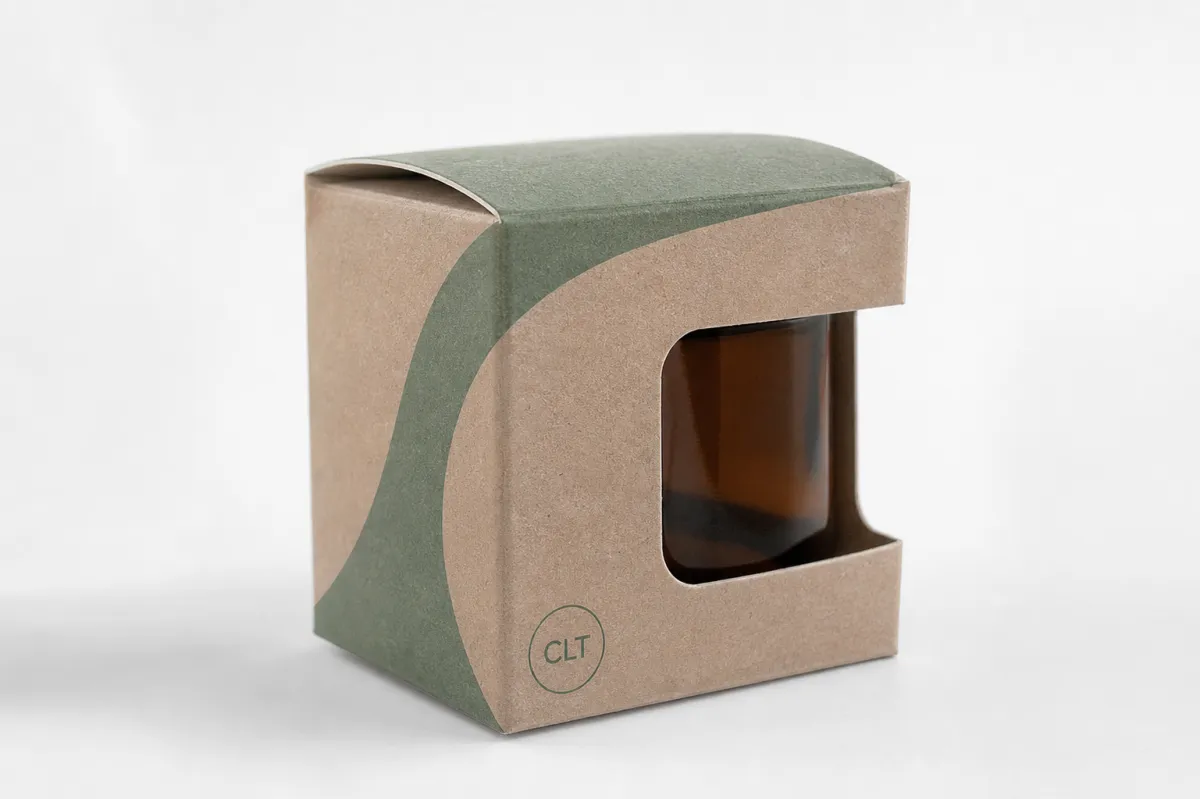
The packaging test I keep in mind for every sustainable jar cartons wholesale inquiry is simple: will the carton protect the jar, present well, and stay reasonable in cost once shipping and rework are included? If the answer is no on any one of those, the packaging is not doing its job. A pretty render does not make a good carton. That happens more often than people want to admit, and it gets expensive quickly.
Movement is usually the failure point, not graphics. A jar that shifts inside its carton will punish the corners, scuff the label, and beat up the lid. A box can pass a visual check and still fail in a courier lane because vibration and compression do damage that hands and eyes miss. In real production, the strongest sustainable jar cartons wholesale design is the one that holds the product stable with a simple structure and a controlled amount of empty space.
Wholesale buyers also need repeatability. One batch is easy. Ten batches is where weak packaging decisions show up. The carton has to work across production runs, pallet stacking, and retail handling without constant tweaks. Structure belongs ahead of decoration. Premium shelf presence is fine, but it should never come from an overbuilt box when a right-sized paperboard carton and a well-planned insert can do the same work with less waste.
From a buyer’s point of view, the priorities usually look like this:
- Lower packaging waste without under-protecting the jar.
- Cleaner shelf presentation with straight panels, accurate folds, and a good print surface.
- Repeatable bulk ordering so the same SKU can be reordered without redesigning the carton every time.
- Fewer damaged units during packing, storage, and shipping.
- Less guesswork on MOQ, lead time, and cost.
“The best carton is rarely the fanciest one. It is the one that protects the jar, prints cleanly, and does not force a second round of fixes.”
If your current carton looks premium but your return rate is ugly, the structure is probably doing less work than the artwork. Sustainable packaging does not mean weak packaging. It means right-sized, efficient, and credible. That is the point of sustainable jar cartons wholesale.
Product details: what sustainable jar cartons wholesale actually includes
Several carton styles show up again and again in sustainable jar cartons wholesale, and each one does a different job. Tuck-end cartons are the everyday workhorse. Sleeve cartons are useful when you want speed and lighter material use. Rigid cartons bring a premium feel and better crush resistance. Mailer-style boxes help when the jar is heavy, shipped direct to consumer, or packed for rougher handling.
Material choice matters more than buyers often expect. Recycled paperboard is usually the practical starting point for sustainable jar cartons wholesale because it balances cost, printability, and stiffness. FSC-certified board is a strong option when traceable fiber sourcing matters to the brand story. Kraft board gives a natural look and usually supports lower ink coverage. Coated board gives a brighter print surface and sharper graphics, while uncoated stock reads more earthy and less polished. None of those choices are magic. They are tradeoffs that should fit the product, the shelf, and the shipping route.
Printing choices shape the sustainability story too. CMYK works well for full-color branding, but more coverage means more ink and usually more visual noise. Spot colors are useful when you want a controlled palette and a cleaner look. Minimal ink coverage often pairs well with kraft or recycled board because the material itself carries part of the branding. Finishes like aqueous coating can protect the print while keeping the packaging close to the environmental profile many buyers want. Heavy lamination, foil, and soft-touch effects may look impressive, but they add cost and can make recycling less straightforward.
Structural add-ons are where many sustainable jar cartons wholesale projects either get smart or get silly. Inserts can stop a jar from rattling. Dividers can separate two jars in one carton. Dust flaps can help keep a retail face neat. Locking tabs can improve closure strength. A Custom Die Cut can make an odd-shaped jar fit properly instead of forcing a generic box to pretend it works. The goal is not to add features for their own sake. The goal is to add only the features that prevent damage or improve the retail experience.
Most jar categories land somewhere in the following range:
- Candles: often need a snug carton with a stable base and enough headroom for a lid or warning label.
- Food jars: need clear size control, storage-safe board, and sometimes a food-contact discussion depending on how the product is packed.
- Cosmetics: usually benefit from sharp print, clean folding, and a premium unboxing feel.
- Wellness products: often need cartoning that supports compliance text, tamper evidence, or multi-language labeling.
- Specialty gifts: can justify stronger presentation boards or rigid-style packaging if the shelf price supports it.
If you are comparing options for sustainable jar cartons wholesale, ask what the carton needs to do before you ask what it should look like. The best packaging structure is boring in the best way. It fits. It protects. It stacks. Then it prints well enough to sell the product.
For buyers who want a broader procurement path, our Wholesale Programs page is the right place to start once the jar dimensions are known. That saves everyone time, which is rare and refreshing.
Specifications that protect the jar and the budget
Before you quote sustainable jar cartons wholesale, lock down the dimensions. Not roughly. Precisely. Jar diameter, jar height, lid height, label thickness, shoulder shape, and whether the jar ships filled or empty all affect the carton size. A filled jar needs a different fit than an empty one because the weight distribution changes how the package behaves in transit. If the jar has a thick label or a raised lid, that detail can change the internal clearance enough to matter.
Board strength is the next decision. Buyers often ask for “stronger” packaging when what they really need is better fit and a sensible board grade. A 300-350gsm paperboard carton may be enough for a light cosmetic jar. A heavier glass candle jar might need 400gsm board, a reinforced base, or an insert. Rigid board around 1.5-2.0 mm is common when the package needs more crush resistance and a premium feel. Overbuilding the carton is easy. Choosing the Right spec is harder, and cheaper in the long run.
Finishing spec affects both cost and sustainability. An aqueous coating is usually the most practical protective finish if you want a clean surface without a heavy plastic feel. Matte lamination can look good, but it adds a layer that not every buyer needs. Embossing and foil can be useful for premium brands, yet they are not free, and they do not make a jar safer. If the customer cannot see or feel the finish in a way that changes the sale, skip it. The box does not need to win a beauty contest.
Compliance and usage details matter too. If the carton is for food jars, ask whether the final pack must support any food-contact or storage requirements. If the jar is for candles, heat exposure and label durability matter. If the carton is for supplements or cosmetics, shelf presentation and secondary carton logistics often matter more. For transit testing, the sensible benchmark is not guesswork; use the methods and thinking published by groups like ISTA for shipping validation and by FSC for responsible fiber sourcing where certification is required.
When buyers ask for a spec sheet on sustainable jar cartons wholesale, I recommend including the following:
- Material grade: recycled paperboard, kraft board, or rigid board.
- Board thickness: gsm or caliper, with a practical target range.
- Carton style: tuck-end, sleeve, rigid, mailer, or custom die cut.
- Insert type: none, paperboard insert, divider, molded pulp, or custom cutout.
- Print method: CMYK, spot color, or limited-color kraft printing.
- Finish: aqueous, matte, gloss, or no coating.
- Tolerance range: a realistic allowance for jar fit, usually around 1-2 mm depending on structure.
- Product weight: empty and filled weight, not just the jar weight.
A good spec sheet does one job: it removes excuses. That is valuable in sustainable jar cartons wholesale because vague specs create vague pricing, vague sampling, and vague responsibility when the first production run goes sideways.
Sustainable jar cartons wholesale pricing, MOQ, and quote basics
Pricing for sustainable jar cartons wholesale comes down to a few variables that are easy to understand but easy to overlook. Material choice is the first one. Print coverage is the second. Finishing is the third. Insert complexity, carton size, and shipping weight follow close behind. If the order uses a simple recycled board with one or two colors and no special finish, the price stays relatively sane. If the carton is large, fully printed, foil stamped, and fitted with a custom insert, the budget moves fast. That is not a mystery. It is manufacturing.
MOQ changes unit cost because setup costs have to go somewhere. A low-volume run spreads die cutting, print setup, and labor across fewer cartons, so the unit price is higher. A larger order drops the per-box price because the fixed costs are diluted. That is why sustainable jar cartons wholesale buyers should ask for tiered pricing at several breakpoints instead of one lonely quote that hides the real economics. If the pricing jumps sharply between 1,000, 3,000, and 5,000 pieces, you want to see that early.
| Carton option | Typical MOQ | Indicative unit price | Best use case | Notes |
|---|---|---|---|---|
| Recycled kraft tuck-end carton | 1,000-3,000 pcs | $0.18-$0.32 | Light jars, simple branding, lower ink coverage | Good starting point for sustainable jar cartons wholesale when the jar is not heavy |
| Printed paperboard carton with aqueous coating | 3,000-5,000 pcs | $0.24-$0.45 | Candles, cosmetics, retail shelf display | Better print appearance, still reasonable for bulk ordering |
| Carton with insert or divider | 3,000-5,000 pcs | $0.32-$0.62 | Heavier jars, multi-pack kits, fragile glass | Insert design affects fit and packing speed |
| Rigid gift-style carton | 1,000-3,000 pcs | $0.65-$1.25 | Premium gift sets, higher shelf price points | Stronger presentation, higher material and labor cost |
| Mailer-style protective carton | 1,000-3,000 pcs | $0.40-$0.85 | Direct-to-consumer shipping, heavy jars, e-commerce | Useful when transport protection matters more than shelf theater |
Those numbers are not universal, and they should not be treated like a live factory quote. They are useful ranges for planning. Real cost depends on the actual size, artwork, insert shape, board availability, and shipping route. If a quote seems too cheap, check what is missing. Usually something is missing.
The common cost traps are easy to spot:
- Oversized cartons that waste board and increase shipping volume.
- Extra coatings that add cost without improving durability or sales.
- Redesigns after dieline approval because dimensions were estimated instead of measured.
- Too many SKUs at once with tiny quantity splits that drive unit price up.
- Last-minute artwork changes that trigger fresh proofs and more delay.
A buyer-friendly way to request sustainable jar cartons wholesale pricing is to ask for three versions at once: a lean protection-first version, a balanced version, and a premium version. That gives you a real comparison. You can see where the money goes and decide whether the added finish or insert is actually worth it. A quote that compares nothing is just a number. A tiered quote is a decision tool.
For clients who already know they will reorder, the Wholesale Programs route usually pays off because it keeps the quote logic and future replenishment cleaner. Wholesale should reduce friction, not create a weekly scavenger hunt for carton details.
Process and timeline: from artwork to delivery
A proper sustainable jar cartons wholesale order follows a predictable path: brief, spec confirmation, dieline, artwork, proof, sample, approval, production, packing, and shipment. Skip one step and the schedule usually bites back. It is boring. It works.
The brief should include jar dimensions, target quantity, print expectations, shipping destination, and whether the carton must be retail ready or shipment ready. Once those details are in hand, the dieline can be prepared. If the dieline is based on actual measurements instead of rough estimates, the rest of the job moves faster and with fewer surprises. That matters because the carton is only as good as the space it is allowed to occupy.
Lead times vary by complexity. A simple structural sample may be ready in a few business days. Printed samples take longer because artwork, color checks, and finish decisions have to be approved. In many cases, a straightforward sustainable jar cartons wholesale order can move from proof approval to production in roughly 12-18 business days, with shipping added on top. More complex cartons with inserts, premium finishes, or multiple SKUs usually take longer. Peak season can stretch everything. Factories are not magic, and shipping is rarely in a good mood.
Most delays happen in the same three places:
- Missing measurements that force a second dieline.
- Slow proof approval because the brand team needs seven internal opinions on one line of copy.
- Last-minute edits after sampling, which are always more expensive than sending the right file first.
Sampling is cheap compared with fixing an entire production run. That is the part people skip because they want to feel efficient. A plain structural sample can prove fit before ink is involved. A printed sample can confirm color, panel placement, and finish. Both can save money. Both belong in sane sustainable jar cartons wholesale buying.
Transport planning matters too. If the cartons are shipping by sea, leave room for port time and inland delays. If they are going by air, budget for the freight impact. If they are going directly to a fulfillment center, check receiving requirements before production starts. A perfect carton that arrives too late is still a problem.
Why choose us for sustainable jar cartons wholesale
What buyers really want from sustainable jar cartons wholesale is not a dramatic pitch. They want stable board sourcing, reliable print quality, and a process that does not create unnecessary back-and-forth. That is the practical advantage. If a supplier can hold specs, communicate MOQ clearly, and keep artwork reviews tight, the buyer spends less time fixing preventable mistakes. Funny how that works.
At Custom Logo Things, the focus is on repeatable bulk orders, not one-off packaging theater. That means the quote should reflect the actual carton structure, not a generic template with your logo pasted on top. It also means the sample should match the intended use: right board, right insert, right finish, right tolerance. A clean process matters more than a loud promise.
Sustainability is strongest when it is specific. Recycled content options matter. FSC-certified board matters when chain-of-custody is part of the brand story. Right-sized structures matter because empty space is still material, and material is still cost. Reduced ink coverage or simpler finishes matter when the brand can carry a more natural look without losing shelf impact. Those are real choices in sustainable jar cartons wholesale, not buzzwords.
Customization depth also matters. Different jars need different builds. A candle jar is not a wellness jar. A cosmetic cream jar is not a food jar. A gift set may need an insert, while a single SKU might do better with a cleaner tuck-end design. Good wholesale packaging adapts to the product instead of forcing every item into the same shape. That saves time and usually saves money too.
Buyers should also expect clear documentation. A good supplier should be able to state carton style, board grade, print method, finish, tolerance range, and sampling plan without making the process feel like a treasure hunt. That is especially useful when the client is ordering sustainable jar cartons wholesale across several SKUs and needs a consistent naming system for future replenishment.
The practical reasons to choose a structured wholesale partner are simple:
- Dependable samples that reflect the real carton, not a loose approximation.
- Documented specs so repeat orders do not start from scratch.
- Clear MOQ guidance so the buyer can plan cash flow and inventory.
- Better fit control so the jar does not rattle, shift, or crush the lid.
- Less wasted material because the carton is built to the product, not around it.
If you are already comparing options, our Wholesale Programs page can help you move from rough idea to actual carton spec without wasting a week on vague back-and-forth. That is usually the part people wish they had done first.
Next steps for ordering sustainable jar cartons wholesale
If you want a clean quote for sustainable jar cartons wholesale, prepare the basics before you ask. Send the jar diameter, jar height, lid height, jar weight, whether the jar ships filled or empty, the target quantity, the carton style you prefer, the print file status, and the destination country. That is enough information to stop the guessing and start the actual quoting.
The smartest decision path is usually this:
- Choose the carton style based on how the jar is used.
- Pick the board grade based on weight, shipping method, and shelf expectations.
- Decide the finish based on branding and durability needs.
- Lock the print complexity only after the structure is right.
That order saves trouble. It also keeps the packaging budget from drifting into useless extras. I would rather see a strong carton with restrained branding than a flimsy box with expensive decoration. The customer notices damage faster than foil. Every time.
Ask for two quote versions if you are unsure: one lean version focused on protection and cost control, and one premium version that adds more visual polish. That side-by-side comparison makes the tradeoff obvious. It also helps brands defend the choice internally because the numbers are visible instead of implied.
If you are planning a reorder program, build the spec sheet now. Do not wait until the next production cycle to discover that the jar was measured three different ways by three different people. For sustainable jar cartons wholesale, accuracy up front is what keeps the later orders cheap, fast, and boring in the best possible way.
So here is the direct move: measure the jar correctly, choose the carton style that matches the job, and ask for a dieline before artwork starts. If you can send dimensions, quantity, shipping method, and the finish you actually need, you will get a quote that is useful instead of hopeful. That is the cleaner route, and it saves a lot of backtracking.
FAQs
What affects sustainable jar cartons wholesale pricing the most?
Material choice, carton size, print coverage, and finishing have the biggest impact on cost. MOQ changes unit price quickly because setup costs get spread across more or fewer cartons. Custom inserts, foil, embossing, and special coatings add cost without always adding real value, which is why sustainable jar cartons wholesale quotes should be compared by structure, not just by headline price.
What details do you need for an accurate sustainable jar cartons wholesale quote?
Provide jar diameter, height, and lid height, plus whether the jar ships filled or empty. Share target quantity, carton style, print requirements, and any insert needs. If artwork is ready, send the file format; if not, ask for a dieline first. That is the cleanest way to build a usable sustainable jar cartons wholesale quote.
What is a typical MOQ for sustainable jar cartons wholesale?
MOQ depends on carton size, print method, and finishing complexity. Simple kraft cartons often have lower MOQ than fully printed cartons with special finishes. Ask for tiered pricing so you can see the unit-cost jump at each volume. That gives you a real view of sustainable jar cartons wholesale economics instead of a single number that hides the tradeoff.
How long does sustainable jar cartons wholesale production usually take?
Plain structural samples are usually faster than printed samples. Artwork approval, sampling, and tooling can add time before mass production starts. Simple cartons move faster; complex cartons with inserts or premium finishes take longer. In many cases, a straightforward sustainable jar cartons wholesale order can be produced in roughly 12-18 business days after approval, with shipping added separately.
Which carton style works best for heavy glass jars?
Heavier jars usually need stronger board, tighter internal fit, and sometimes an insert or divider. Mailer-style or rigid constructions can reduce damage during transit. The best choice depends on jar weight, shipping method, and retail display needs. For heavier products, sustainable jar cartons wholesale often works best when the carton is built around transport performance first and branding second.