Buyer Fit Snapshot
| Best fit | Custom Die Cut Labels Supplier projects where brand print, material claims, artwork control, MOQ, and repeat-order consistency need to be specified before quoting. |
|---|---|
| Quote inputs | Share finished size, material target, print colors, finish, packing count, annual reorder estimate, ship-to region, and any compliance wording. |
| Proofing check | Approve dieline scale, logo placement, barcode or warning zones, color tolerance, closure strength, and carton packing before bulk production. |
| Main risk | Vague material claims, crowded artwork, missing packing details, or unclear freight terms can make a low unit price expensive after revisions. |
Fast answer: Custom Die Cut Labels Supplier: Material, Adhesive, Artwork, and MOQ should be specified like a repeatable production item. The safest quote records material, print method, finish, artwork proof, packing count, and reorder notes in one written spec.
Production checks before approval
Compare the actual filled-product size with the drawing, then confirm tolerance on folds, seals, hang holes, label areas, and retail display edges. Reserve space for logos, QR codes, warning copy, and material claims before decorative graphics fill the panel.
Quote comparison points
Review material grade, print process, finish, sampling route, tooling charges, carton quantity, and freight assumptions side by side. A quote is only useful when the supplier can repeat the same color, closure quality, and packing count on the next order.
Custom Die Cut Labels Supplier: What Buyers Need to Know
A Custom Die Cut labels supplier can make the same artwork feel refined, feel rushed, or land somewhere in the middle where the label does the job but never quite earns a second glance. That may sound dramatic, but I have seen a clean design lose its footing because the stock was too thin, the adhesive was too aggressive, or the cut shape left barely enough room for the barcode. The final price often shifts more because of stock, adhesive, shape, and finish than because of the graphic itself. The right custom die cut labels supplier helps you spot those tradeoffs early, before a small choice turns into an expensive correction on press.
From a packaging buyer's point of view, labels are never just labels. They touch product packaging, retail packaging, branded packaging, and sometimes custom printed boxes, so the cut, the adhesive, and the finish all have to behave on the actual surface, not just in a mockup file. A strong custom die cut labels supplier does more than print; it watches for the production details that keep the label working after the art has already been approved, which is the part many teams only discover once the line starts moving. That is usually when everyone gets a little quiet and asks for a reprint, which is nobody's favorite meeting.
"If the label looks perfect in proof but lifts on the pack, the artwork stops mattering. The line wins every time."
That is why a custom die cut labels supplier should be part of the conversation before artwork is locked down. If the label has to wrap a curved bottle, sit on a textured carton, or survive moisture, refrigeration, or shipping abrasion, the supplier needs to see the package early. Otherwise you end up with a polished file and a production headache nobody budgeted for. The dieline exists for a reason, and it usually shows up right after the first fit problem. Ask me how I know.
What a Custom Die Cut Labels Supplier Actually Does
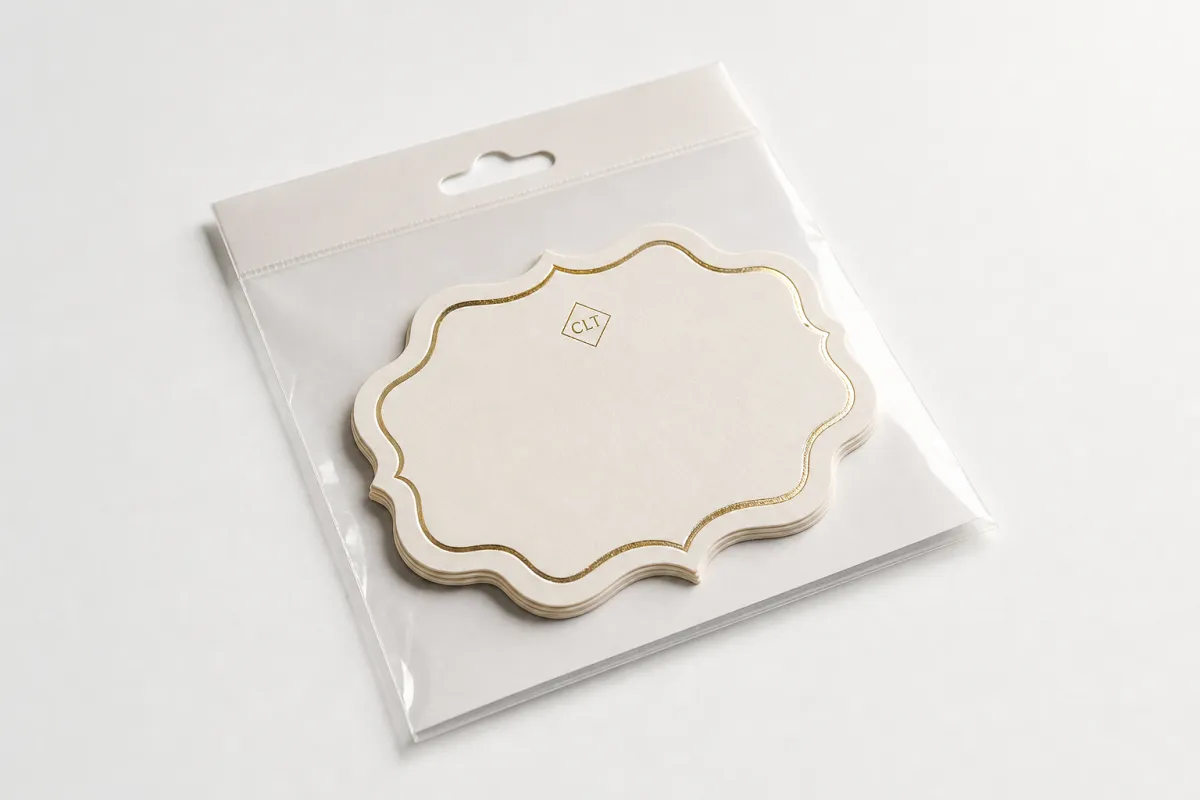
A custom die cut labels supplier takes a design and turns it into something that can be printed, cut, peeled, and applied without drama. The work is part technical, part practical, and the balance matters more than many buyers expect. The graphic absolutely matters, though it is only one piece of the job. Stock thickness, adhesive behavior, print method, and the way the label lands on the package all shape the final result.
The clearest difference is die cut versus kiss cut. A die cut label is cut all the way through the material to a specific shape, so the final piece comes out as a single custom form. A kiss cut label is cut through the face stock only, while the backing stays intact, which makes it easier to peel from a sheet or roll. For bottles, jars, mailers, cartons, and shipping packs, that decision changes both application speed and visual presentation.
A custom die cut labels supplier is also where the dieline gets cleaned up. If your artwork is already set, the supplier checks whether the cut line leaves enough room around text, barcodes, and borders. A well-balanced die line can make a small label feel premium. A cramped one makes the design look tight, even when the artwork itself is strong. That is one reason a custom die cut labels supplier adds more value than a generic print shop that only wants a file and a payment.
Material matching matters too. A matte paper stock can feel more natural for Custom Packaging Products, while a BOPP or vinyl option may be better for moisture exposure or longer wear. Some jobs need a permanent acrylic adhesive; others need a removable adhesive because the label must come off cleanly later. A custom die cut labels supplier should ask about the package surface, storage conditions, and application method before recommending a spec.
That detail makes a real difference. A label for a hand-applied candle jar is not the same as a label for an automated line with pressure-sensitive application. A custom die cut labels supplier who understands that gap can save you from a run of labels that look fine but waste time during packing. Problems like that do not stay small for long; they turn a good packaging design into a support issue.
For buyers who want a broader packaging reference, the Institute of Packaging Professionals is a useful place to start for packaging basics and standards. A label vendor does not need to quote every standard under the sun, but a serious custom die cut labels supplier should still speak the same language as the rest of the packaging team.
How the Custom Die Cut Labels Supplier Process and Timeline Work
A custom die cut labels supplier usually starts with intake, not printing. The first pass is spec gathering: dimensions, quantity, shape, application surface, material preferences, finish, and any environment issues such as cold storage or oil exposure. If the supplier skips that step and jumps straight to price, the quote may arrive quickly, but it often leaves out the information that makes the job usable.
The next step is artwork review. A custom die cut labels supplier checks the file format, resolution, bleed, safe area, and whether the cut line makes sense. If the job is tight on space, this is where the supplier may ask you to enlarge the label, reduce copy, or move a barcode. Those are not cosmetic suggestions. They are the details that keep the final label readable, printable, and consistent on the package.
After that comes proofing. A custom die cut labels supplier may send a digital proof, a layout proof, or a sample depending on the order type. This is the stage where buyers should slow down and check the boring stuff: spellings, shape, cut margin, color notes, SKU differences, and whether the finish still matches the brand brief. One proof round is normal. Three usually means the brief was not specific enough in the first place.
Timeline depends on the variables. A simple digital label run with a common stock and no special finish might move in 5-8 business days after proof approval. A more complex order with specialty adhesive, metallic stock, or a custom shape can stretch to 10-15 business days or more. A custom die cut labels supplier should separate production time from freight time, because those are different clocks, even when launch pressure makes them feel like the same one.
The most common delay is not the press run. It is artwork feedback. Someone notices a margin issue late. Someone else wants a last-minute copy change. Another stakeholder wants a different shade of black because the brand deck says so. A custom die cut labels supplier can move quickly, but only if the buyer stops moving the target every day.
Rush orders earn their place when the launch is real, the specs are final, and the cost of waiting is higher than the rush fee. They are far less useful when the file is still changing. In that case, the extra spend buys faster mistakes, which is rarely what anyone meant to purchase.
If the label will be tested for transit abuse, you can use ISTA packaging test standards as a practical reference for shipping performance. A custom die cut labels supplier does not need a full lab program for every order, but the package should still be judged against the conditions it will actually face.
Custom Die Cut Labels Supplier Pricing: What Drives Cost
A custom die cut labels supplier quotes labels based on more than print coverage. The real cost usually breaks into setup, material, printing, finishing, inspection, packing, and freight. If a buyer only looks at the per-label number, the quote can seem better or worse than it really is. That is how procurement gets distracted by a cheap-looking line item and then wonders why the total keeps climbing.
Setup matters because a custom shape takes more preparation than a standard rectangle. If the supplier needs a new die or extra prepress work, there is a fixed cost before the first label is produced. Quantity changes the math fast. At 1,000 pieces, setup is spread across a small run, so the unit price can look high. At 10,000 pieces, the same setup gets diluted, and the per-label price drops. A custom die cut labels supplier should be able to show those break points clearly.
Here is the part buyers actually need: digital and flexo behave differently. A custom die cut labels supplier using digital print is usually better for lower quantities, fast changes, and multiple SKUs. Flexo becomes attractive at higher volume, especially when the design is stable and the order repeats. If the run is short, digital often wins. If the volume is large and consistent, flexo often pulls ahead on unit cost. Straightforward. No smoke, no tricks.
| Option | Best Fit | Typical Unit Range | Lead Time | Main Tradeoff |
|---|---|---|---|---|
| Digital die cut labels | Short runs, multiple SKUs, fast launches | $0.18-$0.55 per unit | 5-10 business days after proof approval | Lower setup, higher unit cost at scale |
| Flexo die cut labels | Higher volume, repeat orders, stable artwork | $0.04-$0.16 per unit | 10-15 business days after proof approval | Better unit economics, higher setup complexity |
| Specialty finish labels | Foil, texture, varnish, premium package branding | $0.22-$0.75 per unit | Often 12-18 business days | Higher waste, more finishing steps |
| Paper stock with simple cut | Dry goods, cartons, low-abuse retail packaging | $0.08-$0.24 per unit | Usually the fastest option | Less durable than film stocks |
These ranges are directional, not live quotes, because stock availability, freight, and minimums can move them around pretty quickly. That is not a dodge; it is how real production works.
Material is another major driver. A paper face stock is usually cheaper than polyester or BOPP. Permanent adhesive can cost more than removable adhesive. Cold-temp adhesive, freezer-grade adhesive, and wet-strength stock all push the quote up because they are built to handle a harder job. A custom die cut labels supplier should tell you which detail is actually driving price instead of handing over a number and hoping nobody asks why.
Finishing can also surprise people. Matte lamination, gloss varnish, soft-touch coating, foil accents, and custom die shapes all add cost. A label that looks simple on a mockup can become expensive once the finishing stack is finalized. If you are comparing quotes, make sure the finish matches. A lower price on a different stock or a simpler finish is not a fair comparison. It is just a cheaper ticket to a different result.
There is also the hidden-cost category: extra proof cycles, split shipments, packaging changes, rush production, and minimums on specialty materials. A custom die cut labels supplier may be perfectly fair and still leave room for surprises if the buyer did not spell out the job. If you want apples-to-apples pricing, compare size, stock, adhesive, quantity, finish, and delivery terms line by line. Anything less is guesswork with a spreadsheet attached.
For paper-based labels, FSC-certified material can matter if your brand is trying to support responsible sourcing. The certification itself does not make the label perform better, but it can help with brand requirements and customer expectations. The details on certified paper sourcing are listed by FSC, which is a sensible place to check when sustainability belongs in the brief.
Step-by-Step: How to Order From a Supplier
Working with a custom die cut labels supplier gets easier when you stop treating the quote request like a mystery novel. Start with a packaging audit. What does the label touch? Glass, coated board, HDPE, kraft mailers, or a textured pouch? Does it face moisture, rubbing, refrigeration, oil, or outdoor exposure? The answer changes the stock and adhesive, which changes the whole order.
- Measure the real package. Do not rely on the artboard alone. Measure the visible flat area, the curve, and the seam clearance if the label wraps around a bottle or jar.
- Define the application method. Hand-applied labels can tolerate different specs than machine-applied labels, so tell the custom die cut labels supplier how the product is packed.
- Choose the performance level. A label for shelf display is not the same as a shipping label or a durable product label that stays on for months.
- Send a spec sheet. Include dimensions, quantity tiers, finish, stock preference, adhesive notes, and any brand rules that matter.
- Provide artwork or a mockup. If you do not have a clean dieline, a custom die cut labels supplier can often help refine the cut line before production.
- Approve the proof on the actual package. Screen previews lie. A desktop mockup does not tell you how the label feels on a curved or textured surface.
A custom die cut labels supplier is only as helpful as the information you give it. If the brief is vague, the quote will be vague. If the package photos are missing, the supplier may choose the wrong material. If the quantity is only approximate, the price break points will be fuzzy. Packaging teams that keep a clean launch file usually move faster on the next run because they are not re-solving the same problem from scratch.
Before production starts, lock the practical details: timeline, payment terms, reprint policy, delivery address, and whether the labels ship on rolls or sheets. A custom die cut labels supplier should confirm all of that in writing. If a change appears later, you want a clear record of what was approved and when.
For anything likely to sit in a humid or shipping-heavy environment, ask for test samples and apply them to the real package. A custom die cut labels supplier may recommend a stronger adhesive or a different stock once they see the surface. That is not overcautious. That is the whole point of paying for a custom job instead of gambling on a generic label.
Common Mistakes When Buying Custom Die Cut Labels
The first mistake with a custom die cut labels supplier is assuming a photo is enough to size the label correctly. Photos distort scale. Packaging curves hide dimensions. A label that looks balanced in a mockup can end up too tall, too narrow, or squeezed against a seam on the real package. Measure the package, then measure it again. That is cheaper than reprinting.
Another mistake is choosing adhesive based only on indoor use. A custom die cut labels supplier will ask about temperature swings, moisture, oils, cold storage, and the package surface for a reason. Adhesive failures do not care that the artwork was approved. They peel, lift, or wrinkle anyway. If the product lives in a cooler, warehouse, bathroom, or shipping line, the adhesive spec needs to match that reality.
People also approve proofs too fast. A custom die cut labels supplier can deliver a clean proof and still have the buyer miss edge clearance, barcode contrast, or how the die line cuts into the visual balance. If the label is part of retail packaging, those details matter because shoppers notice clutter before they notice typography. The brand gets judged in a second, not after a design meeting.
One of the easiest traps is picking the lowest quote without checking what it includes. A custom die cut labels supplier may show a low unit price while leaving out setup, freight, a premium adhesive, or the finish your package really needs. On paper it looks smart. On the invoice, less so. The buyer who chases only the bottom number often pays for it later in rework or slow application.
The final mistake is ignoring reorder consistency. A custom die cut labels supplier might make the first batch look perfect and then struggle to match a later run if the stock changes or the file was not locked down. That matters for product packaging with ongoing SKUs, because customers expect the same label every time. Consistency is part of brand trust, not just production convenience.
For a broader look at packaging material choices and application behavior, Custom Labels & Tags can help you compare options against the actual use case instead of guessing from a catalog thumbnail.
Expert Tips for Better Results From a Supplier
A custom die cut labels supplier gets better results when the buyer standardizes the obvious stuff. If you use three label shapes across ten SKUs, try to reduce the number of variables where you can. Fewer sizes mean fewer mistakes, easier reorders, and less friction when packaging design changes. It is boring advice, and it saves money. Honestly, it saves a lot of back-and-forth too.
Test samples on the real surface, not on your desk. A custom die cut labels supplier may send a beautiful sample sheet, but glossy paper behaves differently from coated board, and curved glass behaves differently from flat cartons. If the label must stay flat on a squeeze bottle or a freezer pack, test it in the condition it will actually face. That habit prevents a lot of wishful thinking.
A good custom die cut labels supplier should also tell you how color matching works. Ask whether the team is matching to a physical sample, a Pantone reference, or a digital file. Ask whether they allow material substitutions if the exact stock is unavailable. Ask what happens on a reorder. Those questions sound tedious because they are. They are also the difference between stable package branding and a batch that looks slightly off for no good reason.
Keep a launch kit. Seriously. A good one should include the approved dieline, final artwork, stock reference, finish notes, quantity history, and any application notes from the packaging line. A custom die cut labels supplier can then repeat the job without starting from zero. That matters if your line keeps moving and your team does not want to re-explain the same specs every quarter.
Build a small overage buffer. If you order exactly the minimum, one damaged carton or one late change can stall the launch. A custom die cut labels supplier can usually add a modest overrun allowance, but you should still ask for spare units if the job is time-sensitive. The cost of a little extra inventory is usually smaller than the cost of an urgent reprint.
For brands with broader packaging programs, it helps to think in systems rather than single SKUs. A label, a carton, and the outer shipper should all feel like they belong to the same family. That is where package branding gets stronger. The label is not isolated; it is part of the full shelf story. If your team also buys Custom Packaging Products, keep those specs aligned so the final presentation does not look stitched together by accident.
A custom die cut labels supplier should be able to support that system thinking. The best ones do not just print a shape. They help the buyer reduce variation, keep reorders stable, and avoid little production headaches that turn into big ones later. That is the practical value, not the sales pitch.
One more useful habit: keep your sustainability requirements clear. If you need recyclable components, FSC paper, or a specific adhesive constraint, say so early. A custom die cut labels supplier can then suggest stock choices that fit your goals without creating a new problem for the production line. For buyers who need to track broader packaging expectations, packaging standards and sourcing notes are easier to manage when the label spec is written down properly.
Next Steps Before You Request a Quote
Before you pick a custom die cut labels supplier, gather the facts that actually affect the job: exact label dimensions, quantity targets, package photos, application method, storage conditions, finish preference, and whether the label must survive moisture, abrasion, or temperature swings. A clean brief gives you a clean quote. That is not marketing language. It is how production works.
Send the same RFQ to two or three suppliers and compare more than price. A custom die cut labels supplier that answers clearly, asks the right follow-up questions, and confirms assumptions in writing is often more valuable than the cheapest option by a mile. Cheap with confusion is just expensive in disguise.
Ask for three things in writing: proof format, lead time, and sample availability. A custom die cut labels supplier should tell you whether the quote includes digital proofing, what the production clock starts on, and how reprints are handled if an error slips through. Once those terms are written down, the order is easier to manage and easier to repeat.
Use a scorecard if the quotes feel close. Rate fit, finish, turnaround, communication, and reorder reliability. Price matters, obviously, but price alone does not tell you which custom die cut labels supplier can repeat the result without chaos. The long-term win is not the cheapest one-time order. It is the supplier that can keep your packaging consistent while your SKU count grows.
A strong custom die cut labels supplier should make the next run easier than the first. That is the real test. If the order only works once, the process is fragile. If the supplier can repeat the same shape, stock, and finish without a dozen corrections, you have something worth keeping. For most buyers, that is the difference between a label vendor and a packaging partner.
So, before you request the quote, tighten the spec, check the surface, and decide what the label actually needs to survive. A custom die cut labels supplier can only quote what you define. Define it well, and the result is cleaner, faster, and much less annoying to manage. That is the whole point.
Frequently Asked Questions
What should I send to a custom die cut labels supplier for an accurate quote?
Send final label dimensions, shape, and quantity first. Then add the packaging surface, finish preference, adhesive needs, and any temperature or moisture exposure. If you have artwork, include it; if you only have a rough mockup, include that too. A custom die cut labels supplier can spot fit issues early if you give enough context.
How long does a custom die cut labels supplier usually need?
Simple stock-material jobs are faster than custom shapes with specialty finishes. In many cases, the proofing cycle takes longer than the actual production run. A custom die cut labels supplier should quote production time separately from shipping time so you do not plan a launch around wishful thinking.
What affects custom die cut labels pricing the most?
Material choice, adhesive type, and print method usually drive the biggest swings. Setup, quantity tiers, and finishing also matter a lot. A custom die cut labels supplier may quote a low base price, but complex shapes, premium finishes, and extra proof rounds can change the total quickly.
Can a supplier help if I only have a rough design?
Yes, if you can share package photos, rough dimensions, and the target use. A custom die cut labels supplier can often help verify or build the dieline before production starts. That said, testing the label on the actual package is still the safest way to catch fit problems.
What MOQ should I expect from a custom die cut labels supplier?
It depends on print method and finish. Digital runs can be relatively low, while flexo and specialty finishing often need more volume to make sense. Ask a custom die cut labels supplier for several quantity break points so you can see where the unit price starts to improve.
For buyers who want labels that actually hold up on the shelf, the best move is simple: choose a custom die cut labels supplier that asks smart questions, quotes the full job, and can repeat the result without surprises. That is how you get branded packaging that looks intentional instead of improvised, and why the right custom die cut labels supplier is worth more than the cheapest line on the page. If you are building the spec now, start with the package surface, the environment, and the finish, then let the artwork follow the job instead of forcing the job to fit the artwork.

