Buyer Fit Snapshot
| Best fit | Custom Logo Mailers for Startups projects where brand print, material claims, artwork control, MOQ, and repeat-order consistency need to be specified before quoting. |
|---|---|
| Quote inputs | Share finished size, material target, print colors, finish, packing count, annual reorder estimate, ship-to region, and any compliance wording. |
| Proofing check | Approve dieline scale, logo placement, barcode or warning zones, color tolerance, closure strength, and carton packing before bulk production. |
| Main risk | Vague material claims, crowded artwork, missing packing details, or unclear freight terms can make a low unit price expensive after revisions. |
Fast answer: Custom Logo Mailers for Startups: Film, Print, MOQ, and Carton Packing should be specified like a repeatable production item. The safest quote records material, print method, finish, artwork proof, packing count, and reorder notes in one written spec.
Production checks before approval
Compare the actual filled-product size with the drawing, then confirm tolerance on folds, seals, hang holes, label areas, and retail display edges. Reserve space for logos, QR codes, warning copy, and material claims before decorative graphics fill the panel.
Quote comparison points
Review material grade, print process, finish, sampling route, tooling charges, carton quantity, and freight assumptions side by side. A quote is only useful when the supplier can repeat the same color, closure quality, and packing count on the next order.
I have seen custom logo mailers for startups do something a plain shipping bag rarely manages: they make a small order feel like a real brand interaction instead of a box-checking exercise. A founder in Austin once told me, half joking and half relieved, that the first time their branded mailers landed on a customer porch, the business finally "looked like it had its act together." That is not magic, and it is not some polished marketing myth. It is package branding doing quiet work in the background, on every porch, at every warehouse bench, and in every customer photo that makes the rounds without a paid boost. For early-stage teams, custom logo mailers for startups are often the first packaging choice that helps marketing, operations, and customer perception all at once, which is kinda rare.
Startups usually do not have the budget to buy their way into trust. They have a product, a promise, and a shipping label. That is why the outer package matters so much. A mailer with a clear logo and a clean print spec signals that the brand has a point of view and the discipline to carry it through to the doorstep. A generic mailer, by contrast, can make the whole shipment feel temporary, even if the product inside is excellent. I have watched customers in Los Angeles and Toronto open two nearly identical orders and remember the branded one better, just because the outer bag felt intentional. Custom logo mailers for startups also help standardize the visual language across fulfillment, pop-up events, and post-purchase sharing, which is valuable when the company is still building recognition one order at a time.
This article covers what custom logo mailers for startups actually are, how they move from file to front door, what drives cost, how to Choose the Right material and size, and where teams tend to stumble. I am also pulling in a few details from factory visits, including a flexographic print line in Longhua, a converting shop in Dongguan that changed a 20,000-piece minimum after a size swap, and the kind of timeline buffer that saves a launch when freight is being freight. Those details matter because packaging is won in the gap between the mockup and the pallet, and that gap is where nice ideas either become a finished product or get expensive, fast. If you are comparing Custom Poly Mailers, Branded Shipping Bags, and other startup packaging options, the difference usually comes down to labor, storage, and how much consistency the team can actually support.
Custom Logo Mailers for Startups: Why They Punch Above Weight
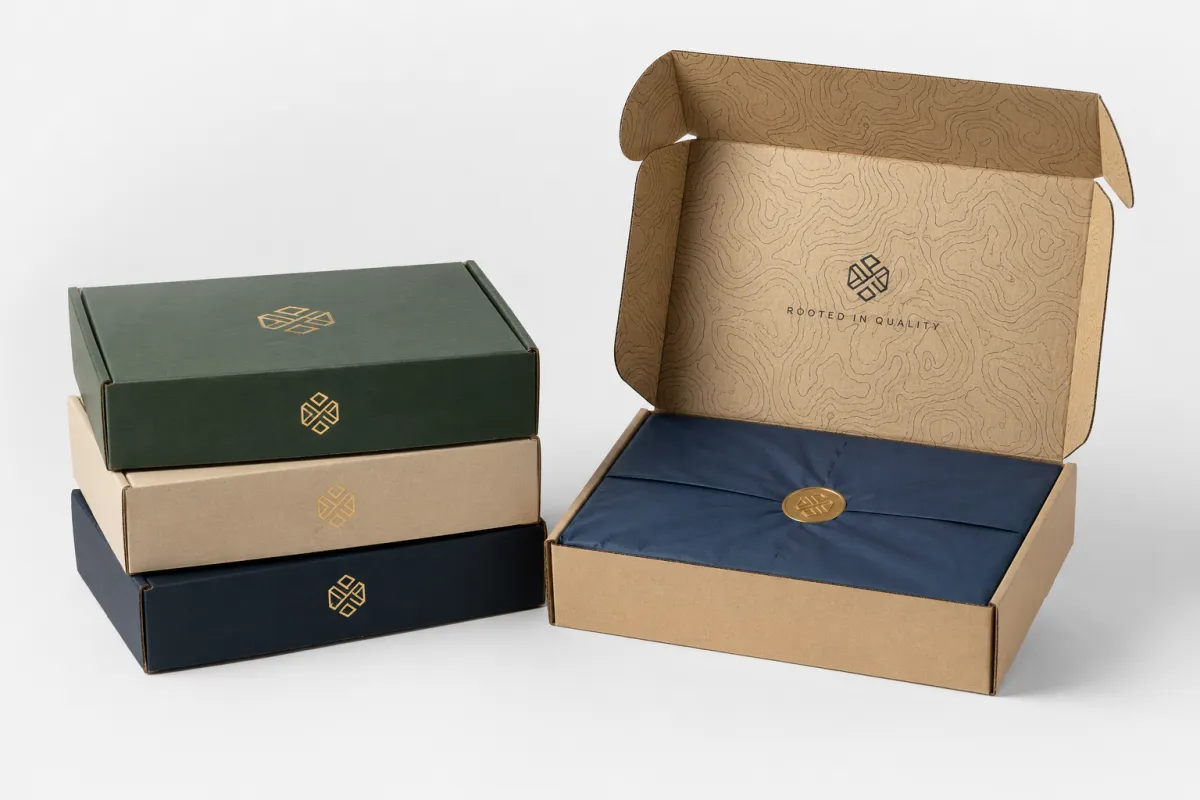
Custom logo mailers for startups are branded poly mailers, shipping bags, or lightweight mailers printed with a logo, color system, slogan, or short brand message. Most are made from polyethylene film in the 2.0 to 3.5 mil range, though recycled-content films and co-extruded structures are common too. They are a natural fit for apparel, accessories, beauty samples, and flat goods that do not need a rigid carton. The appeal is simple: a startup gets visible branding without adding the weight, cubic volume, or storage burden of a full box program. I have had more than one founder tell me they "just needed the packaging to stop acting like a second warehouse problem." Fair enough. For many teams, custom logo mailers for startups are the cleanest way to look deliberate without creating another operational headache.
The reason founders care so much is that packaging sits closer to the customer than most marketing channels ever will. A paid ad can be skipped in two seconds. A mailer gets handled, stacked, carried, opened, and, if the brand has done its job, photographed. I once watched a DTC apparel founder in San Diego compare a plain shipping bag with a branded one and realize the branded bag did more for perceived value than the insert card, even though the insert took three people and a whiteboard to approve. The mailer hit first. The mailer also cost less than the team had been spending on manual branding steps. That is the sort of efficiency that makes sense when cash flow is still doing yoga every month.
The real tension is cash versus presentation. Founders want the polish of custom logo mailers for startups, but they do not want to tie up money in a giant run that sits in storage for half a year. So the question is not whether branded mailers look good. The question is whether the spec is smart enough to protect inventory, support packing speed, and still feel like the brand they want to build. A good choice balances seal strength, print method, film thickness, and reorder risk. A bad choice looks great in a render and causes mild chaos on the warehouse floor. I have seen both. Only one of them usually comes with a happy email thread.
Here is the way I explain it to clients: if you ship 1,000 orders a month, a mailer that adds $0.12 per unit but saves 15 seconds of manual branding can be the better deal. That is not a cute spreadsheet trick. Fifteen seconds across 1,000 orders is a little over four hours of labor every month. Add labor, mistakes, and the overhead of extra steps, and the branded bag starts looking smarter than the "cheap" option pretty quickly. Custom logo mailers for startups punch above their weight because they remove friction while adding visible value. That combination is worth protecting.
Consistency matters more than extravagance, too. A plain poly mailer with a crooked sticker feels improvised. A one-color branded mailer feels intentional. The gap between those two impressions is bigger than most founders expect, especially in product categories where buyers are making fast judgment calls. You do not need a loud design to look credible. You need a clean one. Honestly, a lot of overbuilt packaging just looks like somebody spent too much money solving the wrong problem, usually after a very optimistic afternoon in a glossy sample room near Guangzhou. For custom logo mailers for startups, the goal is not to impress with excess. It is to make the shipment feel credible the moment it lands.
How Do Custom Logo Mailers for Startups Move From File to Front Door?
The production flow for custom logo mailers for startups usually starts with a short brief: product dimensions, monthly ship volume, target finish, and logo files. From there, the supplier checks whether the artwork fits a stock size or needs a custom dimension. The file then moves into proofing, where the printer checks bleed, safe area, logo placement, and ink coverage. After approval, the order goes into printing, then converting, then packing, then freight. That sequence sounds basic, but each step has a trapdoor if the brief is vague. "Vague" is not a harmless little flaw; it gets expensive with astonishing speed, especially when a factory in Dongguan is waiting on a corrected AI file before it can cut film. For custom logo mailers for startups, the proofing stage is where a good idea becomes a production-ready spec, or falls apart in revision loops.
Digital printing and flexographic printing are the two methods most startups hear about first. Digital printing works well for shorter runs, more colors, and frequent artwork changes, but the per-unit cost is usually higher. Flexographic printing needs plates and setup, yet it wins on cost once the order grows into the 5,000 to 20,000 piece range. There is also the stock mailer plus label approach, which can be fine for a test launch, but it adds manual labor and rarely looks as polished as custom logo mailers for startups printed directly on film. I am a little biased here. If the whole point is to look like you mean it, labels on top of generic packaging often feel like a compromise pretending to be a strategy, and the extra 12 seconds per parcel never looks cheaper on payroll anyway.
Artwork setup is where good packaging design becomes practical. A logo that looks perfect on a website header may fail on a 12-inch mailer if the lines are too thin or the contrast is too low. I once watched a brand team in Chicago push for a six-color gradient on matte black film, only to find the detail collapsed in proofing. The fix was not glamorous: one bold white logo, centered, with more breathing room around it. The result looked cleaner, printed better on a flexo line, and cost less per unit. Everyone pretended they had planned it that way. They had not, and that is fine. Good packaging often gets better when it is forced to simplify. That is exactly why custom logo mailers for startups tend to work best with a restrained art direction and one strong brand mark.
Timelines vary, but a straightforward run of custom logo mailers for startups often takes 12 to 15 business days from proof approval to production completion, before freight. Air shipping can add 5 to 8 business days. Ocean freight can add 20 to 30 days depending on the lane and port congestion. Rush orders usually narrow the field of choices: fewer film options, fewer print effects, and less room for revisions. If a launch date is fixed, I tell teams to work backward from the first live shipment, not from the order date. That habit keeps the packaging calendar from drifting until it collides with the warehouse schedule, which is the kind of collision nobody wants at 6:30 a.m. on a Monday in Jersey City.
Quantity changes almost everything. At 3,000 pieces, a supplier may offer fewer size options and a tighter print spec. At 10,000 pieces, there is usually more room for a lower unit price and a cleaner production run. Still, bigger is not always smarter for custom logo mailers for startups. If you ship 400 orders a month, a 12-month supply is overkill unless the design is frozen and storage is already accounted for. The right quantity is usually the smallest run that covers one sales cycle plus a buffer of 10% to 15%. That buffer sounds dull until the last carton gets crushed in transit from Ningbo to Seattle, which, naturally, is exactly when people discover they were one carton short.
These mailers fit into fulfillment in two common ways. For a 3PL, the packaging has to be easy to pick, load, and seal under time pressure, which means clear size labels and a reliable adhesive strip. For in-house shipping, the team usually cares more about speed, stackability, and how the mailer behaves when packed with a sweater, a sample kit, or a rigid accessory. Either way, custom logo mailers for startups should support the warehouse process, not slow it down. Packaging that fights the line will eventually get blamed for the wrong problem, which is a special kind of workplace comedy nobody requested, especially if the 3PL is billing by the pick. The better the fit between packaging and operation, the easier it is to scale the same mailer across more SKUs.
Choosing Materials, Sizes, and Print Specs That Fit the Brand
The material decision is where a lot of founders get pulled toward the wrong thing. Standard poly mailers are the workhorse: lightweight, flexible, and usually the lowest-cost option for custom logo mailers for startups. Recycled-content poly mailers add a stronger sustainability story if the supplier can document post-consumer or post-industrial content. Co-extruded film can improve puncture resistance and give a smoother print surface. Bubble mailers and tamper-evident mailers make sense for fragile or higher-value items, but they also change the cost structure and the visual feel of the shipment. I have a soft spot for the plain poly option because it is honest about what it is: efficient, not theatrical, and usually made in a 3.0 mil film from a plant in Zhejiang or Guangdong. For many teams, that is exactly the right balance between cost and presentation.
Size should follow product reality, not mood boards. Apparel often works well in mailers around 10 x 13 inches, 12 x 15 inches, or 14.5 x 19 inches, depending on fold pattern and thickness. Accessories may need smaller dimensions like 9 x 12 inches. Flat goods, samples, and paper items can move in slimmer formats. If the mailer is too large, it wastes material and invites movement in transit. If it is too tight, seals fail and returns climb. With custom logo mailers for startups, a 1-inch change in width can be the difference between a clean fold and a stressed seam. I have seen that one inch create a lot of bad moods in a warehouse, especially when the pack table is moving 160 orders an hour. The best size is usually the one that matches the actual product geometry, not the one that looks neat on a spec sheet.
Visual choices matter, but they should be tied to print reality. Matte film reads more premium to many customers, while gloss can make color pop more aggressively. One-color printing usually gives a cleaner result than an overstuffed multi-color layout, especially on smaller runs. Printing on one side is cheaper and often enough. Printing on both sides adds brand exposure, but only if the design earns it. For custom logo mailers for startups, restraint often looks more expensive than complexity because the print area has room to breathe. Clutter, on the other hand, can read like a rushed brainstorm that escaped into production, usually after someone asked for "just one more slogan" at 4:45 p.m. A quiet layout with a strong logo and a single accent color often performs better in the hand than a busier package ever will.
Sustainability claims need discipline. A mailer with 30% recycled content is not the same thing as a compostable mailer, and a compostable mailer is not automatically the right choice for a shipping lane that includes moisture, abrasion, and mixed municipal waste. I tell brands to ask for exact percentages, resin type, and disposal guidance. If a supplier cannot explain the claim in plain language, I get suspicious. For broader sourcing context, I like to cross-check with resources at packaging.org and the paper certification standards at fsc.org, especially if a brand is pairing mailers with paper inserts or outer cartons. The paperwork is less glamorous than the mockup, but it usually tells the truth, particularly when the insert uses 350gsm C1S artboard printed in a shop near Suzhou or Xiamen. That same level of scrutiny should apply to custom logo mailers for startups whenever the brand makes an environmental claim.
Print constraints show up fast once you move from a flat mockup to a real film sample. Dark ink on dark film can disappear unless the pigment is opaque enough. Fine-line logos can break at the edges. Barcode or address-panel placement can interfere with brand art if nobody plans the layout. For custom logo mailers for startups, I like a simple rule: if the logo is not readable from six feet away, the design is not ready for production. Distance reveals whether the artwork carries the message or just fills space. That rule has saved more than one launch from becoming a "close enough" problem, which is a terrible way to ship 5,000 units from a factory in Guangzhou. Clarity also helps the mailer function as part of the broader package branding system rather than competing with it.
On the technical side, ask suppliers for film thickness, seal type, and any test data they have for tensile strength or puncture resistance. If the application is apparel, I often ask for a sample run that gets crushed under a 20-pound carton, rubbed against corrugated board, and left in a damp room for 24 hours. That kind of field testing is better than guessing. It also lines up with the practical spirit of standards like ISTA 3A and ASTM film testing, which are useful guardrails even for early-stage brands. I know standards can sound like the boring part, but boring is wonderful when it keeps product from arriving wrapped in a tear on a wet Tuesday in Portland. For custom logo mailers for startups, the spec sheet should be treated like a working document, not a formality.
If your assortment already includes cartons and shipper boxes, our Custom Packaging Products page is a useful place to compare formats, while our Custom Poly Mailers catalog shows the mailer styles that usually fit apparel, cosmetics, and accessories. I have seen teams compare those options side by side and save weeks by making one packaging decision instead of three. That kind of comparison keeps the packaging stack from drifting into unnecessary complexity, and startups do not need more complexity than they can already invent on their own, especially if the logistics team is split between Chicago and Salt Lake City. A good sourcing pass often makes the right choice for custom logo mailers for startups obvious before the first sample arrives.
What Custom Logo Mailers for Startups Cost and What Drives Pricing
Pricing for custom logo mailers for startups is driven by five variables first: order quantity, print colors, film type, size, and finish. A 5,000-piece one-color run on standard poly film can land in a very different range than a 5,000-piece full-color run on recycled-content film with a matte finish. I have seen quotes where the difference between a simple one-color print and a three-color layout was $0.08 per unit. On 10,000 units, that is $800. On a startup budget, that matters more than people like to admit, especially when the launch team is already paying for photography, warehousing, and ad testing. Custom logo mailers for startups work best when the price is judged against the full packaging system, not against the bag alone.
The cleanest way to think about cost is to compare it with the manual branding alternative. A plain mailer may be cheap up front, but if the team is applying stickers, stuffing inserts, and building a branded experience by hand, the labor cost rises quickly. I worked with a beauty brand in Miami that was paying two packers nearly half an hour extra per 100 orders just to add a sticker and a thank-you card. At $18 per hour, that labor was quietly eating more than the upgrade to custom logo mailers for startups would have cost. That is the kind of hidden expense that makes finance teams go quiet in a very suspicious way, especially when sticker rolls are coming from a supplier in Carson at three cents each. In a lot of cases, the branded mailer is the more honest cost structure.
Setup fees and freight are where quote prices and landed costs often diverge. Some suppliers include plate fees, while others separate them. Some quotes show ex-works pricing, which means the buyer still has to add freight, customs, duties, and local delivery. A landed-cost view is better. If the factory price is $0.21 per unit and freight adds $0.05, the real number is $0.26, not $0.21. That gap is why custom logo mailers for startups should never be selected from the unit price alone. Unit price is a clue, not the whole story, and it is definitely not a free pass, especially when the shipment is coming through Long Beach and the brokerage fee shows up later like a rude surprise. The cheapest quote on paper is rarely the cheapest choice after the shipment clears customs.
| Option | Typical cost at 5,000 units | Brand impact | Labor impact | Best fit |
|---|---|---|---|---|
| Plain poly mailer + logo sticker | $0.18-$0.32 each | Moderate, depends on sticker placement | 10-20 seconds per order | Test launches and very small teams |
| Stock mailer + custom insert card | $0.22-$0.40 each | Good inside-the-package branding | 15-30 seconds per order | Sample kits and slower-moving SKUs |
| One-color custom poly mailer | $0.19-$0.28 each | Strong and visible at delivery | Near zero | Steady DTC volume |
| Full-color custom mailer | $0.30-$0.55 each | Highest visual impact | Near zero | Premium brands and seasonal drops |
That table is a realistic starting frame, not a promise. If a supplier is offering recycled-content film, a metallic effect, or a nonstandard size, the numbers shift. A 12 x 15 mailer and a 14.5 x 19 mailer may look similar on a render, but the material usage is not the same, and neither is the freight weight. Packaging cost follows the film, not the mockup. That has annoyed me more than once, usually right after someone says, "But the preview looked almost identical," while a carton line in Dongguan is charging by the kilogram. The real answer usually sits in the details that never show up in the preview.
Specialty materials also carry hidden costs. A thicker film may improve puncture resistance but add weight. A compostable-looking option may need stricter storage conditions and a shorter shelf life. A print design that uses two side panels instead of one can require more setup. Startups chasing custom logo mailers for startups should ask for a quote that spells out what is included: plates, proofing, freight, duties, packaging, and replacement tolerance for defects. If that information is missing, the quote is not truly comparable, no matter how polished the PDF looks. I like pretty PDFs as much as anyone, but they do not pack a pallet, and they certainly do not tell you whether the supplier is quoting from Shenzhen or through a broker in Los Angeles. Clarity on landed cost matters before anyone signs off.
My rule of thumb is simple: if monthly shipments are under 500, keep the first branded order close to a 90-day supply. If monthly shipments are over 2,000, a 4- to 6-month supply is often safer, as long as the design is stable. That keeps inventory from becoming stranded while still lowering the unit price enough to justify the step up from plain packaging to custom logo mailers for startups. It also gives the team room to learn whether the first spec actually fits the way the warehouse packs, which is usually where reality shows up and taps the mic, often right after a 7:00 a.m. receiving appointment.
Step-by-Step Ordering Timeline for Startup Teams
The best ordering process for custom logo mailers for startups starts with an internal brief, not with design opinions. First, define the product dimensions, average parcel weight, monthly order volume, and target mailer price. Second, decide whether the first run should be one size or two. Third, collect logo files in vector format, usually AI, EPS, or SVG. If the artwork only exists as a low-resolution PNG, the proofing process slows down immediately, and the supplier spends time cleaning up a file that should have been ready on day one. I have seen entire timelines wobble because somebody's "final_final2.png" was supposed to carry a brand launch. It did not, and the printer in Suzhou knew that before the founder did. For custom logo mailers for startups, clean file handoff is one of the fastest ways to keep the calendar honest.
- Day 1-2: Confirm shipment size, monthly volume, and budget range, then shortlist two or three suppliers.
- Day 3-5: Send artwork, dimensions, and brand colors, including Pantone references if the supplier can match them.
- Day 6-8: Review digital proofs, request changes to logo placement, and approve final specs.
- Day 9-12: Approve a physical sample if the order is large enough to justify one.
- Day 13 onward: Enter production, inspect the first cartons, and schedule freight to the warehouse or 3PL.
Inside a startup, ownership matters more than people expect. Marketing usually wants the design to look strong in photos. Operations wants the mailer to seal cleanly and fit the pick-line process. Founders often want both plus a lower price. For custom logo mailers for startups, I recommend one decision-maker for visuals and one for operations, with final approval from whoever owns the budget. If everyone is a reviewer, nobody is accountable for the deadline, and the supplier ends up chasing five versions of the same file. That is how a "quick packaging choice" mutates into a week of polite chaos, usually across three time zones and one very tired purchasing lead.
One negotiation I remember clearly involved a founder in San Francisco who needed mailers in 18 business days for a launch event. The supplier quoted a 20,000-piece minimum with two color options and no room for samples. We shifted to a stock size, a single-color print, and a matte white film. That cut the MOQ in half and kept the total order within the budget. It was not the fanciest spec, but it got the brand live on time. That is often the real job of custom logo mailers for startups: reduce friction enough that the product can ship. Fancy is nice; shipped is better, especially when the event is in two weeks and the fulfillment team is in Newark.
Build buffer time into the calendar. Proof revisions can cost 1 to 3 days. Freight can slip by 2 to 5 days. Holiday congestion can add more. If a product launch depends on the packaging arriving by a fixed date, I advise teams to have the mailers in hand at least 10 business days before launch. That gives room for one damaged carton, one color adjustment, and one warehouse delay without turning the packaging plan into an emergency. It also protects the team from making rushed calls that cost more than the packaging itself, which is always a special kind of pain when the replacement run has to come out of a budget approved in Q2.
Reordering is its own discipline. A smart trigger is often when inventory falls to 25% of the next 90 days of shipment needs. For example, if the brand ships 1,200 mailers a month, reorder around 900 pieces remaining. That sounds early, but a 10-day production window plus freight can create a stockout if the team waits until the pallet is nearly empty. With custom logo mailers for startups, the reorder trigger is part of the system, not an afterthought. The best teams treat packaging replenishment like ad inventory: if you wait until it is gone, you are already late.
Common Mistakes Startups Make With Custom Logo Mailers
The most common mistake is choosing the wrong size. I have seen brands order a 10 x 13 mailer for thick knitwear, then discover the product needs two folds and still bulges at the seam. The result is wasted material, slower packing, and a higher return risk. On the other side, an oversized 14.5 x 19 mailer for a small accessory leaves too much empty space and looks sloppy. Custom logo mailers for startups work best when the dimensions are tied to actual fold patterns and pack-out tests, not assumptions from a catalog photo. Measure the real thing. Always. The catalog is not coming to rescue you if the hoodie barely fits, and the exchange team in Columbus is not going to thank you for surprise overage.
The second mistake is overdesigning. Tiny text, six colors, gradients, thin outlines, and a cluttered slogan often look worse in print than they do on screen. I sat through one client meeting where the team wanted three badges, a QR code, a long tagline, and a product photo on a mailer that was only 12 inches wide. The printer was right to push back. A strong logo, one accent color, and a simple message usually outperform busy art on custom logo mailers for startups. Clean art is easier to print, easier to read, and easier to remember. Also, it does not make the production team sigh into their coffee, which I consider a meaningful bonus, especially when the pressroom is already running a midnight shift in Dongguan.
Durability gets ignored more often than it should. A mailer that tears at the corner during parcel sorting is cheap only until the first replacement shipment goes out. Ask about adhesive quality, seal width, and puncture resistance. If the brand ships anything with sharp edges, buttons, zippers, or sample jars, the film spec matters a lot. For that reason, I never treat custom logo mailers for startups as a purely visual item. They are a shipping component first and a branding tool second. If they fail the shipping job, the branding part becomes a very expensive costume, usually backed by a customer support ticket and a replacement label.
Another mistake is making sustainability claims before the supplier documentation is ready. "Eco-friendly" is too vague to mean much. A mailer with recycled content, a paper-based insert, or downgauged film can be part of a better sourcing strategy, but it needs exact language. If the startup wants to talk about recycled resin or certification, get the document trail first. That is where trust is built. It is also where the claims behind custom logo mailers for startups either hold up or fall apart. Customers can forgive modest packaging. They do not love being sold a story that is thinner than the film, especially if the carton label says something different than the product page.
Founders also overbuy. A 20,000-piece order can look efficient on paper, but if the brand is still testing CAC, conversion, or seasonal demand, that inventory may sit too long. I have seen founders lock up more than $6,000 in packaging before shipping 1,500 orders. That is capital that could have gone into product photos, a better ad creative test, or a second SKU. The better approach is to let custom logo mailers for startups scale with order history, not vanity. Packaging should track demand, not wishful thinking. I say that with love, but also with a healthy amount of "please do not make me explain dead stock again" to any CFO with a spreadsheet open.
Finally, teams forget the rest of the unboxing sequence. The mailer has to coordinate with return instructions, inserts, and any internal wrapping. A beautifully branded outer bag can still feel incomplete if the first thing a customer sees is a loose flyer and a folded invoice. Good product packaging thinks about sequence. Better package branding thinks about what the customer remembers 30 seconds after opening. That is the difference between a nice bag and a coherent brand experience, and it is exactly where custom logo mailers for startups either support the story or interrupt it.
Expert Tips and Next Steps Before You Place the Order
Start with one hero product. If the brand ships tees, socks, and hoodies, choose the SKU that drives the most predictable volume and build the first spec around that. I have seen teams save 15% on total packaging cost by standardizing custom logo mailers for startups around one high-volume item before expanding to a second size later. That choice also simplifies reorder planning and warehouse storage by one pallet position, which is a real advantage once the pallets start multiplying like they have somewhere better to be.
Ask for three things before approval: a physical sample, a print proof, and a landed-cost quote. The sample tells you how the film feels and whether the seal holds. The proof shows logo clarity, color placement, and any cropping risk. The landed-cost quote captures freight and duties. Without all three, the first order of custom logo mailers for startups is a guess dressed up as procurement. Good buying starts with evidence, not optimism. I am all for optimism in founders, just not in freight calculations.
Test the mailer the way it will actually be used. Put a packed sample on a flat table, then press on it with 10 to 15 pounds of weight. Drop it from waist height. Rub it against corrugated cardboard. Leave it near a humid corner for a day. That is not overkill. It is a realistic stress test for shipping bags that will spend time in bins, trucks, and warehouse staging areas. If the mailer survives that, it has a better chance of succeeding as part of the brand's custom logo mailers for startups program. If it fails, better to find out with a sample than with 5,000 units and a headache.
"We stopped treating the mailer as a bag and started treating it as part of the product," one founder told me after a rollout of 8,000 branded shipments. "Our returns did not change, but our customer photos did."
Keep the design readable from three environments: a stacked fulfillment bin, a front porch, and a phone screen. That means large type, one strong logo mark, and enough contrast to survive glare. If a customer has to squint to find the brand, the mailer is doing too much work. For custom logo mailers for startups, clarity is usually more persuasive than decoration. The smartest designs often feel quiet at 10 feet and confident at 10 inches. That is the sweet spot, and it is harder to hit than people assume, especially with glossy film under warehouse LEDs.
Before you place the order, gather product dimensions, estimate monthly ship counts, choose one budget range, and request three comparable quotes. Use the same size, the same print method, and the same freight assumptions for each quote so the numbers can be compared fairly. That process is boring, but it saves money. It also prevents the startup from choosing a supplier because the mockup looked good in one PDF. The best custom logo mailers for startups decisions are made with numbers first and aesthetics second. You can always make the artwork prettier later; it is much harder to fix a bad purchasing decision after the invoice lands.
If you need a practical launch path, here is the one I recommend most often: pick one size, one color, one film spec, and one reorder trigger. That combination keeps inventory manageable, protects cash, and gives the brand room to learn from real shipment data. Once the first 90 days are in the books, widen the spec only if the numbers justify it. That is how custom logo mailers for startups become a stable part of the packaging system instead of a one-time experiment. I like plans that can survive contact with the warehouse, and this is one of them.
For custom logo packaging, the smartest move is usually the one that gets branded shipments out the door with the least friction and the clearest numbers. If you know your dimensions, volume, and target unit cost, custom logo mailers for startups can move from a nice idea to a measurable packaging plan in one order cycle. The right mailer can carry the brand farther than the team expects, especially when the first proof is clean, the landed cost stays in range, and the reorder point is set before the last stack disappears. That is the takeaway: choose a mailer that fits the product, fits the warehouse, and fits the cash plan, then lock the spec before the first shipment goes live.
How do custom logo mailers for startups compare with plain poly mailers?
Custom logo mailers for startups create brand recognition at the shipping stage, while plain poly mailers are cheaper up front and usually depend on stickers or inserts for branding. In practice, the decision is not just about a difference of $0.05 or $0.10 per unit; it is also about labor time, perceived value, and whether the package should do part of the marketing work. A branded mailer also tends to hold up better visually when it moves through a warehouse in Dallas or lands on a customer's porch in Denver, which matters more than people expect when the package gets photographed. For many teams, the stronger unboxing experience makes the upgrade worthwhile.
What is the minimum order for custom logo mailers for startups?
Minimums vary by printer, material, and print method, but many suppliers will quote smaller runs at a higher unit price. For custom logo mailers for startups, I usually suggest asking for low-MOQ options that cover one sales cycle plus a 10% buffer, especially if the brand is testing a new product, subscription box, or seasonal drop. If a factory in Shenzhen, Dongguan, or Yiwu can combine your size with another buyer's film run, the minimum sometimes drops farther than the first quote suggests. I have seen a supplier go from "not possible" to "fine, but give us the right file" in the span of one morning. That flexibility can make the first custom poly mailers order much easier to approve.
How long does it take to produce custom logo mailers for startups?
A straightforward order can move in 12 to 15 business days after proof approval, but shipping time, artwork revisions, and sample sign-off can add another week or more. The safest plan for custom logo mailers for startups is to work backward from the launch date and build in time for freight delays, a correction round, and warehouse receiving. A launch that depends on a same-week delivery is usually a packaging risk, not a packaging plan. I would rather see a brand wait four extra days than launch with bags that do not fit or print badly, especially if the freight lane runs through the Port of Los Angeles or Vancouver. Time is part of the cost structure, even if it does not show up on the first quote.
Are custom logo mailers for startups worth the cost?
They are often worth it when packaging has a visible role in repeat purchases, social sharing, or premium positioning. For DTC brands, custom logo mailers for startups can also reduce manual branding labor, which matters as order volume climbs past a few hundred shipments a month. The value shows up in fewer packing steps, stronger first impressions, and a cleaner presentation that does not rely on a human hand to keep every shipment consistent. That is the kind of efficiency that feels invisible until it disappears, and then everybody notices immediately, usually at the exact moment a launch campaign is already live.
What should startups prepare before requesting a quote for custom logo mailers?
Have product dimensions, estimated monthly shipment volume, target budget, preferred mailer size, and logo files ready before asking for pricing. If you can also specify one-color print, full-color print, recycled film, or a matte finish, suppliers can quote custom logo mailers for startups much faster and with fewer revision cycles. A clear brief also helps the factory avoid quoting the wrong film gauge, which is one of the easiest ways to create a surprise on the final invoice. And nobody likes a surprise invoice unless it is weirdly small, preferably by at least $200. The more complete the brief, the cleaner the first round of pricing will be.

