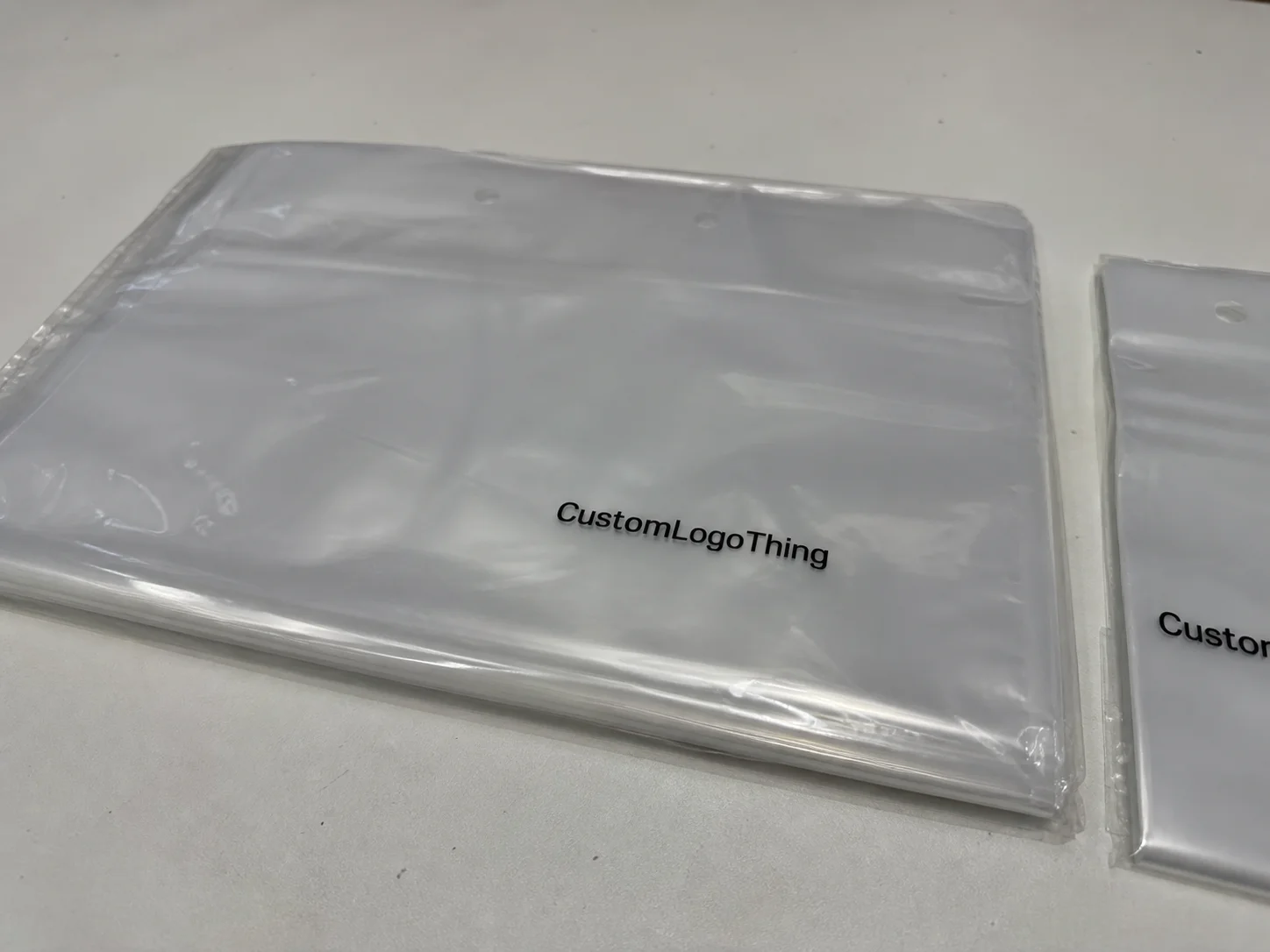
Buyer Fit Snapshot
| Best fit | Sustainable Poly Mailers Supplier projects where brand print, material claims, artwork control, MOQ, and repeat-order consistency need to be specified before quoting. |
|---|---|
| Quote inputs | Share finished size, material target, print colors, finish, packing count, annual reorder estimate, ship-to region, and any compliance wording. |
| Proofing check | Approve dieline scale, logo placement, barcode or warning zones, color tolerance, closure strength, and carton packing before bulk production. |
| Main risk | Vague material claims, crowded artwork, missing packing details, or unclear freight terms can make a low unit price expensive after revisions. |
Fast answer: Sustainable Poly Mailers Supplier: Film, Print, MOQ, and Carton Packing should be specified like a repeatable production item. The safest quote records material, print method, finish, artwork proof, packing count, and reorder notes in one written spec.
Production checks before approval
Compare the actual filled-product size with the drawing, then confirm tolerance on folds, seals, hang holes, label areas, and retail display edges. Reserve space for logos, QR codes, warning copy, and material claims before decorative graphics fill the panel.
Quote comparison points
Review material grade, print process, finish, sampling route, tooling charges, carton quantity, and freight assumptions side by side. A quote is only useful when the supplier can repeat the same color, closure quality, and packing count on the next order.
A sustainable Poly Mailers Supplier can save you real money, but only if the bag fits the product, the film spec is honest, and the print process does not waste material for no good reason. I have seen plenty of “eco” mailers that look responsible on paper and behave like cheap junk in the packing room. That is not sustainability. That is a prettier mistake.
The smart buyer does not shop for a moral badge. A good sustainable poly mailers supplier should cut waste, keep product protected, and avoid the sneaky cost creep that shows up through damage, rework, and oversized freight. If the bag is too big, too heavy, or built from mixed materials that are hard to recover, you are paying more for less. Simple math. Bad packaging hides from it anyway.
For brands that care about branding and shipping performance, the sweet spot is usually a custom mailer that uses the right gauge, the right recycled-content ratio, and the right print coverage. That is exactly where Custom Poly Mailers make sense, especially when you need the package to do more than just carry a logo. If you need broader packaging support, Custom Packaging Products can help you keep the look and specs consistent across the box, bag, and insert.
A sustainable mailer is not the one that sounds greenest. It is the one that uses less material, protects the product, and gives you a clear end-of-life path without pretending the laws of physics do not exist.
What a sustainable poly mailers supplier actually changes
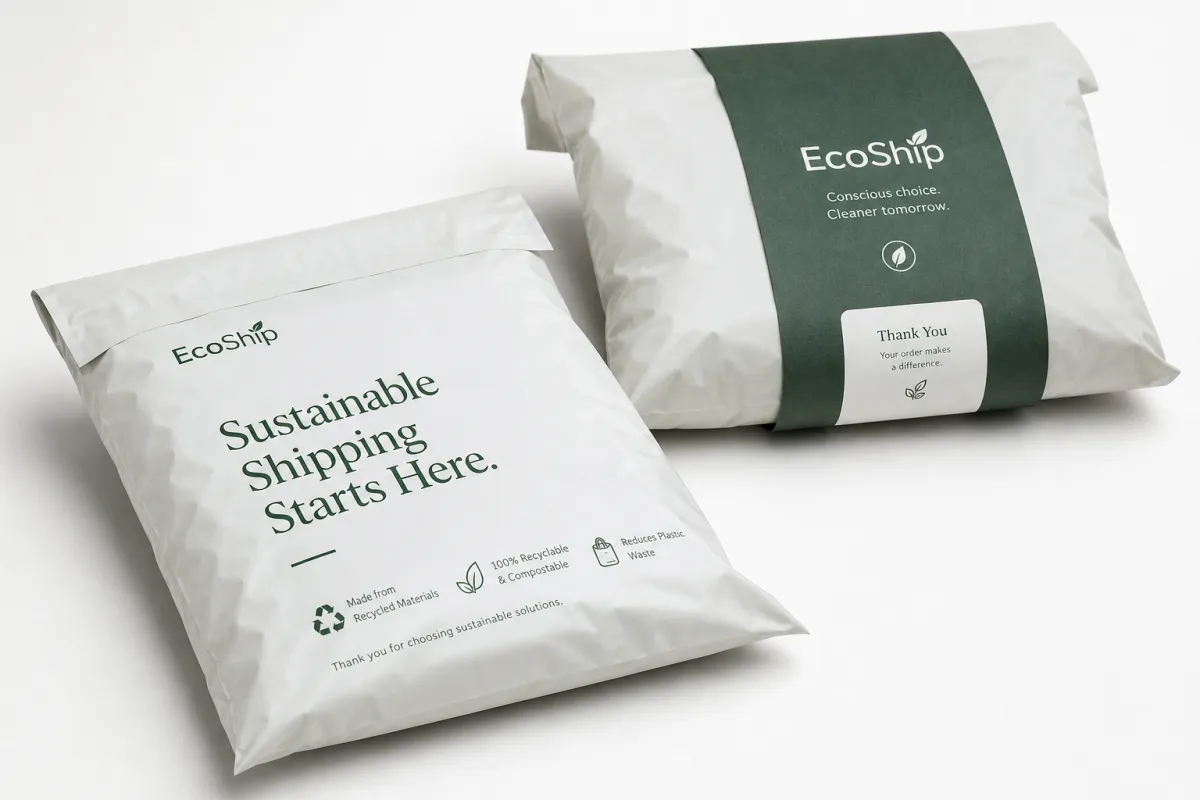
A sustainable poly mailers supplier changes more than the color of the bag. It changes how much resin goes into the film, how much air gets shipped with every order, how much ink is laid down, and whether the final structure can be handled in a sensible recycling stream. Those details matter. A mailer is small, but small waste repeated 50,000 times gets expensive fast.
The first thing to understand is that a mailer can look eco-friendly and still be wasteful. Oversized bags add empty space. Overprinted bags use more ink and sometimes more coating. Mixed-material structures can make recycling harder. So if a sustainable poly mailers supplier only talks about “green packaging” and never tells you the film thickness, recycled percentage, seal type, or disposal route, the claim is weak.
In plain terms, the label should mean a few things. The supplier should be able to discuss recycled content, downgauged film, cleaner print methods, and packaging formats that match the actual product instead of forcing you to stuff a tiny item into a giant pouch. That is not marketing fluff. That is how material gets reduced without wrecking performance.
There is also a difference between a supplier that sells “eco” and one that treats sustainability like a real purchasing spec. The second one can tell you whether the bag is made from post-consumer recycled polyethylene, whether the adhesive is consistent enough for secure sealing, and whether the dimensions can be reduced by 10 to 20 mm without increasing damage risk. That kind of conversation saves time and cuts bad decisions off at the knees.
From a buyer’s point of view, the right sustainable poly mailers supplier should help you do three things at once: protect the product, reduce waste, and stay inside budget. If the bag is greener but tears in transit, you have not improved anything. You have just made the returns department unhappy. They will notice. Always do.
Real sustainability also includes the boring stuff nobody wants to talk about. Carton packing efficiency. Pallet count. Freight weight. Print setup waste. Those are all places where a sustainable poly mailers supplier can make a difference, and they often matter more than a shiny badge on the box.
Another thing people skip too fast: supplier honesty about tradeoffs. A bag can be lighter and still tough enough. A bag can be recycled-content and still print cleanly. A bag can be right-sized and still protect a soft good. A strong supplier helps you balance those pieces instead of pushing the most expensive answer and calling it progress.
I also like when a supplier will say, plainly, “You do not need the heavy spec for this product.” That sounds small, but it tells me they understand usage, not just sales language. And yes, I am gonna trust the person who can say no to overbuilding a bag.
How a sustainable poly mailers supplier makes mailers greener
The greener version of a mailer starts long before the bag reaches your warehouse. A sustainable poly mailers supplier should be able to explain the supply chain in plain English: resin selection, film extrusion, printing, converting, packing, and shipping. If the answer stops at “recyclable” and the supplier cannot break down the process, you are not getting much to work with.
Here is the practical flow. Raw resin is selected, then extruded into film, then printed, then cut and sealed into the finished mailer. Every step can add or remove impact. Recycled resin lowers demand for virgin plastic. Better film design can reduce thickness without losing strength. Smarter print setup can cut waste at the press. Even carton packing can change the carbon footprint per unit.
There are a few material paths you will hear about again and again. Recycled polyethylene is the most common one for shipping mailers because it keeps the water resistance and puncture resistance that shipping actually needs. Bio-based inputs can help, but they are not magic. Compostable films can make sense for certain systems, but they are not automatically better if local disposal infrastructure is weak or if the product still needs a high-barrier shipping layer.
That last point gets ignored too often. A lot of people want a compostable label because it sounds cleaner. Fine. But if the bag has to survive a cross-country shipment, a wet loading dock, and a stack of carton corners, then performance matters more than a nice slogan. A sustainable poly mailers supplier should be honest about those tradeoffs instead of pretending every material works for every use case.
There is a reason recycled-content poly mailers remain the practical choice for many brands. They usually offer a stronger balance of durability, water resistance, and cost control than most alternatives. When buyers ask me what to check first, I usually say start with film thickness, recycled percentage, and seal integrity. That trio tells you a lot before you ever touch the sample.
Another way a sustainable poly mailers supplier improves the footprint is by right-sizing. A 10 x 13 mailer might be technically “fine,” but if your actual product packs cleanly in a 9 x 12, why ship extra film and extra air? Those little savings stack up. They also make packout faster, which is a nice bonus when you are not trying to run a charity for wasted motion.
For brands shipping apparel, accessories, or soft goods, the best results usually come from matching the mailer to the folded product footprint. That means less filler, less void, and fewer returns caused by a bag that is too tight or too loose. A good sustainable poly mailers supplier will ask for product dimensions, not just order volume. That is the sign you want.
It also helps when the supplier can explain the difference between a structure that is technically recyclable and one that is actually likely to be recycled in the real world. Those are not always the same thing. Consumers do not keep a flowchart next to the bin, and local programs vary. A supplier who admits that is usually more trustworthy than the one who pretends every curbside program works the same way.
For reference, industry groups like the U.S. EPA recycling resources and the ISTA test standards are useful starting points if you want to compare packaging performance and end-of-life realities with less guesswork. Not glamorous. Very useful.
Key factors: pricing, materials, and MOQ from a sustainable poly mailers supplier
Pricing is where a lot of people get lazy, and that is usually where they get burned. A sustainable poly mailers supplier may quote a tempting unit price, but the real cost depends on film grade, size, print coverage, bag construction, setup fees, freight assumptions, and the minimum order quantity. Compare those incorrectly and you are basically comparing soup to screws.
Typical pricing for custom recycled-content poly mailers varies a lot. For a 5,000-piece order, you might see somewhere around $0.18-$0.28 per unit for simpler printed mailers, then $0.28-$0.45 per unit for heavier print coverage, special sizing, or more demanding recycled-content specs. Small runs often price higher, sometimes $0.35-$0.70 per unit, because setup costs are spread over fewer pieces. Those are practical ranges, not promises. Specs move the numbers.
The MOQ logic is simple, even if suppliers wrap it in jargon. Lower MOQs mean less efficiency for the factory, more setup per bag, and usually more costly printing and converting. A sustainable poly mailers supplier can sometimes offset that with standard sizes, simplified artwork, or stock structures that only need printing. If you want ultra-low MOQ and ultra-low price, that combo rarely shows up wearing a tie.
Here is the part buyers forget: the cheapest quote may hide expensive strings. Freight can be padded. Artwork changes can be billed separately. A “sample approval” that sounds free may not be free after revisions. And if the supplier quotes a low unit cost on a flimsy bag, damage rates can wipe out the savings fast. A stronger bag at a slightly higher price often wins on total landed cost.
The material spec matters just as much as the price tag. Ask whether the bag uses post-consumer recycled content, post-industrial recycled content, or a blend. Ask whether the recycled portion is in the outer layer, the inner layer, or both. Ask whether the seal line is designed to hold up under repeated handling. Those are the questions that separate a real spec from a sales brochure.
| Option | Typical Material | Indicative Unit Price | Best For | Watchouts |
|---|---|---|---|---|
| Stock recycled mailer | Recycled polyethylene, standard gauge | $0.10-$0.18 | Fast reorders, basic shipping needs | Limited branding, fixed sizes |
| Semi-custom printed mailer | Recycled polyethylene with spot or simple print | $0.18-$0.32 | Branded ecommerce shipments | Setup charges, artwork limits |
| Fully custom mailer | Custom size, thickness, and full print coverage | $0.28-$0.45 | Brand-led packaging, tighter fit | Higher MOQ, longer lead time |
| Special-material mailer | Bio-based or compostable structure | $0.35-$0.70 | Specific sustainability programs | Performance and disposal limits |
The table above is not there to make anyone feel clever. It is there because people keep comparing only one line item. A strong sustainable poly mailers supplier should help you compare total cost, including freight, setup, sample revisions, and the actual cost of defects. If you need to repack 2% of your orders, that hidden labor can matter more than a few cents on the quote.
Sustainability proof points also matter. Ask for the actual recycled percentage, not just “contains recycled material.” Ask whether the bag is made with post-consumer or post-industrial content. Ask for compliance statements, test data, and disposal guidance in plain language. A credible sustainable poly mailers supplier can explain what the bag is made of and what happens to it after use.
One more thing: do not over-specify the bag just because you can. A 100-micron heavy-duty mailer for a lightweight garment is often overkill. If a 60-80 micron structure does the job and still passes your shipping test, use that. Less material is less cost. Sometimes people need permission to stop paying for overkill.
Cost is not just a supplier issue. It is also a packaging design issue. Every extra millimeter, every extra ink pass, every extra layer shows up in your budget eventually. A good quote should reward restraint, not punish it.
And if a supplier will not quote against the exact same dimensions and print coverage as the other bidders, walk away from the comparison. You are not shopping for clever wording. You are shopping for a mailer that works.
Ordering process and timeline with a sustainable poly mailers supplier
The ordering process is usually straightforward, but only if the brief is clear. A sustainable poly mailers supplier will normally move through inquiry, quote, sample review, artwork approval, production, quality check, and final shipping. Skip any of those steps and you are asking for rework later. Rework is expensive in ways that invoices never fully capture.
Stock mailers can move fast, sometimes within a few business days if inventory is available and the artwork is already approved. Custom sizes and custom print take longer. A realistic lead time for a custom run is often 12-15 business days after proof approval, and special materials or complex print layouts can stretch that further. If a supplier promises something much faster without a clear reason, ask how they are skipping the steps everyone else has to do.
Delays usually come from the buyer side, not the factory side. Slow artwork feedback is the classic one. Then there are incomplete size specs, sample revisions, color tweaks, and last-minute logo changes from someone who suddenly noticed the bag has already been approved. A good sustainable poly mailers supplier can keep the process moving, but they cannot save a file you never signed off on.
A practical timeline should include buffer. If you are preparing for a product launch, seasonal spike, or promo drop, build in a cushion of at least one to two weeks beyond the quoted lead time. That way a small delay does not become a shipping panic. The worst time to discover you are out of mailers is the day the orders start landing.
Here is a simple planning rule I like: finalize specs before you finalize the marketing calendar. That sounds obvious until a brand picks the bag after the campaign is already in motion. A sustainable poly mailers supplier can support the launch better when they are brought in early enough to suggest a better fit, a cleaner print setup, or a smaller carton pack.
When you are ordering through Custom Logo Things, this is the stage where clean communication pays off. Use exact dimensions, real order counts, and the shipping destination. Vague briefs create vague quotes. Vague quotes create argument. Nobody needs that.
One more operational detail: ask whether the supplier can keep your art and spec history on file for reorders. That sounds boring, but it saves a ridiculous amount of back-and-forth six months later when someone wants the same bag “but maybe a little different.” A supplier with a disciplined reorder process is worth a lot more than one with pretty slides.
Step-by-step guide to choose the right sustainable poly mailers supplier
Start with the product, not the packaging catalog. Measure what you are shipping, folded or boxed as it will actually leave your facility. Then choose the mailer dimensions, thickness, and closure style based on fit, protection, and packing speed. A sustainable poly mailers supplier can only help if you give them a real use case instead of a vague wish.
1. Measure the shipped item
Get the real packed dimensions, not just the product label size. A folded hoodie, a set of cosmetics, and a paperback book need different allowances. If the bag is too tight, seals suffer. If the bag is too loose, shipping volume rises and the package looks sloppy. Either way, the cost shows up somewhere.
2. Shortlist suppliers on the same spec sheet
Build a short list and compare apples to apples. Same dimensions. Same thickness. Same print coverage. Same destination. Same quantity. A sustainable poly mailers supplier can only be fairly judged when every quote is based on the same assumptions. Otherwise, the cheapest option is usually just the least honest one.
3. Ask for proof, not adjectives
“Eco,” “green,” and “earth-friendly” are not specs. Ask for recycled-content documentation, production details, and any relevant compliance or test references. If the supplier uses recycled polyethylene, ask what percentage and whether it is post-consumer or post-industrial. If they claim a specialty material, ask how it behaves in shipping conditions. A real sustainable poly mailers supplier answers directly.
4. Request samples and beat them up
Samples should not sit on a desk looking pretty. Seal them. Drop them. Rub them. Check opacity, puncture resistance, print legibility, and how the adhesive behaves after repeated handling. If a sample survives the packing bench, good. If not, you just saved yourself from a much more expensive lesson. That is the whole point of sampling.
5. Compare total landed cost
Do not stop at unit price. Add freight, setup, artwork changes, sample revisions, and the labor cost of packing issues. A sustainable poly mailers supplier with a slightly higher quote can still be the better value if the bags are better sized, ship faster, and reduce defects. Buyers who only look at one number often pay twice.
6. Score service and scaling ability
Ask how they handle reorders, rush jobs, and volume bumps. A supplier that is polite on day one but slow when you need a reorder is not really a partner. Score responsiveness, transparency, and whether they can support your next order without starting from scratch. If the answer is yes, that is worth paying attention to.
From a practical buying standpoint, a good scorecard should include these five things:
- Material proof - exact recycled content and structure details.
- Performance - seal strength, puncture resistance, and shipping durability.
- Price - total landed cost, not just unit cost.
- Lead time - sampling, approval, and production windows.
- Support - response speed, reorder ease, and flexibility.
If you want a simple filter, ask yourself this: does the sustainable poly mailers supplier make the buying process easier, or just greener-sounding? The best partners do both. The weak ones do a lot of talking and very little explaining.
Another useful test: ask a supplier to explain the bag in one paragraph without using buzzwords. If they can do that, they probably know the product. If they cannot, they may know the sales deck and not much else.
I also like to ask for one example of where the bag should not be used. Good suppliers know the limits. That answer tells you more than a polished brochure ever will.
Common mistakes when choosing a sustainable poly mailers supplier
The first mistake is chasing the cheapest quote without checking thickness, recycled content, or freight. That is how people end up with thin film, split seams, and a reorder that eats the “savings” in one ugly bite. A sustainable poly mailers supplier should help you avoid that trap, not encourage it.
Second, buyers often accept vague sustainability language. If the quote says “eco-friendly” but does not say what the bag is made of, how much recycled content it has, or how it should be disposed of, the claim is weak. Honestly, I treat claims like that as marketing wallpaper. Nice to look at. Useless when you need facts.
Third, some brands over-spec the bag. Heavy-duty film, oversized dimensions, full coverage print, and a special finish can look impressive, but they also increase cost and material use. If your product is light and non-fragile, a simpler spec might be the smarter choice. A good sustainable poly mailers supplier should be comfortable saying that out loud.
Fourth, people skip samples. That is a rookie move, especially for brands with strong visual identity or products that need a precise fit. A logo that looks crisp on screen can blur on film. A seal that looks strong on a spec sheet can fail after ten cycles of handling. Sample testing is where you catch the annoying surprises before customers do.
Fifth, teams forget to test the mailer in the actual packing environment. A bag that works in a clean office demo might not work on a live line with speed pressure, cold hands, or repeated opening and closing. A sustainable poly mailers supplier can only optimize for reality if you show them reality.
Here are a few warning signs that should make you pause:
- No material breakdown and no clear recycled percentage.
- Pricing that looks low but freight is oddly vague.
- Lead times that seem too good to be true.
- No sample process or no willingness to revise based on testing.
- Sales language that sounds green but avoids concrete specs.
There is also a common branding mistake. Some companies spend too much effort matching a bag color and too little on fit and strength. Packaging should carry the brand, yes, but it should also survive the trip. If you are working with a sustainable poly mailers supplier, ask for the package to do its job first, then look pretty second.
For recycling guidance and broader environmental claims, the EPA and FSC are useful references. The FSC site is more relevant for paper-based packaging, so I would not use it as proof for a plastic mailer. Still, it is a good benchmark for how clear certification language should look. If a supplier cannot explain its own claims as clearly as those organizations do, that tells you something.
One more pitfall: choosing a mailer that fits the brand story and fails the real shipment. That is a bad trade. Customers do not reward packaging for looking noble in a flat lay if the bag shows up torn at the doorstep. Pretty is nice. Delivered in one piece is nicer.
And yes, a surprisingly common mistake is ignoring the packing line itself. If the mailer is slippery, hard to open, or awkward for the team to seal quickly, labor costs go up. That is not a glamorous problem, but it is a real one.
Expert tips and next steps for working with a sustainable poly mailers supplier
Ask for three things on every quote: full material spec, production timeline, and a plain-language explanation of how the bag should be disposed of or recycled. That sounds basic because it is basic. A sustainable poly mailers supplier that can answer those questions cleanly is already ahead of half the market.
Negotiate the levers that actually move price. Higher volume usually helps. Standard sizes usually help. Consistent reorders usually help. Simplified print often helps more than squeezing on quality. Buyers often chase cents on unit price while leaving larger savings untouched. It is a strange habit, but I have seen it enough times to say it plainly.
Test one production run before committing to a large annual buy. Then compare damage rates, packing speed, customer complaints, and reorder ease against your current mailer. If the new bag lowers waste and holds up in transit, great. If it does not, you learned that cheaply. That is a win too, even if it stings a little.
If you are choosing between a few options, keep the decision framework simple:
- Pick the best fit for the product.
- Choose the strongest sustainability proof you can verify.
- Check the real landed cost, not the headline unit price.
- Favor the supplier that communicates clearly and ships on time.
- Choose the option that can scale without changing the whole setup later.
One final buying tip: if the supplier gets defensive when you ask for documentation, that is usually not a great sign. A serious sustainable poly mailers supplier will expect good questions. They know the material, the spec, and the tradeoffs. They do not need drama to sell a bag.
For brands looking to tighten up their shipping presentation, thoughtful packaging strategy pays off. The mailer, the print, the fit, and the reorder plan should all work together. If you want a packaging partner that can support that approach, start by comparing the facts, request identical quotes, and pick the sustainable poly mailers supplier that proves performance instead of just talking about it. Then lock the spec, test the samples, and keep the next reorder on the same exact sheet. That is the clean move.
My practical takeaway: pick the mailer that protects the product with the least material you can honestly get away with, then work with a supplier who can document every claim without flinching. That is the line between a good sustainability story and a box of expensive nonsense.
What should I ask a sustainable poly mailers supplier before ordering?
Ask for the exact material makeup, recycled percentage, and whether the bag is designed for curbside recycling or another disposal path. Confirm MOQ, unit price, setup charges, freight assumptions, and lead time in writing so the quote is actually comparable. Request sample bags and a spec sheet before approving a custom run. If the answers stay vague, keep pushing. Vague is expensive.
How do I compare prices between sustainable poly mailers suppliers?
Compare total landed cost, not just unit price; include freight, setup, artwork changes, and any hidden minimum charges. Use the same size, thickness, print coverage, and order quantity for every quote so the numbers mean something. Check whether a lower price is coming from thinner film, weaker seals, or lower recycled content. Cheap is only cheap when the bags survive the trip.
Are recycled poly mailers better than compostable options?
Recycled Poly Mailers usually win when you need strength, water resistance, and mainstream shipping performance. Compostable options can work in specific systems, but they are not automatically better if local disposal infrastructure is weak. Choose the option that matches your product, shipping conditions, and end-of-life reality instead of the trendiest label. Packaging should fit the job, not the slogan.
How long does a custom order take with a sustainable poly mailers supplier?
Stock orders can move fast, while custom size or custom print orders usually need more time for sampling and approval. Artwork revisions and spec changes are the biggest timeline killers, so get signoff early. Build buffer time before launches or seasonal spikes so shipping does not become a panic project. A few extra days now beat a warehouse headache later.
How do I know if a sustainable poly mailers supplier is credible?
Look for material documentation, clear performance specs, and direct answers instead of vague eco language. Ask for samples, test results, and any compliance or certification details they claim to have. A credible supplier can explain the tradeoffs, not just repeat a green marketing script. If they know the bag, they will sound like it.
What is the safest way to start if I am switching suppliers?
Run one side-by-side test order before you move all volume. Keep the dimensions, print, and quantity consistent so you can compare defect rates, packing speed, and landed cost without guessing. If the new mailer performs well in the actual packing flow, scale it up. If it does not, you found out before the mistake got expensive.