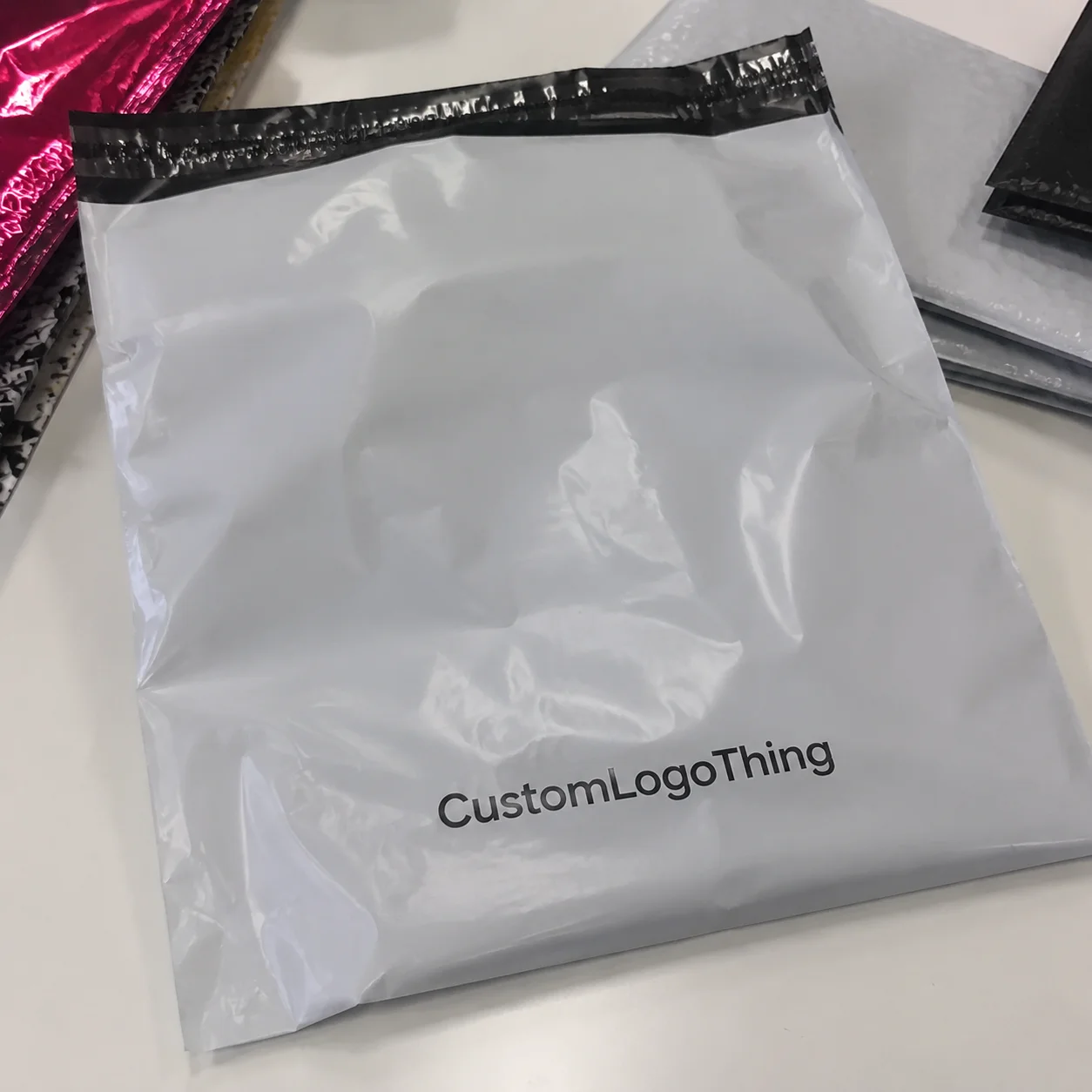
Buyer Fit Snapshot
| Best fit | Tear Proof Mailers for Cosmetics projects where brand print, material claims, artwork control, MOQ, and repeat-order consistency need to be specified before quoting. |
|---|---|
| Quote inputs | Share finished size, material target, print colors, finish, packing count, annual reorder estimate, ship-to region, and any compliance wording. |
| Proofing check | Approve dieline scale, logo placement, barcode or warning zones, color tolerance, closure strength, and carton packing before bulk production. |
| Main risk | Vague material claims, crowded artwork, missing packing details, or unclear freight terms can make a low unit price expensive after revisions. |
Fast answer: Tear Proof Mailers for Cosmetics: Film, Print, MOQ, and Carton Packing should be specified like a repeatable production item. The safest quote records material, print method, finish, artwork proof, packing count, and reorder notes in one written spec.
Production checks before approval
Compare the actual filled-product size with the drawing, then confirm tolerance on folds, seals, hang holes, label areas, and retail display edges. Reserve space for logos, QR codes, warning copy, and material claims before decorative graphics fill the panel.
Quote comparison points
Review material grade, print process, finish, sampling route, tooling charges, carton quantity, and freight assumptions side by side. A quote is only useful when the supplier can repeat the same color, closure quality, and packing count on the next order.
On a Tuesday morning in a contract packing line outside Los Angeles, I watched a carton of skincare sets come back from a parcel sorter with one ugly corner split right at the seam, and the funny part was that the tear proof Mailers for Cosmetics had looked perfect on the packing table only an hour earlier. The product inside was fine, but the outer bag had failed during a single rough pass through the hub, and that one weak point turned into a refund, a replacement shipment, and a very unhappy customer. I still remember the supervisor holding the bag up like it had personally offended him, which, honestly, I understood. The carton had been loaded in Commerce, California, and the split happened after a 54-minute linehaul leg to a regional sort center, which is exactly the sort of real transit stress that exposes a weak film seal.
That kind of failure is exactly why tear proof Mailers for Cosmetics matter. They are not just stronger plastic bags. They are engineered shipping mailers built to resist punctures, seam splits, edge tearing, and abrasion during fulfillment, linehaul, and last-mile delivery, while still staying light enough to keep freight cost under control. I’ve spent enough time around extrusion lines, bag-making machines, and packing benches to know that the difference between a mailer that survives and one that fails often comes down to details as small as 0.5 mil in film gauge, a better seal pattern, or the right adhesive strip. And yes, those tiny details can make a grown warehouse manager mutter into his coffee (I’ve heard it more than once). On a 5,000-piece run, a 3.2 mil coextruded bag might land around $0.18 per unit, while a 4.0 mil upgrade can add only a few cents and save dozens of claims.
If you sell boxed lip products, subscription kits, sample sets, or secondary-packaged skincare, the right mailer can protect presentation as much as product. A lot of cosmetic returns start with packaging choices that looked harmless at the purchase order stage but got exposed once cartons hit conveyor corners, tote walls, and driver handoffs. I’ve seen brands spend weeks perfecting a soft-touch box finish only to lose the whole effect because the outer mailer split like cheap office tape in July, and I’ve watched that happen with a shipment built in a fulfillment center near Atlanta, Georgia, where the summer humidity made a marginal adhesive even less forgiving. A well-built mailer needs to protect a 210 x 140 x 45 mm retail carton, not just survive a desk-side tug test.
What Tear Proof Mailers for Cosmetics Actually Are
Tear proof mailers for cosmetics are typically poly mailers or multi-layer mailers built to hold up better than standard mailing bags. In plain language, they use tougher film structures, stronger seams, and better closures so the mailer can take a beating without opening up along the edge or turning a tiny nick into a full-length rip. They are especially useful for products that are boxed, flat, or semi-rigid, where the outer package needs to protect the brand presentation without the bulk of a corrugated shipper. A common build for beauty brands is a 3-layer polyethylene structure with a 3.5 mil total gauge, sometimes paired with a matte printed exterior that keeps fingerprints off a black or blush-colored finish.
Here’s the surprising part from the factory floor: many cosmetic returns do not begin with the product itself. They begin with a mailer that looked fine during packing, passed a quick hand squeeze, and then failed at the corner seam after one rough sort at a parcel hub. I saw that pattern repeatedly when I visited a fulfillment center in New Jersey that handled beauty subscriptions; the staff blamed rough carriers, but the real issue was that the mailers were stretching too much at the seal and not resisting abrasion on the corners. The bag wasn’t “weak” in a dramatic sense. It was just the wrong build for the kind of abuse it was about to meet. In one run, a side seal measured only 6 mm wide, and that narrow seal was the exact place where the split began after a 4-foot drop from a conveyor chute.
Cosmetics are a tricky category because the items are often light, but they are not always forgiving. A glass serum bottle inside a carton, a compact with a sharp-edged case, or a boxed lip set can all create localized pressure points. Even if the outer shipping carton stays intact, moisture, rubbing, and crush can scuff printed sleeves, dent corners, or smear labels. That is why tear proof mailers for cosmetics are often used for apparel-style cosmetic bundles, samples, flat boxed items, subscription kits, and secondary packaging for non-fragile SKUs. I’ve also seen them work beautifully for influencer seeding kits, where the unboxing moment matters almost as much as the products themselves. A brand sending 250 PR kits from Dallas, Texas, for example, may choose a 4.0 mil white coex mailer with a 1.5-inch adhesive strip because it keeps the kit looking crisp from the fulfillment bench to the customer’s doorstep.
Standard poly mailers and tear resistant builds are not the same thing. A basic poly mailer might be 2.5 mil with a simple seal and a single adhesive strip, which works fine for a T-shirt or a light accessory. A stronger construction may use coextruded polyethylene layers, a thicker gauge such as 3.5 to 4.5 mil, reinforced seams, and a higher-tack closure to hold up under repeated flexing. In the packaging plants I’ve worked with, the good converters are always the ones who can explain exactly why a given film stack was chosen rather than just saying it’s heavy duty. “Heavy duty” is a nice phrase; it is not a spec, and it never once saved a shipment. If you are comparing materials, ask whether the film is a coex PE blend, whether the seal line is 8 mm or 10 mm, and whether the adhesive is permanent or tamper-evident.
That said, tear proof mailers for cosmetics are not indestructible, and I’d be wary of any supplier who implies otherwise. If the SKU has sharp edges, heavy glass, or a lot of void space inside, the mailer alone may not be enough. The inner pack-out still matters, and sizing still matters, because even the strongest film can fail if you overfill the bag or let the product rattle around inside. I’ve seen a perfectly good bag lose a fight with a loose compact that kept hammering the same corner for two hours in transit. The compact won; the customer did not. That is why a 145 x 105 x 30 mm lipstick trio can ride safely in a snug mailer, while the same trio in a bag with 35 mm of extra slack can chew through the side seam before it reaches the first delivery stop.
How Tear Resistance Is Built Into the Mailer
The reason tear proof mailers for cosmetics outperform standard bags usually comes down to material science and converting discipline. A multi-layer polyethylene film can be tuned for toughness, flexibility, and stretch so that a small nick does not propagate into a long tear as quickly. In practice, that means the mailer can absorb some abuse from conveyor edges, tote corners, and rough stacking without splitting open at the first stress point. A film designed for cosmetic shipment might use a soft inner layer for seal integrity and a tougher outer layer for abrasion resistance, which is exactly the sort of two-part structure that performs better in a busy warehouse in Louisville, Kentucky, than a single thin layer ever will.
In a converting plant, the details start with gauge thickness and film structure. A downgauged film might save pennies, but if the mailer is too thin, the film stretches too easily and the seam becomes the weak link. Coextruded layers help because one layer can provide puncture resistance while another contributes elongation and cling. I remember a supplier meeting in Shenzhen where the film engineer laid three sample rolls on the table—2.75 mil, 3.2 mil, and 4.0 mil—and the 4.0 mil sample was only slightly higher in unit cost, but it survived the dart test and corner drag test far better than the lighter options. The price difference looked tiny; the performance difference looked like a joke in the 2.75 mil sample’s direction. On a 10,000-piece order, the stronger roll might add less than $0.03 per unit while cutting rejection rates enough to matter in a real P&L.
Seam bonding matters just as much. A strong bag body is wasted if the side seal is narrow or inconsistent. Good tear proof mailers for cosmetics often use wider seals, cleaner heat-bonding control, and sometimes gusseting to distribute stress. Gussets help the mailer sit flatter around a boxed lip kit or a compact set, which reduces the chance that the contents push directly into a stress concentration near the edge. I’ve stood beside a forming machine in a small converter outside Indianapolis and watched a 2 mm change in seal width make the difference between a tidy bag and one that started to peel at the corner after flex testing. A 10 mm side seal with consistent temperature control at 155°C will usually outperform a rushed 6 mm seal made on a line that is drifting by five degrees every few minutes.
Additives and film orientation also affect performance. If the film has better dart impact resistance and higher elongation, it handles sudden hits better. That can Matter More Than people realize, because automated sorters are rougher than most brands expect. Conveyor edges, metal guides, chute drops, and last-mile handoffs create real transit stress, and weak mailers often fail in exactly those places. If you’ve ever opened a customer complaint photo and seen a clean slit along the side, that was probably not bad luck; it was a mailer that could not propagate stress safely. Honestly, that’s the kind of photo that makes packaging people stare at a wall for a minute and then start asking better questions. In a test lab in Monterrey, Mexico, a 4-foot edge drop and a 15-cycle flex test revealed exactly where a 2.8 mil bag gave up, which is why real test data beats a supplier promise every time.
Closures are the other half of the equation. Pressure-sensitive adhesive strips, tamper-evident seals, and dual-adhesive systems all help keep the bag closed even if it gets flexed several times. For tear proof mailers for cosmetics, I like closures that stick fast and resist peel-back, because beauty fulfillment lines move quickly and workers should not need to fight the closure or re-tape every third unit. Nothing drains morale like a sticky strip that behaves like it’s being paid by the hour. A 1.25-inch adhesive with a clean release liner usually makes a faster pack-out than a narrow strip that catches on gloves and slows a 20-person shift in Riverside, California.
“The mailer isn’t there to look tough on a catalog page; it has to survive the sorter, the driver’s tote, and the customer’s first tug on the flap.”
That quote came from a fulfillment manager in Pennsylvania after we reviewed a run of custom beauty bags that looked gorgeous but failed in transit because the closure adhesive was too aggressive in warm weather and too weak in cold. Packaging is rarely about one spec in isolation. It is about how the whole build behaves under stress, and that is especially true for tear proof mailers for cosmetics. A bag that works in a 68°F packing room in Portland may behave very differently after three hours in a delivery van parked on a 92°F street in Phoenix.
If you want to compare formats, our Custom Poly Mailers page is a useful starting point, and broader branding options can be reviewed through our Custom Packaging Products catalog. I’ve seen buyers save a lot of time once they stop treating the mailer as a generic commodity and start treating it as a controlled shipping component. For cosmetic programs with 5,000-piece repeats, that approach can keep the per-unit price predictable and the damage rate much easier to control.
What Matters Most for Tear Proof Mailers for Cosmetics?
The first factor is product fragility. A sheet mask bundle is not the same as a glass dropper bottle, and a rigid compact is not the same as a soft tube. Tear proof mailers for cosmetics work best when the product has already been buffered by a carton, sleeve, or protective inner pack. If the item has sharp corners or a hard shell, you need to think about how those edges press against the mailer during movement. A 90 g boxed lip duo with rounded corners can often ride in a lighter mailer, while a 240 g skincare jar with a square cap usually needs a stronger shell and a tighter fit.
Sizing is a bigger deal than most people think. I’ve watched teams use oversized bags because they were trying to reduce SKU count, and that backfires fast. When the mailer is too large, the product slides, racks, and creates stress points where the corner or edge repeatedly hits the same area. If the bag is too small, it overstretches and can split at the seam. The sweet spot for tear proof mailers for cosmetics is a snug fit that still allows a clean seal without forcing the film to its limit. Too much empty space is bad, too little space is somehow worse. Packaging likes moderation; the parcel network does not. For a 170 x 120 x 40 mm carton, a mailer sized at 190 x 140 mm may be workable, while 220 x 160 mm can create enough slack to generate racking during transit.
Moisture and scuff protection matter too. Cosmetic boxes often carry high-quality printing, matte coatings, foil details, or barcode labels that must arrive clean and legible. A wet parcel sort or a damp warehouse floor can turn a premium exterior into a smudged mess. That is why many brands pair tear proof mailers for cosmetics with a secondary carton or a coated inner sleeve when the outer finish needs to stay presentation-ready. In Seattle, Washington, where drizzle and dock humidity are both part of daily life, I’ve seen a coated sleeve save a foil-stamped box from rubbing against the film wall during a 2-day regional shipment.
Branding counts, but it should never outrank function. A smooth finish, clean print, and well-placed logo can make the unboxing feel premium, yet the mailer still has to open and close properly. I’ve sat in enough client meetings to know that marketing teams love a glossy custom look, while operations teams want fewer damaged returns. The best packaging satisfies both groups without pretending one can replace the other. A black mailer with a 2-color white logo and a matte finish might cost $0.28 per unit at 5,000 pieces, but if it protects the shipment better than a shinier, thinner option, it usually earns its keep quickly.
Sustainability is another point worth handling carefully. Recycled-content films, downgauged thickness, and right-sizing can reduce material use, but only if the pack still passes real transit conditions. I’m all for using less material, especially in high-volume beauty fulfillment, but I would rather ship a 3.2 mil mailer that performs than a 2.4 mil bag that causes replacements every week. If you want to align with recycled-material goals, it helps to review the packaging guidance at EPA recycling resources and look at fiber sourcing standards through FSC when paper components are part of the system. Some brands in Toronto and Vancouver now ask for post-consumer recycled content percentages on every PO, and that kind of specificity makes sourcing much cleaner.
Pricing is the last major factor, and it is never just the unit price. Gauge, print complexity, order volume, custom sizing, adhesive upgrades, and freight all change the landed cost. For example, a stock 3.0 mil printed mailer might land around $0.18 per unit at 5,000 pieces, while a fully custom 4.0 mil mailer with two-color print and upgraded adhesive could be closer to $0.31 to $0.39 per unit depending on size and minimums. Those numbers are not universal, but they are the kind of real-world figures I like to discuss before a buyer commits. In other words: the “cheap” option has a habit of wandering back later with a bigger bill. If the order ships from Dongguan or Ho Chi Minh City, add freight and duty to the calculation before you compare anything on paper.
Step-by-Step: Choosing the Right Tear Proof Mailer
The easiest way to choose tear proof mailers for cosmetics is to start with the product, not the packaging catalog. Build a simple profile sheet that lists SKU dimensions, weight, fragility level, carton type, and whether the product ships alone or inside a kit. A 6 oz skincare jar in a rigid retail box has very different needs from a 2 oz sample pack in a slim folding carton. If the packed-out unit weighs 180 grams and the box corners are sharp, that detail belongs on the spec sheet before you ever ask for pricing.
Next, match the mailer to the use case. Low-fragility boxed cosmetics may work well in a strong poly mailer, while premium glass items usually need a mailer plus inner cushioning or a rigid insert. I think too many buyers try to solve a protection problem with film thickness alone. That can help, but it does not replace basic pack-out logic. A tougher bag won’t magically fix a loose bottle bouncing around like it’s late for a train. If the product ships in a 160 x 100 x 35 mm carton, the mailer should hold that shape firmly enough that the box cannot shift more than a few millimeters.
Ask the supplier for real specifications, not just marketing claims. For tear proof mailers for cosmetics, request film gauge, tensile strength, puncture resistance, seam style, closure type, and print method. If the vendor cannot tell you whether the bag is a 3-layer coextrusion or a single-layer film with an aggressive seal, that is a signal to slow down. I’ve been in negotiations where the price looked excellent until the supplier admitted the quoted bag was only being run in a lighter stock during peak demand; that kind of surprise is expensive later. It also tends to ruin everyone’s lunch. A good quote should also list the exact material, such as 350gsm C1S artboard for inserts or a 4.0 mil PE structure for the outer mailer, so there is no confusion when production starts.
Then run a pack-out test with actual product. Not a photo, not a mock-up, but the real item in the real carton. Simulate drop and flex conditions, then inspect the bag for corner abrasion, seam stress, and closure failure. If the bag survives a 3-foot drop test in your packing room but fails when it slides across a rough conveyor chute, you have learned something useful before customers do. Standards like ISTA help structure those tests, and ASTM methods can be useful for evaluating material performance in a more formal way. A 1.2-meter drop on each edge, plus a 10-cycle compression test, will reveal far more than a visual approval alone.
Compare the mailer cost to the damage rate. A stronger bag that costs $0.04 more may save you far more than that if it reduces breakage, replacements, and service calls. One beauty client I worked with in Texas changed from a cheaper 2.5 mil bag to a reinforced 3.8 mil version, and the difference in unit cost was only a few cents, but their return rate on damaged shipments dropped enough that the total monthly spend actually went down. On a 20,000-unit run, that small change saved them several hundred dollars in replacement postage alone, which made the decision easy by the second month.
Finish by locking artwork and sizing. Keep the logo placement clean, confirm the seal area, and make sure the bag dimensions leave enough room for a secure closure without overstuffing. For tear proof mailers for cosmetics, I like to leave a little breathing room in the length so the adhesive lands on flat film instead of on a stress-loaded fold. A fold in the wrong place can turn into a tiny failure line, and then you are back to square one, which is nobody’s favorite place to be. A 12 mm flat seal zone is a lot safer than asking adhesive to hold across a kinked edge.
Process and Timeline: From Sampling to Production
The process for custom tear proof mailers for cosmetics usually moves through discovery, material recommendation, artwork setup, sample approval, production, and shipping. The exact timeline depends on how much customization you need, but in a normal run I would expect sampling and proofing to take several days, while production often falls into a 12 to 15 business day window after approval for a standard order. Complex print jobs, special adhesives, or higher-volume seasonal runs can take longer. For a straightforward one-color bag made in a plant near Ningbo, China, the whole cycle may be quicker than a fully custom gloss-finish run with a special liner and matching insert.
Sampling comes first because strength and print quality need to be confirmed in the real world. A physical sample tells you whether the adhesive strip seals cleanly, whether the print registers properly, and whether the film feels right in hand. I’ve seen plenty of buyers approve a PDF proof and then panic later when the actual bag felt too slippery or looked too dark against their brand colors. That is why a sample pack is worth the extra time. Screen previews can lie with a straight face; film cannot. A sample approved on Wednesday and tested on Friday can still catch a bad color shift before a 10,000-piece run starts the next week.
A typical converting facility will source or extrude film, print the artwork, slit the rolls, form the bags, inspect the seals, and carton the finished mailers. In a good plant, each step has a check. In a rushed plant, people assume the previous step caught the problem, and that is where mistakes slip through. When I toured a high-output line in Guangdong, the most impressive part was not the speed; it was the consistency of the seam inspection and the way they rejected off-spec bags before they reached final packing. That kind of discipline is boring in the best possible way. A line that produces 30,000 bags per shift but rejects the ones with a 1 mm seal drift is usually a line worth trusting.
Lead times can stretch when artwork changes late, when the color match needs another round, or when a seasonal rush has already filled the press schedule. Custom colors and special adhesives are especially likely to push the calendar. If your cosmetic line has a holiday launch, plan inventory early and keep safety stock on the higher-volume SKUs so fulfillment is not forced to switch packaging in the middle of a peak week. I’ve watched a December launch get sidetracked by a missing adhesive spec, and nobody involved thought that was funny except the supply chain calendar, which seems to have a cruel sense of humor. A good rule is to finalize art at least 20 business days before launch and allow 5 business days for revisions if you want fewer surprises.
Approval checkpoints save money. I always recommend dimensional signoff, print proof approval, and pack-out validation before mass production. Those three checkpoints catch most of the expensive errors: bad sizing, off-brand colors, and failures that show up only under load. tear proof mailers for cosmetics are too practical to leave to assumptions. A signed sample with the exact seal width, the exact print Pantone, and the exact adhesive spec is far easier to defend than a rushed verbal okay from a crowded conference room.
Common Mistakes That Lead to Tears, Returns, and Complaints
The first mistake is choosing a mailer that is too thin for the weight or edge profile of the product. A bag that works beautifully for light samples may fail completely on a boxed serum set with hard corners. The second mistake is confusing puncture resistance with tear resistance. A mailer can shrug off a quick poke yet still split when the force runs along the seam. I’ve seen a 2.8 mil film survive a pencil-point poke in a lab in Charlotte, North Carolina, and then fail immediately when the same film was flexed over a carton corner in pack-out.
Overstuffing is another classic error. When the contents press hard against the seam and corners, the bag lives under constant tension, and that tension often shows up as a split after a few miles of conveyor travel. The wrong adhesive choice can make matters worse, especially if the seal has to compensate for poor sizing. I’ve watched teams blame the adhesive when the real issue was a bag that was 20 mm too short. Packaging folks love to argue about glue; the bag usually tells the truth. If the closure is required to bridge a stretched opening on a 180 mm-wide bag, you are asking it to do work that belongs in the sizing stage.
Skipping transit testing is the biggest mistake of all. It feels efficient for a day, and then it becomes expensive. Once customer complaints start, you are paying for re-shipments, support time, and the damage to brand trust. Buying on unit price alone is another trap; a mailer that costs $0.14 instead of $0.19 may look great on paper, but if it adds even a 2% damage rate, the total cost climbs quickly. A $0.05 savings on 8,000 units can disappear fast if even 160 orders need replacements, and that math is especially harsh for subscription beauty boxes.
For tear proof mailers for cosmetics, the cheapest-looking option is rarely the cheapest actual option. That is the lesson I keep seeing, whether I’m standing in a packing room, on a supplier call, or looking at a returns report with three different SKUs failing in three different ways. In one case, the bag looked fine at $0.16 per unit, but the replacement postage and support credits pushed the true landed cost above a sturdier $0.24 option made in Suzhou, China.
Expert Tips for Better Protection and Lower Packaging Cost
Right-size the mailer so the product sits flat. That one move eliminates a lot of racking and corner stress. If you are shipping boxed lip kits, keep the mailer close to the footprint of the carton so the item does not wander inside the bag during transit. For tear proof mailers for cosmetics, a flat pack-out is often a stronger pack-out. A snug 190 x 145 mm mailer around a 180 x 135 mm carton usually performs better than a bigger bag with 20 mm of empty space on each side.
Use reinforced or coextruded films on higher-stress shipping lanes. Not every destination needs the heaviest build, but routes that pass through rough parcel networks, long cross-country lanes, or high-volume sorters often benefit from a more durable construction. I’ve seen brands create two specifications: one lighter mailer for local fulfillment and one heavier version for national distribution. That kind of split can keep costs in check without sacrificing performance. A warehouse in Ohio sending to nearby states might use a 3.0 mil bag, while shipments heading to the West Coast might move up to 4.0 mil.
For premium beauty products, consider pairing the mailer with an inner rigid insert or a small protective sleeve. This helps the presentation hold up after multiple touches, and it reduces the chance that a sharp carton corner abrades the outer film. It does add cost, so you want to reserve it for the SKUs that really justify the extra layer. A 350gsm C1S artboard insert can be a smart middle ground for a lip set or fragrance sampler, especially when the outer film is being asked to protect a glossy printed box.
Order print in sensible quantities. Very small custom runs can carry a high setup cost, while overly large orders tie up cash and storage space. I usually like to balance the setup fee against a realistic 60- to 90-day usage forecast, especially for cosmetics brands with seasonal promotions. The best order quantity is not the biggest one; it is the one that keeps inventory flowing without aging on the shelf. A 5,000-piece run with a $0.15 per unit price can be smarter than a 20,000-piece run that sits for half a year and ties up warehouse space in a facility near Nashville, Tennessee.
Ask for samples from the actual production line rather than a generic stock bag. That one detail catches a lot of problems early. A sample pulled from the same process, film source, and adhesive spec gives you a far more honest picture of how the final tear proof mailers for cosmetics will behave. If the sample was printed in the same facility in Dongguan and laminated on the same line that will make your order, you are much more likely to see the real result before money is on the table.
Track damage by SKU. If one serum line fails and another does not, the problem may be the carton, the weight distribution, or the way the item is packed, not just the mailer. I’ve worked with clients who discovered that a heavy pump bottle was causing failures only when packed on the left side of a tray, which meant the solution was pack-out orientation, not a thicker film. That sort of detective work is tedious, but it beats guessing and then apologizing later. A simple spreadsheet with SKU, ship date, damage count, and lane destination can uncover patterns in under 30 days.
If you are building a broader packaging program, our Custom Packaging Products resource can help you compare mailers, boxes, and branded shipper options side by side. I prefer that kind of comparison because it forces the buyer to think in systems, not just single items. It also makes it easier to compare a poly mailer at $0.22 against a corrugated option at $0.41 before the order hits production.
What to Do Next Before You Place an Order
Before you buy tear proof mailers for cosmetics, create a simple spec sheet with product dimensions, weight, fragility notes, and branding requirements. Include the exact carton size if the item ships boxed, and note whether the contents are glass, plastic, or a mixed kit. That sheet becomes the basis for smarter supplier conversations and avoids vague back-and-forth later. If your retail box measures 165 x 110 x 35 mm and weighs 220 grams, write that down exactly so the supplier can quote the right film and seal width.
Shortlist two or three constructions and request samples. Keep the comparison honest by testing each one with real product, then inspect for seam integrity, surface scuffing, and closure reliability. If possible, test with at least three packed-out units per option so you can spot inconsistency instead of trusting a single perfect sample. One perfect sample is not a plan; it is a polite lie with good lighting. A short comparison test in your own packing room, using the same operator and the same fold sequence, will tell you more than a polished sales deck.
Calculate true landed cost. Include unit price, freight, expected damage rate, and replacement cost. I know that sounds tedious, but it is the only way to compare packaging choices fairly. A mailer at $0.22 that saves $1.40 in avoided damage is a bargain. A mailer at $0.16 that creates returns is not. If the shipment is moving from Los Angeles to Miami, make sure freight, fuel surcharge, and any duty-related costs are in the same column before you decide.
Then choose the option that balances strength, presentation, and efficiency. Lock artwork, confirm reorder points, and build a small buffer for launch periods or seasonal spikes. That is how brands keep fulfillment steady. And if you need packaging that fits your cosmetic line, tear proof mailers for cosmetics can be a very smart place to start because they protect both the product and the customer’s first impression. A 1,000-unit safety stock is often enough for a small brand, while a larger operation may want 3 to 4 weeks of coverage before a holiday promotion.
I’ve seen the best results when brands treat packaging like part of the product experience, not an afterthought. In one meeting with a cosmetics startup in Chicago, the founder told me she thought the shipping bag was just outer packaging. After two weeks of replacement orders and one painful social media thread with photos of scuffed boxes, she changed her mind quickly. The right tear proof mailers for cosmetics were not a luxury for her; they were the difference between a polished brand and an expensive mess. Her first custom run came back from a plant in the suburbs of Shenzhen with a 3.8 mil film, matte white finish, and a 12-business-day turnaround after proof approval, which was exactly the kind of timeline her launch needed.
For a practical next step, start small, test hard, and document the results. If a mailer passes the actual route, the actual pack-out, and the actual customer use case, then you have something worth scaling. That is the factory-floor truth, and it has saved more money than any glossy brochure ever could. A few hours spent testing in February can prevent weeks of apology emails in April.
Tear Proof Mailers for Cosmetics: decision table
| Decision area | Best fit | What to verify | Risk if skipped |
|---|---|---|---|
| Board or flute choice | Product protection, stacking strength, and shipping distance | Caliper/flute, crush resistance, and sample fit | Weak structure or oversized cartons increase damage and freight cost |
| Print and finish | Retail presentation, unboxing, and shelf recognition | Color proof, coating, scuff resistance, and logo placement | A good dieline can still look cheap if finish and color drift |
| Packing method | Hand packing, ecommerce fulfillment, or retail-ready cartons | Inner count, master carton, label position, and warehouse handling | Good packaging slows operations if pack-out is ignored |
Frequently Asked Questions
Are tear proof mailers for cosmetics strong enough for glass bottles?
Yes, sometimes, but only when the glass item is already protected inside a properly sized box or insert. For unboxed glass, a mailer alone is usually not enough because impact protection is different from tear resistance. I always recommend testing the actual packed-out bottle before using it at scale, especially if the bottle has a heavy base or a sharp shoulder. A 30 mL serum vial in a 350gsm C1S carton may be fine, while a loose 100 mL bottle in an oversized bag is a problem waiting to happen.
What thickness should tear proof mailers for cosmetics be?
There is no single perfect thickness because the right gauge depends on product weight, edge profile, and how rough the shipping lane is. Heavier or boxier cosmetics usually need a thicker film and reinforced seams. Ask for the film specification, not just a broad thickness claim, so you can compare options accurately and avoid apples-to-oranges quotes. For many beauty shipments, 3.2 mil to 4.5 mil is a practical range, especially when the route includes long parcel sorting in hubs like Memphis or Louisville.
How do tear proof mailers for cosmetics compare on cost to boxes?
Mailers often cost less than corrugated boxes because they use less material and take up less storage space. Still, if the product is fragile, the total cost can rise once you add inserts, protective wrap, or replacement risk. The smartest choice is the one with the lowest total cost per successful delivery, not the lowest unit price on the purchase order. A $0.19 mailer that replaces a $0.75 box plus a $0.10 insert may save you money, but only if the damage rate stays low.
Can tear proof mailers for cosmetics be custom printed?
Yes. Most can be custom printed with logos, brand colors, and short marketing messages. Print complexity can affect cost, lead time, and minimum order quantity, so it helps to request proofs early. If branding matters, review the physical sample before approving production so color placement and logo size match your packaging standards. A two-color print on a 4.0 mil bag from a converter in Jiangsu may add only a small premium if you keep the artwork simple and the run size around 5,000 units.
How long does it take to get custom tear proof mailers for cosmetics?
Lead time depends on whether you are ordering stock or fully custom packaging. Sampling, artwork approval, and production scheduling all affect the timeline, and special finishes can add more time. The fastest path is to finalize product dimensions and artwork early, then approve samples quickly so production can begin without delays. For many standard custom orders, 12 to 15 business days from proof approval is a realistic production window, with shipping adding a few more days depending on origin and destination.