Buyer Fit Snapshot
| Best fit | Labeling Fragile Freight Boxes Work projects where brand print, material claims, artwork control, MOQ, and repeat-order consistency need to be specified before quoting. |
|---|---|
| Quote inputs | Share finished size, material target, print colors, finish, packing count, annual reorder estimate, ship-to region, and any compliance wording. |
| Proofing check | Approve dieline scale, logo placement, barcode or warning zones, color tolerance, closure strength, and carton packing before bulk production. |
| Main risk | Vague material claims, crowded artwork, missing packing details, or unclear freight terms can make a low unit price expensive after revisions. |
Fast answer: Labeling Fragile Freight Boxes Work: Material, Adhesive, Artwork, and MOQ should be specified like a repeatable production item. The safest quote records material, print method, finish, artwork proof, packing count, and reorder notes in one written spec.
Production checks before approval
Compare the actual filled-product size with the drawing, then confirm tolerance on folds, seals, hang holes, label areas, and retail display edges. Reserve space for logos, QR codes, warning copy, and material claims before decorative graphics fill the panel.
Quote comparison points
Review material grade, print process, finish, sampling route, tooling charges, carton quantity, and freight assumptions side by side. A quote is only useful when the supplier can repeat the same color, closure quality, and packing count on the next order.
The most useful Tips for Labeling fragile freight boxes are usually the plain ones, which is exactly why they get overlooked. A carton can be marked fragile, wrapped in layer after layer of film, and still get handled like any other box if the label is tiny, hidden under tape, or turned toward the wrong aisle on a pallet. I have seen that happen more than once, and it is the sort of failure that feels small until a customer opens the shipment and finds broken product inside. That is the practical reason tips for labeling fragile freight boxes matter before the truck ever rolls out.
From a packaging buyer's point of view, a fragile label is not decoration. It is a handling signal, and it has to earn attention in a busy warehouse where nobody is pausing to admire the artwork. Strong tips for labeling fragile freight boxes help dock workers, warehouse teams, and drivers spot risk fast. If the label is hard to see, it is almost as useful as no label at all.
That said, a label cannot rescue weak packaging. A soft carton, thin cushioning, or sloppy sealing will fail long before any warning label gets a vote. The goal is practical: use tips for labeling fragile freight boxes to make the warning obvious, durable, and visible enough to survive the usual chaos of parcel handling, LTL freight, and palletized shipping. That is the honest version, and honestly, that is the version people need.
Tips for Labeling Fragile Freight Boxes: Why Labels Fail
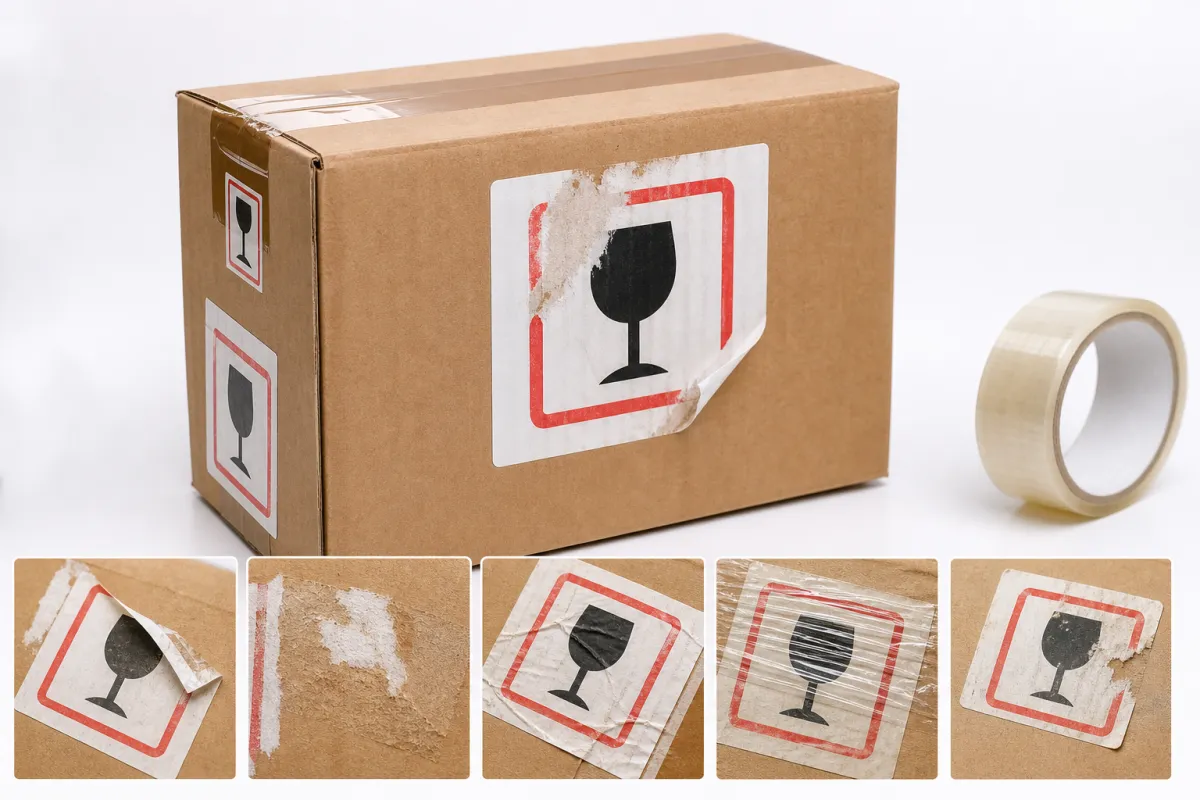
Most freight damage does not happen because someone ignored a label on purpose. It happens because the label was hard to see, too generic, or placed where no handler could spot it in three seconds flat. That is the first thing people miss when they ask for tips for labeling fragile freight boxes. A label has to compete with stack lines, stretch wrap, barcode labels, routing stickers, and the general visual clutter of a busy dock.
Picture a pallet of mixed cartons. One box says fragile, but the text is printed in a thin font, the sticker is only two inches wide, and half of it is hidden under clear tape. By the time that pallet reaches staging, the signal is gone. The lesson behind tips for labeling fragile freight boxes is simple: if a label cannot be read from arm's length under normal dock lighting, it is not doing its job. It does not have to be pretty. It has to be obvious.
Fragile freight boxes can mean several things in practice: double-wall cartons, corrugated shippers with inserts, printed retail-ready boxes, crates, and mixed freight units that move by parcel, LTL, or pallet. The box style matters because each format creates a different visibility problem. A clean carton on a parcel belt is not the same as a box buried in a pallet stack, and the best tips for labeling fragile freight boxes account for that difference instead of pretending every shipment moves the same way.
Good labeling helps with handling and routing. It does not fix a carton with soft corners, bad fill, or product that can rattle around inside like loose change. That is the part I wish more teams heard clearly. If the structure is weak, the label is a polite request, not protection. Still, careful tips for labeling fragile freight boxes can reduce careless stacking, improve visibility during transfer, and make it more likely that someone notices the load before damage happens.
A fragile label buried under stretch wrap is not a warning. It is a suggestion, and freight handlers have enough of those already.
That is why the real job is to create an obvious visual cue. Use bright contrast. Use large type. Place it where human eyes naturally go during pickup, sorting, and load-out. The better your tips for labeling fragile freight boxes match the actual movement of freight, the fewer chances you give for a bad handoff. A little clarity goes a long way in a warehouse that is moving quickly.
Tips for Labeling Fragile Freight Boxes: How the Process Works
To use tips for labeling fragile freight boxes well, it helps to understand how freight actually moves. A box is rarely handled once and forgotten. It passes through pickup, dock scan, staging, sorting, line-haul, transfer, and delivery. Each step is a chance for someone to decide, in a fraction of a second, how to place or stack it. The label has to survive that entire chain.
Handlers usually make visual decisions quickly. If they see a bold warning on the top half of a carton, they may avoid putting weight on it or may place it where it will not get crushed under another unit. If they do not see the message, they may treat it like every other box in the stack. That is why tips for labeling fragile freight boxes focus on placement, contrast, and repetition more than clever wording. Clever is nice; legible is better.
There is also a difference between shipping labels, handling labels, and warning labels. The shipping label tells the carrier where the box goes. The handling label tells the team how to treat it. The warning label tells the team what to avoid. Mixing those functions into one crowded sticker is a common mistake, and it usually leads to sloppy placement. Strong tips for labeling fragile freight boxes keep the message separate and easy to read.
For palletized freight, visibility changes again. A single fragile sticker on one side of the box may vanish once the load is stretch-wrapped or stacked against another carton. That is why repeated placement matters. The point of tips for labeling fragile freight boxes is not to decorate every face of the shipment; it is to make sure at least one label stays visible from the angle a dock worker is likely to see first. Sometimes two labels are enough, and sometimes a third is the better call if the pallet is irregular or heavily wrapped.
Loose cartons in parcel shipping need a slightly different approach. They pass through conveyors, sortation equipment, and short handoffs that can scuff labels or twist the box orientation. On those shipments, tips for labeling fragile freight boxes should prioritize abrasion resistance and high-contrast printing so the message survives physical contact and fast movement. I have seen labels look perfect on the pack bench and then come off the first conveyor turn like they were never there.
That chain of movement matters because fragile handling is rarely a single decision. It is a chain of small decisions. Better labels increase the chance that one of those decisions goes your way. That is the practical value of tips for labeling fragile freight boxes: they give your shipment a better shot at being seen before somebody sets a heavy carton on top of it.
Key Factors in Tips for Labeling Fragile Freight Boxes
The four biggest variables are size, readability, contrast, and placement. If any one of those is weak, the label loses power fast. For tips for labeling fragile freight boxes, I would rank size and contrast highest, because those are the first things that determine whether the message is noticed at a glance. After that, placement usually decides whether the warning survives real handling.
Use label sizes that can actually be read from a few feet away. For freight cartons, many shippers land in the 4 x 6 inch to 6 x 8 inch range for handling labels, depending on box size and available flat space. Smaller labels can work on small cartons, but once you move into palletized freight, tiny labels become visual background noise. Good tips for labeling fragile freight boxes start with enough surface area to carry the message cleanly.
Durability matters just as much. Labels should resist scuffing, moisture, and normal dock friction. If a carton goes through cold storage, condensation can loosen weak adhesive. If it gets slid against another box, cheap paper stock can tear or fade. Durable tips for labeling fragile freight boxes usually point toward a stronger adhesive, a tougher face stock, and a print method that will not rub off after one rough handoff. That is not overengineering. That is basic field sense.
Wording needs to be blunt. Short instructions work best: FRAGILE, HANDLE WITH CARE, THIS SIDE UP, DO NOT STACK, or a more specific note like GLASS INSIDE when the contents justify it. The message should not read like a paragraph. Good tips for labeling fragile freight boxes rely on speed, not storytelling.
Icons help, but only when they support the text. A glass symbol is fine. A red breakable icon is fine. But symbols alone can be too vague, especially if your freight moves through teams that do not share the same visual shorthand. Clear language still matters. That is one of the more overlooked tips for labeling fragile freight boxes: use icons as reinforcement, not as a lazy substitute for instructions.
Box strength and packing quality belong in this discussion too. A well-designed label cannot compensate for a carton that bows under its own contents. Use the right board grade, enough cushioning, and a closure method that matches the product weight. If your package cannot survive normal compression, even the best tips for labeling fragile freight boxes will not save it.
For companies that care about testing and standards, it helps to compare label performance against shipping conditions instead of guessing. Organizations like ISTA publish packaging test guidance that can help you think more clearly about transit abuse, while FSC certification can matter if your packaging program also cares about responsible material sourcing. Neither replaces common sense. They just make the process less fuzzy, which is useful when you are trying to reduce avoidable breakage and not just make the carton look official.
What to specify before you print
If you are turning tips for labeling fragile freight boxes into a real spec, define the essentials before anyone prints anything. Decide the label size, the wording, the color palette, the adhesive type, and the surfaces where it will be applied. Otherwise, one person buys a bright sticker and another person applies it over a seam because nobody wrote down a rule. That kind of drift is how small packaging decisions get messy fast.
Also define what not to do. For example: do not place labels over taped seams, do not use glossy artwork that hides the warning, and do not choose a font so thin it disappears on a moving conveyor. Practical tips for labeling fragile freight boxes are often about eliminating bad habits before they become policy. A short, written standard beats a dozen half-remembered opinions.
| Label option | Typical unit cost | Best use | Tradeoff |
|---|---|---|---|
| Stock fragile labels | $0.03-$0.08 each | Low-volume, standard cartons | Cheaper, but less branded and often less tailored to your process |
| Custom printed labels | $0.06-$0.18 each | Regular freight programs and branded shipments | Higher upfront setup, stronger consistency and better visibility |
| Heavy-duty adhesive labels | $0.10-$0.25 each | Cold chain, rough handling, moisture exposure | More expensive, but they hold up better in bad conditions |
That table is not fantasy math. It reflects the usual pattern: the harder you push the label to perform, the more you pay for stock, adhesive, and print quality. Still, the right choice depends on the shipment profile. Good tips for labeling fragile freight boxes are not about buying the most expensive label. They are about buying the one that stays visible long enough to matter, and that is a pretty different question.
Process and Timeline for Labeling Fragile Freight Boxes
A clean workflow makes tips for labeling fragile freight boxes much easier to follow. Start with the label spec. Confirm the wording, size, color, and stock. Then print a proof or order a sample batch. Test it on real cartons, not a desk mockup. After that, check adhesion and visibility through your normal packing and wrapping process before you scale anything.
The timing is straightforward, but people still get it wrong. Labels should usually be applied after packing and before final closure or stretch wrap. Put them on too early and they get scuffed, covered, or misaligned during packing. Put them on too late and somebody forgets them during the rush. The best tips for labeling fragile freight boxes build the label step into the packing order so it becomes routine, not optional.
If you are ordering custom labels, expect proofing, material selection, print production, drying or curing time, and a final quality check before shipping. For small orders, labels can often be turned around in a handful of business days once the proof is approved. For larger runs, 10-15 business days is a more realistic planning window, especially if you need special adhesive or more complex printing. That timeline is one reason smart tips for labeling fragile freight boxes include keeping a buffer stock. A little cushion in your supply plan saves a lot of scrambling later.
Warehouse teams also need a repeatable process. One team member should not invent a new placement pattern every afternoon. Make the rule simple: where the label goes, how many labels are required, and how the team confirms they are visible after the load is wrapped or sealed. That kind of consistency is one of the most overlooked tips for labeling fragile freight boxes, and it is exactly what keeps the process from drifting.
For businesses with frequent shipping changes, the easiest path is usually a reusable internal checklist. It saves time and reduces mistakes. A basic checklist can cover contents, carton integrity, label application, label visibility, and final box count. The point is not paperwork for its own sake. It is making sure tips for labeling fragile freight boxes show up the same way every time, even when the crew is busy.
If your team buys packaging in one place and labels in another, it can help to keep all the parts in one buying system. A supplier like Custom Labels & Tags is useful when you need a dedicated label run, while Custom Packaging Products can help if you want the box and label strategy to match instead of fighting each other. That kind of alignment makes tips for labeling fragile freight boxes much easier to sustain.
One more point on timing: if you expect a seasonal spike, do not wait until the week of shipping to order labels. That is how people end up settling for generic stock art because the custom run is not ready. Practical tips for labeling fragile freight boxes always leave a little room for supply delays, proof changes, and the reality that print jobs occasionally need correction. It is a small planning habit, but it avoids a lot of last-minute nonsense.
Cost and Pricing for Fragile Freight Box Labels
People love to ask for a cheap label as if labels are all the same. They are not. Size, material, adhesive, print method, quantity, and color coverage all affect cost. If you want solid tips for labeling fragile freight boxes, stop thinking only about sticker price and start thinking about total shipment risk.
Stock labels usually cost less upfront because the artwork and format already exist. Custom labels often cost more per unit, but they can improve visibility, match your packaging style, and reduce mistakes caused by inconsistent labeling. For high-volume shippers, that consistency is worth real money. So one of the better tips for labeling fragile freight boxes is to compare label cost against the cost of a damaged shipment, not against a random supplier quote.
Minimum order quantity matters too. If you only need a few boxes per week, stock labels can make sense. If you ship fragile freight every day, a custom run often becomes the better option because the per-label price drops as quantity increases. In many buying programs, small runs can land in the 500-1,000 piece range, while larger programs often move into 5,000, 10,000, or more. That volume shift changes the math quickly. Good tips for labeling fragile freight boxes should always account for that.
Here is the part that people underprice: the hidden cost of bad labeling. One crushed product, one re-ship, one claim dispute, or one delayed customer order can erase months of savings from a cheap label. If your fragile freight is even moderately valuable, a better label spec is not wasteful. It is insurance with a lower premium and a simpler claim trail. That is why tips for labeling fragile freight boxes should be viewed as a cost-control tool, not a design preference.
There is also a tradeoff between legibility and decoration. Fancy graphics, gradients, and tiny logo marks may look nice on a proof, but they can distract from the warning message. If the brand needs to show up, keep the logo secondary and the instruction primary. That is a packaging buyer's version of common sense, and it is central to tips for labeling fragile freight boxes. A label that looks refined but reads poorly is not doing the job.
When people compare options, I usually suggest they think in three buckets:
- Stock labels for low-complexity, low-volume shipping where speed matters more than branding.
- Custom labels for recurring freight where consistency and visibility matter.
- Heavy-duty labels for rough handling, moisture exposure, or cold chain movement.
If you are buying packaging and labels together, ask for the full system cost. A box that needs fewer labels because the print area is built in can be cheaper overall than a bargain carton that needs extra stickers, extra labor, and extra rework. That is one more reason tips for labeling fragile freight boxes should be part of a packaging plan, not just a label purchase. The label lives inside the process, not apart from it.
Common Mistakes When Labeling Fragile Freight Boxes
The most common mistake is also the most annoying: putting the label on one side only, then stacking that side against another box or pallet wall so nobody can see it. That is not a label strategy. That is wishful thinking. Strong tips for labeling fragile freight boxes always include at least two sides because freight rarely cooperates with your preferred angle.
Small labels are another problem. A tiny sticker can be fine for a small retail carton, but once the box moves into freight, it disappears fast. Low-contrast text causes the same issue. Black text on white stock works because it reads well in bad light. Gray on beige looks tasteful and useless. If you want practical tips for labeling fragile freight boxes, choose readability over aesthetic cleverness.
Decorative fonts are a trap. Script lettering and thin serifs may look polished in a mockup, but they break down in motion, glare, and distance. Freight handlers are not standing there admiring typography. They are moving fast, often while wearing gloves, and sometimes a little half-awake on an early shift. That is why one of the plainest tips for labeling fragile freight boxes is still one of the best: use bold type.
Another classic mistake is label clutter. When fragile stickers sit next to return labels, barcodes, route codes, and compliance stickers, the message becomes visual noise. If every surface is crowded, none of the signals stand out. Cleaner placement makes the fragile instruction easier to notice. Good tips for labeling fragile freight boxes reduce clutter instead of adding more stickers just because there is room.
People also tape over labels too aggressively. Tape can trap bubbles, wrinkle the face stock, or lift the edges over time. Seams and corners are worse. Once a label peels, the warning may stay attached to the tape while the box keeps moving. That is a small failure, but it happens constantly. Careful tips for labeling fragile freight boxes avoid those edge zones and prioritize flat, clean surfaces.
Then there is the assumption that everyone knows what fragile means. They do not. Some teams will slow down. Some will not. Some will read the label and still stack the box because the load has no alternative. So say what you mean. If the shipment cannot be stacked, say DO NOT STACK. If the contents are glass, say GLASS INSIDE. If orientation matters, say THIS SIDE UP. Clear language is one of the easiest tips for labeling fragile freight boxes to apply, and it is often the one that gets skipped.
A final mistake is assuming the label alone solves the problem. It does not. The best results come from pairing the label with sensible carton strength, proper cushioning, and a packing process that does not create loose space inside the box. Labels guide handling. They do not replace packaging engineering. That is the gap many shippers miss when they look for tips for labeling fragile freight boxes and only buy stickers.
Expert Tips for Labeling Fragile Freight Boxes and Next Steps
If you want the short version of tips for labeling fragile freight boxes, here it is: use big labels, use bold language, and put them where the eye naturally lands. On most shipments, that means at least two adjacent sides, with one label visible above or around stretch wrap whenever possible. That simple setup beats one lonely sticker on a hidden panel, and it usually costs less in labor than people expect.
Use high-contrast color without overcomplicating the design. Red on white, black on white, or another strong contrast usually works better than a busy design with multiple accent colors. Keep the type large enough to read from a few feet away. In practice, the best tips for labeling fragile freight boxes are the ones that survive bad lighting, quick movement, and the fact that handlers are usually in a hurry.
Test one real shipment before you roll the label out across every order. That test should include your normal box, your normal fill, your normal tape, and your normal wrap. If the label peels, wrinkles, or disappears under film, fix it before buying in bulk. The point of tips for labeling fragile freight boxes is to avoid discovering a visibility problem after a claim comes in, because by then the packaging lesson has already gotten expensive.
A simple internal checklist helps more than most teams expect. Verify the contents, confirm the box is sound, apply the label, check visibility from more than one side, and record the final count. It does not need to be fancy. It just needs to be followed. Good tips for labeling fragile freight boxes work best when the packing team can do them the same way every time.
For companies that ship fragile items regularly, it also makes sense to compare standard stock options with custom printed options. If the warning needs to stand out every time, custom labels can be worth the higher unit price. If the need is occasional, stock may be enough. Either way, the decision should be based on how your freight moves, not on whatever sticker happens to be on sale. That is one of the more practical tips for labeling fragile freight boxes I can give.
Start with an audit. Look at your current carton labels, placement, and packaging flow. Identify where labels get buried, where they peel, and where the message is too small to matter. Then test a revised spec on one shipping run. Once you see what survives your real process, you can scale it with far less guesswork. That is how tips for labeling fragile freight boxes turn into a repeatable shipping standard instead of a one-off fix.
If you want to improve the packaging system around the labels, explore Custom Labels & Tags for the handling message itself and Custom Packaging Products for the box structure around it. When the carton and the label work together, the whole shipment looks more intentional and usually ships better. That is the real value of tips for labeling fragile freight boxes: fewer surprises, fewer damage claims, and fewer expensive do-overs.
Strong tips for labeling fragile freight boxes are not complicated. They are just specific. Make the warning easy to see, hard to peel, and impossible to confuse with the rest of the shipping clutter. Do that, and your fragile freight has a much better shot at arriving in one piece. That is the takeaway I would trust in my own packing room, and it is the one worth keeping on the wall.
What should I print on tips for labeling fragile freight boxes labels?
Use short, unmistakable wording such as FRAGILE, HANDLE WITH CARE, and THIS SIDE UP. If the contents need extra direction, add a specific note like GLASS INSIDE or DO NOT STACK. The best tips for labeling fragile freight boxes keep the message large enough to read quickly at dock level, because no one has time to decode a tiny warning.
How many labels do fragile freight boxes need?
Use at least two labels on different sides so one stays visible after stacking or wrapping. For palletized freight, place labels where handlers can see them without moving other boxes. If the load is large or irregular, add more labels only if they do not create clutter. Those are basic tips for labeling fragile freight boxes, but they prevent a lot of missed warnings.
Where is the best place to put fragile freight labels?
Put labels on flat, clean surfaces near the top half of the box for fast visibility. Avoid seams, edges, and tape-heavy areas that can cause peeling or hide the message. Make sure at least one label remains visible after stretch wrap or bundling. That placement advice sits near the top of practical tips for labeling fragile freight boxes for a reason.
Do fragile freight box labels actually reduce damage?
Yes, but mostly by improving handling awareness, not by replacing proper packaging. Labels work best when they are large, visible, and repeated on the load. They help most when warehouse teams can spot them during fast sorting and transfer. So, while tips for labeling fragile freight boxes will not fix weak packaging, they can reduce avoidable handling mistakes.
What is the best material for fragile freight box labels?
Choose a durable adhesive label stock that resists moisture, scuffing, and handling wear. If the freight may see cold storage or outdoor transfer, use a stronger adhesive and tougher face stock. For high-volume shipping, test one label through your normal packing and wrapping process before ordering in bulk. That test is one of the smartest tips for labeling fragile freight boxes because it reveals problems before they cost money.


