Frosted Zipper Bags for subscription boxes do more than hold a product. They shape the first impression, keep small items from rattling around, and signal whether the package was planned or just packed. Buyers often talk about print and color first. In practice, the bag usually succeeds or fails on fit, closure quality, and how well it holds up after shipping.
If you are sourcing Frosted Zipper Bags for subscription boxes, the real decision is not whether the pouch looks nice in a sample photo. The useful questions are simpler: does it match the contents, does it survive transit, and does it improve the unboxing without inflating cost? That is the part people miss. If your box includes branded inserts, sample packs, or retail-ready pieces, it can also help to review the wider range of Custom Packaging Products before locking the spec.
A bag can look premium and still be wrong. If it crushes, splits, or fights the zipper line, it is not premium. It is just expensive.
What frosted zipper bags for subscription boxes actually do
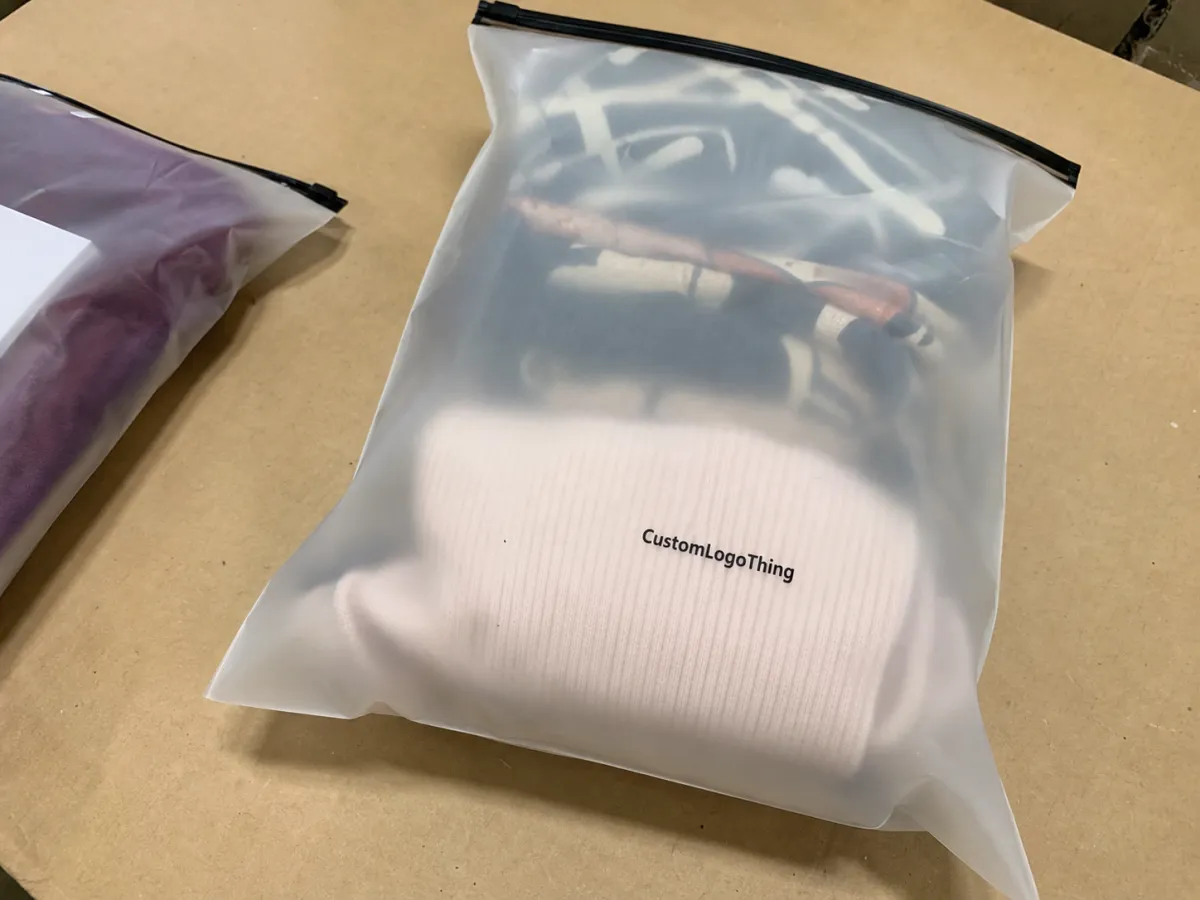
These bags usually carry three jobs at once. They present the product neatly, keep components contained, and add a layer of organization inside the box. That matters more than brands admit. A subscription kit with loose items feels rushed. A kit with a properly sized pouch feels planned, even if the contents are modest.
The frosted finish is not just decoration. It softens the view of the contents, hides fingerprints, and makes seam lines less obvious. Clear bags can look clean, but they also expose every tiny imbalance in fill level, every scuff, and every shift in the contents after shipping. Frosted film gives the package some visual breathing room. That is why it shows up so often in beauty kits, accessory bundles, stationery sets, and sample assortments.
In subscription packaging, the pouch usually plays one of three roles: an inner organizer, a secondary retail package, or a protected container for items that should not move around in the outer box. The role matters. A bag tucked inside a rigid carton can be lighter and less structured than a pouch that needs to protect sharp or heavy contents on its own. If you spec every bag the same way, you either overspend or underbuild.
The biggest misconception is that the frosted look itself creates the premium effect. It does not. The full package does that: thickness, zipper performance, print quality, and how the pouch sits with the rest of the kit. Get those parts aligned and the bag supports perceived value. Get them wrong and the box feels halfway finished.
How the zipper, film, and finish work together
A frosted zipper bag is a flexible pouch with a frosted outer finish, a resealable closure, and optional features like hang holes, tear notches, or gussets. On paper, that sounds simple. In production, every part affects the others. A good zipper on weak film still fails. Strong film with a sloppy closure feels irritating every time the customer opens it.
The frosted finish diffuses light instead of reflecting it sharply. That sounds minor, but it changes how the whole kit reads. Softened reflection makes the bag feel calmer and more curated inside a busy subscription box. When a box already has tissue, cards, inserts, and multiple SKUs, the pouch should reduce noise, not add to it.
Closure quality deserves more attention than graphics. A zipper that seals evenly, reopens without snagging, and does not split at the ends matters more than a loud design printed on a mediocre bag. Subscribers often open these pouches multiple times, especially for cosmetics, snacks, samples, or accessories they use over several days. If the zipper feels weak, the whole package loses credibility fast.
What to watch in structure
- Film thickness: often 60-120 microns, depending on product weight and how much compression the box will see.
- Zipper style: standard reseal, double track, or child-resistant formats if the product requires it.
- Extra features: hang holes, euro slots, tear notches, and gussets can improve display and handling.
- Gusset shape: helps the pouch stand better and keeps contents from bunching at the corners.
Fit causes more problems than most buyers expect. If the bag is too large, the contents shift and the box starts looking underfilled. If it is too tight, the zipper line gets stressed and the corners wear early. The pouch should cradle the product without squeezing it. That is especially true for layered kits with inserts, sample cards, or secondary pouches inside the main box.
For shipping durability, ask the supplier to talk plainly about compression and drop concerns. If the contents are fragile, ask how the zipper area is reinforced and whether the film holds up under stack pressure. For heavier programs, it helps to request packaging tests aligned with common transport checks such as ISTA protocols. The ISTA resources are a useful reference point: ista.org.
Choosing the right material, size, and print detail
Material choice decides how much protection the bag actually provides. Common options include LDPE, EVA blends, and, depending on the supplier, multilayer films. Softer films feel nicer in the hand, but they crease more easily. Stiffer films keep shape better, but they can look bulky in a tight box. There is no universal winner. The right choice depends on the contents and how the pouch is used.
Light items like stickers, cards, and small samples usually do fine in thinner film. Cosmetics, glass, metal accessories, and items with sharp corners call for more structure. In practice, many subscription programs land around 70-100 microns for general use, then step up when the bag has to carry more load. If the contents have edges or weight, test the actual product inside the bag instead of relying on the spec sheet alone.
Size should follow the product, not the outer carton. That sounds obvious, but it still gets ignored. Buyers size the bag around the shipping box, then wonder why the pouch floats inside the kit or bulges against the lid. A better approach is to measure the finished contents, include inserts or filler, and confirm how the pouch sits once everything is assembled. The bag should feel purposeful, not stuffed in as an afterthought.
Print detail should match the job the bag is doing. On frosted film, a simple logo often looks sharper and more expensive than a busy full-coverage design. Frosted material already adds texture, so it usually does not need much help. Minimal branding works well if the goal is a clean, curated reveal. Bigger print coverage makes more sense if the pouch has to function like a mini billboard or a retail-ready secondary package.
| Use case | Recommended build | Typical tradeoff | Best fit |
|---|---|---|---|
| Light sample kit | 60-80 micron, standard zipper, one-color print | Lower cost, less structure | Stickers, cards, samples |
| Beauty or wellness pouch | 80-100 micron, reinforced zipper, small logo print | Moderate cost, better feel | Cosmetics, minis, accessories |
| Heavier subscription bundle | 100-120 micron, gusseted form, stronger closure | Higher cost, more storage volume | Mixed kits, denser items, retail resale |
One more practical issue: frosted surfaces change how ink reads. Fine lines disappear faster than they would on paperboard or clear film. Low-contrast logos are the first thing to fail. A pale gray mark on frosted plastic may look elegant in a PDF and almost invisible in production. Strong contrast usually wins. Black, deep navy, or a saturated brand color tends to hold up better. Test a proof at actual size. Tiny logos are where good branding goes to die.
Brands in cosmetics, stationery, apparel accessories, and promo kits usually get better results when they keep the design simple. A clean mark, a sensible size, and a pouch that respects the contents will beat overworked graphics almost every time. If the bag only supports the box experience, do not spend on decoration before you solve structure. If the pouch needs to stand alone, put more budget into the closure and the film.
Cost, MOQ, and unit pricing: what changes the quote
Price is driven by size, film thickness, zipper style, print coverage, tooling, and order quantity. The more custom the bag, the more the quote moves. A plain frosted pouch with a one-color mark is much easier to price than a shaped pouch with specialty closure features and heavy decoration. Buyers know that in theory. Then they add another detail and act surprised when the number changes.
MOQ has a direct impact on unit cost. Lower quantities spread setup costs over fewer bags, which pushes the per-unit price up. Higher quantities usually lower the unit number, but they also increase the risk of sitting on the wrong inventory if your box theme changes or your contents get updated mid-cycle. Subscription brands feel that problem hard because packaging can shift by season, campaign, or SKU mix.
Here is the tradeoff in plain language:
- Lower MOQ: useful for testing, seasonal runs, and tight cash flow, but the unit cost is usually higher.
- Higher MOQ: better per-unit pricing, but only if demand and storage are stable enough.
- More print coverage: raises cost and often adds proofing time.
- Heavier film: costs more, but may reduce damage, returns, and replacement packaging.
For early-stage subscription brands, the practical middle is usually best. Order enough to avoid terrible unit pricing, but not so much that a packaging change locks too much cash in storage. Depending on region, supplier, and build, simple printed runs often land somewhere around $0.18-$0.45 per unit at moderate quantities, with lower pricing possible at larger volumes and higher pricing for thicker or more complex bags. That is not a quote. It is a realistic range to keep the conversation honest.
Buyers also overspend by adding decoration before they solve structure. If the pouch needs more protection, put budget into thickness and zipper performance first. If the bag is already strong enough, then decorate it. Printing ink on a weak bag does not make the bag better. It just makes the mistake easier to notice.
For sustainability-led brands, supplier conversations may include recycled content, lower-waste packing choices, or paper components that pair with the pouch. FSC matters more for paper than for plastic film, but it still matters if the kit includes printed inserts or cards. The source for the standard body is here: fsc.org. If a supplier claims recycled content, ask for documentation. Claims are cheap. Proof is not.
Process and lead time: from spec sheet to delivery
The order process should be boring. That is a compliment. A clean workflow usually goes like this: brief, quote, artwork review, sample, approval, production, quality check, and shipment. When one of those steps gets vague, the schedule starts drifting. Most delays come from unclear dimensions or artwork changes that should have been resolved before sampling.
Stock bags move faster because the structure already exists. Custom Frosted Zipper Bags for subscription boxes take longer because the supplier has to confirm size, print placement, zipper details, and any special features. For a straightforward custom run, lead times often fall around 12-20 business days after proof approval. Quantity, print complexity, and factory load can extend that. If the bags need to land before a launch, build in buffer time. Rush charges have a way of showing up right when nobody wants them.
The fastest way to slow production is to alter artwork after sampling starts. A close second is approving dimensions from a rough guess instead of the actual contents. Then the sample arrives and everyone is surprised that the kit does not fit. Packaging does not respond to optimism. It responds to measurements.
Approving a sample before full production is worth the time, especially when the bag has to sit inside a subscription box with inserts and multiple pieces. Test the sample with the real product, the actual filler, and any sleeve or card that goes inside the kit. A pouch that looks right on a table can fail inside the full assembly. Serious buyers test in context, not in isolation.
It also helps to think about transport stress instead of shelf appearance alone. The kit may look excellent on a desk and still get flattened in a truck or on a conveyor. Packaging standards and common test references matter because they give suppliers and logistics teams a shared frame of reference. ASTM and ISTA are useful touchpoints for that conversation.
A sample is not a checkbox. It is the cheapest insurance you can buy before committing to production.
Common mistakes subscription brands make with zipper bags
The classic mistake is choosing a bag because it looks premium in a photo, then finding out it cannot handle shipping compression or repeated handling. Photo samples flatter everything. Production does not. What matters is whether the zipper seals cleanly, the film resists dents, and the pouch still feels deliberate after it has been packed, shipped, opened, and repacked.
Another common error is sizing from one hero item instead of the full kit. The real box may contain a card, sample bottle, mini insert, and filler. If you only measure the bottle, the pouch often ends up too small or too thin at the corners. Packaging specs should reflect the whole bundle, not the prettiest object inside it.
Artwork prep causes its own damage. Frosted surfaces lower contrast, so tiny logos, pale colors, and thin type can turn muddy. If the brand mark is too small, it looks accidental instead of intentional. That is easy to prevent with a proper proof and a real-size mockup. It is much harder to fix after production starts.
There are also operational mistakes that have nothing to do with graphics:
- Ordering too little and paying more later for the next run.
- Skipping samples because the timeline feels tight.
- Assuming every supplier uses the same zipper quality.
- Forgetting to check the final insert stack before approval.
- Ignoring storage space until cartons arrive and there is nowhere to put them.
The worst version is when a brand tries to solve presentation problems with more decoration instead of better structure. If the bag is weak, print will not save it. If the size is wrong, a nicer logo will not fix it. Build the pouch first. Then make it attractive.
Next steps: sample, compare, and place a smarter order
Start with a simple spec sheet. Put the dimensions, target thickness, zipper style, print needs, quantity, and intended contents in one place. One page is enough if it is clear. That document saves a lot of back-and-forth, and it helps suppliers quote faster because they are not guessing at the basics.
Request two or three quote options if possible. Compare unit price, MOQ, sample cost, and lead time side by side. The cheapest number is not always the best outcome, especially if it comes with weak closure performance or a lead time that misses the box schedule. For subscription packaging, timing can matter as much as price.
Before approval, test the bag inside the actual subscription box with inserts and product samples. Check lid clearance. Check how the pouch sits after the box is closed. Check whether the zipper opens cleanly without pulling the contents out awkwardly. That sounds minor until a subscriber has to fight the package and loses patience with it.
From a buying standpoint, frosted zipper Bags for Subscription boxes should make the kit look better and work better. If the pouch adds visual noise, it is not earning its place. If it supports presentation, protection, and repeat use at a fair price, the spec is doing its job. That is the target.
The smartest move is usually simple: compare samples, confirm the fit, and choose the build that matches the box instead of the fantasy version of the box. That is how these bags end up helping the subscription, not just filling space.
Are frosted zipper bags for subscription boxes better than clear bags?
Often, yes, if the goal is a more polished presentation. Frosted bags hide fingerprints, seams, and small fill variation better than clear bags, so the kit usually looks cleaner. Clear bags still make sense when visibility is the priority. If the subscriber should see the contents immediately, clear can work. If you want a more curated reveal, frosted usually performs better.
What thickness should frosted zipper bags for subscription boxes use?
There is no single correct thickness. Light kits can work with thinner film, while heavier, sharper, or more fragile items need more structure. Many general subscription programs land somewhere in the 60-120 micron range, but the real answer depends on the contents and how much compression the box sees in transit. Always test the actual product before locking the spec.
How does MOQ affect frosted zipper bag pricing?
Lower quantities usually raise the unit price because setup costs are spread across fewer bags. Higher MOQ can improve pricing, but it also increases inventory risk if your assortment changes often. The right order size balances cash flow, storage, and how stable your subscription program is. Low unit cost does not help if the inventory sits unused.
How long does production usually take for custom zipper bags?
Stock bags move faster. Custom printed bags usually take longer because of artwork review, sampling, approval, and manufacturing. A straightforward run can often fall around 12-20 business days after proof approval, but that changes with quantity and print complexity. If the bags need to arrive before a launch or seasonal drop, build in extra time.
What should I check before ordering frosted zipper bags for subscription boxes?
Confirm the dimensions, zipper strength, print placement, and whether the bag fits the full kit with inserts or filler. Request a sample and test it inside the actual box, not just on a desk. Double-check artwork contrast on frosted film, because light logos and thin type can disappear fast. If the pouch does not fit and present well, the order is not ready.

