Buyer Fit Snapshot
| Best fit | Managing Packaging Supplier Lead Times Effectively projects where brand print, material claims, artwork control, MOQ, and repeat-order consistency need to be specified before quoting. |
|---|---|
| Quote inputs | Share finished size, material target, print colors, finish, packing count, annual reorder estimate, ship-to region, and any compliance wording. |
| Proofing check | Approve dieline scale, logo placement, barcode or warning zones, color tolerance, closure strength, and carton packing before bulk production. |
| Main risk | Vague material claims, crowded artwork, missing packing details, or unclear freight terms can make a low unit price expensive after revisions. |
Fast answer: Managing Packaging Supplier Lead Times Effectively: Material, Print, Proofing, and Reorder Risk should be specified like a repeatable production item. The safest quote records material, print method, finish, artwork proof, packing count, and reorder notes in one written spec.
Production checks before approval
Compare the actual filled-product size with the drawing, then confirm tolerance on folds, seals, hang holes, label areas, and retail display edges. Reserve space for logos, QR codes, warning copy, and material claims before decorative graphics fill the panel.
Quote comparison points
Review material grade, print process, finish, sampling route, tooling charges, carton quantity, and freight assumptions side by side. A quote is only useful when the supplier can repeat the same color, closure quality, and packing count on the next order.
Tips for managing packaging supplier lead times matter more than most teams want to admit. A two-day delay in artwork approval can snowball into a much bigger mess than a two-day delay on the press floor. That pause can stall sampling, push production behind other jobs, and force freight into a more expensive window. From a packaging buyer's point of view, the real clock starts before the purchase order is even released.
I have seen teams obsess over the factory schedule and miss the actual problem sitting in their inbox. Packaging supplier lead times are not just the hours a press is running. They cover the full path from approved order to finished, deliverable packaging in your hands. Dieline review, proofing, sampling, inspection, transit, and the back-and-forth in between all live inside that window. If you are buying branded packaging, custom printed boxes, retail packaging, or any product packaging tied to a launch date, the room for error gets thin fast.
The good news is that tips for managing packaging supplier lead times are not mysterious. Most delays come from the same few gaps: late approvals, unclear specs, optimistic transit assumptions, and sloppy reorder planning. Once you can see those gaps, you can close them. Once you close them, the schedule starts acting like a schedule instead of a suggestion. Nice change, honestly.
Tips for Managing Packaging Supplier Lead Times: Why Delays Snowball
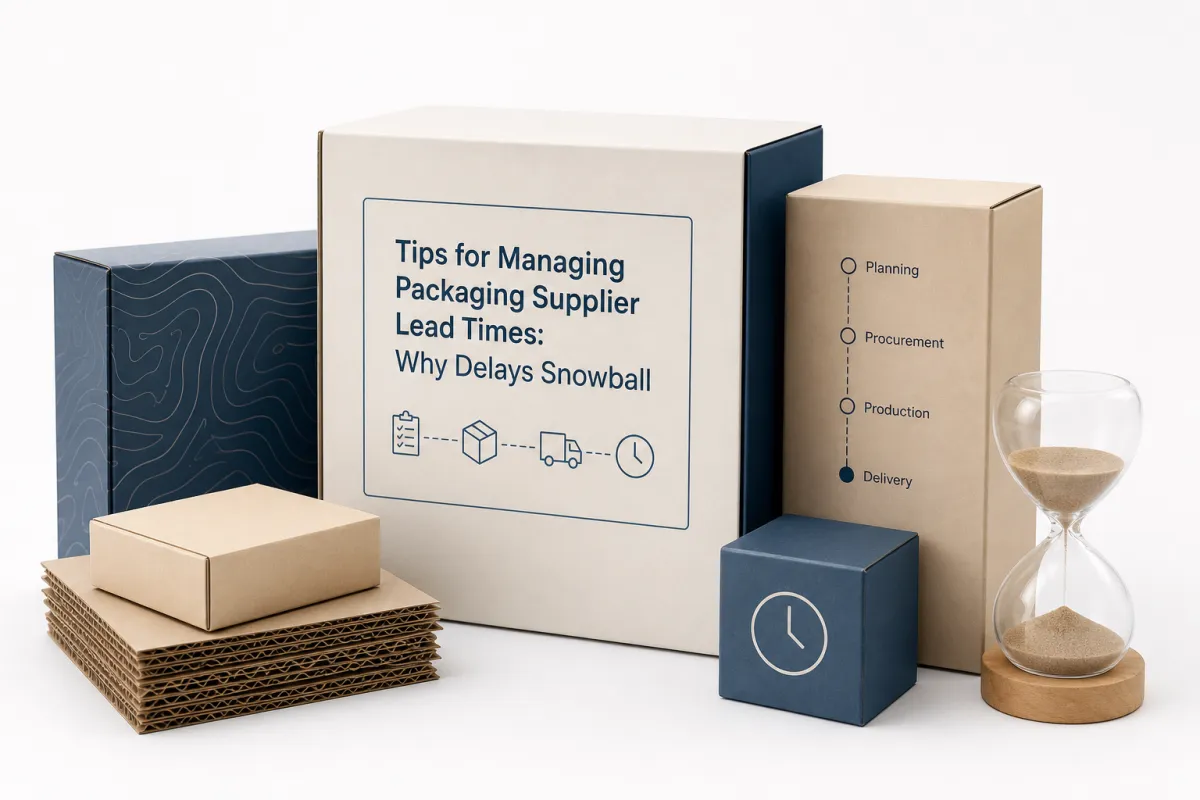
The slowest step is often not production. It is the handoff between artwork approval, sample sign-off, and PO release. Sounds harmless. It is not. A small slip there can turn into a three-week headache fast. One missed revision can hold a line slot open, and once that slot is lost, the job may wait behind other work or move into an expedited queue. That is why tips for managing packaging supplier lead times usually start with internal process discipline, not factory speed.
Packaging supplier lead times are the total elapsed time from approved order to finished packaging in your facility. That window can include quoting, dieline checks, structural adjustments, proof approval, color correction, tooling or plate setup, print production, finishing, inspection, packing, and shipping. For custom packaging, especially custom printed boxes or layered retail packaging, each step can add days. If your package branding depends on exact color matching or a specialty finish, the timeline stretches even more.
Here is the practical ripple effect. A small approval delay can idle a press schedule, push freight into a pricier window, and trigger stockouts downstream. If a launch is tied to a retailer reset or a marketing campaign, the packaging miss can cascade into missed shelf dates, delayed content, and extra warehouse touches. Tips for managing packaging supplier lead times are really supply chain risk controls wearing a procurement hat.
From a packaging buyer's point of view, the surprise is usually how many teams touch the schedule. Design wants the layout polished. Operations wants lean inventory. Marketing wants a launch on a specific date. Purchasing wants the best unit price. Lead times are where all four priorities collide. If one group treats the timeline as flexible, the rest of the plan starts to wobble.
The most expensive delay is rarely the one in production. It is the one that looked harmless because it happened in email.
That is why tips for managing packaging supplier lead times need a cross-functional mindset. The clock should be visible to everyone involved in the order, not just procurement. A simple shared schedule can prevent the kind of last-minute scramble that turns routine custom packaging into an emergency order with premium freight attached.
For buyers who want a useful benchmark, the industry context matters too. Associations and standards groups such as packaging.org help frame general packaging trends, while testing bodies like ISTA show how transit performance and shipping abuse testing fit into the broader package development cycle. That matters because packaging supplier lead times are not just about making a box. They are about making a box that survives the trip and lands on schedule.
One more thing. If your team sees lead time as a single number, you are already underestimating risk. Good tips for managing packaging supplier lead times break the order into stages, then assign time to each stage. That is how you spot where delays are hiding and where you actually have room to move.
Tips for Managing Packaging Supplier Lead Times: How the Timeline Works
A clean timeline usually runs through seven stages: quote, dieline review, artwork prep, proofing, sampling, production, inspection, and shipping. Each stage can be short or long depending on complexity. A standard folding carton might move from approved proof to production in 10-15 business days. A rigid box with specialty lamination, foil, and a foam insert can take much longer. Tips for managing packaging supplier lead times get practical once you can see which stage is the bottleneck, not just the total number of days.
The hidden minutes add up
Proofing is where many schedules quietly go off track. A single correction cycle can cost 1-3 business days, and if the artwork includes legal copy, multilingual content, or barcode changes, the review loop can stretch further. Sampling is another common drag. If a sample needs structural changes, the team may need a second or third round before sign-off. That is why tips for managing packaging supplier lead times should always include a rule for how many revisions are allowed before escalation.
Standard, expedited, and rush production windows are not the same thing, even when the finished box looks identical. Standard production sits in the factory's normal queue. Expedited work jumps ahead with overtime or re-sequencing. Rush work often displaces other jobs entirely and can trigger a premium because the supplier is paying to compress capacity. The same custom packaging order can have three very different lead times depending on how early it was requested and how stable the artwork was.
| Option | Typical Timeline | Best Use | Tradeoff |
|---|---|---|---|
| Standard production | Often 10-25 business days after approval, depending on structure and finish | Planned launches, repeat orders, normal replenishment | Lowest cost, but least flexible if demand moves |
| Expedited production | Can compress the schedule by several days with priority handling | Moderate schedule slips or tighter launch windows | Higher cost, often with limited slot availability |
| Rush production | Shortest path, sometimes measured in days, not weeks | True emergencies and launch rescue situations | Highest cost and greatest chance of compromise |
Domestic versus overseas sourcing changes the math again. A domestic order may have a longer print queue but a shorter transit leg. An overseas order can look cheap on paper for larger runs, yet it adds ocean transit, customs clearance, port congestion, and more handoff risk. If you are buying custom printed boxes with a six-week boat transit, the manufacturing slot is only part of the schedule. Tips for managing packaging supplier lead times have to cover the full journey.
Shipping mode matters too. Air freight can rescue an emergency, but it can erase savings quickly. Ocean freight is far more cost-efficient for volume, yet it is less forgiving when the production date slips by even a few days. That is why a packaging buyer should always ask for a stage-by-stage timeline, not a single promise date. A good supplier should be able to show where the order sits, where the calendar is fragile, and what happens if an approval lands late.
For materials, the differences can be sharp. Plain kraft mailers may move quickly. A 350gsm C1S artboard carton with soft-touch lamination, spot UV, and foil stamping may require more setup and more inspection. FSC-certified board can add sourcing constraints if the mill has limited availability. That does not make the order bad. It just means tips for managing packaging supplier lead times need to match the actual substrate and finish, not a generic assumption.
There is also a transit reality that many teams undercount. A domestic truck move might take 2-5 days, while an import can spend 14-40 days on the water plus customs and final-mile delivery. None of that is theoretical. If a holiday launch depends on retail packaging arriving before the warehouse closes its inbound window, one small miss can push delivery into the following week. That is how schedule slips become shelf slips.
So the timeline works like a chain. Every link matters. Shorten proofing by one day, standardize dielines, lock art early, and you often save more than you would by chasing a lower quote. That is the quiet logic behind tips for managing packaging supplier lead times: remove friction before production even begins.
Cost and Pricing: What Tight Lead Times Really Add Up To
Compressed schedules almost always cost more. The obvious charges are rush fees and premium freight, but those are only the visible part. Overtime labor, short-run inefficiency, extra quality checks, and rework from late design changes can all climb into the landed cost. If a supplier has to interrupt a standard production run to prioritize your order, that disruption usually shows up somewhere in the quote. Strong tips for managing packaging supplier lead times help you avoid paying for speed you did not actually need.
The tradeoff is simple in theory and messy in practice. Pay more to move faster, or hold more inventory to absorb normal variability. Most teams do a bit of both. The mistake is doing neither on purpose. If a product launch depends on a unique carton style and the reorder size is only 2,500 units, the math gets ugly fast. Smaller batches usually carry higher per-unit costs because setup time is spread across fewer pieces. That is true for product packaging, branded packaging, and most forms of package branding that require print consistency.
There are hidden pricing variables that catch teams off guard. Specialty finishes like foil, embossing, or aqueous coating can add time and cost. Limited material availability can force a supplier to switch board grades or wait for inventory. Minimum order quantities can push a buyer to order more than planned just to keep the unit rate in range. And if artwork changes after proof approval, the replate, retool, or resample cost can dwarf the original savings. Tips for managing packaging supplier lead times should always include a review of these cost triggers before the PO goes out.
Here is the deeper connection: lead time buffers can lower cost over time. That sounds backwards, but it is usually true. A buffer gives you room to consolidate orders, choose normal freight instead of premium freight, and avoid emergency production that burns through margin. On repeat items, the savings are even clearer. Once a packaging structure is standardized, reorders are easier to schedule and less likely to drift into rush territory. If you need a place to build that consistency, a catalog like Custom Packaging Products can help teams narrow the number of formats they buy and simplify replenishment.
Standard cost drivers versus emergency cost drivers
To keep the pricing picture concrete, compare the two sides side by side. One order is planned around normal capacity. The other arrives as a fire drill. Both can produce acceptable custom printed boxes, but only one keeps the budget calm.
| Cost Driver | Planned Order | Emergency Order |
|---|---|---|
| Production slot | Reserved in advance | Often reprioritized or rescheduled |
| Labor | Normal shift coverage | Overtime or shift disruption |
| Freight | Economy truck or ocean mode | Premium air or expedited ground |
| Materials | Purchased to schedule | Sometimes bought at short notice |
| Risk of rework | Lower, because approvals are finished earlier | Higher, because timelines are compressed |
That table captures the business case behind tips for managing packaging supplier lead times. The more you compress the schedule, the more you pay in one form or another. It is not always a bad choice. Sometimes speed is worth it. Speed should be a conscious decision, not a surprise bill.
There is also a quality angle. Suppliers under deadline pressure may still hit the target, but the inspection burden often rises. If the packaging needs to meet specific standards, such as drop testing aligned with ISTA procedures or source documentation tied to FSC chain of custody, then any schedule squeeze needs extra care. Testing and certification do not have to slow everything down, but they do need to be planned into the calendar. That is a classic point where tips for managing packaging supplier lead times protect both cost and compliance.
One useful habit is to compare the quote against the real schedule, not just the unit price. If a slightly higher quote comes with a firmer timeline, fewer revisions, and lower freight, it may be the cheaper option overall. That comparison is especially important for retail packaging tied to a launch. The missing day often costs more than the higher carton price.
So yes, tight lead times can inflate cost. The bigger lesson is simpler: uncertainty is expensive. The best tips for managing packaging supplier lead times reduce uncertainty first, then chase unit price second.
A Step-by-Step Process for Building Reliable Lead Time Buffers
Start with demand planning. Map forecasted sales, promo windows, seasonal spikes, and reorder history across your main SKUs. If a carton sells steadily at 4,000 units a month but doubles during a promotional push, the reorder schedule should reflect the peak, not the average. Tips for managing packaging supplier lead times work best when they are tied to actual consumption patterns, not wishful thinking.
Then work backward from the launch date. Set internal deadlines for artwork approval, supplier sign-off, sample acceptance, and PO release. Do not park those dates right on the edge of the launch. Give each step protected time. A clean method is to back-schedule the project with one buffer day between key handoffs. That sounds conservative, but it prevents one missed comment from blowing up the whole sequence.
Here is a simple reorder formula many teams can use:
Reorder point = average weekly usage x supplier lead time in weeks + safety stock
If a custom packaging item uses 5,000 units a week, the supplier lead time is 6 weeks, and your safety stock is 10,000 units, the reorder point is 40,000 units. If the order has frequent artwork revisions or long transit, that safety stock may need to be higher. Tips for managing packaging supplier lead times are often just disciplined math applied early enough to matter.
Build the buffer around the real bottleneck. If sampling usually takes two weeks because the product packaging needs a structural check, do not bury that inside the production lead time. Keep it separate. If freight can swing by a week based on port activity, that is a separate buffer too. The more visible each element is, the easier it becomes to defend the schedule when someone wants to shave days off the plan.
Use escalation thresholds, not vague reminders
A simple escalation path keeps projects from drifting. At 80% of the lead-time window, confirm whether every approval is on track. At 90%, escalate any open artwork issues, sample comments, or payment holds. At 100%, make a decision: accept the revised date, approve a freight upgrade, or move to the backup plan. This kind of trigger is one of the most practical tips for managing packaging supplier lead times because it removes guesswork from the moment pressure rises.
When possible, pair the buffer with a material strategy. Standardize board grades, finishes, and carton structures for repeat programs. That way, a reorder is less likely to need a fresh engineering cycle. For branded packaging, consistency can save as much time as it saves money. A narrower spec reduces the chance that one stakeholder will ask for a new substrate at the last minute.
It also helps to create a shared calendar. Not a static spreadsheet that people forget, but a live planning view that includes design handoff, proof window, PO date, expected ship date, and warehouse receiving date. If everyone can see the same date chain, tips for managing packaging supplier lead times become operational, not theoretical.
And if the package has to survive parcel shipping, fit testing into the plan early. ASTM or ISTA-based transit tests are usually much cheaper to run before production than after a failure in the field. The point is not paperwork for paperwork's sake. The point is to protect the schedule from a painful rework loop.
One final note on buffering: do not treat every SKU the same. A hero product with high velocity and long transit needs more cushion than a seasonal insert card or a low-risk mailer. Tips for managing packaging supplier lead times are strongest when the buffer matches the business value of the item. A one-size-fits-all rule usually creates waste or stockouts. Sometimes both. That is a fun way to lose money.
Common Mistakes That Stretch Packaging Supplier Lead Times
The first mistake is waiting to request quotes until the launch date is already fixed. That leaves no room for sampling, negotiation, or revision. It also forces the supplier to answer a deadline problem instead of a planning problem. If you want reliable tips for managing packaging supplier lead times, this is the habit to stop first.
The second mistake is changing artwork after proof approval. That sounds obvious, but it happens constantly. A legal line changes. A barcode shifts. Marketing wants a sharper message. Each tweak can restart part of the production chain. If plates, dies, or finishing files need to be updated, the delay can be far larger than the edit itself. Packaging teams know this pain well; it is one reason package branding should be signed off with every stakeholder in the room the first time.
The third mistake is comparing suppliers only on production time. That is a partial view. If one supplier quotes a shorter print window but a longer transit path, the total lead time may still be worse. If another supplier is slightly slower in production but faster in shipping and cleaner in proofing, the full schedule may actually be better. Tips for managing packaging supplier lead times depend on total elapsed time, not just machine time.
The fourth mistake is ordering too close to the need date and then paying for rush handling. Emergency orders often get labeled unavoidable, but many are just forecast misses wearing expensive shoes. A better habit is to keep a reorder trigger tied to safety stock and actual lead time. That is where the math beats the panic.
A rushed order is rarely just a shipping problem. It is usually a planning problem that finally became visible.
There are a few more traps worth mentioning. Teams sometimes skip the sample review because the mockup looks close enough. Then the first production lot reveals a color shift, a closure issue, or a board stiffness mismatch. Teams also undercount customs time on overseas orders and assume the freight leg will behave like an internal truck move. It will not. The calendar does not care that the campaign launch is fixed.
Another common miss is leaving out the warehouse. If inbound scheduling is tight, the carton can arrive on time and still miss the receiving window. That creates a false sense of delay because the packaging is physically present, but not actually available for use. In a strict sense, the lead time was not just manufacturing and shipping; it was also internal receipt and availability.
Tips for managing packaging supplier lead times also require honesty about supplier capacity. A vendor can be excellent and still be full. If you ask for a quote during peak season without warning, the quoted date may reflect the next open slot, not the earliest possible slot. That is one reason it helps to build ongoing supplier relationships for key custom packaging items rather than treating every order as a one-off scramble.
Finally, do not assume the cheapest quote is the safest. A lower price with a fragile timeline can become the most expensive choice in the room. That is especially true for custom printed boxes that support a launch, where a missed date can cost far more than the carton margin ever saved.
Expert Tips for Stabilizing Packaging Supplier Lead Times
Build a supplier scorecard that tracks quoted lead time versus actual lead time, not just price and quality. A supplier that quotes 18 business days and ships in 19 is easier to plan around than one that quotes 12 and ships in 21. That difference matters more than many procurement teams admit. If you want tips for managing packaging supplier lead times that improve trust, start with measurement.
Ask for milestone updates, not generic status notes. “In production” is not enough. You want to know whether the art is approved, whether materials have arrived, whether the run has started, whether finishing is complete, and whether the cartons are packed for shipment. Milestones expose slippage early. They also make it easier to decide whether to intervene or wait. Tips for managing packaging supplier lead times get much sharper once you can see the order in motion.
Standardize specs wherever possible. Every unique board grade, foil color, gloss level, or insert style adds decision time. That does not mean every package must be identical. It means the fewer variables you change, the easier it is to keep the lead time stable. A consistent structure can still support strong package branding. In many cases, it looks better because the finish and print quality are more repeatable.
Develop a backup plan for critical SKUs. That may include a second supplier, a pre-approved alternate board, or a stripped-down version of the package that can be used temporarily if the preferred format slips. The backup does not have to be pretty. It just has to keep the product moving. That is one of the most practical tips for managing packaging supplier lead times because it turns surprise into choice.
Use standards as guardrails
For shipping performance, look at ISTA testing as a scheduling tool, not an afterthought. If a pack fails transit tests, redesigning after production is far more expensive than fixing the issue at sample stage. For sustainable sourcing, FSC-certified paperboard can support procurement goals, but it should be ordered with enough lead time to avoid sourcing stress. These standards do not solve everything. They do, though, keep the process honest.
Industry context helps too. Packaging organizations and standards groups often publish useful guidance on materials, testing, and supply chain pressure points. If your team is building a more disciplined packaging program, those references can keep the conversation grounded. The goal is not to chase every trend. The goal is to make custom packaging more predictable.
Another expert move is to split your portfolio by risk. High-velocity items, promotional kits, and launch packaging deserve tighter monitoring and larger buffers. Stable repeat items can run on a leaner system. Low-risk inserts or secondary shippers may not need much oversight at all. That kind of segmentation keeps the team from applying high-touch control to low-risk materials.
One more point: keep design, operations, and procurement in the same conversation early. If packaging design changes after the supplier has already quoted the item, the schedule and price both move. If operations knows the warehouse has a receiving blackout, the shipping date can be adjusted before it becomes a problem. Tips for managing packaging supplier lead times work best when the handoffs are coordinated before the order is live.
For teams buying multiple packaging formats, a centralized spec library can save real time. Store approved dielines, substrate notes, finish options, and vendor contacts in one place. That way, the next reorder does not begin with a scavenger hunt. A page of tribal knowledge becomes a system.
If you are narrowing down your own assortment, a structured source of branded packaging options can also make planning easier because you are working from approved standards instead of renegotiating the same choices every cycle. That reduces revision loops. Fewer loops usually mean cleaner lead times.
Actionable Next Steps to Improve Packaging Supplier Lead Times
Audit your last three packaging orders and compare quoted lead times, actual lead times, and the reason for every delay. Be blunt. Was the delay in art approval, sample revisions, supplier scheduling, freight, or internal receiving? Once you know the true cause, the fix gets a lot simpler. This is one of the most useful tips for managing packaging supplier lead times because it turns anecdote into data.
Build a shared calendar for the next 90 days. Include artwork deadlines, proof review dates, PO release dates, expected ship dates, and warehouse receipt dates. Make the calendar visible to design, purchasing, operations, and marketing. A visible schedule creates accountability without a weekly fire drill. It also helps people understand that tips for managing packaging supplier lead times are not just about the supplier; they are about the whole chain of decisions that comes before the order.
Set one minimum buffer rule for every critical packaging SKU. For some teams, that may mean four weeks of safety stock. For others, it may mean one full reorder cycle plus transit cushion. The number matters less than the rule. Once the buffer is written down, it stops being optional. That is where discipline starts to replace stress.
Then standardize the most painful variables. If one carton structure keeps causing delays, ask whether the die line can be simplified. If one finish creates repeated proof questions, consider whether a less complex option would perform almost as well at lower risk. If one supplier routinely misses the quoted date, compare actual performance over several orders rather than one isolated run. Smart tips for managing packaging supplier lead times are rarely dramatic. They are steady.
For teams managing launch-heavy product packaging, the biggest win often comes from moving approval work earlier. Get marketing, legal, and operations to review the artwork before the supplier needs the final file. That single step can save days, sometimes weeks. It is not glamorous, but it works.
If you need a simpler starting point, choose one SKU and run the process end to end with tighter controls. Document every handoff. Measure the difference between quoted and actual time. Review the hidden steps. Then roll the process out to the next item. Small wins matter because they show the team that lead time control is repeatable, not theoretical.
The larger lesson is easy to miss: tips for managing packaging supplier lead times are really about building calm into a process that too often runs on urgency. If you know your demand, protect your approvals, hold a realistic buffer, and watch the full timeline instead of one number, the whole operation gets easier to run. That is true whether you are buying retail packaging, branded packaging, or custom printed boxes for a product launch.
If you only do one thing this quarter, make it this: build a lead-time calendar that includes approval dates, sample dates, ship dates, and a reorder trigger tied to actual usage. That one system catches most of the misses before they become expensive. Keep it visible, keep it updated, and keep people honest about the dates. The schedule will still move sometimes, because of course it will, but it will stop moving in secret.
And that last point is the one worth remembering. Tips for managing packaging supplier lead times are not a one-time fix. They are a habit. Keep the habit, and the schedule becomes far more predictable.
What are typical packaging supplier lead times for custom packaging?
Lead times vary by material, print method, finishing, and shipping distance, but custom orders usually take longer than stock items. Add extra time for proofing, sampling, and revisions, since those steps often create the biggest schedule swings. Ask suppliers for a stage-by-stage timeline so you can see where the real bottleneck is before placing the order.
How can I shorten packaging supplier lead times without driving up risk?
Approve dielines and artwork early, because late design changes are one of the fastest ways to lose weeks. Keep materials and finishes consistent when possible so suppliers do not need to re-source or retool. Use forecasted reorder points and safety stock to reduce the need for last-minute production requests.
Why do packaging lead times affect pricing so much?
Short timelines can trigger rush fees, overtime production, and premium freight charges that quickly raise the landed cost. Small emergency orders often cost more per unit because suppliers lose the efficiency of larger scheduled runs. Any rework from late approvals or spec changes adds both material waste and labor cost.
When should I reorder packaging to avoid stockouts?
Reorder when projected inventory drops to your safety stock level, not when you are already close to empty. Build the reorder window around your supplier's full timeline, including approvals and transit, not just manufacturing time. Increase the buffer before seasonal launches, promotions, or product rollouts that can distort demand.
What should I do if a packaging supplier misses the promised lead time?
Ask for a revised milestone plan with the specific cause of delay, not a vague new delivery estimate. Escalate only after checking whether artwork, payment, or approval delays on your side contributed to the slip. Document the miss and use it to update your reorder buffer, supplier scorecard, and next procurement cycle.


