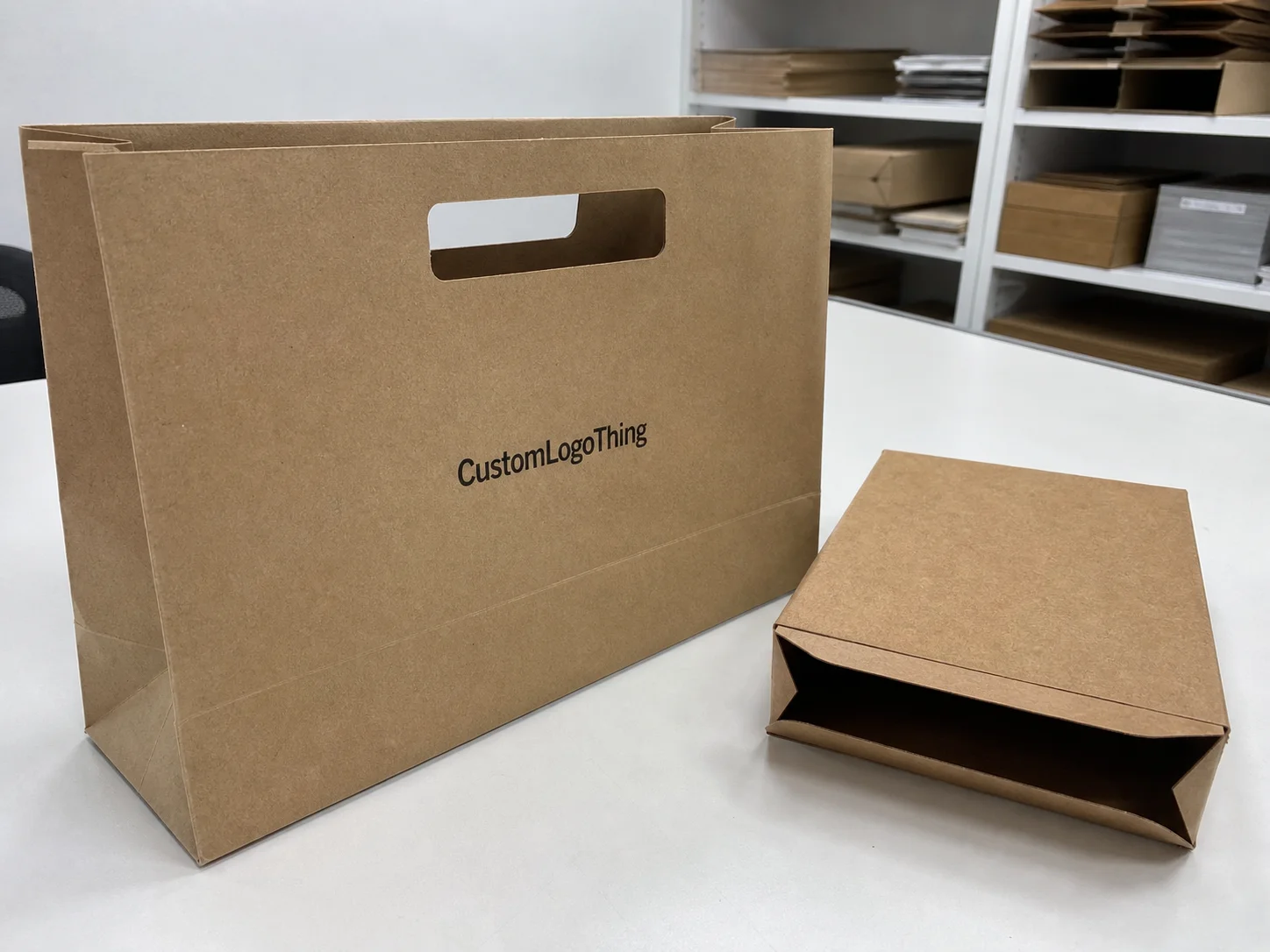
Buyer Fit Snapshot
| Best fit | Peak Season Packaging projects where brand print, material claims, artwork control, MOQ, and repeat-order consistency need to be specified before quoting. |
|---|---|
| Quote inputs | Share finished size, material target, print colors, finish, packing count, annual reorder estimate, ship-to region, and any compliance wording. |
| Proofing check | Approve dieline scale, logo placement, barcode or warning zones, color tolerance, closure strength, and carton packing before bulk production. |
| Main risk | Vague material claims, crowded artwork, missing packing details, or unclear freight terms can make a low unit price expensive after revisions. |
Fast answer: Peak Season Packaging: Material, Print, Proofing, and Reorder Risk should be specified like a repeatable production item. The safest quote records material, print method, finish, artwork proof, packing count, and reorder notes in one written spec.
Production checks before approval
Compare the actual filled-product size with the drawing, then confirm tolerance on folds, seals, hang holes, label areas, and retail display edges. Reserve space for logos, QR codes, warning copy, and material claims before decorative graphics fill the panel.
Quote comparison points
Review material grade, print process, finish, sampling route, tooling charges, carton quantity, and freight assumptions side by side. A quote is only useful when the supplier can repeat the same color, closure quality, and packing count on the next order.
Tips for Peak Season Packaging: Plan, Price, and Ship
The first holiday line I watched stall out had nothing to do with a dead conveyor or a printer crash. A 2 mm insert change slipped through unchecked in a plant outside Columbus, Ohio, and a clean 14-second pack cycle turned into hand-fitting, extra tape pulls, and a pile of rework that kept growing by the hour. I still remember standing there thinking, we are getting buried by a piece of cardboard the width of a pencil. That kind of problem is exactly why tips for peak season packaging matter so much: a small packaging decision can move labor, freight, damage rates, and margin in a single afternoon, especially when the seasonal push is already running 18% above baseline. The best advice begins with a simple habit: measure the pack-out before the volume spike starts.
Peak season packaging is never just a box and a label. It is the full system around product packaging: board specs, pack-out rules, void fill, Supplier Lead Times, warehouse routines, and the timing of approvals that seem harmless until they are late. Miss one step by a day and a 10,000-unit launch can get expensive fast. I have seen a $0.08 insert delay turn into a $3,400 airfreight bill because cartons had to be on the dock before a weekend promo went live in Chicago and Atlanta. Nobody enjoys explaining that kind of line item to finance, especially when the purchase order was already approved at $28,500.
A 1% error rate sounds tiny on a spreadsheet. Move from 4,000 units to 40,000 units and that same 1% becomes 400 problem orders, each one carrying replacement product, service labor, shipping adjustments, and the kind of annoyance that drags on for weeks. That is why tips for peak season packaging are not decorative advice. They protect margin in a very practical way, and they do it with numbers that show up in the same month-end report as payroll and freight. Good packaging choices also keep dimensional weight, void fill, and carton strength in balance, which is where the math gets real.
I have always thought the best packaging teams treat peak season like a controlled stress test. They plan for speed, and they plan for failure at a 3% to 5% level so the line can keep moving when something slips. Extra corrugate, a backup adhesive, a second approved supplier in the Midwest, and a clear answer for a carton spec that misses by 1/8 inch do more for profit than most people expect. The brands that prepare this way usually save more than they spend on the planning itself, which is a rare and beautiful thing in operations, especially when a 12-15 business day reprint window is the difference between launch and air freight. That is the kind of prep work that turns a nasty surprise into a manageable hiccup.
Tips for Peak Season Packaging: Why the Small Stuff Matters
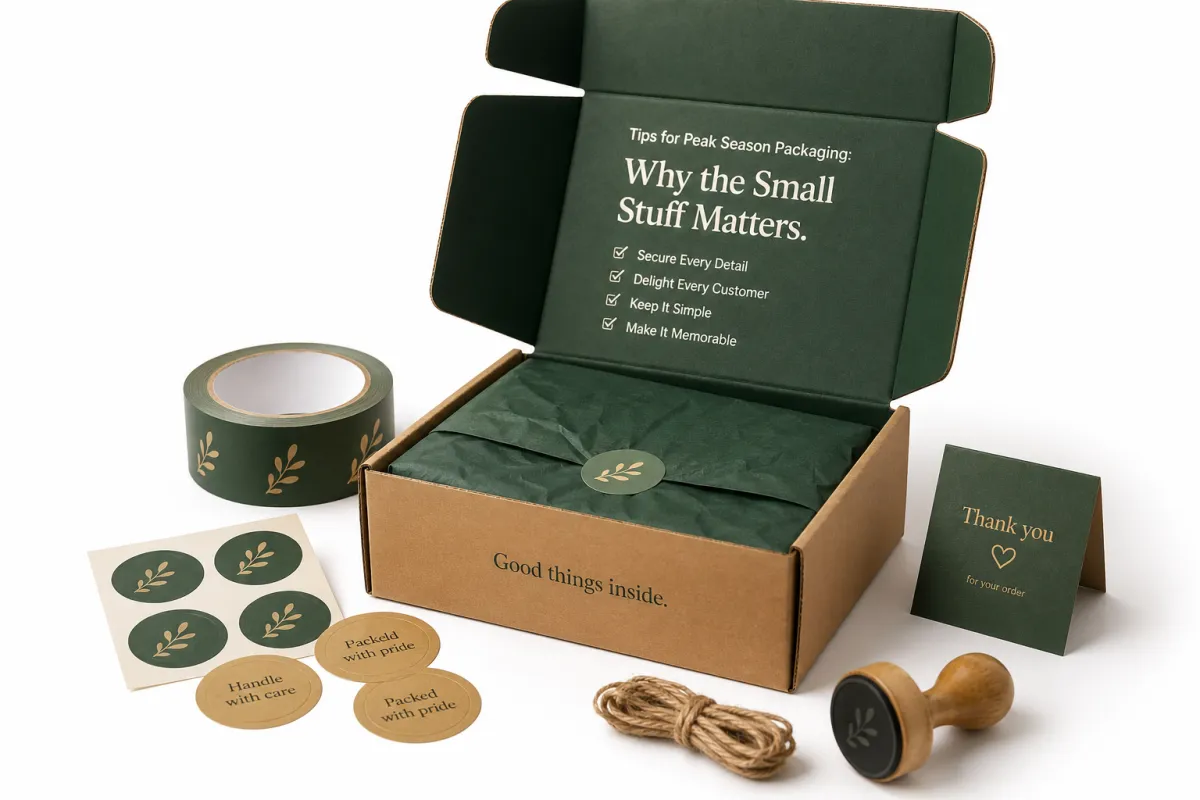
Outside Dallas, I once walked through a fulfillment center where the biggest bottleneck was not the pack bench. A carton flap kept catching on a divider because the board caliper had shifted from 32 ECT to a weaker run on a later shipment from a converter in Fort Worth. Six packers slowed by roughly 20%, and a 9 a.m. start became a 7 p.m. overtime bill. That is the real value of tips for peak season packaging: they help teams catch tiny details before those details spread across the whole shift and turn a standard Tuesday into an expensive cleanup. In practice, the strongest ideas usually show up as tighter pack rules, clearer staging, and fewer surprises at the dock.
Peak season packaging covers the materials and processes that keep orders moving when volume jumps by 25%, 50%, or sometimes 300% over baseline. It includes custom printed boxes, right-sized mailers, inserts, tape, labels, void fill, pallet patterns, and the labor habits that go with them. A pack station that takes 11 seconds longer to close feels manageable until you multiply it by 18,000 units, at which point the extra time can consume two full labor positions for a week at $19.75 per hour. I have seen managers stare at those numbers like they are looking at a bad magic trick.
I have seen the stakes up close in supplier meetings in Shenzhen and Dongguan. One customer wanted to save $0.03 per unit on a retail carton, and on paper that looked disciplined. A 5,000-unit pilot told a different story: the cheaper board failed a compression test after 11 minutes of humidity exposure at 85% RH, while the original spec held for 28 minutes. The "savings" disappeared into 2.6% damage claims and a stack of unhappy emails. That is the kind of trap these packaging decisions are meant to keep out of the workflow.
Pressure during peak season usually shows up in four places at once: damage, delay, rush freight, and rework. Each one taking just 1% off the top can feel closer to a 5% or 6% hit because the problems compound on each other. I have watched a strong sales month in November turn into a disappointing net result because there was no room left for packaging failure, supplier slippage, or extra labor on the night shift. The mistake is treating packaging like a fixed cost. During peak, it behaves more like an active risk factor, and that is the part people underestimate until the phones start ringing at 6:45 a.m.
For Brands That Sell physical goods, packaging sits right inside the customer promise. A dented shipper can damage a premium unboxing moment, while a sloppy inner pack can make a $40 product look like it came off a clearance shelf. That is why branded packaging and package branding are not just design choices; they shape retention, repeat purchase, and review quality. If a customer opens the carton and sees crushed corners, the brand takes a hit before the product even gets a chance to shine. I have had customers send me photos that made a very nice product look like it survived a forklift argument in a warehouse near Reno.
How Tips for Peak Season Packaging Work From Forecast to Fulfillment
Tips for peak season packaging only work if they follow the actual flow of the business. Forecast comes first, then specs, then purchasing, then receiving, then line setup, then final shipment. I have watched teams spend two weeks polishing artwork while ignoring a 42-day lead time on a custom insert from a supplier in Ningbo. That order is backwards. If the insert cannot arrive before the first promotional ship date, the graphics barely matter. Pretty art does not help if the box is empty on November 3.
A better timeline starts with volume forecasting and SKU prioritization. If the top 20 SKUs will represent 78% of holiday orders, that is where the attention should go first. Confirm dimensions, weight, compression needs, and carrier requirements. Place material orders early enough to absorb one reprint, one sampling cycle, and one supplier correction. Good planning gives you a calendar, not a motivational checklist, because motivation does not keep a dock appointment or move a plate-making queue in Shenzhen.
Planning beats reacting because it keeps price pressure under control. A proactive team can reserve board stock, lock insert tooling, and avoid emergency freight. A reactive team ends up paying for premium production, split shipments, and substitutions that were never part of the original plan. On one client call, a buyer told me their "cheap" carton became the priciest line item in the order because they had to fly 1,200 units overnight from a regional converter after a spec mismatch. That sort of thing is common when approvals slip by three business days and no one notices until the dock is empty at 3 p.m. A little approval buffer saves a lot of panic.
Delays usually show up in the same four places: supplier lead times, artwork approvals, receiving congestion, and late-stage size changes. The receiving dock is a frequent trouble spot. If six pallets of packaging sit behind inbound product for 18 hours, the pack line may go idle even though the product is ready to ship. The better approach is simple: stage materials by ship date, not by receipt date, so the line always sees what it needs next. I know that sounds almost too basic, but basic is usually what survives peak season when the warehouse is moving 900 cartons before lunch.
Teams that want a cleaner sourcing process should compare packaging families before the rush begins. If you are still building out options, the Custom Packaging Products page is a practical starting point for reviewing formats, finishes, and material types against actual throughput targets. I would still ask for a sample kit and a timed assembly test on a real bench, not just a conference table. A carton that looks right on a screen can behave very differently after 300 openings and closings, and the machine does not care how nice the mockup looked in the meeting.
Testing should rest on real standards, not guesswork. For drop and transit validation, ISTA methods are a useful benchmark, and I have seen them catch failures that visual checks missed entirely. If sustainability is part of the packaging promise, FSC certification can support sourcing claims for paper-based materials such as 350gsm C1S artboard or 44 ECT corrugate. Those standards do not solve every issue, but they give the team a shared language before peak volume starts. That shared language matters more than people think, especially when three departments are all using the phrase "basically fine" to mean three different things.
Key Factors That Change Peak Season Packaging Decisions
The strongest packaging decisions start with an honest look at the product itself. A 4-ounce cosmetic jar needs a very different pack-out than a 3-pound candle or a kitted apparel bundle. Fragility, SKU count, order size, and shipping distance all move the equation. If the shipment is going 500 miles by ground from Nashville to St. Louis, a lighter carton may be enough. Push that same order through 2,000 miles and multiple hubs, and the pack may need more edge protection, a stronger seal, and a higher burst rating. Those practical decisions keep the material spec aligned with the route, not just the brand deck.
Labor availability matters just as much as product design. A pack-out that requires six folds, two tape pulls, and a loose insert check can slow the entire line when staffing is tight. Simpler formats win in that setting. A 12-second assembly beats a 19-second assembly every time if the protection is the same. One production manager in Ohio told me her peak-season rule was simple: if a new pack-out adds more than one touchpoint, it has to save at least $0.06 per unit somewhere else. That is a smart threshold, and I wish more teams had that kind of spine when the samples start getting fancy.
Carrier limits can reshape the entire packaging plan. Dimensional weight, carton counts, pallet height, and dock-door layout all change what is economical. If you are paying by dim weight, adding one inch to a carton can raise shipping charges on every unit, not just the odd oversize order. Add mixed carton sizes and label mistakes, and the line loses speed at the exact moment it needs precision. That is why tips for peak season packaging need carrier math as much as they need internal labor math. A carton can pack beautifully and still be a poor business choice if it tips the parcel into a higher billing tier, especially on 8,000 parcels a week.
Customer expectations matter too. Some buyers want premium unboxing, some want the smallest possible footprint, and some want the box to arrive intact, full stop. A retail brand sold through boutiques in Los Angeles may care about printed surfaces, inserts, and shelf appeal. A subscription brand may care more about consistent retail packaging than ornate finishes. The packaging strategy should match the channel because a warehouse club order and a DTC order rarely belong to the same solution set, even if they leave the same plant in Atlanta.
I see expensive confusion around this point all the time. Teams treat custom printed boxes like a branding decision only, while those boxes also affect pack speed, storage density, and freight cost. A smarter conversation asks three questions: How much protection does the product need? How fast can the line assemble it? How much space will 5,000 units consume on the dock? Those numbers usually settle the debate faster than any mood board ever will, and they save everyone from a long, exhausting back-and-forth that nobody wanted in the first place.
Step-by-Step Guide to Peak Season Packaging Execution
The most useful packaging improvements start with a packaging audit. Pull the top-selling 10 to 25 SKUs and list every current pain point: damaged corners, slow carton builds, too much void fill, inaccurate labels, or pack-outs that require two people. On one factory floor I walked last spring in Grand Rapids, the audit found a 17-second delay caused by tape that was 2 mm narrower than spec. Nobody would have found that without timing the actual line. It was one of those moments where the room gets very quiet because everyone realizes how many hours have been leaking out the side of the process.
Once the pain points are clear, fix the biggest bottlenecks first. I prefer a 70/20/10 approach: 70% of the effort goes to the top-volume products, 20% to medium-volume items with high risk, and 10% to the long tail. That usually gives the best return. If one SKU represents 18% of revenue and creates 31% of packaging complaints, it deserves attention before the novelty item that sells 200 units a month. Packaging work goes best when it follows volume, not internal politics, because politics does not fill orders and it does not reduce a 14-second pack cycle either.
Testing the pack-out before launch is next. Verify fit, drop performance, tape performance, label placement, and line speed. I like a simple five-run test: 25 units, then 50, then 100, then 250, then 500, with a time check at each step. If the pack rate drops by more than 8% at the 250-unit mark, something in the workflow needs attention, whether that is training or materials. That is where ISTA-style thinking pays off, because the line should be tested under conditions close to real shipment stress. A test on a clean bench is nice; a test that survives actual chaos in a 96-degree warehouse is useful.
Standardization is the quiet hero of peak season. Lock the approved box size, the insert orientation, the tape width, the label location, and the fold order. Put the process on one page instead of six. I have seen too many ops teams bury the working instructions in a folder nobody opens at 6 a.m. A cleaner approach is a single sheet with photos, measurements, and a note for what to do if a carton arrives dented or short-packed. Those are the moments when packaging becomes operational discipline instead of theory. They also keep corrugated mailers, shipping inserts, and void fill choices consistent shift to shift.
Training matters just as much as tooling. A 15-minute huddle before the shift can prevent a 15-hour cleanup after a bad run. Teach workers what to inspect, what to escalate, and what not to improvise. If a box flap opens too easily, do not let the crew start doubling tape at random. If a label shifts by half an inch, fix the template, not the operator. The line should have a fallback path for stockouts, damaged cartons, and wrong-size inserts so no one has to invent a solution while the clock is running. I have watched very smart people try to improvise at 4:30 p.m. on a Friday in Louisville, and it rarely ends well.
Monitoring should happen daily, not weekly. Watch stock levels, damage counts, pack speed, and rework in the same meeting. If the team ships 8,000 units a day, a one-hour issue can ripple through the rest of the shift. I recommend a 15-minute end-of-day review with three numbers on the board: materials on hand, pack rate versus target, and damage rate. That rhythm catches small problems while they still cost $50, not $5,000, and it keeps the team from finding out about a shortage after the 5 a.m. truck has already left. The most practical checks are the ones you can track every day without a long report.
When the system is built well, the result feels boring, and that is a compliment. Boring means the crew can move 600 to 900 units per hour with fewer surprises, fewer interruptions, and fewer carrier claims. I have seen that kind of consistency save more money than any single material substitution. Good packaging decisions are rarely flashy. They create predictable output, and predictable output protects profit in the same way a 44 ECT carton protects a ceramic set from a 36-inch drop.
Cost and Pricing: Where Peak Season Packaging Budgets Break
Price is where many teams get blindsided, so packaging decisions need to include the full cost stack. Unit price is only one line. Add freight, storage, labor minutes, damage replacement, write-offs, and rush fees, and the number looks very different. I have watched a carton quoted at $0.28 land closer to $0.46 once the buyer added split shipments, staging time, and one emergency reprint from a converter in Monterrey. That is not a pricing anomaly. That is landed cost, and it is the number that finance remembers.
A cheaper box can become expensive if it slows the pack line by even 2 seconds per unit. Over 20,000 orders, that adds up to about 11 hours of labor. At a loaded wage of $21 per hour, the slower carton just added about $231 in direct labor, before overtime premiums or supervision. That is why buyers should compare total throughput, not just quote sheets. I always tell people the cheapest carton is not the cheapest carton if it makes the crew grumble twice as much and triggers one extra pallet of overtime.
Vendor comparison also means checking minimums, lead times, and tooling. A supplier offering 5,000-piece pricing at $0.19 per unit may look cheaper than one quoting $0.24, but the math changes if the first supplier has a 30-day lead time and a $325 plate charge. I would also ask what happens if inventory runs short by 800 units. Will the vendor rush a reprint at standard cost, or will they add a 20% premium? Those details matter much more during peak than they do during the rest of the year, and they are exactly where budgets start squeaking.
| Packaging Option | Typical Price at 5,000 Units | Pack Speed | Protection | Best Use Case |
|---|---|---|---|---|
| Stock corrugate with printed label | $0.18 to $0.24/unit | Fast | Moderate | High-volume SKUs with stable dimensions |
| Custom printed boxes | $0.32 to $0.58/unit | Medium | Moderate to high | Branded packaging and retail packaging with shelf appeal |
| Right-sized mailers | $0.21 to $0.36/unit | Fast | Low to moderate | Lightweight DTC products and apparel |
| Corrugated shipper with molded pulp insert | $0.41 to $0.72/unit | Slower | High | Fragile items, glass, and premium product packaging |
The table above is why I push clients to think past box cost. If a $0.18 unit saves $0.10 against a premium option but causes 2% more damage, the savings disappear in replacements, refunds, and service calls. A brand I advised last season spent $1,400 more on inserts and saved nearly $6,000 in replacement product across November and December. That is the better trade every time.
Build a contingency line into the budget too. I usually recommend 5% to 8% of the packaging budget for surprises: expedited freight, emergency labor, reprints, or backup inserts. That reserve can feel uncomfortable when finance wants every dollar allocated in advance, but the season is rarely tidy. When one supplier misses by three days, that reserve can protect both launch timing and customer experience. I would rather carry a small buffer than spend a Friday night trying to explain why a line is short by 2,000 boxes.
One more pricing point deserves attention: storage costs. If a carton takes 30% more cube than a right-sized alternative, you may need an extra pallet position every week. At $18 to $25 per pallet position in some DCs, that becomes a recurring cost rather than a one-time issue. In a tight operation, storage and staging can quietly erase the benefit of a lower unit quote. That is exactly the kind of hidden issue these planning decisions should bring to the surface early.
Common Mistakes and Expert Tips That Prevent Rework
The most common mistake I see is under-ordering materials. Someone approves 12,000 cartons for a 10,000-unit forecast, assuming the forecast will hold perfectly. Then the campaign overperforms by 11%, and the team starts rationing boxes by Wednesday. That is not a theoretical issue. It happens constantly. Strong planning accounts for forecast error, not just forecast hopes, because the forecast never calls me to apologize when it is wrong.
Late spec changes cause a different kind of damage. A 1/4-inch carton adjustment sounds harmless until the insert tool no longer fits, the pallet pattern changes, and the labels need a new placement file. I have sat in meetings where a late spec shift created four extra approvals and added nine business days to the schedule. Once the line is already loaded, that kind of move can force airfreight or an awkward substitution nobody wanted, especially if the production slot was already reserved in Suzhou.
Ignoring dimensional weight is another classic mistake. A carton that grows by 1.5 inches in one direction can push a parcel into a higher billing zone, especially when the operation ships hundreds or thousands of small packages. Add mixed carton sizes and label mistakes, and the line loses speed at the exact moment it needs precision. That is why these packaging tips always include a clean size matrix and a label-control check. One wrong box size can turn into a whole parade of small costs, which is frankly rude behavior from packaging.
One expert tip sounds almost too simple: reduce the number of pack-out options. If the crew has to choose between six box sizes, four inserts, and three tape patterns, hesitation rises quickly. Keep the primary flow to two or three standardized options and stage backup materials within arm's reach. I prefer to place backup cartons within 10 feet of the main line, not across the room, because distance is where small delays turn into full stops. A 10-foot walk sounds harmless until it happens 900 times before noon.
"The fastest line is the one that does not have to think too hard," a plant manager told me during a supplier review in Charlotte, and he was right. We had 14 SKUs moving through one room, and the only station that stayed under 20 seconds per pack was the one with the fewest choices and the most clearly labeled materials.
Failure planning matters more than most teams admit. What happens if one carton spec runs out? What if a pallet arrives crushed? What if the carrier cuts pickup capacity on a Thursday afternoon? Good packaging work includes a written response for each case. I like a three-tier plan: normal flow, short-term substitution, and emergency fallback. If those options are agreed in advance, the team can stay productive even when the first choice disappears, which is far better than inventing a plan while 300 orders wait on the line.
I also tell teams to track rework in plain language. "We fixed it later" is not a metric. Record how many units were repacked, how many labels were reprinted, and how many cartons were rebuilt. If rework exceeds 2% in a day, stop and inspect the cause. That threshold is low enough to catch a developing issue and high enough to avoid false alarms. It is one of the most practical ways I know to protect both labor and morale, and nobody needs morale to evaporate while folding cartons at 5:30 p.m.
Next Steps: Put Tips for Peak Season Packaging Into Action
The easiest way to turn this into action is to build a 30-day checklist. Day 1 to 7 should cover forecasts, top SKUs, and current pain points. Day 8 to 14 should lock specs, request samples, and confirm supplier lead times. Day 15 to 21 should finalize purchase orders, staging locations, and backup materials. Day 22 to 30 should focus on training, timed pack tests, and contingency planning. That sequence keeps the work from drifting into last-minute panic, which is where a lot of otherwise smart plans go to die.
Then hold one internal review meeting with operations, purchasing, and customer service in the same room or on the same call. That single 45-minute discussion can remove dozens of small misalignments. Operations knows the line speed. Purchasing knows the vendor terms. Customer service knows where complaints usually begin. When those three groups agree on the packaging timeline and the escalation path, the season gets much easier to manage. I have seen that meeting save more money than a round of late discounts ever could, and it usually costs less than the coffee people bring to it.
Keep the dashboard simple. Track damage rate, pack speed, stockouts, rush-order spend, and rework. If damage stays under 0.8%, pack speed holds within 5% of target, and rush spend stays below the contingency budget, the plan is probably working. If two of those numbers start drifting, intervene quickly. The best packaging tips are measurable, not sentimental. They give you signals before the customer notices a problem, which is the whole point.
Save the playbook too. Document the box specs, insert choices, tape widths, supplier contacts, test results, and fallback steps so the next peak is easier to handle. A good packaging playbook is not a static file; it is a living record of what worked, what failed, and what cost too much. The brands that revisit it after every surge usually start the next season 10 to 15 days ahead of everyone else. I wish more teams treated that document like a quiet profit center instead of a dusty folder.
If I had to leave you with one truth from too many factory floors and supplier meetings, it would be this: packaging control is really about practical control. Not perfect control. Practical control. The teams that plan early, price honestly, and ship with a documented process keep more margin, waste less time, and protect the customer experience when volume spikes. That is the difference between surviving the rush and using a disciplined packaging plan to turn the rush into a repeatable advantage. So before the next surge hits, get the top SKUs, the lead times, and the fallback materials on one page, and keep that page close.
What are the best tips for peak season packaging?
When should I start applying tips for peak season packaging?
Start as soon as your forecast shows a seasonal lift, especially if volume is expected to rise by 20% or more. I like to begin with the top 10 SKUs and lock packaging specs before suppliers enter their busiest window, because a 12-15 business day proof approval cycle can disappear quickly once the calendar turns to September. The earlier you audit, sample, and approve, the more time you have for one failed test, one correction, and one reorder without paying emergency freight. I have seen a late start turn a well-meant plan into a very expensive sprint, and that sprint usually ends with someone saying, "we should have done this in August."
How do tips for peak season packaging help reduce costs?
They cut hidden costs, not just box spend. A packaging plan that reduces rework by 2% and trims pack time by even 1.5 seconds per unit can save far more than a minor unit-price reduction. They also help you compare total landed cost, which includes freight, storage, labor, and replacement product, so budgeting is based on reality instead of a quote sheet. Honestly, I think that total-cost view is the difference between looking busy and actually protecting margin on a $75,000 seasonal program.
What materials are best for peak season packaging?
The best materials are the ones matched to the product, the route, and the labor available on your line. Right-sized corrugate, dependable inserts, and strong sealing materials often outperform more decorative choices if the goal is speed and damage control. For fragile goods, I would test the pack-out with real transit stress and, when needed, use a standard like ISTA as a reference point before volume peaks. A nice-looking sample that fails in transit is just an expensive disappointment with tape on it, whether it is built from 350gsm C1S artboard or 44 ECT corrugated board.
How can I avoid packing delays during peak season?
Pre-kit the most-used materials, keep backups close to the line, and reduce the number of packaging variations the crew has to choose from. The fewer decisions packers make per unit, the faster the line stays. I also recommend daily checks on stock levels and a short end-of-shift review so a missing carton or a label issue gets caught before it stops the next day’s run. The goal is to catch the mess before it becomes a pile of people standing around waiting for one missing insert or one mislabeled pallet.
Which metrics matter most for peak season packaging performance?
Watch damage rate, pack speed, rework rate, stockouts, and rush spend. Those five numbers tell you whether the packaging system is protecting the product and keeping labor under control. If damage climbs above 1%, rework rises above 2%, or rush spend starts eating the contingency budget, the plan needs attention fast. That is the clearest way I know to keep the work tied to real results, especially when a daily run is pushing 6,500 to 9,000 units.